
人类命运共同体

Search documents
拓展合作的广度和深度 政产学研嘉宾共话“一带一路”新图景
Guo Ji Jin Rong Bao· 2025-11-30 05:21
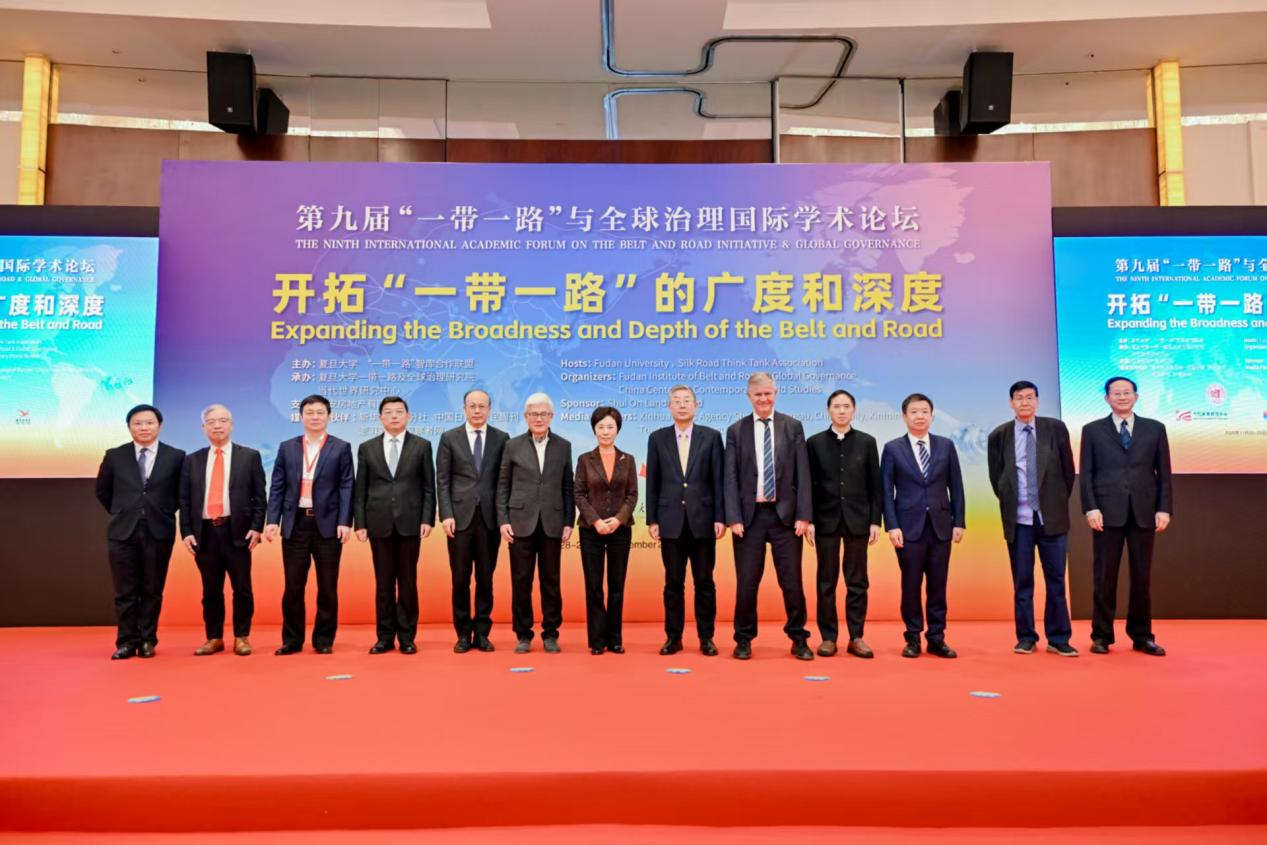
瑞安集团主席罗康瑞表示,随着"一带一路"合作领域不断拓展,合作模式持续创新,需开拓合作的广度与深度,进一步链接全球资源,寻找全盘解决方 案。他建议在现有基建项目基础上强化贸易、投资和新兴行业协同,发挥企业优势,提升差异化竞争力,赋能当地发展。"加强专业服务协作,搭建服务平 台机构,可以为企业提供政策咨询、风险评估等更多支持。"针对人才缺口问题,罗康瑞建议高校开设针对性课程,结合不同地区特点制定差异化培养方 案,培养熟悉市场和区域环境、具备全球视野与跨文化领导力的专业人才,助力企业更好融入当地市场。 共建"一带一路"为世界经济增长开辟新空间,为完善全球治理拓展新实践。联合国前副秘书长兼环境规划署执行主任、"一带一路"绿色发展国际联盟主 席埃里克·索尔海姆(Erik Solheim)认为,中国近年来推动"一带一路"合作向绿色转型,是全球绿色转型不可或缺的力量。从1984年首次到访上海至今,他 见证了中国经济社会的快速发展。中国绿色发展理念是值得借鉴的,推动构建更包容的全球治理体系。他呼吁各国深化绿色经济、人工智能等领域合作,在 科学、教育、文化等领域拓展合作,携手应对全球性挑战。 11月28日,第九届"一带一路" ...

外交部:以习近平外交思想为引领,中国外交将为人类和平与进步事业作出更大贡献
Xin Hua She· 2025-11-28 10:12
Core Viewpoint - The publication of the "Xi Jinping Thought on Diplomacy Learning Outline (2025 Edition)" aims to enhance China's diplomatic efforts and contribute to global peace and progress, guided by Xi Jinping's diplomatic thought [1][2] Group 1: Publication and Content Overview - The "Xi Jinping Thought on Diplomacy Learning Outline (2025 Edition)" has been updated and published, reflecting the latest developments and contributions of Xi Jinping's diplomatic thought [1] - This new edition serves as an authoritative resource for party members, officials, and the public to learn and implement Xi Jinping's diplomatic thought [1] Group 2: Strategic Goals and Principles - The 2023 Central Foreign Affairs Work Conference established the framework for building a community with a shared future for mankind, outlining China's diplomatic strategy for the new journey [2] - The Chinese government emphasizes the importance of equality, orderly multipolarity, and inclusive economic globalization, while promoting global governance reform towards a more just and reasonable direction [2] - China's diplomatic approach is characterized by self-confidence, openness, justice, and win-win cooperation, aiming to create a favorable external environment for national rejuvenation and modernization [2]
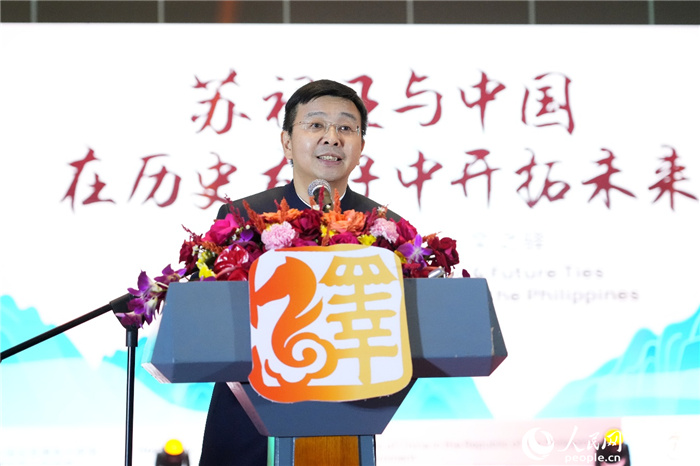
苏禄王与中国·在历史友好中开拓未来——魅力德州走进中菲人文之驿活动成功举办
人民网-国际频道 原创稿· 2025-11-28 06:10
Core Points - The event "Charm of Dezhou Entering the Sino-Philippine Cultural Exchange" was co-hosted by the Chinese Embassy in the Philippines, Dezhou Municipal Government, and the Federation of Filipino-Chinese Associations, highlighting historical ties and future cooperation between China and the Philippines [1][7] - The event featured nearly 400 attendees, including government officials, media, descendants of the Sulu King, and the Chinese community, emphasizing the importance of cultural exchange [1][3] - The Chinese Embassy's representative, Zhou Zhiyong, highlighted China's commitment to high-level openness and international cooperation, as outlined in the recent 20th Central Committee's "14th Five-Year Plan" [1][3] Summary by Sections Event Overview - The event focused on the historical friendship between China and the Philippines, particularly the story of the Sulu King's visit to China, aiming to strengthen bilateral relations [1] - Activities included a photo exhibition showcasing Sino-Philippine friendship and Dezhou's development achievements, along with performances by Dezhou artists [1][5] Key Messages - Zhou Zhiyong emphasized the significance of the "14th Five-Year Plan" in shaping China's economic and social development over the next five years, reinforcing the vision of global cooperation and cultural exchange [1][3] - The event served as a platform to renew traditional friendships and create new narratives between the peoples of China and the Philippines [1][7]
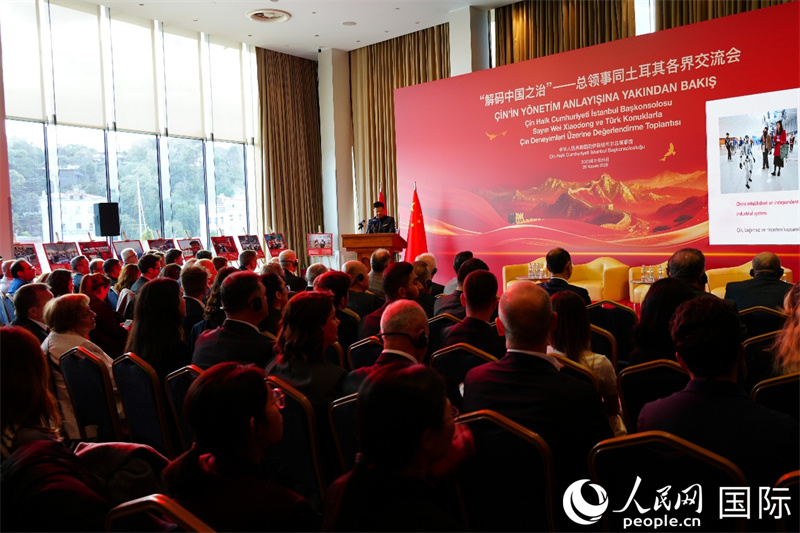
中国驻伊斯坦布尔总领事馆举办同土耳其各界交流会
人民网-国际频道 原创稿· 2025-11-28 06:10
Group 1 - The core message of the event was to showcase China's contributions in areas such as livelihood construction, economic development, and global governance, emphasizing the significance of the "15th Five-Year Plan" for countries including Turkey [2] - The event was attended by over 160 representatives from various sectors in Turkey, including business, think tanks, media, and educational institutions, as well as leaders from Chinese enterprises and organizations in the region [1][2] - The forum included discussions on themes such as the "15th Five-Year Plan" and Chinese-style modernization, global initiatives, and the construction of a community with a shared future for mankind, highlighting the desire for deeper cooperation between China and Turkey [4] Group 2 - The Consul General of China in Istanbul, Wei Xiaodong, expressed a commitment to enhancing exchanges and cooperation with Turkey, guided by the consensus reached during the meeting between the two countries' leaders [2] - The atmosphere at the exchange meeting was described as lively, with Wei Xiaodong responding to questions from attendees, indicating a strong interest in China-Turkey relations [4][5]
《新时代的中国军控、裁军与防扩散》白皮书发布
Ren Min Ri Bao· 2025-11-27 22:30
Core Viewpoint - The white paper emphasizes China's commitment to advancing international arms control, disarmament, and non-proliferation efforts, underlining its role as a constructive participant in global security governance [1][2]. Group 1: International Security and Arms Control - The white paper outlines the complex and severe international security and arms control situation, highlighting China's proactive stance in promoting global governance in this area [1]. - China, as a permanent member of the UN Security Council, actively maintains the authority and effectiveness of international arms control mechanisms and participates constructively in multilateral arms control processes in nuclear, biological, and chemical fields [2]. Group 2: Emerging Areas of International Security Governance - The white paper identifies outer space, cyberspace, and artificial intelligence as new strategic security focal points and emphasizes the need for a globally recognized governance framework in these emerging areas [2]. - China advocates for a governance system that enhances the representation and voice of developing countries, promoting broad consensus among nations [2]. Group 3: Non-Proliferation and Peaceful Use of Technology - The white paper stresses China's ongoing efforts to strengthen non-proliferation capabilities and actively participate in international non-proliferation processes [2]. - It promotes international cooperation for the peaceful use of technology and aims to improve global governance in non-proliferation [2].
维护全球经济稳定是中德共识
Jing Ji Ri Bao· 2025-11-27 21:41
Group 1 - The visit of German Vice Chancellor and Finance Minister Lindner to China marks a significant step in enhancing Sino-German economic relations, emphasizing mutual benefits amidst global economic challenges [1][2] - Sino-German trade has shown resilience, with bilateral trade reaching €185.9 billion in the first nine months of 2025, a 0.6% increase year-on-year, reaffirming China's position as Germany's largest trading partner [1][2] - The joint statement from the fourth Sino-German high-level financial dialogue highlighted 27 agreements, focusing on macroeconomic policy coordination and international economic governance, aiming to promote global economic recovery and sustainable development [3] Group 2 - Sino-German economic cooperation serves as a stabilizer for both economies, with Germany facing a projected GDP growth of only 0.2% this year, while China's vast consumer market offers significant opportunities for German high-end products [4] - The partnership is crucial for global supply chain security, as Germany's reliance on China has increased, and both countries aim to strengthen economic ties to avoid supply chain disruptions [5] - The collaboration reflects a practical approach to global challenges, with both nations leveraging their strengths in renewable energy and technology to contribute to global public goods [5]
发布新版军控白皮书,是中国积极践行全球安全倡议、全球治理倡议的具体举措
Ren Min Ri Bao Hai Wai Ban· 2025-11-27 21:18
Core Viewpoint - The release of the white paper "China's Arms Control, Disarmament and Non-Proliferation in the New Era" marks China's renewed commitment to global security initiatives and governance, emphasizing its role in international peace and security [1][2]. Group 1 - The white paper is China's first comprehensive statement on arms control in 20 years, reflecting its active participation in international arms control processes, especially since the 18th National Congress of the Communist Party [1]. - The document highlights China's constructive efforts and significant achievements in international arms control over the past two decades [1]. - The timing of the white paper coincides with the 80th anniversary of the victory in the Chinese People's War of Resistance Against Japanese Aggression and the establishment of the United Nations, underscoring its historical significance [1]. Group 2 - China reaffirms its stance as a steadfast force for world peace and justice, advocating for a multipolar world and inclusive global economic development [2]. - The country expresses its willingness to collaborate with all peace-loving nations to strengthen the international arms control system centered around the United Nations [2]. - The white paper reflects China's commitment to building a community with a shared future for mankind [2].
视频丨国务院新闻办公室发布《新时代的中国军控、裁军与防扩散》白皮书
Yang Shi Xin Wen Ke Hu Duan· 2025-11-27 13:46
Core Viewpoint - The white paper titled "China's Arms Control, Disarmament and Non-Proliferation in the New Era" emphasizes China's commitment to advancing modernization under Xi Jinping's thought, promoting global initiatives, and contributing to international security and cooperation [2][3]. Group 1: International Security and Arms Control - The white paper outlines the complex and severe international security and arms control situation, highlighting China's role as a significant force in promoting global governance in arms control [3]. - China, as a permanent member of the UN Security Council, actively maintains the authority and effectiveness of international arms control mechanisms and participates constructively in multilateral arms control processes in nuclear, biological, and chemical fields [3]. Group 2: Emerging Areas of International Security Governance - The white paper identifies outer space, cyberspace, and artificial intelligence as new strategic security focal points and emphasizes the need for a globally recognized governance framework in these emerging areas [3]. - China advocates for a governance system that enhances the representation and voice of developing countries, promoting broad consensus among nations [3]. Group 3: Non-Proliferation and Peaceful Use of Technology - The white paper stresses China's ongoing efforts to strengthen non-proliferation capabilities and actively participate in international non-proliferation processes [3]. - China promotes international cooperation for the peaceful use of technology and aims to improve global governance in non-proliferation [3].
新时代的中国军控、裁军与防扩散白皮书丨外交部:发布新版军控白皮书,是中国积极践行全球安全倡议、全球治理倡议的具体举措
Xin Hua Wang· 2025-11-27 13:28
Core Viewpoint - The release of the white paper "China's Arms Control, Disarmament, and Non-Proliferation in the New Era" marks China's comprehensive articulation of its policies in these areas after 20 years, reflecting its commitment to global security initiatives and governance [1][2] Group 1: Historical Context - The white paper is released in a significant year, coinciding with the 80th anniversary of the victory in the Chinese People's War of Resistance against Japanese Aggression and the establishment of the United Nations [1] - China previously published arms control white papers in 1995 and 2005, indicating a long-standing engagement in this area [1] Group 2: Current International Security Landscape - The current international security and arms control situation is described as complex and severe, with frequent local conflicts and an ongoing arms race [1] - The white paper emphasizes the critical choice humanity faces between peace and war, dialogue and confrontation, and win-win cooperation versus zero-sum outcomes [1] Group 3: China's Role and Contributions - China is portrayed as a constructive participant in international arms control, disarmament, and non-proliferation processes, actively contributing initiatives and solutions to improve the international security environment [2] - The country positions itself as a builder of world peace, contributor to global development, and maintainer of international order [2] - China expresses its commitment to standing on the side of peace and justice, advocating for a multipolar world and inclusive economic globalization [2]
新时代的中国军控、裁军与防扩散白皮书|外交部:发布新版军控白皮书,是中国积极践行全球安全倡议、全球治理倡议的具体举措
Xin Hua She· 2025-11-27 09:41
Core Viewpoint - The release of the white paper "China's Arms Control, Disarmament and Non-Proliferation in the New Era" marks China's comprehensive articulation of its policies in this area after 20 years, reflecting its commitment to global security initiatives and governance [1][2] Group 1: Historical Context - The white paper is released in a significant year, coinciding with the 80th anniversary of the victory in the Chinese People's War of Resistance against Japanese Aggression and the establishment of the United Nations [1] - China previously published arms control white papers in 1995 and 2005, indicating a long-standing engagement in this domain [1] Group 2: Current International Security Landscape - The current international security and arms control situation is described as complex and severe, with frequent local conflicts and an ongoing arms race [1] - Humanity faces critical choices between peace and war, dialogue and confrontation, and win-win cooperation versus zero-sum outcomes [1] Group 3: China's Role and Contributions - China actively participates in international arms control, disarmament, and non-proliferation processes, contributing initiatives and solutions aimed at improving the international security environment [2] - The country positions itself as a builder of world peace, contributor to global development, and maintainer of international order [2] - China expresses its willingness to collaborate with all peace-loving nations to promote a multipolar world and inclusive economic globalization, reinforcing the UN-centered international arms control system [2]