智慧城市

Search documents
中电鑫龙:公司深耕智慧用能、智慧新能源、智慧城市三大业务领域
Zheng Quan Ri Bao Zhi Sheng· 2025-09-29 09:39
Group 1 - The company, Zhongdian Xinlong, focuses on three main business areas: smart energy (intelligent power distribution equipment and components), smart new energy, and smart cities [1] - The company plans to continue concentrating on its core business and closely monitor market dynamics [1] - The company aims to actively seize development opportunities across various segments of the industry chain [1]

万集科技涨2.12%,成交额4101.72万元,主力资金净流入181.22万元
Xin Lang Cai Jing· 2025-09-29 02:25
Company Overview - Wanji Technology Co., Ltd. is located in Haidian District, Beijing, and was established on November 2, 1994. The company was listed on October 21, 2016. Its main business involves providing dynamic weighing, dedicated short-range communication, and laser detection products for highway and urban traffic clients, along with related design, installation, software development, and maintenance services. The revenue composition is 100% from the intelligent transportation industry [1]. Stock Performance - As of September 29, Wanji Technology's stock price increased by 2.12%, reaching 27.88 CNY per share, with a trading volume of 41.02 million CNY and a turnover rate of 1.08%. The total market capitalization is 5.942 billion CNY. Year-to-date, the stock has declined by 18.84%, with a 3.06% drop over the last five trading days and a 3.36% drop over the last 20 days, while it has increased by 4.42% over the last 60 days [1]. Financial Performance - For the first half of 2025, Wanji Technology reported a revenue of 421 million CNY, representing a year-on-year growth of 11.47%. The net profit attributable to shareholders was -100 million CNY, showing a year-on-year increase of 32.98% [2]. Shareholder Information - As of June 30, 2025, the number of shareholders for Wanji Technology is 29,700, an increase of 0.44% from the previous period. The average number of circulating shares per person is 4,638, a decrease of 0.44% [2]. The top ten circulating shareholders include Hong Kong Central Clearing Limited and Huashang Advantage Industry Mixed A, with notable increases in their holdings [3]. Dividend Information - Since its A-share listing, Wanji Technology has distributed a total of 341 million CNY in dividends, with no dividends paid in the last three years [3].
万马科技涨2.01%,成交额1.17亿元,主力资金净流出653.33万元
Xin Lang Cai Jing· 2025-09-29 02:15
Group 1 - The core business of Wanma Technology includes research, production, system integration, and sales of communication and medical information technology equipment, as well as data center integration and maintenance services [2] - The revenue composition of Wanma Technology is as follows: 46.44% from vehicle networking, 30.39% from cabinet and chassis products, 11.64% from industrial control products, 6.64% from other products, and 4.89% from medical information technology products [2] - As of June 30, the number of shareholders of Wanma Technology increased to 32,000, a rise of 151.51%, while the average circulating shares per person decreased by 60.24% [2] Group 2 - In the first half of 2025, Wanma Technology achieved operating revenue of 339 million yuan, a year-on-year increase of 50.91%, and a net profit attributable to the parent company of 16.46 million yuan, up 3.06% year-on-year [2] - Since its A-share listing, Wanma Technology has distributed a total of 35.24 million yuan in dividends, with 30.82 million yuan distributed over the past three years [3] - The stock price of Wanma Technology has increased by 39.73% year-to-date, with a recent decline of 5.63% over the last five trading days [1]

普天科技跌2.04%,成交额8863.64万元,主力资金净流出323.96万元
Xin Lang Zheng Quan· 2025-09-29 01:51
Core Viewpoint - Puhua Technology's stock has experienced fluctuations, with a recent decline of 2.04% and a year-to-date increase of 25.53%, indicating volatility in its market performance [1]. Financial Performance - For the first half of 2025, Puhua Technology reported revenue of 2.024 billion yuan, a year-on-year decrease of 16.96%, and a net profit attributable to shareholders of -20.8032 million yuan, down 152.91% compared to the previous year [2]. - Cumulative cash dividends since the company's A-share listing amount to 490 million yuan, with 130 million yuan distributed over the past three years [3]. Shareholder Information - As of June 30, 2025, the number of shareholders increased to 31,000, a rise of 1.45%, while the average circulating shares per person decreased by 1.17% to 21,982 shares [2]. - The fifth largest circulating shareholder is Hong Kong Central Clearing Limited, holding 15.205 million shares, an increase of 4.3204 million shares from the previous period [3]. Business Overview - Puhua Technology, established on November 19, 1994, and listed on January 28, 2011, is based in Guangzhou, Guangdong Province. Its main business includes information network construction services and the production and sale of communication printed circuit boards [1]. - The company's revenue composition is as follows: public communication 36.06%, private communication and smart applications 35.41%, and intelligent manufacturing 28.53% [1]. - Puhua Technology operates within the communication services sector, focusing on communication engineering and services, and is involved in concepts such as IPV6, IoT, smart cities, Huawei concepts, and cloud computing [1].

研判2025!中国智能仪表行业发展历程、相关政策、发展现状及前景展望:国家基础设施建设推进及工业自动化水平提高,带动智能仪表规模增至7084亿元[图]
Chan Ye Xin Xi Wang· 2025-09-29 01:17
Core Insights - The smart instrument industry in China is experiencing significant growth, driven by rapid economic development, urbanization, and advancements in industrial automation, with the market size projected to increase from 492.4 billion yuan in 2018 to 708.4 billion yuan in 2024, representing a compound annual growth rate (CAGR) of 6.25% [1][10][11] - The future of smart instruments is expected to focus on increased intelligence, integration, high precision, and the fusion of multiple technologies, enhancing their role in industrial internet and smart city applications [1][11][17][18][19] Industry Overview - Smart instruments are high-tech products that integrate modern information and sensing technologies, capable of data collection, processing, and display, widely used in various fields such as industrial automation, environmental monitoring, medical diagnostics, and aerospace [1][10] - The classification of smart instruments includes temperature, pressure, and flow smart instruments, and they can be categorized by output methods such as local display, remote transmission, and network connection [3][4] Market Growth - The smart instrument market in China is projected to reach 757.3 billion yuan by 2025, indicating a continuous upward trend in demand due to urban management, energy monitoring, and water resource management [1][11] - The smart water meter market is expected to grow from 4.92 billion yuan in 2017 to 13.188 billion yuan in 2024, with a CAGR of 15.13% [11][12] - The smart electric meter market is also expanding, with the number of tenders increasing from 38.1875 million units in 2017 to 89.33 million units in 2024 [12][13] - The smart gas meter market is projected to grow from 5.636 billion yuan in 2017 to 10 billion yuan in 2024, with a CAGR of 8.54% [13] Industry Policies - The Chinese government has implemented various policies to support the development of the smart instrument industry, including initiatives aimed at innovation in manufacturing and quality improvement [7][10] Industry Structure - The smart instrument industry is characterized by intense competition, with companies categorized into two main types: those focusing on industrial automation solutions and those specializing in water and gas management [14] - Key players in the industry include Chuan Yi Automation, Hanwei Technology, and others, with a clear tiered structure based on revenue and market presence [14][15] Development Trends - The industry is moving towards deeper intelligence, with future smart instruments expected to incorporate AI algorithms for self-learning and predictive maintenance [17] - Integration is a key trend, with devices becoming more compact and multifunctional, enhancing operational efficiency [18] - High precision and the fusion of technologies such as IoT and big data are critical for meeting the demands of high-end manufacturing and environmental monitoring [19]


华为AI城市峰会:共建城市数智底座,AI CITY先锋城市案例发布
Sou Hu Cai Jing· 2025-09-28 09:48
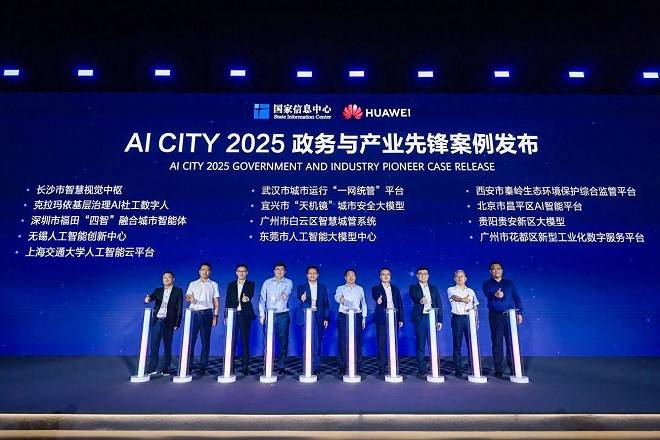
Core Insights - The AI City Summit held during Huawei Connect 2025 focused on the theme of building an intelligent world cloud foundation to accelerate smart governance and industrial upgrades [1][3] - The summit gathered industry experts, government representatives, and ecosystem partners to discuss the rapid evolution of AI technology and its role in driving systematic innovation in smart city construction [1][3] Group 1: AI CITY Development - Huawei and the National Information Center released the "AI CITY 2025 Government and Industry Pioneer Cases," highlighting the transformative impact of AI on urban governance and development paradigms [3] - The AI CITY initiative aims to integrate AI technology deeply into urban modernization and industrial advancement, marking a new phase of comprehensive intelligent transformation in China's smart city development [3][5] Group 2: AI CITY "1234MNX" Framework - The AI CITY "1234MNX" framework addresses challenges in smart city construction, including data silos, insufficient AI scene adaptation, and information security issues [5][6] - The framework consists of one intelligent cloud foundation, two major security systems, three AI engineering platforms, and four types of operations, aiming to enhance resource efficiency and model application [6] Group 3: Practical Applications and Achievements - The framework has shown initial value in practical applications, such as enhancing government services in Shenzhen and revolutionizing urban management in Guangzhou [6][8] - In the industrial sector, the AI CITY initiative has significantly reduced product design cycles and improved manufacturing accuracy, demonstrating its effectiveness in driving industrial upgrades [6][8] Group 4: Future Outlook and Collaboration - Huawei's vision for the future of AI CITY includes collaboration with research institutions and enterprises to innovate and create intelligent upgrade cases for urban governance and industry [7][11] - The company emphasizes the importance of talent cultivation and invites partners to join the AI CITY industry innovation plan to promote comprehensive intelligent transformation [7][11] Group 5: AI Infrastructure and Ecosystem - Huawei Cloud's infrastructure developments, such as the CloudMatrix384 super node and the Pangu model, are designed to support large-scale AI applications and enhance urban decision-making capabilities [8][9] - The company aims to build a robust AI ecosystem that fosters local AI applications, industry ecosystems, and professional talent development, contributing to the overall impact of AI in urban settings [9][11]
携手建设沙特智慧城市:中企“智”造阿拉伯半岛新明珠
人民网-国际频道 原创稿· 2025-09-28 06:31
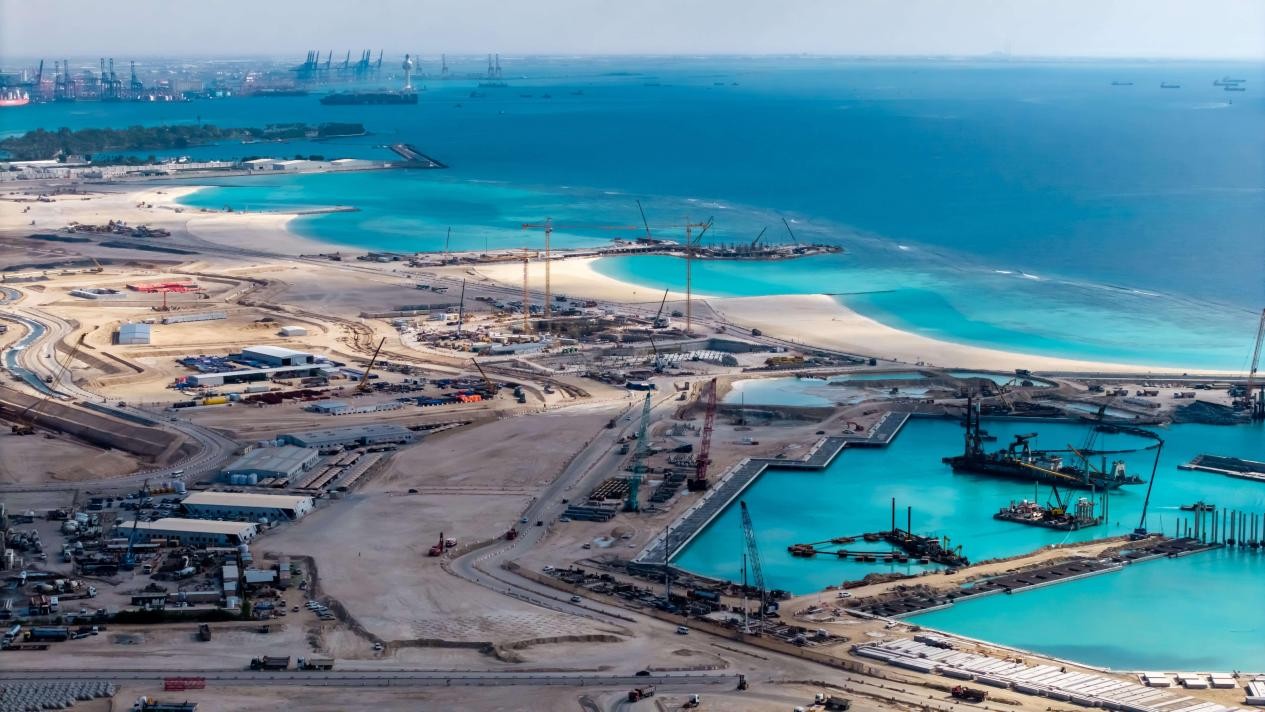
Core Viewpoint - The Jeddah Comprehensive Development Project, undertaken by Chinese companies, aims to create a smart new urban area in Jeddah, Saudi Arabia, featuring various facilities such as museums, opera houses, and high-end hotels, with a focus on integrating smart city systems and management platforms [1][2]. Group 1: Project Overview - The project covers a total area of 5.7 million square meters and includes a coastline of 9.5 kilometers [2]. - Key construction elements include a 1,507-meter comprehensive service corridor, a 324-kilometer pipeline system, 18 kilometers of municipal roads, and six service buildings [2][4]. Group 2: Technological Integration - The project utilizes Building Information Modeling (BIM) to create a digital twin of the construction process, allowing for preemptive identification of potential issues and optimization of construction plans [3][4]. - The integration of Virtual Reality (VR) and Augmented Reality (AR) technologies enhances project management and execution, providing immersive experiences and precise location tracking of infrastructure [6][8]. Group 3: Efficiency and Quality Improvement - The use of BIM and AR technologies has significantly improved construction efficiency and quality, reducing rework and enhancing safety during installation processes [4][6]. - The project team has developed a smart construction site and integrated various subsystems for real-time monitoring and management, ensuring that data is visible and manageable [8]. Group 4: Future Prospects - The project aims to leverage BIM and digital twin technologies to facilitate dynamic management and resource coordination in smart city operations, enhancing urban living [8]. - Successful implementation of these technologies in Jeddah is expected to serve as a model for other cities in Saudi Arabia, promoting further Sino-Saudi cooperation in urban development [8].
这场大赛干货满满!创业孵化基地助项目从蓝图走向市场
Nan Fang Du Shi Bao· 2025-09-27 10:25
Group 1 - The Guangdong-Hong Kong-Macao Greater Bay Area Entrepreneurship Competition serves as a platform for accelerating the implementation of innovative projects beyond just ranking [2] - The Hong Kong Cyberport has successfully gathered over 2,200 tech companies, with a total financing amount reaching HKD 46.2 billion, focusing on fintech, smart living, smart cities, and digital entertainment [4] - Hong Kong Smart Learning Technology Limited, incubated by Cyberport, showcased its AI-driven course scheduling assistant, highlighting the importance of support in navigating policies and resources for startups [5] Group 2 - The Guangdong-Hong Kong-Macao Greater Bay Area (Guangdong) Youth Innovation and Entrepreneurship Incubation Base provides comprehensive one-stop entrepreneurial support services, facilitating over 200 interactions with entrepreneurs and achieving preliminary incubation intentions for six projects [5][6] - The incubation base has established a mentor team comprising investment institutions, academic scholars, and entrepreneurs to enhance resource networking for startups [6]

西安培育数字经济增长新引擎 全力推进“丝路数港”建设
Zhong Guo Xin Wen Wang· 2025-09-26 11:01
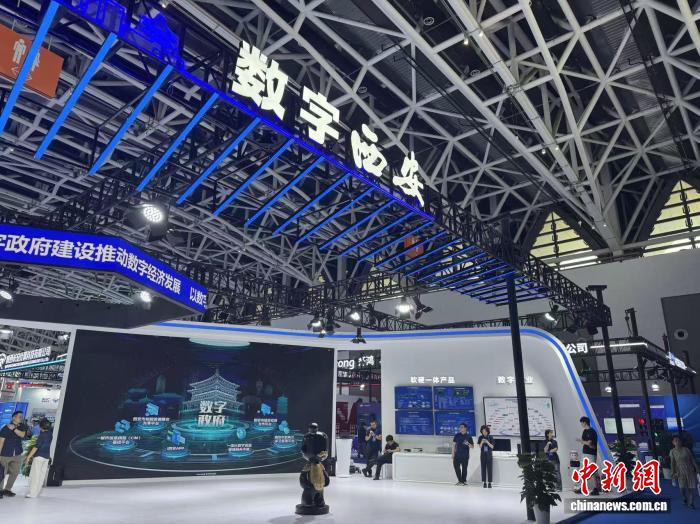
Core Viewpoint - Xi'an is actively promoting the construction of the "Silk Road Digital Port" by leveraging technology innovation and industrial integration to foster the growth of the digital economy [1][2]. Group 1: Policy and Development Strategy - Xi'an is enhancing policy guidance to create a new model for digital economy development, focusing on innovation breakthroughs, key linkages, and nurturing key industries [1]. - The city has established a supportive policy framework that aligns goals, complements measures, and ensures closed-loop connections for digital economy development [1]. Group 2: Project Initiatives and Collaboration - Xi'an has released a "Project Demand and Scenario Opportunity List," which includes 62 project demands and 8 major fields of urban governance since 2024, aimed at guiding collaborative efforts between research institutions and enterprises [2]. - The city is implementing a "five-in-one" model focusing on data supply, flow, utilization, and security to advance the "Silk Road Digital Port" initiative [2]. Group 3: Data Resource and Industry Development - Currently, Xi'an has made available 1,364 data resources and products, with 262 data enterprises participating, stimulating the integration of technology and industry innovation through data element circulation [2]. - The city is establishing demonstration benchmarks in key areas, such as the digital content sector, where it has attracted 32 full-chain enterprises and generated over 100 million yuan in revenue from various projects [2].
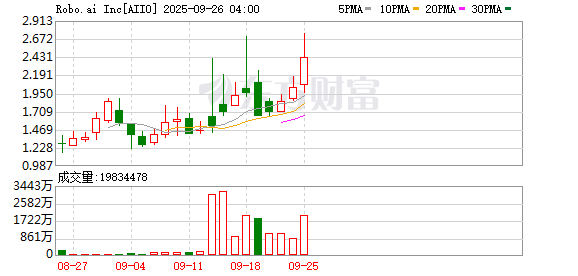
Robo.ai宣布与JW集团合资设立迪拜商用车公司“RoBUS”
Zheng Quan Ri Bao· 2025-09-26 07:36
合资企业双方中,Robo.ai将通过资本市场助力合资公司,并通过品牌营销推动中东以及全球市场的开 拓;JW集团将通过其海外制造业基地帮助合资公司的产品快速投产上市,并通过其现有的400多家经销 商网络,进一步开拓市场。其中,RO1绿色智能豪华大巴车系列,该系列产品覆盖了6米—12米的新能 源客车系列,主要满足日益增长的长途客运、旅游客运以及通勤车需求;RO2绿色智能公交车系列,该 系列产品覆盖了9米—12米的新能源公交车系列,主要满足城市公共交通绿色出行的需求。通过搭载多 项先进的智能辅助驾驶技术,R02在环境感知、预警、驾驶行为监测及防错控制等方面均表现出色,为 乘客和驾驶员提供了全方位的安全保障;RO3豪华舒适商务车系列,该系列产品是面向高端公商务出行 的需求,豪华感与智能感兼具,具备更安全、更可靠、更舒适、更智能、更强劲五大性能优势,能够为 客户提供更加便捷、高效、安全的高品质用车体验。 JW集团首席执行官Javed Afridi表示:"RoBUS的成立将实现绿色智能商用车产品的普及,通过建立商用 车共享智能制造平台,我们期待和Robo.ai合作打造最具影响力的商用车制造基地,满足全球市场的需 求。" ...