
知识产权保护

Search documents
透视新兴市场“危”与“机”,广交会送上“掘金”指南
21世纪经济报道· 2025-10-22 10:10
Core Viewpoint - The article discusses the opportunities and risks faced by Chinese enterprises as they expand into emerging markets, particularly in the context of the Belt and Road Initiative and the changing global trade environment [1][3]. Group 1: Trade Environment and Market Trends - In the first three quarters of 2025, China's imports and exports to Belt and Road countries reached 17.37 trillion yuan, an increase of 6.2%, accounting for 51.7% of total trade value, up by 1.1 percentage points [1]. - The growth in trade with ASEAN, Latin America, Africa, and Central Asia was 9.6%, 3.9%, 19.5%, and 16.7% respectively, indicating a diversification of China's export markets [1]. - The overall credit risk for small and medium-sized foreign trade enterprises has been on the rise, with an average annual increase of 7.2% in the risk index over the past three years [3][4]. Group 2: Risks in Emerging Markets - The global trade environment is increasingly influenced by protectionism and resource nationalism, leading to heightened uncertainty and risk in international trade [4]. - Labor-intensive industries like textiles and light manufacturing face challenges from trade barriers and raw material cost fluctuations, while technology-intensive sectors like electronics and new energy vehicles encounter rising compliance costs and intense competition [4]. - Emerging market currencies are often volatile, with examples like the Turkish lira experiencing daily fluctuations exceeding 10% [8]. Group 3: Compliance and Legal Risks - Companies expanding into Southeast Asia must be aware of environmental compliance and ESG requirements, as neglecting these can lead to significant penalties and operational disruptions [9]. - Intellectual property risks, such as trademark squatting and technology leakage, are prevalent in Southeast Asia, necessitating proactive measures from companies [9]. Group 4: Strategies for Risk Management - Companies are advised to conduct compliance planning before entering new markets, ensuring that tax compliance is integrated into business strategy [11]. - For managing currency risks, companies can use hedging strategies involving direct transactions with the renminbi or through a two-step process involving the US dollar [11]. - Establishing a knowledge property defense matrix is recommended, including simultaneous IP registration in target countries and monitoring mechanisms to track trademark registrations [13].

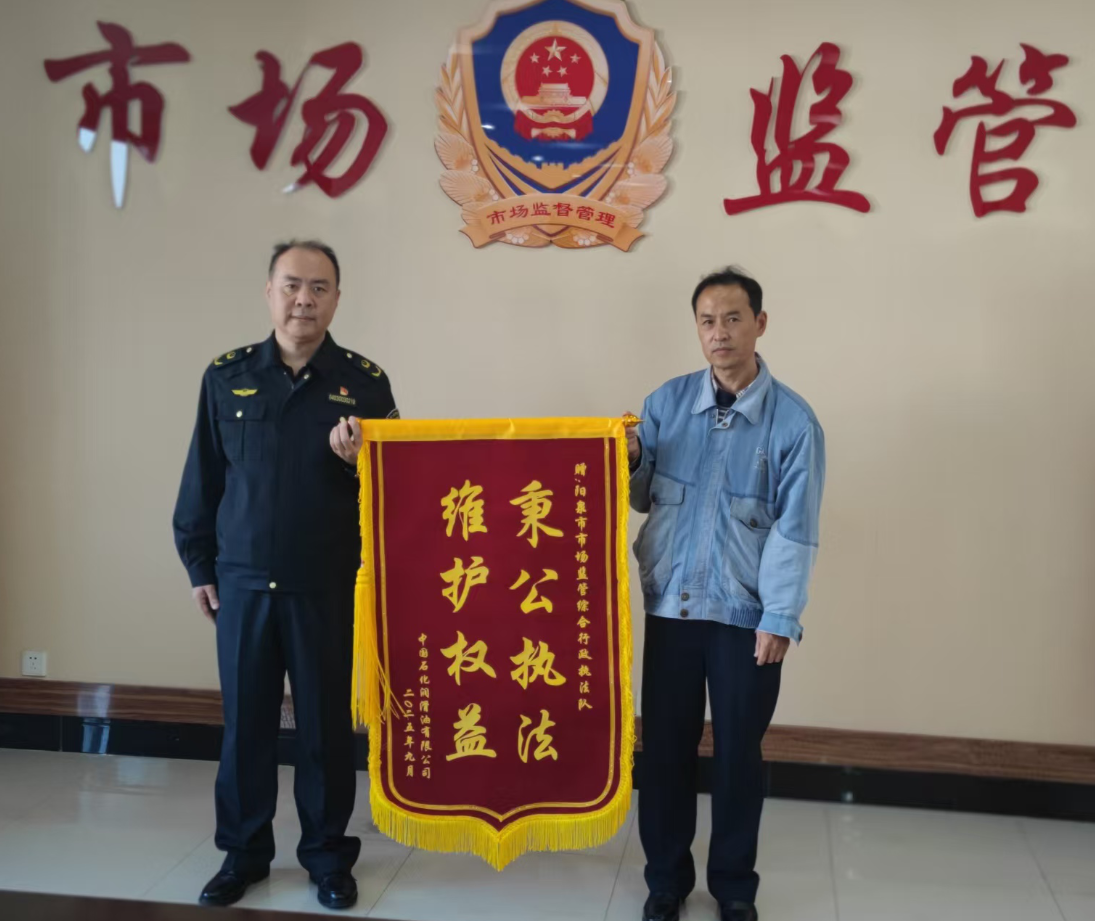
山西省阳泉市市场监管综合行政执法队获赠“秉公执法 维护权益”锦旗
Zhong Guo Zhi Liang Xin Wen Wang· 2025-10-22 05:45
今年7月,阳泉市市场监管综合行政执法队查处一起侵犯中国石化润滑油有限公司长城牌润滑油注册商标的案件,现场查扣假冒侵权润滑油52桶,货值达14 万余元,有效维护了企业与消费者的合法权益。 近年来,山西省阳泉市市场监管行政执法队持续开展假冒侵权商品重点整治,在白酒、卫生纸、运动鞋和润滑油等领域取得积极成效,办理案件数十起, 有效震慑了制假售假不法分子。下一步,阳泉市市场监管综合行政执法队将持续保持打击侵权假冒违法行为的高压态势,通过精准执法进一步筑牢品牌保 护屏障。(杨海平) 中国质量新闻网讯 近日,中国石化润滑油有限公司工作人员将一面印有"秉公执法 维护权益"的锦旗送给山西省阳泉市市场监管综合行政执法队,以感谢执 法人员在保护该企业知识产权和维护市场经营秩序方面作出的贡献。 ...

海口推出专利快速预审服务 专利申请审查周期最短15天
Hai Nan Ri Bao· 2025-10-22 01:55
Core Viewpoint - The Haikou Intellectual Property Protection Center has launched a rapid patent pre-examination service to stimulate innovation, reducing the patent application review cycle to as fast as 15 days [1][2] Group 1: Patent Pre-examination Service - The pre-examination service helps applicants eliminate textual errors and substantial defects in application documents before submission to the National Intellectual Property Administration [1] - This service aims to enhance application quality, allowing high-quality applications to enter a fast-track review process [1] Group 2: Impact on Review Cycles - The average review cycle for invention patents is expected to shorten from 16 months to 3-6 months [2] - Utility model patents' review cycle is projected to decrease from 8 months to 1-2 months [2] - Design patents' review cycle is anticipated to reduce from 6 months to between 15 days and 1 month [2] Group 3: Focus Industries - The pre-examination service covers key industries in Haikou, specifically equipment manufacturing and biomedicine, encompassing 70 IPC classification codes and 29 Locarno classification codes [2] - This initiative is seen as a significant measure to optimize intellectual property services and invigorate innovation within these industries [2]
携手跨国公司,共建共生共赢产业生态
Da Zhong Ri Bao· 2025-10-22 01:00
Core Insights - Shandong has attracted 236 Fortune Global 500 companies to invest in 946 projects, focusing on building a collaborative and mutually beneficial industrial ecosystem with multinational corporations [1][3]. Investment and Economic Data - In the first eight months of this year, Shandong utilized $6.55 billion in foreign investment, ranking fifth in the country, with high-tech industries accounting for 42% of this investment [3]. - The province's foreign-funded enterprises contributed 16.9% to the total import and export volume, highlighting their importance in stabilizing foreign trade [3]. Policy and Regulatory Environment - Shandong has implemented a new negative list for foreign investment and is actively promoting openness in manufacturing, services, and agriculture sectors [5]. - The province has revised local regulations to enhance intellectual property protection for multinational companies, including provisions for overseas patent risk management and the establishment of a patent pool [5]. International Cooperation and Market Expansion - Shandong is leveraging platforms like the Shanghai Cooperation Organization to facilitate joint ventures between multinational and local companies in markets along the Belt and Road Initiative [6][7]. - In the first three quarters of this year, Shandong's exports to Belt and Road countries increased by 9.2%, with significant growth in trade with Africa, the Middle East, and Central Asia [6]. Events and Engagements - Shandong is set to host the eighth China International Import Expo, with over 2,000 companies registered to participate, indicating strong interest from the international business community [7].
杭州知识产权领域国际专家天团亮相
Mei Ri Shang Bao· 2025-10-21 22:59
商报讯(记者 郑炜)2024年10月,首次落地中国的国际保护知识产权协会(AIPPI)世界知识产权大会 在杭州成功举办。以大会为纽带,中国国际商会杭州商会知识产权专业委员会(以下简称"知产专委 会")成立,国际保护知识产权协会(AIPPI)前会长奥山尚一,AIPPI中国分会会长、中国贸促会专利 商标事务所所长龙传红等知产界专家学者受聘成为知产专委会特邀专家。10月20日,适逢AIPPI世界知 识产权杭州大会举办一周年之际,知产专委会特邀专家队伍再度壮容,聘任俄罗斯戈罗迪斯基律师事务 所合伙人、AIPPI俄罗斯分会会长弗拉基米尔·比尤林,南非冯赛德尔斯事务所合伙人、国际知识产权律 师联合会(FICPI)前会长巴斯蒂安 科斯特,巴西丹尼尔律师事务所合伙人、国际商标协会(INTA) 商标通讯委员会成员露布黛 阿兰芝等成为知产专委会特邀专家。至此,知产专委会专家库成员达19 名,囊括亚非欧美四大洲知识产权界的"顶流",他们将为知产专委会的发展构筑坚实的专业基础,也将 为杭州企业的国际化经营提供智力支持。 几位新增的特邀专家来杭接受聘书。会前,他们与南非和巴西等金砖国家颇负盛名的知识产权领域法律 服务机构及律师事务所有 ...
吉林省西点药业科技发展股份有限公司关于取得发明专利证书的公告
Zhong Guo Zheng Quan Bao - Zhong Zheng Wang· 2025-10-21 10:42
Core Viewpoint - The company has recently obtained an invention patent certificate for the synthesis method of a core product, which signifies a strategic enhancement of its technological capabilities and intellectual property protection [1][2]. Group 1: Patent Acquisition - The company has received an invention patent certificate from the National Intellectual Property Administration of China for a synthesis method of Rhizoma Anemones [1]. - The synthesis method involves using gallic acid and malic acid as raw materials, with concentrated sulfuric acid as a condensation catalyst, achieving a product yield of over 90% and purity of up to 99% [1]. Group 2: Strategic Implications - The acquisition of this patent reflects not only a technological advancement but also a strategic move to strengthen core technologies and lay a foundation for future development [2]. - The company now holds two patents related to the synthesis process of Rhizoma Anemones, which will enhance its core competitiveness in technological innovation and support the development of this key product [2].
藏在华强北深处的“奢侈品帝国”
Hu Xiu· 2025-10-21 09:06
Core Insights - The article highlights the hidden industry of counterfeit luxury goods in Shenzhen's Huaqiangbei, contrasting it with the well-known electronic products market [1][16] - It describes the operational methods of street vendors selling counterfeit items, emphasizing their awareness of risks and their ability to identify undercover agents [3][4][16] Group 1: Counterfeit Luxury Goods Market - Vendors openly admit to selling counterfeit products, claiming to provide a trustworthy experience despite the illegal nature of their goods [3][4] - The market features a range of counterfeit luxury items, including high-quality replicas that closely mimic the originals, with prices significantly lower than genuine products [8][12] - The article details the production process of these counterfeit goods, highlighting a rapid response supply chain that allows for quick replication of popular items [11][12] Group 2: Pricing and Quality Comparison - A comparison is made between different quality levels of counterfeit products, with prices ranging from 980 yuan for lower-quality items to 1800 yuan for high-quality replicas [8][12] - The article notes that the genuine LV CARRYALL small handbag retails for 23,000 yuan, showcasing the substantial price difference between authentic and counterfeit items [8] Group 3: Market Dynamics and Trends - The article discusses the current market dynamics for electronic products, noting that prices for older iPhone models have remained stable or even increased despite the release of new models [13][15] - Vendors attribute the price stability of older models to high demand and limited inventory, indicating a shift in traditional pricing patterns [15] Group 4: Legal and Ethical Considerations - The article concludes by addressing the legal implications of the counterfeit goods market, emphasizing the ongoing challenges of balancing commercial interests with legal compliance [16] - It suggests that as global efforts to protect intellectual property intensify, the counterfeit market will face increasing scrutiny and potential repercussions [16]
重磅!江门“民营经济十条”来了→
Sou Hu Cai Jing· 2025-10-21 07:32
Core Viewpoint - The "Ten Measures to Promote the Development of Private Enterprises in Jiangmen" aims to provide systematic support for the growth and high-quality development of private enterprises in the region, addressing key challenges and fostering a conducive environment for innovation and market expansion [1][2]. Group 1: Systematic Policy Measures - The policy outlines 20 specific measures across ten dimensions, focusing on nurturing private enterprises, expanding investments, driving innovation, ensuring resource availability, protecting rights, and creating a favorable environment [2]. - Emphasis is placed on building a comprehensive nurturing ecosystem for private enterprises, enhancing their growth throughout their lifecycle, and promoting the upgrading of business entities [4][6]. - The policy targets 15 key industrial chains for precise investment attraction, aiming to create resilient and competitive industrial clusters through dynamic updates of "investment maps" and "industrial maps" [4][6]. Group 2: Financial and Talent Support - The policy addresses long-standing issues faced by private enterprises, such as financing difficulties and talent shortages, by enhancing financial services and talent support systems [9][10]. - It encourages innovative financial solutions, including government investment funds and supply chain finance, to facilitate easier access to capital for private enterprises [9]. - Talent development initiatives include promoting dual education systems and establishing human resource platforms to support skill development for private enterprises [9][10]. Group 3: Innovation and Market Expansion - The policy encourages private enterprises to enhance their core competitiveness through technological innovation and market expansion, focusing on key areas like artificial intelligence and new materials [11][14]. - It supports the establishment of technology innovation alliances and the creation of various research and development platforms to accelerate the transition of technological achievements to production [11]. - Initiatives to promote brand and quality enhancement are also included, aiming to increase product value and support international brand registration [11][14]. Group 4: Government and Business Relations - The policy aims to foster a supportive government-business relationship and a social environment that respects and values entrepreneurship [16][19]. - It emphasizes the importance of regular communication between government and enterprises, establishing platforms for addressing business needs effectively [16]. - The promotion of entrepreneurial spirit and social responsibility among private entrepreneurs is encouraged, with initiatives to highlight their contributions to society [19].

三态股份涨0.96%,成交额4279.89万元,近5日主力净流入-1506.14万
Xin Lang Cai Jing· 2025-10-20 08:22
Core Viewpoint - Shenzhen SanTai E-commerce Co., Ltd. is benefiting from the depreciation of the RMB and is actively developing AI-driven tools for risk detection in cross-border e-commerce [2][3]. Company Overview - Shenzhen SanTai E-commerce Co., Ltd. was established on January 7, 2008, and went public on September 28, 2023. The company primarily engages in cross-border e-commerce retail and logistics [7]. - The company's revenue composition includes 76.14% from cross-border e-commerce product sales, 23.80% from logistics sales, and minimal contributions from technology services and other business [7]. Business Developments - The company has launched a proprietary intellectual property risk detection tool named "RuiGuan·ERiC," which utilizes AI and big data models to provide cost-effective and accurate risk monitoring solutions for businesses [2][3]. - The company is also developing an AIGC project that generates high-quality images using AI, significantly enhancing operational efficiency and reducing production costs [2]. Financial Performance - For the first half of 2025, the company reported a revenue of 827 million yuan, representing a year-on-year growth of 3.27%, while the net profit attributable to shareholders decreased by 48.75% to 23.26 million yuan [8]. - As of September 30, 2023, the company had a market capitalization of 6.642 billion yuan, with a trading volume of 42.79 million yuan on October 20, 2023 [1][8]. Market Position - The company operates within the internet retail sector, specifically in cross-border e-commerce, and is associated with concepts such as intellectual property and e-commerce [8]. - As of June 30, 2025, the company had 30,100 shareholders, with a slight decrease of 1.25% from the previous period [8].
蓝海华腾:已获得“增量式方波编码器的Z信号更新方法、装置、设备及介质”的专利授权
Ge Long Hui· 2025-10-20 08:09
Core Viewpoint - Blue Ocean Huateng (300484.SZ) has recently received an invention patent certificate from the National Intellectual Property Administration of the People's Republic of China, which pertains to the Z signal updating method, device, equipment, and medium for incremental square wave encoders [1] Summary by Relevant Sections Patent Details - The patent involves a method for updating the Z signal of incremental square wave encoders, which includes selecting the difference between the current and previous count values as the change value [1] - The method captures the Z signal's rising or falling edge corresponding to the count value as the capture value for the current cycle [1] - If the change value exceeds a preset threshold, the current capture value is selected as the current capture value, and the previous capture value is taken from the last cycle [1] - The update of the Z signal usage value enhances system control stability and precision [1] Impact on Company - The acquisition of the patent is not expected to have a significant impact on the company's recent production and operations [1] - It is beneficial for the company to further improve its intellectual property protection system and consolidate its leading position in independent technology [1] - The continuous innovation mechanism driven by this patent is expected to enhance the company's core competitiveness [1]
