
中国特色金融发展之路

Search documents
中信建投期货:奋楫笃行显担当 服务实体见实效
Qi Huo Ri Bao Wang· 2025-12-23 02:30
Core Viewpoint - The central financial work conference during the "14th Five-Year Plan" period emphasizes the goal of accelerating the construction of a financial power, aiming to create a capital market that is "safe, standardized, transparent, open, vibrant, and resilient" to promote high-quality financial development in the new era [1] Group 1: Company Development and Strategy - The company is committed to implementing the spirit of the 20th National Congress of the Communist Party and the series of important instructions from General Secretary Xi Jinping regarding financial work, focusing on a path of financial development with Chinese characteristics [1][2] - The number of party branches within the company increased from 4 to 21 during the "14th Five-Year Plan," with the proportion of party members rising from 12% to 20%, enhancing the grassroots party organization's role [2] - The company has been recognized for its strong leadership and core competitiveness, with continuous improvement in various operational indicators [2] Group 2: Focus on Core Business - The company focuses on its main responsibilities, utilizing the futures market for price discovery, risk management, and resource allocation to support the stable development of real enterprises [3] - In serving technology finance, the company has expanded its services to national-level specialized and innovative enterprises, providing comprehensive solutions such as hedging and consulting [3] - The company has established a significant advantage in green finance, contributing to the industrial chains of industrial silicon, lithium carbonate, and polysilicon, while also participating in the preparation for the listing of electricity and carbon emission rights [3] Group 3: Social Responsibility and Financial Inclusion - The company has successfully conducted 445 "insurance + futures" projects, benefiting nearly 250,000 farmers with compensation exceeding 200 million yuan [4] - It has established a public welfare futures trader education base in Chongqing, producing over 4,000 original educational materials and reaching more than 750,000 people since its operation began in October 2021 [4] - The company is enhancing its professional service capabilities in pension finance and has introduced age-friendly services to protect investor rights [4] Group 4: Regional Development - The company has been deeply involved in the "智融惠畅" project in Chongqing, assisting in the establishment of the first log futures delivery warehouse and enhancing regional resource allocation capabilities [5][6] - It provides risk management services to traditional and emerging industries in Chongqing, contributing to the growth of the "33618" modern manufacturing cluster [6] Group 5: Collaborative Development - The company is strengthening internal and external collaboration to enhance customer service quality, building a comprehensive business advantage through a nationwide collaborative network [7] - It integrates services with various stakeholders, including government, exchanges, and educational institutions, to expand its service ecosystem and enhance brand image [7] Group 6: Risk Management - The implementation of the futures and derivatives law during the "14th Five-Year Plan" is crucial for the industry to serve the real economy and mitigate financial risks [8] - The company is enhancing its risk prevention and compliance management systems, focusing on early detection and resolution of risks [8] Group 7: Future Outlook - As the "15th Five-Year Plan" begins, the company aims to continue its commitment to serving the real economy, focusing on financial innovation and risk management to support national strategic goals [9]

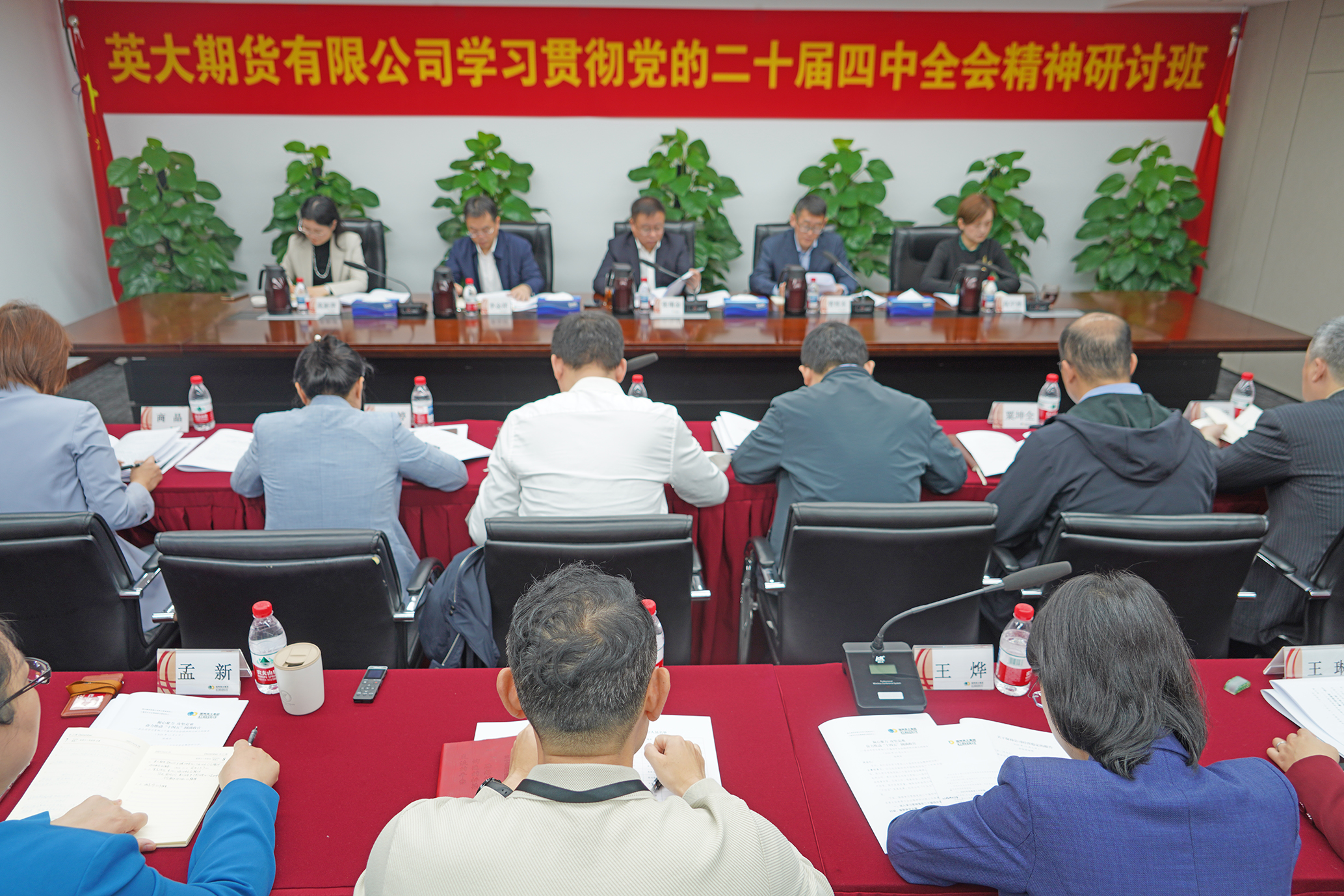
英大期货:坚定走好能源特色期货公司高质量发展之路
Qi Huo Ri Bao Wang· 2025-12-23 02:01
Core Viewpoint - The news emphasizes the importance of the futures market in China's economic development and highlights the role of Yingda Futures in supporting state-owned enterprises and contributing to the national "dual carbon" strategy through innovative financial services [3][8]. Group 1: Financial Services and Risk Management - Yingda Futures has established a specialized working group to focus on the electricity energy industry chain, conducting in-depth research to explore the integration of various business units with derivatives [5]. - The company has successfully won a consulting service project for a major state-owned enterprise, providing comprehensive solutions including risk management system construction and professional training [5][6]. - Yingda Futures has actively supported central enterprises in enhancing their financial derivatives management capabilities, aligning with the regulatory requirements set by the State-owned Assets Supervision and Administration Commission [4][7]. Group 2: Green Finance and Sustainability - The company has strengthened its green finance service capabilities in line with the national "dual carbon" strategy, forming a high-quality, professional futures trading consulting team [8]. - Significant achievements include the completion of a feasibility analysis report for electricity futures, which serves as a reference for decision-making [8]. - Yingda Futures has enhanced its industry influence by publishing professional articles and hosting events to promote the integration of green finance with the non-ferrous metal industry [8]. Group 3: Support for Energy Supply and Social Responsibility - Yingda Futures has provided efficient coal procurement financing services to a major power generation enterprise, addressing liquidity pressures and ensuring stable fuel supply during peak electricity demand [9]. - The company has actively engaged in rural revitalization efforts, contributing over 800,000 yuan to various projects aimed at supporting local industries and talent development [10]. - Yingda Futures is committed to continuing its support for rural revitalization and industry upgrades, leveraging its financial expertise to contribute to sustainable development [10]. Group 4: Commitment to High-Quality Development - The company is dedicated to adhering to the principles of serving the real economy and the energy sector, aiming to contribute to the high-quality development of the futures industry [11].

三十载执“信”为笔 中诚信托谱写高质量发展新篇章
Jin Rong Jie Zi Xun· 2025-12-18 01:37
Core Viewpoint - Zhongcheng Trust celebrates its 30th anniversary, emphasizing its commitment to serving national strategies, the real economy, and improving people's lives while achieving high-quality development [1][4]. Group 1: Company History and Development - Zhongcheng Trust, originally known as Zhongmei Trust, officially commenced operations on December 18, 1995, marking the beginning of its journey [2]. - The company became one of the first trust investment companies to be re-registered in 2001 and underwent several capital increases, with registered capital reaching 4.85 billion yuan [2]. - Over the years, Zhongcheng Trust has continuously responded to the call of the times, innovating and transforming its business to align with national strategies and social responsibilities [4]. Group 2: Business Innovations and Offerings - The company has launched various innovative financial products, including the first collective fund trust plan in 2003 and the first standardized credit asset securitization product in 2005 [5]. - Zhongcheng Trust has developed a comprehensive wealth management trust business, covering family trusts, insurance trusts, and special needs trusts, enhancing its service offerings in the aging finance sector [11]. - The company has also focused on industrial finance, supporting technology, green, and digital finance through various investment funds and projects [13]. Group 3: Financial Performance and Scale - Zhongcheng Trust has maintained profitability for 30 consecutive years, with its trust asset management scale exceeding 1 trillion yuan [7]. - The company has established a diversified financial platform through investments in various subsidiaries, enhancing its capital strength and operational capabilities [6]. Group 4: Social Responsibility and Consumer Protection - Zhongcheng Trust has committed to protecting financial consumers' rights, conducting regular educational activities to promote financial safety among millions of families [17]. - The company has actively engaged in social responsibility initiatives, including the "Zhongcheng Charity" brand, supporting education, rural industries, and vulnerable groups through charitable trusts [19]. Group 5: Future Outlook - Looking ahead, Zhongcheng Trust aims to continue its path of developing a leading, innovative trust company while contributing to the construction of a strong financial nation [21].

声入耳、理入心、化于行(学习贯彻党的二十届四中全会精神)
Ren Min Ri Bao· 2025-12-12 22:51
Group 1 - Various regions and organizations, including Tianjin, Shanxi, and Hainan, have innovatively conducted grassroots宣讲活动 to promote the spirit of the 20th Central Committee, reaching a wide audience [1][2][3] - Tianjin has organized over 1,500宣讲 teams and 15,000宣讲员, conducting more than 9,600宣讲 events, reaching over 614,000 people [1] - Shanxi's "理响太行"宣讲团 utilizes popular culture, such as video games, to engage audiences and promote local culture alongside theoretical education [2] Group 2 - Hainan is preparing for the full operation of its free trade port, with宣讲 activities focusing on the new policies that will be implemented post-closure, aiming to clarify the changes for local residents [3] - The宣讲 activities in Hainan have reached over 320,000 people through nearly 5,000 events, emphasizing the importance of agricultural development and local entrepreneurship [3] - Financial state-owned enterprises are enhancing宣讲 efforts among their employees, focusing on practical applications of theoretical knowledge to improve financial services and risk management [4][5]
建设金融强国最新部署
清华金融评论· 2025-12-03 02:02
Core Viewpoint - The article emphasizes the importance of accelerating the construction of a financial power as a strategic goal set by the Chinese government, which is essential for achieving high-quality development and ensuring financial security during the 14th Five-Year Plan period [4][5][6]. Group 1: Significance of Building a Financial Power - Accelerating the construction of a financial power is crucial for the comprehensive modernization of the socialist state, as finance is the lifeblood of the national economy and a key component of national competitiveness [5]. - The construction of a financial power is necessary for promoting high-quality development, which is the primary task during the 14th Five-Year Plan period [6]. - Financial security is integral to national security, and the absence of a financial crisis in China over the past four decades has contributed significantly to economic growth and social stability [7]. Group 2: Theoretical and Practical Requirements - Building a financial power is a pioneering endeavor that requires a systematic, innovative, and practical approach, guided by Xi Jinping's thoughts on socialism with Chinese characteristics [8]. - Six key financial elements are essential for a financial power, including a strong currency, a robust central bank, powerful financial institutions, an international financial center, effective financial regulation, and a talented workforce [8]. - The path to building a financial power must align with China's unique characteristics and adhere to the principles established by the Communist Party [9]. Group 3: Key Tasks and Measures - Continuous improvement of the central bank system is necessary, including the establishment of a dual-pillar monetary policy framework and a comprehensive macro-prudential management system [12]. - Financial services must be enhanced to support major strategies and key areas, such as technological self-reliance and green transformation [13]. - The development of a healthy and stable capital market is essential, focusing on inclusivity and adaptability to new industries and technologies [14]. - Financial institutions and infrastructure must be optimized to ensure effective service to the real economy and enhance governance [15]. - The construction of an international financial center, particularly in Shanghai, is a priority to enhance global competitiveness [16]. - Regulatory capabilities must be improved to ensure comprehensive oversight of financial activities and enhance risk management [17]. - Strengthening financial legal frameworks is crucial to maintain national financial security and ensure compliance with laws [18].

王江发表署名文章
财联社· 2025-12-03 00:24
Core Viewpoint - The article emphasizes the importance of accelerating the construction of a financial power as a strategic requirement for achieving socialist modernization and high-quality development in China, as outlined in the 20th National Congress of the Communist Party of China [3][4]. Group 1: Significance of Building a Financial Power - Accelerating the construction of a financial power is essential for the comprehensive realization of socialist modernization, as finance is a critical component of national economic strength and competitiveness [4]. - The construction of a financial power is also necessary for promoting high-quality development, which is the primary task during the 14th Five-Year Plan period [5]. - Financial security is a vital part of national security, and enhancing the financial system's resilience and regulatory capacity is crucial to prevent systemic risks [6]. Group 2: Theoretical and Practical Requirements - Building a financial power is a pioneering endeavor that requires a systematic, innovative, and practical approach, guided by Xi Jinping's thoughts on socialism with Chinese characteristics [7]. - Six key financial elements are identified as essential characteristics of a financial power, including a strong currency, a robust central bank, and a comprehensive financial regulatory framework [8]. - The path to building a financial power must align with China's unique characteristics, distinguishing it from Western financial models, and should focus on continuous exploration and improvement [9]. Group 3: Key Tasks and Measures for the 14th Five-Year Plan - Continuous improvement of the central bank system is necessary, including establishing a dual pillar framework for monetary policy and macro-prudential management [12]. - Financial services must be enhanced to support major strategies and sectors, including technology independence and green transformation [13]. - Promoting the healthy and stable development of capital markets is essential, with a focus on accommodating new industries and technologies [14]. - Optimizing the financial institution and infrastructure system is crucial for effective service to the real economy [15]. - Accelerating the construction of an international financial center, particularly in Shanghai, is a priority to enhance global competitiveness [16]. - Improving financial regulatory capabilities is vital to ensure comprehensive oversight and risk management across the financial sector [17].

中央金融办副主任王江在人民日报撰文:加快建设金融强国
Ren Min Ri Bao· 2025-12-03 00:06
Core Viewpoint - The construction of a financial power is a strategic goal set by the Chinese government, emphasizing the importance of a robust financial system for national modernization and development [1][2]. Group 1: Significance of Building a Financial Power - Accelerating the construction of a financial power is crucial for achieving socialist modernization and national rejuvenation, as finance is integral to the economy and national competitiveness [2]. - The development of a financial power is essential for promoting high-quality development, which is a key theme for the "14th Five-Year Plan" period [3]. - Financial security is a vital component of national security, and building a financial power is necessary to mitigate risks and ensure long-term stability [4]. Group 2: Theoretical and Practical Requirements - The construction of a financial power is characterized by six key financial elements, including a strong currency, central bank, financial institutions, international financial center, regulatory framework, and talent pool [5]. - The path to building a financial power must align with China's unique conditions and follow the principles established by the Communist Party [6][7]. - Establishing a modern financial system is a critical task, requiring a comprehensive approach to financial regulation, market structure, and product diversity [8]. Group 3: Key Tasks and Measures for the "14th Five-Year Plan" - Continuous improvement of the central bank system is necessary, focusing on a dual-pillar framework for monetary and macro-prudential policies [9]. - Financial services must be enhanced to support major strategies and sectors, including technology independence and rural revitalization [10]. - Promoting the healthy development of capital markets is essential, with a focus on long-term investment and support for innovative industries [11]. - Optimizing the financial institution and infrastructure system is crucial for effective service to the real economy [12]. - Accelerating the establishment of an international financial center, particularly in Shanghai, is a priority for enhancing global competitiveness [13]. - Strengthening financial regulatory capabilities is vital for comprehensive oversight and risk management [14].
中央金融办:加快建设金融强国 促进资本市场健康稳定发展
Ren Min Ri Bao· 2025-12-02 23:29
Core Viewpoint - The construction of a financial power is a strategic goal set by the Chinese government, emphasizing the importance of a robust financial system for national modernization and economic development [1][2]. Group 1: Significance of Building a Financial Power - Accelerating the construction of a financial power is crucial for achieving socialist modernization and national rejuvenation, as finance is integral to the economy and national competitiveness [2]. - The development of a financial power is essential for promoting high-quality development, requiring a supportive financial environment and services for key strategic areas [3]. - Financial security is a vital component of national security, necessitating the enhancement of financial strength and risk management capabilities to prevent systemic risks [4]. Group 2: Theoretical and Practical Requirements - Building a financial power is characterized by six key financial elements, including a strong currency, central bank, financial institutions, international financial center, regulatory framework, and talent pool [5]. - The path to a financial power must align with China's unique characteristics, emphasizing the need for a financial system that reflects national conditions and diverges from Western models [6]. - Constructing a modern financial system involves multiple tasks, including financial regulation, market structure, institutional frameworks, and product diversity, requiring a systematic approach [7]. Group 3: Key Tasks and Measures for the 14th Five-Year Plan - Continuous improvement of the central bank system is necessary, focusing on a dual-pillar framework for monetary and macro-prudential policies to ensure liquidity and economic stability [8]. - Financial services must align with the strategic needs of high-quality development, enhancing support for technology innovation and sustainable finance [9]. - Promoting the healthy development of capital markets is essential, with a focus on inclusivity and adaptability to new industries and technologies [10]. - Optimizing the financial institution and infrastructure system is critical, ensuring that institutions focus on their core missions and effectively serve the real economy [11]. - Accelerating the construction of an international financial center, particularly in Shanghai, is a priority to enhance global competitiveness and facilitate cross-border transactions [12]. - Strengthening financial regulatory capabilities is vital, ensuring comprehensive oversight and early risk detection mechanisms [13]. - Enhancing financial legal frameworks is necessary to support the development of the financial sector and ensure compliance with regulations [14].
做好“五篇大文章” 推动金融高质量发展(高质量发展故事汇·第13期)
Ren Min Ri Bao· 2025-11-27 22:20
Core Insights - The Chinese government emphasizes the importance of finance as a vital component of national competitiveness and economic modernization, with a focus on high-quality financial development through five key areas: technology finance, green finance, inclusive finance, pension finance, and digital finance [1][2][3]. Group 1: Financial Development Strategies - The government aims to deepen the understanding of the essence of socialist finance with Chinese characteristics, integrating Marxist financial theory with contemporary Chinese realities and traditional culture [2]. - The focus is on serving the real economy, risk prevention, and promoting financial innovation within a market-oriented and legal framework [2][4]. Group 2: Implementation of Financial Policies - Various policy frameworks and tools have been established, including significant funding allocations for technology innovation and green finance initiatives, such as a 200 billion yuan technology innovation relending program and a 400 billion yuan inclusive pension relending program [4][6]. - The introduction of diverse financial products, such as patent pledge loans and technology insurance, aims to support technology enterprises and enhance the financial service ecosystem [5][6]. Group 3: Performance Metrics - As of September 2023, technology loans accounted for 30.5% of all new loans, with a 22.3% year-on-year increase in loans to technology SMEs, significantly outpacing overall loan growth [6]. - The balance of green loans reached 43.5 trillion yuan, reflecting a 22.9% year-on-year growth, with green bonds totaling 4.9 trillion yuan issued [6]. Group 4: Future Directions - The government plans to continue promoting the five key areas of finance to support the construction of a strong financial nation and the rejuvenation of the Chinese nation, aligning with the 15th Five-Year Plan [7][10]. - Emphasis will be placed on enhancing digital finance capabilities, improving service efficiency, and ensuring data security and consumer protection in the digital age [10][16].
紧抓机遇助力金融强国建设
Jing Ji Ri Bao· 2025-11-11 22:20
Core Viewpoint - The company emphasizes its commitment to serving the real economy, enhancing financial services, and promoting sustainable development through various initiatives and strategies [1][2][3][4][5]. Group 1: Commitment to Political Leadership - The company adheres to the centralized leadership of the Party in financial work, ensuring that its operations align with national policies and directives [1]. - It aims to strengthen the political attributes of state-owned financial enterprises and integrate party-building work with core business operations [1]. Group 2: Service to the Real Economy - The company has supported 124 enterprises in A-share listings and 366 in the New Third Board, facilitating over 200 billion yuan in direct financing for technology-related companies [2]. - It has invested in over 200 equity projects, totaling more than 15 billion yuan, and established specialized funds to support high-quality listed companies [2]. Group 3: Focus on People's Financial Needs - The company prioritizes a people-centered approach in its financial services, enhancing customer service and expanding access to low-risk financial products [3]. - It has a leading position in the market for pension financial products, with its pension fund's Y share holding exceeding 1.5 billion yuan [3]. Group 4: Green Finance Initiatives - The company has developed a comprehensive green finance service system, achieving over 500 billion yuan in green finance projects [3]. - It actively promotes innovation in green finance and collaborates with high-end partners to support the green transformation of the economy [3]. Group 5: Digital Transformation - The company is committed to digital financial development, enhancing its digital service capabilities and creating a customer-centric service platform [4]. - It aims to improve operational efficiency and risk management through digitalization, ensuring comprehensive coverage of its digital initiatives [4]. Group 6: Risk Management - The company has established a robust compliance and internal control system to mitigate financial risks, ensuring sustainable and high-quality development [4]. - It employs technology to enhance the efficiency of its internal control mechanisms, reinforcing its risk management framework [4]. Group 7: Future Development Goals - The company aims to leverage opportunities in the evolving capital market, aligning its strategies with national financial development goals [5]. - It seeks to contribute to the advancement of China's financial sector through high-quality growth and adherence to the principles outlined by national leadership [5].
