互联网医疗

Search documents
创始人去世9年后,春雨医生2.7亿“卖身”上市公司!
Xin Lang Cai Jing· 2025-12-09 08:35
Core Viewpoint - The acquisition of 78.3% of Beijing Chunyu Tianxia Software Co., Ltd. by Guorui Life for approximately 269 million RMB (about 294.8 million HKD) represents a significant strategic shift for the company, aiming to diversify its revenue sources amid declining performance in its property management sector [1][22][25]. Group 1: Acquisition Details - Guorui Life will acquire 78.3% of Chunyu Doctor, valuing the company at approximately 344 million RMB, a drastic reduction from its peak valuation of over 1 billion USD, reflecting a 95% decline [1][22]. - The acquisition will be executed through a combination of issuing shares and cash payments, with 20% paid upfront and the remaining 80% structured through share issuance and cash [6][25]. - Following the acquisition, Guorui Life will become the absolute controlling shareholder of Chunyu Doctor, increasing its total share capital to 3.367 billion shares [6][25]. Group 2: Financial Performance - Guorui Life has faced financial pressure, with projected property management service revenue decreasing by approximately 17% in 2024 and a net loss of about 934.8 million HKD in investment property fair value [6][26]. - Chunyu Doctor has also struggled financially, with revenues declining from 101 million RMB in 2023 to 66.2 million RMB in 2024, and a net loss of 957,200 RMB in 2023 [8][29]. - Despite these challenges, Guorui Life reported a positive turnaround in 2025, with a revenue of 156 million RMB and a net profit of 1.907 million RMB in the first half of the year [8][28]. Group 3: Strategic Rationale - The acquisition is seen as a necessary move for Guorui Life to develop resilient and scalable new revenue sources, transitioning into the healthcare sector to mitigate the cyclical nature of property management [6][26]. - The integration of Chunyu Doctor's digital healthcare capabilities with Guorui Life's resources aims to create a synergistic effect, potentially enhancing both companies' market positions [29][38]. - Guorui Life's long-term strategy involves building an ecosystem centered around Chunyu Doctor, focusing on specialized services and expanding the healthcare value chain [38][40]. Group 4: Market Context - The internet healthcare market in China is rapidly expanding, with a projected growth from 392.5 billion RMB in 2023 to 479.9 billion RMB by 2025, indicating significant opportunities for digital healthcare platforms [17][37]. - Chunyu Doctor has accumulated a substantial user base of 180 million and over 680,000 practicing physicians, which presents valuable data and resources for monetization post-acquisition [37][40]. - The success of the acquisition will depend on effective integration and management of Chunyu Doctor's resources within Guorui Life's existing operations [41].


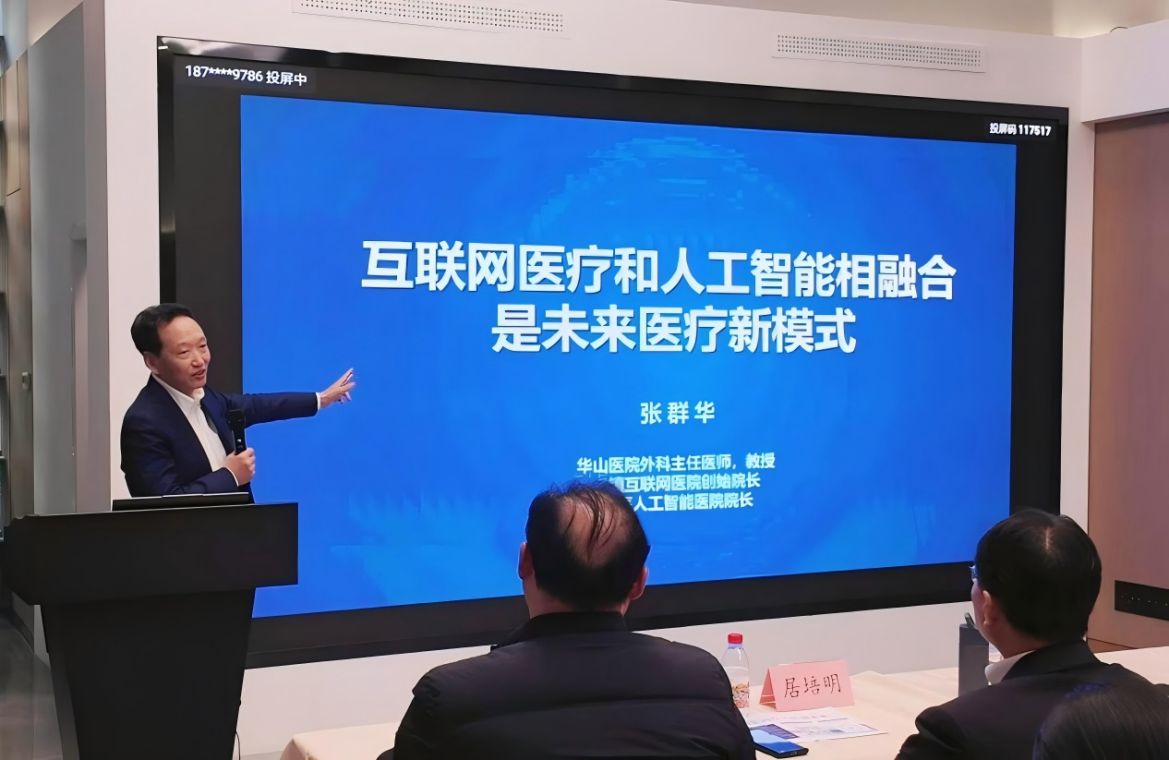
微医张群华:政策与技术双驱动 微医深耕AI+医疗重构全病程管理
Huan Qiu Wang· 2025-12-08 06:14
Core Insights - The forum focused on the deep integration of artificial intelligence (AI) and healthcare, highlighting the challenges faced by traditional medical services in China and the potential of AI to enhance service quality and efficiency [1][4] Group 1: AI and Healthcare Integration - The integration of AI into healthcare is seen as a crucial direction for the industry, addressing issues such as uneven distribution of medical resources and the increasing burden of chronic diseases [1][4] - AI is not merely a technological upgrade but a core driver for enhancing the value of internet healthcare, enabling precise diagnosis, matching, and treatment [2][5] - The combination of AI and internet healthcare allows for comprehensive health management throughout a patient's life cycle, providing intelligent solutions from prevention to rehabilitation [2][4] Group 2: Strategic Collaborations and Developments - A strategic partnership was formed between WeDoctor, Hainan Boao Lecheng International Medical Tourism Pilot Zone, and Qionghai Municipal Government to create a medical resource platform leveraging remote healthcare and AI technology [2][4] - WeDoctor's journey reflects the broader development of China's "Internet + Healthcare" sector, with the establishment of the first internet hospital in 2015 marking a significant milestone [4][5] Group 3: Future Directions and Innovations - WeDoctor plans to launch an AI-driven tumor management platform and a skin disease management platform, further integrating AI with clinical specialties [6] - The Chinese government has issued guidelines to promote AI in healthcare, aiming for widespread implementation of intelligent applications by 2030 [6][7] - The future of AI in healthcare will focus on patient health outcomes, creating an integrated service ecosystem that enhances operational capabilities [7]
绝地反击:我做春雨医生CEO的工作方法
Sou Hu Cai Jing· 2025-12-08 01:53
Core Insights - The article discusses the transformation of Chunyu Doctor under new management, highlighting its evolution from a struggling startup to a more stable entity within a public company framework. The focus is on merging the essence of healthcare with the efficiency of the internet [1][16]. Group 1: Challenges Faced - Upon taking over, Chunyu Doctor was revealed to be in a precarious financial situation, with cash flow issues leading to significant monthly losses [3]. - The company had spread itself too thin across various business lines, resulting in a lack of focus and a failure to generate sustainable revenue [3][4]. - There was a misalignment in understanding internet healthcare, with the team overly focused on online traffic rather than addressing core healthcare needs [4][5]. Group 2: Strategic Solutions - A comprehensive strategy was implemented, focusing on streamlining operations, enhancing core business areas, and controlling costs [8]. - The management shifted from a "traffic-driven" approach to a "healthcare-driven" mindset, emphasizing the importance of integrating online and offline services [8][12]. - The company adopted a strict cost control policy, including layoffs and reducing office space, to maintain cash flow during challenging times [12][10]. Group 3: Achievements - Chunyu Doctor successfully reversed its financial losses, achieving a break-even point in core business cash flow and establishing a sustainable revenue model [14]. - The brand image transformed from a "light consultation" service to a "professional and trustworthy medical service platform," enhancing customer trust and loyalty [15]. - The strategic investment from China Resources Group provided significant financial backing and resources, facilitating the integration of online and offline healthcare services [16].

首儿所开放“线上跨院复诊”,可开“明星小药”
Xin Jing Bao· 2025-12-01 07:04
记者从首儿所获悉,为优化患者服务体验,该院互联网医院近期开通了"外院复诊""自助预开单""线上 线下(300959)号源双向预约"三项全新功能。 首儿所门诊部主任闫雪介绍,为降低医疗风险,一般情况下,各互联网医院的群体圈定在"本院复诊患 者"范围内。不过,该院外地患儿很多,来一趟北京殊为不易,这几年,很多家长提出希望外院的就诊 史也能被首儿所接受,这样可以在家先进行线上复诊,或直接开到首儿所的医院制剂。 针对需要复诊开具药品的需求,互联网医院也可完成。闫雪告知,除了镇静药等风险药品外,该院大部 分常见病慢性病的药品都可以线上购买,包括肤乐霜、复合钙等"明星小药",由医生根据患儿病情开具 处方,之后快递送药到家。对于北京本地患儿,线上就诊和购药已经可以医保支付。 近日,首儿所"线上跨院复诊"功能得以实现。患儿在其他正规医疗机构有过半年内明确的处方、检查检 验报告等材料的,可凭材料申请首儿所相应科室的线上复诊,经审核材料有效、症状匹配,即可挂线上 号。这意味着,即便患儿身处偏远省份,也可以通过网络在家中得到北京专家的诊疗服务。 该功能上线4天,挂号量达到393人次。有北京婴儿由于甲状腺功能异常在协和医院就诊,被推 ...
就医帮 | 首都儿童医学中心互联网医院功能上新,智慧就医再升级
Sou Hu Cai Jing· 2025-11-26 20:35
出品 | 搜狐健康 作者 | 首都儿童医学中心门诊部(互联网医疗办公室),首都儿童医学中心宣传中心郝洁 编辑 | 周亦川 操作流程简便易懂:家长关注"首都儿童医学中心"微信公众号,通过"就诊服务-互联网医院-自助预开单"模块,根据患儿复查需求勾选项目并提交申请, 经医生审核通过后,在线缴费即可自动生成检查预约。同时支持线上实时查询预约时间、灵活修改预约信息,全程无需线下奔波。 线上线下双衔接,就医流程更顺畅 为持续优化患者服务体验,打通线上线下一体化就医闭环,首都医科大学附属首都儿童医学中心互联网医院开通了"外院复诊""自助预开单""线上线下号 源双向预约"三项全新功能。此次升级精准聚焦复诊患者的核心需求,依托线上服务场景的深度拓展,进一步简化就医流程、减少往返奔波,让整个诊疗 过程更顺畅高效,为患者带来更便捷、更省心的就医新体验。 外院确诊患者不用跑,线上复诊咨询更省心 针对外院已明确诊断、希望在首都儿童医学中心进行线上复诊或开具院内制剂的患者诉求,互联网医院新增外院确诊患者线上复诊通道。这一举措打破了 就医地域与场景限制,让更多患者无需线下跑腿即可享受优质医疗服务,是医院以患者为中心优化服务的具体实践。 ...

海思科跌2.02%,成交额1.07亿元,主力资金净流入606.14万元
Xin Lang Cai Jing· 2025-11-25 02:40
Core Insights - The stock price of Haisco fell by 2.02% on November 25, trading at 57.81 CNY per share with a market capitalization of 64.742 billion CNY [1] - Haisco's stock has increased by 75.29% year-to-date, with a 5-day increase of 5.70% and a 20-day increase of 11.77% [1] - The company reported a revenue of 3.3 billion CNY for the first nine months of 2025, a year-on-year increase of 19.95%, while net profit decreased by 22.66% to 295 million CNY [2] Financial Performance - Haisco's main business revenue composition includes: anesthetic products (39.81%), cooperative product-related income (23.59%), and other therapeutic areas [1] - Cumulative cash dividends since A-share listing amount to 3.673 billion CNY, with 687 million CNY distributed over the past three years [3] Shareholder Information - As of September 30, 2025, Haisco had 12,900 shareholders, an increase of 12.87% from the previous period [2] - The top ten circulating shareholders include various funds, with notable increases in holdings from several institutional investors [3]

京东健康(06618.HK)2025年三季报点评:营收增长逐季攀升 医保与AI双轮驱动增长
Ge Long Hui· 2025-11-19 20:09
Core Insights - JD Health achieved a revenue of 17.12 billion yuan in Q3 2025, a year-on-year increase of 28.7% from 13.3 billion yuan, with growth accelerating from 23.7% in Q2 2025 [1][2] - The company's operating profit reached 1.243 billion yuan, a significant year-on-year increase of 125.3%, while Non-IFRS operating profit was 1.378 billion yuan, up 59.9% [1][2] - Non-IFRS net profit was 1.902 billion yuan, reflecting a year-on-year growth of 42.4%, with net profit margin improving from 10.1% in the first half of the year to 11.1% [2] Operational Data - JD Health expanded its online medical insurance payment services to nearly 200 million people, a substantial increase from over 100 million a year ago [2] - The number of platform merchants exceeded 150,000, growing by over 50,000 since the end of 2024 [2] - The "AI Jingyi" intelligent service user base surpassed 50 million, and offline service expansion included the opening of new medical beauty and health check-up centers [2] Strategic Collaborations - In Q3 2025, JD Health signed strategic cooperation agreements with major pharmaceutical companies such as Eli Lilly, Innovent Biologics, and Bayer China, reinforcing its position in the high-end drug supply chain [3] - The company is developing a leading smart outpatient service platform in collaboration with Huazhong University of Science and Technology, aiming to enhance patient experience through AI-assisted services [3] Investment Outlook - JD Health's leading position in the pharmaceutical e-commerce sector is expected to be bolstered by ongoing online medical insurance payment policies and the scaling of AI services [4] - Revenue forecasts for 2025-2027 are projected at 71 billion, 82.9 billion, and 95.5 billion yuan, with adjusted net profits of 6.3 billion, 7.4 billion, and 8.5 billion yuan respectively [4]

万达信息跌2.07%,成交额6220.61万元,主力资金净流出501.49万元
Xin Lang Cai Jing· 2025-11-19 02:22
Company Overview - Wanda Information Co., Ltd. is located at 1518 Lianhang Road, Shanghai, and was established on November 9, 1995. The company was listed on January 25, 2011. Its main business involves software development and services in the urban informationization sector, focusing on public affairs [1]. Financial Performance - For the period from January to September 2025, Wanda Information achieved a revenue of 1.329 billion yuan, representing a year-on-year growth of 0.57%. However, the net profit attributable to shareholders was -408 million yuan, showing a year-on-year increase of 27.07% in losses [2]. - Since its A-share listing, Wanda Information has distributed a total of 292 million yuan in dividends, with no dividends paid in the last three years [3]. Stock Performance - As of November 19, Wanda Information's stock price decreased by 2.07%, trading at 7.09 yuan per share, with a total market capitalization of 10.214 billion yuan. The stock has declined by 10.71% year-to-date, but has seen a 2.90% increase over the last five trading days and a 4.73% increase over the last 20 days [1]. - The company experienced a net outflow of 5.0149 million yuan in principal funds, with significant selling pressure observed in large orders [1]. Shareholder Information - As of November 10, the number of shareholders for Wanda Information was 57,800, a decrease of 1.07% from the previous period. The average number of circulating shares per person increased by 1.08% to 24,897 shares [2]. - As of September 30, 2025, Hong Kong Central Clearing Limited was the tenth largest circulating shareholder, holding 9.7795 million shares, a decrease of 2.6443 million shares from the previous period [3]. Business Segments - The revenue composition of Wanda Information includes software development (47.86%), operation and maintenance services (32.37%), integration services (19.74%), and other services (0.03%) [1]. - The company operates within the computer IT services sector, with involvement in various concept sectors such as data trading centers, internet healthcare, online education, DRG concepts, and the elderly care industry [1].

国证国际港股晨报-20251117
Guosen International· 2025-11-17 09:47
Group 1: Economic Overview - The Hong Kong stock market showed weakness in November, with the Hang Seng Index falling by 1.85%, the Hang Seng China Enterprises Index down by 2.09%, and the Hang Seng Tech Index decreasing by 2.82% [2] - In October, China's industrial production maintained growth, with a year-on-year increase of 4.9% and a month-on-month increase of 0.17%. The equipment manufacturing and high-tech manufacturing sectors performed particularly well, growing by 8.0% and 7.2% respectively [3][4] - The retail sales of consumer goods increased by 2.9% year-on-year, while fixed asset investment decreased by 1.7%, primarily due to a decline in real estate investment [4] Group 2: Company Analysis - Shoujia Technology - Shoujia Technology, established in 1991 and listed in Hong Kong in 1992, is a leading producer of steel wire for tires in China, with plans to expand its production capacity to over 300,000 tons [6] - The company is entering the new market of robotic tendons, leveraging its existing production technology for steel wire. It has initiated a joint research and development project with Stardust Intelligent [6] - Financial forecasts indicate that Shoujia Technology's revenue will reach HKD 2.42 billion, HKD 2.58 billion, and HKD 2.79 billion from 2025 to 2027, with net profit expected to grow significantly [7] Group 3: Investment Recommendation - Shoujia Technology is recognized as a leading player in the steel wire industry with strong shareholder backing and unique capabilities in transitioning to robotic tendon production [7] - A comparison with A-share company Daye Co., which has a projected PE ratio of 45.3, shows Shoujia Technology's PE at 32.1, indicating potential undervaluation [7] - The estimated market value of Shoujia Technology is HKD 2.61 billion, suggesting a target share price of HKD 4.9, with a recommended buy rating [7]
微医国际云药房首发:打造全球创新药械先导平台
Huan Qiu Wang· 2025-11-17 04:54
Core Insights - The 13th Health Industry Hospital Management Conference was held in Hainan, where the International Cloud Pharmacy by WeDoctor was officially launched, marking a significant step towards connecting global innovative medical products with Chinese patients [1][3] - The strategic cooperation agreement was signed between the Hainan Boao Lecheng International Medical Tourism Pilot Zone Administration, Qionghai Municipal Government, and WeDoctor Group, aiming to accelerate the formation of an innovative ecosystem in the medical special zone [1][4] WeDoctor International Cloud Pharmacy - The WeDoctor International Cloud Pharmacy aims to serve as a core hub linking global cutting-edge medical technology with the vast Chinese market, facilitating efficient access to international innovative drugs for Chinese patients [1][3] - The platform has already processed over 10 million hospital prescriptions annually and plans to upgrade its technology and services to create a leading platform for international innovative medical products [3] Benefits to Stakeholders - For hospitals, the platform will enable system-level integration with medical institutions, significantly expanding their medication catalog and service capabilities [3] - For doctors, each will have access to a "personal international pharmacy," allowing them to develop treatment plans based on global medical advancements [3] - For pharmaceutical companies, the platform will streamline the entire process from market education to drug delivery and efficacy tracking, enhancing the efficiency of new drug launches [3] Strategic Cooperation Agreement - The agreement aims to promote the construction of the International Cloud Pharmacy and the investment in the "International Health City" and "Health Management College," introducing advanced consumer healthcare and health products [4] - The initiative seeks to shift from "passive healthcare" to "active health management," enriching the business landscape of the Lecheng area and creating a new industrial ecosystem that integrates health consumption, wellness services, and talent cultivation [4]