全栈AI

Search documents
国内首个全栈AI总指挥中心点亮 中足联携手联想助推足球赛事迈入AI新阶段
Zheng Quan Ri Bao Wang· 2025-11-18 12:47
Core Insights - Lenovo Group Limited and the Chinese Football Association League jointly launched the first AI Command Center for football events in China, marking a significant step towards the integration of AI and sports in the professional football league [1][2] Group 1: AI Command Center Launch - The AI Command Center features a large-screen visualization and intelligent interaction model, covering three core functions: event status, event supervision, and command scheduling [1][3] - The launch is a result of the collaboration announced in February and represents a new starting point for the digital transformation of the Chinese professional football league [1][3] Group 2: Technological Capabilities - The Command Center demonstrates strong operational management capabilities, including real-time display of league standings, match schedules, and weather conditions for various regions [3] - It also enables simultaneous monitoring of multiple matches, security surveillance, and live broadcast feeds, ensuring smooth event operations [3] Group 3: AI Integration and Future Plans - Lenovo's AI technology has been successfully applied across various industries, including manufacturing, education, and finance, showcasing its versatility and potential for further integration [3][4] - The dedicated AI entity, "Zuzhi Duomao AI," is built on Lenovo's advanced technology platform and is designed to support the specific needs of the Chinese Football Association [4] Group 4: Commitment to Innovation - Lenovo aims to leverage its comprehensive advantages in AI technology, equipment support, and operational services to enhance the smart sports operation system and lead industry transformation [5] - The collaboration with the Chinese Football Association is seen as a practical example of Lenovo driving new productive forces through AI [5]

联想携手中足联点亮首个全栈AI总指挥中心
Zhong Guo Jing Ji Wang· 2025-11-18 07:15
Core Insights - Lenovo and the Chinese Football Association have launched the first AI Command Center for football events in China, marking a significant step towards the integration of AI in sports operations [1] - This initiative follows Lenovo's establishment of a smart sports business unit and represents its first foray into football [1] Group 1: AI Command Center Features - The AI Command Center employs a "large screen visualization + intelligent interaction" model, creating a smart service system with three core functions: event status, event supervision, and command dispatch [1] - The "Event Status" module displays real-time data for 16 Chinese Super League teams, including standings, schedules, and weather conditions [1] - The "Event Supervision" module allows for simultaneous monitoring of multiple matches, security surveillance, and live broadcast feeds [1] - The "Command Dispatch" module supports both daily coordination and emergency command capabilities, ensuring smooth event operations [1] Group 2: Impact on Chinese Football - The establishment of the AI Command Center is expected to inject strong development momentum into the intelligent, professional, and international aspects of Chinese football events [1] - This collaboration is part of Lenovo's broader strategy to implement its full-stack AI solutions across various industries, including manufacturing, education, and finance [1]
广汽集团与阿里云签署全栈AI战略合作协议
Zheng Quan Shi Bao Wang· 2025-11-14 11:11
Core Viewpoint - GAC Group has signed a comprehensive AI strategic cooperation agreement with Alibaba Cloud to develop an AI-driven full-chain system covering research and development, production, marketing, management, and user services [1] Group 1 - The agreement leverages GAC's deep expertise in vehicle research and development and intelligent manufacturing [1] - Alibaba Cloud will provide its leading cloud infrastructure and Tongyi series large models to support the initiative [1]

联想集团与敦煌市共建城市超级智能体,开创丝路古城智能化发展新篇章
3 6 Ke· 2025-11-10 11:22
Core Insights - Lenovo Group has signed a strategic cooperation agreement with Dunhuang City to leverage its "full-stack AI" strategy and urban super-intelligent body technology to drive intelligent transformation in various sectors including culture and tourism, agriculture, low-altitude economy, and urban governance [1][6][9] Group 1: Strategic Cooperation - The partnership aims to create a new benchmark for smart city construction along the Silk Road, facilitating Dunhuang's transition into the smart city 4.0 era [1][6] - Dunhuang, a UNESCO World Heritage site, is recognized for its rich cultural heritage and is a key city along the Belt and Road Initiative, actively promoting digital economy and smart tourism [3][6] Group 2: Technological Framework - Lenovo's urban super-intelligent body utilizes an advanced "1+N intelligent body" architecture, integrating multiple AI technologies such as deep learning and natural language processing to form a city-level intelligent system [7][8] - The "1" represents a unified super-intelligent core, while "N" denotes multiple specialized intelligent bodies trained for specific domains, ensuring knowledge sharing and collaborative capabilities [7][8] Group 3: Areas of Focus - The collaboration will enhance four core areas: cultural heritage digital protection, smart agriculture, low-altitude economic development, and modern urban governance [8][9] - AI technology will be employed to create immersive tourism experiences, optimize scenic area management, and improve agricultural production precision [8][9] Group 4: Future Directions - Lenovo plans to continue advancing large model technology across various sectors, aiming to build an open technological ecosystem that supports the digital transformation of traditional urban management [11] - The initiative is expected to provide a replicable and scalable model for intelligent development in western cultural cities [11]

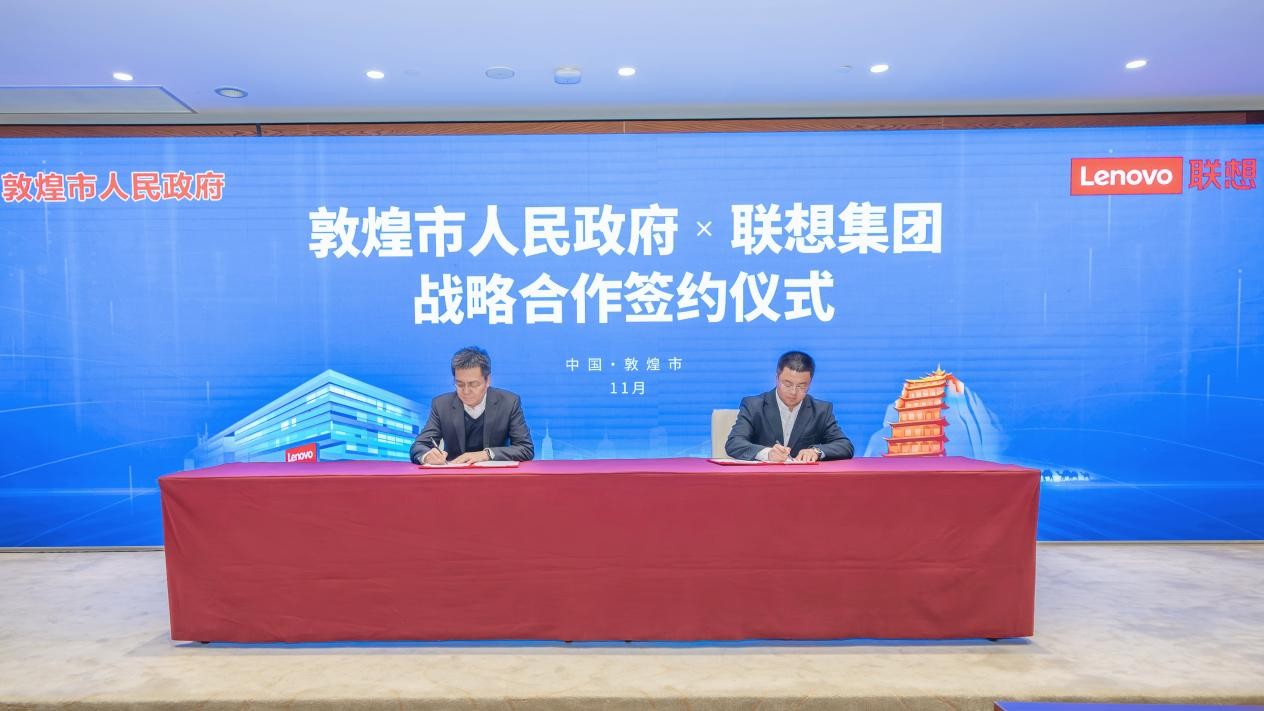
联想集团与敦煌市签署城市超级智能体战略合作协议
Xin Hua Cai Jing· 2025-11-07 14:06
Core Insights - Lenovo Group has signed a strategic cooperation agreement with Dunhuang City, Gansu Province, to leverage its "full-stack AI" strategy and urban super-intelligent body technology to drive intelligent transformation in various sectors including culture and tourism, agriculture, low-altitude economy, and urban governance [2][3] Group 1: Strategic Cooperation - The partnership aims to establish a new benchmark for smart city construction along the Silk Road, assisting Dunhuang in entering the era of Smart City 4.0 [2] - The collaboration will utilize Lenovo's advanced technologies in AI, big data, IoT, and cloud computing, combined with Dunhuang's unique cultural tourism resources and geographical advantages [2][3] Group 2: Technology Framework - Lenovo's urban super-intelligent body is based on advanced large model technology and a multi-agent collaborative architecture, forming a leading "1+N intelligent body" technology system [3] - The "1" represents a unified super-intelligent core that integrates four key engines: multi-modal perception, cognitive reasoning, decision planning, and intelligent orchestration, capable of processing vast amounts of heterogeneous data in real-time [3] - The "N" signifies multiple specialized intelligent bodies trained on domain-specific large models, equipped with capabilities for understanding domain knowledge, complex scenario reasoning, and parallel processing of multiple tasks [3] Group 3: Implementation and Recognition - Lenovo's urban super-intelligent body has been implemented in various cities across China, including Wuyishan, Yichang, Hohhot, Shanghai Hongkou, Shaanxi Xixian New Area, and Shenzhen Guangming District [4] - The initiative has received recognition, winning the "2025 Digital Government Innovation Solution" award from the China Internet Association for its innovative technology architecture and extensive practical applications [4]
沙利文AI云报告:阿里百度合计份额超五成,双雄格局初现
Cai Fu Zai Xian· 2025-10-27 05:11
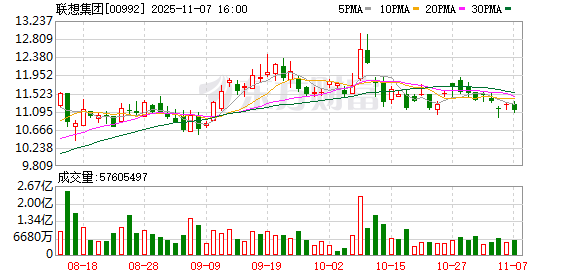
Core Insights - The report by Frost & Sullivan indicates that the Chinese full-stack AI cloud service market is projected to reach 25.9 billion yuan in the first half of 2025, with Alibaba Cloud holding a 30.2% market share and Baidu Smart Cloud at 22.5%, together surpassing 50% market share, establishing a duopoly in the AI cloud sector [1][3][4] Market Dynamics - The competition in AI cloud services has entered an "ecosystem war" phase, requiring cloud vendors to integrate services at different levels and build a triad model of IaaS, PaaS, and MaaS to enhance competitive capabilities [3][4] - High investment in AI strategies by Baidu and Alibaba has led to significant returns, as evidenced by their consistent top rankings in various third-party research reports [3][4] Company Strategies - Baidu and Alibaba have been early adopters of AI application transformation, with Baidu aiming to revamp all its products using AI and Alibaba pushing for comprehensive "AIification" of its existing business [4][5] - Both companies have adopted a full-stack approach to AI cloud services, creating a self-research closed loop from chips and computing power to models and applications [4][5] Financial Performance - In the first half of 2025, Baidu's AI new business revenue reached 19.4 billion yuan, marking a 36% year-on-year growth, the highest among cloud vendors, while Alibaba Cloud's revenue grew by 22% [5] External Collaborations - Baidu and Alibaba have been increasingly visible in external collaborations, including joint advertising efforts and partnerships with Apple for AI technology support, which may lead to significant market opportunities by the end of 2025 [6][8]


阿里竞逐全球机器人巨头
Hua Er Jie Jian Wen· 2025-10-15 02:03
Core Insights - Alibaba is officially entering the field of embodied intelligence, aiming to bridge AI with the physical world, as indicated by the establishment of a dedicated team led by Lin Junyang [3][5] - The company has invested significantly in robotics, including a $140 million funding round for a domestic robotics startup, highlighting its ambition to create AI that can perceive and interact with the physical environment [3][5] - The current landscape shows a gap between advanced AI models and their physical applications, presenting a substantial opportunity for growth in embodied intelligence [6][12] Investment and Strategic Moves - Alibaba has been actively investing in various robotics companies since 2024, including Zhijidongli and Yushutec, to secure a foothold in the embodied intelligence sector [5][6] - The company’s strategy is driven by the belief that AI's ultimate value lies in its ability to interact with the physical world, which is essential for unlocking its full potential [6][9] - The competition in the embodied intelligence space is intensifying, with major players like SoftBank and NVIDIA also making significant moves, indicating a race to develop AI that can operate in real-world environments [4][7] Market Potential and Trends - The global market for humanoid robots is projected to reach $5 trillion by 2050, with China’s potential market estimated at 22.8 trillion yuan, suggesting a massive growth opportunity in the sector [13] - The demand for embodied intelligence is expected to surge, as evidenced by significant investments in the field, with multiple companies announcing plans to produce humanoid robots this year [13][14] - The transition from virtual AI to physical applications is seen as a critical step for companies to remain competitive and relevant in the evolving tech landscape [14][15] Technological Development and Challenges - The integration of large AI models with physical robotics is a key challenge, as traditional models often struggle to adapt to real-world scenarios [16][17] - Alibaba's Qwen model, with its advanced capabilities in task decomposition and spatial awareness, is positioned to support the development of effective embodied intelligence solutions [17][19] - The company aims to create a comprehensive AI ecosystem that combines cloud computing, advanced models, and robotics, which could provide a competitive edge in the market [21][22] Future Outlook - Alibaba's strategy reflects a broader trend of companies seeking to redefine their roles in the AI landscape by focusing on embodied intelligence as a means to enhance their core business operations [22][23] - The company's investments and technological advancements are expected to reshape its market valuation and growth narrative, particularly as it seeks to leverage AI as a foundational infrastructure across various industries [23][24] - As the industry evolves, Alibaba's ability to create a seamless integration of AI and robotics will be crucial for its long-term success and relevance in the market [22][23]

AI彻底重塑全球云计算:Gemini企业版发布,谷歌云年化超500亿美元
3 6 Ke· 2025-10-11 00:46
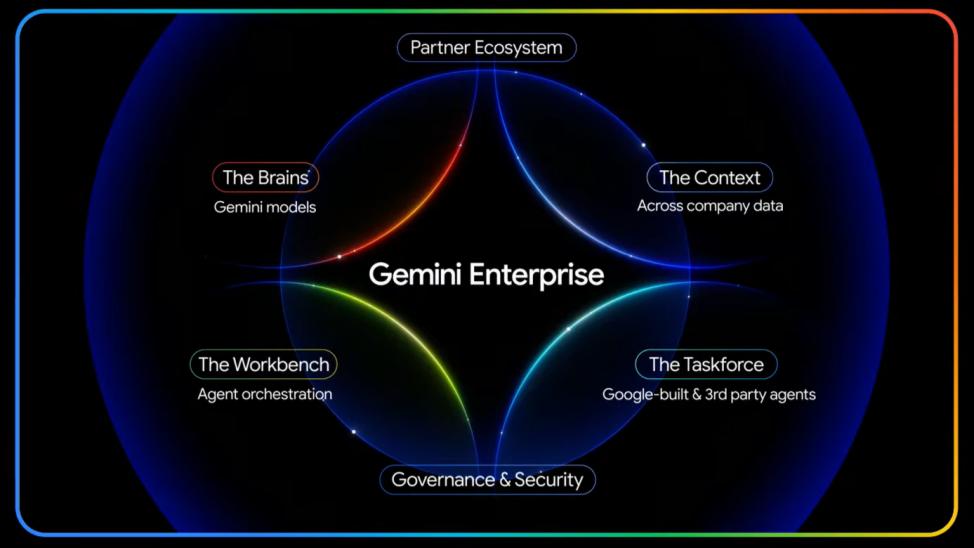
Core Insights - Google Cloud has launched Gemini Enterprise, an enterprise-level AI solution aimed at creating a comprehensive platform that integrates AI intelligence, enterprise data, business processes, and employees [1][2] - The annual revenue of Google Cloud has surpassed $50 billion, with over 65% of cloud customers utilizing its AI products, indicating a significant shift in the cloud market driven by AI [1][6] Gemini Enterprise Platform Ambitions - Gemini Enterprise is defined as an end-to-end platform unifying six core components rather than a standalone application [2] - The platform includes advanced Gemini models as its core, a no-code framework for building AI agents, pre-built specialized agents, secure connections to various data sources, centralized governance and security, and a marketplace for partner-built agents [2][3][4] Full-Stack AI Strategy - Google's full-stack AI strategy consists of four tightly integrated layers: infrastructure, research, model, and product/platform, which collectively form a competitive moat [4][5] - The infrastructure layer includes advanced TPU technology, while the research layer is supported by world-class teams driving innovation [4][5] Building an "Agent Economy" - Google emphasizes the importance of an open ecosystem, collaborating with partners to enhance product integration and accelerate the deployment of Gemini Enterprise [5] - The company is establishing an "agent economy" with standards for agent communication and secure transactions, enabling agents developed by different companies to collaborate and transact [5][41][42] Customer Case Studies - Early adopters of Gemini Enterprise, such as HCA Healthcare and Best Buy, have reported significant efficiency gains, with HCA saving millions of hours annually and Best Buy increasing customer service efficiency by 200% [6][32] - The platform's capabilities are already demonstrating value in real-world applications, showcasing its potential to transform workflows and enhance productivity [6][32] Global Enterprise Impact - Companies like Banco BV and Macquarie Bank have leveraged Gemini Enterprise for improved operational efficiency and customer service, highlighting the platform's versatility across industries [32][36] - The integration of Gemini models into various products is driving significant business outcomes, such as increased order volumes and enhanced customer experiences [43][44] Future Innovations and Collaborations - Google is collaborating with the LA28 Olympic Games to enhance event experiences through AI, showcasing the platform's scalability and potential for global impact [46][47] - The company is expanding its partner ecosystem to support AI stack development, ensuring a comprehensive approach to AI integration across various business functions [49]

构建全栈AI护城河!科技巨头为未来AI十亿倍增长“引弓”?|AI观察系列策划
Mei Ri Jing Ji Xin Wen· 2025-10-09 09:53
Core Insights - Nvidia's CEO Jensen Huang announced a new collaboration with OpenAI to help establish a fully self-operating large-scale company, focusing on building a complete technology stack [1][5] - The global AI arms race is intensifying, with major tech companies investing heavily in AI infrastructure and full-stack AI strategies becoming a core competitive barrier [1][4] Group 1: Nvidia and AI Market Dynamics - Nvidia reported a revenue of $46.7 billion for Q2 of fiscal year 2026, marking a 6% increase from the previous quarter and a 56% increase year-over-year [2] - The company's AI chip series, Blackwell, saw a 17% quarter-over-quarter revenue growth, indicating its sustained leadership in the AI computing market [2] - Huang expressed optimism about AI inference growth, predicting a potential increase of up to a billion times, highlighting a shift from traditional AI scaling laws to a new "thinking" inference law [2][3] Group 2: Alibaba's AI Strategy - Alibaba's CEO Wu Yongming announced a strategic shift for Alibaba Cloud to position itself as a full-stack AI service provider, with a significant investment plan of 380 billion yuan for AI infrastructure [7][10] - Alibaba Cloud's revenue growth accelerated to 26% in Q1 of fiscal year 2026, with AI-related products achieving triple-digit year-over-year growth for eight consecutive quarters [7] - The company is focusing on multi-modal models and has released over 300 models, with global downloads exceeding 600 million [12] Group 3: Industry Trends and Future Outlook - Major financial institutions like Goldman Sachs and Morgan Stanley have raised target prices for leading AI companies, indicating a bullish sentiment in the AI sector [2] - The global capital expenditure in AI is projected to grow at an annualized rate of 11% in the first half of 2025, driven by real enterprise demand [4] - The transition from AGI (Artificial General Intelligence) to ASI (Artificial Superintelligence) is being discussed, with significant challenges remaining in achieving self-learning and self-improvement capabilities [8][12]

当AI有了大脑和身体,世界将如何改变?| 品牌新事
吴晓波频道· 2025-09-28 00:31
Core Viewpoint - The article discusses the evolution and future direction of Alibaba's cloud and AI strategies, emphasizing the significance of the annual Yunqi Conference as a platform for showcasing advanced technologies and innovations in AI and cloud computing [4][10]. Group 1: Conference Overview - The Yunqi Conference has transformed from a local internet technology exhibition to an international technology event, attracting a diverse audience including foreign participants [9][8]. - The theme for this year's conference is "Cloud Intelligence Integration, Silicon-Carbon Symbiosis," highlighting the focus on AI and cloud technologies [4]. Group 2: ASI Declaration and Strategic Path - Alibaba's CEO, Wu Yongming, introduced the "ASI Declaration," outlining a three-step path towards achieving Super Artificial Intelligence (ASI) [11]. - The first phase involves AI learning from vast human knowledge, the second phase focuses on AI's autonomous actions to assist humans, and the third phase aims for AI to surpass human capabilities through self-learning and real-world data integration [13][14][15]. Group 3: Investment and Infrastructure - Alibaba plans to invest 380 billion yuan over the next three years in cloud and AI infrastructure, exceeding the total investment of the past decade [18]. - The company aims to enhance its AI capabilities significantly, with projections indicating a tenfold increase in energy consumption for global data centers by 2032 [18]. Group 4: AI Supercomputer and Technological Advancements - Alibaba is developing a comprehensive AI supercomputer that integrates AI chips, cloud computing platforms, and foundational models, representing a full-stack approach to AI [20][30]. - The newly released models, such as Qwen3-Max and Qwen3-Next, demonstrate significant advancements in performance and efficiency, with Qwen3-Max surpassing GPT-5 and Claude Opus 4 in various benchmarks [23][24]. Group 5: Agent Development and Ecosystem - The introduction of the ModelStudio-ADK framework allows for the rapid development of intelligent agents, enabling them to perform complex tasks autonomously [27]. - Over 200,000 developers have created more than 800,000 agents using Alibaba's cloud services, significantly impacting various industries, including automotive and finance [28]. Group 6: Competitive Landscape - Alibaba has established itself as a leading player in the global AI cloud market, competing with major international firms and aiming to secure a position among the few remaining global super cloud computing platforms [36][35]. - The demand for AI computing power has surged, with Alibaba's AI computing capacity increasing over fivefold in the past year, indicating a robust growth trajectory in the AI infrastructure sector [35].