品牌授权

Search documents
颖通控股冲刺“中国香水第一股”,高度依赖品牌授权
Nan Fang Du Shi Bao· 2025-06-12 11:19
Core Viewpoint - Ying Tong Holdings Limited is seeking to list on the Hong Kong Stock Exchange, aiming to become "China's first fragrance stock" with a strong portfolio of international brand licenses [1][3]. Group 1: Company Overview - Ying Tong Holdings specializes in brand management for fragrances and has licenses for high-end brands such as Hermès, Van Cleef & Arpels, and Chopard [1][3]. - The company was founded in 1987 and has evolved from representing international fragrance brands to managing a comprehensive portfolio that includes fragrances, cosmetics, skincare, and eyewear [3]. - As of March 31, 2025, Ying Tong manages a total of 72 external brands and has launched its own brand, Santa Monica, in 1999 [3][6]. Group 2: Financial Performance - The company's annual revenue for the years ending March 31, 2023, 2024, and 2025 were approximately RMB 1.699 billion, RMB 1.864 billion, and RMB 2.083 billion, respectively [6][7]. - Net profits for the same periods were RMB 173 million, RMB 206 million, and RMB 227 million [6]. - The fragrance business is the primary revenue driver, contributing 88.5%, 81.7%, and 80.9% of total revenue for the respective years [6][7]. Group 3: Business Structure and Strategy - The company’s revenue channels include retail, distribution, and direct sales, with retail accounting for 48.6% of revenue, distribution 30.4%, and direct sales 20.7% as of March 31, 2025 [7]. - The IPO proceeds will be used to develop its own brands, expand direct sales channels, accelerate digital transformation, and enhance brand awareness [5]. Group 4: Market Context and Challenges - The Chinese fragrance market is experiencing rapid growth, with retail sales reaching RMB 26.1 billion in 2023 and projected to grow to RMB 47.7 billion by 2028, representing a compound annual growth rate of 12.8% [9]. - However, the company faces risks due to its high dependency on external brand licenses, with 77.8% of procurement concentrated among five major suppliers [8][9]. - A significant revenue drop occurred when a major luxury brand's licensing agreement expired in December 2022, resulting in a revenue decrease of RMB 425 million, or 25.5% [9].

全球最大的“卖商标”公司ABG,正在加码中国
Guan Cha Zhe Wang· 2025-06-11 09:40
Core Insights - Authentic Brands Group (ABG) has established its Asia-Pacific headquarters in Shanghai, aiming to capture significant growth opportunities in the Chinese market [1][3] - ABG is a leading global brand development and licensing platform, managing over 42 well-known brands, including Reebok, Champion, and Nautica, with a global annual revenue exceeding $32 billion [2][3] Group 1: Company Overview - ABG operates as a platform integrating mergers, brand strategy, creativity, and digital innovation, making it the largest sports and entertainment licensing company globally [1] - The company has a vast sales network in over 150 countries, with more than 13,000 stores and 400,000 points of sale [1] Group 2: Market Strategy - The establishment of the Asia-Pacific headquarters in Shanghai is seen as a strategic move to tap into the Chinese market, with expectations of significant growth [3] - ABG has formed strategic partnerships with Chinese companies, such as Belle Fashion and Baozun E-commerce, to enhance brand presence in Greater China [4] Group 3: Brand Performance - ABG's revenue in the Asia-Pacific region is reported at $4 billion, while the U.S. headquarters generates $20 billion [3] - The performance of brands like Reebok and Nautica in the Greater China market has been underwhelming, prompting potential adjustments in business strategies by local partners [6][7] Group 4: Future Collaborations - ABG plans to strengthen collaborations with local Chinese brands, with recent partnerships including a collaboration between Roxy and Anta [7] - The company aims to create products in China that could gain popularity in other markets, such as the U.S. and Europe [9]

21深度|南极电商欲撕“吊牌之王”标签
2 1 Shi Ji Jing Ji Bao Dao· 2025-05-26 10:38
Core Viewpoint - The company is transitioning from a "brand licensing" model, known for its "label-selling" business, back to a self-operated model, aiming to revitalize the "Nanji Ren" brand and improve its market position [1][18]. Business Strategy - Starting in 2023, the company has shifted some core categories of the "Nanji Ren" brand from brand licensing to self-operated sales, launching new product lines including thermal clothing and planning to enter the down jacket market [1][18]. - The company aims to position "Nanji Ren" as a brand that combines the pricing of Decathlon, the variety of Uniqlo, and the quality of Lululemon [2]. Financial Performance - In 2024, the company expects revenue growth of 24.75% to reach 3.358 billion yuan, but it anticipates a net loss of 237 million yuan, marking a shift from profit to loss [1]. - The company's revenue has been declining, with total revenue falling from 3.888 billion yuan in 2021 to 2.692 billion yuan in 2023, and net profit dropping from 477 million yuan to a loss of 298 million yuan in the same period [16]. Historical Context - The "Nanji Ren" brand began as a thermal underwear seller but transitioned to a "label-selling" business model around 2008, focusing on brand licensing and outsourcing production [4][10]. - At its peak in 2019, the brand achieved a GMV of 27.138 billion yuan across e-commerce platforms, with significant market share in various categories [5]. Market Challenges - The company faces challenges related to quality control and brand positioning, as the "label-selling" model has led to inconsistent product quality and legal disputes [12][14]. - The decline in e-commerce platform traffic and the limitations of a single brand strategy have highlighted the need for diversification and improved quality management [16]. Marketing and Sales - The company has increased its marketing budget significantly, with sales expenses projected to reach 588 million yuan in 2024, a 430.28% increase from the previous year [19]. - The company plans to enhance its marketing efficiency and focus on product planning and overall marketing strategies moving forward [20]. Future Outlook - The company is optimistic about its self-operated business model, believing it will yield results in the next one to two years despite current losses [20]. - The company continues to invest in mobile internet marketing, which has been a significant revenue contributor, accounting for over 80% of total revenue in recent years [21].

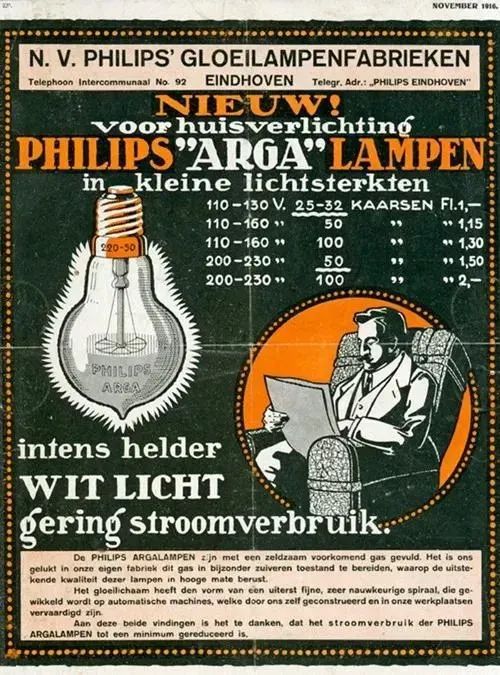
跨国巨头飞利浦,为何沦为了“贴牌大王”?
3 6 Ke· 2025-05-19 11:18
Core Viewpoint - Philips has transitioned from a leading global brand known for innovation to a company primarily engaged in brand licensing and outsourcing production, leading to a significant decline in revenue and market presence [1][5][27]. Business Model and Revenue Decline - Philips has increasingly relied on a business model that involves licensing its brand to other manufacturers, resulting in a loss of direct control over product quality and innovation [19][21][47]. - The company's revenue has decreased from $40.14 billion in 1996 to approximately $19.49 billion in 2024, which is less than half of its peak revenue [5][6][27]. - Philips' ranking in the Fortune 500 has dropped from 53rd in 1996 to 423rd in 2018, and it completely fell off the list by 2019 [6][27]. Historical Context and Business Strategy - Founded in 1891, Philips initially thrived by producing carbon filament light bulbs and expanded into various consumer electronics over the decades, earning the title "King of Small Appliances" [3][5]. - The company has undergone significant restructuring, including the divestiture of its semiconductor business, which was once a key area of growth, to focus on healthcare and consumer products [27][30]. - Philips has sold off several business units, including its lighting division, which was integral to its origins, and has shifted its focus to high-margin sectors like healthcare [15][30]. Brand Licensing and Quality Control Issues - Philips has engaged in extensive brand licensing, allowing other companies to produce and sell products under the Philips name, which has led to concerns about product quality and brand integrity [21][45][47]. - The company has licensed its brand for various products, including air conditioners and water purifiers, which are manufactured by third parties without direct involvement from Philips [22][26][45]. - This strategy has raised questions about the long-term sustainability of the Philips brand, as the quality of licensed products may not meet consumer expectations, potentially harming the brand's reputation [46][47]. Conclusion - Philips' shift towards a licensing model and the divestiture of core business units reflect a broader strategy to focus on high-growth areas, but this has come at the cost of brand strength and market presence [27][30][47].