数据共享

Search documents
上海:鼓励及时将创新药械数据提供给商业保险公司作为定价参考
Bei Jing Shang Bao· 2025-08-06 11:59
Core Viewpoint - The document outlines measures to promote the high-quality development of commercial health insurance, supporting innovation in the biopharmaceutical industry through enhanced data sharing and collaboration among various stakeholders [1] Group 1: Data Sharing and Collaboration - The measures emphasize upgrading health data sharing capabilities, focusing on deepening the data sharing mechanisms among medical, health insurance, and commercial insurance sectors [1] - It highlights the importance of ensuring data security and privacy while expanding the dimensions and scope of data sharing to support product design, actuarial pricing, and risk assessment for commercial insurance [1] - The establishment of a data cooperation and sharing mechanism is encouraged, utilizing the city's big data center and certified third-party organizations [1] Group 2: Support for Insurance Companies - Insurance companies are supported in accessing historical health data in a secure environment, which aids in collecting and analyzing claims-related diagnostic information and medical expense details [1] - The measures aim to facilitate the development of insurance products tailored for specific groups and risks, enhancing risk prevention strategies [1] - Medical institutions and pharmaceutical companies are encouraged to provide timely information on innovative drugs and devices, including disease applicability and clinical trial data, to commercial insurers for pricing reference [1]
时报经济眼丨“数据孤岛”串联成链,支撑小微信贷精准直达
证券时报· 2025-08-06 00:14
Core Viewpoint - The article highlights the significant role of data sharing and financial support mechanisms in facilitating loans for small and micro enterprises, which traditionally faced challenges due to lack of collateral and guarantees [1][3][5]. Group 1: Data Sharing and Financial Mechanisms - The support mechanism for small and micro enterprises has broken down data sharing barriers, allowing financial institutions to better assess the creditworthiness of these businesses, thus reducing financing costs and risks [1][5]. - The "joint consultation mechanism" in Shandong aims to provide tailored financial solutions for enterprises that do not meet lending criteria, involving various departments to address specific financing challenges [4][9]. - The Chongqing financial regulatory bureau has developed a "data sharing + business collaboration" model, which has successfully mapped out the funding landscape for 370,000 market entities, enhancing the precision of financial services [6][9]. Group 2: Individual Case Studies - The experience of Sanyang Import and Export Trade Co., which faced significant cash flow pressures due to delayed payments from overseas clients, illustrates the common struggles of small enterprises in securing financing without collateral [3][4]. - The case of Haosen Motorcycle demonstrates how the introduction of digital tools and data analysis has helped identify financing needs that were previously overlooked, leading to successful loan approvals for businesses that had never borrowed before [8][9]. Group 3: Impact of Digital Technology - The integration of digital technology in financial services has allowed for more efficient matching of financial resources to small enterprises, addressing the psychological barriers that many business owners face regarding loan qualifications [8][9]. - The Chongqing financial regulatory bureau's initiative has resulted in the identification of 10.9 million high-quality small enterprises, with a significant portion having never received loans before, showcasing the potential of data-driven approaches in expanding access to finance [9].


破数据墙 畅办事路
Jing Ji Ri Bao· 2025-08-02 21:50
Core Insights - The establishment of a unified public security service platform has facilitated over 1.6 billion cross-network interactions among various departments, indicating a significant step towards breaking down data barriers and enhancing service efficiency [1][2] - Despite the progress, challenges remain in cross-departmental operations due to inconsistent data standards and privacy concerns, which hinder effective data sharing [1][2] Group 1: Platform Functionality and Impact - The platform has developed seven common foundational functions, including identity verification and electronic certificates, which address the most pressing needs of the public and can lead to immediate reductions in the need for citizens to physically visit offices [2] - The collaborative use of the platform by departments such as railways, civil aviation, and immigration highlights the importance of prioritizing data sharing among closely related departments to minimize resistance and achieve quicker results [2] Group 2: Data Sharing Challenges and Solutions - Concerns regarding data security and usage norms are significant barriers to data sharing, with departments questioning the safety of sharing their data and the reliability of using others' data [2] - To overcome these challenges, it is essential to establish clear regulations defining the scope, subjects, and processes of data sharing, as well as to implement unified standards for data management to resolve compatibility issues [2] - Ensuring data security during sharing is critical, which can be achieved through encryption, classification management, dynamic permission settings, and comprehensive tracking to prevent data breaches or misuse [2]
市场消息:美国卫生官员与科技高管将启动数据共享计划。
news flash· 2025-07-26 14:37
Core Viewpoint - U.S. health officials and tech executives are set to launch a data-sharing initiative aimed at improving public health outcomes and enhancing the efficiency of healthcare systems [1] Group 1: Data Sharing Initiative - The initiative will focus on collaboration between government health agencies and technology companies to facilitate the exchange of health data [1] - This program is expected to leverage advanced technologies to analyze health data, potentially leading to better disease prevention and management strategies [1] Group 2: Implications for the Healthcare Industry - The collaboration may lead to significant advancements in healthcare analytics, which could improve patient care and operational efficiencies within healthcare organizations [1] - By integrating technology with health data, the initiative aims to address critical public health challenges and streamline healthcare delivery [1]
聚力“高效办成一件事”,曲阜政务服务跑出加速度
Qi Lu Wan Bao Wang· 2025-07-23 09:11
Core Viewpoint - The article highlights the successful implementation of the "Efficient Completion of One Thing" reform in Qufu City, which has significantly improved the efficiency of administrative services and enhanced the experience of businesses and citizens [1][3]. Group 1: Administrative Efficiency - Qufu City has adopted the "Efficient Completion of One Thing" as a key strategy to optimize the business environment and enhance government service efficiency, achieving an average reduction of 81.32% in processing times and a 75% reduction in required documentation [1][3]. - The city has launched over 140 high-frequency "one thing" themed services, transforming administrative processes from "possible" to "easy and convenient" [1]. Group 2: Process Reengineering - Qufu City has restructured administrative processes to eliminate inefficiencies such as multiple trips and excessive documentation, integrating cross-departmental services into a streamlined process [3]. - The establishment of a "one-stop" comprehensive service window allows for simultaneous processing of related matters, reducing the average number of required documents from 47 to 6 and cutting approval times from over 40 days to within 10 working days [3]. Group 3: Digital Empowerment - The city has prioritized data sharing as a core support for the reform, creating a unified government data sharing platform that consolidates 107 types of high-frequency electronic certificates for cross-departmental recognition [4]. - The introduction of the "Cloud Inspection" model utilizes remote video technology to expedite on-site inspections, reducing the average time from several days to approximately 30 minutes [4]. Group 4: Service Extension - Qufu City has developed a "one-body linkage" service system to ensure that the benefits of reform reach all citizens, with a focus on providing assistance throughout the application process [6]. - The establishment of dedicated service teams and special service windows for vulnerable groups ensures that all citizens can access administrative services conveniently and effectively [6].

破解中小企业融资难!产业数字金融提供的不止于“钱”
Bei Jing Shang Bao· 2025-07-21 13:08
Core Viewpoint - The core of China's economy lies in the industrial economy, which is heavily reliant on financial support and digital technology, particularly for small and medium-sized enterprises (SMEs) [1] Group 1: Development of Industrial Digital Finance - The development of industrial digital finance is seen as a solution to the financing difficulties faced by SMEs, with a consensus on using digitalization to address these challenges [1][3] - Industrial digital finance is characterized by the integration of data, technology, innovation, and an ecosystem that supports its growth [1][3] - The concept of industrial digital finance emerged in 2022, evolving from previous models like supply chain finance and scenario finance [3][5] Group 2: Technological Integration and Financial Services - The integration of technologies such as IoT, blockchain, AI, and big data is crucial for breaking down information barriers between finance and industry, enabling better tracking and evaluation of assets and transactions [4] - Financial services are becoming deeply embedded in the entire industrial ecosystem, allowing for a holistic risk assessment based on the entire supply chain rather than individual enterprises [4][5] - The shift from traditional company finance to industrial digital finance reflects a transition from point-based to network-based financial services [5] Group 3: Case Studies and Innovations - Successful case studies in various regions demonstrate the effectiveness of industrial digital finance, with platforms like "泉融通" in Jinan facilitating over 30 billion yuan in financing by aggregating data from multiple sources [6][7] - Innovations such as AI-driven risk verification and the use of digital RMB for secure transactions highlight the advancements in financial technology applications [6][8] Group 4: Challenges and Recommendations - Despite positive developments, challenges remain in areas such as platform construction, service innovation, and collaboration between industry and finance [7] - Recommendations for future development include accelerating the digital transformation of SMEs, establishing risk-sharing mechanisms, and ensuring that financial institutions play a leading role in providing tailored services [7][8]

市场监管总局与中国民航局签订数据共享合作协议
news flash· 2025-07-18 11:35
Core Viewpoint - The signing of a data-sharing cooperation agreement between the State Administration for Market Regulation and the Civil Aviation Administration of China marks the establishment of a normalized cooperation mechanism in data resource sharing and credit regulation, enhancing cross-departmental regulatory collaboration and service [1] Group 1: Data Resource Sharing - The cooperation will provide strong data support for both parties' responsibilities, releasing multiple important values [1] - The State Administration for Market Regulation aims to enhance the application of enterprise credit information, improving the efficiency of information collection, public disclosure, big data monitoring and analysis, credit risk classification, index research, and credit evaluation [1] Group 2: Support for Civil Aviation Industry - The data resources from the State Administration for Market Regulation will assist the Civil Aviation Administration in verifying qualification information for traditional general aviation enterprises and emerging drone companies, as well as in joint punishment, credit evaluation, regulation, and enterprise withdrawal [1] - This collaboration is expected to contribute to the healthy and safe development of the civil aviation industry [1]
“破界”,建设全国统一大市场先行区
Xin Hua Ri Bao· 2025-07-11 21:34
Core Viewpoint - The Long Triangle region is advancing towards a unified national market through enhanced cooperation among the market regulatory departments of Shanghai, Jiangsu, Zhejiang, and Anhui, focusing on breaking barriers, establishing standards, and promoting digital transformation [1][2][4]. Group 1: Cooperation and Achievements - The Long Triangle region has implemented over 170 high-frequency government services and applications for cross-province "one-stop" processing, with 40 types of high-frequency electronic certificates recognized across provinces [2]. - A total of 6.98 billion data entries have been collected in the regional business entity database, with data update cycles reduced from monthly to daily [2]. - Since the 14th Five-Year Plan, the region has signed 45 cooperation agreements and published 18 policy documents, indicating a strong commitment to regulatory integration [6]. Group 2: Regulatory Framework and Standards - The region aims to deepen fair competition reforms, enhance anti-monopoly and anti-unfair competition enforcement collaboration, and promote a unified regulatory framework [2][4]. - A joint action plan for quality support and standard leadership in key industries such as biomedicine and artificial intelligence has been established [3]. - The Long Triangle region is working on international standardization research and the development of green and low-carbon standards [3]. Group 3: Digital Transformation and Data Sharing - A digital collaborative action plan is underway to enhance cross-province regulatory data sharing and optimize various databases [3]. - The region is focused on building a strong data foundation for regulatory collaboration, enhancing data sharing applications, and creating impactful shared scenarios [3]. Group 4: New Initiatives and Projects - Six new cooperation agreements have been signed, including those focused on platform economy innovation and integrated risk warning systems [5]. - The agreements aim to address significant issues in the online market and enhance regulatory collaboration among platform enterprises [5]. Group 5: Consumer Protection and Market Potential - The Long Triangle region is implementing a three-year action plan to optimize the consumer environment, including the establishment of trusted stores and markets [7]. - There is a focus on enhancing food safety regulations and cross-regional cooperation in food production and operation oversight [7][8]. - The region aims to improve consumer rights protection mechanisms and establish a system for handling consumer disputes across different cities [8].
全球首个跨境数据空间标准IEEE P1988正式启动
Zhong Guo Chan Ye Jing Ji Xin Xi Wang· 2025-07-11 07:38
Core Points - The IEEE P1988 international standard aims to establish a secure, efficient, and scalable environment for cross-border data flow and sharing, addressing key barriers such as privacy protection and technological fragmentation [1][5] - The standard is a collaborative effort involving the Next Generation Internet National Engineering Center, the International Data Space Association (IDSA), and the IEEE Standards Association, marking a significant step towards global data cooperation [2][3] Group 1: Standard Overview - IEEE P1988 focuses on the secure circulation and trusted interaction of data across organizations and regions, serving as a foundational framework for global data infrastructure development [2][3] - The standard emphasizes interoperability, trust mechanisms, privacy protection, and cross-domain collaboration, defining a universal data space model and interface protocols [3][4] Group 2: Technical Architecture - The technical architecture of IEEE P1988 integrates IDSA's international data space architecture and DSP connection protocols, utilizing advanced data protection technologies such as IPv6 virtual private networks, data sandboxes, privacy computing, and blockchain [3][4] - The standard aims to facilitate cross-organizational data sharing while ensuring data sovereignty and privacy [3][5] Group 3: Pilot Projects and Applications - Multiple pilot projects are underway across various sectors, demonstrating the adaptability and applicability of the IEEE P1988 standard [4] - Initiatives include the "Guangdong-Hong Kong-Macao Cross-Border Scientific Research Innovation Data Space" and projects in smart connected vehicles focusing on carbon emissions data and supply chain information [4] Group 4: Future Implications - The launch of IEEE P1988 represents a pivotal moment in the establishment of a global data circulation system, addressing the lack of unified technical standards and trust mechanisms in cross-border data flow [5] - The standard is expected to foster a collaborative environment for data exchange, shifting the focus from risk-based approaches to trust-driven frameworks [5]
数据赋能破局 浙江宁波激活产业发展“新动能”
Zhong Guo Xin Wen Wang· 2025-07-08 09:07
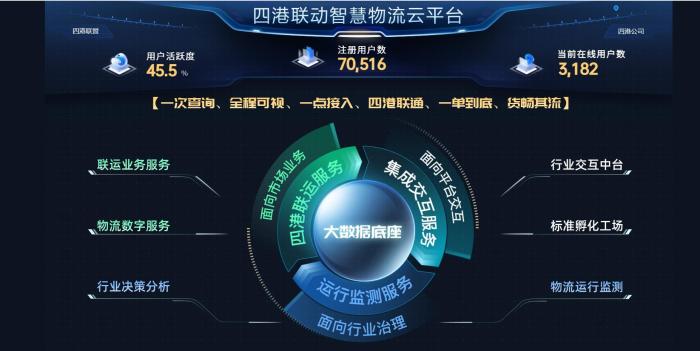
Group 1 - The core viewpoint is that data elements are becoming a key driver for industrial upgrading in Ningbo, enhancing operational efficiency and reducing costs across various sectors [2][3] - The Ningbo Zhoushan Port container terminal has improved container turnover efficiency by 30% through a specialized logistics database that integrates various data sources and analysis models [1] - The "Energy Efficiency Insight" platform has helped local enterprises save over 200 million kilowatt-hours annually and reduce carbon emissions by 140,700 tons, with an average energy cost reduction of 36% [2] Group 2 - The "Four Ports" linkage cloud platform has streamlined logistics operations, reducing the time for sea-rail intermodal bookings from 48 hours to 24 hours, saving a cross-border e-commerce company 2 million yuan in logistics costs annually [2] - The integration of data across different sectors, including healthcare, has led to significant improvements, such as AI-generated patient records in traditional Chinese medicine, enhancing efficiency in medical services [2][3] - The Ningbo Data Bureau has established a comprehensive mechanism for data collection, governance, and application, facilitating efficient data flow and breaking down departmental barriers [3]