
源网荷储一体化

Search documents
森特股份:公司高度重视“源网荷储一体化”政策研究,积极推进相关技术研发
Zheng Quan Ri Bao Wang· 2026-01-20 11:40
Core Viewpoint - The company emphasizes the importance of the "source-network-load-storage integration" policy and is actively advancing related technology research to enhance its competitiveness in this field [1]. Group 1 - The company is committed to researching the "source-network-load-storage integration" policy [1]. - The company is actively promoting relevant technology research [1]. - The company aims to strengthen its competitiveness through continuous application innovation in this area [1].

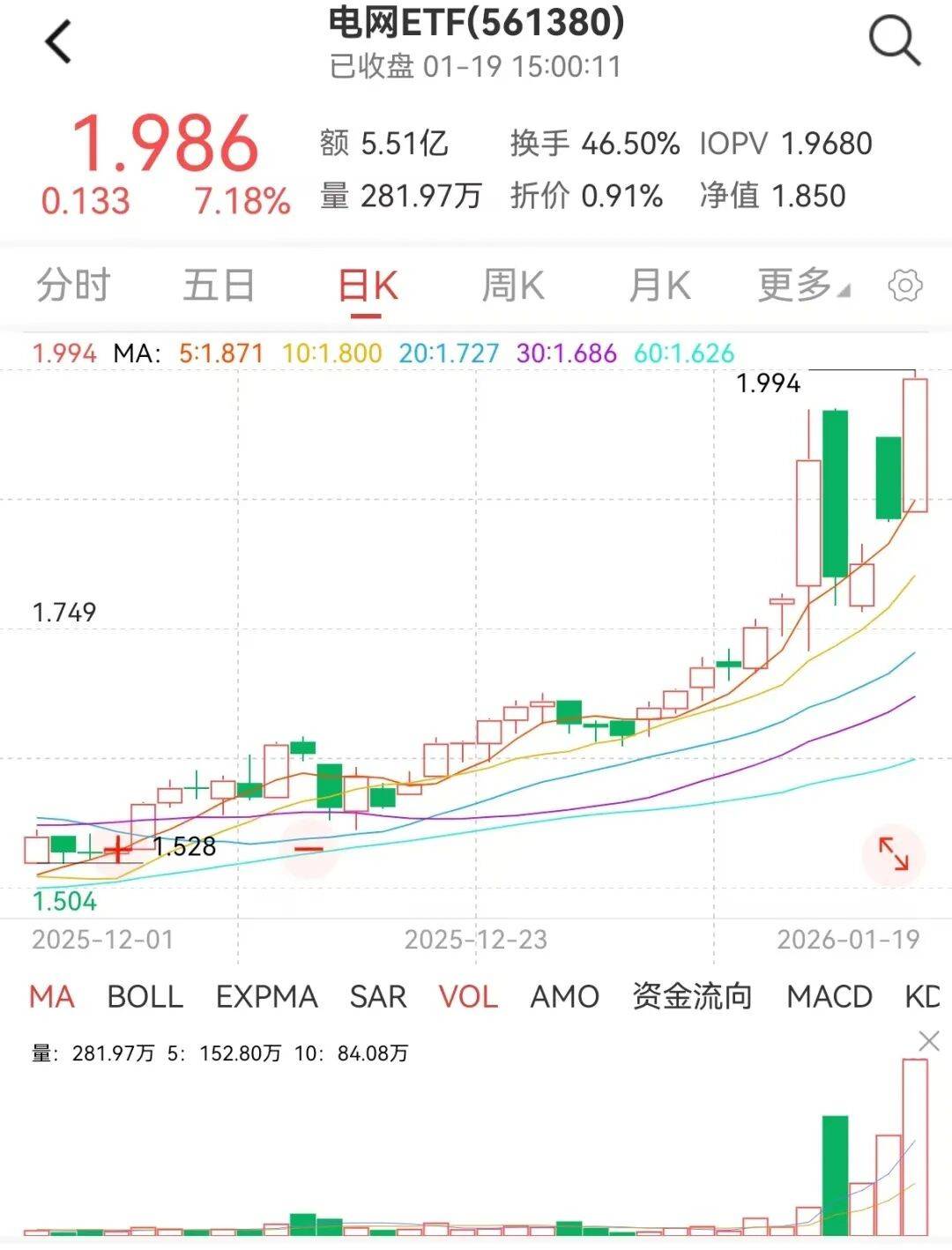
“AI缺电”逻辑发酵+国家电网“十五五”投资双重催化,关注电网ETF(561380)
Sou Hu Cai Jing· 2026-01-20 01:16
电网ETF(561380)紧密跟踪恒生A股电网设备指数,选取了市值最高的50只电网设备产业链上市公司,通过"优中选优"确保组合的攻击性与代表性。成 分股不仅涵盖了特高压、智能电网等核心基建领域,还向发电、配电及用电侧延伸,能够全面捕捉"源网荷储"一体化发展带来的投资机会。 在AI算力对电力基础设施提出更高要求,以及国内新一轮电网大规模投资启动的背景下,电网设备行业正处于"超级周期"的起点。电网ETF(561380)提 供了一个高效、便捷的布局工具,投资者可适当关注并考虑逢低分批配置,分享行业高景气红利。 1月19日,受"AI缺电"逻辑发酵及国家电网"十五五"投资规划出炉的双重催化,电网ETF(561380)交投活跃,大涨逾7%。在全球能源转型与AI算力爆发 的共振下,电网设备行业正迎来一轮长周期的景气上行。 来源:WIND 当前电网设备板块的投资逻辑,已从单一的国内基建托底,演变为"国内电网升级+海外设备出海"的双重红利释放。根据最新消息,国家电网"十五五"期 间固定资产投资预计将达到4万亿元,较"十四五"期间增长约40%。这一超预期的投资规模,直接锁定了未来五年行业的高景气度。特别是特高压、主网 扩容及配网 ...

济南2026年将新增市级以上绿色工厂(园区)25家以上
Qi Lu Wan Bao· 2026-01-19 06:39
Core Viewpoint - Jinan City is committed to implementing the "dual carbon" strategy, focusing on energy consumption and carbon emission management, while promoting the transition from energy consumption control to carbon emission control [1] Group 1: Carbon Management and Energy Transition - Jinan will strictly control total coal consumption and implement coal consumption substitution [1] - The city aims to optimize the structure and layout of coal-fired power generation and accelerate the construction of advanced coal-fired units [1] - Projects such as the Longqing 2×660 MW advanced coal-fired unit transmission project (Phase II) will be expedited [1] Group 2: Green Energy and Smart Energy Initiatives - Development of virtual power plants and integrated energy systems will be accelerated to enhance green electricity consumption [1] - The city will actively promote comprehensive smart energy pilot projects in the starting area [1] Group 3: Transportation and Waste Management - Jinan will optimize and adjust its transportation structure, improving the multimodal transport system [1] - The city will promote the transfer of bulk goods from road to rail and water transport [1] - Efforts will be made to enhance the management of municipal solid waste and improve the resource utilization of construction waste [1] Group 4: Green Development Goals - Jinan plans to establish over 25 new green factories (parks) at the municipal level or above [1] - The city is committed to deepening the "waste-free city" initiative and advocating for a green, low-carbon lifestyle among its citizens [1]
全国首个“虚拟电厂小镇”深圳投运
Ren Min Ri Bao· 2026-01-14 20:33
据悉,该"小镇"位于深圳宝安区沙井街道,是全国首个以社区为载体的虚拟电厂示范工程。项目由民营 资本和村集体共同参与,通过整村"统建统营"模式盘活村集体闲置资源,构建"源网荷储"一体化智慧能 源系统。同时,该项目通过接入深圳虚拟电厂调控管理云平台,可参与电力市场化交易,在缓解高负荷 密度区域迎峰度夏压力、促进新能源消纳的同时,积极探索城中村集体经济从单一"收租经济"向多 元"能源经济"的转变。"小镇"预计在2027年全面完工。 本报电(田启东)在广东深圳宝安区捷和工业园,分布式光伏、储能、充电设施"连点成片",通过接入虚 拟电厂,被聚合成既绿色低碳又能灵活调节的稳定力量,为该片区发展注入新动能——这是宝安区"虚 拟电厂小镇"一期项目现场。近日,南方电网深圳供电局服务该项目顺利投运,助力全国首个"虚拟电厂 小镇"增新添绿。 ...
绿电赋能项目兴 滨州产业向新行
Xin Lang Cai Jing· 2026-01-14 15:33
Core Viewpoint - Binzhou City is committed to achieving carbon peak and carbon neutrality goals, focusing on green and low-carbon high-quality development, with significant advancements in renewable energy and industrial transformation by 2025 [1][10]. Group 1: Renewable Energy Development - By the end of 2025, the total installed capacity of renewable energy in Binzhou is expected to reach 10.05 million kilowatts, tripling from the end of 2020, thus exceeding the "10 million kilowatt" target ahead of schedule [2]. - The city is developing a 21.18 million kilowatt integrated wind-solar-storage project in the northern coastal saline-alkali land, which will convert 1.29 million acres of previously barren land into a green energy hub, supplying 13.5 billion kilowatt-hours of green electricity annually [2][3]. - The city has implemented a total of over 5 million kilowatts of shared energy storage projects to stabilize green electricity supply and enhance local consumption [3]. Group 2: Energy Structure Optimization - The proportion of renewable energy in Binzhou's total power generation capacity has exceeded one-third, an increase of 21 percentage points since 2020, marking a significant shift towards cleaner energy sources [5]. - The city has completed the construction of six clean and efficient coal power units totaling 2.51 million kilowatts while shutting down 32 outdated coal power units totaling 1.235 million kilowatts [5]. Group 3: Innovative Development Models - Binzhou is addressing challenges in renewable energy integration by advancing integrated projects that combine generation, storage, and consumption, aiming for high-level energy consumption and deep industrial coupling [7]. - The city has launched the Huaneng Binzhou New Energy 850,000 kilowatt photovoltaic project, which is a benchmark for future renewable energy projects [7][8]. Group 4: Industrial Integration and Growth - The city is fostering deep integration between renewable energy and traditional industries, enabling sectors like aluminum production to transition to green energy, exemplified by the 2GW fish-solar complementary project [9]. - By 2025, the new energy and new materials industry cluster in Binzhou is projected to exceed 100 billion yuan in revenue, with a complete supply chain for battery materials and significant production capacities in various sectors [9][10]. Group 5: Future Goals and Vision - Binzhou aims to establish itself as a significant hub for new energy economic development, targeting an additional 100 billion yuan in output value by 2030, with plans to expand the new energy and new materials industry scale to over 200 billion yuan [10].
青海在全国率先实现新能源装机和发电量占比“双主体”
Zhong Guo Dian Li Bao· 2026-01-14 08:13
Core Viewpoint - Qinghai is leading the nation in achieving a dual dominance in both installed capacity and generation of renewable energy, aiming to establish itself as a national clean energy industry hub [1][2]. Group 1: Renewable Energy Development - As of November 2024, Qinghai's total installed power capacity reached 62.24 million kilowatts, with clean energy accounting for 58.21 million kilowatts, representing 93.5% of the total [1]. - The province has established a modern large-scale hydropower station, the Qinhai Malang Hydropower Station, which will significantly alleviate electricity demand in central cities through the "West-to-East Power Transmission" initiative [2]. - Qinghai has built and put into operation seven large hydropower stations in the upper reaches of the Yellow River, with a total installed capacity of 13.4 million kilowatts, making it one of the thirteen major hydropower bases in the country [2]. Group 2: Energy Infrastructure and Technology - The world's first high-voltage direct current project primarily for renewable energy transmission, the Qinghai-Henan ±800 kV project, was completed in 2020, with a maximum operating power of 6 million kilowatts and cumulative electricity transmission exceeding 60 billion kilowatt-hours [4]. - Qinghai has established a clean energy and green computing scheduling center, which provides centralized monitoring and management of clean energy resources, enhancing operational efficiency and reducing costs by over 40% [6]. - The province has developed 177 megawatts of new energy storage projects, with an annual increase of 126 megawatts, to address the intermittency and volatility of renewable energy [7]. Group 3: Industrial Growth and Policy Support - Qinghai has attracted over 40 renewable energy manufacturing enterprises, including five of the top ten photovoltaic manufacturers in the country, creating a complete photovoltaic industry chain [9]. - The province has issued local standards for green computing infrastructure and energy efficiency, becoming the first in the country to establish such standards [9]. - The establishment of the zero-carbon data center by China Telecom in Qinghai has achieved a carbon reduction of 300,000 tons annually, showcasing the province's commitment to sustainable energy practices [10].
屯昌:大同产业园“上新”忙
Hai Nan Ri Bao· 2026-01-14 01:29
Core Viewpoint - The article highlights the ongoing developments in the Daitong Industrial Park in Tunchang, focusing on the launch of new environmental products, the construction of a craft beer factory, and the initiation of a large-scale energy storage project. Group 1: Environmental Equipment Manufacturing - The Hainan (Tunchang) Environmental Equipment Manufacturing Plant has developed a new underground garbage collection system that effectively isolates odors and connects to the IoT for capacity alerts, with a patent application in progress [3][4] - The plant has been operational since the end of 2024 and collaborates with local research institutions to produce municipal sanitation facilities, waste disposal, and wastewater treatment equipment, aligning with Tunchang's industrial layout [3][5] - The company plans to expand its operations with a second phase project focused on developing new energy garbage transfer vehicles [5] Group 2: Craft Beer Production - The Yangchun Beer (Hainan) Craft Brewery is nearing completion, with large fermentation tanks installed and equipment in the final stages of testing, expected to begin production around the Chinese New Year [5] - Once fully operational, the brewery is projected to produce 50,000 tons annually, generating an estimated revenue exceeding 200 million yuan [5] Group 3: Energy Storage Project - The Hengneng Century 200MW/800MWh independent shared energy storage project has commenced construction, aiming to facilitate the transition of local energy consumption towards an integrated model of generation, grid, load, and storage [5] - This project is expected to attract more renewable energy companies to the industrial park, fostering a cluster effect [5] Group 4: Industrial Park Development - The Daitong Industrial Park is recognized as a national-level demonstration zone for integrated urban and industrial development, with over 2,951 acres of land reserved and more than 2.85 billion yuan invested in construction [5] - The park is enhancing its infrastructure to support various industries, including green circular economy, new stone materials, and deep processing of forestry products, providing ample space for high-quality projects [5] Group 5: Investment and Economic Growth - In December 2025, Tunchang signed 12 projects with a total planned investment of over 1.63 billion yuan, covering sectors such as tourism, agricultural processing, cross-border e-commerce, and ecological agriculture [6] - The local government aims to optimize project tracking services to ensure timely implementation and benefits from the free trade port policies [6]
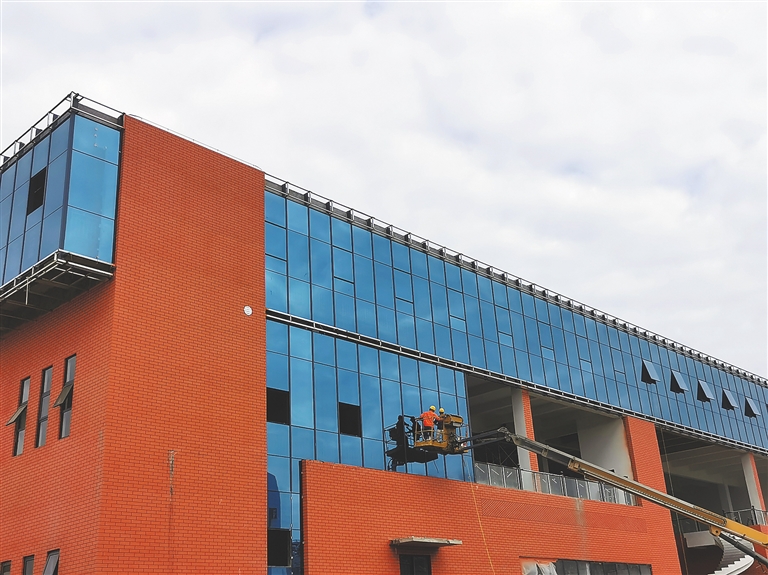
中国电力风光火项目捷报频传
Xin Hua Wang· 2026-01-13 07:05
Core Insights - China's power sector is experiencing rapid development, with multiple projects achieving significant milestones by the end of 2025 [1] Group 1: Major Projects and Developments - The Pingwei Phase IV project successfully connected its 1000 MW ultra-supercritical coal-fired unit to the grid, marking the start of load testing and laying a solid foundation for future power generation [2] - The project, with a total investment of approximately 8 billion yuan, features advanced technologies that reduce coal consumption to 258.5 grams per kilowatt-hour and exceed national ultra-low emission standards [2] - The project is expected to generate an annual output of 10 billion kilowatt-hours, enhancing the reliability of the regional power grid during peak demand periods [2] Group 2: Renewable Energy Initiatives - The Zhongdian Shenhua Muli 800 MW green power replacement wind project successfully connected to the grid, aimed at reducing the load of existing coal-fired units by 30% [3] - This project is expected to deliver approximately 2.4 billion kilowatt-hours of clean electricity annually, saving around 710,000 tons of standard coal and significantly reducing emissions of CO2, SO2, NOx, and particulate matter [3] - The Yangzhou Zhongwu Electric Smart Energy 100 MW fish-solar complementary photovoltaic project also achieved full capacity grid connection, expected to generate about 120 million kilowatt-hours annually and reduce CO2 emissions by 100,000 tons [4]

华自科技:公司自主研发多能物联核心技术
Zheng Quan Ri Bao Wang· 2026-01-12 13:15
Core Viewpoint - The company, Huazi Technology, has developed core technologies for multi-energy IoT and created an integrated platform for energy sources, networks, loads, and storage, contributing to the clean and low-carbon energy transition [1] Group 1: Company Developments - Huazi Technology has independently developed several core hardware and software products, including an integrated platform for energy sources, networks, loads, and storage, multi-energy IoT coordinators, commercial liquid-cooled energy storage cabinets, and energy storage inverters [1] - The company provides comprehensive energy solutions to users, having implemented multiple integrated projects for energy sources, networks, loads, and storage [1]

河南以要素保障激发民营经济新活力
Zhong Guo Dian Li Bao· 2026-01-12 07:33
Core Viewpoint - The Henan provincial government is focusing on enhancing energy factor security to support the high-quality development of the private economy, with significant investments and reforms in the energy sector over the past three years [1][2]. Group 1: Energy Investment and Infrastructure - Energy project investments in Henan have exceeded 100 billion yuan for three consecutive years, with total installed power generation capacity surpassing 160 million kilowatts [1]. - Renewable energy generation capacity accounts for over 50% of the total, with generation exceeding 1000 billion kilowatt-hours [1]. - Key projects such as the Xuchang Energy Coal Power Project and the Xinyang Wuyue Pumped Storage Power Station have been completed, enhancing energy infrastructure [2]. Group 2: Green Energy Transition - Henan is prioritizing green energy development, with over 88 million kilowatts of renewable energy installed, representing more than half of the total capacity [3]. - The province aims for renewable energy generation to exceed 1400 billion kilowatt-hours, a 21% year-on-year increase, with green electricity accounting for nearly 40% of total generation [3]. - The transition to green energy is providing private enterprises with low-cost green electricity, facilitating industrial upgrades [3]. Group 3: Policy and Regulatory Reforms - Henan is implementing reforms in energy sectors to create a more favorable environment for private enterprises, including the integration of source, network, load, and storage [4]. - The province has introduced policies to streamline project applications, reducing the approval time for integrated projects from over three months to one week [7]. - Recent policies have opened various energy sectors to private enterprises, with over 90% participation in photovoltaic projects and significant contributions in biomass power generation [8]. Group 4: Future Development and Opportunities - Henan plans to accelerate the development of frontier energy industries such as hydrogen and storage, with expectations for new storage capacity to exceed 5 million kilowatts [5]. - The province is fostering a collaborative energy development model, integrating state-owned and private enterprises to enhance market access and participation [8]. - The ongoing energy investments and policy support are expected to unleash further innovation potential in the private economy, contributing to high-quality energy development in Henan [8].