生猪产能调控

Search documents
预计11月能繁母猪存栏环比微减、但生猪存栏延续增势
Zhong Guo Jin Rong Xin Xi Wang· 2025-11-12 06:53
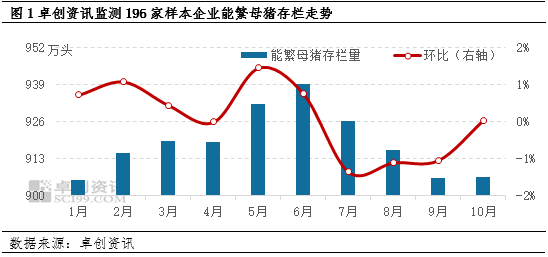
Core Viewpoint - The inventory of breeding sows and pigs increased slightly in October, but is expected to decrease marginally in November due to losses in farming, lack of confidence in future markets, and policy guidance [1][3][4] Group 1: Breeding Sows Inventory - In October, the inventory of breeding sows showed a slight month-on-month increase and a year-on-year growth, driven by multiple factors including the response of farming groups to national capacity regulation policies and a halt in the decline of piglet prices [1][4] - The forecast for November indicates a likely slight decrease in the breeding sow inventory, as farmers may accelerate the culling of low-yield and older sows to mitigate losses and optimize herd structure [3][6] Group 2: Pig Inventory - The pig inventory also saw a slight increase at the end of October, attributed to the breeding cycle logic where the increase in breeding sows from 4-5 months prior should theoretically lead to a significant rise in pig inventory [4][6] - Despite a slight increase in pig inventory, the overall market conditions suggest limited upward movement in pig prices, which may restrict significant growth in inventory levels [3][6]

全行业亏损!新希望“弃量保利”:调减能繁母猪,养猪业或迎大洗牌?
Mei Ri Jing Ji Xin Wen· 2025-11-12 01:33
Core Viewpoint - The recent decline in pig prices and the adjustment of breeding capacity have become hot topics in the industry, with New Hope responding to these issues during strategy meetings held from November 4 to 7 [1][2]. Group 1: Financial Performance - In the first three quarters of the year, New Hope reported a net profit attributable to shareholders of 760 million yuan, a year-on-year increase of nearly 400%, with a net profit of 5.13 million yuan in the third quarter [2]. - The company's feed segment generated a net profit of 1.03 billion yuan in the first three quarters, up 23% year-on-year, maintaining a monthly profit level above 100 million yuan [2]. - Conversely, the pig farming segment incurred a cumulative loss of 180 million yuan in the first three quarters, with a loss of 230 million yuan in the third quarter due to rapidly falling pig prices [2][3]. Group 2: Market Conditions - The current pig price of around 11 yuan per kilogram has led the entire industry into losses, with many leading enterprises also experiencing significant losses [2][3]. - The decline in pig prices is attributed to high levels of breeding sows last November, leading to a peak in market supply, which the market is currently struggling to digest [3]. Group 3: Strategic Adjustments - New Hope plans to gradually reduce the number of breeding sows by the end of January next year, which will also lead to a decrease in the number of pigs marketed [1][4]. - The company is increasing the proportion of self-breeding and self-fattening pigs, shifting from a previous ratio of 30:70 to 35:65 in the third quarter [5]. Group 4: International Expansion and Production Capacity - New Hope is not in a hurry to expand its pig farming capacity overseas but is seeing significant growth in its feed business internationally, particularly in countries like Indonesia, Vietnam, Egypt, Bangladesh, and the Philippines [6]. - The company has increased its overseas feed production capacity significantly, achieving a sales growth rate of 21% in the first three quarters, with plans to reach a feed production capacity of 10 million tons by 2028 [6].


季节性消费回暖叠加二次育肥情绪升温,10月下旬猪价上涨超10%
Sou Hu Cai Jing· 2025-11-04 02:27
Core Insights - The recent monitoring by the National Bureau of Statistics indicates a mixed trend in the prices of 50 key production materials, with 26 products experiencing price increases and 22 seeing declines, highlighting a significant rise in live pig prices by 10.1% to 12.0 yuan per kilogram [1] Group 1: Price Trends and Influencing Factors - Short-term increases in pig prices are driven by seasonal consumption recovery and heightened secondary fattening sentiment [2] - Despite the short-term price fluctuations, medium-term projections suggest that high supply pressure will likely keep pig prices from rising significantly [2] - The overall sentiment in the pig farming sector remains weak, with the market experiencing a situation where supply growth outpaces demand growth [2][4] Group 2: Supply and Demand Dynamics - The current supply-demand balance shows strong supply against weak demand, leading to a notable supply surplus [4] - The Ministry of Agriculture and Rural Affairs has reported a decrease in the number of breeding sows, with a target to reduce the breeding sow population by approximately 1 million heads [5] - The focus on controlling production capacity and reducing low-quality production is expected to stabilize pig prices and farming profits [4][5] Group 3: Future Outlook - As the weather cools towards the end of the year, demand for heavier pigs is anticipated to increase, particularly in southern regions due to traditional consumption patterns [2] - However, the consensus in the industry suggests that the expected peak season for pig consumption may not materialize, maintaining the trend of supply growth exceeding demand growth [2][4]
国民刚需,农业强国!农业ETF天弘(认购代码:512623)重磅发行中,低位布局农业正当时!
Sou Hu Cai Jing· 2025-11-04 01:21
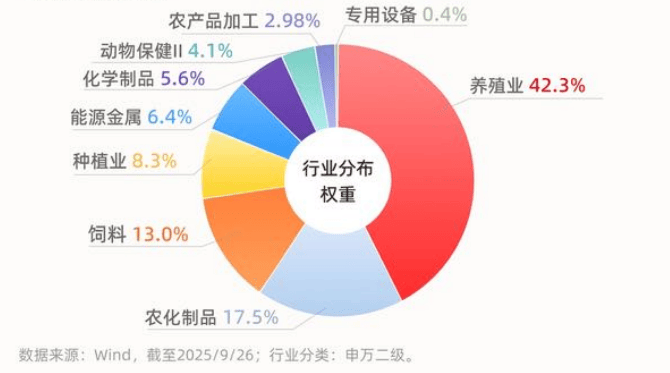
Group 1 - The Agricultural ETF Tianhong (subscription code: 512623) has officially launched, providing an efficient and convenient tool for investors to allocate resources in the agricultural sector [1] - The ETF is policy-backed, benefiting from the foundational role of agriculture in the national economy, with policies such as the 2025 Central Document No. 1 and the "Accelerating the Construction of a Strong Agricultural Country Plan" set to be implemented, ensuring a full-chain dividend [1] - The ETF tracks the CSI Agricultural Index, selecting 50 stocks across various fields, including breeding (42.3%) and agrochemicals (17.5%), featuring leading companies like Muyuan and Haida, which helps to diversify cyclical risks [1] Group 2 - The current index price-to-earnings ratio (TTM) is below the 10th percentile of the past decade, indicating a valuation trough, combined with rising pig prices and institutional capital inflow, suggesting potential for valuation recovery and earnings growth [3] - The president of the China Animal Husbandry Association stated that high-quality development in the pig farming industry does not exclude competition, emphasizing the need for innovation, cost reduction, and quality maintenance while controlling production capacity [3] - According to Guojin Securities, the average national pig price in Q3 2025 was 13.79 yuan/kg, down 29.05% year-on-year, with some companies facing losses due to falling prices, leading to an expected industry capacity reduction [3]
供需维持偏松格局,猪价或将承压运行
Hua Long Qi Huo· 2025-11-03 05:09
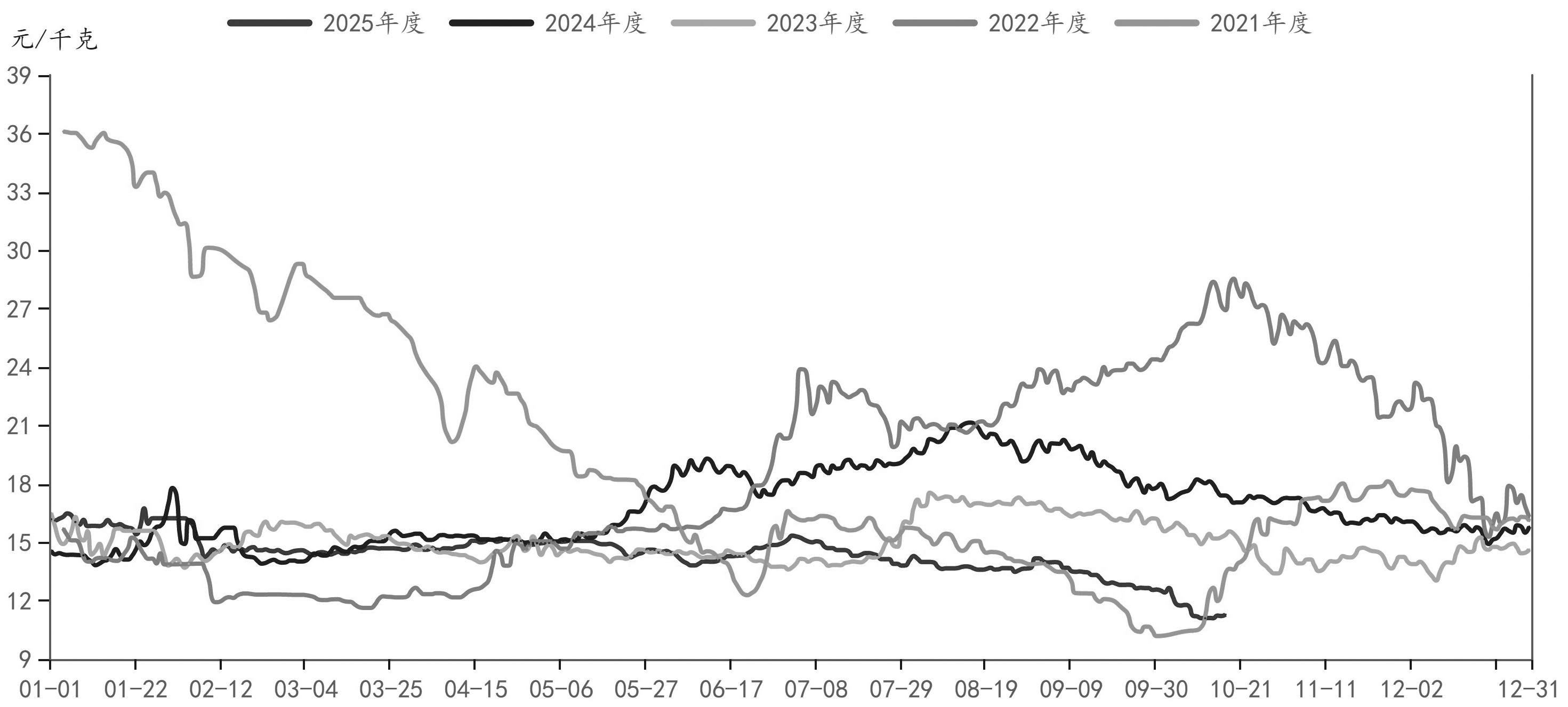
Report Industry Investment Rating No relevant content provided. Core Viewpoints of the Report - In the long - term, as the process of capacity optimization progresses, the market supply - demand relationship will gradually improve, and the far - month contracts are relatively supported due to the expectation of policy - driven capacity reduction. In the medium - term, with high supply pressure, pig prices are likely to fall rather than rise. In the short - term, pig prices may fluctuate due to multiple factors. Currently, the supply pressure remains high, and the oversupply situation is difficult to fundamentally change in the short - term, so pig prices may continue to be under pressure, and the market may maintain range - bound fluctuations [7][117]. Summary by Directory 1. Price Analysis (1) Futures Price - In October 2025, the main contract of live hog futures switched from LH2511 to LH2601, which fluctuated widely after a gap - down opening and dropped significantly overall. By the end of October, the main contract LH2601 fell 1010 yuan/ton, a decline of 7.88%, and closed at 11815 yuan/ton [6][13]. (2) Spot Price - As of October 23, 2025, the national average live hog price was 12.32 yuan/kg, down 0.95 yuan/kg from the previous month, and was at a relatively low level compared to the past five years. As of October 31, the average price of binary sows was 32.47 yuan/kg, down 0.03 yuan/kg from the previous month. As of October 23, the average price of piglets was 25.13 yuan/kg, down 3.12 yuan/kg from the previous month. The prices of 20 - kg foreign - ternary piglets in Hebei, Shandong, and Henan also dropped significantly compared to the previous month [17][21][25]. 2. Supply - Demand Balance Situation (1) Global Live Hog Supply - Demand Balance - According to the USDA report, in 2024, the global live hog supply - demand gap was 36,816 thousand heads, an increase of 13,929 thousand heads year - on - year, and the global pork supply - demand gap was 1,350 thousand tons, an increase of 505 thousand tons year - on - year [32]. (2) China's Live Hog Supply - Demand Balance - According to the USDA report, in 2024, China's live hog supply - demand gap was 2,410 thousand heads, an increase of 11,781 thousand heads year - on - year, and China's pork supply - demand gap was - 1,209 thousand tons, an increase of 592 thousand tons year - on - year [39]. 3. Supply - Side Situation (1) Year - on - Year Live Hog Inventory - As of September 2025, the national live hog inventory was 436.8 million heads, a month - on - month increase of 2.9% and a year - on - year increase of 2.3%, and was at a relatively low historical level [45]. (2) Reproductive Sow Inventory - As of September 2025, the national reproductive sow inventory was 40.35 million heads, a month - on - month decrease of 30 thousand heads (0.07%) and a year - on - year decrease of 270 thousand heads (0.66%), and was at the lowest historical level [50]. (3) Live Hog Slaughter - In the third quarter of 2025, the national cumulative live hog slaughter was 529.92 million heads, a year - on - year increase of 9.62 million heads (1.85%), and was at a relatively high level in the past five years [55]. (4) Pork Production - As of the third quarter of 2025, the national cumulative pork production was 43.68 million tons, a year - on - year increase of 1.28 million tons (3.02%), and was at the highest level in the past five years [61]. (5) China's Pork Imports - In September 2025, China's monthly pork imports were 80 thousand tons, the same as the previous year and a month - on - month decrease of 20%, and were at the lowest level in the past five years [66]. 4. Demand - Side Situation (1) Slaughter Volume of Designated Live Hog Slaughtering Enterprises in China - In September 2025, the slaughter volume of designated live hog slaughtering enterprises in China was 35.84 million heads, a month - on - month increase of 2.34 million heads (6.99%), and was at the highest level in the past five years [73]. (2) Pork and Main Meat Production - As of September 30, 2025, the national cumulative main meat production was 731.2 million tons, of which the cumulative pork production was 436.8 million tons, accounting for 59.74% [77]. 5. Feed Supply - Demand Analysis - As of October 23, 2025, the average spot price of corn was 2.46 yuan/kg, down 0.03 yuan/kg from the previous month, and the average spot price of soybean meal was 3.26 yuan/kg, down 0.02 yuan/kg from the previous month. As of September 2025, the feed production was 31.287 million tons, a year - on - year increase of 5.2%, and was at the highest level in the past five years [80][86]. 6. Breeding Benefit Analysis - As of October 31, 2025, the breeding profit of purchasing piglets was - 179.72 yuan/head, the self - breeding and self - raising live hog breeding profit was - 89.33 yuan/head, and the broiler chicken breeding profit was - 1.1 yuan/bird, all at relatively low historical levels [93][100][105]. 7. Pig - Grain Ratio - As of October 31, 2025, the pig - grain ratio in China was 5.54. According to the standard, the live hog price is in the second - level early - warning range of excessive decline, and the national reserve operation frequency has increased recently [110]. 8. Recent Policies and Conferences in the Live Hog Industry (1) Live Hog Capacity Regulation Enterprise Symposium - On September 16, the Animal Husbandry and Veterinary Bureau of the Ministry of Agriculture and Rural Affairs and the Price Department of the National Development and Reform Commission held a symposium, involving capacity control of reproductive sows, restriction of "secondary fattening", and weight reduction of live hog slaughter. The official proposed to reduce the reproductive sow inventory to 39.5 million heads, and many leading pig enterprises responded to the regulation [112][113]. (2) Video Conference on Live Hog Quarantine and Slaughter Work - On October 15, the Ministry of Agriculture and Rural Affairs held a video conference to strengthen live hog quarantine and slaughter work, emphasizing the importance of quarantine and slaughter supervision, and requiring further optimization of related work to ensure pork product quality and safety [114]. 9. Fundamental Analysis - In October 2025, the national live hog spot price, binary sow price, and piglet price all declined. The supply pressure remains high, and the actual capacity reduction is slow. The inventory of frozen pork has increased due to the slowdown in sales. The demand has recovered to some extent with the drop in temperature, but the increase is limited. The breeding profit is in a loss state [115][116]. 10. Future Outlook - The same as the core viewpoints, in the long - term, the supply - demand relationship will improve; in the medium - term, pig prices are likely to fall; in the short - term, prices may fluctuate. The current supply pressure is high, and pig prices may continue to be under pressure [7][117]. 11. Operation Strategy - It is expected that the main live hog contract in November may maintain low - level range - bound fluctuations. For single - side trading, take a range - bound approach and gradually stop profiting on previous short positions; for arbitrage, consider reverse arbitrage; for options, wait and see for the time being [8][118][119].
温氏股份总裁黎少松:龙头企业要带头去产能,我们在全国关停了七个猪场
Xin Lang Cai Jing· 2025-11-03 05:05
Core Viewpoint - The core challenge facing the industry is the pressure on profitability due to oversupply in the market [1] Industry Challenges - The industry is experiencing deep losses due to oversupply, which many participants find unsustainable [1] - There is a need to strictly control new production capacity to stabilize the overall supply [1] - Inefficient production capacity, especially in restricted areas and those failing to meet environmental standards, should be eliminated [1]

产能调控持续推进,猪价低位反弹!畜牧养殖ETF(516670)连续16日“吸金”5.2亿元
2 1 Shi Ji Jing Ji Bao Dao· 2025-10-30 01:52
Group 1 - The core viewpoint of the articles indicates a recent rebound in pig prices, with an average price of 12.51 yuan/kg as of October 30, reflecting a rise of 0.18 yuan/kg from the previous day and an increase of approximately 1.5 yuan/kg from mid-October's lowest point [1] - Short-term price increases are driven by seasonal consumption recovery and heightened sentiment for secondary fattening, while long-term trends suggest a downward shift in pig prices due to deepening breeding losses and ongoing capacity regulation policies [1] - The Ministry of Agriculture and Rural Affairs has reiterated the need for stronger regulation of pig production capacity, with the number of breeding sows recorded at 40.35 million at the end of September, a decrease of 450,000 from the peak at the end of last year [1] Group 2 - The livestock breeding ETF has attracted significant capital attention, with a net inflow of 520 million yuan over 16 consecutive days, bringing the total scale to 1.393 billion yuan, a new high since its listing [2] - The CSI Livestock Breeding Index, which covers the pig breeding industry chain, has a management fee rate of 0.2% per year, making it the lowest among ETFs tracking this index [2]
东兴证券:猪价持续下行 产能去化趋势已现 建议关注牧原股份(002714.SZ)
智通财经网· 2025-10-29 03:34
Core Viewpoint - The report from Dongxing Securities indicates that the regulation of pig production capacity under policy guidance will remain a key theme in the near future, with expectations for the elimination of outdated capacity increasing and the cost advantages of high-quality capacity becoming more pronounced, leading to better profit elasticity post-regulation [1] Industry Supply and Demand Performance - The downward trend in pig prices continues, with average prices for piglets, live pigs, and pork in September 2025 at 30.06 CNY/kg, 13.81 CNY/kg, and 24.50 CNY/kg respectively, showing month-on-month changes of -10.62%, -3.79%, and -1.92% [1] - After the National Day holiday, the average price of live pigs has been on a continuous decline, reaching 10.90 CNY/kg by October 20 [1] Supply Side - In September, there was a concentrated release of pig output, with an increase in the outflow plans from both large-scale and social farms as the weather cooled, leading to a rise in market pig supply and meat output [2] - The demand side saw slight improvement due to pre-holiday stocking and cooler weather, but slaughter enterprises remained cautious, and slow inventory reduction of frozen products limited fresh product consumption growth [2] - By mid-October, the pace of second fattening at near the 10 CNY/kg bottom price accelerated, providing slight support to short-term pig prices [2] Capacity Change Trends - As of the end of September, the number of breeding sows was 40.35 million, a month-on-month decrease of 0.07%, and a reduction of 90,000 heads compared to the end of Q2 [3] - Data from various sources indicate a consistent downward trend in breeding sow inventory, with a month-on-month decline of 0.84% in the sample data from Yongyi and 0.28% in the Steel Union sample data [3] Policy Regulation and Price Decline - Current policy regulations are fully implemented, with previous meetings clarifying requirements for production capacity control, slaughter weight, and environmental funding [4] - Leading enterprises have responded positively, with Muyuan Foods reporting a breeding sow inventory of 3.305 million heads at the end of September, a reduction of 126,000 heads since the end of June [4] - As of October 24, 2025, the average profit per head for self-bred pigs in the industry was -185.68 CNY, and for purchased piglets, it was -289.07 CNY, indicating increased losses in farming [4] - The combination of policy regulation and industry losses is expected to accelerate capacity reduction, with pig prices likely to see an upward turning point in the second half of 2026 [4]


华联期货生猪周报:产能过剩,猪价承压-20251026
Hua Lian Qi Huo· 2025-10-26 14:47
Report Summary 1. Report Industry Investment Rating No relevant information provided. 2. Core Viewpoints of the Report - The current pig market is characterized by an oversupply situation, with high pig production capacity and a weak demand outlook. The short - term supply - demand imbalance is difficult to reverse, and the pig price is under pressure. Although the policy has released positive signals, the actual reduction in production capacity is less than expected. The pig price is expected to remain in a weak and volatile state in the short term, with a possible seasonal improvement in the fourth quarter and a potential price rebound [7][8]. - For the strategy, the main contract of live pigs is expected to fluctuate widely at a low level, with a reference range of 11,000 - 13,000. In the options market, selling out - of - the - money put options is recommended [8]. 3. Summary by Directory 3.1. Weekly Views and Strategies - **Fundamental Viewpoints** - **Spot Market**: The weekly average price of live pigs increased to 11.33 yuan/kg, up 3.47% week - on - week and down 34.92% year - on - year. The low pig price has increased the enthusiasm for secondary fattening, providing some support around 10 yuan/kg. However, the high supply and weak demand situation persists, and the market is expected to remain weak and volatile [7][14]. - **Production Capacity**: In the first three quarters of 2025, the national pig slaughter reached 529.92 million heads, a year - on - year increase of 1.8%. The pork output was 43.68 million tons, a year - on - year increase of 3.0%. By the end of the third quarter, the national pig inventory was 436.8 million heads, a year - on - year increase of 2.3%. In September 2025, the inventory of breeding sows was 4.035 million heads, a year - on - year decrease of 0.7%. The production efficiency has improved, and the pig slaughter is expected to continue to grow until May 2026 [7]. - **Strategy Views and Outlook** - **Outlook**: Policy signals are positive, but the actual reduction in production capacity is slow. In the short term, the supply is abundant, and it is the off - season for demand, so the pig price is under pressure. In the medium term, the production capacity is still being released. The government has introduced a "double 100,000 - head" task for large - scale breeding enterprises. The supply pressure in the fourth quarter of this year and the first quarter of next year is still large, but the demand may improve seasonally in the fourth quarter [8]. - **Strategy**: The supply - demand imbalance is expected to continue in the short term. The main contract is expected to fluctuate between 11,000 - 13,000. Selling out - of - the - money put options is recommended [8]. 3.2. Futures and Spot Market - **Pig Futures and Spot Prices**: The weekly average price of live pigs increased to 11.33 yuan/kg, up 3.47% week - on - week and down 34.92% year - on - year. The low price has increased the enthusiasm for secondary fattening, but the high supply and weak demand situation persists [14]. - **Futures - Spot Basis**: No specific information provided. - **Futures Price Spreads**: No specific analysis provided. - **Standard - Fat and Hairy - White Price Spreads**: The prices of standard and fat pigs increased synchronously this week. The average price difference between standard and fat pigs was - 0.76 yuan/kg, the same as last week. The increase was due to the sufficient supply of standard pigs, low inventory of large - weight fat pigs, and the recovery of catering consumption. The price increase of standard pigs was more significant, leading to a narrowing of the price difference [34]. - **Prices of Piglets and Binary Sows**: The weekly average price of 7 - kg piglets was 166.43 yuan/head, up 0.72% week - on - week and down 50.57% year - on - year. The low market sentiment and strict environmental regulations in Guangdong and Guangxi have reduced the enthusiasm for piglet replenishment [38]. - **Price of Culled Sows**: The average price of culled sows this week was 8.29 yuan/kg, up 2.01% week - on - week and down 35.59% year - on - year. The price is expected to continue to fluctuate with the pig price [41]. 3.3. Production Capacity - **Inventory of Breeding Sows**: In September 2025, the national inventory of breeding sows was 4.035 million heads, a year - on - year decrease of 0.7% and a month - on - month decrease of 0.2%. Although it is within the normal range, it is at the upper limit. The production efficiency has improved, and the pig slaughter is expected to grow until May 2026. According to sample data, the inventory of breeding sows in large - scale farms decreased slightly in September, and the inventory of small and medium - sized farms also decreased [45][48]. - **Culling Volume of Breeding Sows**: In September, the culling volume of breeding sows in large - scale farms was 106,603 heads, a month - on - month increase of 2.54% and a year - on - year increase of 9.60%. The culling volume of small and medium - sized farms was 11,526 heads, a month - on - month increase of 13.80% and a year - on - year increase of 29.83%. The culling volume is expected to continue to increase in October, but the process may be slow [51]. - **Inventory Proportion of Breeding Sows**: No specific analysis provided. 3.4. Supply Side - **Inventory of Commercial Pigs**: In September, the inventory of commercial pigs in large - scale farms was 36.8499 million heads, a month - on - month increase of 1.44% and a year - on - year increase of 5.29%. The inventory of small and medium - sized farms was 1.5402 million heads, a month - on - month increase of 2.93% and a year - on - year increase of 6.29%. The inventory is expected to increase in October [58]. - **Slaughter Volume of Commercial Pigs**: In September, the slaughter volume of commercial pigs in large - scale farms was 10.2173 million heads, a month - on - month decrease of 4.54% and a year - on - year increase of 23.49%. The slaughter volume of small and medium - sized farms was 0.4803 million heads, a month - on - month increase of 1.39% and a year - on - year increase of 33.52%. The slaughter volume is expected to increase in October [61]. - **Average Slaughter Weight of Commercial Pigs**: The average slaughter weight of national outer - ternary pigs this week was 123.21 kg, a week - on - week decrease of 0.18% and a year - on - year decrease of 0.49%. The weight is expected to be supported next week [67]. 3.5. Demand Side - **Pig Slaughter Volume**: The proportion of pigs under 90 kg and over 150 kg in the slaughter volume remained the same as last week. The temperature drop has increased the expectation of a wider standard - fat price difference, but it has little impact on the slaughter proportion of small and large - weight pigs [71]. - **Cold Storage Rate of Slaughtering Enterprises**: The fresh - sales rate of key slaughtering enterprises this week was 86.14%, the same as last week. The cold - storage rate was 18.08%, an increase of 0.24% from last week. The fresh - sales rate is expected to decline next week, and the cold - storage rate may continue to increase slightly [76]. - **Operating Rate and Fresh - Sales Rate of Slaughtering Enterprises**: The operating rate of slaughtering enterprises this week was 34.94%, an increase of 2.56 percentage points from last week and 7.35 percentage points from the same period last year. The operating rate is expected to continue to increase slightly next week [77]. - **Substitute Prices**: No specific analysis provided. 3.6. Cost and Profit - **Pig Breeding and Slaughtering Profit**: The pig breeding industry has entered a deep - loss stage. The average loss per head of self - breeding and self - raising and purchasing piglets this week was 149.54 yuan and 279.65 yuan respectively, both showing a downward trend. The price is expected to remain strong in the short term, but the overall supply - demand pattern has not changed fundamentally [91]. - **Slaughter Gross Profit and Feed - to - Meat Ratio**: No specific analysis provided. - **Pig - Grain Ratio**: The pig - grain ratio this week was 5.13, a week - on - week increase of 3.89%. The market has returned to the third - level early - warning range. The pig - grain ratio is expected to fluctuate little next week [98].
供需矛盾加剧 生猪弱势格局难扭转
Qi Huo Ri Bao· 2025-10-20 23:56
Core Viewpoint - The overall demand for live pigs during the National Day holiday showed a "peak season not prosperous" trend, with prices declining and supply pressures expected to persist post-holiday [1][3]. Supply and Demand Dynamics - After the National Day holiday, the supply pressure in the live pig market is unlikely to ease, leading to a significant imbalance between supply and demand, with the average price of live pigs reported at 10.95 yuan/kg, a year-on-year decrease of 38.96% [1][3]. - The futures market for live pigs saw a decline, with the main contract hitting a record low of 11,120 yuan/ton on October 13, indicating a pessimistic market sentiment regarding future supply and demand dynamics [3]. Policy and Regulatory Environment - The Ministry of Agriculture and Rural Affairs has held multiple meetings to promote high-quality development in the pig industry, suggesting measures such as reducing the number of breeding sows and controlling new production capacity [4]. - A significant policy directive was issued requiring the top 25 pig farming enterprises to reduce their breeding sows by 1 million heads by the end of January 2026, representing about 10% of their current stock [4]. Current Industry Metrics - As of August 2025, the national breeding sow stock was reported at 40.38 million heads, slightly above the normal range, indicating a temporary oversupply situation [5]. - The production efficiency in the pig farming industry has improved, with the average number of weaned piglets per sow increasing from 24 to over 26, leading to prolonged capacity cycles [5]. Market Behavior and Trends - Due to falling prices, many large-scale enterprises are accelerating their slaughtering processes to mitigate losses, resulting in a 3% increase in daily slaughter volumes post-holiday [6]. - The current market shows a decline in both the operating rates and slaughter volumes of sample enterprises, indicating insufficient consumer demand to absorb the increasing supply [6]. Future Market Outlook - The supply of live pigs remains excessive, and weak downstream demand is expected to keep prices under pressure, with short-term price fluctuations likely to continue [7]. - Seasonal demand may increase towards the end of the year, but the overall market is anticipated to maintain a trend of supply growth outpacing demand growth, with prices expected to remain low even during traditional peak seasons [7].