稳定币监管

Search documents
欧洲央行行长拉加德:欧盟应弥补稳定币监管的漏洞
Ge Long Hui A P P· 2025-09-03 08:40
Core Viewpoint - The European Central Bank President Christine Lagarde emphasizes the need for EU lawmakers to require foreign stablecoin issuers to implement "safeguards" and "strong equivalent regulatory frameworks" to prevent reserve run risks within the EU [1] Regulatory Framework - Lagarde stated that EU legislation should ensure that such plans cannot operate within the EU unless supported by strong equivalent frameworks from other jurisdictions and safeguards related to asset transfers between EU and non-EU entities [1] - She highlighted the importance of international cooperation, noting that without a fair global regulatory environment, risks will always seek the weakest links [1]
今夜!大跳水
Zhong Guo Ji Jin Bao· 2025-09-01 16:44
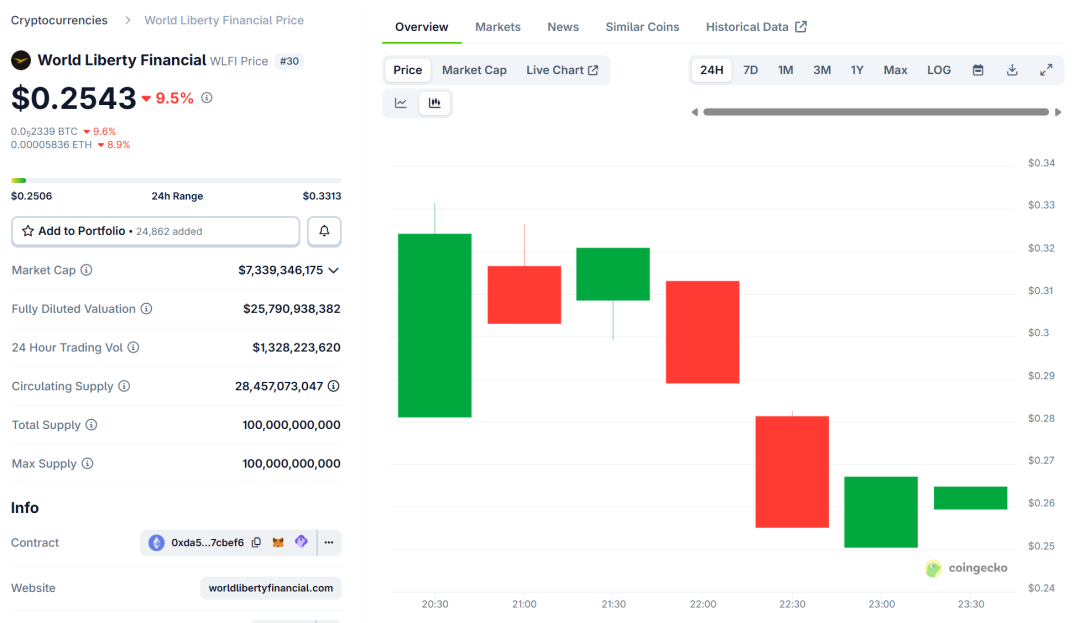
Group 1 - The WLFI token, supported by the Trump family, officially began trading on September 1, with early investors able to unlock and sell 20% of their holdings, which represents 5% of the total supply [3][4] - WLFI surged over 17% after its debut, reaching a high of $0.33, with an initial average price of approximately $0.28, and is listed on major exchanges like Binance, OKX, and Kraken [3][4] - The Trump family's significant stake in World Liberty Financial includes 38% ownership through DT Marks DEFI LLC, which also holds 22.5 billion WLFI tokens and receives 75% of the token sale revenue [5] Group 2 - The launch of WLFI is seen as a test of the value that the Trump name can bring to the cryptocurrency market, with potential market capitalization placing it among the top 45 tokens [4] - The project aims to bridge traditional finance and open economies, attracting retail interest and liquidity, while also facing criticism regarding potential conflicts of interest due to the Trump family's involvement in cryptocurrency during regulatory changes [5][10] - Since the launch of World Liberty, the Trump family has reportedly earned around $500 million from the project, with the association to Trump being a key factor for early investors [9]

担心6.6万亿美元存款外流,美国银行业游说阻止稳定币付息规则
Hua Er Jie Jian Wen· 2025-08-25 13:46
Core Viewpoint - The new stablecoin regulations in the U.S. may create regulatory loopholes that could lead to significant capital outflows from the banking system, potentially amounting to trillions of dollars [1][2]. Group 1: Regulatory Concerns - Banking lobby groups have warned lawmakers about regulatory "loopholes" in the new stablecoin regulations, which could allow users to earn interest on funds held in crypto platforms while banks are restricted from doing so [1][2]. - The recently passed "Genius Act" aims to regulate the $288 billion global stablecoin market but prohibits issuers from paying interest to customers, creating an uneven playing field between banks and crypto platforms [2]. Group 2: Potential Economic Impact - The banking industry estimates that stablecoins could siphon off approximately $6.6 trillion in deposits from banks, which could weaken lending capabilities and impact the overall economy [2]. - Experts warn that a mass migration of deposits could lead to higher interest rates and increased borrowing costs for businesses and households [3]. Group 3: Crypto Industry Response - The crypto sector has pushed back against banks' claims, arguing that banks are attempting to stifle competition by preventing exchanges from offering interest on stablecoin holdings [4]. - Crypto advocates assert that enforcing banks' demands would favor large traditional banks, which often do not provide attractive yields to consumers, thus limiting consumer choice [4].
稳定币第一股不稳定:Q2营收增53%,但净亏损4.82亿美元
Guan Cha Zhe Wang· 2025-08-14 12:19
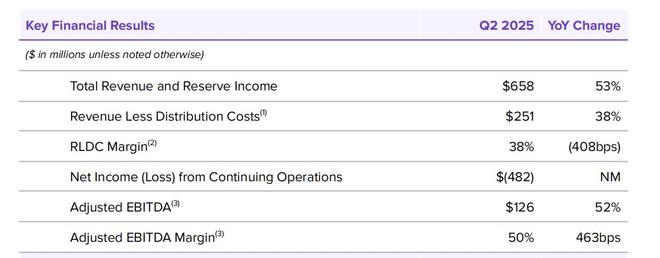
Core Insights - Circle Internet Group reported strong Q2 results with USDC circulation reaching $65.2 billion, a 90% year-over-year increase, driving total revenue and reserve income to $658 million, up 53% [1][3][4] - The passage of the GENIUS Act in June established a clear regulatory framework for stablecoins, benefiting compliant issuers like Circle and marking a shift in the competitive landscape towards compliance capabilities [1][7][9] Financial Performance - Total revenue and reserve income for Q2 reached $658 million, a 53% increase year-over-year, with reserve income growing 16.1% to $634 million [3][4] - The company reported a net loss of $482 million, primarily due to one-time non-cash expenses related to IPO stock incentives and convertible debt valuation changes [3][4][8] - Adjusted EBITDA increased by 52% to $126 million, with an adjusted EBITDA margin of 50% [4][8] Operational Highlights - USDC circulation reached $61.3 billion by the end of Q2, with a 90% year-over-year growth, and the market share increased to 28% [5][6] - Circle's self-developed Arc blockchain upgraded USDC to a "native gas," enabling faster cross-chain settlements and reducing transaction costs by 70% [2][6] - The Circle Payment Network (CPN) has opened four payment channels, with over 100 financial institutions in the onboarding process [5][6] Regulatory Environment - The GENIUS Act provides a federal licensing framework for stablecoins, requiring 100% reserves and regular audits, which increases operational costs but enhances compliance [7][8][9] - Tether, holding 65% of the market share, announced a transition to 100% cash and short-term government bonds by the end of 2025, responding to regulatory pressures [1][9] Competitive Landscape - The focus of competition in the stablecoin market is shifting from regulatory arbitrage to compliance and technological integration [2][7] - Circle's compliance advantages and technological innovations position it favorably against competitors like Tether and emerging players such as PayPal [9]

财报后宣布“股份出售”,“稳定币第一股”Circle盘后大跌6%
Hua Er Jie Jian Wen· 2025-08-13 00:43
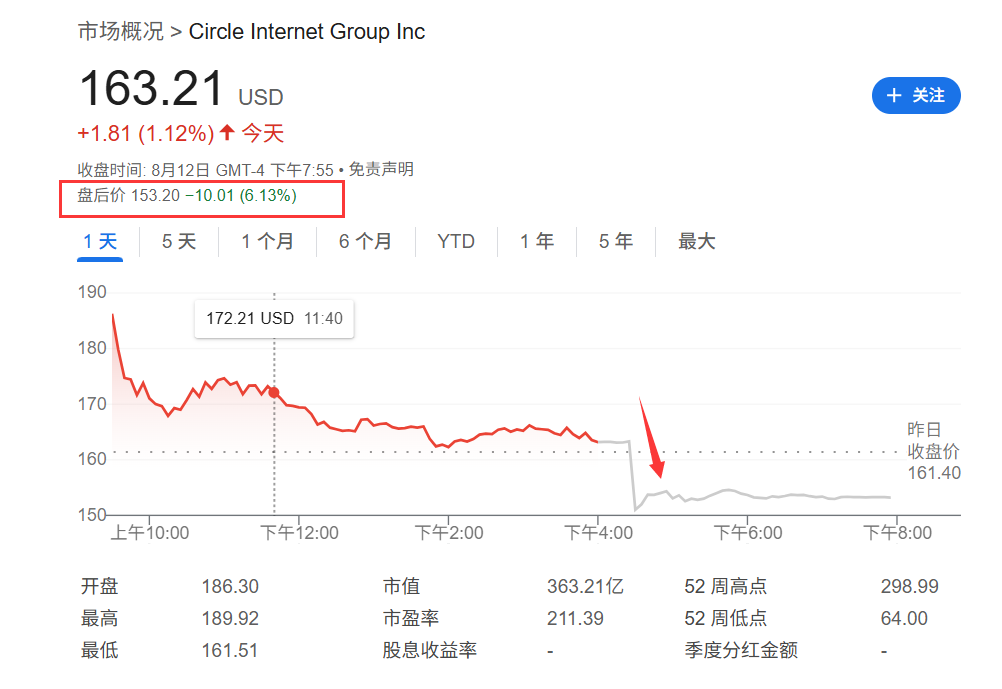
Group 1 - Circle's stock price fell over 6% after announcing a plan to sell 10 million shares, including 2 million new shares and 8 million from existing shareholders, aiming to raise $1.63 billion at a closing price of $163.21 [1][3] - The timing of the stock issuance raised market concerns, as it followed a strong Q2 earnings report showing a 53% year-over-year revenue increase to $658 million and a 90% increase in USDC circulation to $61.3 billion [3][4] - The issuance is seen as increasing the supply of circulating shares, potentially leading to investor worries about insiders cashing out [3] Group 2 - The signing of the GENIUS Act has established a federal regulatory framework for stablecoins, which is a significant benefit for Circle's long-term compliance status [4] - Despite the improved regulatory environment, Circle acknowledged facing challenges such as intensified competition in yield-generating digital assets, potential stablecoin run risks, technology disruption risks, and an evolving regulatory landscape [4]
观学院直播厅【思想者说】第11期(上)| “游击队”变成了“正规军”:稳定币的风险究竟在哪儿?
Sou Hu Cai Jing· 2025-08-11 05:41
Group 1: Regulatory Developments - The U.S. has introduced three significant bills in July, including the GENIUS Act, which establishes a federal regulatory framework for stablecoins [2][4] - The GENIUS Act aims to provide oversight for stablecoins, acknowledging their existence and associated risks, rather than simply launching new stablecoins [5][8] - Hong Kong has also enacted its Stablecoin Regulation, allowing local companies to apply for licenses to issue RMB stablecoins [1][2] Group 2: Definition and Types of Stablecoins - Stablecoins are defined as digital assets pegged to fiat currencies at a 1:1 ratio, but they are not equivalent to legal tender [4][5] - There are three main types of stablecoins: fiat-backed stablecoins, asset-backed stablecoins, and algorithmic stablecoins, with the latter losing market favor due to past risks [7][8] Group 3: Risks Associated with Stablecoins - Stablecoins face three primary risks: counterparty risk due to private issuers, peg risk from potential de-pegging from fiat currencies, and systemic risk from integration with traditional financial systems [8] - The GENIUS Act requires stablecoin issuers to hold high-quality liquid assets equivalent to the amount of stablecoins issued, which could introduce systemic risks if not managed properly [8]

香港金管局呼吁市民提防稳定币不实信息
智通财经网· 2025-08-11 02:39
Core Viewpoint - The Hong Kong Monetary Authority (HKMA) has announced that the "Stablecoin Regulation" and the regulatory framework for stablecoin issuers officially came into effect on the 1st of this month, emphasizing the need for regulated channels for stablecoin sales [1] Group 1: Regulatory Framework - The regulation mandates that stablecoin sales must occur through regulated channels, with only "permitted offerors" allowed to legally offer stablecoins [1] - Currently, "permitted offerors" are limited to licensed stablecoin issuers, corporations licensed by the Hong Kong Securities and Futures Commission (SFC) for Type 1 regulated activities, licensed virtual asset trading platforms, banks, and licensed stored value payment tool providers [1] - The HKMA clarified that non-"permitted offerors" are prohibited from offering stablecoins to retail or professional investors [1] Group 2: Public Awareness - The HKMA has noted the circulation of a promotional flyer regarding stablecoin sales that falsely bears its logo, clarifying that it has not issued any such promotional material [1] - The authority has urged the public to remain vigilant regarding such misleading information [1] Group 3: Exclusions - Virtual asset over-the-counter (OTC) trading institutions are currently not classified as "permitted offerors" under the new regulation [1]
香港稳定币,慢了一拍
虎嗅APP· 2025-08-09 09:33
Core Viewpoint - The implementation of the "Stablecoin Regulation" in Hong Kong is expected to revolutionize digital currency, but the stringent licensing requirements have dampened market sentiment, leading to a pessimistic outlook on the future of stablecoins in Hong Kong [2][9]. Summary by Sections Licensing and Market Entry - The licensing requirements for stablecoin issuance in Hong Kong are exceptionally strict, making it difficult for major internet companies like JD.com and Ant Group to qualify for the initial batch of licenses [2][4]. - Only a limited number of licenses, in single digits, will be issued, significantly lower than the market's expectation of "dozens" [2][9]. Regulatory Concerns - Hong Kong's regulatory authorities prioritize safety, fearing that inadequate regulation could lead to financial crimes such as money laundering, especially given the cross-border nature of stablecoins [4][6]. - The regulations require stablecoin issuers to verify the identity of every user and track all transactions to prevent illicit activities [5][6]. Compliance Challenges for Internet Companies - Internet platforms like JD.com and Ant Group face challenges in meeting the stringent compliance and capital requirements set by Hong Kong's regulations, which are more easily met by traditional financial institutions [5][9]. - The regulations also impose high reserve requirements and asset backing for stablecoins, which are difficult for fintech companies to fulfill [5][6]. Comparison with Other Digital Currencies - The stablecoin model in Hong Kong emphasizes compliance, safety, and transparency, distinguishing it from decentralized cryptocurrencies like Bitcoin and USDT [6][9]. - The article suggests that Hong Kong's stablecoin could serve as a digital currency extension rather than a direct competitor to existing cryptocurrencies [6][7]. Global Context and Strategic Positioning - The dominance of USD-pegged stablecoins in global transactions highlights the need for Hong Kong to establish its own stablecoin to mitigate the risks associated with dollar hegemony [8][9]. - The article argues that Hong Kong's stablecoin initiative is both a defensive measure against dollar dominance and an offensive strategy to gain a larger role in the future global monetary system [7][8].

监管重塑与支付变革,《Web3支付产业研讨会》成功举办
Sou Hu Cai Jing· 2025-08-08 12:45
Core Insights - The seminar focused on the explosive growth of stablecoins, regulatory reshaping, and payment transformation in the Web3 payment industry [1][3] Group 1: Stablecoin Market Dynamics - The stablecoin market is characterized by a significant scale and oligopolistic effect, with USDT and USDC accounting for over 86% of the market share [3] - There are seven key information gaps between traditional payment systems and stablecoin payments identified by industry experts [3] Group 2: Regulatory and Compliance Framework - Discussions highlighted the importance of a robust technical compliance framework for stablecoins, including risk management and anti-money laundering (AML) measures [3][5] - The need for a risk-based transaction monitoring system to track the flow of stablecoins and maintain a blacklist of sanctioned addresses was emphasized [3] Group 3: Innovation and Licensing in Crypto Payments - The seminar covered the innovative pathways and compliance practices for crypto payments, detailing licensing requirements in major regions such as the EU and Singapore [7] - The EU's MiCA CASP licensing requirements were specifically discussed, including capital requirements and management reviews [7] Group 4: RWA as a Use Case for Stablecoins - Real World Assets (RWA) were identified as a valuable application scenario for stablecoins, providing significant use cases within the stablecoin ecosystem [10] Group 5: Industry Perspectives and Future Directions - The roundtable discussion addressed the regulatory landscape for stablecoins globally, with a focus on the challenges and pathways for implementation [11] - Experts suggested that practitioners in the Web3 space should prioritize entering regions with mature regulations to gain experience in compliance and industry logic [12]

前纽交所总裁带领Bullish冲刺美股:手握2.4万枚比特币,估值300亿
Sou Hu Cai Jing· 2025-08-07 06:58
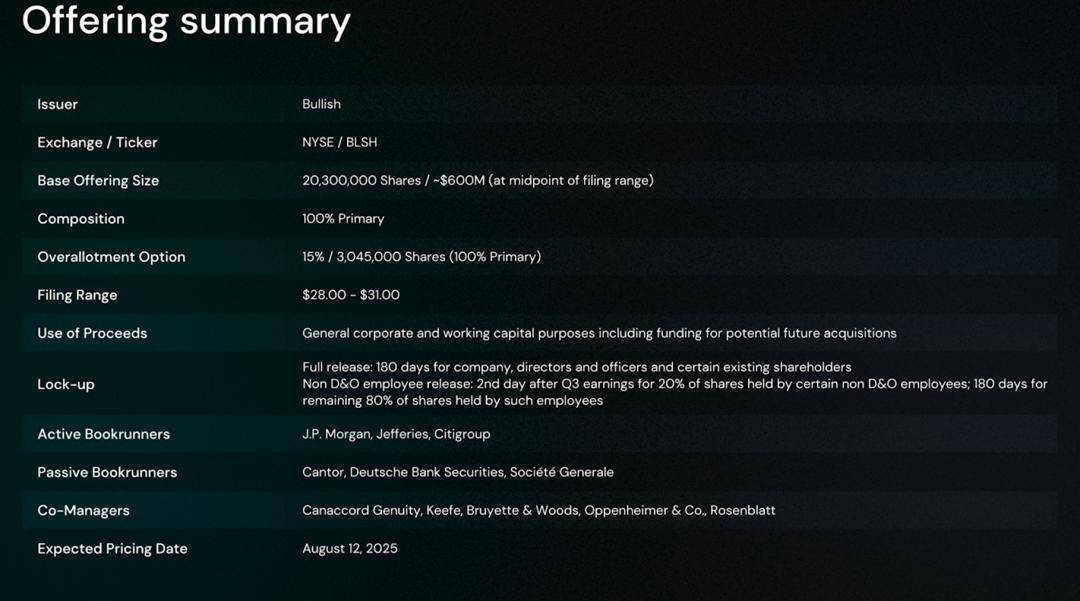
Core Insights - Bullish, a digital asset exchange operator backed by Peter Thiel, is preparing for an IPO on the NYSE with a valuation of approximately $4.2 billion, aiming to raise up to $629 million by offering 20.3 million shares at a price range of $28 to $31 [1][2][3] Financial Overview - As of March 31, 2025, Bullish reported over $3 billion in liquid assets, including 24,000 Bitcoin and 12,600 Ethereum, alongside $418 million in cash and stablecoins [3] - The company experienced significant trading volume growth, with Bitcoin trading volume reaching $108.6 billion in Q1 2025, a 36% increase from the previous year [20] - Bullish's digital asset sales are projected to grow from $72.89 billion in 2022 to $250.2 billion in 2024, with net income shifting from a loss of $4.25 billion in 2022 to a profit of $79.56 million in 2024 [21][24] Market Position and Strategy - Bullish focuses on institutional investors, providing a range of products and services to enhance their operations in the digital asset space [13][19] - The company has expanded its offerings through acquisitions, including CoinDesk in 2023 and CCData in 2024, enhancing its data and information services capabilities [15][17] - Bullish operates under multiple Tier 1 regulatory licenses, ensuring compliance and facilitating a global trading environment [52] Recent Developments - The company has seen a surge in trading volumes and has established a strong market presence, with a reported total trading volume of $758 billion in Q1 2025 [32][35] - Bullish's management team, led by CEO Thomas W. Farley, has a history of creating shareholder value and is focused on sustainable growth [59][60] Shareholder Structure - Major shareholders include Brendan F. Blumer, who holds 36.3% of Class A shares, and Peter Thiel, a significant backer of the company [26][27]