飞地经济

Search documents
湖南建立利益分享机制 加快推进 “飞地园区” 发展
Zhong Guo Fa Zhan Wang· 2025-11-13 03:08
Core Viewpoint - The Hunan Provincial Development and Reform Commission has issued policies to establish a benefit-sharing mechanism to accelerate the development of "flying land parks," aiming to break administrative barriers and promote high-quality development of the "flying economy" in the province [1][6]. Summary by Sections Policy Framework - The "Several Policies" propose multiple encouragement and support measures for the development of "flying land parks," focusing on creating a new regional cooperation mechanism centered on benefit sharing, optimizing industrial layout, and promoting resource allocation efficiency [2][3]. - Hunan has established a core framework of differentiated policies for three types of parks: support type, cooperation type, and innovation type, with specific rules for a 10-year benefit-sharing period [2]. Benefit Sharing Mechanism - For support-type parks, the tax revenue sharing between the "flying out" and "flying in" areas is set at a maximum of 4:6 for the first five years and 5:5 for the latter five years. Cooperation-type parks can adjust the sharing ratio based on market principles, while innovation-type parks' tax revenue primarily belongs to the "flying in" area [2][3]. Support Measures - The policies include support measures across seven areas: cooperation mechanisms, financial resources, financial services, resource guarantees, technological innovation, talent introduction, and evaluation [3]. - Financial support will be provided through the Jin Furong Fund and special bonds for infrastructure development, with local governments allowed to invest in projects through funds [3]. Existing Practices - Existing practices in Hunan's "flying economy" provide examples for policy implementation, such as the Yuxu Industrial Park, which has signed contracts with 36 companies and launched 22 projects, and the Xiangqiong advanced manufacturing industry park, which has attracted 29 projects with a total investment of 13 billion yuan [4]. Overall Impact - The introduction of the "Several Policies" marks a significant step in reforming park management systems in Hunan, establishing a complete system for cross-regional collaborative development that promotes resource optimization and a new industrial development pattern of mutual benefits [6].


“盐田-饶平汇智谷”反向人才飞地运营中心在深揭牌
Nan Fang Nong Cun Bao· 2025-11-10 15:03
Core Points - The "Saltian-Raoping Huizhi Valley" reverse talent fly-in operation center has been officially inaugurated in Shenzhen, aiming to enhance regional economic cooperation and development between Saltian District and Raoping County [2][15][32] Group 1 - The operation center occupies an area of approximately 500 square meters and is designed to leverage the geographical advantages, research capabilities, and market resources of Shenzhen Saltian, while integrating the industrial characteristics and development needs of Raoping [11][12] - The center will serve as a platform for investment attraction, project incubation, talent recruitment, and product showcasing, facilitating deeper collaboration and support between the two regions [13][18] - Raoping is currently in a phase of rapid development, presenting significant potential and opportunities, with the center expected to inject strong "intellectual core" momentum into Raoping's high-quality development [17][19] Group 2 - The operation of the "Saltian-Raoping Huizhi Valley" is managed by Shenzhen Dongyu Happiness Industry Investment Co., which aims to act as a transit hub for talent, technology, achievements, and capital into Raoping, as well as an acceleration zone for enterprise investment [20][21] - The center encourages high-quality enterprises from Raoping to establish branches in Shenzhen, focusing on product development, talent introduction, market promotion, and investment attraction, thereby linking urban incubation with local industrialization [22][24] - The collaboration between Shenzhen Saltian and Raoping is marked as a historic moment, indicating a new level of cooperation and development between the two regions [31][32]

广东“飞地经济学”:园区里转动产业新引擎
2 1 Shi Ji Jing Ji Bao Dao· 2025-11-07 12:56
(原标题:广东"飞地经济学":园区里转动产业新引擎) 俯瞰广清产业园 南方财经记者李振 广州报道 走进欧派AI超级工厂衣柜车间,几乎看不到工人,开料、封边、排孔工艺全部由机器自动完成,灵活 的6轴机械臂约一个半小时就能完成近2000件板材的分拣工作。 这里是欧派家居的广东清远制造基地,位于广清产业园内。很难想象,10多年前这里只是一个广袤荒芜 的小镇;如今,这里俨然已是一座新城,商业广场、现代化厂房、绿道和公园,一股现代气息扑面而 来。 作为广东省承接产业有序转移重点主平台园区之一,广清产业园区截至目前已累计完成工业总产值近 1200亿元,全口径税收约26亿元,可谓探索"飞地经济"的典型代表。 将时间回溯到2017年,欧派家居之所以将生产基地从广州转移到广清产业园,正是看中了这里优越的地 理位置和良好的营商环境。"我们反馈的需求,园区总能快速响应。"清远欧派集成家居有限公司党支部 书记钟菠对此印象深刻。 广清产业园由广州开发区主导开发,自2014年成立以来就不断推动广清一体化向纵深发展,探索出"广 州总部+清远基地""广州前端+清远后台""广州研发+清远制造""广州孵化+清远产业化"等合作共建模 式。这些模式 ...

陕西神木:“黑金之地”的绿色蜕变
Xin Jing Bao· 2025-10-27 09:05
Core Insights - Shenmu City, known for its abundant coal resources, is transitioning from a resource-dependent economy to a diversified one, focusing on agricultural efficiency, rural income growth, and revitalization through technology and collaboration between villages and enterprises [1] Agricultural Efficiency - The "Four Precision" integrated technology measures implemented in demonstration fields have led to improved crop yields despite adverse weather conditions, with a focus on precise land preparation, navigation-based planting, water and fertilizer management, and pest control [2][4] - The "Feidi Economy" demonstration park has transformed former mining areas into productive agricultural land, with nearly 50,000 acres of ecological restoration and the establishment of various agricultural and renewable energy facilities [3] Rural Income Growth - The "Village-Enterprise Pairing" initiative has successfully converted previously abandoned land into productive agricultural bases, significantly increasing local income and providing stable employment for villagers [5][6] - Since the launch of the "Village-Enterprise Pairing Strong Industry" initiative, 88 enterprises have partnered with 90 villages, resulting in 81 projects and an investment of 820 million yuan, laying a solid foundation for rural revitalization [7] Rural Vitality - The "He Mei Village" initiative has revitalized rural areas by improving infrastructure and living conditions, leading to increased tourism and local economic activity [8][9] - Significant investments have been made in rural development, including the construction of 66 "He Mei" villages, with funding of approximately 1.143 billion yuan, enhancing living standards and public services [10]
中共浙江省委党校浙江省“八八战略”创新发展研究院 以飞地经济重塑山海协作新格局
Jing Ji Ri Bao· 2025-10-26 22:06
Core Insights - The article discusses the initiatives taken by Zhejiang Province to optimize regional economic layout and promote coordinated development through a multi-layered and multi-form "flying land" system, breaking down administrative barriers and reshaping the internal logic of regional development [1][5] Innovation Flying Land Model - Zhejiang Province is exploring a "two-way flying land" model to enhance cooperation between developed and underdeveloped regions, aiming for a win-win situation by integrating innovation and industrial chains [1] - The province has introduced policies to promote the construction of "development flying lands," facilitating the deep integration of industrial and innovation chains across regions [2] Multi-Party Flying Land Model - To address challenges such as reluctance to land incubation projects, Zhejiang is developing a "multi-party flying land" model, allowing projects to settle in a "third location" outside the two collaborating regions [2] - In 2022, policies were issued to support underdeveloped counties in establishing flying economies in central cities and new areas of the Greater Bay Area, with specific land allocation measures [2] Incentive Mechanism Improvement - Zhejiang is enhancing the distribution mechanism to boost the enthusiasm of local governments involved in flying land projects, with a focus on benefiting underdeveloped areas [3] - The province is lowering standards for recognizing provincial-level technology-based enterprise incubators and encouraging applications for specialized small and medium enterprises [3] Organizational Structure Strengthening - A multi-level coordination mechanism has been established to promote flying land construction, including integrating flying land progress into provincial leadership responsibilities [4] - Dynamic monitoring of flying land construction is conducted, with annual progress reports submitted for review, and incentives provided for successful projects [4] - A collaborative mechanism between state-owned enterprises from both regions is being developed to manage the construction and operation of flying lands through a platform company [5]
锚定长三角一体化,盐城激活高质量发展新动能
Yang Zi Wan Bao Wang· 2025-09-10 14:40
Core Insights - The Yangtze River Delta region is recognized as one of the most economically vibrant and innovative areas in China, contributing nearly a quarter of the national economic output with only 4% of the land area [2] Group 1: Industrial Development - The Zhengtai New Energy Yancheng Base, a key manufacturing project initiated by the Zhengtai Group, has established production lines for 3GW of battery cells and 8GW of modules, benefiting from the transportation advantages of the Yangtze River Delta [1] - The Yancheng area has seen significant industrial growth, with an average annual increase of 43.4% in industrial sales and 108.5% in industrial output value since the 14th Five-Year Plan [2] - A total of 359 new projects worth over 100 million yuan were initiated in Yancheng in the first half of the year, representing 88.6% of all new projects in the city [4] Group 2: Regional Cooperation - Yancheng has established 14 cooperative parks with the Yangtze River Delta region, with 11 of them being cooperative parks with Shanghai, covering all counties [3] - The city is actively engaging in cross-regional cooperation, having recently visited Shanghai to discuss major collaborative projects with various groups [2] Group 3: Green Energy and Innovation - Yancheng is a national pilot city for carbon peaking and has become the first city in the Yangtze River Delta to generate over 10 million kilowatts of renewable energy, with renewable energy accounting for over 60% of total electricity consumption [5] - The city has implemented innovative mechanisms for ecological value realization, including the first wetland carbon credit pledge loan in Jiangsu [5] - The establishment of various technology transfer and innovation centers has led to the growth of over 300 technology enterprises and talent teams in the region [4] Group 4: Infrastructure and Services - The Yancheng Port to Shanghai Port route has established a daily service, enhancing transportation connectivity [5] - The city is focused on improving its business environment, signing cooperation agreements with 227 regions to facilitate cross-regional administrative services [5] - Yancheng's strategic positioning as a "northern hub" aims to connect the Yangtze River Delta with the Huaihe Ecological Economic Belt, reflecting a shift in mindset among local leaders [6]
一江连两广,携手奔康庄——粤桂协作撬动区域融合发展新动能
Xin Hua Wang· 2025-09-08 02:05
Core Viewpoint - The collaboration between Guangdong and Guangxi (粤桂协作) is enhancing regional economic development through industrial cooperation, talent exchange, and consumer support, ultimately promoting common prosperity and sustainable growth in the region [1][3][4]. Industrial Development - The establishment of the Shenzhen-based deep manufacturing industrial park in Baise, Guangxi, is expected to achieve an annual output value of over 1 billion yuan, with a total projected output of 1.5 billion yuan for the park [2][4]. - Guangxi is set to build 50 projects focused on extending and strengthening industrial chains, with 49 unique industrial categories being developed [3]. - The collaboration has led to the creation of 787 new enterprises and 125 industrial parks, generating an industrial agglomeration effect with an estimated output value of 600 billion yuan [4][5]. Employment and Labor Services - The collaboration has facilitated the creation of 3,500 job opportunities in the Shenzhen Longgang-Baise Jingxi cooperation industrial park, with significant employment support for local residents [6][7]. - Over 42,000 rural laborers have been stabilized in employment through various initiatives, including the establishment of 126 labor markets and 59 employment bases [9]. - The "Sunshine Quick Hire" labor market has successfully connected over 20,000 individuals with job opportunities, enhancing employment services in the region [8][9]. Talent Exchange and Support - The "group-style" assistance model has brought in 219 retired experts to support local healthcare and education sectors in Baise, enhancing the quality of services [10][11]. - Since 2024, over 1,300 professional technical talents have been dispatched from Guangdong to Guangxi, contributing to local capacity building [12]. Consumer Support and Agricultural Development - The collaboration has facilitated the sale of over 36 billion yuan worth of agricultural products and handicrafts from Guangxi to Guangdong, enhancing market access for local farmers [15]. - The introduction of new agricultural products, such as mango ice cream, has significantly increased the processing capabilities in Guangxi, contributing to an estimated total industrial output of 210 billion yuan [14][15]. - The promotion of local brands and products through events has helped raise awareness and demand for Guangxi's agricultural offerings in larger markets [13][14]. Tourism and Cultural Integration - The integration of tourism with local cultural elements has led to a 23.38% increase in domestic tourist visits to Daxin County, generating significant revenue [16]. - The collaboration has fostered the development of cross-border tourism products, enhancing the region's attractiveness to visitors [16].
氢能如何更好赋能传统产业?
Zhong Guo Chan Ye Jing Ji Xin Xi Wang· 2025-08-11 01:13
Core Viewpoint - The Chinese government is focusing on promoting the green and low-carbon development potential of traditional industries, particularly through the application of clean low-carbon hydrogen in sectors such as metallurgy, synthetic ammonia, synthetic methanol, and refining [1][2]. Group 1: Policy and Implementation - The "Implementation Plan" issued by the Ministry of Industry and Information Technology, National Development and Reform Commission, and National Energy Administration aims for significant progress in the application of clean low-carbon hydrogen in industrial sectors by 2027 [1]. - The shift from "demonstration verification" to "industrialization" is crucial for achieving deep decarbonization in high-emission industries [1][2]. Group 2: Industry Impact and Current Progress - Hydrogen utilization in the metallurgy industry is seen as a key technology for the green transformation of the steel sector, with significant strategic importance [2]. - Current projects, such as Baosteel's Zhanjiang project, demonstrate the potential for hydrogen-based metallurgy, achieving over 60% carbon reduction compared to traditional methods [3]. Group 3: Economic Challenges - Economic viability remains a major issue, with the production costs of green hydrogen being significantly higher than traditional methods, which hinders widespread adoption [3][5]. - The need for a clear market demand and economic incentives is emphasized to encourage the transition to hydrogen-based processes [5]. Group 4: Recommendations for Policy Improvement - Experts suggest establishing a unified national standard for green hydrogen and improving incentive policies to facilitate its adoption in traditional industries [6]. - Recommendations include financial support for research and development of hydrogen production technologies and the establishment of a green hydrogen premium compensation mechanism [6][7]. Group 5: Future Directions - The exploration of "flying economy" models and the establishment of hydrogen industry collaborative demonstration zones are proposed to enhance the efficiency of hydrogen production and distribution [7]. - The development of a hydrogen replacement roadmap for the steel industry and the implementation of a "green hydrogen quota system" in the refining sector are also suggested [7].
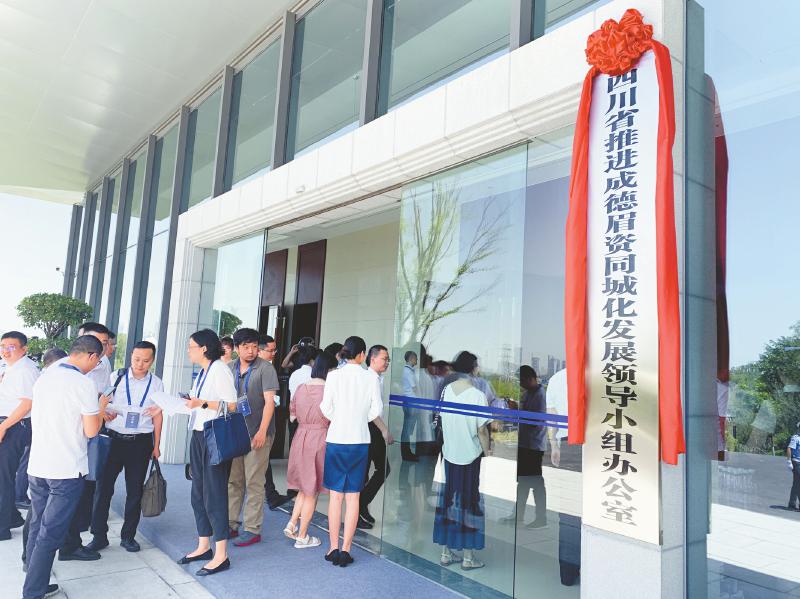
五年协同铸就万亿集群:成德眉资同城化重塑区域经济版图
Zhong Guo Jing Ji Wang· 2025-07-29 09:28
Core Viewpoint - The Chengdu-Deyang-Meishan-Ziyang (CDMZ) urban integration development is emerging as a new engine for high-quality development in Western China, focusing on industrial clusters and breaking administrative barriers to create a modern industrial system through collaborative efforts over five years [2][4]. Group 1: Industrial Collaboration - The four cities have implemented a "functional complementarity and differentiated development" strategy to address their respective industrial shortcomings, leading to a series of effective explorations and practices [3]. - Chengdu focuses on research and design, Deyang aims to build a world-class heavy equipment manufacturing base, Meishan is developing a new materials industry hub, and Ziyang is cultivating a rail transit cluster and specialized dental industry [3]. Group 2: Economic Growth and Industrial Clusters - The economic output of the Chengdu metropolitan area is projected to grow from 2.24 trillion yuan in 2020 to 2.98 trillion yuan by 2024, with an average annual growth rate exceeding national and provincial averages [4]. - By 2025, the output value of nine key industrial chains in the Chengdu metropolitan area is expected to exceed 1.2 trillion yuan, with 14 national-level industrial clusters, including electronics and equipment manufacturing, reaching over 1 trillion yuan in scale [4]. Group 3: Infrastructure and Connectivity - Over five years, more than 200 billion yuan has been invested in transportation projects, significantly reducing average commuting time between the four cities from 2 hours to 1 hour, thus facilitating industrial collaboration [6]. Group 4: Public Services and Talent Mobility - The "Chengdu-Deyang-Meishan-Ziyang Unified Service" initiative has enabled 505 high-frequency services to be processed across cities, enhancing talent mobility and providing strong support for industrial development [9]. Group 5: Future Development and Goals - The CDMZ urban integration is set to accelerate towards higher levels of development, focusing on innovation collaboration, deepening open cooperation, and optimizing ecological systems, with plans to establish two world-class industrial clusters and four trillion-yuan industrial clusters by 2030 [10][13].
粤港澳大湾区和海南自贸港的双向奔赴
Ren Min Ri Bao Hai Wai Ban· 2025-07-28 01:22
Core Viewpoint - The successful logistics delivery via drones across the Qiongzhou Strait and the inaugural flight of the "Sanya-Zhanjiang" helicopter route signify a new era of connectivity and economic collaboration between the Guangdong-Hong Kong-Macao Greater Bay Area and Hainan Free Trade Port [1][2]. Group 1: Transportation and Infrastructure Development - The Qiongzhou Strait is a crucial artery for the construction and development of Hainan Free Trade Port, with projected passenger transport of 19.14 million and vehicle transport of 5.52 million in 2024, alongside over 100 million tons of goods [2]. - The shortest route across the Qiongzhou Strait has been reduced to 12 nautical miles, with travel time cut to 1 hour, establishing a "one strait, dual hub" model with Haikou [3]. - The Zhanjiang-Wuchuan Airport is forming an "hourly aviation economic circle" with Haikou and Sanya, contributing to a preliminary three-dimensional transportation network [3]. Group 2: Economic Collaboration and Investment - Xu Wen County is positioned as a "bridgehead" for the Guangdong-Hong Kong-Macao Greater Bay Area to connect with Hainan Free Trade Port, with significant investment projects totaling 25.306 billion yuan across various sectors [3][4]. - A strategic cooperation agreement has been signed between Guangdong and Hainan to enhance collaborative mechanisms, with over 20 areas of policy alignment and cooperation established between Zhanjiang and Haikou [4]. - The establishment of the Guangdong-Hainan Advanced Manufacturing Cooperation Industrial Park in Haikou, with a total scale of 1 billion yuan for the Qiong-Yue Industrial Investment Fund, reflects ongoing industrial collaboration [6].