
NewCo模式

Search documents
近五年港股最大医药IPO来了!最高募资额可达130.8亿港元
21世纪经济报道· 2025-05-16 01:36
Core Viewpoint - Heng Rui Pharmaceutical has officially launched its H-share global public offering, aiming to raise up to HKD 13.08 billion, marking the highest fundraising amount for a Hong Kong IPO by a pharmaceutical company in the past five years [1][2]. Group 1: IPO Details - The company plans to issue 224,519,800 H-shares, with 5.5% allocated for public sale in Hong Kong and 94.5% for international placement, with a price range set between HKD 41.45 and HKD 44.05 per share [1]. - If the overallotment option is fully exercised, the total number of H-shares could reach 296,927,200, with a maximum fundraising amount of HKD 13.08 billion [1]. - The public offering in Hong Kong will end on May 20, 2025, with the final issue price expected to be determined by May 22, and the shares may be listed on the Hong Kong Stock Exchange as early as May 23 [1]. Group 2: Investor Participation - Key cornerstone investors for the IPO include Singapore's GIC, Invesco, UBS Global Asset Management, Hillhouse Capital, and Boyu Capital, with total subscriptions exceeding HKD 4.1 billion (USD 533 million), accounting for 43.04% of the offering size [2]. Group 3: Financial Performance - In 2024, Heng Rui Pharmaceutical reported a revenue of CNY 27.985 billion, a year-on-year increase of 22.63%, and a net profit of CNY 6.337 billion, up 47.28% [7]. - For Q1 2025, the company achieved a revenue of CNY 7.206 billion, a 20.14% increase year-on-year, and a net profit of CNY 1.874 billion, reflecting a 36.90% growth [7]. Group 4: R&D and Innovation - Heng Rui has established various technology platforms, including PROTAC, peptide drugs, monoclonal antibodies, and ADCs, with 19 innovative drugs approved for sale in China and over 90 products in clinical development [9]. - The company has maintained high R&D investment, with expenditures reaching CNY 65.83 billion in 2024, accounting for over 29.40% of its revenue [10]. - The company plans to showcase its technological reserves through the IPO, which could enhance its international collaboration and market presence [10]. Group 5: Industry Trends - The trend of Chinese innovative pharmaceutical companies going public in Hong Kong is driven by policy support and the need for capital to transition from generic drugs to true innovation [3][11]. - The Hong Kong market is seen as a vital platform for these companies to enhance their global competitiveness and facilitate international partnerships [14]. - The License-out model is increasingly being adopted by Chinese pharmaceutical companies to enter global markets, allowing them to leverage foreign partners' networks and resources [11][17].


近五年港股最大医药IPO!一场“不差钱”的资本突围
2 1 Shi Ji Jing Ji Bao Dao· 2025-05-15 06:44
Core Viewpoint - Heng Rui Medicine has officially launched its H-share global public offering, aiming to raise up to HKD 13.08 billion, marking the highest fundraising amount for a Hong Kong IPO by a pharmaceutical company in the past five years [1][2]. Group 1: IPO Details - The company plans to issue 224,519,800 H-shares, with 5.5% allocated for public offering in Hong Kong and 94.5% for international placement [1]. - The price range for the shares is set between HKD 41.45 and HKD 44.05, with the final price expected to be determined by May 22, 2025 [1]. - If the overallotment option is fully exercised, the total number of H-shares could reach 296,927,200 [1]. Group 2: Use of Proceeds - The funds raised will be used for R&D programs, building new production and R&D facilities in China and overseas, and for working capital and other general corporate purposes [2]. - The cornerstone investors include notable firms such as GIC, Invesco, and Hillhouse Capital, with their subscriptions accounting for 43.04% of the total offering [2]. Group 3: Financial Performance - In 2024, Heng Rui Medicine reported a revenue of CNY 27.985 billion, a year-on-year increase of 22.63%, and a net profit of CNY 6.337 billion, up 47.28% [3]. - For Q1 2025, the company achieved a revenue of CNY 7.206 billion, reflecting a 20.14% growth year-on-year, and a net profit of CNY 1.874 billion, up 36.90% [3]. Group 4: R&D Investment - The company has maintained high R&D investment, with expenditures reaching CNY 6.150 billion in 2023 and projected to increase to CNY 6.583 billion in 2024, representing over 23% of revenue [4]. - Cumulatively, the R&D investment since 2011 has reached CNY 46 billion, supporting ongoing innovation [4]. Group 5: Industry Trends - The trend of Chinese innovative pharmaceutical companies going public in Hong Kong is driven by policy, capital, and industry logic, with 30 A-share companies disclosing plans for Hong Kong IPOs since early 2025 [2][5]. - The shift from generic drugs to true innovation is seen as a necessary transition for the industry, with Hong Kong serving as a platform for global resource integration [2][5]. Group 6: Internationalization Strategy - The H-share listing is considered a critical step in Heng Rui Medicine's internationalization strategy, enhancing its brand influence and optimizing its capital structure [7]. - The company aims to leverage the Hong Kong market to expand its overseas business and international R&D collaborations [7]. Group 7: License-out Model - The License-out model has accelerated the internationalization of Chinese innovative pharmaceutical companies, allowing them to enter global markets by partnering with foreign firms [8][10]. - Heng Rui Medicine's recent licensing agreement with Hercules Company exemplifies this strategy, providing both upfront payments and equity stakes [9].
40%退货率,卖到海外的国产创新药遭遇“分手”危机?
3 6 Ke· 2025-04-29 01:17
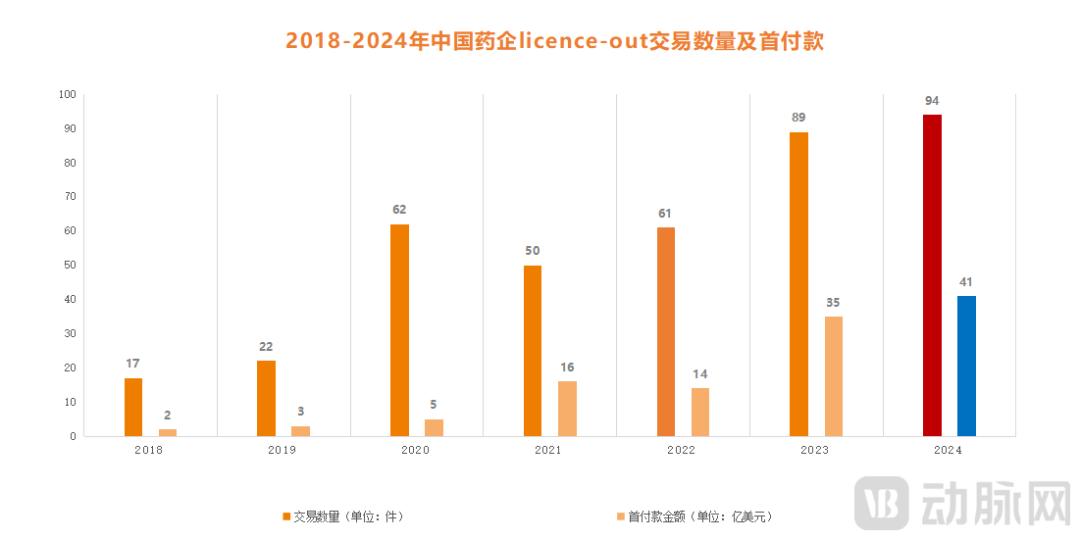
Core Insights - The trend of license-out transactions involving Chinese pharmaceutical companies continues into 2025, with over 20 deals reported in Q1 alone, including significant agreements worth over $1 billion [2] - However, there is a concerning "return rate" of 40% for completed license-out transactions from 2020, indicating a growing trend of terminated collaborations [5] - The industry is experiencing a "clearing" phase after a surge in business development (BD) activities, with many companies facing challenges in maintaining partnerships [5][6] Group 1: Business Development Trends - In Q1 2025, notable transactions included Roche's $1 billion deal with Innovent Biologics and Lepu Biopharma's $1.2 billion collaboration with ArriVent [2] - Companies like InnoCare and Baillie Gifford have successfully capitalized on BD opportunities, with InnoCare's license-out deals exceeding $6 billion, contributing to its successful IPO [2] - The overall BD transaction volume is expected to reach new highs in 2025, driven by increased interest from global pharmaceutical companies in Chinese innovative drugs [2] Group 2: Challenges and Terminations - As of April 2025, 25 out of 62 completed license-out transactions from 2020 have been terminated, reflecting a 40% return rate [5] - Recent high-profile disputes include Novo Nordisk's $800 million claim against Henlius for alleged fraud and GAVI's termination of a pre-purchase agreement with Clover Biopharmaceuticals [6] - The primary reasons for these terminations include disappointing clinical data and strategic shifts by the buying companies, leading to increased competition and pressure on Chinese biotech firms [6][8] Group 3: Financial Implications - The milestone achievement rate for Chinese innovative drugs is only 22%, indicating that most companies only receive the initial payment, which typically constitutes 2%-5% of the total deal value [9][11] - The financial impact of terminated collaborations is significant, as companies lose potential milestone payments and face challenges in maintaining market confidence [9][12] - The NewCo model is emerging as a more favorable alternative, allowing for shared risk and deeper collaboration between Chinese firms and multinational corporations [13][14] Group 4: Future Outlook - The BD landscape is expected to see an increase in "return" events, as the market matures and companies face heightened scrutiny [15] - Successful future collaborations will require Chinese companies to demonstrate superior clinical data and competitive advantages in the global market [18][19] - The industry must balance the urgency of BD with long-term strategic planning to avoid reliance on potentially volatile partnerships [17][18]

南向资金持续涌入,港股创新药板块成“心头肉”
智通财经网· 2025-04-25 08:11
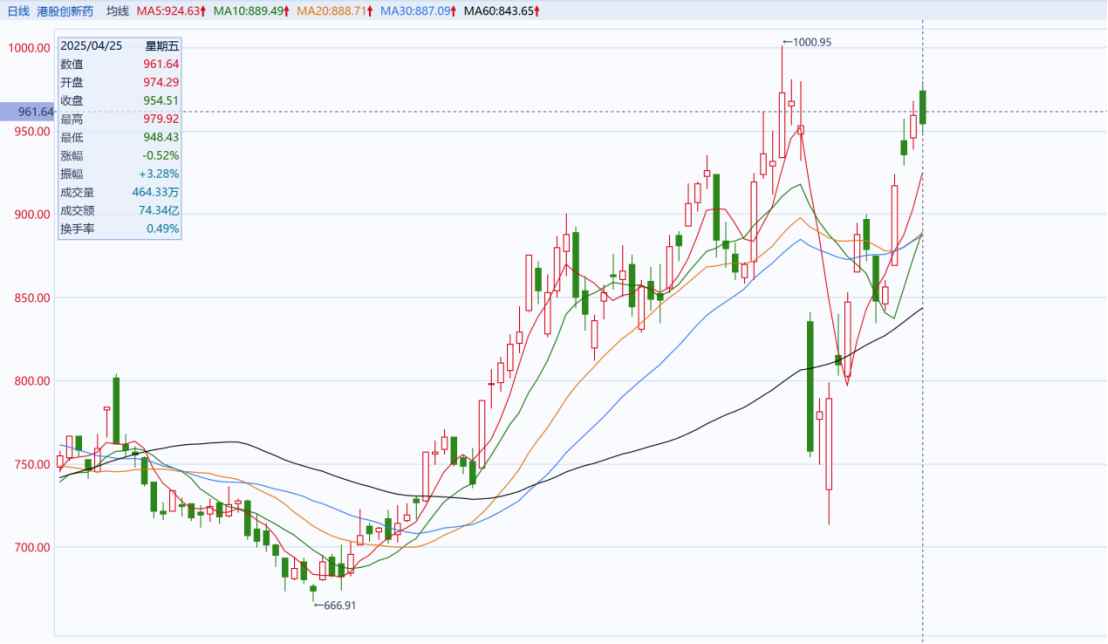
Group 1 - The Hong Kong innovative drug sector has rebounded rapidly due to a favorable external environment, with the China Securities Hong Kong Innovative Drug Index (931787) experiencing a significant recovery since its low on April 9, 2023 [1][3] - As of April 25, 2023, the index reached a peak of 979.92 points, showing a maximum cumulative increase of 37.43% from its previous low [1] - The overall increase in the Hong Kong innovative drug sector has outperformed the Hang Seng Technology Index, which has only seen a year-to-date increase of 12.48% compared to the innovative drug index's 31.03% [3] Group 2 - Recent data indicates a collective performance improvement among Hong Kong innovative drug companies, significantly exceeding market expectations [4] - In 2024, 10 out of 12 Hong Kong innovative drug companies with a market capitalization over 10 billion HKD reported positive revenue growth, with 8 companies also showing positive profit growth [4] - The company with the highest revenue growth is CloudTop New Drug-B (01952), with a revenue growth rate of 341.8%, while Innovent Biologics (01801) reported a net profit growth of 91.8% [4] Group 3 - The trend of "going global" has become a key topic, with Chinese pharmaceutical companies achieving significant growth in overseas licensing transactions [6][8] - The total transaction amount for licensing-out by Chinese pharmaceutical companies reached a historical high of 51.9 billion USD in 2024, indicating a strong global competitiveness in innovative drug development [6] - The NewCo model has emerged as a favorable strategy for domestic biotech companies, allowing for cash flow support and risk sharing in international collaborations [8] Group 4 - New industry trends in pharmaceuticals, such as weight-loss drugs, dual-antibody drugs, ADC drugs, and innovative medical devices, are expected to create new investment opportunities [9] - The Chinese government is increasing support for innovative drug exports, as evidenced by recent policies aimed at facilitating the import of research materials for biopharmaceutical companies [9] - Despite market fluctuations due to trade tensions, the pharmaceutical sector remains relatively insulated, presenting a favorable opportunity for large-scale investments [9] Group 5 - The Hong Kong innovative drug sector is poised for a valuation recovery, with significant inflows of capital from southbound investors since the beginning of the year [11] - As of April 24, 2023, net capital inflows from A-share investors into Hong Kong stocks reached 611.1 billion HKD, with healthcare becoming the second most net inflow sector [11] - The current price-to-earnings ratio (TTM) for the pharmaceutical and biotechnology sector is 27.1, indicating that the sector is undervalued compared to other growth sectors [12][13]
亏损扩大、研发投入超7亿元,康诺亚营收仍靠对外授权
Xin Jing Bao· 2025-03-25 10:47
Core Viewpoint - 康诺亚's revenue growth is driven by external licensing, despite significant losses and high R&D expenditures [1][2][5] Group 1: Financial Performance - 康诺亚 reported a revenue of 4.28 billion yuan in 2024, a year-on-year increase of 21% [1] - The company experienced a net loss attributable to shareholders of 5.15 billion yuan, an increase of 43.4% year-on-year [1] - R&D expenses reached 7.35 billion yuan, reflecting a 23% increase year-on-year, surpassing the company's revenue [1][5] Group 2: Product Development and Market Position - 康诺亚's first product,司普奇拜单抗, was approved in September 2024 for treating moderate to severe atopic dermatitis, marking it as the first domestically developed IL-4Rα antibody drug [3] - The company has multiple ongoing clinical trials, with several products nearing commercialization, including indications for chronic rhinosinusitis with nasal polyps and seasonal allergic rhinitis [3][6] - 康诺亚's licensing strategy has generated significant revenue, with 3.92 billion yuan from external licensing in 2024 [3][4] Group 3: Strategic Initiatives - 康诺亚 employs a NewCo model, collaborating with overseas capital to establish new companies for licensing specific product pipelines, which allows for risk diversification and accelerated internationalization [4] - The company plans to expand its production capacity to meet the increasing demand for its candidate drugs, aiming to maximize their commercial value [6] - 康诺亚's cash and cash equivalents totaled approximately 21.56 billion yuan as of December 31, 2024, with a debt-to-asset ratio of 34%, indicating a stable financial position despite ongoing losses [6]
2025,中国优质新药「怎么卖」,大厂们给出了明牌
36氪· 2025-03-05 00:09
Core Viewpoint - The article highlights the significant growth and potential of Chinese innovative drugs in the global market, emphasizing that Chinese companies are increasingly recognized for their capabilities in drug development and commercialization, which poses a challenge to traditional pharmaceutical giants in the U.S. [2][3] Group 1: Market Trends - In 2024, nearly 100 deals involving Chinese innovative drugs were reported, with a total disclosed amount close to $60 billion [3] - Major pharmaceutical companies are shifting their focus towards acquiring innovative drugs from China due to the high costs associated with developing new drugs in the U.S. [4] - The trend of "NewCo" transactions has gained traction, allowing Chinese companies to establish new entities overseas to attract higher valuations and funding [7][8] Group 2: Buyer Preferences - Multinational corporations (MNCs) are increasingly interested in early-stage projects, contrary to the stereotype that they prefer stable, late-stage products [5] - Buyers are looking for "clean" transactions, focusing on individual products rather than the entire technology platform of a biotech company [5] - The willingness of MNCs to source innovative drugs from China is becoming an open secret, driven by the cost-effectiveness of Chinese products [4][5] Group 3: Challenges and Considerations - The NewCo model, while promising, has limitations as it often involves products that are not core to the original company’s pipeline, leading to lower upfront payments [8] - The cultural and operational challenges of establishing trust and collaboration in international markets are significant for Chinese companies entering NewCo transactions [9] - The financial sustainability of biotech firms during the waiting period for potential acquisitions or IPOs remains a concern, as they may face cash flow issues before realizing returns [8][9]

黑石赚了一笔
投资界· 2025-02-19 07:46
新路径。 作者 I 岳笑笑 报道 I 投资界-并购最前线 以下文章来源于并购最前线 ,作者岳笑笑 并购最前线 . 投资界(PEdaily.cn)旗下,专注并购动态 近日,诺华宣布以31亿美元交易总价收购Ant h o s The r a pe u ti c s,背后大股东黑石实现退 出。据悉,该交易预计将于 202 5 年上半年完成。 不同于传统并购案例,Ant hos The r a pe uti c s在2019年由交易的两位主角——诺华、黑石 共同创立。如今6年过去,双方合作将心血管重磅药物推向全球,而股东之一黑石成功退 出,通过早期2.5亿美元的投入撬动数倍回报,功成身退。 一个出钱、一个出力,药企和投资机构共同分担风险,也共同迎接收益——眼下,这一 被称作NewCo的模式,悄然在医药创投圈流行,为投资人和Bi ot e c h指出一条特殊的生 存之路。 黑石完成一笔罕见退出 先从一场合作说起。 20 19年2月,MNC诺华牵手Bl a c kst one Lif e Sc i e nc e s,宣布将共同成立一家新生物制 药公司An t ho s The r a pe uti c s,以开发治疗心血 ...


对话礼丰:NewCo出海新模式下,中国生物医药企业如何寻找最优解?
IPO早知道· 2024-12-02 01:27
微信公众号|ipozaozhidao 目前的生物医药领域,境外美元基金有可投资资金,跨国企业(MNC)的BD及并购意愿热度不减; 另一方面,中国企业的很多管线已进展到具有交易价值的环节,资金端与资产端找到了一些契合点。 在此背景下,今年不断有中国生物医药企业达成NewCo交易,而顶级美元基金也在继续寻找这样的 机会。 近日,IPO早知道对话了礼丰律师事务所合伙人赵颖洁和资深律师李然,她们分享了中国生物医药企 业以NewCo模式出海的优势及风险因素,以及企业应如何应对交易中的风险、获得更多有利条件。 长期来看中国企业还要开始培育新的技术和管线。 本文为IPO早知道原创 作者|罗宾 赵颖洁表示,在"技术出海+合资"的NewCo模式下,境外合资公司往往以老牌美元基金为主导,中 国生物医药企业为合资公司的小股东, 这样的架构兼顾了中国企业的商业利益,中国生物医药公司 不但能收到管线许可费,又作为合资公司股东享受未来资本增值化收益;同时因为美元基金主导, NewCo受到的地缘风险冲击更小。 当然,在NewCo的交易达成与后期退出中,也有很多生物医药企业需要考量的风险点, 包括拟分拆 管线的估值、新老投资人的利益协调及原 ...