
元宇宙

Search documents
重估平台电商:如何实现以AI促消费
2 1 Shi Ji Jing Ji Bao Dao· 2025-11-27 23:10
Core Viewpoint - The implementation plan aims to enhance the adaptability of supply and demand in consumer goods, leading to industrial upgrades and better meeting diverse consumer needs, marking the first consumer promotion policy document issued after the 20th National Congress of the Communist Party of China [1] Group 1: Policy Framework - The plan emphasizes the orderly development of new business models such as live e-commerce, instant retail, and circular e-commerce, encouraging platform enterprises to utilize AI technology to explore user needs and match products and services [3][4] - It highlights the strategic value of platform consumption in the context of the deepening digital economy, recognizing platforms as key hubs connecting consumption promotion and AI application innovation [3] Group 2: Technological Integration - The plan encourages the use of AI to capture consumer demands, addressing the pain points of consumption upgrades where supply often lags behind demand [4] - Platforms are evolving from simple transaction facilitators to intelligent supply-demand configuration centers, leveraging big data and deep learning to enhance matching efficiency [4][5] Group 3: Consumer Experience Enhancement - The support for technologies like virtual reality and the metaverse aims to create immersive shopping experiences, appealing particularly to younger consumers and stimulating new types of consumption [5] - Platforms serve not only as beneficiaries of AI technology but also as incubators for AI innovation, utilizing vast amounts of interaction data to train and refine AI models [5] Group 4: Compliance and Sustainability - The plan stresses the importance of legal compliance in AI utilization, requiring platforms to adhere to data security and personal privacy protections to avoid damaging consumer rights and industry reputation [6] Group 5: Economic Impact - With strong policy guidance, the potential for a new consumption era powered by AI is anticipated, which will achieve a higher level of dynamic balance between supply and demand, injecting robust technological momentum and consumer confidence into China's high-quality economic development [7]


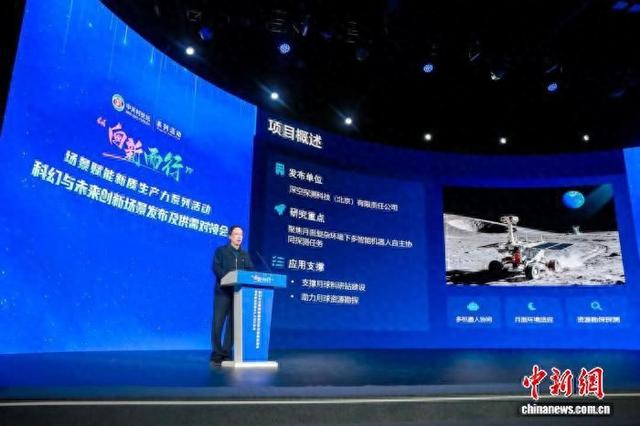
聚焦具身智能等前沿领域 北京发布一批科技新场景需求
Zhong Guo Xin Wen Wang· 2025-11-27 14:42
Core Insights - The event "Towards New Action" focuses on empowering new productive forces through innovative scenarios in advanced fields such as embodied intelligence, commercial aerospace, and the metaverse [1][3][4] - The initiative aims to match scene demands with innovative supply, facilitating market, cooperation, funding, and scenario identification for enterprises [3][4] Group 1: Event Overview - The event was co-hosted by the Beijing Municipal Science and Technology Commission, Zhongguancun Science Park Management Committee, and Shijingshan District People's Government [3] - It is part of a broader effort to promote the construction of new technological scenarios in Beijing [3] Group 2: Key Projects and Collaborations - Several key engineering projects were launched, including a collaboration between China Electronics Technology Group Corporation and Zhongguancun Tongli Technology Service Co., Ltd. to build a smart network engineering center focused on 6G integration [6] - Another project involves the development of a domestic engine flight simulation digital twin gaming platform by Hangyu Rongkang and Zhuanguang Technology [6] Group 3: Focus Areas and Demands - The event highlighted specific technological demands, such as the need for multi-robot autonomous collaborative exploration in complex lunar environments [4] - The demand for constructing future digital street scenarios was also emphasized, aiming to integrate digital spaces into urban renewal and public service systems [4] Group 4: Policy Support and Framework - The event included a policy interpretation session regarding measures to support the construction of a future digital space innovation experimental zone in Beijing [3] - The measures propose systematic support paths in areas like scene openness, content creation, technology validation, application demonstration, and financial support [3]
行业先驱变“先烈”,AI硬件为何如此难做
3 6 Ke· 2025-11-27 12:13
Core Viewpoint - Rabbit, a player in the AI hardware sector, is facing significant financial difficulties, primarily due to regulatory issues hindering its market entry in India, leading to a substantial deviation in financial forecasts [4][3]. Financial Challenges - Rabbit's founder, Jesse Lyu, acknowledged the company's financial pressure, which has resulted in employees experiencing unpaid wages since July, prompting protests [4][3]. - Reports indicate that the financial troubles of Rabbit may be more severe than initially anticipated, contributing to a lack of response to negative publicity surrounding its product launch [4][3]. Product Performance and Market Reception - The Rabbit R1, launched at CES, initially gained significant attention, selling 10,000 units on the first day of pre-orders and 50,000 units within two weeks of its official launch [5][6]. - Despite its promising start, the Rabbit R1 has been criticized for overestimating its supply chain capabilities and AI model tuning, leading to a product that does not meet user expectations [8][10]. Consumer Expectations and Market Dynamics - The concept behind Rabbit R1 was to provide a healthier interaction paradigm, allowing users to complete tasks with simple commands, but the execution fell short, requiring multiple confirmations instead [8][10]. - The rapid decline of Rabbit highlights the challenges in the AI hardware market, as the industry struggles to define the next universal computing device post-smartphone [10][12]. Comparison with AI Toys - Unlike Rabbit's ambitious product, AI toys have successfully captured market interest by emphasizing their educational value and emotional engagement, which are less easily quantifiable than the performance metrics of Rabbit R1 [12][14]. - The distinction between the target audiences of AI toys and Rabbit R1 illustrates the need for practical and relatable product features that resonate with consumers [12][14]. Conclusion - Ultimately, the utility of an AI hardware product is the key measure of its success, as consumers are willing to invest in products that provide tangible benefits rather than free software alternatives [14].

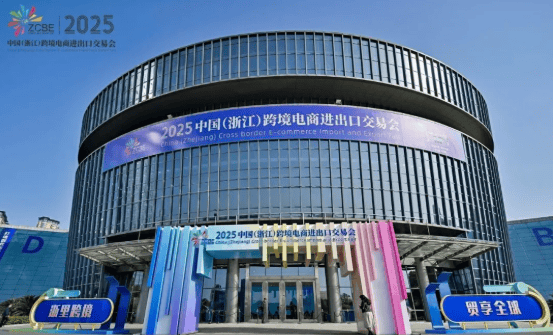
首日爆场!2025中国(浙江)跨境电商进出口交易会盛大开幕!
Sou Hu Cai Jing· 2025-11-27 07:08
Core Insights - The 2025 China (Zhejiang) Cross-Border E-commerce Import and Export Trade Fair has officially commenced, attracting global cross-border sellers, buyers, industry experts, and service providers to explore new opportunities in cross-border e-commerce [1][2] Group 1: Event Overview - The trade fair covers an exhibition area of 50,000 square meters, featuring over a thousand well-known domestic and international e-commerce platforms, service providers, and source factories [2] - The event includes five distinctive exhibition areas: Overseas Factory Area, Quality Industrial Belt and Supply Chain Area, Future Business Technology Ecosystem Area, Full-Chain Service Ecosystem Area, and Boutique Imported Goods Area, creating a comprehensive platform for cross-border e-commerce [2] Group 2: Exhibition Highlights - The A1 Hall showcases major international cross-border platforms like Shopee, Ozon, Walmart, and Trendyol, serving as a vital resource hub for merchants seeking to expand into overseas markets [4][6] - The B1 Hall integrates flagship platforms such as Alibaba International Station and AliExpress, providing a full-service ecosystem that includes financial payment, e-commerce training, and operational support for cross-border sellers [7][9] - The C1 Hall features cutting-edge technology applications, including generative AI and digital marketing, with innovative companies like Yushutech demonstrating significant advancements in automation [10][12] - The D1 Hall focuses on full-chain services for cross-border e-commerce, showcasing platforms like Amazon and logistics service providers, while also highlighting local industrial strengths [14][16] - The E1 Hall serves as a key display area for imported goods, featuring products like pet supplies and new energy vehicles, emphasizing the quality and appeal of imported items [16] Group 3: Conference and Discussions - The Global Cross-Border E-commerce Ecosystem Conference, held concurrently, featured discussions on the future of digital trade and cross-border e-commerce, with participation from industry leaders and experts [17][19] - The conference included thematic discussions on emerging markets and strategies for leveraging platforms like TikTok Shop to enhance sales during major promotional events [21]
VR产业千亿规模背后的喜与忧
Ke Ji Ri Bao· 2025-11-27 00:10
Core Insights - The VR industry in China has reached a scale of over 100 billion yuan, with Jiangxi province alone generating over 110 billion yuan in revenue in 2024 [1] - The industry is currently in a critical growth phase, with a projected compound annual growth rate of 43.8% from 2022 to 2025, making it the fastest-growing VR market globally [2] - The rapid increase in the number of VR-related companies, exceeding 35,000, is driven by supportive government policies and a favorable investment environment [3] Industry Development - The VR industry is experiencing significant technological breakthroughs, expansion in applications, and increased capital investment [2] - Major regions for VR development in China include Beijing, Jiangxi, Guangdong, and the Yangtze River Delta, forming a core area for VR industry growth [2] - The government has set a target for the VR industry to exceed 350 billion yuan by 2026, indicating strong policy support for the sector [3] User Experience Challenges - Current VR devices face criticism for being heavy and uncomfortable, leading to issues such as dizziness and poor visual quality [5][6] - The industry struggles with a lack of high-quality content and natural interaction, which hampers user experience and limits market growth [6][7] - The high cost of VR devices, typically over 3,000 yuan, makes them less appealing to average consumers, restricting widespread adoption [5] Technological Limitations - The VR industry is hindered by reliance on imported key components, such as high-definition micro-OLED screens and specialized chips, which limits domestic innovation [7][8] - There is a pressing need for breakthroughs in technology to improve user experience and reduce the weight and cost of VR devices [7][10] - The industry is transitioning from a focus on hardware to a more integrated ecosystem that includes content and user experience [9][10] Future Outlook - The industry anticipates a significant growth spurt akin to the smartphone boom, with companies investing heavily in production capabilities [9] - Innovations in lightweight design and enhanced interaction capabilities are expected to drive the next generation of VR devices [10] - The establishment of experience points in urban areas is suggested to enhance public engagement and dispel misconceptions about VR technology [11]
影响市场重大事件:新资金入市 第10只险资私募基金开始投资运作;工信部等六部门:有序发展平台消费、发展直播电商等新业态
Mei Ri Jing Ji Xin Wen· 2025-11-26 22:31
Group 1 - The 10th insurance private equity fund, Yangguang and Yuan private securities investment fund, has begun operations after being registered with the China Fund Industry Association, marking a significant step in the long-term investment trial for insurance funds with an approved scale of 20 billion yuan [1] - The Ministry of Industry and Information Technology and five other departments have issued a plan to promote the orderly development of platform consumption and new business formats such as live e-commerce, encouraging the use of AI and other technologies to enhance consumer experiences [2] - The same departments have also outlined plans to expand low-altitude tourism and aviation sports, promoting diverse interest consumption products while ensuring safety [3] Group 2 - Morgan Stanley's chief equity strategist for China expressed confidence in the continued inflow of funds into the Chinese market, suggesting that significant fiscal policy adjustments could lead to a more positive outlook [4] - Paradromics, a US brain-computer interface company, has received FDA approval for its first long-term clinical trial, which aims to explore the ability to detect neural activity related to imagined hand movements [5] - Novo Nordisk announced that the European Commission has approved its Kyinsu product, the world's first weekly insulin and GLP-1 receptor agonist combination for adults with type 2 diabetes [6] Group 3 - The Chinese Center for Disease Control reported that the country has entered a rapid rise phase of influenza, with the highest proportion of flu-like cases in four years, particularly noting a higher incidence in northern provinces [7] - OpenAI projects that the number of paid subscribers for ChatGPT will exceed 220 million within five years, potentially generating nearly 200 billion dollars in annual revenue [8] - A former member of Tesla's Optimus team has joined Xiaomi's robotics team to accelerate the development of dexterous hand technology [9] - Dongfeng has delivered its first Mach Power 2.0T engine designed for low-altitude flight scenarios, which is based on a vehicle engine and has a power-to-weight ratio of 1.87 kW/kg, aimed at large drones and logistics aircraft [10]
影响市场重大事件:新资金入市,第10只险资私募基金开始投资运作;工信部等六部门:有序发展平台消费、发展直播电商等新业态
Mei Ri Jing Ji Xin Wen· 2025-11-26 22:30
11月26日,工业和信息化部、国家发展改革委等六部门印发《关于增强消费品供需适配性进一步促进消 费的实施方案》。其中提到,有序发展平台消费。有序发展直播电商、即时零售、策展零售、循环电商 等新业态。鼓励平台企业依法合规利用人工智能技术挖掘用户需求,匹配推送产品和服务。支持平台企 业应用虚拟现实、元宇宙、人工智能、区块链等数智技术,打造多场景、沉浸式消费体验。引导平台企 业开展品牌品质促消费活动。 NO.3 六部门:有序扩大低空旅游、航空运动等低空消费供给 11月26日,工业和信息化部、国家发展改革委等印发《关于增强消费品供需适配性进一步促进消费的实 施方案》。方案指出,拓展多元兴趣消费供给。积极发展宠物周边、动漫、潮服潮玩等兴趣消费产品。 在严控风险、确保安全的前提下,有序扩大低空旅游、航空运动、私人飞行、消费级无人机等低空消费 供给。拓展汽车改装、房车露营、汽车赛事等汽车后市场消费,促进汽车租赁高质量发展。 NO.4 摩根士丹利:对资金持续流入中国市场保持信心 摩根士丹利中国首席股票策略师王滢11月25日发布最新报告,她表示,市场关于股票中长期可持续性的 讨论愈发激烈。"投资者似乎正专注于寻找看多中国市场的 ...
北京城市图书馆应用人工智能等新技术打造新场景 在这里 阅读更有科技感
Ren Min Ri Bao· 2025-11-26 22:23
Core Insights - The Beijing City Library has introduced an immersive reading and knowledge-sharing experience through the use of AI and digital avatars, including a digital representation of the famous writer Lu Xun [1][2] - The library aims to create a "digital universe" where readers can interact with digital personas and explore various thematic areas within the library [3] Group 1: Digital Innovation in Libraries - The library features a digital avatar of Lu Xun, who historically contributed to the founding of the library's predecessor, providing guidance and recommendations to visitors [1][2] - The design team faced challenges in creating a realistic digital persona of Lu Xun, focusing on his characteristics and historical context to enhance authenticity [2] Group 2: User Engagement and Interaction - Since its opening at the end of 2023, the digital avatars have engaged in over 1.7 million voice conversations with library visitors, showcasing their popularity and effectiveness in stimulating interest in reading [2] - Readers can create their own digital avatars and interact with others in a virtual space, enhancing social engagement and knowledge sharing [3] Group 3: Future Developments - The library plans to develop an online version of the metaverse library, allowing users to access a virtual library anytime and explore a wide range of knowledge [3] - The initiative aims to combine traditional reading with advanced technology, creating a multi-sensory immersive reading environment to foster a love for reading and knowledge exploration [3]
在这里,阅读更有科技感
Ren Min Ri Bao· 2025-11-26 22:21
Core Insights - The Beijing City Library has introduced a metaverse experience that allows readers to engage in immersive reading and knowledge sharing through advanced technologies like AI [1][3] - A digital avatar of Lu Xun, a prominent figure in Chinese literature, has been created to guide visitors, recommend books, and share local cultural insights [1][2] - The library's digital initiatives have led to over 1.7 million voice interactions between digital avatars and visitors since its opening at the end of 2023 [2] Group 1: Digital Innovation - The library employs AI technology to create a lifelike digital representation of Lu Xun, enhancing the visitor experience by providing personalized guidance [1][2] - Additional digital avatars, such as "Tutu" and "2122," have been developed to engage with readers on various topics, appealing particularly to younger audiences [2] - The library's metaverse allows users to create their own digital personas and interact with others, merging online and offline reading experiences [3] Group 2: User Engagement - The immersive environment encourages readers to explore different sections of the library, including children's literature and ancient texts, through a digital interface [3] - Future developments aim to create a fully online version of the metaverse library, enabling users to access a virtual library anytime [3] - The initiative seeks to foster a tech-driven reading culture, stimulating interest in literature and knowledge exploration among readers [3]
深耕9年 产业规模突破150亿元 青岛打造“中国虚拟现实之都”
Zheng Quan Shi Bao· 2025-11-26 18:32
Core Insights - Qingdao's virtual reality industry has achieved over 80% of the international market share in high-end VR display devices, with a continuous revenue growth rate exceeding 20% for three consecutive years [1] - The city has established itself as a national digital economy innovation hub, with over 140 companies in the VR industry and more than 70% of the country's research capabilities concentrated there, leading to a total industry scale surpassing 15 billion [1][7] - The integration of artificial intelligence and virtual reality is expected to create a trillion-dollar market opportunity, with companies like GoerTek focusing on AI glasses as the next significant terminal that may partially replace smartphones in the next 5 to 8 years [2][4] Industry Development - Qingdao's VR industry is characterized by a full-chain layout, open scenarios, and comprehensive services, aiming to become "China's Virtual Reality Capital" [1][8] - The establishment of the "Global R&D Center + Terminal Production Base" and the National Virtual Reality Innovation Center in Qingdao has strengthened the local VR ecosystem [2][3] - The city has introduced various support policies and established a 2,100-acre specialized industrial park, along with a 2.5 billion fund to enhance the VR industry ecosystem [7][6] Technological Integration - The convergence of virtual reality with AI, 5G, and spatial computing is accelerating, leading to new terminal products and applications across various sectors such as industrial manufacturing, healthcare, and urban governance [4][8] - Companies in Qingdao are focusing on developing AR+AI glasses and enhancing their technological capabilities to create a more integrated industry ecosystem [3][9] Challenges and Recommendations - The industry faces challenges in high-end core components and foundational development tools, necessitating a focus on self-sufficiency in technology [9][10] - Recommendations include strengthening technological breakthroughs, creating typical application scenarios, and fostering a collaborative innovation mechanism that integrates market demands with enterprise needs [9][10] Future Outlook - Qingdao aims to transition from a manufacturing base to an innovation hub by 2025, with the VR industry cluster expected to be recognized as a key digital industry cluster in Shandong Province [7][6] - The city is committed to maintaining strategic focus on innovation and technology development to ensure sustainable growth in the VR sector [11]
