
全球发展倡议

Search documents
美国经济趋势基金会主席杰里米·里夫金:中国生态文明建设带来范式转变
Xin Hua She· 2025-08-19 01:37
Group 1 - The core viewpoint emphasizes China's ecological civilization as a transformative paradigm for human development, highlighting its global significance and the need for new governance models in response to ecological crises [1][2]. - The establishment of national parks and ecological protection systems in China reflects a holistic approach to ecosystem management, prioritizing nature over societal adaptation [2]. - China's leadership in renewable energy technologies, including solar power and electric vehicles, positions it as a key player in global energy initiatives, particularly in promoting distributed energy systems [2]. Group 2 - The Sina Finance ESG Rating Center serves as a platform for promoting sustainable development and responsible investment, focusing on ESG (Environmental, Social, and Governance) values [3]. - The center aims to enhance ESG assessment standards and corporate ratings in China, facilitating the growth of ESG investment within the asset management industry [3].
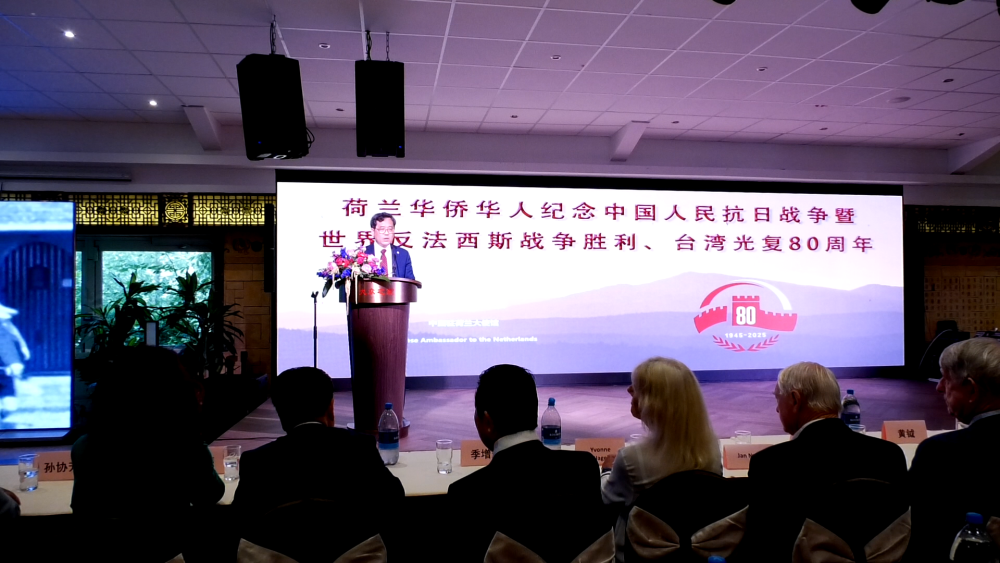
荷兰华侨华人隆重纪念抗战胜利与台湾光复80周年
Xin Hua She· 2025-08-19 00:49
Core Points - The event commemorated the 80th anniversary of the victory in the Chinese People's War of Resistance against Japanese Aggression and the recovery of Taiwan, emphasizing the historical significance and sacrifices made during the war [2][5][8] - The Chinese Ambassador to the Netherlands highlighted the importance of remembering history and the contributions of China to the global anti-fascist efforts, asserting that the victory was hard-won and came at a great cost [3][5] - The event featured speeches from various leaders, including the chairman of the Dutch China Peaceful Unification Promotion Association, who acknowledged the vital role of overseas Chinese in supporting the war effort [5][8] Summary by Sections Historical Significance - The event marked the 80th anniversary of both the victory in the anti-Japanese war and the return of Taiwan to China, linking these events as crucial moments in Chinese history [2][5] - The sacrifices of 35 million Chinese military and civilian lives were highlighted as a significant cost for national independence and world peace [8] Contributions of Overseas Chinese - The speeches underscored the unwavering support of overseas Chinese during the war, who contributed through fundraising and advocacy [5][8] - The publication of the "Anti-Japanese War Bulletin," which documented the efforts of the overseas Chinese community, was announced, showcasing their historical contributions [10] Call for Peace and Unity - The event called for a collective remembrance of history to promote peace and prevent the denial of historical aggressions, emphasizing the need for global cooperation and security [3][5]

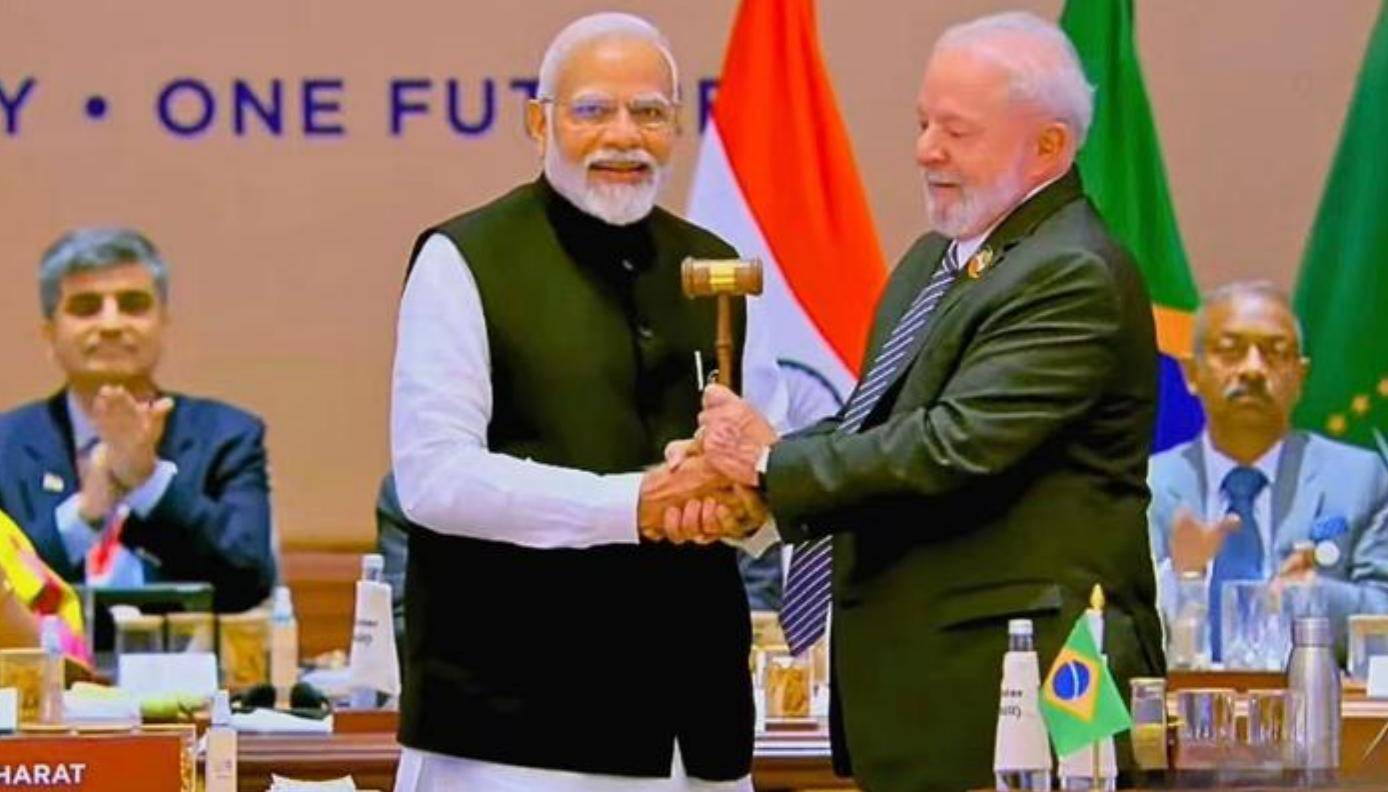
搞定了金砖最难缠国家,中国释放最强烈信号,要带上印度一起玩?
Sou Hu Cai Jing· 2025-08-17 04:36
Core Insights - The article discusses the impact of the U.S. imposing tariffs on India, which has unexpectedly strengthened the unity among BRICS nations, particularly with India aligning more closely with Russia and China [1][10]. Group 1: U.S. Tariff Impact - In August 2025, the U.S. announced a 25% additional tariff on Indian exports, raising the total tariff rate to 50%, significantly affecting India's textile, chip, and pharmaceutical industries [1][3]. - The Indian government responded by continuing to import oil from Russia and signaling its willingness to engage with China through participation in various initiatives [1][3]. Group 2: India's Diplomatic Shift - India's Ministry of External Affairs criticized the U.S. actions as "unfair" and indicated a shift towards a more independent foreign policy, distancing itself from the U.S. [3][12]. - India has shown a willingness to cooperate within the BRICS framework, participating actively in discussions and initiatives led by Brazil and China [5][6]. Group 3: China’s Response - China adopted a dual strategy of cooperation and control, signaling its willingness to support India while maintaining its own interests through actions like terminating anti-dumping investigations against Indian products [3][5]. - The Chinese government emphasized the importance of sincerity in cooperation, indicating that while collaboration is welcome, there are non-negotiable boundaries [8][10]. Group 4: BRICS Cooperation - The BRICS nations are moving towards a more coordinated economic alliance, with India transitioning from a passive participant to an active collaborator [6][12]. - Brazil's President Lula played a crucial role in initiating collective actions against U.S. tariffs, fostering a sense of unity among BRICS members [5][10]. Group 5: Future Prospects - The BRICS alliance is evolving into a platform for effective cooperation, with India no longer seen as a disruptive force but as a constructive participant [12]. - The dynamics of global south countries are shifting, as they redefine their roles and assert their interests in the face of U.S. policies [12].
专访|中国生态文明建设带来范式转变——访美国经济趋势基金会主席杰里米·里夫金
Xin Hua Wang· 2025-08-16 01:52
Core Viewpoint - China's ecological civilization construction is creating significant changes and a paradigm shift for human social development, as stated by Jeremy Rifkin, President of the Foundation on Economic Trends [1]. Group 1: Ecological Civilization Concept - The ecological civilization concept in China represents a transformation in the relationship between humans and nature, as well as between individuals [1]. - Rifkin emphasizes that the ecological crisis necessitates new ideas and global governance models, with China's global development initiative offering hope through principles like harmonious coexistence with nature [1]. Group 2: Institutional Framework - The inclusion of ecological civilization in China's constitution reflects the country's commitment and the establishment of a corresponding institutional framework to promote modernization in harmony with nature [1]. Group 3: Ecological Protection Systems - China has established national parks and ecological protection systems that transcend administrative boundaries, indicating a holistic approach to ecosystem management [2]. - The vision of adapting society to nature rather than the reverse is a key aspect of China's ecological strategy [2]. Group 4: Technological Leadership - China is a global leader in solar energy and electric vehicle technology, with advantages in wind energy, energy storage, hydrogen energy cost reduction, and long-distance transportation [2]. - The initiative to build a global energy internet and develop smart grids is crucial for reducing disparities in energy access and usage among different countries and regions [2]. Group 5: Youth Engagement - Many young people in China are actively working towards the ecological civilization vision, contributing to a new technological revolution driven by advancements in artificial intelligence [2]. - The role of China and Asia is expected to be significant in this transformative process [2].
中国生态文明建设带来范式转变——访美国经济趋势基金会主席杰里米·里夫金
Xin Hua She· 2025-08-15 15:13
Group 1 - The core viewpoint is that China's ecological civilization construction is creating significant changes and a paradigm shift for human social development, as highlighted by Jeremy Rifkin, the chairman of the Foundation on Economic Trends [1][2] - Rifkin praises China's ecological civilization concept, particularly the idea that "lucid waters and lush mountains are invaluable assets," indicating a global recognition of China's approach to ecological governance [1][2] - The ecological crisis is seen as a pressing issue that necessitates new ideas and global governance models, with China's global development initiative emphasizing harmony between humans and nature [1][2] Group 2 - China has established a national park and ecological protection system that transcends administrative boundaries, indicating a holistic approach to ecosystem management [2] - The country is recognized for its leadership in solar energy, electric vehicle technology, and advancements in wind energy, energy storage, and hydrogen energy, which are crucial for global energy equity [2] - The younger generation in China is actively working towards the vision of ecological civilization, with many engaged in research that contributes to a new technological revolution [2]
泰中双边区域发展合作研讨会在曼谷举办
人民网-国际频道 原创稿· 2025-08-15 10:11
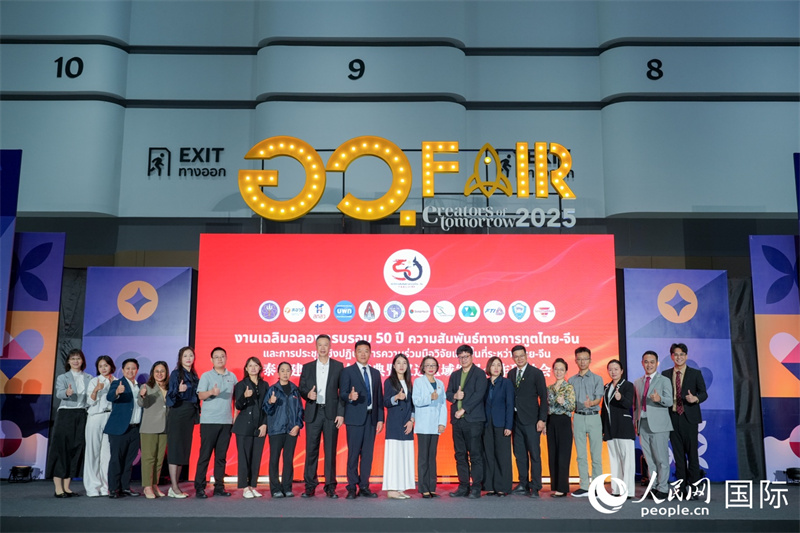
泰中双边区域发展合作研讨会会场。人民网记者 孙广勇摄 值此中泰建交50周年的历史性时刻,此次研讨会及合作备忘录的签署不仅是两国在绿色经济领域深化互利合 作的具体行动,更是积极落实全球发展倡议、高质量共建绿色 "一带一路"的生动实践。 人民网曼谷8月14日电 (记者孙广勇)泰中双边区域发展合作研讨会8月9日—10日在泰国曼谷举办,此次会 议由泰国高等教育科研与创新部主办,泰国高等教育科研与创新部、泰国科研与创新促进委员会、孔敬大学、清 迈大学,以及一带一路环境技术交流与转移中心、云南省商务厅和企业代表出席会议。 泰国高等教育科研与创新部区域发展办公室(PMUA)副主任普恩致辞表示,泰中双方具有共同的意愿,即 利用科研、创新和绿色技术作为两国经济和社会稳步、可持续向前发展的驱动力,两国合作前景广阔。 研讨会上,中泰两国代表就高质量共建绿色"一带一路"进行深入研讨,并签署多项合作备忘录,以实际行动 献礼中泰建交50周年。与会代表表示,将建立战略合作伙伴关系,整合各方资源,在技术研发、产业应用、人才 培养等领域开展全面合作,推动中泰相关产业的创新与升级。 此次研讨会上,一带一路环境技术交流与转移中心与泰国高等教育科研 ...
“中国式现代化是走和平发展道路的现代化”
Ren Min Ri Bao· 2025-08-11 02:32
"中国不追求一枝独秀,更希望百花齐放,同广大发展中国家携手实现现代化。" 在二十国集团领导人第十九次峰会上,习近平主席着眼全人类共同福祉,郑重宣布中国支持全球发展的 八项行动,表明中国携手广大发展中国家共同实现现代化的决心。 "习近平主席为人民谋福祉,维护社会公平正义,倡导和平而非战争、合作而非对抗、创造而非破坏, 为世界做出了榜样。"巴西总统卢拉道出很多国家共同的感受。 中国正以中国式现代化全面推进强国建设、民族复兴伟业。14亿多中国人民整体迈入现代化,意味着形 成一个超过现有发达国家规模总和的巨大市场。推进中国式现代化应该走什么样的道路,不仅关乎中国 人民福祉,也关乎世界各国人民福祉。 "中国式现代化是走和平发展道路的现代化。"深入思考中国长期以来的实践探索,深刻总结国际经验, 习近平总书记作出重要论断。 和平、和睦、和谐是中华民族5000多年来一直追求和传承的理念,中华民族的血液中没有侵略他人、称 王称霸的基因。 "中国人自古以来信奉'己所不欲,勿施于人'、'天下为公'、'和谐万邦'的理念,中国绝不会搞国强必 霸,也不认同你输我赢的零和游戏,因为中国人从来没有这种文化基因,也没有这种野心。中国的发展 始 ...
“中国式现代化是走和平发展道路的现代化”(总书记的人民情怀)
Ren Min Ri Bao· 2025-08-10 22:00
Group 1 - The core viewpoint emphasizes China's commitment to global development and modernization in collaboration with developing countries, as articulated by President Xi Jinping at the G20 summit [1][2] - China advocates for a peaceful development path, rejecting the historical practices of war and colonization that have caused suffering in developing nations [2][3] - The concept of "Chinese-style modernization" is presented as a model that not only benefits China but also contributes to the welfare of people worldwide, highlighting the importance of inclusive and resilient global development [2][3][4] Group 2 - Xi Jinping's leadership is characterized by a focus on improving the lives of both Chinese citizens and people in other countries, as seen in various international initiatives and projects [3][4] - The narrative includes specific examples of successful projects in countries like Indonesia, Rwanda, Madagascar, and Guyana, showcasing China's technological contributions and humanitarian efforts [3] - The overarching theme is the promotion of a community with a shared future for mankind, emphasizing cooperation, mutual benefit, and the importance of ensuring that all nations prosper together [3][4]
携手捍卫二战胜利成果(国际论坛·以史为鉴 共护和平)
Ren Min Ri Bao· 2025-08-08 22:01
Core Points - Russia and China emphasize the importance of remembering history and oppose any attempts to distort or alter the history of World War II, advocating for multilateralism and the maintenance of an international system centered around the United Nations [2][4][5] - The sacrifices made by both Russian and Chinese people during World War II are highlighted, with a focus on the significant contributions of the Chinese Communist Party in uniting the nation against Japanese militarism [3][4] - The establishment of the United Nations post-World War II is recognized as a crucial outcome of the victory over fascism, with Russia and China holding special responsibilities as major victors and permanent members of the UN Security Council [4][5] Summary by Sections Historical Context - The article reflects on the devastating impact of World War II, noting that 80 years ago, Russia and China, alongside other peace-loving nations, fought against fascism and militarism, leading to a significant victory that laid the foundation for the post-war international order [2][3] Current Challenges - The article addresses contemporary challenges to global peace and development, citing unilateralism and hegemonic practices by certain countries that threaten the UN-centered international system and the principles of international law [4][5] Future Initiatives - Russia and China propose strengthening global cooperation through initiatives such as the Global Development Initiative, Global Security Initiative, and Global Civilization Initiative, aiming to promote world peace, stability, and prosperity [5]

“携手开创这个星球更加美好的未来”——习近平主席引领中国特色大国外交在世界变局中展现时代担当
Xin Hua She· 2025-08-06 16:50
世界之变、时代之变、历史之变的大潮奔涌而来,人类再次行进至历史的十字路口。 "面对加速演进的世界百年变局和变乱交织的国际形势,各国比以往任何时候都更加需要团结合 作,以宽广胸襟超越隔阂冲突,以博大情怀关照人类命运。" 2025年7月25日,北京人民大会堂北京厅,面对16位来自各大洲的外国新任驻华大使和上海合作组 织秘书长,习近平主席的讲话掷地有声。 年初以来,习近平主席引领中国特色大国外交劈波斩浪、勇毅前行,同国际社会一切进步力量一 道,有力推动百年变局朝着有利于人类发展进步的方向演进。 2025年仲夏时节,第二届中国-中亚峰会在哈萨克斯坦隆重举行。从2023年的西安到2025年的阿 斯塔纳,习近平主席同中亚五国元首又一次聚首。 回溯中国同中亚国家交往的历史,习近平主席感慨系之:"我们的合作根植于两千多年的友好往 来,巩固于建交30多年的团结互信,发展于新时代以来的开放共赢。" 2100多年前,中国汉代使者张骞自长安出发,出使西域,打开了中国同中亚友好交往的大门。千 百年来,中国同中亚各族人民一道推动了丝绸之路的兴起和繁荣,为世界文明交流交融、丰富发 展作出了历史性贡献。 一条联结中国同中亚绵延千年的友谊合作 ...