普惠金融

Search documents
南粤银行:场景化服务激活县域经济,普惠金融润产业兴乡村
Nan Fang Du Shi Bao· 2025-12-25 12:56
普惠金融是滋养实体经济的"源头活水",更是金融机构践行社会责任的核心阵地。作为国有控股银行, 广东南粤银行坚守"金融为民"初心,主动响应国家"金融五篇大文章""百千万工程"等政策号召,聚焦中 小微企业、涉农主体等普惠群体,以顶层设计为引领、以科技为支撑、以场景为依托,构建起全方位、 多层次的普惠金融服务体系。 产品创新驱动,打造"多元化+场景化"融资模式 不同产业、不同场景下的融资需求千差万别,普惠金融不能"一刀切"。对此,南粤银行聚焦农业、制造 业等重点领域,为一系列具体产业场景定制适配融资方案。此举实现了融资纾困、产业升级与百姓增收 的多维成效,并系统性提升了普惠金融服务的精准匹配能力与覆盖范围。 在特色农业领域,湛江某水产养殖企业急需资金采购母鱼和饲料。南粤银行为其量身定制专项流动资金 贷款,通过绿色通道7日内完成1000万元放款。资金到位后,该企业产能提升40%,带动合作农户户均 年增收近2万元。 在应急保供场景中,深圳某农产品公司在节日前面临资金紧张。南粤银行深圳分行迅速响应,采用"抵 押+个人保证担保"方式,在一周内完成1000万元应急贷款审批,有效保障了市场供应稳定,守护了农 户收益底线。 截至 ...
根植民企,深耕普惠:民生银行广州分行赋能经济高质量发展
Nan Fang Du Shi Bao· 2025-12-25 12:54
Core Viewpoint - China Minsheng Bank, as the first national joint-stock commercial bank initiated by private enterprises, has consistently focused on supporting the private economy as its core strategy since its establishment 29 years ago. The bank is actively enhancing its services to private enterprises in the Guangdong-Hong Kong-Macao Greater Bay Area, aiming to facilitate high-quality financial development [1]. Group 1: Service Development - The Guangzhou branch of China Minsheng Bank has established a comprehensive service matrix to address the financing challenges faced by small and micro enterprises, significantly improving the convenience of obtaining loans [2]. - The branch has conducted over 90 outreach activities to connect with nearly 80 private enterprises, facilitating financing needs and enhancing service foundations in manufacturing and quality small and micro enterprises [3]. Group 2: Financial Products and Support - The bank has developed a diverse product system targeting small and micro enterprises, including the "Minsheng Hui" series, which offers tailored financial services based on specific scenarios, aiming for precise financial support [4]. - As of November 30, the Guangzhou branch has served over 10,000 small micro customers through its Minsheng Hui services, demonstrating its commitment to providing comprehensive financial solutions [4]. Group 3: Technological Empowerment - The Guangzhou branch emphasizes technology as a key driver for enhancing financial services, integrating new technologies such as the internet, big data, and AI to improve service efficiency and reduce operational costs for clients [5]. - The bank has partnered with various SaaS platforms to provide integrated solutions for the restaurant industry, showcasing its innovative approach to financial service delivery [5]. Group 4: Focus on Key Sectors - The bank has issued over 60 billion yuan in preferential loans this year, benefiting more than 8,000 small micro clients, and has established specialized teams to support cross-border and technological innovation sectors [6]. - As of November, the loan balance in key sectors such as consumption recovery reached 8.878 billion yuan, indicating the bank's proactive role in stimulating market recovery [6]. Group 5: Future Commitment - Looking ahead, the Guangzhou branch of China Minsheng Bank will continue to leverage its private enterprise roots, focusing on customer needs and technological innovation to deepen its practice of inclusive finance, thereby contributing to the high-quality development of the Guangdong-Hong Kong-Macao Greater Bay Area [7].

保障如何既“普”且“惠”?解析平安人寿广东普惠保险样本
Nan Fang Du Shi Bao· 2025-12-25 12:44
普惠新速度,民生新温度。 "保险的口碑是'赔'出来的。"相关监管部门亦曾多次要求保险公司做到"应赔尽赔、能赔快赔",提升保 险服务的质量和效率。平安人寿广东分公司深刻践行这一要求,以数字化转型为支撑,打造出"111极速 赔""直赔服务""重疾先赔"三大特色服务品牌,彻底颠覆传统理赔模式,让普惠保障真正落地见效。 "一句话报案、一键上传、一分钟审核"——这并非口号,而是客户K先生的真实体验。2025年5月,金 先生意外扭伤,通过"平安金管家"APP语音报案仅用30秒;后续申请理赔,从提交材料到赔款到账,全 程仅耗时51秒。据平安人寿广东分公司工作人员介绍,这一高效体验背后,是AI技术的深度应用。报 案环节引入"AI理赔机器人"实现语音智能识别,申请环节支持材料自动分类归档,审核环节完成案件智 能录入与理算扣费,全流程数字化处理大幅压缩理赔时间,解决了传统理赔材料繁琐、耗时较长的行业 痛点。 对于患者而言,住院的经济压力不仅来自疾病本身,也来自垫付资金的压力。平安人寿广东分公司推出 的直赔服务,通过与医院系统直连,实现了"出院即结算"。2025年9月,投保了"平安福"系列产品的孟 先生在珠海市人民医院出院时,医保 ...



深耕湾区服务实体,金融为民温暖羊城
Nan Fang Du Shi Bao· 2025-12-25 12:44
普惠金融:精准滴灌助力小微 响应国家普惠金融高质量发展政策,华夏银行广州分行立足江门"摩托车之都"产业特色,推出"摩配 贷"供应链金融服务方案。针对当地配件小微企业60-90天承兑汇票账期痛点,以核心企业信用为支撑, 为小微客户提供精准金融支持。截至2025年11月末,该行涉农贷款较年初增速达23.19%,为区域特色 产业链稳健发展筑牢金融根基。 暖心服务:民生底色彰显担当 践行"金融为民"宗旨,华夏银行广州分行将暖心服务落到实处。该行黄埔大道支行连续7年帮扶特殊儿 童公益组织,获广州市社会组织联合会来信感谢。分行营业部为聋哑客户启用"爱心沟通包",成功解决 其账户司法止付难题;肇庆分行为85岁海外受骗客户定制解挂方案,相关案例获"金融暖心客服优秀案 例",用细节诠释金融温度。 绿色金融:创新破局赋能双碳 紧扣"双碳"国家战略部署,华夏银行广州分行创新推出"穗碳"绿色低碳服务方案,依托平台直联供电局 数据精准识别企业绿色产能。广东某省级"专精特新"科技企业凭借该方案获得150万元信用贷款,有效 缓解流动资金压力。分行更落地全国首单低空经济资产支持专项计划。绿色金融相关案例获评省级绿色 金融改革创新案例。 在服 ...

金融活水润乡野!九江银行广州分行“贷”动乡村振兴
Nan Fang Du Shi Bao· 2025-12-25 12:44
Core Viewpoint - The article highlights the role of Jiujiang Bank's Guangzhou branch in providing financial support to the agricultural sector through innovative credit products, particularly the "Rural Talent Loan," which addresses the financing challenges faced by farmers and promotes rural revitalization [2][4]. Group 1: Financial Products and Support - Jiujiang Bank's Guangzhou branch has introduced the "Rural Talent Loan" to provide comprehensive credit support for agricultural activities, including seed procurement, feed investment, facility upgrades, and land transfer [2][4]. - The "Rural Talent Loan" has been designed to cater to the unique financial needs of farmers, allowing for quick approval and disbursement of funds without the need for complex collateral [4]. Group 2: Impact on Farmers - Farmers like Mr. Liang, who operates a 60-acre orchard, have benefited from the "Rural Talent Loan," receiving funds within one day, which enabled them to meet critical production timelines [2]. - Mr. Wang, who manages 145 acres of banana fields, successfully obtained a loan within three days, alleviating financial pressures related to land rental and seed procurement, thus allowing for expansion of his operations [4]. Group 3: Overall Financial Support and Growth - As of November 2025, the "Rural Talent Loan" and similar products have provided credit support to 112 farmers, totaling 43.6347 million yuan, covering various agricultural sectors such as fruit and flower cultivation and aquaculture [4]. - The overall agricultural loan balance of Jiujiang Bank's Guangzhou branch reached 1.896 billion yuan, providing a solid financial foundation for local agricultural production and farmer income growth [4]. Group 4: Future Focus and Strategy - Jiujiang Bank's Guangzhou branch aims to continue focusing on the core needs of rural revitalization, enhancing product adaptability and service precision to empower more farmers to expand production and improve management [4].
科技帮小微,金融暖民生:小赢科技用创新书写普惠金融新答卷
Nan Fang Du Shi Bao· 2025-12-25 12:44
Core Viewpoint - The article emphasizes the importance of small and micro enterprises as vital components of the real economy, highlighting the proactive measures taken by the government and financial technology companies like Xiaoying Technology to support these businesses through innovative financial services and initiatives [2][3]. Group 1: Government Support and Financial Environment - The Chinese government has introduced various policies, including "Several Measures to Support Financing for Small and Micro Enterprises," to enhance the financing environment for these businesses, resulting in a 12.5% year-on-year increase in the balance of inclusive loans to small and micro enterprises, reaching 35.3 trillion yuan by the end of Q1 2025 [3]. - Xiaoying Technology has launched the "Be Your Own Light" annual support plan in 2025, which includes the "Small Store Shining Plan" and "User Lighting Plan," aimed at providing financial support to small and micro enterprises, having served over 9.5 million small business owners and individual entrepreneurs across 31 provinces and regions from January 2020 to October 2025 [3]. Group 2: Technological Innovation and Service Enhancement - The "Financial Technology Development Plan (2022-2025)" encourages the application of intelligent technology in finance, and Xiaoying Technology has introduced the virtual digital assistant WinDaidai in 2025, marking a new phase in optimizing user services [5]. - WinDaidai integrates advanced technologies such as AI voice synthesis, real-time rendering, and intent recognition, providing a comprehensive intelligent interaction experience for users [7]. - The design of WinDaidai reflects a blend of technology and human touch, featuring a 3D data light ring and a color scheme that symbolizes the combination of humanistic care and technological wisdom [8]. Group 3: Social Responsibility and Consumer Protection - Xiaoying Technology emphasizes the integration of industry, academia, and research to foster sustainable development in financial technology, exemplified by the establishment of a "Digital Finance Laboratory" in collaboration with Renmin University of China [9]. - The company prioritizes consumer rights protection, conducting educational activities that have reached approximately one million people to raise awareness about financial safety and risk prevention [9]. - In the realm of public welfare, Xiaoying Technology has established a rural campus library in Jiangxi, which houses 40,000 books, enhancing educational resources for local children and demonstrating the company's commitment to social responsibility [10]. Group 4: Future Outlook - Xiaoying Technology plans to continue aligning with government policies and focusing on user needs, aiming to enhance its digital partner services and further contribute to the high-quality development of the real economy [10].

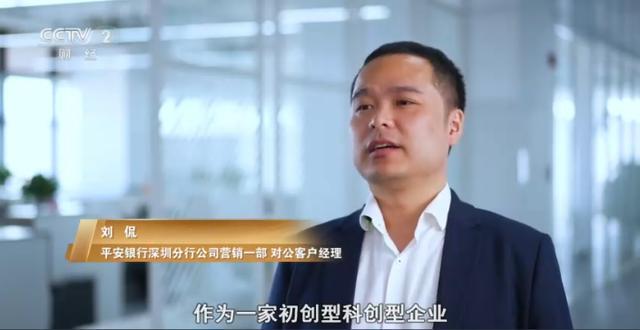
平安银行科创贷亮相央视,成功入选典型案例
Hua Xia Shi Bao· 2025-12-25 09:40
Core Viewpoint - The event "Financial Empowerment of the Bay Area - Financial Night" showcased the financial reform and innovation achievements during the 14th Five-Year Plan period in the Greater Bay Area, highlighting the role of financial institutions like Ping An Bank in supporting technological innovation and development [1][8]. Group 1: Financial Support and Innovation - Ping An Bank's "Science and Technology Loan" program was recognized as a typical case of high-quality financial development in the Greater Bay Area, demonstrating its effectiveness in supporting technology enterprises [1][5]. - The bank's comprehensive financial solutions integrate insurance, banking, securities, and leasing to provide a multi-layered support system for technology innovation companies, covering the entire lifecycle from research and development to sales [1][6]. Group 2: Case Study of He Yi New Energy - He Yi New Energy, a company specializing in micro-battery technology, faced a funding gap of 3 million yuan to fulfill a large order but received timely support from Ping An Bank, which provided a loan of 300,000 yuan to upgrade its production line [5][6]. - Following the financial assistance, He Yi New Energy successfully upgraded its production capabilities, achieving an annual production capacity of over 50 million batteries and securing orders totaling over 300 million yuan [6][7]. Group 3: Science and Technology Loan Features - The "Science and Technology Loan" focuses on the technological capabilities of enterprises, utilizing data from the industry chain and innovation qualifications for credit assessment, thus facilitating financing for technology-driven companies [7]. - As of now, Ping An Bank has approved over 10 billion yuan in "Science and Technology Loans," providing financing services to more than 2,300 technology-oriented small and micro enterprises across various sectors [7]. Group 4: Future Directions - Ping An Bank aims to continuously optimize its technology financial service system and enhance its role in supporting real innovation and the construction of a modern industrial system [8].

《奇迹》背后,总有“平安”守护
Zhong Guo Jin Rong Xin Xi Wang· 2025-12-25 09:38
Core Viewpoint - The article highlights the spirit of perseverance and innovation embodied by the "Niu" sculpture in Shenzhen, representing the dedication of individuals and companies like China Ping An in contributing to the city's development and the well-being of its people [1][5]. Group 1: Company Overview - China Ping An has evolved into a comprehensive financial group with full licenses, safeguarding the lives and properties of the people, and focusing on areas such as pension finance and inclusive finance [7][9]. - As of June 2023, China Ping An has served nearly 247 million customers, indicating that approximately one in six Chinese individuals chooses Ping An, reinforcing the brand's deep-rooted presence in the insurance market [8]. Group 2: Innovation and Technology - The development of the "Yak Insurance" product showcases the integration of technology and finance, with real-time monitoring capabilities for livestock, reflecting China Ping An's commitment to innovation [6][7]. - China Ping An has over 3,000 scientists and more than 21,000 top technology talents, with a total of 53,521 patent applications, demonstrating its strong focus on technological advancement [7]. Group 3: Social Responsibility and Market Adaptation - China Ping An is adapting to changing consumer needs, particularly in the aging population and pension industry, by optimizing service structures and continuously launching innovative initiatives [9]. - The company plays a crucial role in supporting small and micro enterprises through inclusive finance, addressing their financing challenges and contributing to their growth [9].

上海高院发布若干意见 为加快建设上海国际金融中心提供司法服务保障
Zhong Guo Jing Ji Wang· 2025-12-25 08:21
上海市高级人民法院副院长林晓镍表示,下一步,上海法院将以更精准的司法裁判、更高效的解纷服 务、更坚实的协同保障,为上海加快建成与我国综合国力和国际影响力相匹配的国际金融中心提供更加 有力的司法保障。 记者了解到,《服务保障意见》聚焦科技金融、绿色金融、普惠金融、养老金融、数字金融"五篇大文 章",精准施策,以司法保障激活金融服务实体经济新动能。其中,在科技金融领域,支持金融机构基 于专利质量、研发团队实力、数据资产规模等科技企业技术价值,创新信用评价标准,破解"轻资产、 缺抵押"融资难题。在数字金融领域,完善数字金融纠纷案件证据规则,针对涉互联网金融、在线交易 中电子数据存证难、取证难、示证难等突出问题,出台针对性的证据认证规则,规范电子数据证据的审 查认定标准。 此次发布的《服务保障意见》具有三方面突出特点。一是全新对标中央、市委、最高人民法院决策部 署,紧密对接加快建设上海国际金融中心任务安排。《服务保障意见》紧密围绕中央金融委员会《加快 建设意见》中提出的六大核心举措,逐一细化司法服务保障的内容、路径、方法。二是全面回应新时代 上海国际金融中心建设司法需求,系统集成金融司法保障功能。《服务保障意见》首次 ...
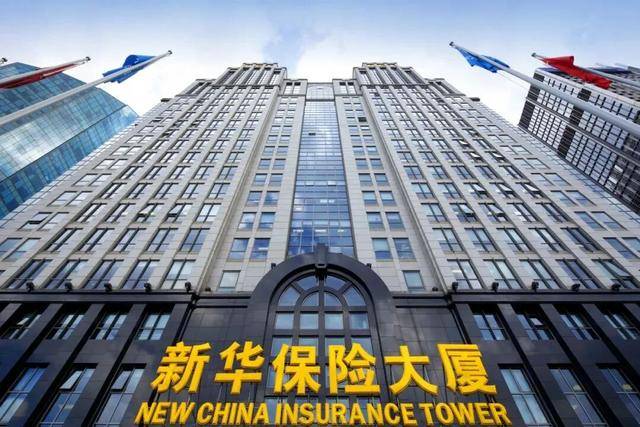
年度盘点①丨投资余额近3200亿!深耕“五篇大文章” ,新华保险以金融之力服务国家战略
Sou Hu Cai Jing· 2025-12-25 07:43
2025年是"十四五"规划收官之年,也是新华保险进一步全面深化改革的重要一年。回首2025,新华保险 以实际行动扛起国企担当,彰显保险价值,在内涵式、高质量发展的道路上迎难而上、只争朝夕,通 过"明战略、优服务、抓改革、激活力、练内功、强投资",交出了一份"规模价值双提升、品质结构双 优化"的"全科优等生答卷",综合实力更加强大,高能级发展阔步向前。让我们一起聚焦这一年的发展 足迹。 2025年是新华保险服务国家战略深化拓展年。作为国有大型寿险公司,新华保险坚守"报国为民"初心, 践行"大保险观",将金融资源与专业服务精准注入金融"五篇大文章",全力推动金融强国、中国式现代 化建设服务工作走深走实。 公司聚焦主责主业,推动保险、投资、服务三端协同发力。负债端深耕民生保障,重点推广长期护理保 险、惠民保、养老金等业务,创新多款惠民生产品,截至11月底,新华保险累计赔付133.95亿元,自公 司成立以来累计赔付超1354亿元,筑牢民生兜底防线。投资端锚定国计民生关键领域,截至11月底,服 务"五篇大文章"投资余额近3200亿元、同比增长约15%,通过保险资金长期投资模式,精准助力新质生 产力发展与绿色转型。服务端 ...