Workflow
美元指数
icon
Search documents
基差方向周度预测-20251107
Guo Tai Jun An Qi Huo· 2025-11-07 14:24
Report Summary 1) Report Industry Investment Rating No relevant content provided. 2) Core Viewpoints of the Report - The ADP employment figures in the US in October significantly exceeded expectations, reversing the downward trend from the previous month's revised data, indicating signs of stabilization in the labor market, and the ISM Services PMI reached a new high in nearly 8 months. However, due to the ongoing government shutdown in the US and the delay in official data release, the market has concerns about the economic and employment outlook, and the expectation of an interest rate cut in December remains volatile [2]. - Despite being affected by overseas markets, A - shares showed resilience. The index remained in the consolidation range after breaking through 4000 points. The Shanghai Composite Index rose nearly 1% this week, returning to the 4000 - point level. The large - cap broad - based indices were relatively stronger, with the Shanghai 50 and CSI 300 rising about 0.8% for the week, leading the CSI 500 and CSI 1000 [2]. - The trading volume this week decreased significantly compared to last week, with the average daily volume less than 2 trillion. The inflow of margin trading slowed down, and the market entered a phase of volume - contraction game [2]. - The "dividend + micro - cap" old dumbbell structure returned in terms of style. The CSI Dividend and micro - cap stock indices led the core indices, while the Beijing Stock Exchange and Sci - tech Innovation Board lagged behind [2]. - The basis of all varieties weakened slightly compared to last week. The premium of IH narrowed to less than 1%, and the annualized discounts of IF, IC, and IM reached 2.5%, 9.9%, and 12.7% respectively, still at the lower quartile in the past three years. The near - end of the term structure declined slightly, with little overall change from last week, and long - short diversified hedging can still be maintained [2]. 3) Summary by Relevant Catalogs Weekly Forecast Conclusion of Basis Direction - This week's model predicts that the basis of IH, IF, IC, and IM will move in the directions of strengthening, weakening, strengthening, and weakening respectively next week [4]. Recent Forecast Conclusion - Specific data on the predicted basis changes of IH, IF, and IC are provided, but the information is presented in a somewhat disorganized manner in the text [3]. This Week's Review - The ADP employment data in the US in October reversed the previous decline, and the ISM Services PMI reached a new high, but market concerns persisted due to the government shutdown and data delay. The A - share market showed resilience despite overseas shocks, with the index rising and the large - cap broad - based indices performing better. The trading volume decreased, and the "dividend + micro - cap" style returned. The basis of all varieties weakened slightly [2].
外储连续三月站稳3.3万亿美元 未来增持黄金仍是大方向
Xin Lang Cai Jing· 2025-11-07 13:24
中国外汇储备余额继续增加,延续了此前两个月的升势。 11月7日,国家外汇管理局统计公布数据显 示,截至2025年10月末,我国外汇储备规模为33433亿美元,较9月末上升47亿美元,升幅为0.14%。值 得注意的是,10月末我国外储规模已连续三个月升至3.3万亿美元之上,较上年末也大幅增加1409.9亿美 元。 中银证券全球首席经济学家管涛认为,这是受主要经济体货币政策及预期、宏观经济数据等因素 影响,美元指数走强,非美元货币总体下跌,但全球金融资产价格总体上涨带来的正估值效应。当月, 美元指数震荡上行,累计上涨2.1%至99.8,创8月份以来新高。 同期央行数据显示,10月末黄金储备为 7409万盎司,较上月末增加3万盎司。(第一财经) ...
刚刚,外汇局发布!33433亿美元!
Jin Rong Shi Bao· 2025-11-07 13:14
Group 1 - As of October 2025, China's foreign exchange reserves reached 33,433 billion USD, an increase of 4.7 billion USD from the end of September, representing a growth rate of 0.14% [1] - The rise in foreign reserves is attributed to the combined effects of asset price changes and exchange rate fluctuations, with the dollar index increasing by 2.1% to 99.8 in October [1] - The Federal Reserve's interest rate cuts have led to a rise in dollar-denominated global bond indices by 0.8% and the S&P 500 index by 2.3%, while the Nikkei index surged by 16.6%, reaching a historical high [1] Group 2 - The recent guidelines from the Central Committee emphasize the importance of "expanding high-level opening up," highlighting the commitment to reform and development through openness [2] - In promoting trade innovation, there is a focus on market diversification, optimizing goods trade, and cultivating new growth points, with exports expected to play a stabilizing role in cross-border capital flows [2] - The guidelines also stress the need for orderly cross-border layout of industrial and supply chains, establishing a foundation for the basic balance of international payments in capital projects [2]
我国外汇储备连续三个月超3.3万亿美元
Sou Hu Cai Jing· 2025-11-07 13:09
Core Points - As of the end of October 2025, China's foreign exchange reserves reached $334.33 billion, an increase of $4.7 billion from the end of September, marking a rise of 0.14% and the highest level since December 2015 [1][3] - The increase in foreign exchange reserves is attributed to the impact of major economies' monetary policies, macroeconomic data, and the overall rise in global financial asset prices [1][3] - The U.S. Federal Reserve's decision to cut interest rates by 25 basis points in October, along with the easing of China-U.S. trade relations, contributed to the overall increase in global asset prices and a rebound in the dollar [1][3] Summary by Category Foreign Exchange Reserves - China's foreign exchange reserves have remained above $3.3 trillion for three consecutive months, supported by a combination of factors including the depreciation of the dollar and rising U.S. Treasury yields [3][4] - The current level of foreign exchange reserves is considered to be at a relatively high level, with the People's Bank of China potentially engaging in foreign exchange net selling to maintain reserves within a reasonable range [4] Economic Indicators - In October, the U.S. dollar index rose, and global financial asset prices generally increased, with the U.S. S&P 500 index rising by 2.3% and the Nikkei index in Japan increasing by 16.6%, reaching a historical high [3] - The European Stoxx index also saw a rise of 2.6%, reflecting a slow recovery in the Eurozone economy [3] Future Outlook - The foreign exchange reserves are expected to remain stable in the future, providing important support for maintaining the RMB exchange rate at a reasonable equilibrium level amid increasing external volatility [4]
10月末中国外汇储备达33433亿美元
Zhong Guo Xin Wen Wang· 2025-11-07 13:07
Core Points - As of the end of October 2025, China's foreign exchange reserves reached $33,433 billion, an increase of $47 billion from the end of September, representing a growth rate of 0.14% [1][2] - The gold reserves stood at 74.09 million ounces, and when calculated in Special Drawing Rights (SDR), the foreign exchange reserves amounted to 24,612.45 billion SDR [1] - The increase in foreign exchange reserves is attributed to the monetary policies and expectations of major economies, as well as macroeconomic data, leading to a stronger US dollar index and a general decline in non-dollar currencies [1][2] Economic Insights - The US dollar index rose by 2.1% to 99.8, marking a new high since August, which contributed to the positive valuation effect on global financial assets [1] - The recent guidelines from the Central Committee emphasize the importance of high-level opening up, which reflects a commitment to reform and development through openness [2] - The focus on trade innovation includes promoting market diversification, optimizing and upgrading goods trade, and fostering new growth points, indicating that exports will play a stabilizing role in cross-border capital flows [2] Investment Environment - The State Administration of Foreign Exchange (SAFE) highlighted the stability and potential of the Chinese economy, suggesting that the conditions for maintaining a stable foreign exchange reserve scale remain unchanged [2] - The approach to foreign investment includes ensuring both access and operational facilitation, which is expected to lay a foundation for the basic balance of international payments in capital projects [2]
美元指数“破百”或昙花一现,2026年走势可能前高后低
Sou Hu Cai Jing· 2025-11-07 07:45
Core Viewpoint - The recent rise in the US dollar index above 100 is driven by a combination of factors, including a cooling expectation of interest rate cuts by the Federal Reserve, political uncertainties in Europe and Japan, and tightening liquidity conditions. However, analysts believe that this upward trend may not be sustainable in the long term, with a potential return to a downward trajectory for the dollar index [1][9]. Group 1: Factors Driving Dollar Strength - The dollar index surpassed the 100 mark for the first time since early August, reaching a high of 100.36, a 4.3% increase from the mid-September low of 96.2 [1]. - Analysts attribute the dollar's strength to three main factors: a reduction in market expectations for Federal Reserve rate cuts, political instability in Europe and Japan, and tightening liquidity conditions [1][6][7]. - The Federal Reserve's recent statements, particularly from Chairman Jerome Powell, have tempered expectations for further rate cuts, with a significant drop in the probability of a 25 basis point cut in December to 67%, down approximately 15 percentage points from a month ago [5][9]. Group 2: Political Uncertainties Impacting Non-USD Currencies - Political instability in France, the UK, and Japan has contributed to the weakening of non-USD currencies, enhancing the relative strength of the dollar [6]. - In France, the recent political turmoil led to a downgrade of the country's sovereign rating outlook to "negative" by Moody's [6]. - The UK faces economic challenges, as indicated by the Prime Minister's announcement of tax increases, which negatively impacted the British pound [6]. Group 3: Liquidity Conditions and Market Sentiment - The ongoing US government shutdown has led to a tightening of liquidity, with bank reserves dropping to their lowest levels since 2025, and the overnight secured funding rate (SOFR) rising to 4.22% [7][8]. - Despite the tightening, analysts do not foresee a liquidity crisis similar to that of 2008, attributing current pressures to technical factors rather than systemic issues [8]. - The Federal Reserve has been actively managing liquidity through various tools, indicating that while there are pressures, the overall dollar liquidity remains manageable [8]. Group 4: Future Outlook for the Dollar Index - Analysts generally agree that the recent rise in the dollar index is likely to be temporary, with expectations of a return to a downward trend as the US government shutdown ends and potentially weak economic data emerges [9][10]. - The dollar index is expected to fluctuate around the 100 mark in the fourth quarter, influenced by various economic and political factors, leading to a potentially volatile outlook [10].
11月份产地进入减产季 棕榈油期货高位震荡运行
Jin Tou Wang· 2025-11-07 07:08
Core Viewpoint - Palm oil futures are experiencing slight fluctuations, with the main contract reported at 8688.00 yuan/ton, reflecting a minor increase of 0.32% [1] Group 1: Market Data - As of October 31, domestic palm oil inventory stands at 592,800 tons, showing a month-on-month decrease of 2.36% but a year-on-year increase of 17.29% [2] - Data from the Southern Peninsula Palm Oil Millers Association (SPPOMA) indicates that from November 1-5, 2025, Malaysia's palm oil yield increased by 5.12% compared to the previous month, with an oil extraction rate up by 0.32% and production rising by 6.80% [2] - BMI forecasts a 1.8% growth in global palm oil production for the 2025/26 fiscal year, reaching 80.1 million tons, with Indonesia's output expected to rise by 3.3% to 47.5 million tons [2] Group 2: Institutional Perspectives - Copper Crown Jinyuan Futures notes that macroeconomic factors, including a record high in U.S. layoffs and fluctuating U.S. Treasury yields, are influencing market conditions, with palm oil prices expected to face weak fluctuations in the short term [3] - Ningzheng Futures highlights that the expectation of reduced production in November supports palm oil prices, while the domestic soybean-palm oil price gap is rapidly correcting, enhancing the cost-effectiveness of palm oil and boosting demand [3] - Despite the supportive factors, the near-term fundamentals continue to exert pressure, leading to profit-taking by short positions and a bottom adjustment in palm oil prices [3]
电解铜期货日报:触及 85000 重要支撑位,价格开始震荡-20251107
Guo Jin Qi Huo· 2025-11-07 05:38
Report Summary 1. Report Industry Investment Rating - Not provided in the given content 2. Core Viewpoints of the Report - After continuous decline, the copper price temporarily stabilized at the important level of 85,000 yuan/ton and entered an oscillation phase [1][9] - The Fed's ambiguous stance on the December interest - rate cut led to the recent strengthening of the US dollar index, which suppressed the copper price. The market's expected probability of a 25 - basis - point interest rate cut by the Fed in December has risen from 60% to 73.9%, indicating a possible improvement in market risk appetite [2][9] - Whether the subsequent copper price will continue to decline depends on when the US federal government ends the shutdown and when the Fed changes its tone on the December interest - rate cut [9] 3. Summary by Relevant Catalogs 3.1 Market Performance of Copper Futures - On November 5, 2025 (Wednesday), the Shanghai copper futures stopped falling and oscillated. The main 2512 contract closed at 85,670 yuan/ton, down 70 yuan/ton or 0.08% from the previous trading day's closing price [1] - The LME copper price continued to decline on Tuesday. After the copper price touched the important 85,000 yuan/ton mark, it temporarily stopped falling and started to oscillate [1] - The trading volume of Shanghai copper futures contracts on November 5, 2025 was 280,003 lots (unilateral calculation), the turnover was 11.9605821 billion yuan (unilateral calculation), and the open interest was 557,645 lots (a decrease of 4,052 lots) [8] 3.2 Macro and Fundamental Analysis - The Fed's ambiguous strategy on the December interest - rate cut led to the recent strengthening of the US dollar, which was the main reason for the suppression of the copper price. However, the market's expected probability of a 25 - basis - point interest rate cut by the Fed in December has increased from 67% to 73.9%, and Goldman Sachs believes that a December interest - rate cut by the Fed is the baseline prediction [2] - The US federal government shutdown has entered its 36th day, creating the longest shutdown record in US history, which has triggered concerns about the liquidity of the US financial market, leading to a general decline in US stocks and commodities on Tuesday [2] 3.3 Market Conditions of the Spot Market - The atmosphere in the spot market on November 5, 2025 was acceptable. After the copper price fell, the market's purchasing sentiment improved, and the downstream enterprises' enthusiasm for bargain - hunting increased. The reduction in the circulation of the spot market seemed to support the spot premium [1] - The refined - scrap price difference of bright copper in some regions of China continued to decline. In Guangdong, it was 2,562 yuan/ton, and in Tianjin, it was 2,640 yuan/ton [1] 3.4 Market Outlook - The Fed's ambiguous strategy on the December interest - rate cut has led to the recent strengthening of the US dollar index, suppressing the copper price. After continuous decline, the copper price has temporarily stabilized at the 85,000 yuan/ton mark and entered an oscillation phase [9] - Whether the subsequent copper price will continue to decline requires close attention to when the US federal government ends the shutdown and when the Fed changes its tone on the December interest - rate cut [9] - The market's expected probability of a 25 - basis - point interest rate cut by the Fed in December rising from 60% to 73.9% means that there is a possibility of improvement in market risk appetite [9]
有色金属月度策略:Metal Futures Daily Strategy-20251107
Group 1: Report Industry Investment Rating - No relevant content provided Group 2: Core Views of the Report - The overall shock - upward pattern of the non - ferrous sector remains unchanged. After key events, the macro focus has shifted from macro narratives to real - world demand, causing an adjustment. With the dollar index stabilizing after a rebound, non - ferrous metals have shown a warming trend again. [11] - In the short term, factors such as the strong dollar, high copper prices, and weak manufacturing data are negative for copper prices. In the long run, the supply of copper concentrates is tight, and domestic copper demand will enter a seasonal peak season, so the copper price center is expected to move up. [3][13] - Zinc shows a fluctuating rebound trend. The supply growth of zinc ingots is gradually realized, and the demand in the peak season is still relatively weak. [14] - The aluminum industry chain presents a complex situation. Aluminum shows a shock - strengthening trend, while alumina is weak, and the peak - season driving force of related sub - sectors is gradually weakening. [14] - Tin is in a state of range - bound shock. The supply of tin concentrates is tight, and the demand in traditional consumer electronics and other fields remains weak. [15] - Lead is in a state of shock - consolidation. The supply is gradually recovering, and the demand for lead - acid batteries has declined. [15] - Nickel and stainless steel are in a state of range - bound adjustment. The supply of nickel is relatively abundant, and the demand is weak. The stainless - steel market is in a weak shock situation. [15][16] Group 3: Summary by Directory First Part: Non - ferrous Metals Operation Logic and Investment Recommendations - **Macro Logic**: After key events, the macro focus has shifted to real - world demand, causing an adjustment in non - ferrous metals. With the dollar index stabilizing after a rebound, non - ferrous metals have shown a warming trend. There are different economic trends in the US, China, and the Eurozone. [11] - **Non - ferrous Metals Strategy** - **Copper**: In the short term, factors such as the strong dollar, high copper prices, and weak manufacturing data are negative for copper prices. In the long run, due to supply constraints and seasonal demand peaks, copper prices are expected to rise. The recommended strategy is to buy on dips, with a support range of 84,000 - 85,000 yuan/ton and a pressure range of 89,000 - 90,000 yuan/ton. [3][13] - **Zinc**: Zinc shows a fluctuating rebound. The supply growth of zinc ingots is gradually realized, and the demand in the peak season is still relatively weak. The recommended strategy is to be bullish on dips, with a support range of 21,800 - 22,000 yuan/ton and a pressure range of 22,800 - 23,000 yuan/ton. [14] - **Aluminum Industry Chain**: Aluminum shows a shock - strengthening trend, alumina is weak, and the peak - season driving force of related sub - sectors is gradually weakening. The recommended strategy is to be bullish on aluminum, short alumina on highs, and be bullish on the aluminum industry chain. [14] - **Tin**: Tin is in a state of range - bound shock. The supply of tin concentrates is tight, and the demand in traditional consumer electronics and other fields remains weak. The recommended strategy is to wait and see or be slightly bullish, with a support range of 260,000 - 270,000 yuan/ton and a pressure range of 290,000 - 300,000 yuan/ton. [15] - **Lead**: Lead is in a state of shock - consolidation. The supply is gradually recovering, and the demand for lead - acid batteries has declined. The recommended strategy is to sell both call and put options, with a support range of 17,300 - 17,500 yuan/ton and a pressure range of 17,800 - 18,000 yuan/ton. [15] - **Nickel and Stainless Steel**: Nickel and stainless steel are in a state of range - bound adjustment. The supply of nickel is relatively abundant, and the demand is weak. The stainless - steel market is in a weak shock situation. The recommended strategy is to be slightly bullish on dips, with a support range of 118,000 - 120,000 yuan/ton for nickel and 12,500 - 12,600 yuan/ton for stainless steel, and a pressure range of 125,000 - 128,000 yuan/ton for nickel and 13,000 - 13,200 yuan/ton for stainless steel. [15][16] Second Part: Non - ferrous Metals Market Review - **Futures Closing Situation**: The closing prices and price changes of various non - ferrous metal futures are presented, such as copper at 86,320 yuan/ton with a 0.76% increase, and aluminum at 21,630 yuan/ton with a 1.10% increase. [16] Third Part: Non - ferrous Metals Position Analysis - **Position Analysis**: The net long - short strength comparison, net long - short position differences, and changes in net long and short positions of various non - ferrous metal futures are provided, along with the influencing factors. [19] Fourth Part: Non - ferrous Metals Spot Market - **Spot Prices**: The spot prices and price changes of various non - ferrous metals are given, such as the Yangtze River non - ferrous copper spot price at 85,990 yuan/ton with a 0.54% increase, and the Yangtze River non - ferrous 0 zinc spot average price at 22,510 yuan/ton with no change. [20] Fifth Part: Non - ferrous Metals Industry Chain - Relevant charts are provided to show the inventory changes, processing fees, and price trends of copper, zinc, aluminum, alumina, tin, lead, nickel, and stainless steel in the industry chain. [22][24][27] Sixth Part: Non - ferrous Metals Arbitrage - Relevant charts are provided to show the arbitrage - related data such as the ratio of domestic to foreign prices, basis, and price differences of copper, zinc, aluminum, alumina, tin, lead, nickel, and stainless steel. [46][48][51] Seventh Part: Non - ferrous Metals Options - Relevant charts are provided to show the historical volatility, implied volatility, trading volume, and open - interest ratio of options for copper, zinc, and aluminum. [64][66][68]
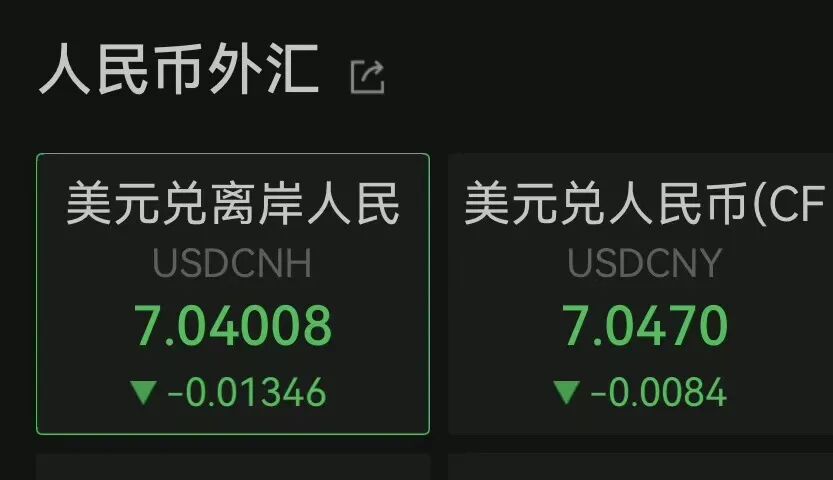
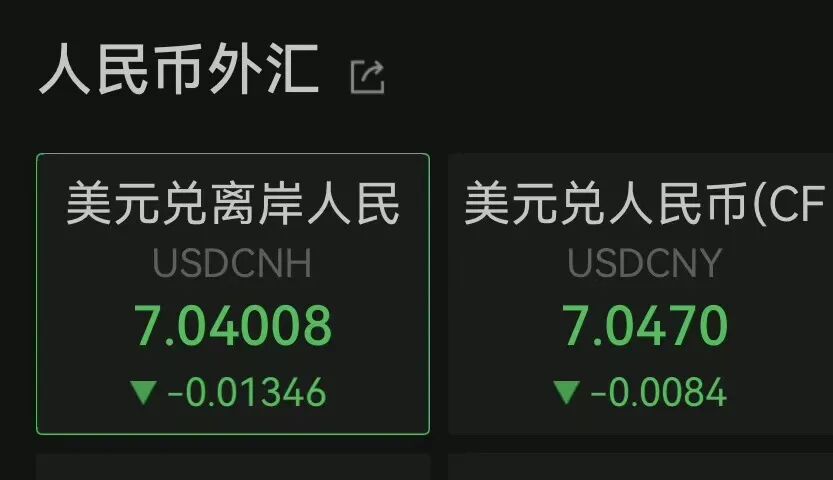
在岸人民币对美元开盘上涨 报7.1195
Sou Hu Cai Jing· 2025-11-07 02:47
Core Points - The onshore RMB against the USD opened higher at 7.1195, compared to the previous closing of 7.1219 [1] - The offshore RMB against the USD was reported at 7.1242 as of 9:35 AM [1] - The central parity rate of RMB against USD was adjusted up by 29 basis points to 7.0836 [1] - The USD index fell to 99.7612, dropping below the 100 mark [1] Market Analysis - Huatai Futures research report indicates that the USD to RMB is expected to fluctuate around the 7.10 range, with market focus on expectation recovery and policy release [1] - There is a potential for RMB appreciation if the Federal Reserve initiates a substantial rate cut cycle and domestic policy support continues to strengthen [1] - The RMB central tendency may gently rise to 7.0, but caution is advised regarding potential short-term rebounds in the USD due to the end of the US government shutdown and core data revisions, which could increase RMB volatility [1]