自由贸易

Search documents
英国央行行长贝利:不要指望一直都能保持平衡的贸易状态。消除非关税壁垒的尝试会带来好处。必须努力重建自由贸易。
news flash· 2025-05-29 15:07
必须努力重建自由贸易。 消除非关税壁垒的尝试会带来好处。 英国央行行长贝利:不要指望一直都能保持平衡的贸易状态。 ...
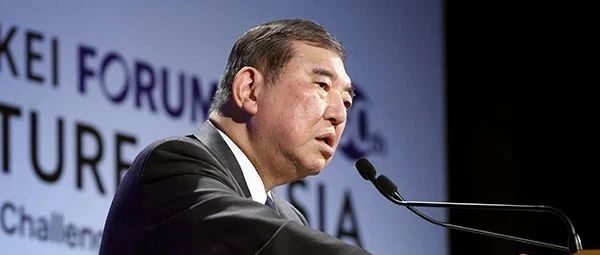
石破茂:推动CPTPP扩展,摸索与东盟、欧盟对话
日经中文网· 2025-05-29 08:16
Group 1 - The core viewpoint of the article emphasizes Japan's commitment to supporting a free trade system amidst rising global protectionism and inward thinking, urging Asian countries to collaborate and demonstrate the importance of a rules-based, free, and fair economic order [1][2] Group 2 - One of the strategies proposed by Japan's Prime Minister is the promotion of the Comprehensive and Progressive Agreement for Trans-Pacific Partnership (CPTPP), which covers a wide range of areas and establishes high-standard unified rules, contributing not only to economic benefits but also to global peace and prosperity [2] - Japan aims to play a leading role in expanding and upgrading the CPTPP framework, which includes not just tariff reductions but also liberalization of services, investment, and intellectual property [2] - As of December 2024, the UK will officially join the CPTPP, increasing the number of member countries to 12, with ASEAN members such as Brunei, Malaysia, Singapore, and Vietnam already part of the agreement [2] - Japan plans to strengthen cooperation with ASEAN and the EU, using the CPTPP as a core framework, and has already signed an Economic Partnership Agreement (EPA) with the EU [2]

芒格谈价值投资、比亚迪、特朗普和马斯克,超精彩的21分钟(2019年)
聪明投资者· 2025-05-29 02:47
Group 1 - The article discusses Charlie Munger's views on the future of BYD in the hybrid and electric vehicle sectors, predicting it will be a major winner [22] - Munger emphasizes the importance of value investing, stating that all wise investments are essentially value investments [60][64] - He highlights the competitive nature of the automotive market in the U.S. and the challenges for new entrants, particularly from China [19][20] Group 2 - Munger expresses a positive outlook on the trade relationship between the U.S. and China, welcoming the trade deficit as beneficial for China's development [10][12] - He acknowledges that China has advantages in certain fields compared to the U.S., which is a natural occurrence in global trade dynamics [13][16] - Munger reflects on the historical context of trade and competition, using the example of Berkshire Hathaway's investment in Dexter Shoe to illustrate the impact of globalization [14][15] Group 3 - The article mentions that BYD has stopped producing gasoline-powered vehicles and is focusing on electric and hybrid cars, with significant sales growth in 2023 [23] - Munger believes that BYD's strength lies in its battery technology, positioning it well for future success in the electric vehicle market [21] - The discussion includes the competitive landscape of electric vehicles, with Tesla being recognized for its significant achievements [24]


商务部副部长凌激会见德国中小企业代表团
news flash· 2025-05-28 01:20
Core Viewpoint - The meeting between China's Vice Minister of Commerce and the German SME delegation highlights the opportunities for German SMEs to invest in China, emphasizing China's large market, efficient supply chain, and vibrant innovation ecosystem [1] Group 1: Market Opportunities - China offers a vast market and a complete, efficient production and supply chain system, which presents significant investment opportunities for German SMEs [1] - The Chinese government encourages mutual cooperation and aims to maintain free trade and stability in global supply chains [1] Group 2: Bilateral Relations - The meeting underscores the importance of Sino-German collaboration in fostering economic ties and supporting each other's businesses [1] - There is a call for both sides to work together to uphold free trade principles and ensure the stability of global industrial and supply chains [1]
凌激副部长兼国际贸易谈判副代表会见德国中小企业代表团
news flash· 2025-05-28 01:15
Core Viewpoint - The meeting between China's Vice Minister of Commerce Ling Ji and the German SME delegation highlights the opportunities for German small and medium-sized enterprises (SMEs) to invest in China, emphasizing the importance of maintaining free trade and stable global supply chains [1] Group 1: Opportunities for Investment - China offers a vast market, a complete and efficient production and supply chain system, and a vibrant technological innovation ecosystem, providing numerous opportunities for German SMEs to invest [1] - The head of the German SME delegation, Dorin, noted the attractiveness of the Chinese market for German SMEs and expressed a commitment to assist more German SMEs, particularly "hidden champions," in entering the Chinese market [1]
东盟-中国-海合会峰会联合声明:探索本币和跨境支付合作
news flash· 2025-05-27 19:31
Core Points - The ASEAN-China-GCC summit joint statement emphasizes the commitment to leverage the complementarity of ASEAN, China, and the GCC to enhance economic cooperation [1] - The completion of negotiations for the upgrade of the China-ASEAN Free Trade Area 3.0 is welcomed, with expectations for the early signing and implementation of the upgraded protocol [1] - There is an anticipation for the timely completion of negotiations for the China-GCC Free Trade Agreement [1] - The establishment of a regional business council is being explored to promote dialogue among enterprises from the three parties, enhance trade and investment flows, and develop regional value chains [1] - The joint statement includes an exploration of cooperation in local currencies and cross-border payment systems [1]
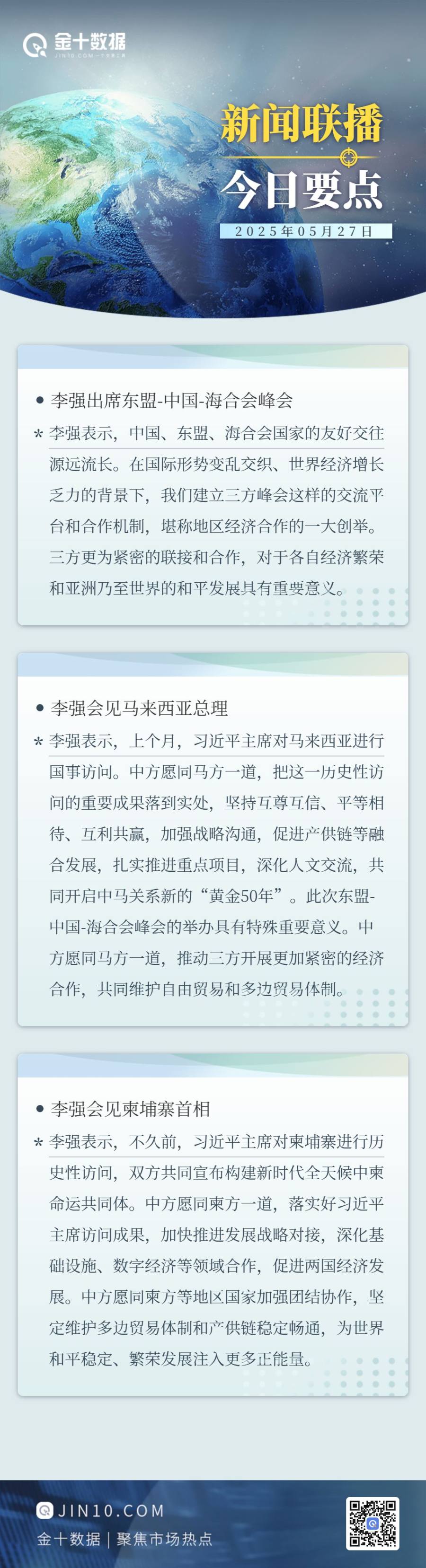
金十图示:2025年05月27日(周二)新闻联播今日要点
news flash· 2025-05-27 13:12
Group 1 - Chinese Premier Li Qiang met with the Prime Minister of Malaysia, emphasizing the importance of implementing the outcomes of President Xi Jinping's recent state visit to Malaysia, aiming for mutual respect, trust, and win-win cooperation [3] - The meeting highlighted the intention to strengthen strategic communication and promote the integration of supply chains, as well as to advance key projects and deepen cultural exchanges, marking a new "golden 50 years" in China-Malaysia relations [3] - The ASEAN-China-GCC summit is noted for its special significance, with China expressing willingness to enhance economic cooperation with Malaysia and jointly uphold free trade and multilateral trade systems [3] Group 2 - In a separate meeting, Premier Li Qiang also met with the Prime Minister of Cambodia, referencing President Xi Jinping's historic visit and the announcement of a new all-weather China-Cambodia community of shared future [4] - The discussions focused on accelerating the alignment of development strategies and deepening cooperation in infrastructure and digital economy sectors to promote economic development between the two countries [5] - China expressed a commitment to strengthen solidarity and cooperation with Cambodia and other regional countries to maintain a stable and smooth multilateral trade system and supply chains, contributing positively to global peace and development [5]
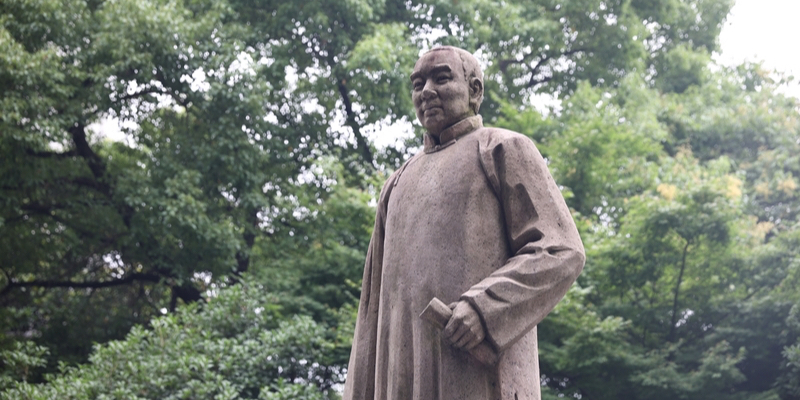
马寅初的第三条道路
Jing Ji Guan Cha Wang· 2025-05-27 11:27
Group 1 - Adam Smith's economic ideas initially inspired Chinese intellectuals, particularly during the late 19th and early 20th centuries, but ultimately did not take root in Chinese academic thought [2][3] - The shift in Chinese economic thought in the 1930s was led by Ma Yinchu, who proposed a balanced approach between free capitalism and Soviet-style socialism in his work "Economic Reconstruction of China" [3][5] - The Chinese Economic Society, founded in 1923, evolved to focus on practical economic issues rather than purely theoretical discussions, reflecting the changing priorities of its members [6][7] Group 2 - Ma Yinchu's economic philosophy transitioned from early liberalism to advocating for a "third way" that combined elements of both capitalism and socialism, influenced by the successes and failures of both systems [8][10] - The "third way" was characterized by a recognition of the limitations of extreme capitalism and communism, leading to a call for a mixed economic model that would suit China's unique conditions [9][11] - Ma Yinchu's ideas gained traction among influential figures in the government and business sectors, facilitating discussions on the implementation of controlled economic policies in China [16][17] Group 3 - The concept of "controlled economy" proposed by Ma Yinchu was distinct from Soviet-style planning, emphasizing the need for a balanced approach to production and distribution to avoid the pitfalls of both extreme capitalism and communism [14][15] - Ma Yinchu argued that China's socio-economic challenges required a departure from individualism towards a more collective approach, drawing inspiration from Friedrich List's nationalism [11][12] - The rapid acceptance of Ma Yinchu's "third way" among Chinese intellectuals and policymakers was evident in the discussions and resolutions of the Chinese Economic Society and its influence on national economic policies [17][18]
深化与东盟&欧洲合作——政策周观察第31期
一瑜中的· 2025-05-27 02:28
文 : 华创证券研究所副所长 、首席宏观分析师 张瑜(执业证号:S0360518090001) 联系人: 陆银波(15210860866) 袁玲玲(微信 Yuen43) 报告摘要 近一周政策出台不多,主要关注以下内容: (一)外交:强化与欧洲、东盟国家联络 。 1 ) 5 月 20 日, 中国与东盟十国全面完成中国 - 东盟 自贸区 3.0 版谈判。 2 ) 5 月 22 日 -23 日 ,总书记先后同法国总统马克龙、德国总理默茨通电 话。在与法国总统通电话时,总书记指出,"维护国际贸易规则和世界经济秩序,践行真正的多边主 义。国际形势越是复杂,中法越要作出正确战略抉择"。 3 ) 5 月 25 日 , 总理同印度尼西亚总统普 拉博沃会谈,"中方愿同印尼加强发展战略对接,深化高质量共建'一带一路'合作","坚持多边主义和 自由贸易,推动平等有序的世界多极化、普惠包容的经济全球化"。 4 ) 5 月 26 日 , 总理将出席在 马来西亚吉隆坡举行的东盟 - 中国 - 海合会峰会。 (二)财政及项目进度。 1 )发改委 4 月审批项目加速 。据 5 月 20 日发改委例行新闻发布会, 4 月份,发改委共审批固定资 ...