
AI医疗

Search documents
AI视角下互联网“大厂病”系列之30: 微医的问题、根源与解决方案
Sou Hu Cai Jing· 2025-12-25 06:30
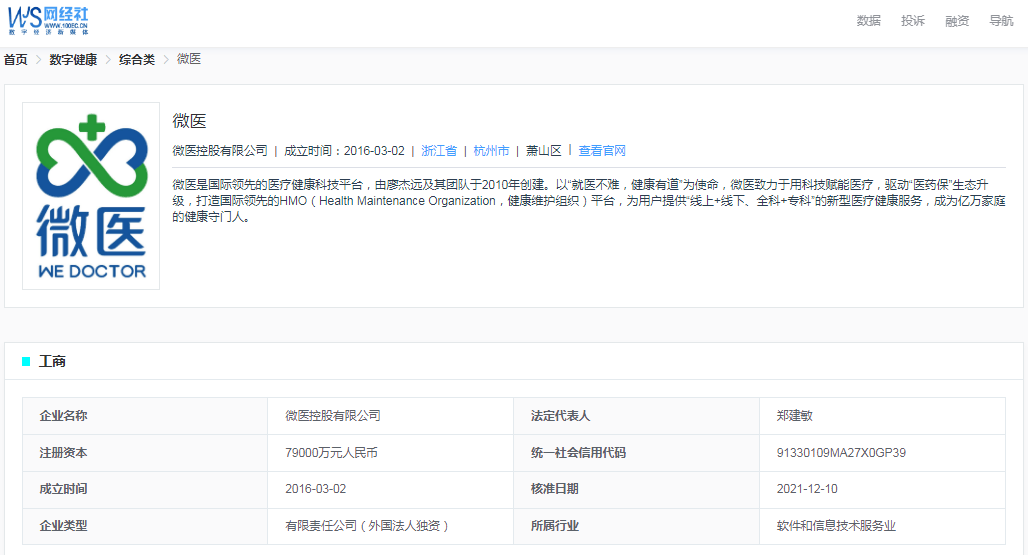
Core Insights - A former employee of Alibaba, Yuan An, shared a lengthy farewell message discussing Alibaba's development, existing issues, and suggestions, which received a response from Jack Ma [1] - The article highlights the challenges faced by WeDoctor, a pioneer in China's "Internet + healthcare" sector, and aims to analyze its core issues, root causes, and potential solutions [1] Company Overview - WeDoctor Holdings Limited, established on March 2, 2016, is a foreign-owned limited liability company based in Hangzhou, China, with a registered capital of 79 million RMB [3] Financial Performance - WeDoctor's revenue from 2021 to 2023 was reported as 9.62 billion RMB, 13.68 billion RMB, and 18.63 billion RMB, respectively, while adjusted losses for the same period were 13.54 billion RMB, 8.17 billion RMB, and 5.05 billion RMB [8][9] - Despite narrowing losses, the company reported a loss of 1.28 billion RMB in the first half of 2024, reflecting a loss rate of 7.0% [9] Business Model and Strategy - WeDoctor's revenue structure indicates a reliance on AI medical services, which accounted for nearly 80% of its income in the first half of 2024, highlighting a risk of income source concentration [11] - The company has undergone multiple strategic shifts, evolving from an appointment booking platform to an integrated digital healthcare service provider, and now focusing on AI healthcare solutions [11][12] Regulatory Challenges - WeDoctor faced regulatory scrutiny, including a 30.3 million RMB fine from the China Securities Regulatory Commission for failing to disclose information during stock trading [6][7] - The company also encountered compliance issues during its rapid expansion, indicating a lag in its compliance framework relative to business growth [7] Market Position and Competition - The digital health sector is highly competitive, with numerous players such as 1药网, 平安好医生, and others, posing significant pressure on WeDoctor [22] - The company’s strategic investments, including attempts to acquire shares in other firms, have led to regulatory penalties, reflecting weaknesses in its investment decision-making [12] Recommendations for Improvement - To address its centralized power issues, WeDoctor should establish a decision-making mechanism with specialized committees and involve external professionals in major decisions [17] - The company is advised to diversify its revenue streams by expanding into corporate health management services and personalized membership health services [19][21] - WeDoctor should enhance its compliance management by adopting best practices and ensuring the independence of its compliance department [19] Future Outlook - If WeDoctor successfully implements the recommended reforms, it may face short-term challenges but could achieve a more sustainable growth model in the long term [23] - The company must leverage policy support for AI healthcare while enhancing compliance and innovation to maintain a competitive edge in the evolving market [24]

长城基金龙宇飞:2026年AI医疗有望将迎来两大催化
Xin Lang Cai Jing· 2025-12-25 06:29
Core Viewpoint - The pharmaceutical industry is entering a critical period of innovation and technological integration, with investment logic being reshaped [1][4]. Group 1: Industry Trends - The core competitiveness standards in the pharmaceutical industry are evolving, shifting from commercialization capabilities over a decade ago, to product strength 5-10 years ago, and now requiring excellence in both R&D and commercialization [1][4]. - The global industry is entering a new wave of technological upgrades, where the ability to embrace new productivity tools and integrate them into business models and R&D will be key to future competition [1][4]. Group 2: Investment Outlook for 2026 - For 2026, the focus is on two main investment directions: innovative drugs and AI healthcare, which are expected to align with both industry trends and stock price trends [1][4]. Group 3: AI Healthcare Catalysts - AI healthcare is anticipated to experience two major catalysts in the coming year: 1. Policy support, with recent guidelines from the National Health Commission and other ministries aiming to establish specialized clinical models and intelligent applications by 2027, creating a two-year window for explosive growth in 2026 [5]. 2. Technological drivers, where foundational industries will benefit first, leading to a ripple effect across various sectors. The initial integration of AI in healthcare has been completed, and advancements in computational model capabilities are expected to drive significant growth in demand from both hospitals and patients [6].
2025港股生物医药热潮:27家企业上市,融资额全球第一,ADC与减肥药成焦点
Sou Hu Cai Jing· 2025-12-25 03:17
Group 1 - The Hong Kong stock market has become a core platform for biopharmaceutical companies seeking IPO financing, with 27 healthcare enterprises successfully listed by December 24, 2025, and nearly 10 more applications submitted in December [1] - Hong Kong's new stock market financing amount ranked first globally in 2025, with notable listings including the largest pharmaceutical IPO in nearly five years by Hengrui Medicine and the first digital therapy stock, Brain Dynamics [3] - The majority of biopharmaceutical companies listed in 2025 are innovative drug firms, many of which are in the pre-profit stage, focusing on cutting-edge fields such as antibody-drug conjugates (ADC), dual antibodies, small nucleic acids, weight-loss drugs, and AI healthcare [3] Group 2 - Market enthusiasm for new healthcare stocks surged, with some public offerings seeing subscription multiples exceeding 3,000 times since July 2025; however, market performance showed divergence towards the end of the year, exemplified by the poor debut of Mingji Hospital's stock [3] - Companies are looking to raise funds as the market recovers from previous capital winters, with the relatively low listing thresholds in Hong Kong making it a preferred choice for enterprises [3]


AI医疗专家交流
2025-12-25 02:43
Summary of the Conference Call Company and Industry Overview - The conference call discusses **Ant Group's** health app, **Afu APP**, which aims to become a national health entry point in China, targeting **500 million registered users** and **100 million monthly active users** by **2026** [2][3]. Core Points and Arguments - **User Engagement and Trust**: Afu APP focuses on enhancing user engagement and trust in both consumer and serious medical fields by providing comprehensive health solutions [2][3]. - **Data Utilization**: Ant Group has accumulated **10 years of data**, including **700 million** health insurance code users and **60 million** health insurance members, to train vertical models for precise health services [2][5]. - **Collaboration with Health Insurance**: The company collaborates directly with health insurance to establish data centers, planning to launch **10 local data centers** by **2025** [2][8]. - **Monetization Strategies**: Afu APP's revenue model includes consultation services (approximately **100,000 paid consultations daily**) and drug sales (around **3 million yuan daily**), with future plans to diversify income sources [2][12][15]. - **Product Features**: The app includes features like medical guidance, health goal tracking, and AI consultation, with plans for further upgrades to enhance user experience [3][12]. Additional Important Content - **Data Acquisition Costs**: The cost of acquiring data varies, with initial investments in promoting health insurance codes and purchasing medical data costing around **200 million yuan** annually [10]. - **Technical Challenges**: Current AI models achieve only **60%-70%** accuracy compared to top experts, and regulations prevent AI from independently diagnosing or prescribing [11]. - **Market Positioning**: Ant Group aims to position Afu APP as a leading health service platform, with a revenue target of **100 billion yuan** and a profit goal of **50 billion yuan** by **2026** [3][21]. - **Competitive Landscape**: Compared to competitors like Tencent and JD Health, Afu APP focuses on comprehensive service coverage and high-frequency user engagement, ensuring long-term app retention [19][20]. Conclusion - Ant Group's strategic focus on the Afu APP aims to leverage extensive data and partnerships to create a robust health service platform, addressing both user needs and market demands while navigating regulatory challenges and competition.
中信证券:从蚂蚁阿福看AI时代医疗Agent机遇
Mei Ri Jing Ji Xin Wen· 2025-12-25 00:41
每经AI快讯,中信证券研报表示,蚂蚁旗下C端AI医疗应用"AQ"更名"蚂蚁阿福",完成品牌战略升级。 我们认为,蚂蚁阿福APP具备结构化多模态精准问诊能力,长周期健康数据积累提升用户黏性,以及阿 里系生态互联商业化前景可观三大亮点;看好互联网大厂凭借AI产品力、成熟生态以及投流资金规模 优势,率先抢占市场并完成用户AI家医心智培育,打造AI集医学问诊、健康管理、医疗消费于一体的 国民级AI医疗应用。 ...

智云健康获年度转型先锋奖:AI驱动战略升级,P2M打开新空间
Sou Hu Cai Jing· 2025-12-24 06:48
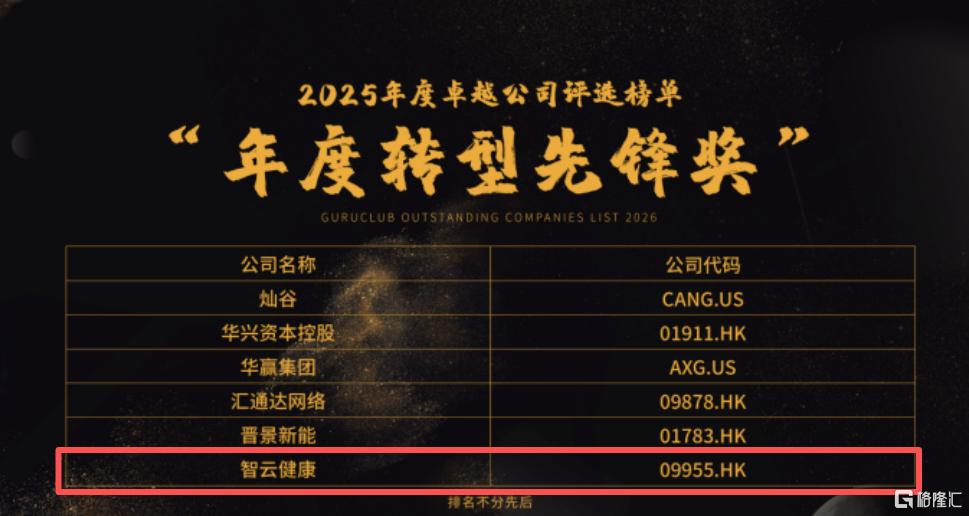
Core Insights - The article highlights that Zhiyun Health (09955.HK) has been awarded the "Annual Transformation Pioneer Award" for its outstanding performance in strategic transformation, business restructuring, and sustainable growth in a dynamic market environment [1][2]. Group 1: Strategic Focus and Transformation - Zhiyun Health has shifted from a scale expansion model to a focus on "AI SaaS + P2M" as its core growth strategy, emphasizing high-quality and high-value growth [2]. - The company has strategically divested from non-core businesses, such as medical supplies and consumables, to concentrate resources on digital chronic disease management, thereby clarifying its strategic direction [3]. Group 2: Financial Performance and Validation - The mid-2025 financial report shows a 20.3% year-on-year growth in revenue after excluding the impact of divested businesses, indicating strong internal growth in core operations [4]. - The gross profit margin reached 37.1%, an increase of over 16 percentage points year-on-year, with adjusted gross margins at 49.9%, reflecting a successful shift from a scale-driven to a quality-driven business model [4]. Group 3: Cash Flow and Sustainability - For the first half of 2025, Zhiyun Health achieved a positive operating cash flow of 28.65 million, marking its first positive cash flow since going public, which validates its high-value strategic focus and demonstrates its self-sustaining capabilities [5][6]. Group 4: Dual-Engine Growth Model - The "AI SaaS + P2M" dual-engine model supports the company's transformation and long-term market outlook, with the SaaS system covering over 2,700 hospitals and nearly 270,000 pharmacies nationwide, establishing a robust digital service network [7]. - The P2M model, which links patient needs directly to the pharmaceutical industry, generated revenue of 260 million in the first half of 2025, a year-on-year increase of 142.1%, and has become a significant growth driver for the company [8]. Group 5: Technological Advancements - Zhiyun Health continues to deepen its core technology exploration, with self-developed models like "Zhiyun Medical Brain" and ClouD GPT enhancing operational efficiency and aiding in clinical diagnosis and research innovation [9]. Group 6: Future Outlook - The award signifies recognition of Zhiyun Health's past transformation and sets the stage for future endeavors, as the company aims to solidify its leading position in digital chronic disease management and leverage technology to reshape healthcare value [10].

智云健康(09955.HK)获“年度转型先锋奖”:AI驱动战略升级,P2M模式打开成长新空间
Ge Long Hui· 2025-12-24 05:41
Core Insights - The article highlights that Zhiyun Health (09955.HK) won the "Annual Transformation Pioneer Award" for its outstanding performance in strategic transformation, business restructuring, and sustainable growth [1][4] - The award recognizes companies that achieve high-quality development and create long-term value through proactive changes in a dynamic market environment [1] Strategic Focus and Financial Transformation - Zhiyun Health has shifted from a scale expansion model to a focus on "AI SaaS + P2M" for high-quality growth [4] - The company has divested non-core businesses, such as medical supplies, to concentrate resources on digital chronic disease management, marking a strategic focus rather than mere contraction [5] Financial Performance - In the first half of 2025, Zhiyun Health reported a 20.3% year-on-year revenue growth after excluding the impact of divested businesses, demonstrating resilience in core business growth [6] - The gross margin reached 37.1%, an increase of over 16 percentage points year-on-year, indicating a successful shift from scale-driven to quality-driven business [6] - The company achieved a historic positive operating cash flow of 28.65 million yuan, marking its first positive cash flow since listing, validating its high-value strategy [7] AI SaaS + P2M Dual-Engine Model - Zhiyun Health has developed a dual-engine model of "AI SaaS + P2M," which enhances its business transformation and provides a sustainable core momentum [9] - The company's SaaS systems cover over 2,700 hospitals and nearly 270,000 pharmacies, establishing a vast digital service network that supports data accumulation and patient insights [10] - The P2M model generated 260 million yuan in revenue in the first half of 2025, a 142.1% year-on-year increase, and has become a profitable growth driver [11] Technological Advancements - The company continues to explore core technologies, with its self-developed "Zhiyun Medical Brain" and various AI models enhancing operational efficiency and aiding in diagnosis and research [12] - The integration of advanced AI technology is crucial for the effective operation of the dual-engine model and building long-term competitive barriers [12] Future Outlook - With the recognition of the "Annual Transformation Pioneer Award," Zhiyun Health has successfully transitioned from a digital service provider to a chronic disease management ecosystem re-builder [14] - The company aims to solidify its leading position in digital chronic disease management while leveraging technology to reconstruct medical value and empower the future of the industry [14]
神州数码:目前公司已经与多家医院合作,具体涉及肿瘤术后康复诊断等诊疗场景
Mei Ri Jing Ji Xin Wen· 2025-12-24 03:58
Core Viewpoint - The company has established partnerships with multiple hospitals for the deployment of its proprietary AI integrated machines, focusing on post-operative rehabilitation diagnosis in oncology, indicating a significant market potential in the healthcare sector [1] Group 1: Company Developments - The company has collaborated with several hospitals, specifically in the area of post-operative rehabilitation diagnosis for cancer patients [1] - The current phase of AI business in the healthcare industry is primarily focused on pilot applications, with plans for gradual market expansion [1] Group 2: Industry Insights - The healthcare sector is identified as a key industry for the company's AI business development, suggesting a strategic focus on this area [1] - The company's existing technology and product accumulation are expected to help build a competitive advantage in the market [1]

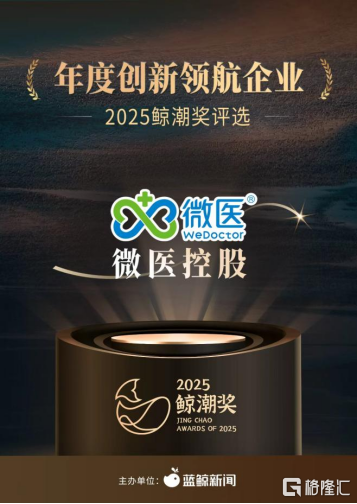
树立AI医疗价值标杆 微医控股荣膺"年度创新领航企业"与"年度卓越人工智能应用企业"
Ge Long Hui· 2025-12-24 03:20
Group 1 - The core viewpoint of the articles highlights that WeDoctor Holdings has received two prestigious awards for its innovative contributions in the digital health and AI medical sectors, specifically the "Annual Innovative Leading Enterprise" and "Annual Outstanding AI Application Enterprise" awards [1][2][5] - WeDoctor's "AI Health Community" is a key innovation that integrates AI technology with healthcare, establishing a payment model based on health outcomes, which has successfully scaled value-based healthcare [1][4] - The company has improved health indicators for over one million users and created a clear commercialization path, providing systematic solutions from technological breakthroughs to industry empowerment [1][4] Group 2 - The "AI Health Community" has restructured traditional medical payment logic from project-based fees to a membership service system based on headcount and value, benefiting various stakeholders including healthcare institutions, doctors, patients, and public health insurance funds [4] - Significant improvements in chronic disease management have been reported, with hypertension control rates increasing from 70.04% to 79.55% and diabetes control rates from 13.71% to 23.98% between June 2024 and June 2025 [4] - WeDoctor's AI medical service revenue reached 2.841 billion yuan in the first half of 2025, reflecting a year-on-year growth of 97.3%, indicating strong commercial growth [7] Group 3 - The company aims to transform the healthcare service system from a focus on scale expansion to value enhancement, aligning with the "Healthy China" strategy and the integration of the digital economy [8] - WeDoctor has been recognized in multiple authoritative awards, including the "Annual AI Application Scenario Breakthrough Enterprise" and ranking in the "Top Chinese Medical Digital Enterprises" by various media outlets, underscoring its leading position in the AI healthcare sector [8]
“蚂蚁阿福”强势出圈,AI医疗产业商业化加速
Zhong Guo Zheng Quan Bao· 2025-12-24 00:48
"健康大小事,阿福帮你讲明白。"电梯间、商场大屏、微博开屏,这款名为"蚂蚁阿福"的AI医疗应用近 期突然闯入大众视野,一夜之间,阿福无处不在。随着产品的强势推广,二级市场AI医疗板块闻风而 动,相关概念股迎来一波上涨。业内人士认为,随着"蚂蚁阿福"等现象级产品持续推出,AI医疗行业商 业化加速,相关板块指数仍处于底部区域,当前投资性价比较高。 概念股闻风而动 ● 本报记者 葛瑶 贺菊颖认为,AI医疗在提升医疗器械功能、检查检验结果的解读、辅助临床医生决策、健康管理等多 个领域的应用价值较大,是医疗企业和医院必须重视的创新方向和竞争趋势。企业有望借助AI进一步 提高产品竞争力和客户黏性,巩固行业地位和竞争优势。 第三方榜单数据显示,截至今年5月,国内排名前100的医院已全部完成大模型部署。此外,云知声、讯 飞医疗科技、医渡科技等多家上市企业已明确部署医疗大模型,AI技术深度嵌入诊疗、管理与科研全 流程。 国内产业化进程同步提速。近日,AI制药公司英矽智能宣布正式启动新股发售,发售价为每股24.05港 元,对应公司总市值为134.06亿港元,预计于12月30日在港交所主板上市。英矽智能是一家AI驱动的生 物科技公 ...