
共同富裕

Search documents
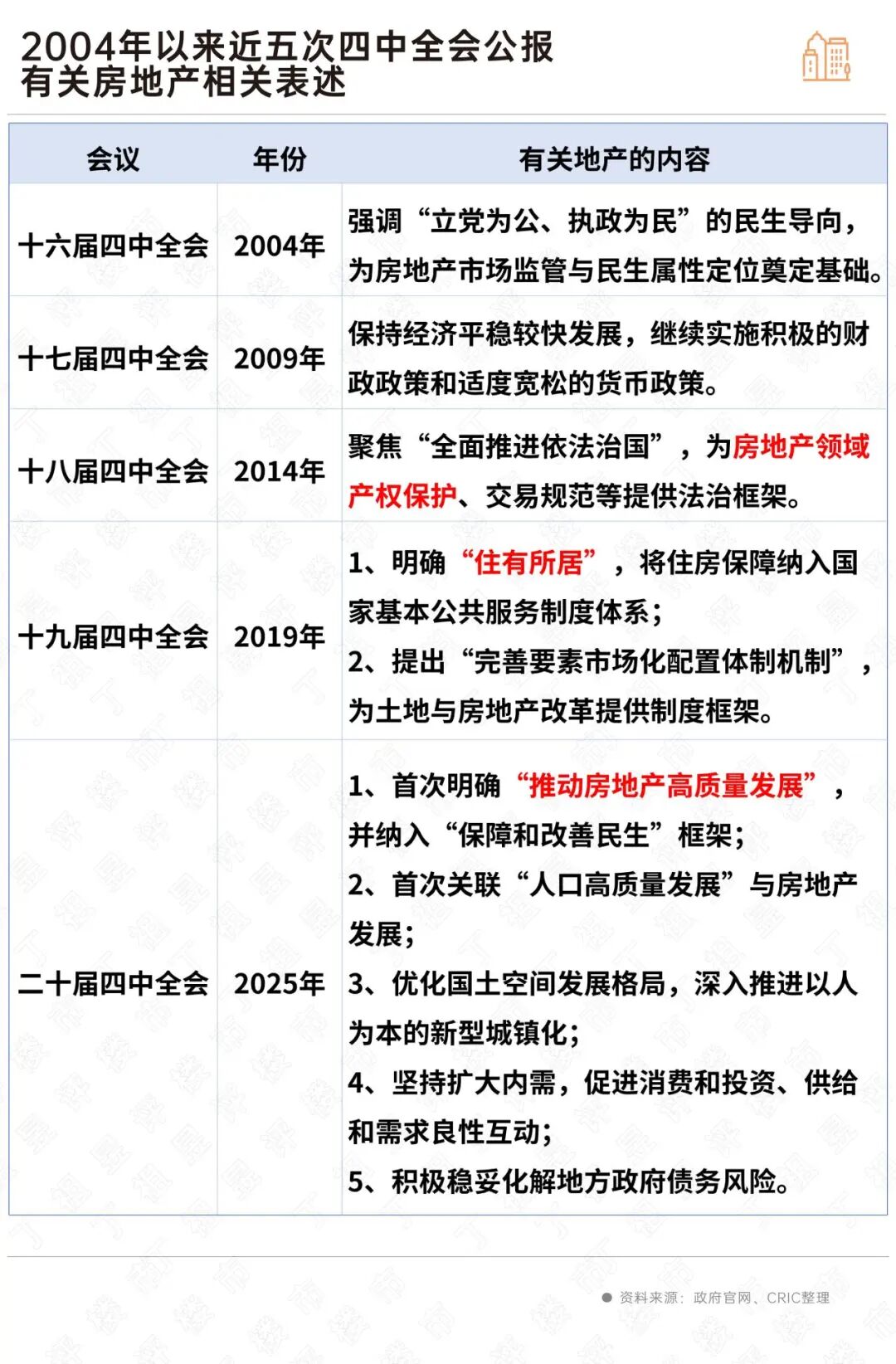
房地产下一个五年,定了!
3 6 Ke· 2025-10-27 02:54
Core Viewpoint - The 20th Central Committee's Fourth Plenary Session emphasizes the promotion of high-quality development in the real estate sector, marking a significant shift in policy direction [1][3][4]. Group 1: Policy Shift - The upcoming five years are designated as a period for high-quality development in real estate, indicating a fundamental change in the approach to the sector [2]. - Real estate is now framed within the context of "guaranteeing and improving people's livelihoods" and "common prosperity," highlighting its importance in national strategies [3][4]. - The focus has shifted from merely being a tool for economic stimulus to a key component in promoting consumption, investment, and urbanization [4][18]. Group 2: Development Framework - The concept of "high-quality development" is multi-dimensional and systematic, requiring a new model for the real estate sector [8][12]. - The Ministry of Housing and Urban-Rural Development has outlined a framework for this new model, emphasizing urban development and renewal [8][10]. - The core objective is to ensure that the real estate sector provides "good housing" for the populace, which is seen as essential for high-quality development [13][14]. Group 3: Implementation Strategies - Four main strategies are proposed to achieve high-quality development: 1. Improve the housing supply system centered on "guarantee + market" to meet diverse housing needs [10]. 2. Establish a mechanism linking "people, housing, land, and finance" to balance supply and demand effectively [10]. 3. Reform the real estate development, financing, and sales systems to enhance efficiency [11]. 4. Focus on developing safe, comfortable, green, and smart housing, including the renovation of old houses [11]. Group 4: Future Trends - The real estate sector is expected to undergo significant changes, transitioning from "incremental development" to "stock optimization" and "precise supplementation" [19]. - A collaborative development pattern between urban and rural areas is anticipated, promoting investment and consumption cycles [21]. - The balance between public welfare and market dynamics will be reinforced, ensuring that housing remains accessible while stimulating market vitality [22][23].

安伟调研并宣讲党的二十届四中全会精神时强调 深入学习贯彻党的二十届四中全会精神
Zheng Zhou Ri Bao· 2025-10-27 02:37
Group 1 - The core message emphasizes the importance of studying and implementing the spirit of the 20th Central Committee's Fourth Plenary Session, particularly the significant speeches by General Secretary Xi Jinping, to promote high-quality development and effective governance in Zhengzhou [1][2] - The Zhenwei Water City project in Xinmi City has become a key urban renewal initiative, with an average daily visitor count of 30,000 and peaks exceeding 100,000, showcasing effective scenic area management [1] - The integration of "Party building + grid + big data" is highlighted as a model for governance, aiming to enhance public experience and satisfaction through efficient management and response to visitor needs [1] Group 2 - The 20th Central Committee's Fourth Plenary Session is described as a significant event for setting direction and building consensus, with Xi Jinping's speech addressing critical strategic issues for advancing Chinese-style modernization [2] - There is a call for accelerating agricultural and rural modernization in Dengfeng City, focusing on improving infrastructure, public services, and living conditions to achieve a better rural environment [3] - The importance of leveraging the cultural heritage of the Songshan area and developing industries such as live e-commerce and cultural tourism to promote both material and spiritual civilization is emphasized [3]
党的二十届四中全会精神在我市各区干部群众中引发热烈反响
Nan Jing Ri Bao· 2025-10-27 02:13
Group 1: Economic Development and Modernization - The 20th Central Committee's Fourth Plenary Session approved the proposal for the 15th Five-Year Plan, emphasizing the need for top-level design and strategic planning for the next five years, aiming to advance Chinese-style modernization [1] - The session highlighted the construction of a modern industrial system and the strengthening of the real economy, with specific focus on industrial growth, project acceleration, and innovation integration in the Jiangbei New Materials Science and Technology Park [2] - The Binjiang Development Zone plans to focus on high-quality industrial development, particularly in new-generation information communication, green intelligent vehicles, and high-end equipment manufacturing [3] Group 2: Agricultural Modernization - The session underscored the importance of accelerating agricultural and rural modernization, aiming for comprehensive rural revitalization, which is crucial for the city's agricultural strategy [4] - The Pukou District has been recognized for its achievements in rural revitalization, with plans to enhance grain production capacity and develop specialized agriculture [5] Group 3: Social Welfare and Employment - The session called for increased efforts in improving people's livelihoods and promoting common prosperity, guiding local health authorities to innovate service delivery and enhance community health services [6] - Employment was identified as a fundamental aspect of people's livelihoods, with local employment services focusing on creating community-based job opportunities and supporting vulnerable groups [7]
让现代化建设成果更多更公平惠及全体人民——三论学习贯彻党的二十届四中全会精神
Xin Hua She· 2025-10-27 01:13
Core Points - The emphasis on "people-centered" development is crucial for achieving common prosperity and improving living standards during the "15th Five-Year Plan" period [1][2][4] - The government aims to enhance public welfare by ensuring stable urban employment, synchronizing income growth with economic growth, and maintaining high participation rates in education and social security [1][2] - The approach to modernization must prioritize the aspirations of the people for a better life, focusing on high-quality development and addressing urgent public needs [2][3] Group 1 - The "15th Five-Year Plan" period will focus on improving people's livelihoods and ensuring that development benefits all [1][4] - The government plans to strengthen public services, enhance social security, and promote quality employment to improve the quality of life for citizens [2][3] - The process of drafting the economic and social development plan involved extensive public consultation, reflecting a commitment to democratic practices and people's participation [3] Group 2 - The leadership under Xi Jinping emphasizes the importance of relying on the people's wisdom and strength to drive modernization [3][4] - The government is committed to implementing policies that directly address the needs and concerns of the populace, fostering a sense of security and happiness among citizens [2][4] - The focus on practical measures and grassroots engagement is seen as essential for achieving sustainable development and enhancing public trust [2][3]
首都干部群众热议党的二十届四中全会公报:锚定方向,在新的起点上接续奋斗
Bei Jing Ri Bao Ke Hu Duan· 2025-10-26 22:30
Group 1: Economic Development and Governance - The 20th Central Committee of the Communist Party emphasizes the importance of achieving socialist modernization and enhancing the governance system, particularly focusing on new economic organizations and employment groups [1][2] - The Beijing Municipal Committee plans to strengthen the construction of the party in emerging fields to enhance its influence and cohesion [1] - The city aims to improve grassroots governance and community service systems, addressing urgent issues faced by the public [1] Group 2: Environmental Protection and Sustainable Development - The committee highlights significant progress in building a beautiful China, with a focus on ecological environment protection and quality improvement in Beijing [2] - The city aims to create a harmonious relationship between humans and nature, promoting green, low-carbon, and high-quality development [2] Group 3: Digital Economy and Innovation - The 20th Central Committee calls for advancing digital China, with the Beijing Internet Court focusing on issues like data rights and artificial intelligence to support the digital economy's high-quality development [3] - The Capital Airport Economic Zone aims to enhance its role in international exchanges and develop a robust economic industry system [3] Group 4: Cultural Development - The committee stresses the need to stimulate cultural innovation and development, with institutions like the National Grand Theatre planning to enhance various cultural platforms and public engagement [4] Group 5: Community Engagement and Social Welfare - Community leaders emphasize the importance of grassroots efforts in improving living conditions and fostering community participation in governance [5] - The focus is on enhancing digital capabilities to integrate heritage protection, public services, and community governance [5] Group 6: Legal and Security Framework - The Beijing Municipal Procuratorate aims to enhance its service framework to support the city's development goals and ensure high-quality legal services [6] - The emphasis on national security and social stability reflects the central government's commitment to maintaining a safe environment for citizens [6]
中共浙江省委党校浙江省“八八战略”创新发展研究院 以飞地经济重塑山海协作新格局
Jing Ji Ri Bao· 2025-10-26 22:06
Core Insights - The article discusses the initiatives taken by Zhejiang Province to optimize regional economic layout and promote coordinated development through a multi-layered and multi-form "flying land" system, breaking down administrative barriers and reshaping the internal logic of regional development [1][5] Innovation Flying Land Model - Zhejiang Province is exploring a "two-way flying land" model to enhance cooperation between developed and underdeveloped regions, aiming for a win-win situation by integrating innovation and industrial chains [1] - The province has introduced policies to promote the construction of "development flying lands," facilitating the deep integration of industrial and innovation chains across regions [2] Multi-Party Flying Land Model - To address challenges such as reluctance to land incubation projects, Zhejiang is developing a "multi-party flying land" model, allowing projects to settle in a "third location" outside the two collaborating regions [2] - In 2022, policies were issued to support underdeveloped counties in establishing flying economies in central cities and new areas of the Greater Bay Area, with specific land allocation measures [2] Incentive Mechanism Improvement - Zhejiang is enhancing the distribution mechanism to boost the enthusiasm of local governments involved in flying land projects, with a focus on benefiting underdeveloped areas [3] - The province is lowering standards for recognizing provincial-level technology-based enterprise incubators and encouraging applications for specialized small and medium enterprises [3] Organizational Structure Strengthening - A multi-level coordination mechanism has been established to promote flying land construction, including integrating flying land progress into provincial leadership responsibilities [4] - Dynamic monitoring of flying land construction is conducted, with annual progress reports submitted for review, and incentives provided for successful projects [4] - A collaborative mechanism between state-owned enterprises from both regions is being developed to manage the construction and operation of flying lands through a platform company [5]
全国林草已形成四个超万亿元产业 直接从业人员逾六千万
Jing Ji Ri Bao· 2025-10-26 22:05
Core Insights - The report presented by the National People's Congress Standing Committee highlights the significant growth and potential of the national forestry and grassland industry, projecting a total output value of 10.496 trillion yuan by 2024, with four key sectors exceeding one trillion yuan each [1][2] - The forestry and grassland industry directly employs over 60 million people, with more than 60% of income for farmers in key forestry counties derived from this sector, positioning it as a "green engine" for rural revitalization and common prosperity [1] Industry Development - The report suggests that enhancing the quality and efficiency of the forestry and grassland industry should be a national strategic task, advocating for a modern industrial system that encompasses the entire value chain from resource cultivation to product sales and ecological tourism [1] - Recommendations include fostering green new productive forces in the forestry and grassland sector, supporting technological innovation, and establishing key national laboratories to improve research capabilities [1] Policy Support - The report calls for increased central budget investments to support infrastructure and industrial base construction in forest areas, as well as the improvement of policies for various sectors such as forest food, quality feed, and other profitable industries [2] - It emphasizes the role of green financial tools to encourage financial institutions to provide credit support in compliance with regulations [2]
锚定方向 在新的起点上接续奋斗
Bei Jing Ri Bao Ke Hu Duan· 2025-10-26 21:18
Group 1 - The 20th Central Committee's Fourth Plenary Session emphasizes the importance of achieving socialist modernization and encourages continuous efforts towards national rejuvenation [1] - The Beijing Municipal Social Work Department aims to enhance social governance, focusing on new economic organizations and employment groups, while improving community service systems [1] - The Beijing Municipal Bureau of Ecology and Environment highlights significant improvements in air quality during the 14th Five-Year Plan and sets goals for a harmonious relationship between humans and nature in the next five years [2] Group 2 - The Beijing Municipal Federation of Industry and Commerce plans to strengthen political guidance for private enterprises and improve the business environment to support high-quality development [2] - The Beijing Internet Court will focus on digital rights, artificial intelligence, and algorithm governance to provide judicial support for the healthy development of the digital economy [3] - The Capital Airport Economic Zone aims to develop a modern industrial system that supports international exchanges and enhances its role as a comprehensive international aviation hub [3] Group 3 - The National Grand Theatre plans to enhance various platforms for performing arts and cultural education to meet the growing cultural needs of the public [4] - Community initiatives like the "Hutong Discussion Council" aim to engage residents in local governance and improve living conditions through digital empowerment [5] - The Beijing Municipal People's Procuratorate focuses on enhancing its service system to support the capital's functional development and improve the quality of its work [5]

刘宁深入滑县浚县宣讲党的二十届四中全会精神时强调:学习好宣传好贯彻好全会精神 扎实推动经济社会高质量发展
He Nan Ri Bao· 2025-10-26 10:45
Core Points - The article discusses the visit of Liu Ning, the provincial secretary, to various enterprises and rural areas in Anyang City, focusing on the implementation of the spirit of the 20th Central Committee and the important speeches of General Secretary Xi Jinping [2][3][4]. Group 1: Economic Development - Liu Ning emphasized the importance of the 20th Central Committee meeting, which approved the "Suggestions on Formulating the 15th Five-Year Plan for National Economic and Social Development," focusing on cultivating new productive forces and building a modern industrial system [3]. - The provincial secretary highlighted the need to strengthen the real economy, promote intelligent, green, and integrated development, and enhance technological innovation to support county-level economic growth [3][5]. Group 2: Agricultural Development - Liu Ning visited Shigucun in Shixian County to inspect autumn grain planting and discussed the importance of consolidating poverty alleviation achievements and improving agricultural policies [4]. - He urged local farmers to apply the spirit of the 20th Central Committee to enhance agricultural productivity and promote rural revitalization through scientific farming practices [4]. Group 3: Cultural and Tourism Development - Liu Ning explored the integration of culture and tourism, stressing the need to stimulate cultural innovation and accelerate the development of the cultural industry [4]. - He called for the protection of cultural heritage along the Grand Canal and the use of new technologies to promote the cultural significance of the canal [4].
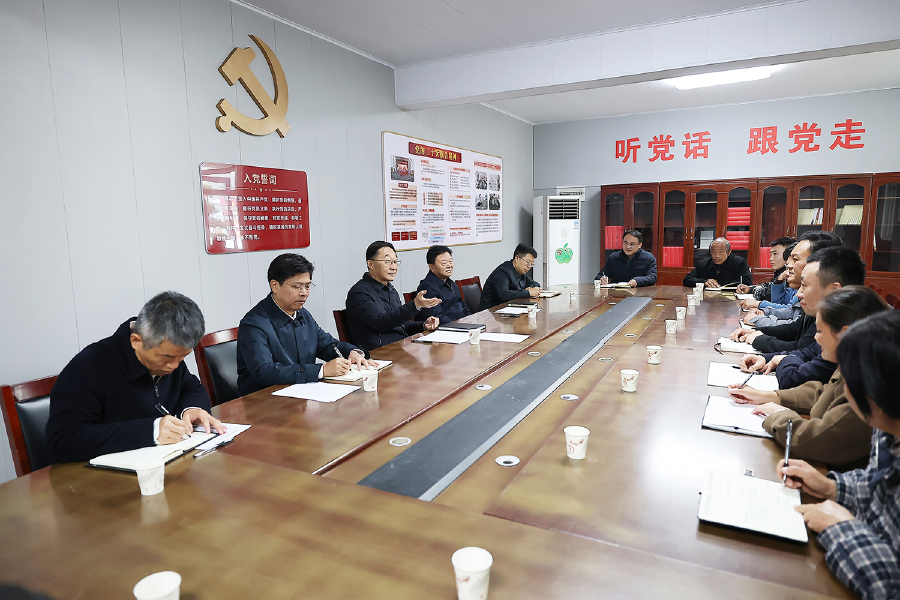
党的二十届四中全会精神在省级机关引发热烈反响以实干担当抓落实,为全国大局作贡献
Xin Hua Ri Bao· 2025-10-25 23:18
Core Points - The 20th Central Committee's Fourth Plenary Session emphasizes the importance of unifying thoughts and actions to ensure the successful completion of the "14th Five-Year Plan" and the scientific planning of the "15th Five-Year Plan" for economic and social development [1][2] Group 1: Economic Development - The session highlights the need to consolidate and strengthen the foundation of the real economy, promoting the renewal of traditional industries and the development of emerging and future industries [2][4] - The focus is on enhancing green development momentum and creating a new quality of productive forces [2][4] - The session calls for a comprehensive deepening of reforms and expansion of opening-up to better leverage the role of economic system reforms [2][4][5] Group 2: Technological Innovation - The session identifies accelerating high-level technological self-reliance and strength as a strategic task, reflecting the central government's emphasis on technological innovation [3] - The goal is to build a high-level technology province by 2035, focusing on original innovation and key core technology breakthroughs [3] Group 3: Industrial System - The session stresses the construction of a modern industrial system and the importance of maintaining a reasonable proportion of manufacturing [4] - It aims to create a modern industrial system with Jiangsu characteristics, integrating various technological and industrial innovations [4] Group 4: Financial and Market Regulation - The financial system is directed to serve the real economy and promote the integration of technological and industrial innovations [6][10] - The market regulation authority aims to enhance service for the construction of a modern industrial system and ensure safety in food, drugs, and industrial products [9] Group 5: Social Governance and Development - The session emphasizes the importance of social governance and the need for a comprehensive approach to enhance the effectiveness of social governance [11] - It highlights the role of various departments in promoting high-quality economic and social development through targeted actions and community engagement [11]