
京津冀协同发展

Search documents
京津冀三省市加快构建现代化首都都市圈 | 都市圈2.0
Di Yi Cai Jing· 2025-10-15 11:24
Core Insights - The Capital Metropolitan Area is the only metropolitan area in China that includes two directly governed cities, playing a unique role in national strategies such as the coordinated development of Beijing-Tianjin-Hebei and the construction of the Xiong'an New Area [1][2] - The "Modern Capital Metropolitan Area Spatial Coordination Plan (2023-2035)" has been developed to support the construction of a world-class metropolitan area centered around the capital, enhancing the Beijing-Tianjin-Hebei world-class city cluster [1][2] - The plan integrates various sectors including industry, transportation, ecology, public services, cultural tourism, and safety resilience into a unified spatial framework, promoting a multi-dimensional collaborative development approach [1][2] Spatial Layout - The plan focuses on better serving and safeguarding the capital's functions, establishing a closer collaborative development framework between the Capital Metropolitan Area and the Beijing-Tianjin-Hebei city cluster [2] - It connects the "lines" and "circles" of development, creating a collaborative development pattern through functional tiered layouts, emphasizing commuting, functional enhancement, and industrial cooperation [2] Key Areas of Focus - The plan emphasizes the coordinated development of six key sectors: industry, technology, transportation, ecology, public services, and cultural tourism, aiming for innovative integration of development and spatial planning [2] - The coordinated development of the Beijing-Tianjin-Hebei region has entered a new phase of comprehensive and high-quality advancement, drawing lessons from other major metropolitan areas in China [2][3] Implementation Strategy - An implementation work plan has been developed alongside the spatial coordination plan to ensure effective execution, leveraging the advantages of the capital planning system and the Beijing-Tianjin-Hebei collaborative development framework [3]

从“好邻居”到“超级合伙人” 安阳如何成为河南对接京津冀的“桥头堡”
He Nan Ri Bao· 2025-10-14 23:01
Core Insights - The article highlights the strategic development of Anyang, Henan, as it integrates into the Beijing-Tianjin-Hebei (Jing-Jin-Ji) economic zone, leveraging its geographical advantages to enhance its industrial capabilities and attract high-end manufacturing resources [2][5][14]. Group 1: Industrial Development - Anyang is positioning itself as a key player in the high-end manufacturing and electronic information sectors, with companies like Xuyang Optoelectronics leading the way in developing advanced display materials for various applications [3][4]. - The establishment of a precision glass industry research institute in collaboration with universities and upstream/downstream enterprises aims to enhance technological innovation and attract research resources from the Jing-Jin-Ji region [4][5]. - Anyang's strategy includes creating a "display industry corridor" to embed "Anyang manufacturing" deeply into the regional industrial, supply, and innovation chains [4][5]. Group 2: Collaborative Efforts - The collaboration between Anyang and Jing-Jin-Ji is characterized by a mutual exchange of resources, where Anyang provides manufacturing space while Jing-Jin-Ji offers technological expertise [5][14]. - The city has successfully attracted over 10 upstream and downstream enterprises, enhancing its industrial ecosystem and reducing delivery times to Jing-Jin-Ji clients by 30% [4][12]. - Anyang's proactive approach to integrating with the Jing-Jin-Ji market has resulted in a significant increase in project investments, with 121 projects totaling approximately 1047.57 billion yuan in the last three years [12]. Group 3: Innovation and Technology - The establishment of the Blue Sky Laboratory, focusing on low-altitude economy and drone technology, exemplifies Anyang's commitment to overcoming innovation barriers and enhancing its technological capabilities [9][11]. - The city has developed 33 application scenarios and established 14 national standards in drone technology, showcasing its potential in the low-altitude economy [11][12]. - Anyang's dual-center innovation model links it with major universities and research institutions in Beijing, facilitating the transformation of technological achievements into practical applications [11][12]. Group 4: Cultural and Economic Integration - Anyang is leveraging its rich cultural heritage to attract tourism from the Jing-Jin-Ji region, with nearly one-third of its out-of-province visitors coming from this area [13]. - The city has initiated various cultural projects and collaborations to enhance its visibility and appeal within the Jing-Jin-Ji market [12][13]. - Anyang's participation in joint ecological governance efforts with Jing-Jin-Ji has led to improved air quality, with a reported increase in the number of good air quality days [13].

天津河北区:做好四篇“文章” 高质量完成“十四五“规划
Zhong Guo Fa Zhan Wang· 2025-10-13 17:47
我们树牢"办一流教育"的雄心壮志,成为全国首批学前教育普及普惠区,代表全市首批通过国家义务教 育优质均衡发展区评估,天津二中、天津一中河北学校、河北小外等一批学校发展态势强劲。找准"破 题点",聚焦群众反映强烈的物业管理难题,以物业小切口撬动基层大治理,在全市首创党建引领"阳光 物业"小区治理新模式,已建成示范小区73个,老百姓的家园更靓了、日子更美了、生活更幸福了。 徐刚表示:接下来,我们将高点定位、深度谋划"十五五"时期发展,围绕打造现代服务业升级版和科技 创新一并谋划中长期发展规划,坚定不移、一步一个脚印地走下去,我们有信心、更有决心,让老工业 基地在新时代焕发全新活力,也欢迎大家来日新月异的河北区转一转、看一看。 河北区副区长田强、河北区委社会工作部部长仲旭、河北区住建委主任罗云、意风区管委会主任郑霞出 席并回答媒体关心的问题。 二是做好"改革"文章,在集聚要素资源上下功夫。党中央赋予天津"改革开放先行区"的定位,我们不断 增强改革魄力,推进生产关系同新质生产力发展相适应,促进资本、技术、人才等要素集聚融合。敢为 人先开展机构改革,在全市率先成立区数字经济发展办公室、数字产业发展集团,创新设立文化创意 ...
决胜“十四五” 打好收官战丨京津冀协同发展不断迈上新台阶
Xin Hua Wang· 2025-10-12 23:39
Group 1: Economic Development - The coordinated development of Beijing, Tianjin, and Hebei is entering a new decade, with significant achievements in economic collaboration, shared livelihoods, and interconnected transportation during the "14th Five-Year Plan" period [1][2] - The GDP of the Beijing-Tianjin-Hebei region is projected to reach 11.5 trillion yuan in 2024, with a GDP of 5.7 trillion yuan achieved in the first half of 2025, reflecting a year-on-year growth of 5.4% [2] - The technology contract transaction amount from Beijing to Tianjin and Hebei reached 230.87 billion yuan, nearly double that of the previous five-year period, indicating a deepening integration of innovation and industry chains [2] Group 2: Infrastructure and Transportation - The opening of new rail transit lines, such as the Beijing-Tangshan Intercity and Tianjin-Xingang Intercity, has established a transportation network that allows for half-hour access between key cities in the region [6][8] - Ongoing construction of major transportation hubs, like the Beijing Urban Sub-center Station, aims to enhance connectivity, allowing for rapid access to major business districts and airports [8] Group 3: Public Services and Quality of Life - The implementation of the "one card for all" system has facilitated seamless access to public services across the three regions, with over 1.17 billion social security cards issued [5] - Collaborative efforts in healthcare and education have improved service delivery, with over 300 Beijing experts regularly providing medical services in Hebei and numerous partnerships established between schools in the region [4][5]
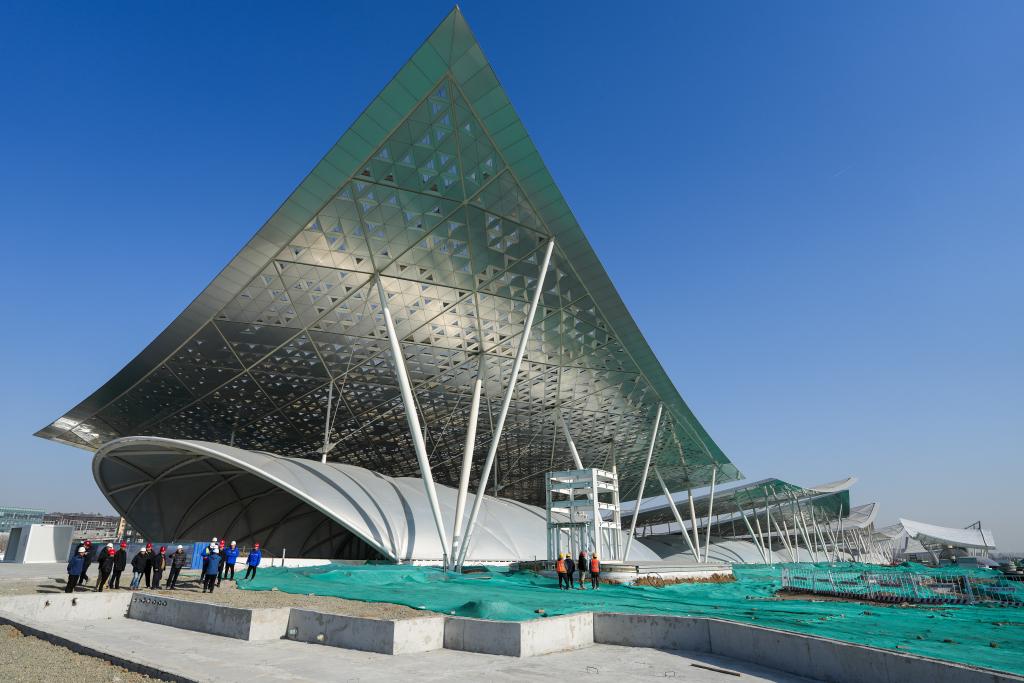
【雄安之声】张国华与中国中化董事长李凡荣、总经理焦健一行举行工作座谈
Sou Hu Cai Jing· 2025-10-12 23:37
Core Viewpoint - The meeting between Zhang Guohua, Secretary of the Party Committee and Director of the Xiong'an New Area Management Committee, and leaders from China National Chemical Corporation (Sinochem) emphasizes the strategic importance of Sinochem's relocation to Xiong'an New Area, highlighting the area's role in national development and innovation [2][5]. Group 1: Xiong'an New Area Development - Xiong'an New Area aims to enhance its urban development capabilities and serve as a model for implementing Xi Jinping's thoughts on socialism with Chinese characteristics [2]. - The area is positioned as a key site for the relocation of non-capital functions from Beijing, focusing on high-quality and high-standard development [2]. Group 2: China National Chemical Corporation's Role - Sinochem's relocation is seen as a significant step in the collaboration between central enterprises and local governments, with expectations for increased investment and the establishment of key projects in Xiong'an [2]. - Sinochem expresses gratitude for the support received from Xiong'an, noting the comprehensive assistance in terms of construction environment, office conditions, and employee services [5]. Group 3: Future Collaboration - Both parties aim to deepen cooperation, with Sinochem planning to leverage its new base in Xiong'an to foster innovation and integrate production and innovation chains [5]. - The meeting underscores a commitment to mutual support and the development of a new chapter in the integration of central and local development efforts [2][5].
决胜“十四五” 打好收官战|京津冀协同发展不断迈上新台阶
Xin Hua She· 2025-10-12 10:16
Core Insights - The Beijing-Tianjin-Hebei (Jing-Jin-Ji) coordinated development strategy has shown significant results during the 14th Five-Year Plan period, particularly in economic collaboration, shared livelihoods, and interconnected transportation [1][2] Economic Development - The overall strength of the Jing-Jin-Ji region continues to improve, with a projected GDP of 11.5 trillion yuan for 2024 and a GDP of 5.7 trillion yuan for the first half of 2025, reflecting a year-on-year growth of 5.4% [2] - The technology contract transaction amount from Beijing to Tianjin and Hebei reached 230.87 billion yuan, nearly double that of the previous five-year period [2] Infrastructure and Transportation - The opening of new rail transit lines, such as the Jing-Tang Intercity and the Tian-Xing Intercity, has established a transportation circle of 1 to 1.5 hours among major cities in the Jing-Jin-Ji region [6] - Ongoing projects like the Jing-Xiong Express Line and the comprehensive transportation hub in the Beijing urban sub-center are expected to enhance connectivity further [6] Public Services and Quality of Life - The implementation of the "one card for all" system has facilitated seamless access to public services across the Jing-Jin-Ji region, with over 1.17 billion social security cardholders as of June [5] - Collaborative healthcare initiatives have improved medical services, with over 300 Beijing experts regularly consulting in Hebei, enhancing local healthcare standards [4] Industry Collaboration - The integration of innovation and industrial chains has deepened, with six key industrial chains, including new energy vehicles and robotics, being collaboratively developed [2] - The shift from traditional transfer and acceptance to deep cooperation among industries has effectively expanded the scale of industrial clusters [2]
推动京津冀协同发展迈上新台阶
Jing Ji Ri Bao· 2025-10-11 22:18
Core Viewpoint - The coordinated development of the Beijing-Tianjin-Hebei region is a significant national strategy aimed at enhancing regional strengths and achieving high-quality development, with a focus on optimizing the capital's core functions and addressing regional imbalances [1][2]. Economic Development - The GDP of the Beijing-Tianjin-Hebei region is projected to reach 11.5 trillion yuan in 2024, doubling since 2013 and accounting for 8.5% of the national total [3]. - The industrial structure has shifted from 6.2:35.7:58.1 in 2013 to 4.3:26.8:68.9 in 2024, with the tertiary sector in Beijing exceeding 80% [3]. - The region has established a collaborative industrial model characterized by "Beijing R&D, Tianjin and Hebei manufacturing" [3]. Innovation and Collaboration - The establishment of the Beijing-Tianjin-Hebei National Technology Innovation Center has facilitated regional innovation, with significant breakthroughs in key technologies [3]. - The three regions are working together to create a world-class port cluster and improve transportation integration, achieving a basic regional traffic circle within 1 to 1.5 hours [4]. Infrastructure and Public Services - By the end of 2024, 1,053 cross-province services will be operational, and 230 "same standards" items will be introduced in the Beijing-Tianjin-Hebei Free Trade Zone [4]. - The region has made significant progress in sharing educational and medical resources, with notable collaborations between Beijing and Hebei in establishing schools and healthcare facilities [10]. Industrial Transformation - The focus is on building a modern industrial system, emphasizing high-end, intelligent, and green development, with a strong push for technological and industrial innovation [5][6]. - The region is actively promoting the transformation of traditional industries and fostering strategic emerging industries [5]. Non-Capital Function Relief - The relief of non-capital functions in Beijing is crucial for enhancing the capital's core functions and optimizing the regional spatial structure [7]. - Over 3,000 general manufacturing enterprises and more than 1,000 markets have been relocated from Beijing, creating space for core functions [8]. Population and Talent Management - The population in Beijing is stabilizing, with a focus on attracting high-skilled and innovative talent, which is essential for the city's sustainable development [8][9]. Future Directions - The coordinated development strategy aims to make the Beijing-Tianjin-Hebei region a model for China's modernization, with ongoing efforts to enhance public services and achieve balanced development across the region [4][12].
提升公共服务共建共享水平
Jing Ji Ri Bao· 2025-10-11 22:14
Core Viewpoint - The article emphasizes the importance of enhancing public services in the Beijing-Tianjin-Hebei (Jing-Jin-Ji) region to improve people's well-being and promote common prosperity, aligning with China's modernization goals [1][2]. Public Service Development - The Jing-Jin-Ji region has made significant progress in public service co-construction and sharing, responding to public needs and enhancing the accessibility of services [1][2]. - The high-speed rail network has expanded from 1,284 kilometers in 2013 to 2,669 kilometers by 2024, achieving full coverage of all prefecture-level cities and creating a "one-hour traffic circle" [1]. Environmental Protection - The PM2.5 annual average concentration in the Jing-Jin-Ji region is expected to decrease by over 60% compared to 2013, with a significant increase in the number of days with good air quality [2]. Education Collaboration - A joint education development action plan has been established, focusing on resource sharing, teacher exchanges, and collaborative schooling to enhance the quality of education across the region [2][3]. Social Security Integration - The Jing-Jin-Ji social security card has become a convenient tool for residents, enabling access to 44 social service items, medical expense settlements in over 64,000 medical institutions, and transportation services across 3,900 routes [2]. Challenges in Public Service Sharing - There are still barriers to public service sharing, such as the lack of unified standards and systems across the three regions [2][3]. Recommendations for Improvement - Suggestions include enhancing cooperation mechanisms, strengthening employment policies, focusing on key livelihood areas, and leveraging the Xiong'an New Area as a model for public service development [3][4].
轨交设备II:国铁集团所属京津冀城际铁路投资有限公司迁驻雄安新区,为疏解首都功能与区域发展添力
Huafu Securities· 2025-10-11 11:41
Investment Rating - The industry rating is "Outperform the Market" indicating that the overall return of the industry is expected to exceed the market benchmark index by more than 5% in the next 6 months [13]. Core Insights - The relocation of the Beijing-Tianjin-Hebei Intercity Railway Investment Co., Ltd. to Xiong'an New Area is a strategic move to alleviate non-capital functions of Beijing and promote resource aggregation and industrial development in Xiong'an, injecting new momentum into the "thousand-year plan" and coordinated development of the Beijing-Tianjin-Hebei region [2][3]. - The company is responsible for multiple railway tasks and aims to enhance the regional high-speed rail network, with 11 railway projects planned during the 14th Five-Year Plan period, covering approximately 1,220 kilometers and requiring a total investment of about 295 billion yuan [3]. - The national railway network is projected to reach 200,000 kilometers by 2035, with high-speed rail accounting for about 70,000 kilometers, creating significant market opportunities for the rail transit equipment industry [4]. Summary by Sections Company Overview - Established in March 2015 with a registered capital of 80 billion yuan, the company focuses on planning, construction, operation, financing, and comprehensive development of intercity railways in the Beijing-Tianjin-Hebei region [3]. Future Projects - The company is currently undertaking 11 railway projects with a total investment of approximately 295 billion yuan, aiming to enhance the high-speed rail network and improve operational efficiency [3]. Market Potential - The government's plans for railway expansion, including a target of 16,500 kilometers of operational railway by 2025 and 20,000 kilometers by 2035, are expected to create vast market space for the rail transit equipment sector [4]. Recommended Companies - The report suggests focusing on several key companies in the rail transit equipment sector, including: 1. CRRC Corporation Limited, a global leader in rail transit equipment [4] 2. China Railway Signal & Communication Corporation, a leading provider of rail traffic control systems [4] 3. Times Electric, a major supplier of traction and conversion systems [4] 4. Sifang Automation, specializing in railway safety equipment [4] 5. Shenzhou High-speed Railway, a leader in intelligent operation and maintenance equipment [4] 6. Huifeng Technology, providing integrated solutions for rail transit operations [4].
京津冀三座城市航站楼先行一体化
Bei Jing Ri Bao Ke Hu Duan· 2025-10-11 09:46
Core Points - The establishment of city terminals in the Beijing-Tianjin-Hebei region enhances convenience for travelers, allowing them to check in and handle luggage at local stations before heading to the airport [1][13] - The city terminals at Daxing Airport and Capital Airport serve to promote economic integration in the Beijing-Tianjin-Hebei area, with over 2.54 million passengers served since their operation [1][5] Group 1: City Terminal Operations - The Tianjin West Station city terminal began trial operations in June 2023, allowing travelers to complete check-in and luggage handling at the high-speed rail station, significantly improving travel efficiency [2][3] - The city terminal at Tianjin West Station has processed 7,849 passengers and handled 3,303 pieces of luggage in its first three months of operation [2] - The city terminal in Langfang serves as a hub for three airports, providing local residents with access to multiple flight options [5][7] Group 2: Transportation Connectivity - The upcoming Tianjin-Xing City Railway will provide direct high-speed rail service to Daxing Airport, reducing travel time to 40 minutes for Tianjin residents [3] - The Langfang city terminal offers free bus services to Daxing Airport, with a frequency of every 30 minutes, enhancing accessibility for local travelers [7] - The Grass Bridge city terminal in Beijing allows seamless transfers via the subway, with an average travel time of 19 minutes to Daxing Airport [8][9] Group 3: Future Developments - Two additional city terminals are under construction to further enhance the "air-rail" network in the Beijing-Tianjin-Hebei region, improving connectivity [10][12] - The future Xiong'an city terminal will feature advanced facilities and aims to provide a "zero-burden" travel experience for passengers [12][13]