
耐心资本

Search documents
国有银行系AIC加速布局 “耐心资本”赋能科技金融新质生产力
Zheng Quan Shi Bao Wang· 2025-08-20 13:06
Group 1 - The national action themed "Equity Investment Synergy: Win-Win through Industry-Finance Integration" was launched in Beijing, focusing on expanding the pilot scope of Asset Investment Companies (AIC) to 18 cities and their provinces, accelerating the layout of state-owned bank AIC institutions to enhance technology finance [1][2] - AIC is becoming a core force in the financial "national team" that supports the entire lifecycle of technology innovation enterprises, leveraging long-term capital supply, industry collaboration, and risk control advantages [1][4] - As of June, AIC institutions have made significant investments in strategic emerging industries, with total investment in the technology sector exceeding 1.7 trillion yuan [2][4] Group 2 - Agricultural Bank's AIC, focusing on technology innovation, has invested in 93 projects totaling 20.3 billion yuan, establishing 12 equity investment funds with a total subscription scale of 11.3 billion yuan [3] - Bank of China’s AIC has achieved full coverage of reserve funds in 18 pilot cities, with an intention to cooperate exceeding 50 billion yuan and has completed the establishment of 16 funds [3] - AIC institutions are exploring diversified technology financial services, integrating equity investment with market-oriented debt-to-equity swaps to provide stable capital supply for technology innovation [6][7] Group 3 - AIC has unique advantages in long-term capital, industry collaboration, professional capabilities, and risk management, positioning itself as a key player in providing patient capital [4][5] - The investment strategy includes supporting both traditional industries' transformation and nurturing strategic emerging industries, with a focus on early-stage enterprises through initiatives like the "New Seed Plan" [7][8] - As of June, the total investment in technology enterprises by a specific AIC reached nearly 120 billion yuan, with around 50 private equity funds initiated, effectively amplifying financial support for technological innovation [7]
点燃创新火种 耐心资本全国行暨产融对接专项行动扬帆启航
Xin Hua Cai Jing· 2025-08-20 08:58
Core Viewpoint - The launch of the "National Action for Patience Capital" aims to link various resources and promote a virtuous cycle of "technology-industry-finance" to support the construction of a Chinese-style technology finance system [1][9]. Group 1: AIC's Role and Expansion - The National Financial Supervision Administration has expanded the AIC's equity investment scope to 18 pilot cities, indicating a significant increase in trial regions within six months [2]. - AIC is becoming a benchmark for investment and financing, forming a new breakthrough in cultivating new productive forces [2]. - AIC institutions are leveraging their advantages in long-term capital, industry collaboration, professional capabilities, and risk management to provide stable patient capital [5][6]. Group 2: Investment Achievements - ICBC's investment arm has achieved a cumulative market-oriented debt-to-equity swap scale exceeding 400 billion yuan and a private equity fund management scale of over 250 billion yuan [3]. - Agricultural Bank's investment company has invested in 93 projects totaling 20.3 billion yuan, focusing on key national strategies and hard technology fields [4]. - Construction Bank's investment has reached nearly 500 billion yuan in equity business, with over 60% of investments in the technology sector in the past three years [5][8]. Group 3: Future Directions and Strategies - AIC is exploring diversified technology financial services and enhancing its role as patient capital by integrating various financial products [7]. - The focus is on supporting both traditional industries' transformation and the growth of strategic emerging industries [7]. - The action aims to create a collaborative innovation network and facilitate efficient connections between patience capital and industry [9].

城西科创大走廊抓住了什么?
Hang Zhou Ri Bao· 2025-08-20 02:37
Core Insights - The article highlights the development of the Chengxi Science and Technology Innovation Corridor, which has successfully attracted a significant number of high-tech enterprises and financial institutions, creating a robust ecosystem for innovation and investment [5][10]. Group 1: Ecosystem Development - The Chengxi Science and Technology Innovation Corridor has gathered 144 (quasi) unicorn companies, accounting for over 35% of the city's total, and more than 4,000 national high-tech enterprises, representing over 25% of the city [5]. - The corridor has established a technology finance service alliance with 80 member units, including banks, securities firms, and insurance companies, aimed at creating a comprehensive financial service ecosystem for tech enterprises [6][7]. Group 2: Financial Services and Products - The alliance focuses on providing tailored financial products to address the unique needs of tech startups, such as the "Hug Seed Loan," which has provided a total of 2.8 billion yuan in loans to 239 key nurturing "new seed enterprises" over two years [10][15]. - Innovative insurance products, like the first biopharmaceutical research equipment insurance in the province, have been introduced to mitigate risks for high-tech companies [9]. Group 3: Government and Capital Interaction - The government plays a crucial role in facilitating capital flow by establishing funds and providing financial support, with an annual allocation of 1.9 billion yuan for innovation development [12][14]. - A "proactive credit" mechanism has been initiated, allowing banks to assess and grant credit to tech enterprises without direct interaction, enhancing the likelihood of loan approvals for small businesses [15]. Group 4: Challenges and Solutions - Many tech startups face challenges in securing long-term and patient capital, particularly those in sectors with longer return cycles [12]. - The corridor is actively addressing these challenges through various initiatives, including the introduction of a "guarantee service" for talent projects, which has facilitated 1.9 billion yuan in financing [11].

专访瑞士百达谭思德:全球经济结构性剧震,四大因素塑造未来十年格局
Sou Hu Cai Jing· 2025-08-19 16:14
Group 1 - The concept of "long-term investment" has gained significant attention in recent years, with policies being developed to support it from top-level design to operational details [1] - Swiss private partnership firm, Pictet, has a long-standing commitment to long-term investment, tracing its history back to 1805, and has evolved into Switzerland's second-largest international financial institution [1] - Alexandre Tavazzi, Chief Investment Officer at Pictet, defines long-term investment as a 10-year horizon, with his team analyzing economic conditions and asset class returns over this period [1] Group 2 - The global economic landscape is undergoing "tectonic shifts," with structural impacts being more critical than cyclical ones in the next decade [4][5] - Negative impacts from U.S. policies include tariffs that effectively tax consumers and a government efficiency initiative that has not yielded expected savings [3] - Positive aspects include regulatory relaxations in the financial sector, allowing banks to operate with lower capital ratios, potentially increasing lending [3] Group 3 - The U.S. economy's stability, security guarantees, and high-return assets are being questioned, with increasing policy uncertainty since the Trump administration [6] - The attractiveness of U.S. assets is declining, particularly as competition from emerging sectors in China grows [7] - The long-term U.S. Treasury yield is viewed negatively due to insufficient compensation for risks, leading to a strategy of shortening duration in bond investments [8] Group 4 - Europe is experiencing significant changes, with Germany planning to abolish its debt brake and invest heavily in military and infrastructure, potentially leading to faster growth in the next decade [9] - The forecast for economic growth over the next decade predicts a U.S. growth rate of 1.8% and a Eurozone growth rate of 1.5%, narrowing the gap between the two regions [10] - Key factors shaping the future include deglobalization, decarbonization, demographic changes, and dominance of fiscal policy, with inflation expected to remain elevated [10]

董事长专访|建发新兴投资董事长王文怀:十年深耕创投生态 精准灌溉科创“良田”
Sou Hu Cai Jing· 2025-08-18 23:57
在中国经济迈向高质量发展的关键阶段,科技创新已成为核心驱动力。而滋养这片"科创森林"的源头活 水,离不开健康、高效的创投生态体系。在这股奔涌的浪潮中,厦门建发新兴产业股权投资有限责任公 司(下称"建发新兴投资")作为一家国有市场化LP(有限合伙人),以其清晰的定位、专业的运作和 持续的定力,十年间完成了从行业新军到主流参与者的华丽蜕变,走出了一条国有资本支持科创的特色 路径。 在中国经济迈向高质量发展的关键阶段,科技创新已成为核心驱动力。而滋养这片"科创森林"的源头活 水,离不开健康、高效的创投生态体系。在这股奔涌的浪潮中,厦门建发新兴产业股权投资有限责任公 司(下称"建发新兴投资")作为一家国有市场化LP(有限合伙人),以其清晰的定位、专业的运作和 持续的定力,十年间完成了从行业新军到主流参与者的华丽蜕变,走出了一条国有资本支持科创的特色 路径。 建发新兴投资的成功密码何在?国有LP如何在GP(普通合伙人)与创业者之间架起坚实的桥梁?近 日,上海证券报记者专访了建发新兴投资董事长王文怀,了解其对创投行业生态的深刻理解、产业链协 同的实践路径及对未来趋势的前瞻洞察。 破解国有资本市场化运作难题 "我们始终明确 ...


建发新兴投资董事长王文怀:十年深耕创投生态 精准灌溉科创“良田”
Shang Hai Zheng Quan Bao· 2025-08-18 19:17
Core Insights - The article emphasizes the importance of a healthy and efficient venture capital ecosystem in driving technological innovation in China's economy, with Xiamen Jianfa Emerging Industry Equity Investment Co., Ltd. (Jianfa Emerging Investment) highlighted as a key player in this landscape [2][3]. Group 1: Company Overview - Jianfa Emerging Investment has transformed from a newcomer to a mainstream participant in the venture capital industry over the past ten years, supported by state-owned capital [2][3]. - The company has invested in over 70 GP management institutions and more than 120 funds, covering over 2,000 technology innovation projects, with a total investment exceeding 29 billion yuan and generating over 4 billion yuan in net profits [4]. Group 2: Role of LP and GP - The company identifies itself as a Limited Partner (LP), emphasizing its role as a "nurturer" and "enabler" in the venture capital ecosystem, while General Partners (GPs) are seen as the "cultivators" responsible for project discovery and management [3]. - The first five years were crucial for establishing trust and recognition in the market, leading to a solid reputation and positioning for Jianfa Emerging Investment [3]. Group 3: Ecosystem Dynamics - The article describes the technology innovation industry as a vibrant ecosystem, where various participants must work closely together for optimal efficiency [5]. - The current challenge in China's venture capital industry is the relatively underdeveloped "water source" and "reservoir" (LPs), which limits the overall effectiveness of the ecosystem [5][6]. Group 4: Future Directions - The company advocates for the cultivation of "patient capital" and the need for enhanced professionalization among LPs to better manage and allocate resources [6]. - It calls for a more integrated approach between state-owned and market-driven capital to foster innovation and economic development, emphasizing the need for a supportive regulatory environment and diverse capital structures [7][8].

子基金管理费3%,这个省科创母基金来了
母基金研究中心· 2025-08-18 09:05
Core Viewpoint - The article discusses the newly released "Management Measures for the Science and Technology Innovation Mother Fund in Shaanxi Province," highlighting the establishment of a 10 billion yuan mother fund aimed at supporting technology innovation and venture capital in the region [1][10]. Summary by Sections Fund Structure and Duration - The mother fund has a duration of 20 years, while the sub-funds can last up to 15 years, with extensions subject to approval by the provincial government [3][4]. - The total scale of the fund matrix is projected to reach 30 billion yuan, integrating various funds to support the entire lifecycle of technology innovation [1]. Investment Strategy and Conditions - The mother fund can invest up to 50% in venture capital sub-funds, with seed and angel funds allowed to receive up to 60% [3][4]. - The management fee for sub-funds is capped at 2% per year, with seed and angel funds at 3% per year, which is considered a competitive rate in the current market [5][6]. Risk Tolerance and Loss Allowance - The fund exhibits a high tolerance for losses, allowing up to 70% for seed and angel funds, 50% for venture capital funds, and 30% for industrial funds. Individual projects can tolerate a maximum loss of 100% [7][9]. - This approach reflects a growing trend among national and local government funds to accept full losses, promoting a more risk-tolerant investment environment [8][9]. Policy Alignment and Market Impact - The measures align with national policies aimed at promoting high-quality development of government investment funds, encouraging longer fund durations and reducing fundraising difficulties [4][10]. - The article emphasizes the potential for Shaanxi's initiatives to serve as a model for other regions, fostering a more supportive environment for early-stage investments in technology [7][10]. Recent Achievements - As of June 2023, the provincial government investment guide fund has formed a total scale of 105.54 billion yuan, investing in key industries such as semiconductors and aviation, and supporting over 150 companies [12].

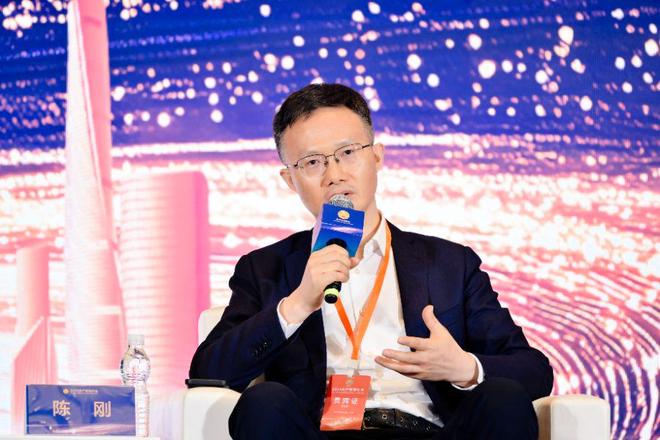
东方证券副总裁陈刚:保险资金是“耐心资本”的核心力量
2 1 Shi Ji Jing Ji Bao Dao· 2025-08-18 03:51
Group 1 - The core viewpoint emphasizes the accelerated entry of insurance funds as "patient capital" into the market, which is expected to provide lasting and stable development momentum for the capital market [1][4] - Long-term capital entering the market is seen as a key policy direction that will reshape market ecology and resonate with systemic reforms in the capital market [3][4] - The current equity market is showing new development trends under policy guidance, with long-term capital entry significantly changing market structure and operational logic [3][4] Group 2 - The company has actively implemented a new strategic plan focusing on three major business lines: wealth management, investment banking, and institutional services, achieving notable progress [3] - The wealth management business has a scale exceeding 17 billion, with public fund advisory business close to 15 billion [3] - The asset management business of the company ranks among the top three in the industry, managing nearly 240 billion, with active equity products performing well [3] Group 3 - Despite the positive trends, challenges remain for long-term capital entry, but the opportunities are seen as greater than the challenges [5] - The Chinese economy has shown strong resilience in a complex international environment, with growth rates exceeding annual targets and consumption contributing over 50% to growth [5] - The economic fundamentals are solid, with an expected growth rate maintained within the 5% target range for the year [5]

广东能有多少个“王兴兴”
21世纪经济报道· 2025-08-17 02:31
Core Viewpoint - The article emphasizes the importance of entrepreneurs and small to medium-sized enterprises (SMEs) in driving the development of emerging industries in Guangdong, highlighting the need for effective policy execution to support these entities [1][2]. Group 1: Entrepreneurial Growth and Support - Since 2024, Guangdong has seen a net increase of 980,000 business entities, with 876,400 startups led by individual shareholders [1]. - The number of SMEs in Guangdong reached 7.745 million, marking a year-on-year growth of 6.86%, with 2,089 "specialized, refined, distinctive, and innovative" small giant enterprises cultivated [1]. - The article calls for enhanced execution of support policies for startups and SMEs, stressing that while policies exist, their implementation is crucial [1]. Group 2: Investment and Talent Development - The article suggests that the success of strategic emerging industries depends on the ability of funds to invest early, in small amounts, and in hard technology [2]. - It highlights the need for a robust assessment system and error tolerance in investment funds to encourage long-term projects that may take five years to yield results [2]. - The article advocates for the identification and cultivation of key talents who can bridge academia and industry, ensuring that grassroots experts are included in discussions about industry-academia collaboration [2].

广东能有多少个“王兴兴” ?周振:耐心资本决定发展后劲
2 1 Shi Ji Jing Ji Bao Dao· 2025-08-15 14:10
Core Insights - The focus on entrepreneurship and small to medium enterprises (SMEs) is crucial for the development of emerging industries in Guangdong, as highlighted by the recent meeting on modern industrial system construction [1] - The increase in new business entities and SMEs in Guangdong indicates a growing entrepreneurial ecosystem, with significant numbers reported for 2024 [1] - The effectiveness of support policies for startups and SMEs is essential, with a call for improved execution of existing policies at various government levels [1] Group 1 - The number of new business entities in Guangdong reached 980,000 in 2024, with 876,400 of these being startups with natural persons as shareholders [1] - The total number of SMEs in Guangdong reached 7.745 million, reflecting a year-on-year growth of 6.86% [1] - The province has cultivated 2,089 "specialized, refined, distinctive, and innovative" small giant enterprises and over 30,000 specialized SMEs [1] Group 2 - The future of strategic emerging industries in Guangdong depends on the ability of funds to invest early, in small amounts, and in hard technology [2] - The assessment and error tolerance mechanisms behind investment funds are critical for encouraging long-term projects that may take five years to yield results [2] - There is a need to identify and cultivate key talents who can bridge academia, industry, and research to enhance the integration of these sectors [2]