通用人工智能

Search documents
沪指创年内收盘新高 可围绕泛科技及安全方向做功课
Chang Sha Wan Bao· 2025-07-21 04:47
Group 1 - The market experienced fluctuations with a total trading volume of 1.57 trillion yuan, an increase of 31.7 billion yuan compared to the previous trading day, with mixed performance among individual stocks [1] - Key sectors showing gains included rare earth permanent magnets, lithium mining, non-ferrous metals, and coal, while gaming, photovoltaics, CPO, and consumer electronics sectors faced declines [1] - CITIC Securities highlighted continuous catalysts in the AI computing power sector, with companies like Meta investing billions in data centers and OpenAI launching a general AI agent in ChatGPT [1] Group 2 - The announcement of the construction of the Yarlung Tsangpo River downstream hydropower super project is seen as a positive development for the hydropower sector [2] - The civil explosives industry is expected to see a significant increase in concentration, with production value projected to grow from 27.3 billion yuan in 2015 to 41.7 billion yuan in 2024, averaging a 5% annual growth [2] - The domestic market indices, driven by heavyweight stocks, returned to the 3,500-point mark, with the Shenzhen and ChiNext indices nearing previous highs, indicating potential short-term technical adjustments [2]
独家丨再融近亿元!清北学霸联手创业,做AI算力“建筑商”
创业邦· 2025-07-21 03:34
Core Viewpoint - The entrepreneurial window for the AI infrastructure sector has passed, and it is no longer a blue ocean market, with significant competition from established players like Nvidia [32][36]. Company Overview - Beijing Jiliu Technology, founded by Tsinghua and Peking University graduates, has rapidly completed seven rounds of financing in just over two years, with a recent A+ round raising nearly 100 million RMB [3][14]. - The company focuses on providing a full-stack autonomous AI computing infrastructure, utilizing its self-developed high-performance open-source computing system, Galaxy HPAC [5][12]. Market Dynamics - The AI infrastructure market is experiencing unprecedented growth, with global spending expected to exceed 100 billion USD by 2028, and a 37% year-on-year increase in investments in AI computing and hardware in the first half of 2024 [12][29]. - The demand for AI infrastructure is driven by the rapid evolution of AI technologies and the need for robust computing capabilities to support large model training and deployment [10][29]. Competitive Landscape - Jiliu Technology positions itself as a "builder" in the AI infrastructure space, focusing on constructing comprehensive computing systems, while competitors may focus on system optimization or platform operation [17][29]. - The company aims to differentiate itself by offering high performance, stability, and flexibility in its computing network components, allowing clients to customize their infrastructure without being tied to a single supplier [17][20]. Financial Performance - Jiliu Technology's revenue is projected to reach several hundred million RMB in 2024, with an expected growth rate of 50% in 2025 [5][31]. - The company has successfully transitioned from smaller computing clusters to larger ones, demonstrating its capability in delivering complex projects under tight deadlines [28][31]. Strategic Focus - The company emphasizes the importance of self-sufficiency in hardware and software development, aiming to create a complete ecosystem for AI infrastructure [28][29]. - Jiliu Technology's strategy includes continuous investment in research and development to enhance its product offerings and maintain competitiveness in a rapidly evolving market [31][36].


摩根士丹利:我们学到了什么以及接下来什么最重要为什么扩散模型可能模糊科技vs媒体的时间花费界限
摩根· 2025-07-19 14:02
Investment Rating - The report indicates a positive investment outlook for the media industry, particularly for companies like Netflix and Spotify, projecting revenue growth in the single to double digits over the next five years [1]. Core Insights - The application of generative AI in the media industry is expected to significantly reduce production costs by 10% to 30% for films and TV shows, enhancing profitability [3]. - Companies like Netflix are focusing on cost control and efficiency improvements, while Spotify is expanding its business model to include podcasts and audiobooks, aiming to increase user engagement and revenue [1][5]. - YouTube is experiencing rising user engagement, becoming one of the largest video platforms in the U.S. due to its high-quality content strategy [1][6]. - Meta platforms are leveraging video content, with over 50% of user time spent on videos, enhancing ad personalization and user engagement [2][7][8]. Summary by Sections Netflix and Spotify Growth Strategies - Netflix aims to optimize scriptwriting and visual effects through AI, significantly lowering content production costs and improving profit margins [1][5]. - Spotify is implementing a "single app" strategy to diversify its offerings and enhance user engagement through AI-driven features like playlists and DJ [1][5]. YouTube's Market Position - YouTube's user engagement is steadily increasing, transitioning from user-generated content to high-quality programming, which includes premium shows and sports events [6]. Meta's Video Engagement - Meta is capitalizing on video growth, with over half of user engagement on its platforms dedicated to video content, and is enhancing ad effectiveness through data-driven personalization [2][7][8]. Impact of Generative AI on the Media Industry - Generative AI is democratizing creativity and storytelling, allowing companies to deliver more targeted high-quality content based on viewer preferences, which could lead to new business models and increased profitability [4][9].


Meta Platforms(META.O)将不签署欧盟通用人工智能行为准则。
news flash· 2025-07-18 11:11
Meta Platforms(META.O)将不签署欧盟通用人工智能行为准则。 ...
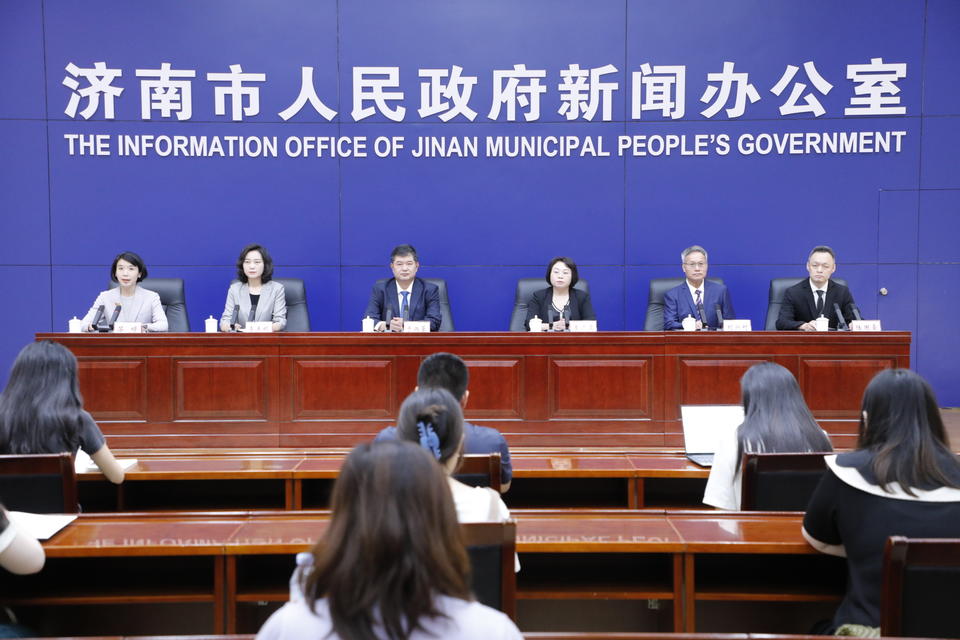
历城区近三年累计完成工业投资138.23亿元
Qi Lu Wan Bao Wang· 2025-07-18 06:47
Core Viewpoint - The Jinan city government is actively implementing an industrial-strengthening strategy, focusing on high-quality industrial development and enhancing the local economy through various initiatives and projects [2][3][4]. Group 1: Industrial Development Achievements - Over the past three years, the Lixia District has added 68 new industrial enterprises above designated size, with an average annual growth of 6.5% in industrial added value [2][3]. - A total of 255 industrial projects have been rolled out, with cumulative industrial investment reaching 13.823 billion yuan, reflecting an average annual growth of 26.7% [2][3]. Group 2: Action Plans and Measures - The Lixia District Industrial and Information Technology Bureau has developed a three-year action plan aimed at high-quality industrial economic development, focusing on five key tasks including the growth of industrial enterprises and the enhancement of industrial economic resilience [3]. - Sixteen specific measures have been implemented to support local enterprise growth, promote industrial transformation, and advance digitalization [3]. Group 3: Project Construction and Investment - The district has optimized its project service model, facilitating the launch of major projects such as the Bond Laser Global Headquarters and the Jinan Rail Transit Industrial Park [4]. - In the last three years, 110 new industrial technology transformation projects have been implemented, with a total investment of 8.16 billion yuan, averaging a 46% annual growth in technology transformation investment [4]. Group 4: Enterprise Support and Innovation - The district has fostered 670 specialized and innovative small and medium-sized enterprises, along with 187 "gazelle" and unicorn companies [5]. - Efforts to assist enterprises in overcoming development bottlenecks have led to successful listings, such as the AI company Yunzhisheng on the Hong Kong Stock Exchange [5]. Group 5: Future Plans - The Lixia District Industrial and Information Technology Bureau aims to enhance project development and service quality, focusing on building a favorable business environment and improving enterprise satisfaction [6]. - Plans include establishing a public service platform for industrial internet and promoting the integration of digital technologies with manufacturing to support smart transformation and the development of new industrial clusters [6].
MiniMax或赴港股上市 估值已达25亿美元
Jing Ji Guan Cha Wang· 2025-07-18 06:21
Core Insights - MiniMax, one of the "AI Six Tigers," is preparing for an IPO in Hong Kong, which has garnered significant industry attention [1] - Founded in December 2021, MiniMax focuses on developing general artificial intelligence technologies and aims to be a leader in the IPO process among large model startups [1] Group 1: Company Overview - MiniMax was established in December 2021 and specializes in general artificial intelligence technology, integrating text, voice, and visual modalities into a unified large model [1] - The company has launched several consumer-facing products, including AI role-playing products Glow and the overseas version Talkie, which achieved high download rankings in 2024 [2] Group 2: Financial Performance - Following a $600 million Series B funding round led by Alibaba in March 2024, MiniMax's valuation reached $2.5 billion [3] - The company is nearing completion of a $300 million Series C funding round, which will increase its valuation to $4 billion [3] Group 3: Product Development - MiniMax released the MiniMax-M1 model in June 2023, claiming it to be the world's first large-scale mixed attention inference model with open weights, supporting 1 million token context input and 80,000 token output [2] - The M1 model requires significantly less computational power compared to competitors, needing only 30% of the power of DeepSeek R1 for 80,000 token deep inference [2] Group 4: Market Position and Competition - MiniMax's daily active users for Talkie and Xingye reached approximately 3 million, significantly outpacing ByteDance's similar product, which had around 300,000 to 400,000 users [3] - The company is in competition with Zhiyu Technology, which is also preparing for an IPO and has a valuation of 40 billion yuan, indicating a competitive landscape among AI startups [4]
关于征集“中国机电一体化技术应用协会具身智能分会”发起单位的通知
机器人圈· 2025-07-17 13:40
各有关单位: 为贯彻落实党的二十大提出的前瞻谋划未来产业,抢占科技革命制高点重要精神,本着充分发挥行业协会的组织 作用,整合资源协同解决具身智能在发展中遇到的挑战和问题,推动我国具身智能实现跨越式发展,为经济高质量发 展锻造新质生产力引擎。经研究决定,拟成立"中国机电一体化技术应用协会具身智能分会"。现将有关事项通知如 下: 一、具身智能分会成立背景 (一) 具身智能战略价值与产业情况 2025 年 3 月,中央政府工作报告明确提出培育具身智能未来产业。作为人工智能的前沿领域,具身智能融合了 人工智能、机器人技术、认知科学等多学科成果,使智能体能够在环境中完成感知、决策与行动的闭环,实现高效人 机协同,已成为新一轮科技革命和产业变革的关键驱动力。 当前,具身智能产业迅猛发展,仅 2025 上半年国内融资额突破 230 亿元。国际科技巨头也纷纷布局,具身智 能作为实现通用人工智能重要路径,在工业、物流、医疗、养老等领域潜力巨大。我国已涌现一批具身智能领域创新 企业,关键技术取得进展,场景应用持续拓展,多地出台政策持续加持。 (二)机电一体化与具身智能的关系 机电一体化构成具身智能的"物理基座" , 二者 在智能 ...

Needham:战略地位和企业文化提振估值 上调谷歌(GOOGL.US)目标价至210美元
智通财经网· 2025-07-17 07:05
Group 1 - Needham raised its earnings forecast and target price for Google (GOOGL.US) from $178 to $210, citing the company's strategic position and corporate culture as key drivers for valuation growth [1] - The analysis highlighted that Google's corporate culture is a significant value growth factor, and the company has the largest general artificial intelligence team, with only two members potentially leaving for Meta (META.US) [1] - Needham emphasized that Google's strong technology culture saves costs for public shareholders and helps retain top tech talent [1] Group 2 - Google is considered "second to none" in terms of talent and assets ahead of the next major technological wave, having benefited from its search engine, Android system, and Google Cloud in previous tech eras [2] - Needham believes that if Google were to be forced to split, the value of the separated entities would exceed that of the whole, potentially increasing stock prices for public shareholders [2] - For 2025, Needham projects total revenue of $387.2 billion (up 11% year-over-year), OIBDA of $173 billion (up 15%), and EPS of $9.64 (up 20%) [2] - For 2026, total revenue is expected to reach $429.1 billion (up 11%), OIBDA of $195.4 billion (up 13%), and EPS of $10.28 (up 7%) [2]

融资135亿亏损20亿,智谱冲刺IPO
Sou Hu Cai Jing· 2025-07-16 10:40
Core Viewpoint - The company Zhiyuan is considering shifting its IPO from A-shares to Hong Kong, aiming to raise approximately $300 million (around 2.34 billion HKD) to enhance its capital channels and financing capabilities [2][3]. Group 1: IPO and Financing - Zhiyuan submitted its IPO guidance to the Beijing Securities Regulatory Bureau in April, becoming the first among the "six small dragons" of large models to initiate the A-share IPO process [2]. - The company has raised over 13.5 billion CNY in financing as of July, indicating a high frequency of technological updates driven by substantial capital investment [3][10]. - Despite ongoing financing efforts, the company is under pressure to balance technology development and commercialization, as the path to profitability remains challenging [3][12]. Group 2: Technological Developments - Zhiyuan has launched over 50 models, including the GLM-4.1V-Thinking series and the experimental model GLM-Experimental, showcasing rapid iteration in technology [3][10]. - The GLM-Experimental model allows users to generate PowerPoint presentations based on simple prompts, demonstrating advancements in user interface and functionality [4][9]. - However, the model's performance in design and content quality requires further optimization compared to competitors like Kimi [6][9]. Group 3: Market Position and Competition - The AI market is experiencing a trend of differentiation, with various business models emerging, including subscription-based and mixed advertising models [16]. - Zhiyuan's commercialization efforts are perceived as weaker compared to larger companies, which have more established organizational structures and marketing capabilities [14][15]. - The competitive landscape is intensifying, making it increasingly difficult for AI companies to achieve effective monetization [13][14]. Group 4: Future Outlook - Starting in 2025, Zhiyuan plans to define the year as "open-source year," with significant investments directed towards research and ecosystem subsidies [12]. - The company aims to find a balance between technology development, commercialization, and funding control to support its long-term goals of achieving general artificial intelligence (AGI) [15][18]. - As the market continues to evolve, Zhiyuan must accurately position itself and establish competitive advantages to optimize its commercialization strategy [18].

年薪2亿!比肩C罗的华人AI大神究竟是谁?
Xin Lang Cai Jing· 2025-07-16 01:03
Group 1 - Meta has hired AI engineer Ruoming Pang with a total compensation exceeding $200 million, surpassing the salary of Apple's CEO Tim Cook and approaching that of soccer star Cristiano Ronaldo [2][4][5] - The compensation package for Pang includes a base salary, signing bonus, and a significant portion tied to company stock performance, which is common in tech companies [4][5] - Meta's aggressive hiring strategy is linked to the establishment of its "Super Intelligence Lab," aimed at creating advanced artificial intelligence [5][7] Group 2 - Meta plans to invest billions in AI infrastructure, research, and talent acquisition, having already recruited over ten researchers from OpenAI and other tech firms [7][8] - The competition for AI talent has intensified, with other tech companies like NVIDIA and Google also actively recruiting top engineers [7][14] - Meta's focus on a select group of elite AI engineers indicates a strategic approach to talent acquisition rather than a broad recruitment effort [14] Group 3 - Ruoming Pang has a distinguished background, having worked at Google for 15 years and leading significant AI projects, including the development of advanced speech recognition systems [11][13] - Pang's transition from Apple to Meta was influenced by challenges faced by his team at Apple, including delays in product development [13] - The current talent landscape in Silicon Valley shows a stark contrast between the high demand for AI experts and the layoffs occurring in non-AI sectors [16]