主动管理

Search documents
永赢基金王乾:在估值与质量的平衡中追求长期稳健回报
Shang Hai Zheng Quan Bao· 2025-10-26 15:37
Core Viewpoint - The article emphasizes the investment philosophy of Yongying Fund's Wang Qian, focusing on value investing by purchasing high-quality companies at reasonable or undervalued prices, while maintaining a long-term perspective [1][2]. Investment Philosophy - Wang Qian adheres to a research-based approach, emphasizing deep analysis of long-term corporate value and understanding market cycles across various industries [2]. - The core source of long-term excess returns in Wang Qian's investment framework is high-quality assets, with a focus on balancing asset quality and valuation levels [2]. - Wang Qian prefers to buy high-quality companies at reasonable prices rather than deeply discounted flawed assets, highlighting the importance of weighing asset quality against price [2]. Market Outlook - Wang Qian holds an optimistic view on blue-chip assets in the A-share market, noting improved market liquidity since the introduction of a series of incremental policies last September [3]. - He believes that many cyclical and high-quality domestic demand assets remain undervalued, presenting rich investment opportunities as the economy stabilizes and recovers [3]. Investment Strategy - The investment strategy remains stable and coherent, focusing on sectors such as consumption, manufacturing, and finance, despite the value strategy facing headwinds this year [2]. - Wang Qian emphasizes the importance of maintaining discipline within the investment circle and having a clear understanding of the risks and sources of returns associated with investments [3]. Active Management Perspective - Despite the rise of passive investing, Wang Qian remains optimistic about the prospects of active management, citing that the growth of passive products may weaken market pricing efficiency [3]. - He points out that, based on experiences from mature overseas markets, active management has never exited the historical stage, and strong long-term management capabilities are essential [3]. Future Plans - Yongying Fund plans to continue increasing its focus and investment in value-oriented products to better meet the diverse financial needs of investors [3].
富达基金总经理孙晨:发挥国际经验优势 与中国市场共成长
Shang Hai Zheng Quan Bao· 2025-10-16 19:01
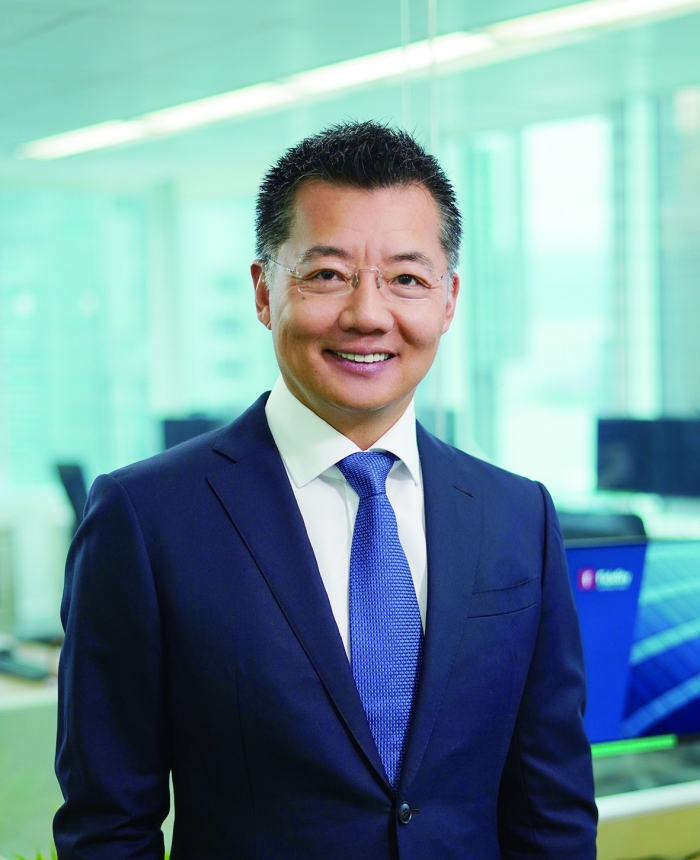
Core Viewpoint - Fidelity International aims to serve as a bridge between Chinese and global capital markets, leveraging its extensive international network and decades of active management experience to adapt successful global strategies to the Chinese market [2][3][4]. Group 1: Strategic Positioning - Fidelity's strategy in China is rooted in its international experience, focusing on creating a two-way capital flow between international and Chinese markets [5][6]. - The company emphasizes a "dual perspective" research system, combining global insights with local market understanding to identify investment opportunities in China [4][6]. - Fidelity seeks to balance its identity as both an international institution and a local company, aiming for an optimal integration of both [4][5]. Group 2: Investment Approach - Fidelity has launched its first multi-asset fund in China, reflecting its global asset allocation strategy while focusing on local assets [6]. - The firm applies artificial intelligence in risk management, drawing from its North American experience to enhance its risk control measures in the Chinese market [6][7]. - Fidelity's active management approach has yielded strong performance, with its equity products ranking among the top in the international asset management sector in 2024 [6][8]. Group 3: Focus on Retirement Finance - The Chinese pension fund market is experiencing significant growth, and Fidelity aims to leverage its extensive global experience in retirement fund management to add value in this sector [8][9]. - Fidelity has been a key player in the development of pension systems in various countries, including the U.S., where it has managed substantial retirement accounts [9]. - The company sees a promising future for target date funds in China, driven by increasing policy support and growing public awareness of retirement investment [9].

AI不再是“唯一宠儿”?华尔街大佬正关注股市这些领域
Feng Huang Wang· 2025-09-30 03:14
Group 1 - Major global investors are focusing on long-term government spending to address geopolitical, technological, and demographic pressures, with investments in infrastructure, energy transition, healthcare, and defense [1][2] - UBS Chief Investment Officer Mark Haefele highlights that many investors have underestimated the impact of fiscal stimulus on real and financial assets due to concerns over rising fiscal debt in some countries [1][2] - Asset management firms are diversifying their investments in sectors such as electricity, resources, healthcare, and defense, following government actions [1][2] Group 2 - The U.S. July tax cuts and spending bill extends previous tax policies and increases funding for border security and defense, contributing to a multi-trillion dollar increase in government debt [2] - European fiscal support, including Germany's €500 billion infrastructure fund and NATO members' commitment to raise defense spending to 3.5% of GDP, has garnered attention from Wall Street [2] - Generali Asset Management's Antonio Cavarero notes that the scale and durability of these fiscal commitments are unprecedented compared to previous market cycles, leading to structural adjustments over several years [2][3] Group 3 - Cavarero emphasizes that sectors like nuclear power, energy infrastructure, biotechnology innovation, and defense are critical and cannot be ignored by the market [3] - The S&P 500 index has risen nearly 14% this year, primarily driven by AI-related momentum, while the European Stoxx 600 index has seen a more modest increase of 9.5% [3] - The European aerospace and defense stock index has surged nearly 68%, indicating a rising importance of defense and industrial sectors amid a broader market dominated by AI [3] Group 4 - Nuveen's Chief Investment Officer Saira Malik anticipates that market gains will expand from tech stocks to cyclical stocks, small-cap stocks, and value stocks [3][4] - Malik advises investors to maintain a balanced portfolio with a slight preference for U.S. markets, while also identifying opportunities in infrastructure, utilities, and waste management as effective inflation hedges [4] - Both UBS and Nuveen emphasize the importance of active management over passive strategies in the current investment climate [4]
当前股票回报是否过高
Guo Ji Jin Rong Bao· 2025-09-29 02:54
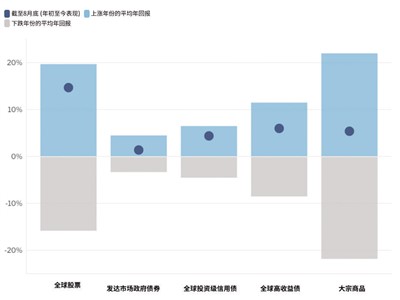
Core Insights - Global stock markets have shown strong performance since the beginning of 2025, with the MSCI Global Index rising approximately 15% year-to-date, continuing a robust trend from previous years [1] - The average annual return for global stocks since the end of the 2022 bear market has reached 20%, which may surprise some investors who typically anchor their expectations around a long-term average return of 7%-10% [1] - This strong performance is not an anomaly but a recurring feature in market cycles, with investment-grade credit bonds historically yielding 6%-7% during economic expansions, while high-yield credit bonds have averaged returns of 11%-12% [1] Investment Insights - Investors should not be deterred by strong market performance; the 15%-20% rise in stocks this year should not be a reason for concern unless an economic downturn is anticipated [2] - Managing downside risk is crucial for enhancing long-term average returns; investors may consider funds that maintain strong participation in rising markets while minimizing downside risk, such as defensive equity funds and hedge funds [2] - Assets with favorable return characteristics, such as credit bonds, are particularly valuable for asset allocators, as they tend to perform well in up years and experience smaller losses in down years [2] Areas of Focus - Key structural growth catalysts to watch include fiscal stimulus, policy reforms, and potential interest rate cuts by central banks [3] - Monitoring inflation trends and the potential rise in cross-asset correlations is essential, despite significant progress made by central banks in controlling inflation [3] - The ability of corporate earnings growth to extend beyond large tech companies to a broader range of industries will be critical for achieving a more balanced and sustainable market rally [5]
华商基金总经理王小刚:锻造主动管理价值 守护投资者至上初心锻造主动管理价值 守护投资者至上初心
Zhong Guo Zheng Quan Bao· 2025-09-25 02:07
专题:北京公募基金高质量发展系列活动 新时代、新基金、新价值 本报记者 王宇露 随着公募基金高质量发展改革东风扬起,主动管理正重归舞台中央。唯有秉持专业主义的笃行者,才能 于时代浪潮中精准捕捉价值;唯有恪守持有人利益至上的守护者,方能于行业变革中筑牢长青根基。 站在二十周年新起点,华商基金将继续以深度研究夯实基础,以卓越业绩驱动发展,以厚重责任赢得信 任,在中国经济转型升级的星火燎原中,与时代共进、与价值同行。 坚守主动管理:在坚守中扎根,积星火而燎原 在被动投资呼啸扩张的年代,主动管理是一条艰难而必要的道路。 2019年至2020年,主动管理迎来历史上相对辉煌的时期,产品业绩节节攀升,行业规模不断扩大,为持 有人创造了良好的收益和体验。然而2021年中市场见顶后,业绩承压、规模缩水、投资者质疑,主动管 理经历了三年多的困难时期。市场偏好开始转向红利投资、被动投资,这让主动管理承受了巨大压力。 因为难,所以才有价值。华商基金没有转身追逐风口,而是选择了一条更孤独的路,把"主动管理坚守 者"写进基因——以专业立身,不主张追逐短期赛道,而是依托自身深厚的积累,从专业角度出发,去 捕捉经济发展和产业变迁中最具生命力 ...
新时代·新基金·新价值——北京公募基金高质量发展在行动 | 华商基金总经理王小刚:锻造主动管理价值 守护投资者至上初心
Zhong Guo Zheng Quan Bao· 2025-09-25 00:36
随着公募基金高质量发展改革持续推进,主动管理正重归舞台中央。唯有秉持专业主义的笃行者,才能 在时代浪潮中精准捕捉价值;唯有恪守持有人利益至上准则的守护者,方能于行业变革中筑牢长青根 基。 主动管理不仅是一种投资策略,更是一种责任和使命。 主动管理的核心价值在于"发现价值,重估价值"。在中国经济高质量发展和新旧动能转换的背景下,必 然会出现一批具有市场影响力甚至全球影响力的上市公司,而主动管理机构的价值发现作用在这一过程 中不可或缺。通过专业研究,主动管理机构能够将资源配置到代表中国经济发展方向和经济转型趋势的 产业和公司中,助力完成经济转型的全过程。 人才培养与投研建设:平台筑基,文化引领 "华商基金在主动管理方面的能力优势,依靠的是从公司成立到现在不同阶段的管理者和不同时代特点 的基金经理共同积累和传承下来的。"王小刚表示,这背后,既有优秀人才的推动作用,也离不开有效 的投研平台和制度。 站在二十周年新起点,华商基金将继续以深度研究夯实基础,以卓越业绩驱动发展,以厚重责任赢得信 任,在中国经济转型升级的星火燎原中,与时代共进、与价值同行。 坚守主动管理:在坚守中扎根,积星火而燎原 在被动投资呼啸扩张的年代, ...
新时代·新基金·新价值——北京公募基金高质量发展在行动 | 锻造主动管理价值 守护投资者至上初心
Zhong Guo Zheng Quan Bao· 2025-09-24 23:43
Core Viewpoint - The article emphasizes the importance of active management in the mutual fund industry, highlighting the need for professional commitment and a focus on long-term value creation amidst market challenges and regulatory reforms [1][3]. Group 1: Active Management - Active management has faced significant challenges since 2021, with performance pressures and a shift in market preference towards passive investment strategies [2]. - Despite these challenges, the company has chosen to remain committed to active management, focusing on deep research and capturing value from economically vital companies [2][4]. - The recent regulatory reforms and policies from the Chinese government have created a favorable environment for the resurgence of active management [3]. Group 2: Talent Development and Research - The company places a strong emphasis on talent development, with a research team of 65 members and an average industry experience of nearly 8 years, including 17 senior fund managers with over 10 years of experience [5]. - A structured research hierarchy is in place to ensure effective knowledge transfer and continuous improvement in investment strategies [6]. - The company promotes a culture of communication and collaboration among research and investment teams to enhance the efficiency of research-to-investment conversion [7]. Group 3: Performance and Strategy - Performance is viewed as the lifeline of mutual funds, with the company committed to driving growth through strong investment returns rather than relying on high fees [8]. - The company actively participates in innovative product trials and has adopted a floating fee structure to align interests with investors [9]. - The company emphasizes a long-term focus on core competencies and responsibility, which has been crucial for its steady development over the past 20 years [9]. Group 4: Future Outlook - The mutual fund industry is expected to evolve with balanced development, combining both index and active management strategies to uncover investment opportunities [10]. - The company aims to continue its commitment to active management, supported by research and performance, to contribute to the high-quality development of the Chinese economy [10].
华商基金总经理王小刚: 锻造主动管理价值 守护投资者至上初心
Zhong Guo Zheng Quan Bao· 2025-09-24 22:25
Core Viewpoint - The article emphasizes the importance of active management in the mutual fund industry, highlighting the need for professional commitment and a focus on long-term value creation amidst market challenges [1][2][4]. Group 1: Active Management Strategy - Active management has faced significant challenges since 2021, with performance pressures and a shift in market preference towards passive investment strategies [2][3]. - 华商基金 has chosen to remain committed to active management, focusing on deep research and capturing value from economically vital companies rather than chasing short-term trends [2][3]. - The company has diversified its active equity styles, enhancing its product offerings to include various strategies such as growth, balanced, value, and cyclical investments [3]. Group 2: Regulatory Environment and Industry Reform - Recent regulatory reforms, including the Central Political Bureau's meeting and the State Council's opinions, have encouraged the development of high-quality mutual funds and supported active management [3][9]. - The China Securities Regulatory Commission has introduced policies to promote the innovation and development of actively managed equity funds, creating a favorable environment for 华商基金's strategic changes [3][9]. Group 3: Talent Development and Research Infrastructure - 华商基金 emphasizes the importance of talent development in active management, with a research team of 65 members and an average experience of nearly 8 years [6]. - The company has established a structured talent development system, ensuring a clear growth path for researchers and fund managers [6][7]. - A robust research platform, "华商金海螺," has been developed to integrate and digitize research data, enhancing the efficiency of the investment process [7]. Group 4: Performance and Investor Relations - Performance is identified as the lifeline of mutual funds, with 华商基金 focusing on generating returns to drive growth rather than relying on high fees [8]. - The company has adopted a floating fee structure linked to performance, aligning its interests with those of investors [9]. - 华商基金 prioritizes investor engagement, especially during market downturns, promoting a rational investment approach and guiding investors towards long-term value [9]. Group 5: Future Outlook - The mutual fund industry is expected to evolve with the ongoing technological revolution and AI advancements, leading to a balanced development of both index and active management strategies [10]. - 华商基金 aims to continue its commitment to active management, leveraging research and performance to create sustainable returns for investors while contributing to China's economic development [10].
锻造主动管理价值 守护投资者至上初心
Zhong Guo Zheng Quan Bao· 2025-09-24 20:17
● 本报记者 王宇露 随着公募基金高质量发展改革持续推进,主动管理正重归舞台中央。唯有秉持专业主义的笃行者,才能 在时代浪潮中精准捕捉价值;唯有恪守持有人利益至上准则的守护者,方能于行业变革中筑牢长青根 基。 站在二十周年新起点,华商基金将继续以深度研究夯实基础,以卓越业绩驱动发展,以厚重责任赢得信 任,在中国经济转型升级的星火燎原中,与时代共进、与价值同行。 坚守主动管理: 在坚守中扎根,积星火而燎原 在被动投资呼啸扩张的年代,主动管理是一条艰难而必要的道路。 2019年至2020年,主动管理迎来历史上相对辉煌的时期,产品业绩节节攀升,行业规模不断扩大,为持 有人创造了良好的收益和体验。然而,在2021年中市场见顶后,业绩承压、规模缩水、投资者质疑,主 动管理经历了三年多的困难时期。市场偏好开始转向红利投资、被动投资,这让主动管理承受了巨大压 力。 因为难,所以才有价值。华商基金没有转身追逐风口,而是选择了一条更孤独的路,把"主动管理坚守 者"写进基因——以专业立身,不主张追逐短期赛道,而是依托自身深厚的积累,从专业角度出发,去 捕捉经济发展和产业变迁中最具生命力的公司。 (下转A02版) (上接A01版) ...
“9·24”一周年,基民收益如何?近2000份问卷揭秘
Zheng Quan Shi Bao Wang· 2025-09-23 11:01
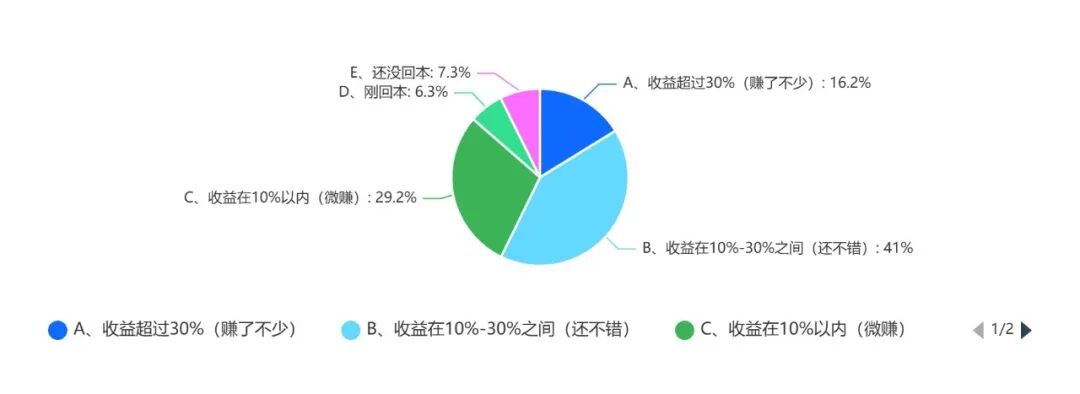
自2024年9月24日一揽子金融政策落地实施以来,A股市场持续释放积极信号。其中,上证指数表现尤为亮眼,两度站上3800点整数关口,并于近期刷新 十年新高,A股市场升温明显。 截至2025年9月20日,全市场共有40只基金年内净值翻倍,887只基金年内净值涨超50%,超12000只基金实现正收益。在这波上涨行情里,手握基金的基 民们表现如何?证券时报基金研究院联合蚂蚁基金发起了《2025基金投资者偏好与信心调研》,基民们用1980份有效问卷给出了答案。 先看收益:近一年超92%主动权益基民正收益 近一年,主动权益基金一路回升,调研结果显示,超92%的主动权益基民获得了正收益。而把时间拉长看,自投资基金以来,有16.2%的基民靠权益基金 赚了30%以上,41%的人收益落在10%—30%区间。 具体来看,这种转变体现在三个关键策略: 其一,"逢低补仓+定投"构筑双保险,低位布局成共识。面对市场波动,基民没有盲目追涨杀跌,而是以更理性的姿态把握布局窗口。在近一年时间中, 35.3%的基民选择"逢低补仓",主动把握阶段性调整中的入场机会;41.7%的基民坚持了"定投"策略,通过长期的分批投入来平滑市场波动。这两大主流 ...