
国家紧急状态

Search documents
可能向全球退回2万亿,特朗普现在很急,警告美国或面临经济灾难
Sou Hu Cai Jing· 2025-11-14 19:45
Core Viewpoint - Trump's warning about a potential economic disaster if he loses a legal battle over comprehensive tariffs highlights the stakes involved, with implications for over $2 trillion in tariff revenue and investment [1][3]. Group 1: Legal and Economic Implications - The "trillion-dollar refund crisis" described by Trump is seen as a tactic to instill fear, framing a legal issue as a national economic crisis [3][5]. - Trump's actions are perceived as an overreach of executive power, testing the limits of the U.S. constitutional system [3][7]. - The Supreme Court faces a dilemma: ruling against Trump could lead to a financial disaster due to the need to refund over $100 billion in taxes, while ruling in favor could set a precedent for future presidential power expansion [9][11]. Group 2: Political Strategy - Trump's proposal to distribute $2,000 to low- and middle-income Americans is a strategy to gain public support for his controversial legal stance [7]. - The potential Supreme Court ruling not only affects Trump's authority but also impacts the expectations of voters who anticipate financial benefits [7][9]. - The case represents a unique confrontation between presidential power and judicial authority, differing from historical precedents due to Trump's method of expanding power through reinterpretation of existing laws [11].

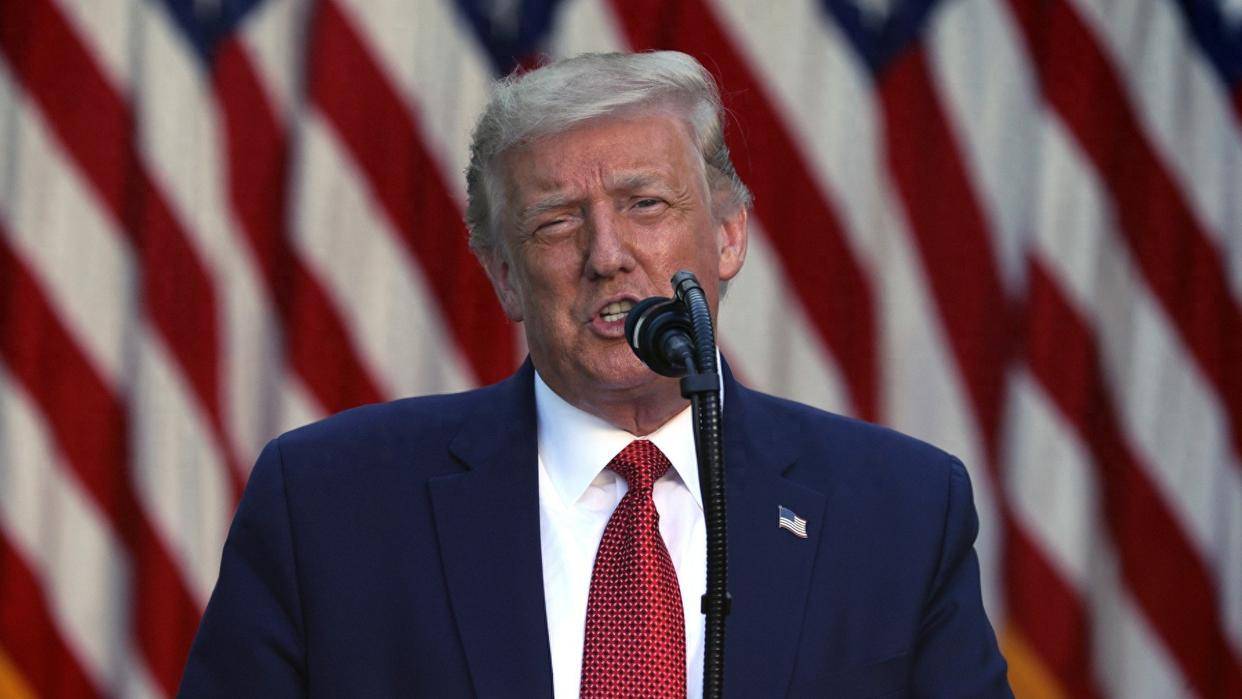
涉嫌越权!特朗普关税政策在美最高法院遭遇强力反击
智通财经网· 2025-11-05 22:26
Core Viewpoint - The U.S. Supreme Court is questioning the legality of the "global tariff" policy implemented during Trump's presidency, which could lead to over $100 billion in tax refunds if deemed unlawful [1][2][3]. Group 1: Legal Basis and Implications - Trump's administration claims the tariffs are based on the International Emergency Economic Powers Act (IEEPA), which allows the president to act in national security or economic emergencies, but does not explicitly authorize tariff imposition [2]. - The Supreme Court justices, including those appointed by Trump, expressed skepticism about the administration's interpretation of IEEPA, suggesting it could undermine Congress's authority over taxation and trade [2][3]. - If the court rules against Trump, it would not only require refunds to importers but also restrict future presidents' ability to unilaterally impose tariffs under the guise of national emergencies, potentially shifting tariff authority back to Congress [3]. Group 2: Court Proceedings and Stakeholders - The hearing lasted two and a half hours, with significant participation from government officials, including the Secretary of the Treasury and the U.S. Trade Representative, indicating the high stakes involved [2]. - The case centers on tariffs announced on April 2, 2025, which imposed rates between 10% and 50% on most U.S. imports, justified by claims of addressing trade deficits and combating fentanyl smuggling [1][3]. - The ruling is expected by the end of the year and could set a critical precedent regarding executive power in trade policy post-Trump [4].
特朗普关税突闯最高法院:9:0还是0:9?全球钢铝税命运今冬悬决
Sou Hu Cai Jing· 2025-11-04 13:26
Core Argument - The U.S. Supreme Court will hold oral arguments regarding the legality of tariffs imposed by President Trump, focusing on whether he has the authority to set import tariffs under the International Emergency Economic Powers Act [1][3]. Group 1: Legal Authority and Historical Context - The central issue is whether the Constitution's grant of exclusive tax and trade powers to Congress still holds, and if the executive branch can set tariffs without public oversight [1]. - The case arises from lower court rulings that deemed Trump's tariff policies illegal, prompting the government to appeal [1]. - Historical precedents show that U.S. courts, including the Supreme Court, have allowed tariffs under similar laws in specific circumstances, such as during the Nixon administration [4]. Group 2: Financial Implications and Arguments - The Trump administration argues that revoking the legal authority for tariffs could lead to significant costs and a larger federal revenue gap than previously disclosed [3]. - However, proponents of a liberal stance dispute this claim, noting that U.S. tariff revenue is relatively limited [3]. Group 3: Legal Text and Interpretation - The International Emergency Economic Powers Act of 1977 does not explicitly mention "tariffs," raising questions about whether "regulating" imports includes the authority to impose tariffs [6]. - The Trump administration contends that regulating imports inherently includes taxation, while the opposing side argues that Congress would have specified "tariffs" if that were the intent [6]. Group 4: Potential Outcomes and Future Implications - Even if the Supreme Court rules against Trump's use of the International Emergency Economic Powers Act for tariffs, it may not dismantle the protectionist framework established by his administration [6]. - Existing legal frameworks, such as the 1974 Trade Act and provisions from the 1930 Tariff Act, could still support tariff policies regardless of the court's decision [6]. - The oral arguments on November 5 will be a significant event in the intersection of U.S. law and politics [6].
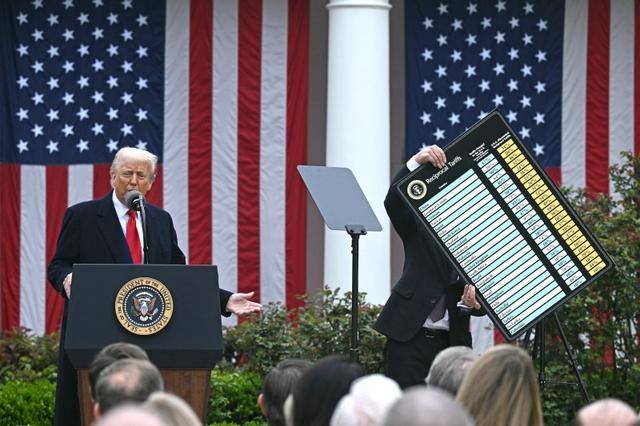
“史上最重要的案件”:特朗普关税命运迎来审判时刻
凤凰网财经· 2025-11-04 12:38
Core Viewpoint - The U.S. Supreme Court is set to hear a significant case regarding Trump's tariffs, which could impact presidential powers related to rapid taxation and trade policy [1] Group 1: Legal Context - The case centers on whether Trump has the authority to impose import tariffs under the International Emergency Economic Powers Act (IEEPA), a law that has not been used for taxation in its 50-year history [1] - The appellate court ruled these tariffs invalid in August, indicating a divided opinion among judges, suggesting a complex outcome [1] Group 2: Arguments Presented - The plaintiffs argue that the case addresses fundamental boundaries between executive and legislative powers, emphasizing that taxation should be approved by elected representatives, a core principle of American governance [1] - The government contends that the court should not question the president's declaration of a "national emergency," with Treasury Secretary Mnuchin stating that the tariffs were a response to a critical trade deficit to prevent a trade crisis [1] Group 3: Potential Consequences - If the Supreme Court upholds the lower court's ruling, Trump may face chaotic refund processes, declining fiscal revenues, and damaged trade agreements [1] - The White House indicated that if the IEEPA is overturned, it would consider using other, more complex trade laws to impose tariffs, which would significantly weaken the president's ability to impose rapid tariffs [1]
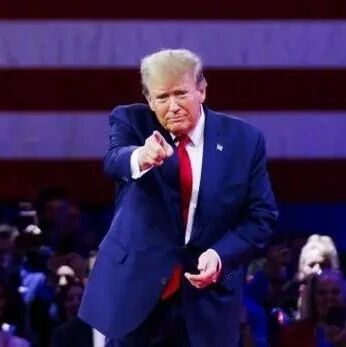
美国参议院通过决议,对政府关税政策说“不”
Huan Qiu Shi Bao· 2025-10-31 23:06
Core Points - The U.S. Senate voted 51-47 to revoke the "national emergency" invoked by the government for implementing "reciprocal tariffs" in April, indicating a division within the Republican Party as all Democrats supported the measure and four Republicans also voted in favor [1][3] - Recent Senate resolutions aimed at eliminating tariffs on goods from Canada and Brazil are expected to face challenges in the House of Representatives, which previously passed a rule prohibiting legislation against U.S. tariff measures until March [3] - The Senate vote reflects growing discontent among U.S. lawmakers regarding aggressive tariff measures, with concerns about rising prices and economic pressure on American families, farmers, and manufacturers [3] Legislative Context - The House of Representatives is unlikely to vote on the recent tariff resolutions, and even if passed, they would face a presidential veto, requiring a two-thirds majority in Congress to override [3] - The Senate's actions are seen as a symbolic rejection of the government's trade policy, highlighting a potential shift in legislative attitudes towards tariffs [3] Economic Implications - Democratic Senator Wyden emphasized the economic strain on American households due to rising prices, while Senate Democratic Leader Schumer criticized the president for leaving families and small businesses to deal with the fallout from erratic tariff policies [3] - Republican Senator Paul expressed concerns about the potential economic disaster resulting from continued aggressive tariff measures [3]
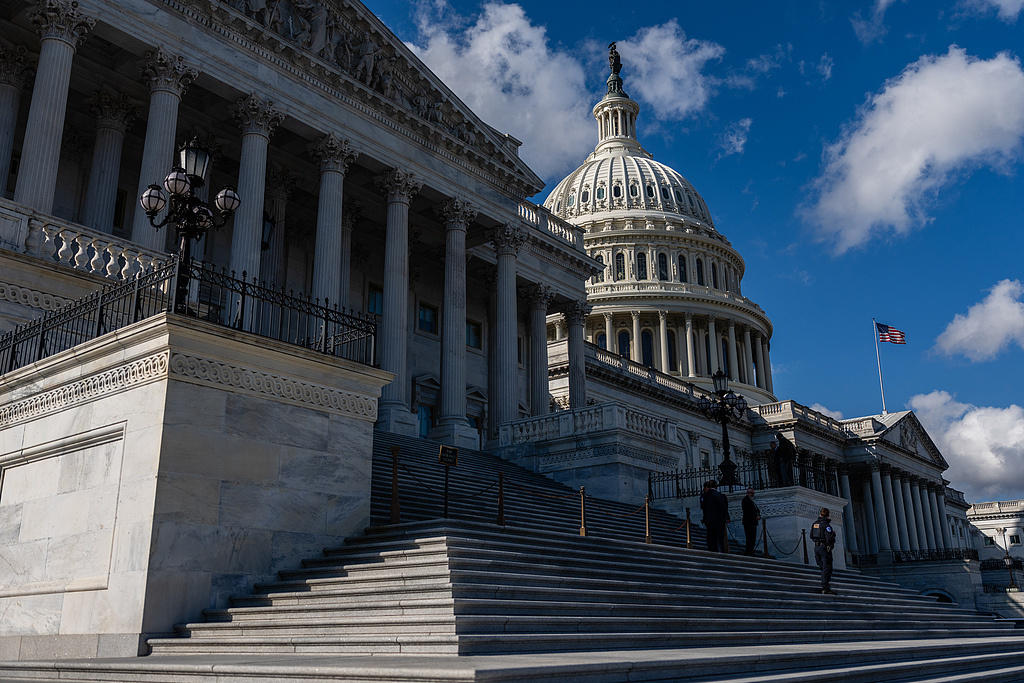
11月5日,“黑天鹅”来袭?
华尔街见闻· 2025-10-04 12:42
Core Viewpoint - The upcoming Supreme Court hearing on November 5 regarding the legality of tariffs imposed by the Trump administration represents a critical juncture for the U.S. market, with potential implications for presidential power and economic policy direction [1][3]. Legal Basis and Implications - The core of the legal dispute revolves around the invocation of the International Emergency Economic Powers Act (IEEPA) by the Trump administration, which allows the president to impose tariffs in response to a "national emergency" [4][5]. - The effective consumer goods tariff rate has risen to 17.9%, the highest level since 1934, due to tariffs that took effect on April 2 [6]. Government's Position - The White House expresses confidence in the legality of the tariffs, citing three main arguments: trade deficits as a unique external threat, the IEEPA not explicitly excluding tariffs as an emergency tool, and periodic congressional review of these tariffs [7]. Legal Community's Perspective - The mainstream legal opinion, including conservative scholars, suggests that the government's legal basis is weak, with a significant likelihood of losing the case based on the "major-questions doctrine," which requires explicit congressional or constitutional authorization for actions of substantial economic and political significance [8][9]. Market Reactions and Economic Impact - The outcome of the Supreme Court case is viewed as a "Damocles sword" over Wall Street, with the potential for two drastically different futures depending on the ruling [10]. - Current market pricing has somewhat incorporated the impact of tariffs, with Treasury Secretary Scott Bessenet predicting annual tariff revenues exceeding $500 billion in the coming years, which could help reduce the fiscal deficit [10]. Consequences of a Ruling - If the Supreme Court rules the tariffs illegal, the White House may need to refund billions in tariffs, significantly impacting fiscal policy and undermining the unilateral economic strategy of the Trump administration [12]. - Conversely, a ruling in favor of the Trump administration would greatly expand presidential power, allowing for unilateral economic decisions without congressional approval, effectively granting a "quasi-royal" authority [14].

下一个“黑天鹅”,11月5日来袭?
Hua Er Jie Jian Wen· 2025-10-04 12:14
Core Points - The U.S. Supreme Court is set to hear a case on November 5 regarding the legality of tariffs imposed by the Trump administration, which could lead to significant economic and political consequences [1][2] - The case centers around the invocation of the International Emergency Economic Powers Act (IEEPA) by the Trump administration to justify tariffs, claiming trade deficits constitute a national emergency [3][4] - The outcome of the case could either validate the administration's broad powers or challenge the legal basis for such unilateral economic measures [5][9] Legal Context - The Trump administration argues that the IEEPA provides the president with extensive powers to impose tariffs in response to national emergencies, with tariffs having raised the effective consumer goods tariff rate to 17.9%, the highest since 1934 [3][4] - However, many legal scholars, including conservatives, believe the administration's legal foundation is weak, citing the "major-questions doctrine" which requires significant economic actions to have clear congressional authorization [5][6] Market Implications - The potential ruling is viewed as a "Damocles sword" over Wall Street, with the outcome likely to influence market pricing and fiscal strategies [7] - If the Supreme Court rules the tariffs illegal, the government may need to refund billions in tariffs, impacting fiscal stability and potentially destabilizing the unilateral economic strategy of the Trump administration [8] - Conversely, a ruling in favor of the administration could expand presidential powers significantly, allowing for unilateral economic decisions without congressional approval, which may lead to market volatility if combined with negative economic indicators [10]
下一个“黑天鹅”会是11月5日吗?
Hua Er Jie Jian Wen· 2025-10-04 10:39
Core Viewpoint - The upcoming Supreme Court hearing on November 5 regarding the legality of tariffs imposed by the Trump administration could significantly reshape presidential power and economic policy in the U.S. [1] Group 1: Legal Basis and Implications - The core of the judicial confrontation revolves around the Trump administration's invocation of the International Emergency Economic Powers Act (IEEPA) from 1977, which grants the president broad powers in response to a "national emergency" [2] - The tariffs implemented on April 2 have raised the effective tariff rate on consumer goods in the U.S. to 17.9%, the highest level since 1934 [2] Group 2: Government's Position - The White House expresses confidence in the legality of the tariffs, with trade advisor Peter Navarro providing three main arguments: trade deficits represent an "unusual and extraordinary" external threat, the IEEPA does not explicitly exclude tariffs as a "emergency" tool, and these tariffs will undergo periodic congressional review [3] Group 3: Legal Community's Perspective - The mainstream legal opinion, including many conservative scholars, argues that the government's legal basis is weak, with a high likelihood of losing the case, primarily based on the "major-questions doctrine" which requires explicit congressional or constitutional authorization for significant economic and political actions [4][5] Group 4: Market Reactions and Economic Consequences - The outcome of the Supreme Court case is viewed as a "Damocles sword" over Wall Street, with potential for two drastically different futures depending on the ruling [6] - If the tariffs are deemed illegal, the White House may need to refund billions in tariffs, impacting fiscal policy, and the unilateral economic strategy of the Trump administration could be fundamentally undermined [7] - Conversely, a ruling in favor of the Trump administration would greatly expand presidential power, allowing for unilateral economic decisions without congressional approval, potentially leading to market volatility if negative economic indicators coincide with a loss [9]
应对美方“威胁” 马杜罗拟宣布紧急状态
Xin Hua She· 2025-09-30 08:17
Core Points - Venezuelan President Nicolás Maduro announced plans to declare a national state of emergency in response to perceived threats from the U.S. following military actions against Venezuelan vessels under the pretext of combating drug trafficking [1][2] - Maduro has initiated consultations for this declaration, emphasizing constitutional measures to protect the Venezuelan people and maintain peace and stability [1] - The Venezuelan Vice President, Delcy Rodríguez, stated that Maduro signed an "external turmoil decree" granting him special powers to act in defense and security matters [1][2] Summary by Sections - **Military Actions and U.S. Involvement** - The U.S. has deployed multiple warships in the Caribbean near Venezuela, claiming to have destroyed several "drug trafficking boats" and killed numerous "drug traffickers" [2] - In August, the U.S. offered a $50 million reward for information leading to the capture of Maduro, citing allegations of drug trafficking [2] - **Venezuelan Government Response** - The "external turmoil decree" allows the President to deploy armed forces, take control of public institutions, and manage critical infrastructure such as the oil and gas industry [1] - This decree, once enacted, will enable the government to implement citizen safety plans [1] - According to Venezuelan law, the special powers granted to Maduro will last for 90 days, with the possibility of a 90-day extension [1]
特朗普“调兵”孟菲斯 威胁宣布“国家紧急状态”
Xin Hua She· 2025-09-16 13:55
新华社北京9月16日电继首都华盛顿特区后,美国总统特朗普15日又以"打击犯罪"为由,宣布向田纳西 州孟菲斯市派遣国民警卫队。 同日,华盛顿特区市长缪丽尔·鲍泽表示拒绝与联邦移民执法部门合作。特朗普威胁说,若该市犯罪率 再次上升,可能"宣布国家紧急状态",并再次接管首都警力。 特朗普:复制在华盛顿的"成功" 据多家美国媒体报道,特朗普15日签署命令,成立孟菲斯市安全特别工作组,向当地派遣国民警卫队, 以打击犯罪活动。 特朗普当天在白宫椭圆形办公室与田纳西州共和党籍州长比尔·李共同宣布这一消息。 "我们现在正在派遣大部队。"特朗普说,除了军队,在孟菲斯的行动还将涉及联邦调查局、毒品管制 局、移民与海关执法局等多个联邦机构的官员。他称孟菲斯的工作组将"复制我们在华盛顿取得的成 功"。 特朗普表示,他还考虑将联邦执法人员派到芝加哥、圣路易斯和新奥尔良等城市。"我们将逐步解决所 有问题,就像我们在华盛顿做的那样。" 民主党人:伤害社区和国家 特朗普在社交媒体上发文称,他对华盛顿执法部门的干预改善了当地治安,如果现在移民执法合作停 止,犯罪率可能上升。如果发生这种情况,他将在必要时"宣布国家紧急状态"。 据美媒报道,特朗 ...