
新能源消纳

Search documents
国家能源局发布重点行业标准
中国能源报· 2026-01-07 03:27
Core Viewpoint - The National Energy Administration has released a series of key industry standards aimed at regulating energy project planning, construction, and safety management, promoting new technologies and industries, and supporting energy efficiency and carbon emission management [1]. Group 1: Comprehensive Technical Specifications - The "Guidelines for Assessing the Capacity of Distributed Power Sources Connected to the Power System" standardizes the assessment of the capacity and available capacity for distributed power sources, enhancing the acceptance and configuration capabilities of the distribution network for distributed renewable energy [2]. - A series of safety production standardization implementation specifications for power generation enterprises have been established, covering various types of power generation including hydropower, gas, coal, and solar, aimed at improving safety management levels in power generation enterprises [2]. Group 2: Important Product Standards - The "Clean Low-Carbon Hydrogen Evaluation Standard" provides a lifecycle assessment method for hydrogen products, guiding hydrogen production enterprises in accurately defining carbon footprint accounting boundaries and promoting the transition to green and clean hydrogen production processes [5]. - The standards for "Green Ammonia" and "Green Methanol" aim to fill gaps in product evaluation and promote the green low-carbon transformation of the ammonia and methanol industries, supporting carbon trading market development [7][8]. Group 3: New Technologies, Industries, and Business Models - The "General Technical Conditions for Photovoltaic Power Plant Inspection Robots" standardizes the technical requirements and testing methods for inspection robots, enhancing the intelligent operation and maintenance of photovoltaic power plants [9]. - The "Deep Peak Regulation Capability Assessment Guidelines for Coal-Fired Power Generation Units" provide a framework for evaluating the peak regulation capabilities of coal-fired power plants, supporting the integration of renewable energy [11]. Group 4: Energy Efficiency and Carbon Emission Management Standards - The "Quantification Methods and Evaluation Standards for Carbon Emissions of Wind Power Projects" and "Photovoltaic Power Projects" establish guidelines for assessing the carbon emissions throughout the lifecycle of these projects, aiding in low-carbon management and industry development [12][13].

国家能源局发布《分布式电源接入电力系统承载力评估导则》等重点行业标准
国家能源局· 2026-01-06 10:00
Core Viewpoint - The article discusses the recent announcement by the National Energy Administration regarding the issuance of key industry standards aimed at regulating energy project planning, construction, and safety management, as well as promoting new technologies and industries to support energy efficiency and carbon emission management [2] Group 1: Comprehensive Technical Specifications - The guideline for assessing the carrying capacity of distributed power sources connected to the power system is established, which aims to enhance the evaluation of distributed renewable energy integration and improve the capacity of the distribution network [3] - A series of safety production standardization implementation specifications for power generation enterprises have been released, covering various types of power generation including hydropower, gas, coal, photovoltaic, and wind power, to strengthen safety management and supervision [4][5] - The operational and maintenance regulations for special transmission channels have been defined, focusing on improving the efficiency and safety of large power grid operations [6] - Standards for the construction of basic geographic information databases for power engineering have been established to support the digitalization of power engineering [7][8] - The continuous mining machine excavation and mining technical specifications have been introduced to promote safe and efficient mining practices in coal enterprises [9][10] Group 2: Important Product Standards - The clean low-carbon hydrogen evaluation standard has been set to guide hydrogen production companies in accurately defining carbon footprint accounting boundaries and methods, promoting a shift towards greener hydrogen production processes [11] - A standard for evaluating green ammonia products has been established, filling a gap in the evaluation of green ammonia and supporting the industry's low-carbon transition [12] - The green methanol product evaluation standard has been introduced to regulate the technical requirements for green methanol, aiding in the industry's transition to low-carbon practices [13] - The B24 heavy marine fuel oil standard has been defined to support the production and sales of bio-marine fuels, guiding the industry's green transformation [14][15] Group 3: New Technologies, Industries, and Business Models - General technical conditions for photovoltaic power station inspection robots have been established, which will enhance the intelligent operation and maintenance of photovoltaic power stations [17] - Guidelines for assessing the deep peak-shaving capacity of coal-fired power units have been introduced, aimed at improving the utilization of renewable energy and reducing waste [18][19] - Design regulations for gas-insulated metal-enclosed transmission lines have been set to provide technical basis and standardize requirements for engineering applications [20][21] Group 4: Energy Efficiency and Carbon Emission Management Standards - The carbon emission quantification method and evaluation standard for wind power projects throughout their lifecycle have been established, providing a technical basis for accurate carbon accounting [22][23] - The carbon emission quantification method and evaluation standard for photovoltaic power projects have been defined, supporting low-carbon management in the industry [24][25] - The energy consumption status evaluation technical specification for coal-fired power plants has been introduced, aimed at optimizing energy consumption levels and supporting environmental upgrades [26][27]
取消“行政化分时电价”,储能收益要重新算账了
阿尔法工场研究院· 2026-01-05 00:03
Core Viewpoint - The cancellation of the "administrative time-of-use electricity pricing" policy will significantly impact the renewable energy sector, particularly affecting the revenue models of solar and wind energy investors, as well as the operations of retail electricity companies [4][11]. Group 1: Policy Changes - The National Development and Reform Commission and the Energy Administration announced that from December 17, 2025, electricity users participating in market transactions will no longer follow government-mandated time-of-use pricing [4][5]. - The previous time-of-use pricing aimed to guide users to shift electricity consumption from peak to off-peak periods, ensuring grid stability [6][9]. Group 2: Impacts on Renewable Energy - The fixed time-of-use pricing model has become outdated, leading to issues such as fixed pricing not reflecting real-time supply and demand, particularly during peak solar generation times [9][10]. - The cancellation of fixed pricing will disrupt the revenue models of solar and wind energy investors, as their previous calculations based on fixed periods and prices will no longer be valid [12][13]. - New market dynamics may allow for better resource allocation through market pricing, potentially leading to higher returns if managed effectively [12][14]. Group 3: Effects on Retail Electricity Companies - Retail electricity companies, which previously profited from fixed pricing, will face increased trading risks as they must now engage in market negotiations [11][12]. - The traditional model of "easy profits" for retail companies will be challenged, necessitating improved trading management to maintain profitability [11]. Group 4: Storage and Flexibility - The previous revenue model for commercial energy storage, which relied on charging during low-price periods and discharging during high-price periods, will be rendered ineffective [12][14]. - However, the shift to a market-driven approach may create new opportunities for energy storage systems to provide grid support and participate in ancillary services, thus generating new revenue streams [14].
绿证交易量增价稳,行业长期价值稳固
Changjiang Securities· 2026-01-04 23:30
Investment Rating - The report maintains a "Positive" investment rating for the utility sector [10] Core Insights - In November, the national trading volume of green certificates reached 132.12 million, a year-on-year increase of 143%, marking a historical high for monthly trading scale. From January to November, the trading of green certificates accounted for 41.81% of the issued tradable scale, an increase of 27.65 percentage points compared to the entire year of 2024, indicating a continuous alleviation of the oversupply issue in green certificates [2][12] - The average trading price of green certificates in November was 4.96 yuan per certificate, showing a month-on-month increase of 10.80%. The improvement in both supply and demand sides is expected to provide long-term support for green certificate prices, further catalyzing the recovery of the utility sector's attributes and growth narrative [2][12] - The report highlights a significant increase in new installed capacity for thermal power, with a historical high of 77.52 million kilowatts added from January to November, representing a year-on-year growth of 63.41%. This expansion is expected to enhance the power system's regulation capacity and alleviate the pressure on renewable energy consumption and electricity prices [2][12] Summary by Sections Green Certificate Trading - The trading volume of green certificates in November reached 132.12 million, a 143% increase year-on-year, with the trading scale hitting a historical high. The trading of green certificates from January to November totaled 728 million, a 119% increase year-on-year. The proportion of traded green certificates to the issued tradable scale reached 41.81%, up 27.65 percentage points from 2024 [2][12] - The average trading price for green certificates in November was 4.96 yuan per certificate, reflecting a month-on-month increase of 10.80%. The price stability is supported by the synchronized improvement in supply and demand, with expectations of rational expansion in supply due to policy changes [2][12] Installed Capacity - From January to November, the total new installed capacity was 44.557 million kilowatts, with November alone contributing 4.773 million kilowatts, a year-on-year increase of 27.86%. Wind and solar power installations saw significant growth, with wind power increasing by 59.42% and solar power by 33.25% year-on-year [2][12] - The report emphasizes that the substantial expansion of thermal power capacity will significantly enhance the power system's ability to accommodate fluctuating renewable energy outputs, thereby stabilizing electricity prices [2][12] Investment Recommendations - The report recommends focusing on quality thermal power operators such as Huaneng International, Datang Power, Guodian Power, and Huadian International, as well as hydropower companies like Yangtze Power and State Power Investment Corporation. It also highlights opportunities in the renewable energy sector, suggesting companies like Longyuan Power and New天绿色能源 [2][12]





江苏高效调峰为绿电铺路
Jiang Nan Shi Bao· 2026-01-04 15:42
Core Insights - Jiangsu Province has achieved a record increase in thermal power generation capacity, adding 10.4 million kilowatts in 2025, the highest in nearly 20 years [2] - The energy structure in Jiangsu is continuously optimizing, with renewable energy capacity reaching 11.193 million kilowatts, making it the largest power source in the province [2] - Thermal power is transitioning from a "main power source" to a "supportive and regulatory power source," playing an essential role in ensuring power supply security and facilitating renewable energy consumption [2] Group 1 - As of December 30, 2025, the commissioning of two new thermal power units has contributed to a total thermal power capacity increase of 10.4 million kilowatts in Jiangsu [2] - On August 23, 2025, Jiangsu's power grid demonstrated its capability to balance supply and demand, with coal-fired units providing 85% of the total output during peak hours [2] - The province has initiated two batches of coal power projects since 2022, totaling 23.94 million kilowatts, to enhance power supply reliability [3] Group 2 - The new thermal power units being commissioned are characterized by advanced ultra-supercritical reheat technology, achieving a coal consumption rate of below 260 grams of standard coal per kilowatt-hour [3] - By the end of 2025, the cumulative deep peak regulation electricity from coal-fired units reached 9.23 billion kilowatt-hours, equivalent to the annual electricity consumption of 2.3 million households being replaced by clean energy [4] - The design of new coal-fired units since 2022 allows for a minimum output of 20%, significantly enhancing grid flexibility and supporting efficient renewable energy consumption [4]

河北又添巨型“充电宝”
Xin Lang Cai Jing· 2026-01-02 22:40
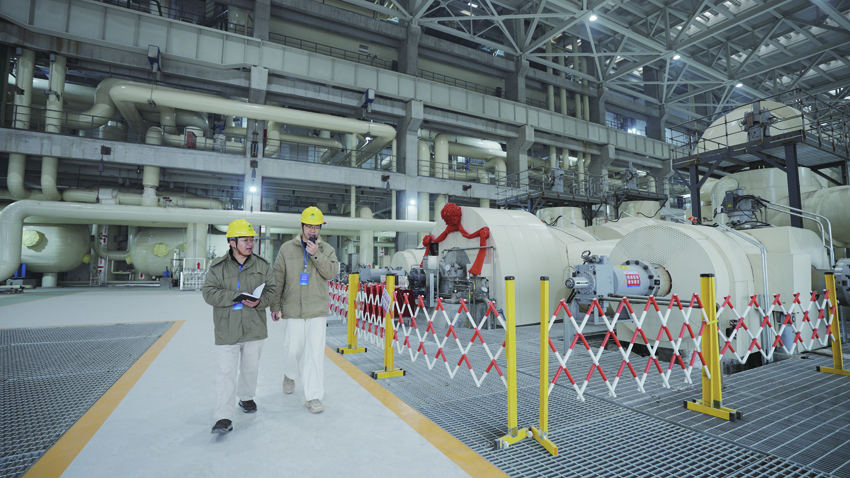
Group 1 - The first unit of the Yixian Pumped Storage Power Station has been successfully put into operation, marking a significant step in the construction of a new energy system in the Xiong'an New Area and enhancing the renewable energy consumption capacity of the North China power grid [1][3] - The Yixian Pumped Storage Power Station has a total investment of 8.022 billion yuan and a total installed capacity of 1.2 million kilowatts, with an annual pumped storage electricity of 24.09 billion kilowatt-hours and an annual power generation of 18.07 billion kilowatt-hours [1] - The operation of the power station is expected to reduce coal consumption by approximately 126,000 tons and cut carbon dioxide emissions by about 213,000 tons annually [1] Group 2 - The construction of the Yixian Pumped Storage Power Station faced significant technical challenges, including high burial depth and complex geological conditions, which required innovative construction techniques and collaborative efforts from all parties involved [2] - The project utilized electric excavation equipment for the first time in the domestic hydropower industry, achieving full electrification in tunnel construction, which contributed to the project's completion in just 31 months [2] - The successful commissioning of the first unit is the first pumped storage unit to be put into operation in the southern Hebei power grid since the 12th Five-Year Plan, highlighting its importance in optimizing the energy structure and ensuring reliable power supply [3]
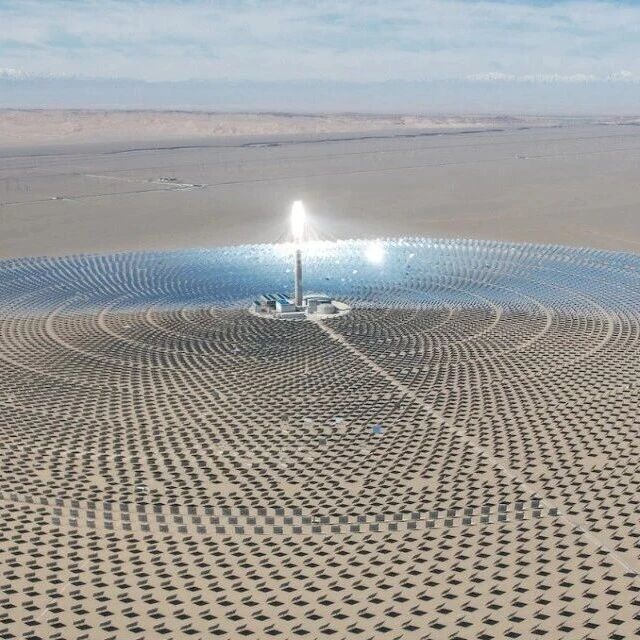
新华社丨光热发电新政推动产业腾飞
国家能源局· 2026-01-02 06:53
Core Viewpoint - Concentrated solar power (CSP) is positioned as a key solution for high-proportion renewable energy consumption in China, leveraging its advantages in energy storage and flexible power generation [2][5]. Group 1: Policy and Strategic Goals - The National Development and Reform Commission and the National Energy Administration issued guidelines aiming for a total installed capacity of approximately 15 million kilowatts for CSP by 2030, with electricity costs comparable to coal power [2]. - The guidelines emphasize the importance of fostering a new industry that is internationally competitive, with a focus on independent market-oriented and industrial development [2]. Group 2: Cost Optimization and Application Expansion - Achieving the outlined goals requires a focus on cost optimization and expanding applications, including establishing a reasonable market mechanism to highlight the value of CSP in peak shaving and energy storage [4]. - The "CSP+" model is enabling diverse applications, extending from large wind-solar bases to zero-carbon parks, industrial steam supply, and clean heating [4]. Group 3: Role in Energy Transition - CSP is becoming a vital force in constructing a new energy system, contributing reliable green power to the transformation of the energy structure [5].
《电力中长期市场基本规则》解读之三︱深化电力市场衔接与协同 推动全国统一电力市场体系建设
国家能源局· 2025-12-31 06:57
Core Viewpoint - The article discusses the revision and implementation of the "Basic Rules for the Medium and Long-term Electricity Market," which aims to enhance the construction of a unified national electricity market system, addressing issues such as market connectivity and coordination [3][4]. Group 1: Objectives and Achievements - The unified electricity market is a key component of deepening electricity system reform and building a new power system, with significant progress made in market construction, supply stability, and price mechanisms [4]. - The market has seen record trading volumes and compliance rates, with market prices becoming more market-driven, and various regions have implemented plans for integrating renewable energy [4]. Group 2: Institutional Innovations - The new rules categorize market participants, including distributed energy sources and virtual power plants, clarifying their rights and obligations throughout the trading process [5]. - A unified technical standard system is established to support data integration and facilitate cross-regional trading [5]. - The rules also standardize trading timelines, enhancing the efficiency of market operations by coordinating long-term and spot market transactions [5]. Group 3: Spatial and Temporal Mechanisms - The rules address the challenges of market segmentation by establishing a trading system that connects inter-provincial and intra-provincial markets, promoting resource sharing and flexible adjustments [6]. - A comprehensive market mechanism is created to accommodate the volatility of renewable energy output, enhancing the stability and liquidity of market operations [7]. Group 4: Collaborative Operations of Trading Varieties - The rules define green electricity trading as a distinct category, emphasizing the traceability of environmental value alongside electricity trading [8]. - There is a focus on integrating the medium and long-term electricity market with the spot market, establishing a price transmission and settlement mechanism to prevent market arbitrage [9]. Group 5: Summary and Future Outlook - The revision of the rules signifies a new phase in the standardized, systematic, and collaborative development of the medium and long-term electricity market [10]. - Future efforts should focus on further integrating market designs and enhancing the operational mechanisms among various market segments to support energy security and the achievement of carbon neutrality goals [10].

国电南自(600268):电力自动化业务乘风而起,产品赋能聚焦新型能源体系
Guotou Securities· 2025-12-30 14:35
Investment Rating - The report assigns a "Buy-A" investment rating to the company with a target price of 12.89 CNY, while the current stock price is 10.58 CNY [5]. Core Insights - The company, Guodian Nanzi, has experienced rapid growth in net profit for two consecutive years, driven by its focus on power automation products and expansion into new business areas [2][4]. - The company is well-positioned to benefit from the construction of a new power system in China, with significant investments in power grid and power plant automation expected to drive revenue growth [3][9]. - The company has a diverse industrial system, including power grid automation, power plant automation, rail transit automation, information and safety technology, and power electronics [2][24]. Summary by Sections 1. Company Overview - Guodian Nanzi, established in 1940, is a pioneer in power automation and was the first high-tech company listed on the Shanghai Stock Exchange in 1999 [2][14]. - The company is controlled by the State-owned Assets Supervision and Administration Commission through Huadian Group, which holds a 49.2% stake [2][15]. 2. Business Performance - The company's revenue from power grid automation reached 3.826 billion CNY in 2024, accounting for 42.37% of total revenue, while the power plant and industrial automation segment generated 1.516 billion CNY, representing 16.79% of total revenue [2][24]. - The company has achieved a five-year compound annual growth rate (CAGR) of 15.74% in revenue and 49.89% in net profit [2][27]. 3. Market Opportunities - The demand for power automation products is expected to rise due to the ongoing transformation of the power supply and demand landscape in China, with significant investments in power grid and power plant projects [3][35]. - The company is actively developing solutions for virtual power plants and grid-type energy storage, which are anticipated to create new growth opportunities [4][24]. 4. Financial Projections - The report forecasts net profits of 378 million CNY, 437 million CNY, and 513 million CNY for 2025, 2026, and 2027, respectively, with growth rates of 10.90%, 15.60%, and 17.44% [9][10]. - The company is expected to maintain a stable gross margin of around 23% in the coming years, with potential for improvement as new high-margin products are launched [30][28].

光伏、风电2026年机会何在?
Minmetals Securities· 2025-12-30 09:04
Investment Rating - The report rates the electrical equipment industry as "Positive" [4] Core Insights - The report highlights the recovery of industry valuation driven by anti-involution measures and the growth opportunities presented by new technologies such as copper substitution for silver and the industrialization of perovskite materials [7] - The offshore wind power sector is expected to see significant growth, with companies expanding their overseas operations to enhance profitability [7] Summary by Sections Electricity Prices - The report indicates a downward trend in electricity prices for new energy, with spot prices declining due to oversupply, negatively impacting investment demand, particularly in the photovoltaic sector [1][12][21] Photovoltaics - Short-term demand for photovoltaics is weak, with production declining in recent months. The domestic market is constrained by electricity prices, while the European market faces challenges due to insufficient grid infrastructure. The U.S. market is hindered by the rapid phase-out of subsidies under the Inflation Reduction Act [2] - The focus is on the supply side, with anti-involution measures showing positive effects, leading to price recovery in the industry chain. The estimated component price is projected to be between 0.80 and 0.85 yuan/W, assuming a 5% net profit margin across various segments [2][41] - Investment opportunities are identified in the valuation recovery from anti-involution and advancements in new technologies [2] Wind Power - The report emphasizes the growth trend in wind power, particularly in the European market, where onshore and offshore wind power are expected to grow at CAGRs of 14% and 34%, respectively. The first half of 2025 saw a significant increase in offshore wind power FID amounts, which grew by 1.8 times year-on-year [3] - The report notes that the wind turbine bidding prices have been recovering since Q3 2024, indicating improved profitability for wind turbine manufacturers. The trend towards larger wind turbines is expected to ease price pressures [3][69] - The global wind power supply chain is primarily located in the Asia-Pacific region, with China being a core supplier. Many components are sourced from China for the European and American markets, providing opportunities for Chinese wind power companies to expand internationally [3][60][70]