
智慧城市建设

Search documents
研判2025!中国遥感测绘服务行业政策汇总、产业链、市场规模、竞争格局及发展趋势分析:在数字经济发展的背景下,遥感测绘服务需求日益增长[图]
Chan Ye Xin Xi Wang· 2025-09-15 01:13
Core Insights - The remote sensing surveying service industry in China is experiencing continuous growth due to the expanding application fields of geographic information and increasing demand for remote sensing data from downstream industries. The market size is projected to reach 23.6 billion yuan in 2024, representing an 8.8% year-on-year increase [1][7]. Industry Overview - Remote sensing surveying involves using sensors mounted on ground, aerial, and space platforms to gather electromagnetic wave signals for mapping terrain or specialized topics. The services can be categorized into ground, aerial, and space remote sensing surveying [3]. Industry Policies - A series of policies have been issued to promote the development of the remote sensing surveying service industry, including the August 2023 document aimed at enhancing the transformation and upgrading of the surveying and geographic information sector [4]. Industry Chain - The upstream of the remote sensing surveying service industry includes satellite manufacturing, aircraft manufacturing, drone manufacturing, and ground equipment manufacturing. The midstream consists of the remote sensing surveying services, while the downstream encompasses applications in autonomous driving, urban planning, traffic management, environmental monitoring, and resource investigation [5]. Industry Development - The rapid development of China's remote sensing satellite industry is evident, with the country launching over 160 remote sensing satellites in 2023, surpassing the United States for the first time. This growth supports the geographic information industry [6]. Competitive Landscape - The remote sensing surveying service industry is characterized by a large number of participants and a fragmented competitive landscape. The market has seen increased participation from private enterprises, with listed companies such as Aerospace Hongtu and Surveying and Mapping Co. entering the market [8]. Future Trends - The demand for smart city construction is expected to surge, driving the need for remote sensing surveying services for urban 3D modeling and underground pipeline digitization [10]. - Data processing in the remote sensing surveying service industry is becoming more intelligent and precise, leveraging technologies like artificial intelligence and big data [12]. - Data security and compliance requirements are becoming increasingly stringent, necessitating enhanced local data processing capabilities to ensure data safety [13].



康力电梯:聚焦粤港澳大湾区,强化布局助力高质量发展
Quan Jing Wang· 2025-09-04 13:45
Core Viewpoint - The company is focusing on the opportunities presented by the development of the Guangdong-Hong Kong-Macao Greater Bay Area, which is recognized as one of the most dynamic and open regions in China, driving demand for customized elevator upgrades and smart maintenance services [1] Company Overview - Founded in 1997, the company specializes in the research, development, production, sales, installation, and maintenance of elevators, escalators, moving walkways, and related components [1] Financial Performance - In the first half of the year, the company achieved a revenue of 1.858 billion yuan and a net profit attributable to shareholders of 180 million yuan, representing a year-on-year growth of 2.29% [1] - The company's earnings per share increased to 0.2254 yuan, reflecting a 2.27% year-on-year improvement [1] Strategic Focus - The company is enhancing its regional organizational structure in the Greater Bay Area and actively optimizing its channels to achieve high-quality development [1] - The ongoing urban renewal and smart city initiatives in the region are expected to further boost the demand for the company's products and services [1]

以人为本 共建幸福之城
Liao Ning Ri Bao· 2025-08-31 01:16
Core Viewpoint - The article emphasizes the importance of urban development focused on improving the quality of life for residents, highlighting various initiatives in cities across Liaoning Province aimed at enhancing urban infrastructure and public amenities to meet the aspirations of the people [2][10]. Urban Development Initiatives - Since the beginning of the "14th Five-Year Plan," the Liaoning provincial government has implemented policies to optimize urban spaces, improve infrastructure, and enhance the quality of life for residents [2]. - The construction of 25 high-quality pocket parks in Anshan, covering a total area of 131,600 square meters, showcases the transformation of previously neglected urban spaces into recreational areas for residents [3]. - The upgrade of the drainage system in Yingkou, involving the renovation of 42.18 kilometers of drainage pipelines, aims to address urban flooding issues and has already shown positive results during heavy rainfall [4]. Infrastructure Improvements - The renovation of old neighborhoods in Shenyang has benefited 776,000 households, with 1,723 old residential areas being upgraded ahead of schedule, enhancing living conditions for residents [4]. - The total area of old residential buildings renovated in Liaoning Province reached 78.48 million square meters, impacting 1,126,000 residents, and 16,000 kilometers of old utility pipelines have been upgraded [6]. Cultural and Historical Revitalization - The revitalization of historical streets, such as Dalian's Dongguan Street, has transformed them into vibrant commercial areas while preserving their historical significance, attracting tourists and enhancing local culture [5][6]. - Various cultural and creative parks in Shenyang and Yingkou have been developed, linking historical and contemporary elements to enrich the cultural landscape of the cities [6]. Smart City Development - The implementation of smart city initiatives in Jinzhou has led to the city receiving the "2024 China Leading Smart City Award," reflecting its commitment to enhancing urban governance and efficiency through technology [8]. - The establishment of integrated government service platforms has streamlined administrative processes, allowing residents to access services more conveniently and efficiently [8][9]. Management and Governance - The use of technology, such as drones for monitoring illegal constructions, has improved urban management and enforcement, contributing to a cleaner and safer environment for residents [7]. - Liaoning Province has made significant strides in wastewater treatment, with 95% of urban sewage being treated to high standards, enhancing the overall quality of urban living [9].
王有莉参赞出席牙买加警署与在牙中资企业座谈交流会
Shang Wu Bu Wang Zhan· 2025-08-29 03:43
Core Points - The meeting focused on discussions regarding smart city construction, artificial intelligence, and public safety [1] Group 1 - The event was attended by Wang Youli, a counselor, representing the interests of Chinese enterprises in Jamaica [1] - The dialogue aimed to enhance collaboration between the Jamaican police and Chinese companies operating in the region [1] - Topics of interest included the integration of technology in urban management and safety measures [1]

侨银股份2025年上半年实现归母净利润1.25亿元
Zheng Quan Ri Bao Zhi Sheng· 2025-08-28 11:42
Core Insights - Qiaoyin City Management Co., Ltd. reported a net profit attributable to shareholders of 125 million yuan for the first half of 2025, with a non-recurring net profit of 131 million yuan, showing improvement in operating cash flow year-on-year [1] - The company's success is attributed to the deep implementation of digital management, utilizing a self-developed integrated platform for finance, taxation, and operations, which has led to cost reduction and efficiency enhancement [1] - Qiaoyin has secured significant contracts in urban services, including a 291 million yuan project in Putian and a 195 million yuan project in Beihai, while also expanding into property management with eight new projects [1] - The company is also expanding its digital urban service capabilities internationally, signing a $200 million intent order with the UAE's THi Group, targeting the Middle Eastern urban service market [1] Financial Performance - Achieved a net profit of 125 million yuan and a non-recurring net profit of 131 million yuan in H1 2025 [1] - Operating cash flow has shown year-on-year improvement [1] Business Development - Secured urban service projects worth 291 million yuan in Putian and 195 million yuan in Beihai [1] - Expanded into property management with eight new projects, ensuring a robust order backlog [1] International Expansion - Signed a $200 million intent order with THi Group in the UAE, marking a significant step in internationalization [1] - Aims to tap into the Middle Eastern urban service market, leveraging experience in AI applications and full-scenario operations [1]
实景三维中国让城市管理向“新”向“智”行 赋能多领域更好服务民生
Yang Shi Wang· 2025-08-25 02:15
Core Viewpoint - The implementation of 3D modeling technology in urban planning and management is advancing rapidly in China, with nearly 300 cities having completed building models, significantly enhancing urban management and digital economy capabilities [1][3][5]. Group 1: 3D Modeling Technology Development - As of now, nearly 300 cities have completed the production of 3D building models, supporting urban renewal and enhancing the quality of life [1][3]. - By the end of 2025, China aims to establish a comprehensive 3D visualization system, with data elements already organized and scaled [3][7]. - The 3D technology system is characterized by intelligent modeling production, integrated management, and knowledge-based service applications [1][5]. Group 2: Applications in Urban Management - The 3D technology has been integrated into various sectors, including urban planning, disaster prevention, and cultural heritage protection, forming a nationwide data-sharing network [5][19]. - In Fuzhou, the 3D modeling has empowered over 60 fields, particularly enhancing urban management through real-time interaction with city infrastructure [8][10]. - The Fuzhou smart city management platform has created a 3D data foundation covering 188 square kilometers, enabling comprehensive spatial awareness and dynamic monitoring [14][16]. Group 3: Water Management Innovations - Fuzhou has utilized 3D modeling for urban water system management, completing models for 107 rivers and over 30 drainage stations, which aids in flood response and decision-making [19][21]. - The integration of IoT data allows for real-time simulation of flooding scenarios, significantly improving emergency response times during typhoons [23][31]. - The scientific scheduling system for water management has achieved an 88% peak flood reduction rate and a 50% reduction in average drainage response time [31].
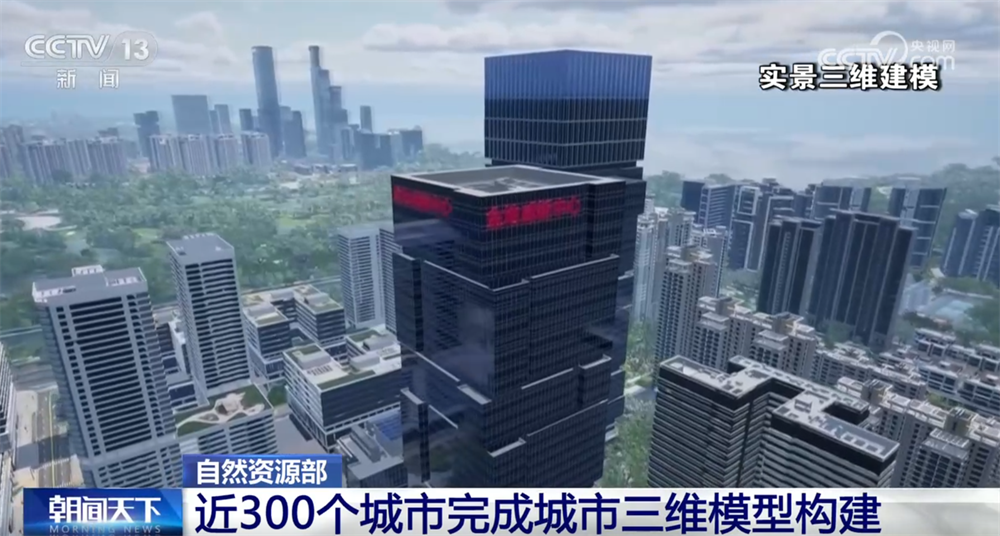
把城市“搬进”三维数字空间 今年底初步建成实景三维中国
Yang Shi Xin Wen· 2025-08-25 01:57
Core Points - The Ministry of Natural Resources reports that nearly 300 cities in China have completed the construction of 3D building models, which play a significant role in urban renewal, public service, and empowering the digital economy [1][2] Group 1: 3D Modeling and Technology - China has achieved autonomous control over core technologies such as real-world 3D data collection and spatial identity coding, establishing a 3D technology system characterized by intelligent modeling, integrated management, and knowledge-based applications [2][3] - By the end of 2025, the goal is to establish a preliminary version of "Real Scene 3D China," with nearly 300 cities having produced 3D models of buildings [2][3] Group 2: Applications in Urban Management - The implementation of 3D technology in Fuzhou has empowered over 60 fields, particularly in urban management, allowing for comprehensive perception, dynamic monitoring, and intelligent analysis of urban spatial information [4][5] - Fuzhou's smart management platform utilizes real-time 3D maps to provide detailed insights into urban infrastructure, including streetlights and manholes, enhancing operational efficiency [4][5] Group 3: Water Management and Emergency Response - The integration of 3D models in Fuzhou's water system management allows for real-time monitoring and simulation of water levels, significantly improving flood response times and water quality management [6][7] - The scientific scheduling system for water management has led to an 88% peak flood reduction rate and a 50% decrease in average drainage response time, achieving a 98% compliance rate for river water quality [7]
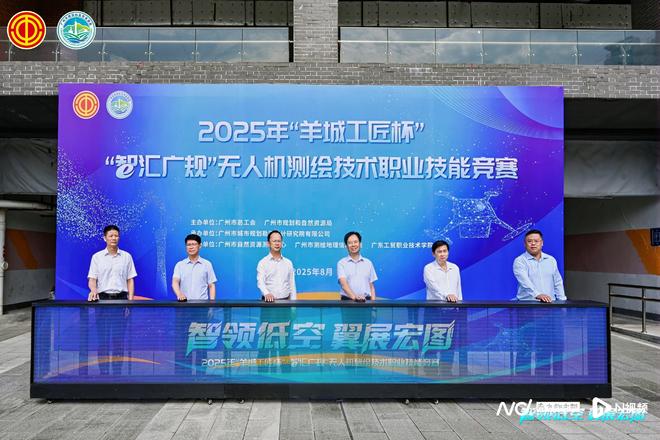
智慧城建叠加低空经济热,广州以赛促培无人机测绘飞手
Nan Fang Du Shi Bao· 2025-08-21 08:53
Core Points - The 2025 "Yangcheng Craftsman Cup" "Smart Planning" Drone Surveying Technology Vocational Skills Competition has commenced, featuring over 100 participants from 33 teams representing various surveying units in Guangzhou [1][3] - The competition focuses on drone surveying operators, combining theoretical knowledge and practical skills, with skill operations accounting for 70% of the assessment [4][9] - The rapid development of drone technology is transforming traditional surveying methods, offering efficiency improvements of 5-10 times and reducing labor costs and safety risks [3][9] Industry Insights - Drones equipped with high-precision GPS, LiDAR, and high-resolution cameras can quickly capture three-dimensional data of terrain, landforms, and buildings, making them a new benchmark in the surveying industry [3] - In terrain surveying, drones can cover difficult areas, generating centimeter-level precision maps, while in engineering surveying, they provide real-time monitoring of construction progress and deformation [3] - The demand for drone pilots is surging due to the growth of the low-altitude economy, with over 1.875 million registered drones in China as of June 2024, but only 225,000 licensed pilots [8] Competition Structure - The competition assesses skills in drone aerial photography, three-dimensional modeling, and operational efficiency, with three-dimensional modeling accounting for 80% of the evaluation criteria [9] - The event aims to promote learning and practice through competition, fostering high-quality surveying talent to support smart city development and enhance the application of surveying and geographic information technology [9]
大城善治重在“绣花功夫”
Jing Ji Ri Bao· 2025-08-19 22:04
Core Viewpoint - China's urbanization is transitioning from rapid growth to stable development, focusing on improving existing urban quality rather than expanding new areas [1] Group 1: Urbanization and Governance - The urbanization rate in China is projected to reach 67% by the end of 2024, reflecting significant achievements in urban development [1] - Challenges such as traffic congestion, housing imbalance, and urban flooding have emerged due to rapid urban growth, alongside issues like aging population and diverse public demands [1] Group 2: Technological Integration in Urban Governance - The digital era requires robust technological support for smart city construction, enhancing digital governance applications and establishing intelligent urban management systems [2] - Utilizing big data and cloud computing can improve governance efficiency by enabling data sharing and early detection of urban risks [2] Group 3: Community-Centric Governance - Modernizing urban governance should prioritize the concerns of the public, focusing on enhancing their sense of gain, happiness, and security [3] - Innovative local measures have been implemented to improve urban living conditions, such as renovating old neighborhoods and optimizing public transport [3] Group 4: Collaborative Governance - Effective urban management cannot rely solely on government efforts; it requires collaboration among government, market, society, and citizens to address complex urban challenges [3]
张少康出席新加坡国庆招待会
Nan Fang Ri Bao Wang Luo Ban· 2025-08-12 02:13
Core Viewpoint - Guangdong and Singapore are enhancing their cooperation in various fields, including technology innovation, digital economy, and green development, under the strategic guidance of both countries' leaders [1] Group 1: Regional Cooperation - Guangdong and Singapore share geographical proximity, cultural ties, and business connections, which facilitate collaboration [1] - The development of the Guangzhou Knowledge City is highlighted as a successful example of international cooperation, attracting high-end industries and top talents [1] Group 2: Economic Development - Guangdong is committed to deepening reforms and expanding high-level opening-up, which will create new cooperation opportunities for countries, including Singapore [1] - The ongoing construction of the Guangdong-Hong Kong-Macao Greater Bay Area is emphasized as a significant initiative for economic integration and modernization [1] Group 3: Areas of Collaboration - The focus areas for future cooperation include technology innovation, digital economy, green low-carbon development, smart city construction, and cultural exchanges [1]