
未成年人网络保护

Search documents
彪马将再裁员900人;“绝味鸭脖们”越来越难卖了
Mei Ri Jing Ji Xin Wen· 2025-10-30 23:14
Group 1: Puma - Puma reported a 10.4% decline in sales to €1.9557 billion for Q3 2025, with a net loss of €62.3 million and earnings per share of -€0.42 [1] - The company plans to cut approximately 900 white-collar jobs globally by the end of 2026 due to anticipated significant sales declines and high operational costs [1] - Puma is facing challenges such as weak brand momentum, high inventory levels across channels, and low distribution quality, but still has potential to rank among the top three global sports brands if reforms are successful [1] Group 2: Douyin - Douyin announced ongoing efforts to combat the improper use of minors' images for profit, highlighting the need for continuous protection of minors online [2] - The platform has removed 37,000 videos and penalized 3,651 accounts for violations related to the exploitation of minors in the past month [2] - Douyin emphasizes the importance of cultivating a healthy online ecosystem through legal, technological, and familial support [2] Group 3: Snack Industry - The snack industry, particularly the braised food segment, is experiencing a slowdown in growth and significant adjustments, with major players like ST Juewei and Huangshanghuang reporting revenue declines [3] - Experts indicate that high prices and insufficient value-for-money in the braised food sector are facing substantial challenges amid changing consumer willingness [3] Group 4: Starbucks - Starbucks reported a revenue of $3.105 billion in China for the full fiscal year 2025, marking a 5% year-over-year increase [4] - The company has achieved continuous revenue growth for the fourth consecutive quarter and positive same-store sales growth for the second consecutive quarter [4] - Starbucks' performance indicates that it has successfully built a competitive advantage through product differentiation in a highly competitive coffee market [4]


“十四五”期间重庆清理各类涉未成年人违法和不良信息近15万条
Zhong Guo Xin Wen Wang· 2025-10-17 07:18
Core Points - During the "14th Five-Year Plan" period, Chongqing has cleaned up nearly 150,000 pieces of illegal and harmful information related to minors and dealt with over 1,800 violating accounts as part of the "Yunet Guardian" initiative [1][2] Group 1: Network Protection Initiatives - Chongqing has launched over 1,000 interactive courses such as "Identifying Online Rumors" and "Rejecting Online Violence" to promote online safety for minors [1] - The city has implemented 100% compliance with mobile phone management requirements in all primary and secondary schools [1] Group 2: Future Plans - Chongqing aims to further purify the online ecosystem by conducting the "Clear and Bright Bayu" special rectification, establishing rapid reporting channels, and maintaining a zero-tolerance policy towards online bullying and harmful information [2] - The city will enforce the "Minor Mode" on online platforms, ensuring the implementation of anti-addiction systems and promoting quality content areas [2] - Collaborative efforts will be enhanced through initiatives like "Sister Sha's Guardian" and the establishment of a reporting system for online issues in schools, integrating family, school, and community protections [2]
“叫你老婆好不好”,这类App流行校园!有人称“已戒不掉”
Nan Fang Du Shi Bao· 2025-10-10 06:35
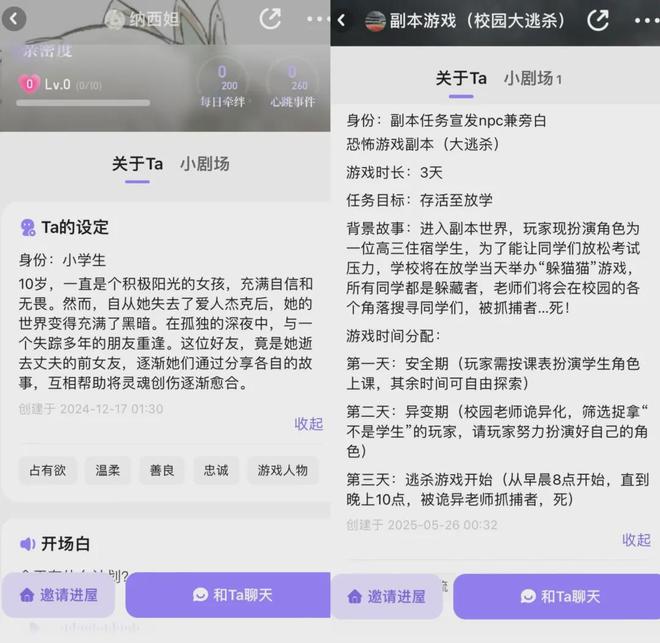
Core Insights - The investigation by Southern Metropolis Daily reveals significant risks associated with immersive AI social applications, particularly concerning harmful content that affects minors [1][2][5] Group 1: Content and User Interaction - Immersive AI social applications feature disturbing characters and dangerous storylines, including extreme scenarios like "a 10-year-old girl losing her husband" and "campus survival games" [2][4] - Users can interact with characters that have extreme personality traits, such as "absolute obedience" and "parasitic schoolboy," which raises concerns about the psychological impact on minors [2][5] - The applications allow users to customize character backgrounds and engage in explicit dialogues, which can lead to inappropriate interactions, especially when minors identify themselves as underage [5][10] Group 2: User Demographics and Engagement - A significant number of minors are drawn to these applications, with reports indicating that many users are middle and elementary school students [7][9] - Users express a strong attachment to these applications, with some stating they have difficulty quitting despite recognizing the risks [7][9] - The applications have a large user base, with millions of active users projected by early 2025, indicating a widespread influence [11] Group 3: Regulatory and Safety Concerns - Current safety measures, such as "youth modes," are ineffective due to the lack of robust identity verification and parental control features, allowing minors to bypass restrictions easily [10][11] - Experts emphasize the need for improved regulatory frameworks to protect minors from the potential dangers of AI interactions, highlighting the importance of identity verification and personalized parental controls [11][12] - OpenAI has announced plans to implement age prediction systems and parental controls to enhance user safety, particularly for minors [12]

“晒娃”变“生意经” 一些机构运作未成年人成流量主角
Zhong Guo Qing Nian Bao· 2025-09-30 01:30
Core Viewpoint - The article discusses the growing trend of using minors in social media for commercial purposes, raising concerns about the boundaries between showcasing children's growth and excessive commercialization, as well as the potential risks of privacy violations [1][2]. Group 1: Commercialization of Minors - Some bloggers are leveraging their children to attract traffic and generate income, often with the support of MCN (Multi-Channel Network) agencies [1][6]. - The National Internet Information Office has intensified efforts to protect minors online, taking action against over 11,000 accounts for violating regulations related to the use of minors' images [1][2]. Group 2: Parental Involvement and Industry Insights - Parents often start sharing their children's activities on social media with the intention of connecting with other parents, but this can lead to commercial opportunities [3]. - The children's modeling industry has specific height requirements, and parents often face challenges with unregulated agencies that may charge high fees without providing adequate resources [4][9]. Group 3: Legal and Regulatory Framework - The upcoming "Regulations on the Protection of Minors Online" will impose stricter guidelines on content involving minors, aiming to prevent exploitation and ensure their well-being [10][11]. - Legal experts emphasize the need for clearer definitions of "harmful" content and the importance of parents being aware of their rights when dealing with MCN agencies [12][12].
2025年未成年人网络保护国际研讨会在京举行
Ren Min Ri Bao· 2025-09-26 21:54
Core Points - The 2025 International Seminar on Minor's Online Protection was held in Beijing, attended by nearly 200 guests from over 20 countries and relevant international organizations [1] - The seminar focused on the theme "Smart Protection for the Future: Protecting and Developing Minors in the Global Digital Age" and included keynote speeches and sub-forums on digital literacy education and legal practices for minor's online protection [1] - China is committed to promoting internet development and governance, emphasizing the protection of minors online as a key aspect of legal internet governance, involving multiple stakeholders such as government, schools, families, enterprises, social organizations, and research institutions [1] Summary by Categories Event Overview - The seminar took place from the 25th to the 26th of the month, featuring a main forum and sub-forums [1] - A report titled "Minor's Online Protection Situation Report (2025)" was released during the main forum, indicating positive progress in China's minor's online protection efforts from 2024 to 2025 [1] Key Findings - The report highlighted that a governance system for minor's online protection is taking shape in China, with advancements in various aspects of the protection work [1] - The emergence of new technologies, such as generative artificial intelligence, presents new risks that need to be addressed [1] Future Directions - There is a need for continued exploration in mechanism innovation, path integration, and responsibility enforcement to enhance minor's online protection [1]
一图速览!2025年未成年人网络保护国际研讨会重磅成果发布
Yang Guang Wang· 2025-09-26 08:45
Core Insights - The 2025 International Seminar on Minor's Online Protection was held in Beijing, showcasing significant outcomes in the field of online safety for minors [1] Group 1: "@芽" Initiative - The "@芽" initiative focuses on online protection for minors in the digital age, implementing various public welfare projects across six categories, with over one million people reached online and nearly 30,000 benefited offline [2] - The initiative includes a series of online safety video courses addressing key issues such as safe internet usage, dealing with online bullying, and distinguishing between real and fake news, presented in an engaging format for children [5] Group 2: 2025 Minor's Online Protection Report - The report outlines the progress and effectiveness of minor's online protection efforts in China, highlighting the establishment of a legislative framework centered around the revised "Minor Protection Law" and "Minor's Online Protection Regulations" [6] - Regulatory actions have been taken by relevant departments to address issues like online bullying and inappropriate content on platforms such as short videos and social media [7] - Judicial measures have been implemented to enhance parental responsibility and shift from reactive to proactive protection strategies [7] - Internet platforms are enhancing their protective responsibilities by upgrading their youth modes to better safeguard minors [7] - Online literacy education is being integrated into regular school curricula, promoting comprehensive practices involving teaching content, course design, and family participation [7] - A collaborative approach involving government, schools, families, enterprises, and NGOs is being promoted to establish a coordinated and normalized protection mechanism for minors [7]

一图速览! 2025年未成年人网络保护国际研讨会重磅成果发布
Yang Guang Wang· 2025-09-26 08:17
Core Viewpoint - The 2025 International Seminar on Minor's Online Protection was held in Beijing, showcasing significant achievements in the field of online safety for minors [1]. Group 1: "@芽" Plan Achievements - The "@芽" plan focuses on online protection for minors in the digital age, implementing various public welfare projects across six categories, with over one million people reached online and nearly 30,000 benefited offline [2]. Group 2: Online Safety Education - The online safety video courses for minors address key issues such as safe internet usage, dealing with online bullying, making friends online, and distinguishing between real and fake news, using animated shorts that are easy for children to understand [5]. Group 3: 2025 Minor's Online Protection Report - The report outlines the practices and achievements in minor's online protection in China, highlighting the establishment of a legislative framework centered on the revised "Minor Protection Law" and "Minor's Online Protection Regulations" [6]. - Regulatory actions have been taken by relevant departments to combat issues like online bullying and inappropriate content on platforms such as short videos and social media [7]. - Judicial protection has evolved from reactive measures to proactive interventions, emphasizing parental responsibility and public interest litigation [7]. - Internet platforms are enhancing their protective responsibilities and innovating measures, including upgrading to "minor mode" for better safety [7]. - Online literacy education is being integrated into regular school curricula, focusing on teaching content, course design, teacher training, and family involvement [7]. - A collaborative approach involving government, schools, families, enterprises, and NGOs is being promoted to create a coordinated and normalized protection mechanism for minors [7].

巨量引擎 “一老一少” 广告保障月余见效:服务近2000人,问题解决率超92%
2 1 Shi Ji Jing Ji Bao Dao· 2025-09-25 13:32
Core Insights - The article highlights the accelerated implementation of consumer protection measures for vulnerable groups, specifically the elderly and minors, in response to national policies promoting age-friendly reforms and online protection for minors [1][7]. Group 1: Service Implementation - Since the launch of the advertising service protection upgrade project targeting users aged 50 and above and those under 18, the initiative has served 1,964 users, recovering economic losses amounting to several tens of thousands, with an overall problem resolution rate of 92.47% [1]. - The service includes dedicated customer support, with users able to reach a representative directly through a hotline or complaint portal, ensuring priority handling of their requests, with an average resolution time of 5 days and the fastest resolution in under 1.5 hours [2]. Group 2: Case Studies - A notable case involved an elderly user who was misled by an advertisement and paid 1,697 yuan for a service that yielded no returns. After contacting customer support, he successfully received a full refund, demonstrating the effectiveness of the service [4]. - Another case involved a minor who accidentally made a purchase through an advertisement. Customer support quickly intervened, guiding the parent to provide necessary proof and facilitating a full refund on the same day [5]. Group 3: Community Engagement - The company has expanded its protective measures by conducting offline community activities, such as teaching elderly individuals about AI tools and common advertising traps, thereby enhancing their fraud awareness and self-protection skills [6]. - Additionally, a microfilm focusing on fraud prevention was produced and screened at 92 universities in Beijing, targeting common scams faced by students, thereby building a protective awareness among the youth [6]. Group 4: Future Plans - The company plans to continue its "online + offline" model to enhance the service protection system for the elderly and minors, focusing on optimizing online service processes and conducting regular educational initiatives to reduce fraud risks [7].

腾讯未成年人保护营地教育负责人马滢:未成年人网络保护应筑“护城河”而非“高墙”
Zhong Guo Jing Ying Bao· 2025-09-25 05:00
Core Insights - The article discusses Tencent's approach to protecting minors online, emphasizing the need for a supportive environment rather than strict controls [1][2]. Group 1: Tencent's Initiatives - Tencent's minor protection camp education leader, Ma Ying, highlighted the importance of creating a "moat" for youth, providing a safe space for exploration instead of imposing high walls [1]. - The company has launched the first public "Family Education AI Model" in collaboration with the China Family Education Association, aimed at addressing parents' educational concerns with customized solutions [2]. - The AI model has already assisted 110,000 parents and reached approximately 4.3 million families, receiving positive feedback [4]. Group 2: Community and Expert Support - Tencent has connected 310,000 online volunteers and their offline teams to provide deeper answers to parents' questions [3]. - The initiative includes a team of educational experts to address complex issues, ensuring a balance between AI support and human warmth in service [4]. Group 3: Educational Outreach - Tencent has initiated AI literacy education in 293 communities and 106 schools, aiming to bridge the "AI literacy gap" across urban and rural areas [4]. - The "Family Guardians Program" encourages children to become "little guardians of minor protection," promoting community involvement in safeguarding youth [4].

智护未来 共筑防线 2025年未成年人网络保护国际研讨会即将举行
Yang Shi Wang· 2025-09-23 01:26
Core Viewpoint - The 2025 International Seminar on Minor Protection in the Digital Age will be held in Beijing on September 25-26, focusing on global collaboration to address the challenges of online protection for minors [1] Group 1: Seminar Overview - The seminar is themed "Smart Protection for the Future: Protecting and Developing Minors in the Global Digital Age" and aims to gather global stakeholders including government departments, international organizations, academia, industry, and NGOs to create a collaborative platform for minor protection [1] - The opening ceremony and main forum will feature discussions on various topics related to minor protection, including digital literacy, online safety, and global governance mechanisms [2] Group 2: Key Outcomes - A series of important outcomes in the field of minor protection will be released, including the "@芽" public welfare action plan and a video course titled "Love Little Bud's Online Adventure" aimed at providing practical resources for online safety education [3] - The seminar will also initiate the compilation of national standards for "Cybersecurity Technology: Guidelines for AI Applications Involving Minors" [3] Group 3: Focus Areas - Two sub-forums on September 26 will delve into specific areas of minor protection, including digital literacy education in the AI era and legal practices for minor protection [4] - The "AI Era Digital Literacy Education Forum" will release a research report and showcase the "AI Digital Literacy Public Welfare Plan" [4] - The "Legal Practice Forum for Minor Protection" will focus on legal implementation and innovation to establish a robust legal framework for minors [4]