汽车安全

Search documents
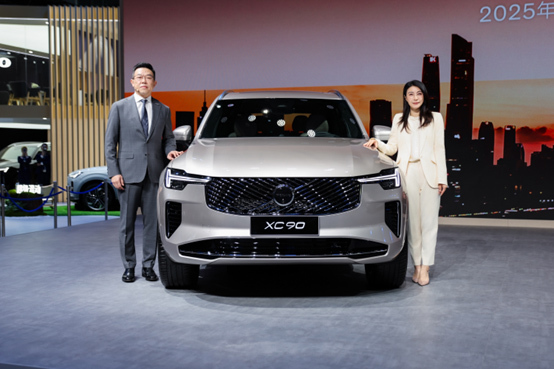
“无论油电,都是安全旗舰”,沃尔沃汽车携手品牌代言人郭晶晶亮相广州车展
Zhong Guo Jing Ji Wang· 2025-11-22 07:06
Core Viewpoint - Volvo Cars emphasizes its commitment to safety across both fuel and electric vehicles, showcasing its nearly century-long legacy of safety innovation at the 23rd Guangzhou International Auto Show [1][3]. Group 1: Brand Commitment to Safety - Volvo has been a leader in automotive safety for 98 years, maintaining its core value of safety through the transition from fuel vehicles to electrification [3]. - The brand's flagship model, the Volvo XC90, has achieved global sales of over 1.65 million units, establishing a safety legacy in the luxury SUV market [5]. - The new XC90 continues to evolve while preserving its classic safety genes, setting a new benchmark in the luxury fuel vehicle market [5]. Group 2: Electric Vehicle Innovations - The new XC70, built on the SMA super hybrid architecture, features a high-strength boron steel safety cage and premium interior materials, enhancing overall safety [6]. - In October 2025, combined sales of the XC70 and XC60 exceeded 8,000 units, positioning them among the top tier of luxury mid-size to large SUVs [6]. Group 3: Social Responsibility and Community Engagement - Volvo's commitment to safety extends beyond vehicles, with the establishment of the Volvo AED Road Ambassador Alliance, which has over 1,300 members, effectively adding 1,300 "mobile ambulances" to the roads [8]. - The company actively engages in various public welfare initiatives, such as the "Little Red Horse Safety Education Campaign" and the "Love Plan," demonstrating its social responsibility [8]. - Volvo's safety philosophy is rooted in a deep respect for life and love, aiming to extend safety measures into broader societal contexts [9].

美媒:在汽车安全上,西方似乎也要追赶中国
Huan Qiu Wang Zi Xun· 2025-11-21 23:07
Group 1 - The article highlights that the safest cars currently available in the European market are primarily from Chinese manufacturers, with the Leap Motor B10 being the top-rated model according to the European New Car Assessment Programme (Euro NCAP) [1] - The Leap Motor B10 achieved impressive scores of 93% in adult and child protection and 85% in safety assistance, earning a five-star safety rating, which is the highest possible [1] - Among the 23 new cars tested, four were from Chinese brands, all receiving the five-star safety rating, indicating a significant advancement in automotive safety standards among Chinese manufacturers [1] Group 2 - The Tesla Model 3, primarily manufactured in China, remains at the top of the Euro NCAP rankings for 2025, despite a lower score of 90% in occupant protection, showcasing strong performance in other safety categories [2] - The NIO ET5, with a record-high occupant protection score of 96%, secured the second position in the rankings, reflecting the growing emphasis on safety among car manufacturers [2] - The article suggests that the perception of Chinese cars being inferior is outdated, as evidenced by their competitive safety ratings, indicating that Western manufacturers may need to catch up in both electric vehicle technology and safety standards [2]


安全为核 沃尔沃携旗下新车型参加广州车展
Huan Qiu Wang· 2025-11-21 14:42
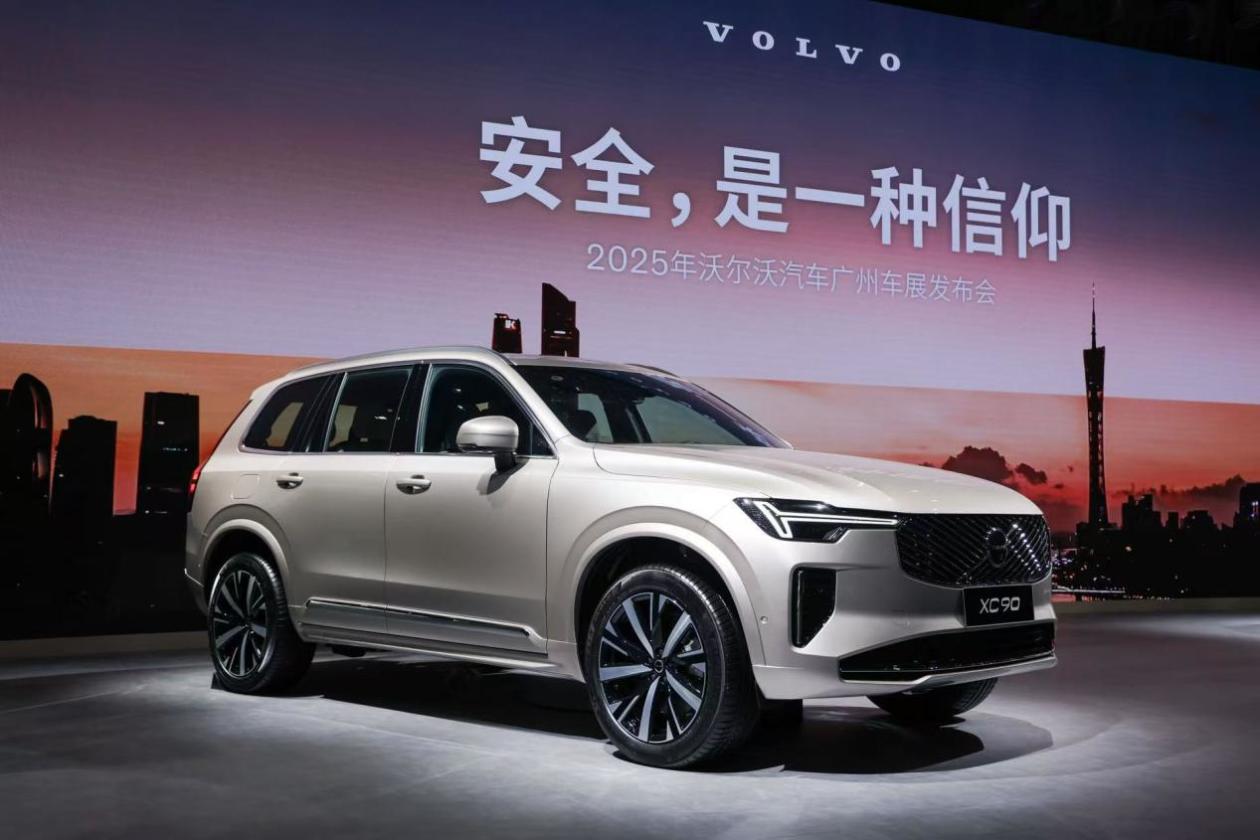
沃尔沃于1970年成立了交通事故调查小组,通过长期收集分析真实事故数据,不断完善安全设计。近期,全新XC60在沃尔沃汽车安全中心完成了碰撞测 试,测试标准高于法规要求,并采用了代表不同年龄、性别和体型的假人模型。 2025年11月21日,沃尔沃品牌携旗下全新XC90等车型参加第二十三届广州车展,展现品牌持续以安全为核心的长期技术积累与社会责任担当。 沃尔沃介绍,自1927年成立起,品牌98年以来持续在汽车安全领域投入与创新。此次车展推出的全新XC90,在车身结构上使用了硼钢闭环设计的"笼式车 身",对包括C柱在内的整车结构进行了强化。同时,全新XC60采用的"三路三区"吸能设计,也体现出其在车身安全方面的技术思路。 在安全技术方面,沃尔沃曾发明三点式安全带,并率先应用于汽车行业。此外,该品牌还推出了反向儿童座椅、侧面碰撞保护系统(SIPS)等多项安全技 术。这些技术中的一部分已通过开源方式与行业共享。 沃尔沃表示,在电动化趋势下,将继续致力于安全技术的研发,希望保持其在汽车安全领域的专业形象。 沃尔沃品牌的安全理念也延伸到社会责任层面。2024年3月,沃尔沃成立了行业首个官方AED组织——"沃尔沃AED道路使 ...
雷军连发三条微博回应安全性质疑,王化同日被传换岗
Sou Hu Cai Jing· 2025-11-21 04:00
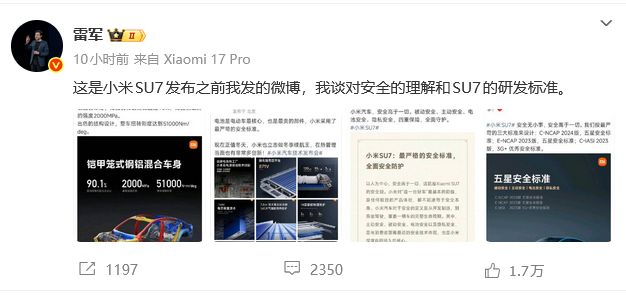
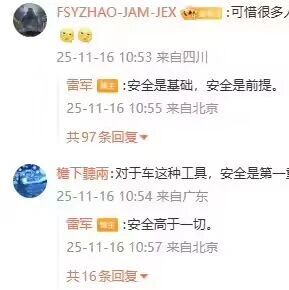
2025年10月13日,一辆汽车在成都天府大道发生致死交通事故,救援时车门无法打开,引发舆论关注。 随着事件发酵,小米汽车口碑遭遇反转,甚至波及创始人雷军。 据智通财经报道,同日,小米公关部总经理王化也即将换岗。 王化于2021年5月升任小米集团公关部总经理。他曾经多次在社交媒体帮助小米进行辟谣和回应等,并 成为小米公关的"知名IP"。有人解读认为,王化此番岗位变化,或许将在一定程度上改变小米对外的宣 传策略。 11月16日,小米创始人雷军连发三条微博谈论汽车安全。 他在其中一条微博表示:在去年4月的一次采访中,自己在谈产品定义时说,"一辆车,好看是第一位 的",这和"安全是基础、安全是前提"矛盾吗?还质疑:"还是在这次采访,我谈设计时候说轮毂最难设 计,这有啥问题?" 雷军还援引了自己在2024年1月3日发布的微博,表达对汽车安全性的重视:"小米汽车,安全高于一 切。被动安全、主动安全、电池安全、隐私安全,四重保障,全面守护。"还有在2023年12月发的微 博:"电池是电动车最核心,也是最贵的部件,小米采用了最严苛的安全标准。" 在回复网友的评论中,雷军表示:"网上有不少人断章取义、歪曲抹黑。"相关表态,疑 ...


经参车评丨安全可以不是卖点 但卖点必须安全
Xin Hua Wang· 2025-11-20 05:58
近日,《机动车运行安全技术条件》国家标准的征求意见稿组织完成,对新能源汽车、辅助驾驶汽 车新增多项重要标准。零百加速、电动门把手、车内大屏等之前频频被企业作为卖点的项目都有了新的 安全标准。此次标准的修订再次表明,安全是汽车产品最基本的要素,是不可逾越的底线。汽车产品所 有的性能、卖点都必须服从于安全这个基础。安全可以不被作为卖点,但卖点必须安全。 安全不是装饰品,而是生命线;不是附加题,而是必答题;不是可选项,而是必选项。企业应当认 识到,安全不是成本和负担,而是投资与责任。真正有远见的企业,不会为了短期营销效果而牺牲安全 底线,而是将安全化为品牌的核心价值。 与此同时,消费者教育也不可或缺。随着汽车科技含量的提升,消费者对车辆性能的认知也需要同 步更新。盲目追求加速性能、过度依赖辅助驾驶功能、不了解新型安全风险,都可能埋下安全隐患。车 企、媒体、监管部门应当共同努力,培养消费者理性、安全的用车观念,使技术创新真正服务于提升出 行体验。 当新能源、智能化成为汽车产业的主流,安全必须始终是指引前行的灯塔。技术的星辰大海值得追 逐,但唯有系好"安全带",才能行稳致远。在汽车产业创新的大潮中,安全永远是不可动摇的 ...
雷军不再“沉默”
Sou Hu Cai Jing· 2025-11-19 11:41
Core Viewpoint - Xiaomi's CEO Lei Jun has recently made strong statements regarding the safety of Xiaomi cars, responding to previous criticisms and controversies surrounding the brand's safety standards and public relations approach [2][5][15]. Group 1: Safety Concerns and Public Response - Lei Jun emphasized the importance of safety in his recent social media posts, stating that "safety is the foundation" and "safety is paramount," while addressing previous comments that were perceived as prioritizing aesthetics over safety [7][8][10]. - The company faced significant backlash following two serious accidents involving Xiaomi vehicles, which resulted in fatalities and raised concerns about the cars' safety features, such as the inability of doors to open after collisions [10][11][31]. - Despite a recent quarterly report showing profitability in Xiaomi's automotive and AI sectors, the stock price fell over 4%, indicating that public sentiment remains affected by safety concerns [5][6]. Group 2: Changes in Public Relations Strategy - Reports suggest that Xiaomi's public relations head, Wang Hua, may be reassigned, indicating a potential shift in the company's communication strategy in response to recent controversies [16][20]. - Wang Hua has been a key figure in managing Xiaomi's public image, often countering negative rumors and defending the brand's reputation [21][22][25]. - The anticipated change in leadership within the public relations department may lead to a new approach in how Xiaomi engages with consumers and addresses public concerns [26]. Group 3: Consumer Sentiment and Brand Loyalty - Xiaomi has historically built a loyal customer base, known as "Mi Fans," who have supported the brand due to its reputation for high-quality, cost-effective products [27][28]. - However, recent issues, including poor customer service and product quality complaints, have led some former supporters to become critical of the brand, expressing their dissatisfaction on social media [30][31]. - The company's handling of safety issues and customer grievances will be crucial in regaining the trust of its consumer base, as many former fans have voiced their disappointment over the lack of adequate responses to safety concerns [31][33].
深蓝汽车邓承浩:年轻人的第一台车 安全比速度更重要
Di Yi Cai Jing· 2025-11-18 12:08
(文章来源:第一财经) 11月18日晚间,在深蓝汽车L06新车上市发布会上,深蓝汽车董事长邓承浩称,年轻人的第一台车,安 全比速度更重要。他表示,把做底盘做扎实,绝不仅仅是为了让大家开的快,更想要实现的是在快的同 时更加安全。 ...
雷军罕见连续发文,辟谣“小米汽车好看比安全重要”
Sou Hu Cai Jing· 2025-11-17 07:17
Core Viewpoint - Xiaomi's CEO Lei Jun emphasizes the importance of safety in automotive design, asserting that safety is the foundation and priority for the company's vehicle development, particularly in light of recent discussions and criticisms regarding the design philosophy of the Xiaomi SU7 [1][3][5]. Group 1 - Lei Jun reiterated that aesthetics should not compromise safety, stating that "a car's appearance is the first priority," but safety remains the fundamental premise [3]. - In a series of tweets, Lei Jun highlighted the focus on vehicle body strength and battery safety, referencing his previous statements made before the launch of the Xiaomi SU7 [3]. - Lei Jun responded to criticisms by asserting that safety is paramount, emphasizing that "safety is the foundation, safety is the premise, safety is above all" [5]. Group 2 - At the 2025 World Intelligent Connected Vehicles Conference, Lei Jun called for the industry to prioritize safety, quality, and innovation, urging collaboration to focus on essential underlying technologies and research areas [7]. - He advocated for a collective effort to combat negative online behaviors such as cyberbullying and misinformation, promoting a positive and orderly development environment for the industry [7].
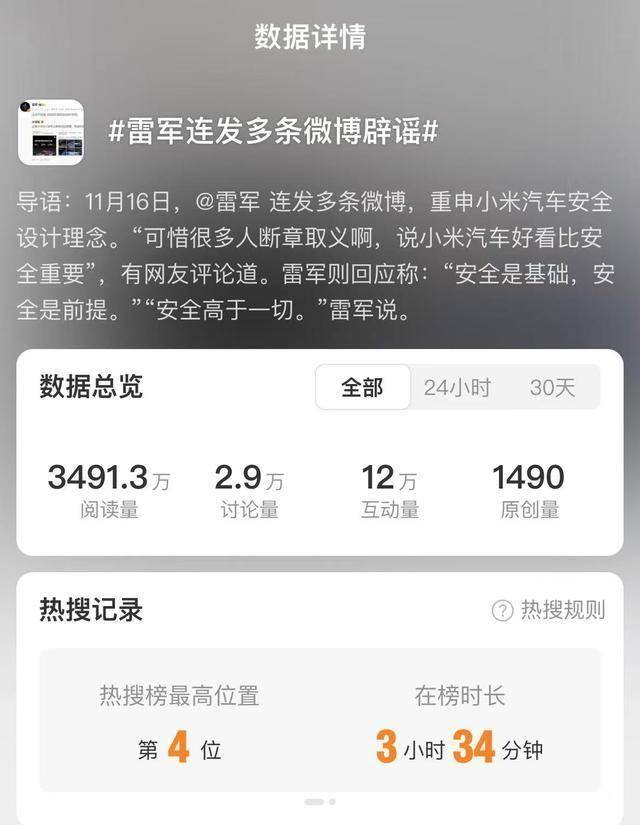
雷军重申安全是小米汽车基础和前提:网上有人断章取义、歪曲抹黑
猿大侠· 2025-11-17 04:11
Core Viewpoint - The founder and CEO of Xiaomi, Lei Jun, emphasizes that safety is the top priority for Xiaomi's automotive division, asserting that the company adheres to the strictest safety standards in vehicle design and manufacturing [1][2][4]. Group 1: Safety Standards - Xiaomi's automotive philosophy prioritizes safety above all else, with a commitment to the highest safety standards for both the vehicle body and battery [2][4]. - The vehicle body is constructed using a steel-aluminum hybrid design, with over 90% of high-strength steel and aluminum, and the highest strength of high-strength steel reaching 2000 MPa [4]. - The overall torsional rigidity of the vehicle is reported to be 51,000 Nm/deg, indicating a robust structural integrity [4]. Group 2: Public Perception and Response - Lei Jun has publicly addressed criticisms and misinformation regarding Xiaomi's automotive safety standards, stating that the brand has faced significant online backlash since the launch of its vehicles [5]. - The company has implemented a four-fold safety guarantee encompassing passive safety, active safety, battery safety, and privacy safety [5].
“好看第一位”和“安全是基础”冲突吗?雷军连发三博能否回答质疑?
Feng Huang Wang· 2025-11-16 22:56
Core Viewpoint - Lei Jun, the founder of Xiaomi, emphasizes the importance of automotive safety in response to recent criticisms and accidents involving Xiaomi vehicles, asserting that safety is paramount and should not be compromised for aesthetics [5][6][8]. Group 1: Safety Emphasis - Lei Jun reiterated his commitment to automotive safety, stating that Xiaomi cars prioritize safety above all else, including passive, active, battery, and privacy safety measures [5]. - In a previous statement, he highlighted the rigorous safety standards applied to the battery, which is a critical and costly component of electric vehicles [5]. - Lei Jun's recent comments appear to be a direct response to public concerns and criticisms regarding the safety of Xiaomi vehicles, particularly following several accidents [5][8]. Group 2: Recent Accidents - Two serious accidents involving Xiaomi vehicles have raised significant public scrutiny, with one incident resulting in a fatality due to suspected drunk driving [6][7]. - The vehicles involved in these accidents were identified as the Xiaomi SU7 Ultra and SU7 standard version, with details indicating that the vehicles had safety features that were activated prior to the collisions [6][7]. - These incidents have intensified the media's focus on Xiaomi's automotive safety and have led to broader discussions about the company's public relations strategies [8]. Group 3: Public Relations and Market Impact - The recent accidents and subsequent media coverage have negatively impacted Xiaomi's stock price, which has seen a decline of 22% since early September, with a closing price of 42.36 HKD on November 14 [9]. - The impending change in Xiaomi's public relations leadership, with the departure of Wang Hua, has raised questions about the company's future communication strategies [8][9]. - Analysts suggest that Xiaomi needs to balance its marketing approach, which heavily relies on Lei Jun's personal brand, with the need to demonstrate product safety and reliability to mitigate negative perceptions [9][10].