
消费新业态新模式新场景

Search documents
大消费板块上演涨停潮!机构看好这些投资主线
Zheng Quan Shi Bao Wang· 2025-12-19 06:25
Core Viewpoint - The consumer sector in A-shares is experiencing a significant rally, driven by favorable policies and market sentiment, with over 10 stocks hitting the daily limit up on December 19 [1][2]. Policy Support - The Ministry of Commerce and the Ministry of Finance have initiated a pilot program for new consumption formats in 50 cities, aiming to stimulate consumption and enhance the supply of quality goods and services [2][3]. - The central economic work conference emphasized the importance of expanding domestic demand and implementing actions to boost consumption, indicating a strong policy support for the consumer sector through 2026 [4]. Investment Trends - Analysts predict that the new consumption sector will gain attention, with a focus on sustainable business models and profitability as key investment criteria [5]. - The consumer market is expected to benefit from policy support and economic recovery, with specific sectors like e-commerce, service consumption, and new retail being highlighted as potential investment opportunities [6]. Future Outlook - The consumer sector is projected to evolve towards health-oriented products, practical consumption, and emotional spending, with a focus on smart and overseas consumption [5]. - The food and beverage sector is identified as a core investment theme for 2025, with a long-term outlook extending into 2026, particularly in the area of health-focused food products [6].


利好!涨停潮!
证券时报· 2025-12-19 04:53
Core Viewpoint - The consumer sector in the A-share market has experienced a significant surge, with the retail trade sector leading the gains and individual stocks hitting the daily limit up [2][3][4]. Market Performance - On December 19, the A-share market showed an overall upward trend, with the Shanghai Composite Index closing at 3899.31 points, up 0.59%, and briefly surpassing 3900 points during the session [4][5]. - The Shenzhen Component Index rose by 0.93%, the ChiNext Index increased by 0.99%, and the STAR 50 Index gained 0.69% [4]. Consumer Sector Highlights - The retail trade sector saw a substantial increase, with the sector's stocks rising nearly 4% during the session. Notable stocks that hit the daily limit include Debi Group, Central Plaza, Shanghai Jiubai, Dalian Friendship, and Dongbai Group [5][6]. - Specific stock performances included: - Debi Group: +19.99% [6] - Central Plaza: +10.04% [6] - Shanghai Jiubai: +10.02% [6] - Dalian Friendship: +10.01% [6] - Dongbai Group: +9.99% [6] - YH Supermarket: +8.20% [6] New Stock Listing - A new stock, Youxun Co., was listed on the A-share market, with its price surging over 450% at one point during the trading session [9][10]. - Youxun Co. specializes in the research, design, and sales of optical communication front-end transceiver chips, which are critical components in optical communication systems [12]. Policy and Industry Support - The Ministry of Commerce and the Ministry of Finance have initiated a pilot program for new consumption formats in 50 cities, aimed at boosting consumer spending and enhancing the supply of quality goods and services [7]. - The pilot program is part of a broader initiative to stimulate consumption and improve living standards, emphasizing the importance of local government involvement in project management and support [7]. Other Sector Movements - Other sectors such as light industry manufacturing, real estate, and comprehensive services also saw gains, with increases exceeding 2% [7]. - Conversely, the banking and coal sectors experienced overall declines [7].


关注下游消费新业态试点运行
Hua Tai Qi Huo· 2025-12-19 02:36
Report Summary 1. Industry Investment Rating No information provided regarding the report's industry investment rating. 2. Core Viewpoints - The report presents an overview of the mid - and upstream, mid - stream, and downstream industries, along with relevant policy events and price trends. In the production industry, there are updates on the export control of rare - earth related items, and in the service industry, there are new consumption pilot programs. The prices of some upstream products are falling, the operating rates of some mid - stream industries are changing, and downstream real estate is warming up while some service sectors are declining [1][2][3][4]. 3. Summary by Directory 3.1 Mid - view Event Overview - **Production Industry**: At the Ministry of Commerce's regular press conference on the 18th, the spokesperson responded to the latest progress of the export control of rare - earth related items. Some Chinese exporters have initially met the requirements for applying for general licenses, and some applications have been received and approved [1]. - **Service Industry**: The General Office of the Ministry of Commerce and the General Office of the Ministry of Finance have issued a notice to carry out pilot projects on new consumption formats, models, and scenarios in 50 cities including Beijing. On December 17, a work deployment and promotion meeting was held, emphasizing that pilot cities should improve implementation plans and ensure the effectiveness of the pilot work [1]. 3.2 Industry Overview 3.2.1 Upstream - **Non - ferrous Metals**: The prices of nickel and lead have slightly declined [2]. - **Agriculture**: The price of palm oil has slightly declined [2]. - **Energy**: The prices of international crude oil and liquefied natural gas continue to decline [2]. 3.2.2 Mid - stream - **Chemical Industry**: The operating rates of PX and PTA continue to decline [3]. - **Energy**: The coal consumption of power plants has increased [3]. - **Infrastructure**: The asphalt operating rate is at a low level [3]. 3.2.3 Downstream - **Real Estate**: The sales of commercial housing in first, second, and third - tier cities continue to pick up [4]. - **Service**: The number of domestic and international flights has declined, and movie box office has also declined [4]. 3.3 Key Industry Price Indicators Tracking - **Agriculture**: On December 18, the prices of corn, eggs, palm oil, cotton, and pork showed different trends, with palm oil down 1.15%, eggs down 0.60%, and others showing small increases or decreases [42]. - **Non - ferrous Metals**: The prices of copper, zinc, aluminum, nickel, etc. on December 18 also had different changes, such as nickel down 1.49% and zinc up 0.02% [42]. - **Energy**: The prices of WTI crude oil, Brent crude oil, liquefied natural gas, and coal on December 18 had different trends, with Brent crude oil down 4.07% and WTI crude oil up 4.53% [42]. - **Chemical Industry**: The prices of PTA, polyethylene, urea, and soda ash on December 18 showed different changes, with polyethylene down 1.46% and PTA up 0.69% [42]. - **Real Estate**: The cement price index, building materials composite index, and concrete price index on December 18 also had different trends, with the cement price index up 0.81% and the concrete price index down 0.06% [42].
两部门:抓紧出台“三新”试点资金管理办法
Zheng Quan Shi Bao· 2025-12-18 18:09
商务部服贸司司长孔德军此前指出,开展消费"三新"试点城市建设主要有两方面考虑:一方面是丰富高 品质服务供给,另一方面是发挥消费联动作用。"消费新业态新模式新场景往往具有较强辐射性和跨区 域性,一个成功的消费场景,既能够促进本地文旅、交通、住宿等关联产业发展,又能带动周边消 费。"孔德军称。 本次会议进一步指出,开展"三新"试点工作是落实《提振消费专项行动方案》、扩大优质商品和服务供 给的重要举措,有关地方商务主管部门要深刻认识开展"三新"试点的重要意义,准确把握试点工作定 位,坚持促消费与惠民生相结合,当好消费体制机制改革的排头兵,以改革、开放、创新激发新业态新 模式新场景发展活力,打造消费创新发展的新高地,培育消费能级提升的新引擎。 会议强调,各试点城市要进一步完善实施方案,建立健全工作推进和保障机制,抓紧出台试点资金(项 目)管理办法,紧扣"三新"试点支持方向,精心筛选支持项目,强化项目动态管理。加强宣传引导,引 导社会各界积极参与,增强试点支持项目的消费拉动作用。试点城市商务主管部门要发挥好牵头协调作 用,推动解决试点面临的堵点痛点问题。 近日,商务部会同财政部召开"三新"试点(即"消费新业态新模式新场 ...
50城试点“三新”消费,北京等地共迎百亿级市场机遇
Jin Rong Jie· 2025-12-18 14:55
Core Viewpoint - The Chinese government is initiating a pilot program in 50 cities to promote new consumption formats, models, and scenarios, signaling a shift from material to service and experience-oriented consumption [1][2]. Policy Signals - The transition towards service and experience-oriented consumption has been officially recognized, with the central economic work conference prioritizing domestic demand and market development [2]. - The government report emphasizes consumption, mentioning it 32 times, indicating unprecedented policy focus on boosting consumer spending [3]. Strategic Positioning - The core mission of the pilot program is to stimulate the development of new consumption formats and create a new high ground for innovative consumption [4]. - This initiative is part of a broader strategy to implement the "Special Action Plan for Boosting Consumption" and expand the supply of quality goods and services [5]. Core Content - The pilot program will focus on three main areas: enhancing the first-release economic service system, innovating diverse service consumption scenarios, and supporting cross-brand collaborations with quality consumption resources [6]. - Specific initiatives include establishing first-release centers, promoting digital technologies in various sectors, and developing immersive consumption spaces [6]. Market Transformation - The consumption market is undergoing structural changes, with service consumption expected to grow by 6.2% year-on-year in 2024, outpacing goods retail growth by 3 percentage points [7]. - Mixed operating models, such as bookstores combined with cafes, are emerging as new consumption highlights, with an emphasis on increasing residents' income to boost consumption capacity [8]. Funding Arrangement - Central government subsidies for pilot cities will vary based on city size, with super-large cities receiving 400 million yuan, large cities 300 million yuan, and other cities 200 million yuan [9][10]. - Funding will be distributed in two batches, with initial funds released in the first year and remaining funds contingent on performance evaluations [10][11]. Implementation Process - The pilot program will follow a structured process involving local applications, evaluations, fund distribution, and performance assessments [12]. - Each province can recommend two cities for the pilot, with top consumer spending provinces allowed to recommend three [12]. Local Actions - Successful implementation of the pilot program relies on strong local government support, with cities encouraged to refine their implementation plans and establish effective mechanisms [13][14]. - Business departments in pilot cities will play a crucial role in coordinating efforts and addressing challenges [15]. New Consumption Trends - Emerging consumption trends include the rise of "self-indulgent consumption" among Generation Z and rapid growth in sectors like pet economy [16]. - The integration of technologies like artificial intelligence with consumer services is expected to create new growth opportunities in the market [16].
商务部:打造消费创新发展新高地
Zheng Quan Ri Bao Wang· 2025-12-18 10:29
会议指出,开展"三新"试点工作是落实《提振消费专项行动方案》、扩大优质商品和服务供给的重要举措,有关地方商务 主管部门要深刻认识开展"三新"试点的重要意义,准确把握试点工作定位,坚持促消费与惠民生相结合,当好消费体制机制改 革的排头兵,以改革、开放、创新激发新业态新模式新场景发展活力,打造消费创新发展的新高地,培育消费能级提升的新引 擎。 会议强调,各试点城市要进一步完善实施方案,建立健全工作推进和保障机制,抓紧出台试点资金(项目)管理办法,紧 扣"三新"试点支持方向,精心筛选支持项目,强化项目动态管理。加强宣传引导,引导社会各界积极参与,增强试点支持项目 的消费拉动作用。试点城市商务主管部门要发挥好牵头协调作用,推动解决试点面临的堵点痛点问题,确保试点工作取得实 效。 (编辑 张昕) 本报记者 刘萌 据商务部12月18日消息,近日,商务部办公厅、财政部办公厅印发《关于做好消费新业态新模式新场景试点有关工作的通 知》,在北京等50个城市开展消费新业态新模式新场景试点(以下简称"三新"试点)。12月17日,商务部会同财政部召开"三 新"试点工作部署推进会,贯彻落实党的二十届四中全会和中央经济工作会议精神,推动地 ...
商务部召开消费新业态新模式新场景试点工作部署推进视频会议
Shang Wu Bu Wang Zhan· 2025-12-18 08:14
商务部召开消费新业态新模式新场景试点工作部署推进视频会议。 (文章来源:商务部网站) ...
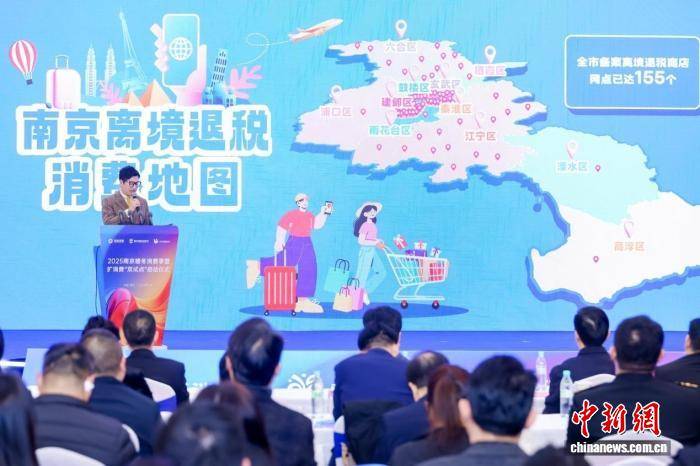
消费“双试点”花落南京:加速建设国际消费中心城市
Sou Hu Cai Jing· 2025-12-17 09:59
Core Viewpoint - Nanjing has been selected as a pilot city for "International Consumption Environment Construction" and "New Consumption Formats and Scenarios," aiming to accelerate its development as an international consumption center city [4]. Group 1: Pilot Programs and Support - The "Double Pilot" program focuses on enhancing international consumption supply and environment, aiming to create a globally attractive consumption destination [4]. - Nanjing can receive a special subsidy of 400 million yuan for the "New Consumption Formats" pilot, indicating strong governmental support [4]. - The pilot program aims to improve high-quality consumption supply, optimize foreign payment services, and enhance international service levels [4]. Group 2: Market Potential and Growth - Nanjing's retail sales reached 677.5 billion yuan from January to October 2025, with a year-on-year growth of 4.3% [5]. - The city welcomed 181 million domestic and international tourists, generating a total tourism revenue of 229.3 billion yuan, reflecting growth rates of 11.3% and 10% respectively [5]. - Traditional shopping districts like Fuzimiao and Xinjiekou continue to thrive, contributing to a favorable environment for consumption upgrades [6]. Group 3: Innovative Consumption Trends - Nanjing has proactively engaged in the "first-release economy," with measures introduced as early as 2021 to promote this sector [6]. - The Deji Plaza in the Xinjiekou commercial area is projected to achieve sales exceeding 24.5 billion yuan in 2024, showcasing the city's retail strength [6]. - The city is becoming a key location for brand launches in China, enhancing its appeal to both domestic and international consumers [6]. Group 4: Cultural Integration and Unique Identity - Nanjing aims to merge "International Trend" with "Jinling Charm" to create a unique consumption center [9]. - The city plans to invest 100 million yuan to bridge the gap with top international consumption cities, enhancing the experience for foreign tourists [9]. - Cultural initiatives, such as promoting traditional crafts and hosting local festivals, are part of the strategy to convert cultural strengths into economic advantages [9].
中央财办有关负责同志:扩大内需是明年排在首位的重点任务
Zheng Quan Shi Bao Wang· 2025-12-16 12:56
Core Viewpoint - The central economic work meeting emphasizes the importance of expanding domestic demand as the top priority for the coming year, with a focus on boosting consumption and investment to sustain economic growth [1][6]. Group 1: Domestic Demand and Consumption - Domestic demand has remained stable, contributing 71% to economic growth in the first three quarters of the year [6]. - There is a structural shift in consumption from goods to a balance between goods and services, with strong demand in sectors like cultural tourism, elderly care, and childcare [2][6]. - Policies will be implemented to enhance residents' income, promote quality employment, and increase basic pensions to boost consumption capacity [2][6]. Group 2: Investment Strategies - Investment has shown a decline, but there are significant opportunities in technology innovation, infrastructure, and improving living standards [3][7]. - The government aims to combine investments in physical and human capital, focusing on infrastructure projects like parking lots and charging stations, while increasing investment in healthcare and elderly care [3][8]. - Measures will be taken to stimulate private investment, particularly in high-tech and service sectors, to enhance confidence among private investors [3][8]. Group 3: Future Outlook - There is confidence that through the synergy of investment and consumption, along with government-market collaboration, domestic demand can achieve sustained growth in the coming year [4][9].
中央财办有关负责同志:扩大内需是明年排在首位的重点任务,明年要把握消费的结构性变化,从供需两侧发力提振消费
Xin Hua She· 2025-12-16 12:44
Group 1 - The core focus for the upcoming year is to expand domestic demand, which is identified as the top priority task, with domestic demand contributing 71% to economic growth in the first three quarters of this year [1] - There is a noticeable slowdown in consumption and investment growth in recent months, necessitating continued efforts to boost domestic demand [1] - The shift from primarily goods consumption to a balance between goods and service consumption is highlighted, with strong demand in sectors like cultural tourism, elderly care, and childcare [1] Group 2 - Investment has shown a decline, but there are significant opportunities in areas such as technological innovation, industrial upgrading, infrastructure, and improving people's livelihoods [2] - The strategy involves combining investments in physical assets and human capital, with a focus on enhancing consumer infrastructure and increasing investment in social services like elderly care and childcare [2] - The government aims to stimulate private investment by implementing measures to boost confidence and encouraging private enterprises to participate in major projects in high-tech and service sectors [2]