
粤港澳大湾区融合发展

Search documents
同一个湾区 同一个梦想——写在第十五届全国运动会开幕之际
2 1 Shi Ji Jing Ji Bao Dao· 2025-11-09 05:27
Core Points - The 15th National Games, hosted by Guangdong, Hong Kong, and Macau, marks a significant milestone in promoting sports as a means of national strength and cultural integration [1][4][10] - The event symbolizes the deepening cooperation within the Guangdong-Hong Kong-Macau Greater Bay Area, showcasing its role as a strategic hub for high-quality development and modernization [3][10][40] Group 1: Event Significance - The 15th National Games is the first time the event is jointly hosted by Guangdong, Hong Kong, and Macau, enhancing the integration of the Greater Bay Area [4][10] - The Games are expected to inspire confidence among the populace as China transitions into the "15th Five-Year Plan" period, emphasizing high-quality development [3][10] Group 2: Cultural and Historical Context - The Greater Bay Area has a rich history as a vital part of the Maritime Silk Road, contributing significantly to trade and cultural exchange [8][9] - The region has been a pioneer in reform and opening-up, playing a crucial role in China's modernization efforts over the past 40 years [9][10] Group 3: Collaborative Efforts - The event features a unique "1+4" coordination mechanism to facilitate cross-border collaboration among the three regions, ensuring smooth operations and resource sharing [15][14] - The Games will utilize existing venues, emphasizing sustainability and efficient use of resources, with over 90% of the facilities being upgraded rather than newly constructed [31][33] Group 4: Economic and Social Impact - The 15th National Games is expected to stimulate local economies through increased tourism and participation in sports, creating a positive feedback loop for community engagement and economic growth [17][28] - The event promotes a "Sports + X" model, integrating sports with culture, technology, and tourism to enhance overall societal well-being [17][28] Group 5: Future Aspirations - The Games are seen as a stepping stone towards achieving a modernized and high-quality development framework for the Greater Bay Area, aligning with national goals for modernization and economic growth [35][40] - The event aims to foster a sense of identity among the "Bay Area people," enhancing regional cooperation and cultural exchange [11][12]

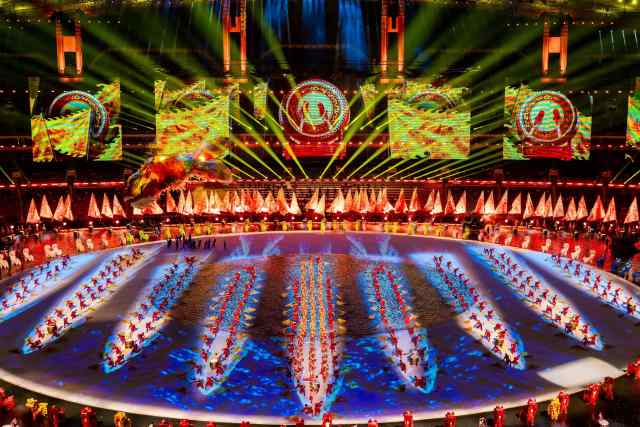
活力大湾区 同心向未来
Ren Min Ri Bao· 2025-11-08 23:34
Core Viewpoint - The 15th National Games serves as a platform for the integration and development of the Guangdong-Hong Kong-Macao Greater Bay Area, showcasing the region's collaborative spirit and cultural richness [1][2][17] Group 1: Event Overview - The event is jointly hosted by Guangdong, Hong Kong, and Macao, emphasizing the innovative practice of "one country, two systems" in sports [1] - The games are expected to attract over 9,000 participants, testing the efficiency of cross-border passage and organizational capabilities [5] Group 2: Cross-Border Collaboration - The cycling event features a 230-kilometer route that crosses three regions, highlighting seamless customs procedures with "zero delay" and "zero contact" [3] - Special customs measures have been implemented for transporting food supplies to the games, ensuring quick and safe passage [4] Group 3: Economic Impact - The event is expected to boost local tourism, with travel agencies reporting increased bookings related to the games, potentially attracting over 100,000 visitors to Hong Kong [6][8] - The integration of sports and tourism is creating new economic opportunities, with local businesses benefiting from increased consumer spending [6][9] Group 4: Cultural Exchange - The games promote cultural exchange among participants from Guangdong, Hong Kong, and Macao, fostering a sense of unity and shared identity [10][11] - The design of the torch for the games symbolizes the themes of integration and shared prosperity among the three regions [10] Group 5: Infrastructure Development - New transportation projects have been launched to enhance connectivity within the Greater Bay Area, facilitating easier access to the games [16] - Urban improvements related to the event are expected to leave a lasting impact on local communities, enhancing public spaces and facilities [14]
融合发展成果的生动展现
Jing Ji Ri Bao· 2025-11-08 22:19
Core Insights - The 15th National Games marks the first time Hong Kong and Macau are co-hosting the event, showcasing the integration of the Guangdong-Hong Kong-Macau Greater Bay Area [1] - The event highlights the improved infrastructure and connectivity in the Greater Bay Area, with six major cross-river and cross-sea channels completed, facilitating smooth transitions for athletes and teams [1] - The economic strength of the hosting regions is underscored, with Guangdong being a manufacturing powerhouse and Hong Kong enhancing its global financial standing, while Macau diversifies its economy [3] Infrastructure Development - The Greater Bay Area has established six major transportation links, including the Hong Kong-Zhuhai-Macao Bridge, enhancing cross-border travel for the National Games [1] - Guangzhou Baiyun International Airport's new T3 terminal and fifth runway will make it the first airport in China with five commercial runways, further supporting the region's connectivity [1] Policy and Soft Connectivity - The National Immigration Administration announced ten new immigration and entry-exit management policies to promote high-level openness and quality development, including extending the 240-hour visa-free transit policy to five ports in Guangdong [2] - The establishment of a regular communication mechanism among Guangdong, Hong Kong, and Macau aims to enhance cross-border customs, material allocation, and food safety during the National Games [2] Economic Impact - The event serves as a test of the economic capabilities of the hosting regions, with Guangdong leading in manufacturing and Hong Kong improving its global rankings in finance and business environment [3] - The 2025 Guangdong-Hong Kong-Macau Greater Bay Area Global Investment Conference resulted in 2,073 investment and trade projects, exceeding 2 trillion yuan, highlighting the area's global attraction [3]
活力大湾区 同心向未来——从十五运会看粤港澳融合发展
Ren Min Ri Bao· 2025-11-08 22:12
Group 1: Event Overview - The 15th National Games (referred to as "15th Games") is a significant sports event that showcases the integration and development of the Guangdong-Hong Kong-Macao Greater Bay Area [1][2] - The event emphasizes the high-quality development of the Greater Bay Area, supporting Hong Kong and Macao's better integration into the national development framework [1][2] Group 2: Cross-Border Collaboration - The cycling event of the 15th Games features a unique cross-border route, covering over 230 kilometers and allowing athletes to pass through three regions without delays [3][4] - Innovative customs measures have been implemented to facilitate the transport of goods and athletes across borders, enhancing efficiency and safety [4][5] Group 3: Economic Impact - The event is expected to attract over 100,000 tourists to Hong Kong, boosting the local economy through increased consumption in the hospitality and retail sectors [6][8] - Various cities in the Greater Bay Area are transforming competition routes into tourism routes, promoting a blend of sports and tourism [6][9] Group 4: Technological Innovations - The use of advanced technologies such as 3D mapping and satellite tracking enhances the spectator experience and operational efficiency during the Games [7][8] - The collaboration between regions has led to the successful application of innovative solutions in event management and logistics [7][8] Group 5: Cultural Exchange - The event promotes cultural exchange among participants from Guangdong, Hong Kong, and Macao, fostering a sense of unity and shared identity [10][11] - The design of the Games' torch symbolizes the cultural integration and collaborative spirit of the Greater Bay Area [10][11] Group 6: Community Engagement - The Games have mobilized a large volunteer force, reflecting strong community involvement and pride in hosting a national event [11][12] - The event encourages public participation in sports, enhancing community health and well-being [12][14] Group 7: Urban Development - The organization of the Games has led to urban improvements, including the development of sports facilities and public spaces, enhancing the quality of life for residents [14][15] - Transportation infrastructure improvements are facilitating better connectivity within the Greater Bay Area, supporting both the event and future regional integration [16][17]
全运会|国家体育总局:十五运会将进一步加强粤港澳三地互联互通
Xin Hua She· 2025-11-08 12:49
新华社广州11月8日电(记者何磊静)记者从第十五届全国运动会组委会8日举行的新闻发布会上获悉, 此次在粤港澳举办的十五运会将以一系列创新务实举措促进协同办赛,进一步加强三地互联互通。 十五运会组委会副主任、国家体育总局副局长李静表示,十五运会是全运会首次由多地共办,也是首次 在港澳举办,筹办工作无先例可遵循,需守正创新。 据介绍,十五运会首次设置串联三地、途经港珠澳大桥的公路自行车男子个人赛和贯通深圳、香港的马 拉松比赛,进一步带动互联互通、协同发展,展示"一国两制"的制度优势。 (文章来源:新华社) 李静介绍,十五运会首创"前置查验、封闭运作、无感通关"模式,破解了在不同体系下人员、物资、信 息等关键要素高效便捷流动的难题,为大湾区在更广领域、更深层次的融合发展积累了宝贵的"全运经 验"。 "比如在方便人员物资跨境流动方面,设置口岸专用通道、建立比赛器材通关机制、建立应急处理机制 等。"李静说,三地赛事指挥中心还实现了"一屏统览、一键调度"的跨区域协同管理。 ...
全运会丨在大湾区,聆听岭南风韵的三地交响
Xin Hua She· 2025-11-08 07:56
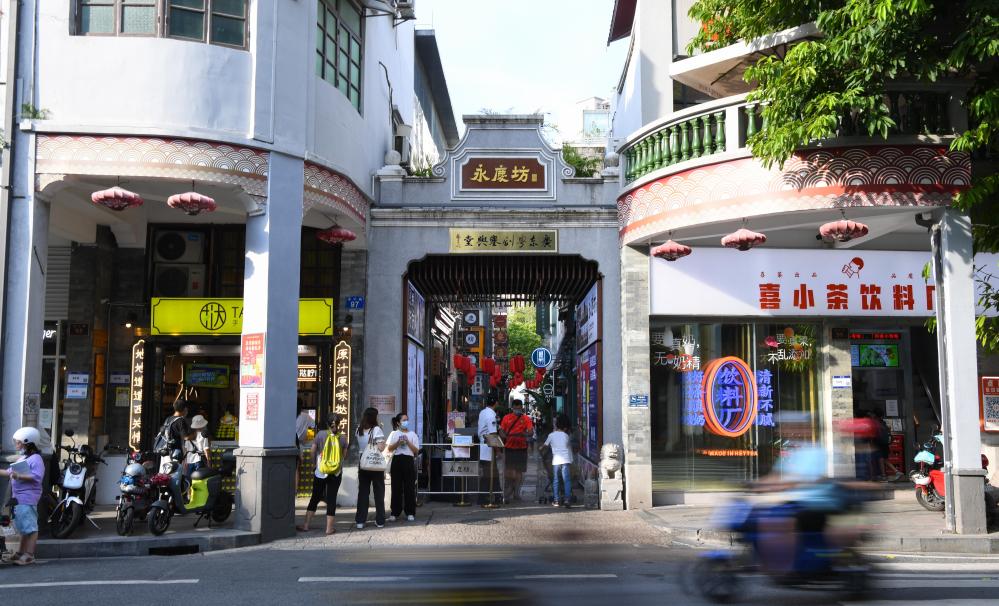
Core Viewpoint - The Greater Bay Area is showcasing its unique cultural and economic integration through various initiatives, emphasizing transportation, ecological connections, technological innovation, and cultural unity, as it prepares for the 15th National Games on November 9 [1]. Group 1: Cultural Heritage and Integration - The Greater Bay Area is characterized by its shared Lingnan cultural roots, with historical architecture and cultural landmarks reflecting its rich heritage [1]. - The area has preserved significant historical sites, such as the ancient buildings and streets in Guangzhou, which highlight its long-standing cultural legacy [4][7]. - The "micro-renovation" approach adopted in places like Yongqingfang has successfully blended historical preservation with modern functionality, enhancing the living environment while maintaining traditional aesthetics [5]. Group 2: Culinary and Artistic Connections - Cantonese cuisine serves as a cultural link among the people of the Greater Bay Area, with its rich flavors and historical significance contributing to cultural exchanges both domestically and internationally [9]. - Traditional performances, such as Cantonese opera and folk dances like Yingge, are vital components of the region's cultural identity, showcasing the area's artistic diversity and heritage [11][13]. Group 3: Educational and Collaborative Initiatives - Higher education institutions in the Greater Bay Area are actively promoting interdisciplinary collaboration, breaking down academic barriers to enhance educational quality and research capabilities [30]. - Cultural exchange initiatives, including joint performances and festivals, are fostering deeper connections among the three regions, enriching the cultural landscape of the Greater Bay Area [25][31]. Group 4: Cultural Infrastructure Development - The Baihetan Greater Bay Area Art Center has emerged as a significant cultural landmark, serving as a hub for artistic expression and cultural exchange since its opening in May 2024 [32]. - The center is rapidly becoming a popular destination, reflecting the vibrant cultural dynamics of the Greater Bay Area and its commitment to promoting local heritage [32].
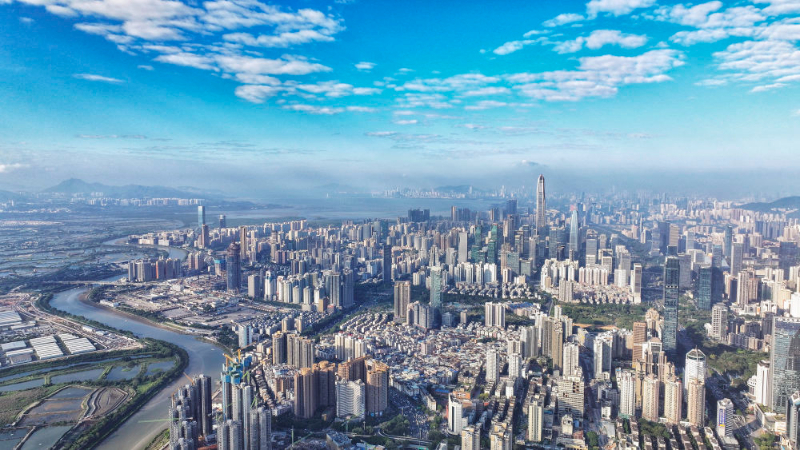
跟着总书记的考察足迹丨瞰广东
Xin Hua Wang· 2025-11-08 00:20
Core Points - Guangdong is recognized as a pioneer in China's economic reform and development, historically significant for its contributions to modernization and revolution [1] - The Guangdong-Hong Kong-Macao Greater Bay Area is advancing in integrated development, with Guangdong leading in various industries [1] Industry Overview - Guangdong has the largest scale in 15 industries, including electronic information manufacturing, automotive, and electrical machinery, ranking first nationwide [1] - The province is projected to become the first in China to exceed an economic total of 14 trillion yuan by 2024 [1] - Guangdong produces one out of every three industrial robots in China, highlighting its manufacturing strength [1]
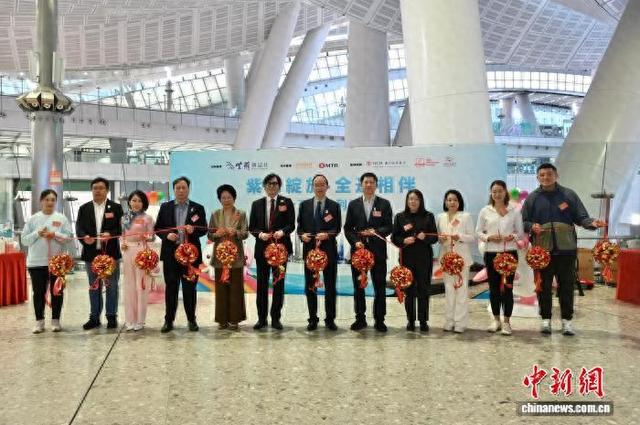
紫荆杂志社等机构在香港举办活动迎接十五运会
Zhong Guo Xin Wen Wang· 2025-11-07 13:43
Core Points - The 15th National Games series event "Bauhinia Blooming · Accompanying the National Games" was launched on November 7 in Hong Kong, supported by the Hong Kong Railway Company [1][3] - The event aims to promote national fitness, enhance integration within the Guangdong-Hong Kong-Macao Greater Bay Area, and foster national pride through diverse cultural promotion [3] Group 1 - The opening ceremony featured various performances, including a lion dance by children from Hong Kong Kai Man Kindergarten and a gymnastics display by students from Tai Po Baptist Public School [3] - The Hong Kong Railway Company has prepared extensively for the event, launching a "National Games Travel Package" and arranging over 50 service ambassadors to assist travelers [3] - Interactive activities at the event included experiences with the National Games mascot, drone football, fencing, and karate, allowing public participation [3]
广东公安以高水平安全护航高质量发展
Nan Fang Ri Bao Wang Luo Ban· 2025-11-07 08:19
Group 1 - The Guangdong Public Security Bureau is actively promoting the construction of the Guangdong-Hong Kong-Macao Greater Bay Area by enhancing cross-border services and creating a law-based business environment [1][2] - The bureau has implemented measures to combat corporate crime, including a crackdown on commercial secret violations, resulting in the arrest of 7 suspects and the recovery of over 100 million yuan in damages [2] - A comprehensive framework for protecting enterprises has been established, including the "Blue Sword" special action, which has led to the resolution of 926 infringement cases and the detention of 2039 individuals [2] Group 2 - The police forces of Guangdong, Hong Kong, and Macao have strengthened cooperation in intelligence sharing and joint law enforcement, enhancing security in the Greater Bay Area [3] - New policies, such as the temporary port visa service, have been introduced to facilitate foreign business operations, significantly improving the efficiency of visa processing for foreign entrepreneurs [4] - The introduction of a streamlined process for foreign talent to work in Guangdong has reduced the time required for obtaining work permits by over 50% [5] Group 3 - Cross-border transportation measures have been optimized, allowing for smoother movement of vehicles and goods between the regions, enhancing the daily lives of residents and businesses [6] - The launch of the "Guangdong-Hong Kong Automobile Export Fast Track" has significantly reduced the time and costs associated with exporting electric vehicles to Hong Kong, saving companies approximately 20 million yuan annually [7] - The overall high-level opening up of Guangdong has provided tangible economic benefits to enterprises, positioning the Public Security Bureau as both a protector of social safety and a builder of the business environment [7]
粤港澳火炬同心接力,十五运推动湾区融合“加速跑”
2 1 Shi Ji Jing Ji Bao Dao· 2025-11-06 09:55
Core Insights - The 15th National Games (referred to as the 15th Games) is serving as a catalyst for innovation in collaborative mechanisms among the Guangdong-Hong Kong-Macao Greater Bay Area, particularly in cross-border infrastructure, regulatory standards, emergency management, and public services [1][4][11] Group 1: Event Overview - The torch relay for the 15th Games took place simultaneously in four cities: Hong Kong, Macau, Guangzhou, and Shenzhen, symbolizing the spirit of sports and the integration of the Greater Bay Area [1][2] - The relay included significant landmarks in Macau, showcasing the region's unique cultural blend and historical significance [2][3] Group 2: Cross-Border Cooperation - The event has prompted improvements in cross-border logistics and customs processes, with the first batch of food supplies for athletes being successfully transported from Guangzhou to Macau under a closed-loop management system [4][5] - The introduction of "smart customs" measures at the Hengqin port has streamlined the process, allowing for facial recognition technology to replace traditional document checks, enhancing efficiency by at least 65% [6][7] Group 3: Infrastructure and Connectivity - The 15th Games has highlighted the need for enhanced cross-border infrastructure, with significant investments in transportation links such as the Hong Kong-Zhuhai-Macao Bridge facilitating seamless movement of people and goods [9][10] - The establishment of remote service counters in Macau allows residents to access various administrative services without crossing borders, further promoting integration [12] Group 4: Future Implications - The collaborative efforts during the 15th Games are expected to create favorable conditions for future integration within the Greater Bay Area, enhancing communication, regulatory alignment, and overall connectivity [11][12]