能源科技创新

Search documents
国家能源局:我国新型储能装机规模5年增长近30倍
Zhong Guo Xin Wen Wang· 2025-08-26 06:02
Core Viewpoint - The "14th Five-Year Plan" period has seen significant achievements in high-quality development within China's energy sector, driven by technological innovation and a focus on self-reliance in key energy technologies [1][2]. Group 1: Energy Self-Innovation - The capacity for energy self-innovation has been continuously enhanced, with breakthroughs in areas such as renewable energy generation, large-scale hydropower, advanced nuclear power, heavy-duty gas turbines, smart grids, and deep-sea oil and gas exploration [1]. - Major technological projects and energy engineering have been pivotal in accelerating the development of core technologies [1]. Group 2: Modernization of Energy Industry Chain - The modernization of the energy industry chain has been expedited through the establishment of "production, learning, research, and application" innovation platforms, facilitating the transition of prototypes from laboratories to market-ready products [2]. - A total of 236 first-of-a-kind projects have been certified, some of which are not only the first in China but also globally [2]. Group 3: Development of New Industries and Business Models - New industries and business models, such as energy storage and hydrogen energy, have flourished, with the installed capacity of new energy storage reaching approximately 95 million kilowatts, a nearly 30-fold increase over five years [2]. - By 2024, China's hydrogen production and consumption scale is expected to exceed 36 million tons, leading the world, with renewable energy-based hydrogen production capacity surpassing half of the global total [2]. - Artificial intelligence is increasingly empowering the energy sector, expanding applications in areas like renewable energy generation, grid inspection, and oil and gas resource discovery, showcasing significant potential for revitalizing the energy industry [2].
非凡“十四五”丨中国,成为世界能源转型重要推动者
Xin Hua She· 2025-08-26 05:26
Group 1 - The core viewpoint is that China's energy sector has achieved significant breakthroughs and historic accomplishments since the start of the 14th Five-Year Plan, with key indicators such as comprehensive energy production capacity and the proportion of non-fossil energy expected to be met on schedule [1] - China has constructed the world's largest and fastest-growing renewable energy system, with the share of renewable energy generation capacity increasing from 40% to approximately 60%, and one-third of the total electricity consumption being green electricity [3] - Cumulatively, China has reduced carbon emissions for other countries by about 4.1 billion tons [3] Group 2 - Energy technology innovation has made greater breakthroughs, with new energy patents accounting for over 40% of the global total, and new energy storage capacity ranking first in the world [6] - The development of smart microgrids and virtual power plants is accelerating, along with the large-scale application of vehicle-to-grid interaction [6] - Energy reform is deepening, with all industrial and commercial users entering the market, and the number of registered electricity market operators reaching 970,000, five times that of 2020 [8]

国家能源局:我国已建成完备的风电光伏全产业链研发设计和集成制造体系
Xin Hua Cai Jing· 2025-08-26 05:19
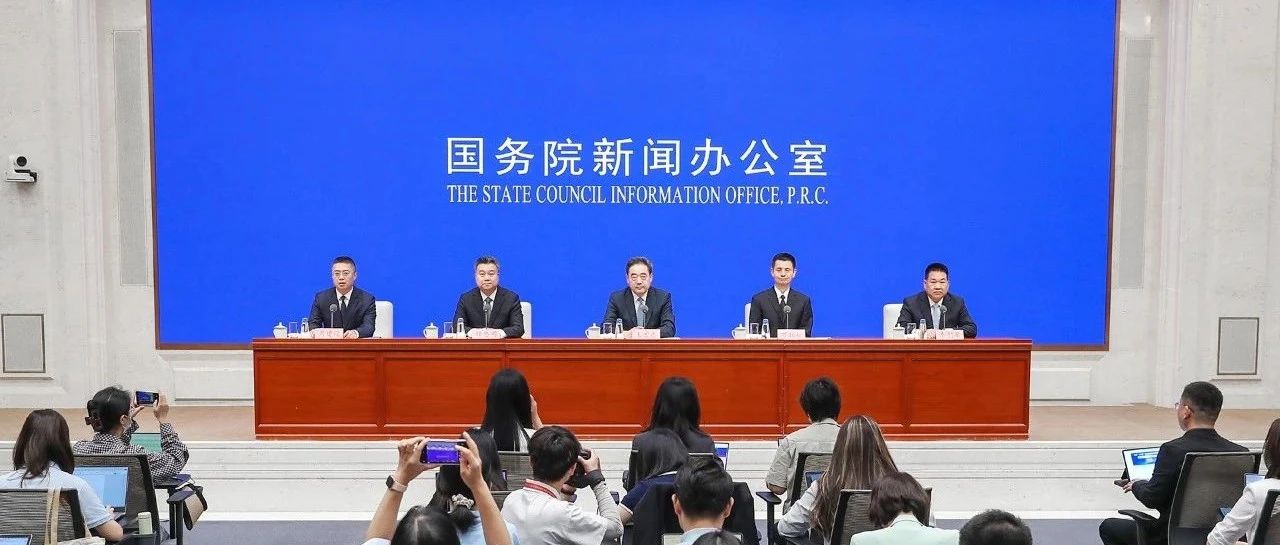
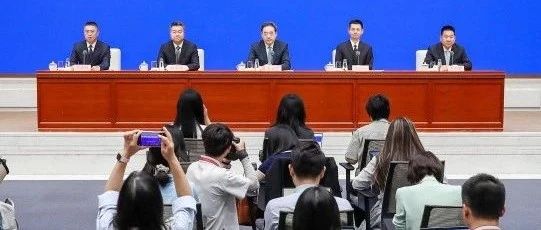
第三,能源新产业新模式新业态蓬勃发展。"十四五"期间,国家能源局统筹谋划新型储能、氢能等新兴 产业发展,促进产业创新生态和发展环境持续优化。截至今年上半年,我国新型储能装机规模约9500万 千瓦,5年增长了近30倍,相当于给新型电力系统配上了"巨型充电宝"。2024年,我国氢能生产消费规 模超过3600万吨,位列世界第一,其中可再生能源制氢的产能超过全球的一半。同时,人工智能也在深 度赋能能源领域,成为能源技术革命的"新引擎",在新能源发电、电网巡检作业、油气新资源发现等领 域不断拓展应用场景,展现出了巨大潜力。 (文章来源:新华财经) 新华财经北京8月26日电 国务院新闻办公室26日举行新闻发布会,介绍"十四五"时期能源高质量发展成 就。国家能源局副局长万劲松在会上表示,我国已建成完备的风电光伏全产业链研发设计和集成制造体 系,为世界能源转型作出中国贡献。 "十四五"时期,我国能源行业科技创新跑出了"加速度",取得了"新突破",实现了高质量发展。万劲松 表示,可以从三个角度来看"十四五"期间我国能源科技创新的成就。 第一,能源自主创新能力持续增强。以重大科技项目为牵引、重大能源工程为依托,加快推动关键核心 ...
我国已构建起全球最大、发展最快的可再生能源体系
Xin Hua Cai Jing· 2025-08-26 05:19
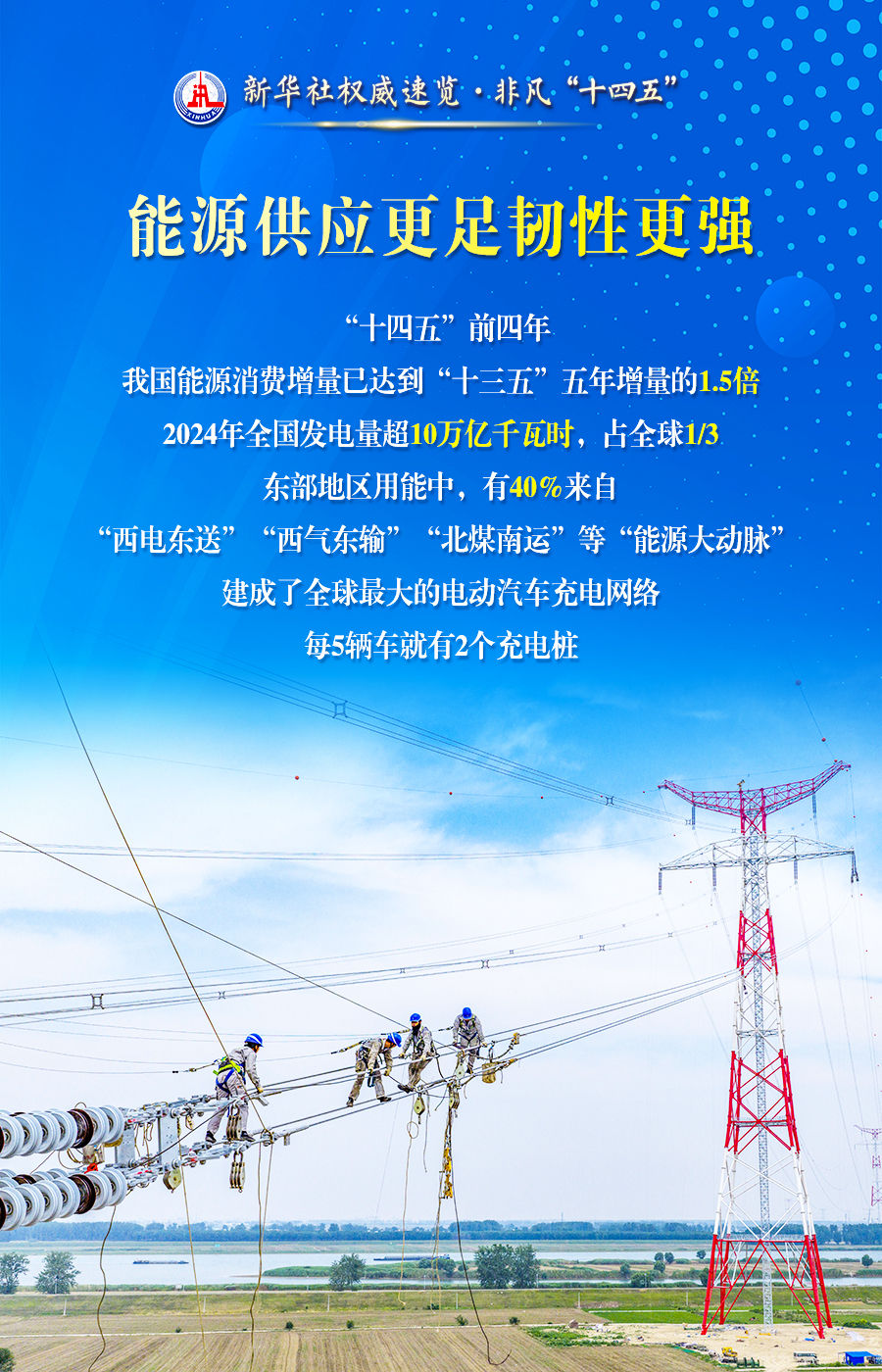
Core Viewpoint - China has established the world's largest and fastest-growing renewable energy system, achieving significant progress in energy development during the "14th Five-Year Plan" period [1][2]. Group 1: Energy Supply and Demand - During the first four years of the "14th Five-Year Plan," China's energy consumption growth reached 1.5 times that of the previous five years, with projected new electricity consumption exceeding the annual consumption of the EU [2]. - By 2024, China's total electricity generation is expected to surpass 10 trillion kilowatt-hours, accounting for one-third of global production, with total energy production equivalent to approximately 5 billion tons of standard coal, representing over one-fifth of global supply [2]. - Energy infrastructure has been optimized, with 40% of energy consumption in eastern regions sourced from major energy transmission projects [2]. Group 2: Green and Low-Carbon Transition - The share of renewable energy generation capacity increased from 40% to around 60% during the "14th Five-Year Plan," with annual additions of wind and solar capacity breaking records [3]. - One-third of electricity consumed is now green electricity, and the share of non-fossil energy in total energy consumption is expected to exceed the 20% target set for the period [3]. - China's exports of wind and solar products have contributed to a reduction of approximately 4.1 billion tons of carbon emissions in other countries [3]. Group 3: Technological Innovation - China leads globally in new energy technologies, holding over 40% of global renewable energy patents, with continuous improvements in solar conversion efficiency and offshore wind turbine capacity [4]. - Major projects such as the Baihetan Hydropower Station and advanced nuclear power plants have been completed, showcasing China's technological capabilities [4]. - New business models and applications, such as smart microgrids and virtual power plants, are rapidly developing, enhancing the integration of energy with other sectors [4]. Group 4: Energy Reform and Market Dynamics - The restructuring of energy policies and mechanisms has accelerated, with the establishment of a unified national electricity market and increased participation of private enterprises in the energy sector [5]. - The number of registered electricity market participants has reached 970,000, five times that of 2020, indicating a significant increase in market vitality [5]. - The energy sector has adapted to complex domestic and international conditions, ensuring energy security and contributing to global energy transition efforts [5].
高质量完成“十四五”规划系列主题新闻发布会丨介绍“十四五”时期能源高质量发展成就
国家能源局· 2025-08-26 04:41
Core Viewpoint - The article emphasizes the significant achievements and progress made in China's energy sector during the "14th Five-Year Plan" period, highlighting the country's commitment to energy security, green transformation, and technological innovation [6][10]. Group 1: Energy Supply and Resilience - During the "14th Five-Year Plan," China's energy consumption growth reached 1.5 times that of the previous five years, with an expected increase in electricity consumption exceeding the annual consumption of the EU [7]. - The total electricity generation in 2024 is projected to surpass 10 trillion kilowatt-hours, accounting for one-third of global production, with energy production equivalent to over 5 billion tons of standard coal, representing more than one-fifth of global supply [7]. - The establishment of the world's largest electric vehicle charging network, with two charging stations for every five electric vehicles, enhances consumer convenience [7]. Group 2: Green and Low-Carbon Transition - China has built the world's largest and fastest-growing renewable energy system, with the share of renewable energy generation capacity increasing from 40% to approximately 60% [8]. - The proportion of non-fossil energy in total energy consumption is expected to exceed the "14th Five-Year Plan" target of 20%, with coal's share decreasing by 1 percentage point annually [8]. - During this period, China's wind and solar products contributed to a reduction of approximately 4.1 billion tons of carbon emissions in other countries [8]. Group 3: Technological Innovation - China leads globally in renewable energy technology, with over 40% of global renewable energy patents and continuous improvements in solar conversion efficiency and offshore wind turbine capacity [9]. - Major projects such as the Baihetan Hydropower Station and the "Hualong One" nuclear reactor have been completed, showcasing China's technological capabilities [9]. Group 4: Energy Reform and Market Development - The construction of a unified national electricity market has accelerated, with significant progress in market rules and trading mechanisms [20][21]. - The total electricity traded in the market has increased from 10.7 trillion kilowatt-hours to 23.8 trillion kilowatt-hours, with market participants growing significantly [22]. - The energy investment during the "14th Five-Year Plan" has shown strong growth, with annual investments exceeding 4 trillion, 5 trillion, and 6 trillion yuan, accounting for nearly 10% of total fixed asset investment [36]. Group 5: Energy Cooperation and Global Engagement - China has strengthened energy cooperation under the "Belt and Road" initiative, signing agreements with over ten countries to enhance green energy development [40]. - The country has provided practical solutions for energy transition to over 100 countries, contributing to global energy governance [41]. Group 6: Addressing Energy Consumption and Sustainability - The rapid growth of new energy consumption, particularly from electric vehicles and digital industries, has led to a significant increase in electricity demand [26]. - The government is promoting charging infrastructure and green electricity services to support the transition to electric vehicles [27]. Group 7: Future Directions and Goals - The next steps include enhancing energy supply structures, promoting clean energy consumption, and achieving carbon peak and neutrality goals by 2030 [57][58]. - The focus will be on optimizing energy systems to accommodate the growing share of renewable energy and addressing challenges related to energy consumption and sustainability [61][66].
国家能源局:新型储能规模跃居世界第一!智能微电网/虚拟电厂/车网互动规模化应用试点加快推进
中关村储能产业技术联盟· 2025-08-26 03:58
Core Viewpoint - The "14th Five-Year Plan" period marks significant achievements in energy development, focusing on high-quality growth, technological innovation, and the transition to a green and low-carbon energy system [4][11][15]. Group 1: Energy Supply and Demand - During the "14th Five-Year Plan," China's energy consumption growth reached 1.5 times that of the previous five years, with projected new electricity consumption exceeding the annual consumption of the EU [12]. - The total electricity generation in 2024 is expected to surpass 10 trillion kilowatt-hours, accounting for one-third of global production [12]. - The energy supply system has been optimized, with a robust infrastructure network supporting energy distribution across regions [12][13]. Group 2: Green and Low-Carbon Transition - The share of renewable energy in total installed capacity increased from 40% to approximately 60%, with annual additions of wind and solar capacity breaking records [14]. - Non-fossil energy consumption is projected to exceed the "14th Five-Year Plan" target of 20%, with coal's share decreasing by 1 percentage point annually [14]. - China's exports of wind and solar products during this period contributed to a reduction of approximately 4.1 billion tons of carbon emissions in other countries [14]. Group 3: Technological Innovation - The period has seen breakthroughs in energy technology, with China leading in renewable energy patents, accounting for over 40% of global patents [4][15]. - New energy storage capacity has grown nearly 30 times, with installed capacity reaching approximately 95 million kilowatts [5][39]. - The development of smart microgrids and virtual power plants has accelerated, integrating energy with industrial and transportation sectors [5][15]. Group 4: Energy Market Reform - The establishment of a unified national electricity market has progressed, with market transaction volumes increasing from 10.7 trillion kilowatt-hours to 23.8 trillion kilowatt-hours [5][22]. - The number of registered market participants has surged to 970,000, five times that of 2020, indicating a vibrant market environment [16]. - The participation of private enterprises in the energy sector has increased significantly, with over 85% of power facility construction involving private companies [31][32]. Group 5: Investment Trends - Energy investment has shown robust growth, with annual investments exceeding 6 trillion yuan, accounting for nearly 10% of total fixed asset investment [30]. - Renewable energy projects accounted for over 80% of power investment in 2024, highlighting a shift towards sustainable energy sources [31]. - Investment in new energy sectors such as hydrogen and energy storage is becoming a new growth point, with nearly 200 billion yuan allocated in 2024 [5][31]. Group 6: International Cooperation - China has strengthened energy cooperation under the Belt and Road Initiative, signing agreements with over 10 countries to enhance green energy development [33][34]. - Collaborative projects in renewable energy have significantly reduced the cost of wind and solar power globally, contributing to a more sustainable energy landscape [34]. - China is actively participating in global energy governance, focusing on energy security, transition, and climate change [35].
截至上半年我国新型储能装机规模约9500万千瓦 5年增长将近30倍
Yang Shi Wang· 2025-08-26 03:39
Core Viewpoint - The news highlights the achievements of China's energy sector during the "14th Five-Year Plan" period, emphasizing technological innovation and high-quality development in energy production and management [1][2]. Group 1: Energy Technological Innovation - The National Energy Administration (NEA) has accelerated technological innovation in the energy sector, achieving breakthroughs in key areas such as renewable energy generation, advanced nuclear power, and smart grids [1]. - Major projects like the Baihetan Hydropower Station and the Shidaowan High-Temperature Gas-Cooled Reactor have been completed, enhancing energy security and supporting energy transition [1]. Group 2: Modernization of Energy Industry Chain - The NEA is advancing the modernization of the energy industry chain by establishing innovation platforms and promoting the application of major technological equipment, resulting in 236 certified first-of-a-kind projects [2]. - China's comprehensive wind and solar energy industry chain has been developed, contributing high-quality renewable energy products to the global market [2]. Group 3: Development of New Energy Industries - The NEA is fostering the growth of new energy industries such as energy storage and hydrogen energy, with the installed capacity of new energy storage reaching approximately 95 million kilowatts, a nearly 30-fold increase over five years [2]. - By 2024, China's hydrogen production and consumption scale is expected to exceed 36 million tons, leading the world, with renewable energy-based hydrogen production capacity surpassing half of the global total [2]. - Artificial intelligence is increasingly being integrated into the energy sector, enhancing applications in renewable energy generation and resource exploration, thereby revitalizing the industry [2].
我国建成全球门类最全规模最大的能源体系
Zhong Guo Dian Li Bao· 2025-08-26 02:42
Core Viewpoint - The "14th Five-Year Plan" period has seen significant advancements in China's energy sector, achieving historical milestones and ensuring the completion of key energy indicators as outlined in the plan [1] Group 1: Energy Supply and Demand - During the first four years of the "14th Five-Year Plan," China's energy consumption increase reached 1.5 times that of the entire "13th Five-Year Plan" period, with projected new electricity consumption exceeding the annual consumption of the EU [2] - By 2024, national electricity generation is expected to surpass 10 trillion kilowatt-hours, accounting for one-third of global production, with total energy production equivalent to approximately 5 billion tons of standard coal, representing over one-fifth of global supply [2] - The energy infrastructure network has been optimized, enhancing resource allocation across regions and supporting economic development, particularly in the central and western regions [2] Group 2: Green and Low-Carbon Transition - China has established the world's largest and fastest-growing renewable energy system, with the share of renewable energy generation capacity increasing from 40% to around 60% [3] - The annual installed capacity for wind and solar power has consistently surpassed 100 million and 200 million kilowatts, respectively, marking unprecedented growth [3] - Non-fossil energy's share in total energy consumption is projected to exceed the "14th Five-Year Plan" target of 20%, while coal's share decreases by 1 percentage point annually, enhancing the "green content" of economic development [3] Group 3: Technological Innovation - China leads globally in new energy technologies, with over 40% of global renewable energy patents and continuous improvements in solar conversion efficiency and offshore wind turbine capacity [4] - Major projects such as the Baihetan Hydropower Station and the "Hualong One" nuclear reactor have been completed, showcasing China's technological capabilities [4] - New business models and applications, such as smart microgrids and virtual power plants, are rapidly developing, driving integration across energy, industry, and transportation sectors [4] Group 4: Energy Reform and Market Dynamics - The restructuring of energy systems and policies has accelerated, with the establishment of a unified national electricity market and the entry of all commercial users into the market [5] - The number of registered electricity market participants has reached 970,000, five times that of 2020, indicating a significant release of market vitality [5] - Private enterprises have become key players in the energy transition, with a substantial portion of solar and wind power manufacturing being driven by private companies [5]
赵刚会见冯来法一行
Shan Xi Ri Bao· 2025-08-06 00:45
Core Viewpoint - The meeting between the provincial governor Zhao Gang and the general manager of the National Energy Group, Feng Laifa, focused on enhancing strategic cooperation in energy and chemical projects in Shaanxi province [1] Group 1: Strategic Cooperation - The discussions emphasized increasing strategic layout in Shaanxi province [1] - There is a commitment to accelerate the construction of major energy and chemical projects [1] - The collaboration aims to promote stable coal production and increase output [1] Group 2: Innovation and Resource Allocation - The meeting highlighted the importance of energy technology innovation [1] - There is a focus on optimizing the allocation of electric power resources [1]
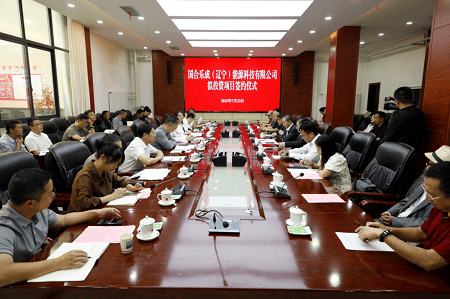
国合乐成(辽宁)拟投资项目签约仪式在贵州省毕节市大方县政府成功举行
Sou Hu Cai Jing· 2025-07-24 05:59
Core Viewpoint - The signing ceremony for the investment project by Guohe Success (Liaoning) Energy Technology Co., Ltd. in Dafang County, Guizhou, marks a significant step towards enhancing local economic development through a focus on renewable energy and technological innovation [1][3]. Group 1: Project Overview - The project aims to develop and utilize renewable energy, focusing on energy technology innovation, leveraging Dafang County's resource advantages and location [3]. - The comprehensive project will integrate green energy production, technology transformation, and industrial chain extension, expected to boost local employment and optimize the industrial structure [3]. Group 2: Stakeholder Involvement - Key figures at the signing ceremony included Guohe Success Chairman Guo Yanbin, Dafang County leaders, and representatives from Guizhou Lingyu Agricultural Technology Development Group [1][6]. - The ceremony was hosted by Dafang County's Deputy Secretary and Mayor Ren Jinfeng, who welcomed the attendees and highlighted the significance of the project [3]. Group 3: Commitment and Future Plans - Guo Yanbin emphasized the company's confidence in the partnership due to Dafang County's favorable business environment and resource availability, committing to high standards in project planning and execution [8]. - Mayor Ren concluded by celebrating the signing as a key achievement in attracting investment, promising full support from the county government to ensure the project's success and integration into local development strategies [9].