
劳动力市场

Search documents
罕见鸽声!美联储主席候选人沃勒:7月应降息以支持劳动力市场
智通财经网· 2025-07-18 00:47
Group 1 - Federal Reserve Governor Waller advocates for a 25 basis point rate cut to support a weakening labor market, contrasting with most policymakers who believe employment remains strong [1][2] - Waller emphasizes that inflation is close to the target level of 2%, suggesting that the risks of rising inflation are limited, and that policy should focus on potential inflation rather than tariff impacts [1][2] - The overall inflation rate in the U.S. showed lower-than-expected growth in June, marking the fifth consecutive month of such trends, although recent tariffs have begun to affect prices of certain goods [1] Group 2 - Waller notes that inflation expectations remain stable and wage growth has not accelerated, which alleviates concerns about persistent inflation [2] - The risk of a weakening job market has increased significantly, prompting the need for a rate cut, despite the economy still growing, albeit at a slower pace [2] - Other policymakers express concerns about tariffs impacting inflation and prefer to delay rate cuts, indicating a divergence in views within the Federal Reserve [2]
美联储理事沃勒:美联储不应等到劳动力市场出现问题再采取降息措施。
news flash· 2025-07-17 22:44
Core Viewpoint - The Federal Reserve should not wait for issues in the labor market to implement interest rate cuts [1] Group 1 - Federal Reserve Governor Waller emphasizes the importance of proactive measures in monetary policy [1] - Waller suggests that timely interest rate adjustments can help mitigate potential economic downturns [1] - The statement reflects a broader strategy to maintain economic stability rather than reactive measures [1]
美联储理事沃勒:越来越多的证据显示劳动力市场正在走弱。
news flash· 2025-07-17 22:35
Core Viewpoint - Increasing evidence suggests that the labor market is weakening, as indicated by Federal Reserve Governor Waller [1] Group 1 - The labor market is showing signs of deterioration, which may impact economic growth [1]
美联储戴利:不希望劳动力市场出现更多疲软。
news flash· 2025-07-17 17:04
Core Viewpoint - The Federal Reserve's Daly expressed concerns about the labor market and emphasized the desire to avoid further weakness in this area [1] Group 1 - Daly's comments indicate a cautious approach towards the current state of the labor market, highlighting the importance of maintaining its strength [1] - The Federal Reserve is closely monitoring economic indicators to ensure that the labor market does not deteriorate further [1]
美联储戴利:经济实现了稳健增长,劳动力市场表现强劲。仍令人担忧的是,尚未实现价格稳定。
news flash· 2025-07-17 16:51
Core Insights - The Federal Reserve's Daly highlighted that the economy has achieved robust growth and the labor market remains strong, but concerns persist regarding the lack of price stability [1] Economic Performance - The economy is experiencing steady growth, indicating positive trends in various sectors [1] - The labor market is performing strongly, suggesting low unemployment rates and high job creation [1] Price Stability Concerns - Despite the positive economic indicators, there are ongoing worries about achieving price stability, which could impact inflation and monetary policy decisions [1]
英国央行货币政策委员曼恩:委员会对需求状况的实际状态以及其在劳动力市场中的表现存在不同看法。
news flash· 2025-07-16 16:57
英国央行货币政策委员曼恩:委员会对需求状况的实际状态以及其在劳动力市场中的表现存在不同看 法。 ...
英国劳动力市场6月报告:就业率、失业率双升
Xin Hua Cai Jing· 2025-07-16 08:39
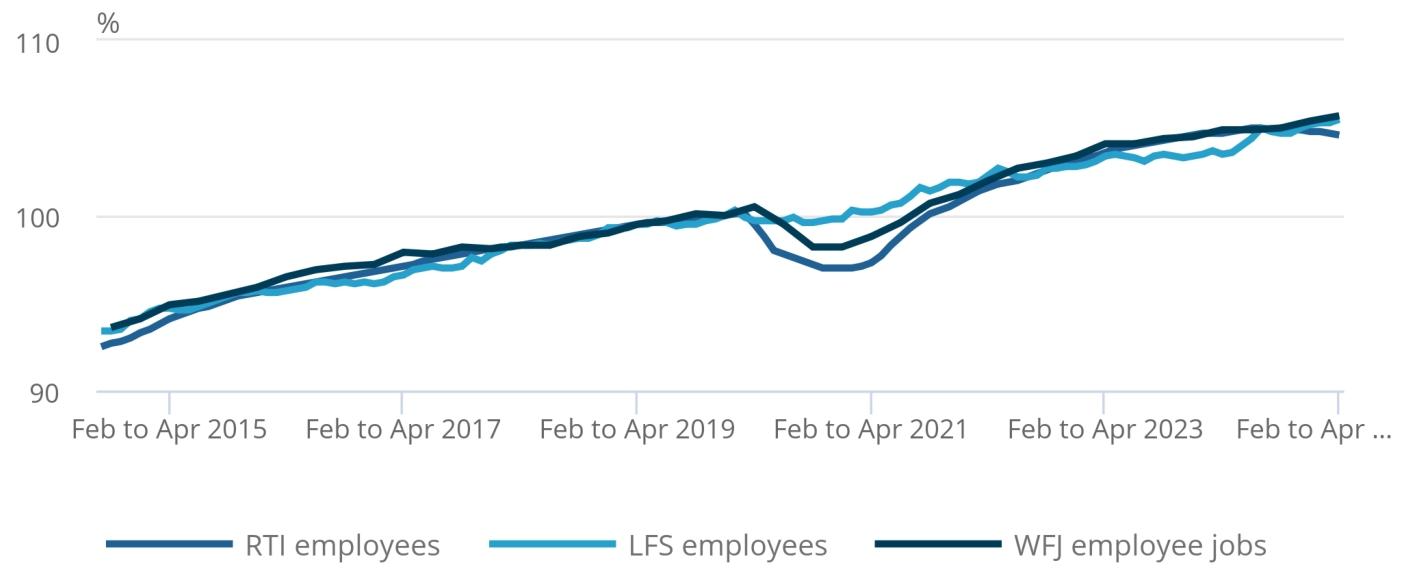
Employment Market Overview - The employment rate for individuals aged 16-64 in the UK rose to 75.1% from February to April 2025, indicating a positive aspect of the job market [1] - However, the number of salaried employees decreased by 55,000 (0.2%) in March-April 2025 and by 115,000 (0.4%) from April 2024 to April 2025, suggesting a cautious hiring strategy among UK businesses [1][3] Public vs. Private Sector Employment - Public sector employment remained stable at 6.15 million in March 2025, with a year-on-year growth of 0.6%, while private sector employment growth faced different challenges [3] - This disparity provides insights for investors, indicating that stable public sector-related industries may offer defensive investment opportunities, while emerging sectors in the private sector also hold potential [3] Unemployment and Economic Inactivity - The unemployment rate for individuals aged 16 and above reached 4.6% from February to April 2025, showing an increase both year-on-year and quarter-on-quarter, which raises concerns about economic growth [3] - The economic inactivity rate for those aged 16-64 decreased to 21.3%, but a significant portion is attributed to long-term illness and students, highlighting structural issues in the labor market [3] Wage Growth and Job Vacancies - Average wage growth for employees was notable, with regular wages increasing by 5.2% and total wages by 5.3% from February to April 2025, leading to improved consumer purchasing power [4] - Job vacancies fell to 736,000 from March to May 2025, marking a continuous decline over 35 quarters, indicating weakened labor demand and cautious investment in labor-intensive sectors [4] Consumer Sector Opportunities - With rising wages, the consumer sector is expected to experience growth, particularly in mid-to-high-end consumption areas such as premium retail, quality dining, and personalized travel services [5] - UK high-end fashion brands may benefit from increased disposable income, leading to higher sales, while specialty tourism projects and luxury hotels are also likely to gain from the consumption upgrade trend [5] Healthcare Sector Investment Potential - The high proportion of long-term illness in the economically inactive population underscores pressure on the UK healthcare system, presenting investment opportunities in medical device development and biopharmaceuticals focused on chronic disease treatment [6] Education and Training Sector Growth - The shortage of skilled labor in the UK is driving demand for education and training, particularly in vocational skills training and online education platforms, which are poised for significant growth [7] Human Resources Services Demand - Despite an overall decline in job vacancies, there remains a strong demand for high-end and specialized talent recruitment, suggesting that human resources service firms focusing on high-end talent acquisition may thrive [8]

美联储洛根:通胀趋缓、劳动力市场疲软可能会促使利率“相当快”地下降。
news flash· 2025-07-15 23:57
美联储洛根:通胀趋缓、劳动力市场疲软可能会促使利率"相当快"地下降。 ...
加薪+工时增长双驱动,加拿大6月劳动力市场释放强劲动能
Xin Hua Cai Jing· 2025-07-11 13:54
Core Insights - The Canadian labor market showed positive changes in June 2025, with employment increasing by 83,000 (+0.4%), leading to an employment rate of 60.9% and a decrease in the unemployment rate to 6.9% [1] - The growth in employment was primarily driven by the core age group of 25-54 years, with male employment rising by 62,000 (+0.8%) and female employment by 29,000 (+0.4%) [1] - The youth and 55+ age groups showed little change in employment, indicating stable employment willingness and market demand in these demographics [1] Industry Analysis - The wholesale and retail sector saw a significant increase in employment by 34,000 (+1.1%), reflecting a vibrant consumer market and strong growth potential for related companies [2] - The healthcare and social assistance sector added 17,000 jobs (+0.6%), driven by aging population trends and increased health awareness, indicating long-term investment potential [2] - Conversely, agricultural employment decreased by 6,000 (-2.6%), suggesting potential challenges in the sector that investors should monitor [2] Regional Employment Trends - Employment growth was uneven across regions, with Alberta leading with an increase of 30,000 jobs (+1.2%), followed by Quebec (+23,000, +0.5%), Ontario (+21,000, +0.3%), and Manitoba (+8,500, +1.2%) [2] - The employment growth in these provinces is expected to boost local economic activity, consumption, and investment opportunities [2] Wage and Hour Trends - Total hours worked in June increased by 0.5%, with a year-on-year growth of 1.6%, indicating rising production demand and active business operations [3] - The average hourly wage rose by 3.2% to CAD 36.01, enhancing consumer purchasing power and reflecting a balanced labor supply-demand relationship [3] - Compared to the U.S., Canada has a higher employment rate, suggesting a more favorable environment for labor market participation, which could attract international investment [3]