
政策风险

Search documents
全球投资的风险有哪些?|投资小知识
银行螺丝钉· 2026-03-01 13:54
Group 1 - The article discusses the necessity for companies to utilize their foreign exchange quotas to convert RMB into USD for purchasing US stock funds, highlighting potential limitations due to fund company quotas [3] - Interest rate risk is defined as the impact of fluctuations in financial market interest rates on asset returns, with a notable quote from Buffett comparing interest rates to gravity. Rising interest rates typically indicate a bear market for bonds, while falling rates suggest a bull market [4] - Currency risk is addressed, emphasizing the unpredictability of exchange rate movements and their potential impact on investment returns, particularly when converting RMB to foreign currencies [6] Group 2 - Policy risk is described as a more extreme form of risk, where foreign governments may impose restrictions on capital inflows, exemplified by the limitations faced by overseas investors during the Asian financial crisis in the 1990s [7]


国债与企业债的风险有什么不同?
Sou Hu Cai Jing· 2026-02-24 05:50
Group 1 - The core distinction between government bonds and corporate bonds lies in credit risk, with government bonds backed by national credit and having a very low default risk due to strict issuance and repayment mechanisms established by financial market regulations revised in 2025 [1] - Corporate bonds, on the other hand, are subject to the financial health and operational stability of the issuing companies, which can lead to default risk if companies face declining profitability or excessive debt burdens [1] - Interest rate risk affects both types of bonds, but government bonds typically exhibit less price volatility compared to corporate bonds due to their higher credit ratings and more rigid market demand [1] Group 2 - Government bonds demonstrate superior liquidity, being actively traded in the open market with a diverse range of participants, allowing for quick transactions at reasonable prices [2] - In contrast, corporate bonds' liquidity is influenced by factors such as issuance scale and credit ratings, with smaller issuers potentially facing higher transaction costs or difficulties in executing trades [2] - The repayment risk at maturity is significantly lower for government bonds, as their repayment is secured by stable fiscal revenues, whereas corporate bonds depend on the issuing company's cash flow, which can lead to potential payment failures [2] Group 3 - Policy risk impacts government and corporate bonds differently, with government bonds being less affected by macroeconomic policy adjustments aimed at market stability, while corporate bonds may be influenced by specific industry or tax policies that could affect the issuer's performance [2]
国债和企业债的风险差异有哪些?
Sou Hu Cai Jing· 2026-02-19 12:46
Group 1 - The core difference between government bonds and corporate bonds lies in credit risk, with government bonds backed by national credit and having a very low default risk, while corporate bonds depend on the issuer's financial health and can face higher default probabilities, especially for lower-rated bonds [1] - Government bonds have a strong repayment guarantee as their repayment is included in the annual fiscal budget, while corporate bonds are subject to market fluctuations and operational risks [1] Group 2 - Interest rate risk affects both types of bonds, but government bonds are more sensitive due to their longer durations, while corporate bonds also face credit spread changes that can amplify price declines during market downturns [2] - Both bond types are vulnerable to inflation, but corporate bonds may have an advantage if issuers can adjust prices or optimize costs, thus maintaining more stable real returns compared to long-term government bonds [2] Group 3 - Liquidity risk varies significantly, with government bonds being highly liquid and easily tradable, while corporate bonds' liquidity depends on the issuer's size and credit rating, with smaller or lower-rated issuers facing potential liquidity issues [3] - High-rated corporate bonds from large state-owned enterprises tend to have better liquidity compared to those from smaller or lower-rated companies [3] Group 4 - Policy risk impacts government and corporate bonds differently, with government bonds influenced by macroeconomic fiscal and monetary policies, while corporate bonds are more susceptible to industry-specific regulations and policies that can directly affect their credit status [4] - Changes in fiscal policy and central bank operations generally do not pose substantial risks to government bond principal, whereas corporate bonds can be significantly affected by industry regulations that may increase financing costs or disrupt cash flows [4]
蓝帽子股价下跌7.45%,科技板块承压及基本面疲软是主因
Jing Ji Guan Cha Wang· 2026-02-12 22:55
Core Viewpoint - Blue Hat's stock price dropped by 7.45% on February 12, closing at $0.56, with an intraday volatility of 11.64% [1] Industry Sector Situation - The Nasdaq index fell by 1.66%, and the digital entertainment sector declined by 2.73%. Increased market risk aversion led to capital outflows from small-cap tech stocks, making illiquid companies more vulnerable to shocks [2] Company Fundamentals - Blue Hat has a negative price-to-earnings ratio, indicating unstable profitability. The trading volume on that day was only $36,200, with a turnover rate of 0.17%, significantly below recent activity levels. Low liquidity amplified the impact of small sell orders on the stock price [3] Stock Price Situation - As of February 12, Blue Hat has declined by 52.15% year-to-date, with a 21.82% drop over the last five trading days. The company has not disclosed any business developments or positive news recently, making it difficult for market confidence to recover in the absence of catalysts [4] Policy and Regulation - On the same day, a new regulation on the Xiaohongshu platform prohibited the promotion of "Blue Hat" health products. Although this is not directly related to the company's business, the name coincidence may raise investor concerns about policy risks for small tech stocks, exacerbating selling sentiment [5]
金荣中国:黄金继续保持看涨上行
Sou Hu Cai Jing· 2026-01-28 04:00
Group 1 - The international gold market is experiencing a slight weakening due to profit-taking and a stabilizing US dollar index, which limits the upward movement of gold prices [1] - The upcoming Federal Reserve decision is expected to maintain interest rates, further diminishing the appeal for gold bulls [1] - Despite potential hawkish comments from Fed Chair Powell, it is unlikely to reverse the current gold price trend, as multiple supportive factors for gold remain in play [3] Group 2 - The long-term outlook for gold remains bullish, driven by geopolitical risks, economic policy uncertainties, and institutional optimism, with expectations of gold prices reaching $5,500 in the short term and potentially $6,000 [3] - There is a possibility of gold prices touching $10,000 before 2030, indicating a strong long-term bullish sentiment [3] - Technical analysis shows that gold prices are currently strong, operating above the upper Bollinger Band, with support levels providing potential re-entry opportunities for bullish positions [3]

中金 | 选举的另一面:行政干预、资本让利与政策风险
Sou Hu Cai Jing· 2026-01-20 23:57
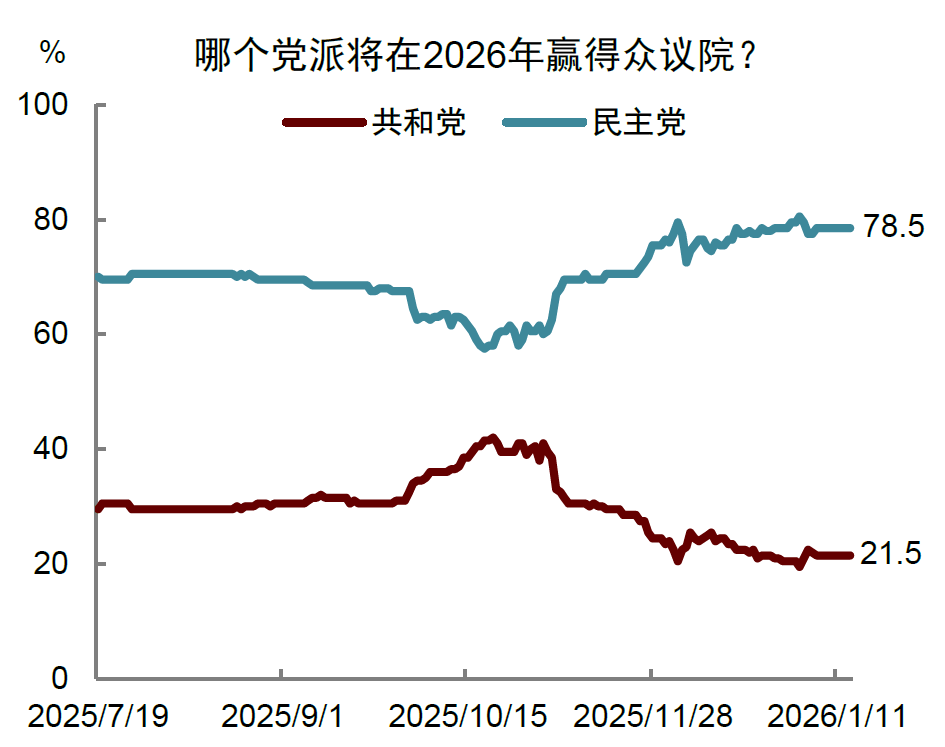
Core Insights - The 2026 midterm elections are crucial for Trump and the Republican Party, with a focus on affordability issues due to high prices, interest rates, and housing costs [1][3][5] - Voter sentiment is shifting towards immediate economic pressures rather than traditional growth metrics, indicating a need for policy responses that address affordability [2][5] Economic Context - High inflation has persistently affected low- and middle-income households, particularly in housing, where affordability has significantly declined since 2022 [1][10] - The rising mortgage rates, which increased from approximately 3% in 2021 to around 6% currently, have exacerbated housing affordability issues [10][14] - Consumer debt pressures are also rising, with significant increases in overdue payments on credit cards, auto loans, and student loans [11][15] Policy Implications - As affordability becomes a central policy goal, there is a shift towards more direct interventions in pricing, interest rates, and corporate behavior [20][21] - Recent actions by Trump include proposals to limit credit card interest rates to 10% and push for legislative measures to prevent large institutional investors from buying single-family homes [21][22] - The administration's focus on affordability may lead to more aggressive policies that could disrupt markets, as seen in historical precedents [29][27] Market Reactions - The market's perception of election-year policies is cautious, with concerns that aggressive affordability measures could lead to volatility in asset prices [2][29] - Sectors with strong pricing power and high profit margins may face increased policy risks as the narrative shifts towards wealth redistribution [29][30] - Conversely, cost-benefit industries may become more favorable for investment as they align with the affordability focus [30]
中金 | 选举的另一面:行政干预、资本让利与政策风险
中金点睛· 2026-01-20 23:37
Core Viewpoint - The 2026 midterm elections are crucial for Trump and the Republican Party, with affordability becoming the central issue for voters, overshadowing traditional economic growth metrics [2][5][7]. Group 1: Political Context - The Republican Party holds a slim majority in the House of Representatives, and losing it could lead to a divided government, limiting Trump's ability to implement policies [5][6]. - Historical trends indicate that the party of the sitting president often loses seats in midterm elections, increasing the risk of impeachment for Trump if the Republicans fail [6][7]. Group 2: Affordability Crisis - High inflation has significantly impacted middle and low-income households, particularly in housing, where affordability has sharply declined since 2022 [2][12]. - The median income required to afford a typical home has increased by 43% compared to the median household income, exacerbated by rising mortgage rates [12][14]. - The burden of debt repayment is rising, with delinquency rates on credit cards and loans nearing previous highs, indicating increased financial stress among households [13][18]. Group 3: Policy Implications - As affordability becomes a primary goal, policy measures may shift towards more direct interventions in pricing and corporate behavior, moving away from traditional macroeconomic policies [3][22]. - Recent actions by Trump include proposals to limit credit card interest rates and push for legislative changes in housing, reflecting a focus on alleviating cost pressures for voters [24][25]. Group 4: Market Impact - The focus on affordability may limit the expansion of index valuations and increase market volatility, as the government prioritizes voter concerns over asset price growth [32]. - Sectors with strong pricing power and high profit margins may face increased policy risks, while cost-benefit industries could become more favorable for investment [32][33]. - Historical examples suggest that aggressive policy interventions can lead to market disruptions, as seen in the 1970s, raising caution among investors regarding potential policy risks [30][31].
农用化学品市场喜忧参半
Zhong Guo Hua Gong Bao· 2026-01-20 02:56
Core Viewpoint - The global agricultural chemicals market is expected to face mixed prospects in 2026 due to resilient recovery and policy uncertainties, with cautious optimism from pesticide and fertilizer companies despite challenges [1] Market Overview - The global agricultural chemicals market is projected to reach $77.7 billion in 2026, a 2.7% increase from $75.7 billion in 2025, marking a significant recovery from the 0.3% growth rate of 2024-2025 [2] - The global seed market is also expected to grow by 2.3% during the same period, providing a boost to agricultural companies that have faced prolonged downturns [2] Industry Challenges - U.S. agricultural profits are expected to decline, with net income projected to drop from $177 billion in 2025 to $148 billion in 2026, influenced by falling crop prices and rising core costs such as fertilizers and labor [1] - Policy risks, particularly related to tariff uncertainties from the Trump administration, continue to create volatility for farmers and suppliers, expected to persist into 2026 [2] Positive Factors - Demand for grains, oilseeds, meat, and biofuels is anticipated to remain historically high, supporting stable demand from farmers who will prioritize high-tech products to maximize yields [3] - The fertilizer market shows a positive outlook, with the removal of import tariffs providing some relief, although supply shortages are expected to keep prices elevated [3] Overall Outlook - Despite facing policy uncertainties and high costs, industry leaders maintain a cautiously optimistic view for the agricultural chemicals market in 2026, driven by stable agricultural demand and a gradual recovery in input markets [4]
世界黄金协会:2025年12月贵金属大涨但走势分化 白银铂金的变动显示出政策驱动型特征 黄金温和上行
Zhi Tong Cai Jing· 2026-01-15 13:29
Core Insights - The World Gold Council reported that precious metals experienced significant price increases in December, with a notable divergence in trends among different metals, indicating a policy-driven characteristic for silver and platinum, while gold showed a moderate upward movement [1] Group 1: Price Movements - Precious metal prices surged, achieving the highest year-on-year returns in 45 years [1] - The final wave of this price increase was particularly influenced by policy factors and short-term market supply tightening for metals other than gold [1] - December's price trends highlighted the internal divergence within precious metals, with physical supply constraints and policy distortions driving up silver and platinum prices [1] Group 2: Future Outlook - As the distorting factors dissipate, gold's resilience, shaped by macroeconomic concerns and structural demand, is likely to become more pronounced [1] - Future trends for gold will be influenced by policy risks, inflation expectations, and investor positioning [1] - The World Gold Council noted that global geopolitical events have benefited gold, and there are currently no signs indicating a change in this trend [1]
分析师:美元兑日元强势反映市场信心转移而非短期反弹
Xin Lang Cai Jing· 2026-01-14 07:37
Core Viewpoint - The current strength of the USD/JPY exchange rate reflects a shift in market confidence rather than a short-term rebound [1][2] Group 1: USD/JPY Exchange Rate Dynamics - The USD/JPY spot exchange rate recently broke a 52-week high, reaching 159.3 [1][2] - The dollar is favored due to the resilience of the U.S. economy, with traders viewing the Federal Reserve as a credible central bank capable of maintaining restrictive monetary policy when necessary [1][2] - The yen remains under pressure from growth concerns, as investors perceive the Bank of Japan's normalization policy as "slow and cautious" [1][2] Group 2: Future Outlook and Risks - Despite the potential for the currency pair to trend higher, there is an increase in policy risks [1][2] - If the yen weakens further, Tokyo authorities may intervene in the currency market [1][2] - The latest increase in the USD/JPY exchange rate is 0.1%, bringing it to 159.29 [1][2]