东数西算

Search documents
中国城市数字经济呈现“极核引领,梯队分化”特征
Zhong Guo Fa Zhan Wang· 2025-09-30 08:54
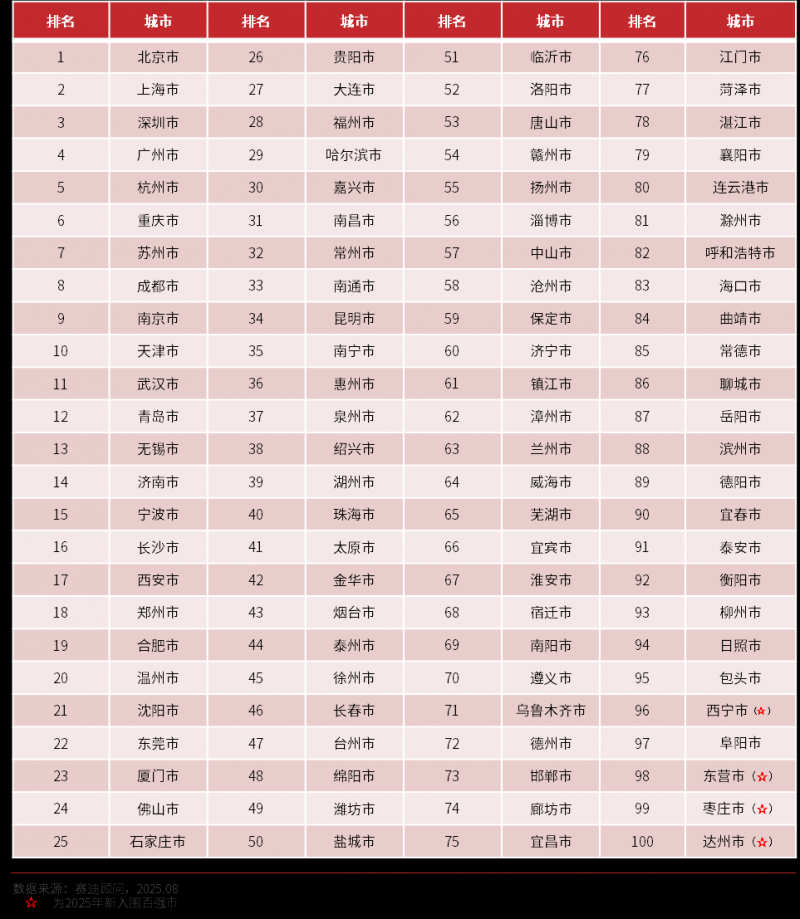
Core Insights - The construction of digital cities in China has entered a new phase characterized by large-scale promotion and deep empowerment, driven by advanced information technologies such as artificial intelligence and data elements [1] Group 1: Digital Economy Development - The "2025 China Digital City Competitiveness Research Report" indicates a significant feature of China's urban digital economy, showing a "core leading, tiered differentiation" pattern [1] - The top cities in the digital economy rankings are Beijing, Shanghai, and Guangzhou, while cities like Shenzhen, Hangzhou, and Chengdu remain stable [1] - Emerging cities such as Heze and Dongying have entered the top 100 digital economy cities, with notable advancements in cities like Hengyang and Binzhou [2] Group 2: Competitive Landscape - The report highlights that 40 cities have improved their rankings, while 31 cities have seen a decline, indicating intense competition among mid-tier and emerging cities [2] - Hohhot is leveraging the "East Data West Calculation" initiative to enhance its digital economy, projecting a core industry value of 17.2 billion yuan by 2024 [2] - Yibin is fostering a digital economy ecosystem with 53 new digital enterprises expected in 2024, and has been recognized as a pilot city for small and medium-sized enterprise digital transformation [2] Group 3: Regional Distribution - All provinces except Hainan, Ningxia, Qinghai, and Tibet have cities listed in the top 100 digital economy rankings, with all four direct-controlled municipalities included [3] - Jiangsu has maintained a leading position with its cities consistently ranking in the top 100 for five consecutive years [3] - The overall distribution of cities in the rankings shows relative stability with minor adjustments, as Shandong has gained two cities while Guangdong and Anhui have lost one each [3] Group 4: Evaluation Methodology - The report evaluates over 200 cities using six dimensions, 22 secondary indicators, and 54 tertiary indicators to determine the top 100 digital cities [3] - The integration of previous reports into a dual-list system aims to provide a clearer and more comprehensive view of urban digital development in China [3]

良信股份:目前公司已有部分断路器产品取得UL认证并于北美市场展开销售
Mei Ri Jing Ji Xin Wen· 2025-09-30 07:35
Core Insights - The company has achieved UL certification for some of its circuit breaker products and is now selling them in the North American market, with plans to continue expanding its UL standard evaluations to enhance competitiveness abroad [1] - The SEA intelligent distribution cabinet integrates digital and intelligent core advantages, providing flexible and diverse power distribution solutions for infrastructure, commercial buildings, and data centers, which is expected to optimize the company's business structure and further enhance market competitiveness [1] Group 1 - The company has successfully obtained UL certification for certain products, allowing entry into the North American market [1] - Future plans include expanding UL standard evaluations to improve competitiveness in overseas markets [1] Group 2 - The SEA intelligent distribution cabinet is designed to offer advanced digital and intelligent features [1] - This product aims to serve various sectors, including infrastructure and data centers, potentially improving the company's business structure and market position [1]

数据港跌2.01%,成交额14.99亿元,主力资金净流出1.61亿元
Xin Lang Zheng Quan· 2025-09-30 05:42
Core Viewpoint - DataPort's stock price has experienced significant fluctuations, with a year-to-date increase of 94.28% but a recent decline in the last five trading days by 7.34% [1] Financial Performance - For the first half of 2025, DataPort achieved a revenue of 811 million yuan, representing a year-on-year growth of 4.13%, and a net profit attributable to shareholders of 84.96 million yuan, up 20.37% year-on-year [2] - Cumulatively, DataPort has distributed 187 million yuan in dividends since its A-share listing, with 91.88 million yuan distributed over the last three years [3] Stock Market Activity - As of September 30, DataPort's stock price was 36.60 yuan per share, with a trading volume of 1.499 billion yuan and a turnover rate of 5.62%, resulting in a total market capitalization of 26.293 billion yuan [1] - The stock has appeared on the "Dragon and Tiger List" five times this year, with the most recent appearance on September 4, where it recorded a net buy of -157 million yuan [1] Shareholder Structure - As of June 30, 2025, DataPort had 115,100 shareholders, a decrease of 22.19% from the previous period, with an average of 6,239 circulating shares per shareholder, an increase of 54.23% [2] - The top ten circulating shareholders include significant institutional investors, with Hong Kong Central Clearing Limited as the third-largest shareholder, holding 7.0416 million shares, a decrease of 253,300 shares from the previous period [3]

威胜控股涨超6%创新高 机构预计公司2025全年数据中心订单将超过20亿
Zhi Tong Cai Jing· 2025-09-30 05:14
Core Viewpoint - 威胜控股's stock price surged over 6%, reaching a historical high of 13.12 HKD, following the announcement of significant contract wins from the State Grid Corporation of China [1] Group 1: Company Contracts - 威胜控股 secured contracts for approximately 490,000 smart meters and low-voltage current transformers valued at about 97.48 million HKD from the State Grid Corporation [1] - 威胜信息技术股份有限公司 obtained contracts for around 37,000 smart integrated terminals and dedicated transformer collection terminals, with a total value of approximately 67.96 million HKD [1] - The total value of contracts won by the company from the State Grid's centralized bidding process is approximately 398 million HKD for the year 2025 [1] Group 2: Industry Focus and Performance - The company is focusing on the data center industry and has actively participated in the East Data West Computing project, achieving significant orders from ByteDance in the first half of the year [1] - The Malaysian factory officially commenced production in the first half of the year, and the company has established partnerships with Siemens and GDS in the intelligent computing center power distribution sector, showcasing a technological advantage [1] - It is projected that the total orders for data centers will exceed 2 billion HKD in 2025, with conservative revenue recognition expected to surpass 1 billion HKD [1] - Among the orders, GDS accounts for 1.3 billion HKD (with 500 million HKD in hand and 480 million HKD in Q4), while the three major telecom operators and other industries are expected to contribute around 1 billion HKD, with deliveries estimated at 500-600 million HKD [1]
港股异动 | 威胜控股(03393)涨超6%创新高 机构预计公司2025全年数据中心订单将超过20亿
智通财经网· 2025-09-30 03:57
Group 1 - The core point of the article is that 威胜控股 (Weisheng Holdings) has seen a significant stock price increase following the announcement of major contracts with the State Grid Corporation of China, indicating strong market confidence and growth potential [1] - 威胜控股's stock rose over 6% to a historical high of 13.12 HKD, with a current trading price of 12.96 HKD and a trading volume of approximately 26.24 million HKD [1] - The company secured contracts for approximately 490,000 smart meters and low-voltage current transformers valued at about 97.48 million HKD, and another contract for around 37,000 smart integrated terminals valued at approximately 67.96 million HKD [1] Group 2 - 威胜控股 has accumulated contracts worth approximately 398 million HKD from the State Grid's centralized bidding for 2025 [1] - 国元国际's report highlights the company's focus on the data center industry, participation in the East Data West Computing project, and successful orders from ByteDance in the first half of the year [1] - The company expects to exceed 2 billion HKD in data center orders for the full year of 2025, with conservative revenue recognition projected to surpass 1 billion HKD [1] - Specific orders include 1.3 billion HKD from 万国数据 (GDS) with 500 million HKD in hand and 480 million HKD for delivery, alongside approximately 1 billion HKD from three major telecom operators and other industries, with expected delivery of around 500-600 million HKD [1]
*ST宇顺2025年9月30日跌停分析
Xin Lang Cai Jing· 2025-09-30 01:53
Group 1 - The core issue for *ST Yushun is its stock hitting the limit down at 37.28 yuan, with a decline of 3.44%, resulting in a total market value of 10.619 billion yuan and a circulating market value of 10.607 billion yuan, with a total transaction amount of 429.026 million yuan [1] - The company is facing significant risks due to high financial leverage, with a debt-to-asset ratio soaring to 92.45%, and an annual interest burden increasing by approximately 150 million yuan [2] - The acquisition of assets worth 3.35 billion yuan, while strategically significant, raises concerns about the company's ability to manage risks, especially since the target company relies entirely on a single client for its revenue [2] Group 2 - The potential impact of industry and policy factors is notable, as the acquisition aligns with the "East Data West Computing" policy, but there are doubts about the company's adaptability to the competitive data center sector [2] - Despite the introduction of a new "annual strong" concept that could attract investor attention, the overall market environment and the company's inherent risks may hinder sustained interest [2] - Technical analysis indicates that the stock may be experiencing a correction after reaching a historical high on September 19, 2025, leading to increased selling pressure and subsequent limit down [2]

安徽第二城 又一个“起飞”机会已至?
Mei Ri Jing Ji Xin Wen· 2025-09-29 14:59
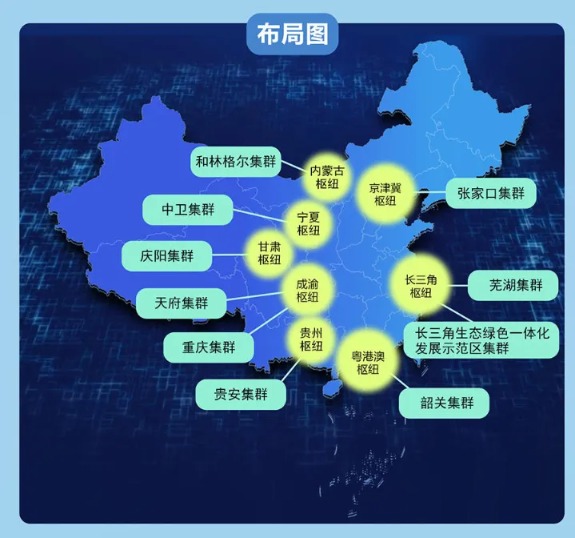
Core Insights - The article highlights the growing importance of computing power as a core infrastructure in the AI era, with Wuhu emerging as a significant player in China's computing power landscape [1][4]. Industry Overview - Wuhu is part of the national "East Data West Computing" project, designated as one of the ten major data center clusters, with the "Chinese Digital Island" being a key area for intelligent computing infrastructure development [1][4]. - The demand for computing power is increasing globally, driven by the AI wave, with Wuhu's computing power industry entering a "harvest period" as major enterprises invest in the region [3][12]. Recent Developments - Wuhu's computing power public service platform recently connected with four national platforms and added six new data centers, enhancing its capabilities [2]. - The Wuhu cluster has integrated 34 data centers, accumulating a total of nearly 640P of general computing power, 26,000P of intelligent computing power, 33.3P of supercomputing power, and 2,070 qubits of quantum computing power, making it a leader in the nation [3][10]. Strategic Importance - Wuhu's strategic location near the East China power grid and its energy sufficiency make it an attractive site for data centers, which require substantial energy resources [6][8]. - The region's low latency network infrastructure supports high-demand applications such as AI inference and e-commerce, positioning Wuhu as a preferred choice for industries in the Yangtze River Delta [9][10]. Economic Impact - Wuhu's GDP surpassed 500 billion yuan for the first time, with a growth rate of 6.4%, driven significantly by the automotive manufacturing sector, which has seen a 20% increase in value added [12]. - The city aims to diversify its economy beyond automotive manufacturing by developing new sectors, including digital economy and intelligent robotics, with the computing power industry at its core [12][13]. Competitive Landscape - Wuhu faces competition from other cities in the Yangtze River Delta, which are also ramping up their computing power initiatives, leading to an increasingly competitive environment [14][15]. - Despite its advantages, Wuhu must address challenges such as talent shortages and higher operational costs compared to western hubs, as well as improve inter-regional coordination in computing power utilization [15].
安徽第二城,又一个“起飞”机会已至?
Mei Ri Jing Ji Xin Wen· 2025-09-29 14:49
Core Insights - Computing power is viewed as the core infrastructure and "engine" of the AI era, with global demand for computing power rising due to the AI wave [1] - Wuhu is gaining attention as a key player in China's computing power landscape, being part of the national "East Data West Computing" project and home to the "Chinese Digital Island" [1][5] - The National Data Bureau aims to concentrate over 60% of new computing power in national hub nodes by the end of this year [1] Group 1: Wuhu's Computing Power Development - Wuhu is one of the ten data center clusters in the national "East Data West Computing" project, with the "Chinese Digital Island" as its core area [1][5] - The Wuhu computing power public service platform has connected to four national platforms and added six new data centers, indicating a shift from planning to a "harvest period" for the computing power industry [4] - As of now, the Wuhu cluster has integrated 34 data centers, accumulating a total of nearly 640P of general computing power, 26,000P of intelligent computing power, 33.3P of supercomputing, and 2,070 bits of quantum computing [4] Group 2: Strategic Importance and Competitive Edge - Wuhu's energy supply is robust, being the only province in the Yangtze River Delta with a positive net power supply, which is crucial for data center operations [10] - The city is strategically positioned to serve high-demand sectors such as industrial internet, finance, and AI inference due to its low latency network connections to major cities [12] - Wuhu's intelligent computing power accounts for 70% of the province's total, with major clients in AI model training and intelligent driving [12] Group 3: Economic Transformation and Future Challenges - Wuhu is undergoing an industrial transformation, moving beyond traditional manufacturing to embrace new sectors like digital economy and intelligent robotics [17] - The city faces competition from other regions in the Yangtze River Delta, with similar computing power goals and ongoing developments in cities like Jiangsu and Zhejiang [18] - Despite its advantages, Wuhu must address challenges such as higher electricity costs compared to western hubs and the need for improved cross-regional computing coordination [19]

亨通光电:创新驱动构建全价值链竞争力迎接光通信新一轮高速增长
Xin Lang Cai Jing· 2025-09-29 12:05
Core Insights - The light counting predicts that the market size for 800G Ethernet optical modules will exceed that of 400G by 2025, and the overall market for 800G and 1.6T optical modules will surpass $16 billion by 2029 [1] - The global optical communication industry is undergoing a structural transformation driven by AI, with unprecedented growth rates expected [1] - Hengtong Optic-Electric is positioned as a leading enterprise in China's optical communication industry, showcasing comprehensive technology layout and innovative vision at the 2025 PT Exhibition [1] Industry Trends - The demand for transmission bandwidth is increasing exponentially due to the rapid growth of AI-driven data centers and large-scale GPU clusters [1] - The "East Data West Computing" project is driving the upgrade of backbone networks, creating significant demand for the renovation of outdated networks [1] - The industry is transitioning from "quantitative change" to "qualitative change," with AI infrastructure and internationalization presenting unique opportunities [1] Company Developments - Hengtong Optic-Electric showcased its achievements in various fields, including high-speed optical modules and cross-data center interconnection solutions at the PT Exhibition [2] - The company has made significant progress in the marine communication sector, with over 108,000 kilometers of new submarine cables constructed [2] - Hengtong aims to become a global leader in information and energy interconnection solutions, focusing on AI computing infrastructure and integrated communication across air, land, and sea [2] Future Outlook - The company plans to enhance its supply capacity for high-end specialty optical fibers and modules to meet the explosive growth in AI computing demand [2] - Hengtong will continue to increase R&D investment and leverage synergies across its business segments to innovate in communication technologies [2] - The optical communication industry is poised for unprecedented development opportunities driven by the AI wave, with Hengtong playing a crucial role in this transformation [2]

美国出具报告:中国能源革命远超美国,已经立于不败之地
Sou Hu Cai Jing· 2025-09-29 08:40
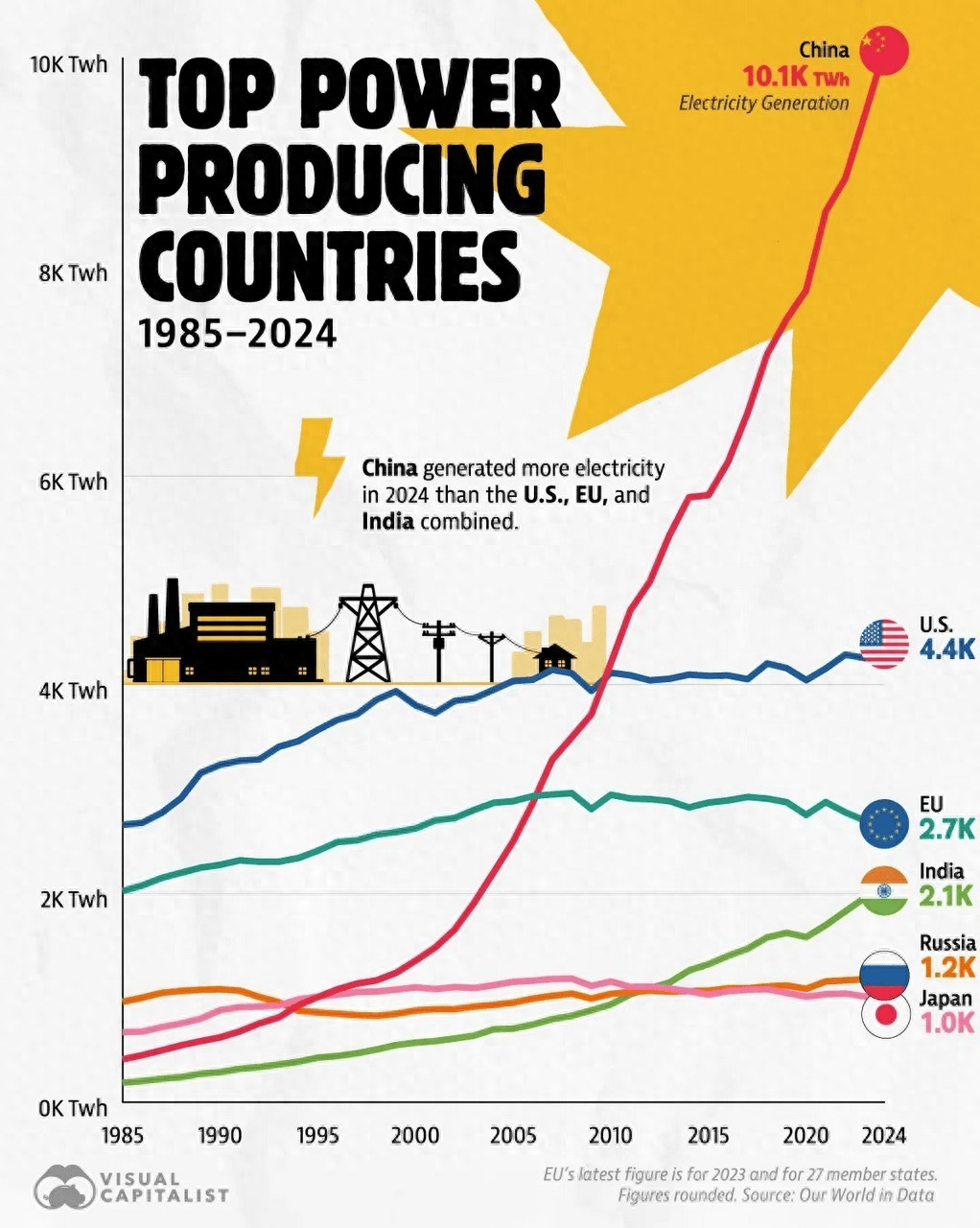
Core Insights - China's dominance in the energy sector is deepening, with a projected total electricity generation of 10,100 TWh by the end of 2024, which is 2.3 times that of the United States [1] - As of July 2025, China's total electricity generation reached 58,586.9 billion kWh, showing a year-on-year growth of 1.3%, while the U.S. growth is influenced by a temporary AI power center expansion [1] - China's installed power capacity grew by 18.2% to 367,367 MW, nearly 12 times faster than the U.S., indicating strong investment in energy infrastructure [3] Energy Demand and AI - The demand for electricity from AI data centers in the U.S. is expected to consume 15% of the national electricity by 2030, highlighting the importance of affordable and stable energy sources [3] - China's strategy of utilizing green energy to reduce costs is already in implementation, despite existing gaps in high-end chip design and manufacturing compared to the U.S. [3] Strategic Initiatives - China's "East Data, West Computing" strategy relocates computing demands from the eastern coastal regions to the resource-rich western areas, significantly lowering operational costs [4] - The price of photovoltaic electricity in the west can be as low as 0.1 RMB per kWh, compared to the U.S. industrial electricity price of approximately 0.6 RMB, affecting innovation and technological development [4] Global Energy Landscape - China is positioned as a frontrunner in the third energy revolution, with over 80% market share in photovoltaic components and leading in new wind power installations globally [6] - The U.S. has lagged in this transition, with inconsistent fossil fuel policies under the Trump administration hindering progress in renewable energy [6] Competitive Advantage - Countries effectively utilizing clean energy will have a competitive edge, and China's consistent policy direction towards green development contrasts with the U.S.'s frequent policy changes [8] - While China faces challenges in converting energy resources into technological advancements, its foundational advantages in electricity will support future industrial growth [8] - The ongoing global energy competition favors China due to its robust energy base and clear strategic direction, while the U.S. may face long-term competitive disadvantages due to energy constraints [8]