
十四五规划

Search documents
省委常委会召开会议 传达学习习近平总书记重要讲话重要指示精神 研究防汛防台风、新能源上网电价市场化改革等事项
Da Zhong Ri Bao· 2025-08-01 00:59
Group 1 - The meeting emphasized the need to accurately grasp the requirements for the 15th Five-Year Plan and to scientifically plan major projects and reforms to lead the construction of a modern strong province [2] - The province's economy showed a good trend in the first half of the year but faces challenges, necessitating unified action to ensure the completion of annual goals and tasks set in the 14th Five-Year Plan [2] - The meeting highlighted the importance of implementing policies to boost domestic demand, deepen reforms, and enhance high-level opening-up while ensuring the safety and improvement of people's livelihoods [2] Group 2 - The meeting arranged for flood and typhoon prevention work, emphasizing the need to adhere to the principle of putting people and life first, and to prepare for the typhoon "Zhu Jie Cao" [3] - It was noted that monitoring, forecasting, and early warning systems should be strengthened, with a focus on key areas such as mountainous regions and tourist spots to eliminate hazards and ensure safety [3] - The meeting discussed the implementation plan for the market-oriented reform of the new energy grid connection price, stressing the need for stable electricity prices and the establishment of risk prevention mechanisms [3]
“十四五”时期,税收改革发展取得积极效果——税费优惠政策为高质量发展注入强劲动力
Zhong Guo Chan Ye Jing Ji Xin Xi Wang· 2025-07-31 23:08
Core Insights - The "14th Five-Year Plan" period in China is characterized by stable economic growth, with tax revenue expected to exceed 155 trillion yuan, accounting for approximately 80% of total fiscal revenue [1] - Cumulative tax reductions and fee cuts are projected to reach 10.5 trillion yuan, significantly supporting economic and social development [2] Tax Policy and Economic Impact - A series of tax and fee reduction policies have been implemented, resulting in a cumulative reduction of 9.9 trillion yuan from 2021 to mid-2023, with an expected total of 10.5 trillion yuan by the end of the year [2] - Tax incentives focused on supporting technological innovation and advanced manufacturing have led to 3.6 trillion yuan in reductions, representing 36.7% of the total [2] - The private economy has benefited significantly, with 7.2 trillion yuan in tax reductions for private enterprises, accounting for 72.9% of the total [2] Manufacturing and Innovation - Manufacturing sector sales revenue has consistently represented about 29% of total enterprise sales from 2021 to 2024, with high-end and high-tech manufacturing showing annual revenue growth of 9.6% and 10.4%, respectively [3] - R&D expense deductions have been optimized, with 3.32 trillion yuan in deductions expected for 2024, marking a 25.5% increase from 2021 [3] Green Taxation - The green tax system has been enhanced, with environmental protection and resource taxes generating 2.5 trillion yuan in revenue from 2021 to mid-2023, alongside 1.5 trillion yuan in tax reductions for green development [4] Personal Income Tax Reforms - The personal income tax system has been improved to promote equitable distribution and enhance compliance, with the top 10% income earners paying about 90% of the total personal income tax [5] - Over 1 billion individuals benefited from special deductions, with a significant portion of the benefits going to the 30-55 age group [6] Smart Taxation Initiatives - The "Smart Taxation" initiative aims to enhance the tax payment experience, reducing the need for physical visits and paperwork, thus improving the overall business environment [7] - By mid-2023, over 61 million taxpayers utilized digital invoices, accounting for over 90% of total invoice amounts, improving efficiency in financial transactions [8]
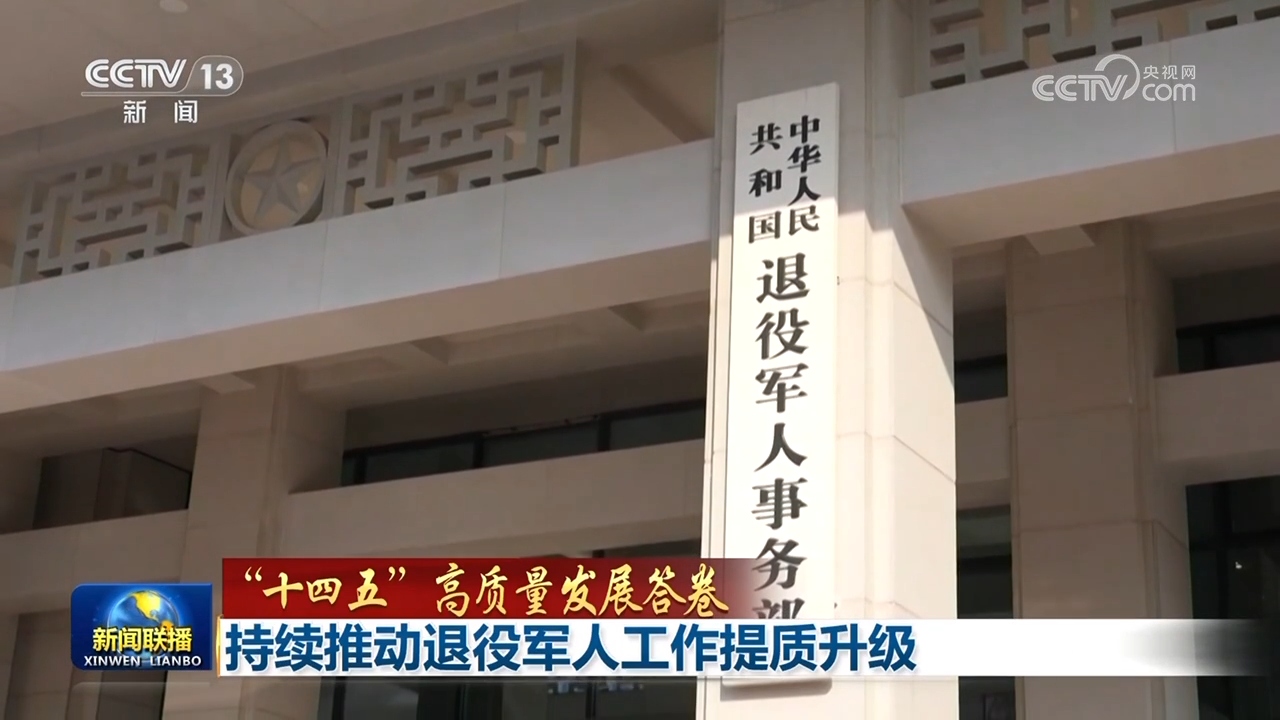
【“十四五”高质量发展答卷】持续推动退役军人工作提质升级
Yang Shi Wang· 2025-07-31 11:57
与此同时,退役军人事务部会同有关部门出台金融信贷、场地支持等优惠政策,支持有条件有意愿的退役军人创业创新,指导各地挂牌设立1988个创业孵化 基地,组建14000多名创业导师队伍,促进退役军人经营主体不断发展壮大。 央视网消息(新闻联播):国务院新闻办公室7月31日上午举行"高质量完成'十四五'规划"系列主题新闻发布会,退役军人事务部相关负责人介绍了"十四 五"期间退役军人工作改革和发展情况。 "十四五"期间,国家出台退役军人服务和保障规划,目前,主要指标落实进展顺利。其中,退役军人安置率等约束性指标全部如期实现;退役军人服务中心 (站)、烈士纪念设施建设等预期性指标稳步落实,部分超额完成。 "十四五"期间,我国还完善了多种退役军人安置办法,出台了《退役军人安置条例》。截至目前,接收安置了25万余名转业军官和安排工作的退役士兵。退 役军人事务部先后与69家央企、国企和大型民企签署自主就业退役士兵就业合作协议;每年组织退役军人就业服务专项行动,累计举办招聘会5万多场次, 140万余名退役军人达成就业意向。 "十四五"期间,我国烈士身份确认工作取得积极进展,组建国家烈士遗骸搜寻队,建立国家烈士遗骸DNA鉴定实验室 ...

“十四五”收官年,军工景气周期开启,航空航天ETF(159227)成交额同类第一
Mei Ri Jing Ji Xin Wen· 2025-07-31 06:44
7月31日,A股市场再度回调,航空航天ETF(159227)全天震荡,截至14点31分,跌幅1.11%,成交额 达1.1亿元,居同类第一,持仓股航天晨光涨停,长城军工涨超9%,中国海防、海兰信、国睿科技、航 发科技、钢研高纳等跌幅居前。 军工作为强计划性行业,五年规划对于行业经营和市场预期有着重要影响,是军工行情的主要驱动因素 之一。2025年恰逢"十四五"收官年,军队建设"十四五"规划执行已进入能力集成交付关键期,订单需求 有望加速释放。 东北证券表示,在当下时点,"十四五"计划进入最后一年,军工行业扰动因素已基本消除,下游需求呈 恢复性增长,同时2027年建设目标迫在眉睫,中长期目标也对行业发展提供明确指引:2035年基本实现 国防和军队现代化,2050年把人民军队全面建成世界一流军队。伴随需求恢复,产能结构逐步优化,国 防军工板块有望得到大幅改善,安全边际高,具备长期成长确定性。 航空航天ETF(159227)跟踪国证航天指数,申万一级军工行业占比高达98.2%,是全市场军工含量最 高的指数,聚焦军工细分空天力量,成分股覆盖战斗机、运输机、直升机、航空发动机、导弹、卫星、 雷达等全产业链龙头,完美契合" ...
“十四五”期间迎回4批265位在韩中国人民志愿军烈士遗骸并隆重安葬
Yang Shi Wang· 2025-07-31 03:38
央视网消息:国新办7月31日举行"高质量完成'十四五'规划"系列主题新闻发布会,介绍"十四五"时期退 役军人工作高质量发展成就。退役军人事务部思想政治和权益维护司司长陈二伟在会上介绍,"十四 五"期间,迎回4批265位在韩中国人民志愿军烈士遗骸并隆重安葬,组建国家烈士遗骸搜寻队及国家烈 士遗骸DNA鉴定实验室,推动7000多名英烈事迹进入中国共产党历史展览馆展陈。 ...
“十四五”期间我国不断拓展退役军人就业渠道
news flash· 2025-07-31 02:17
金十数据7月31日讯,国务院新闻办今天上午举行"高质量完成'十四五'规划"系列主题新闻发布会,退 役军人事务部有关负责人表示,"十四五"以来,我国制定出台退役军人安置条例等法规政策,不断拓展 退役军人就业渠道。退役军人事务部部长裴金佳表示,制定出台退役军人安置条例等法规政策,完善考 试考核、赋分选岗、直通车等多种安置办法,接收安置程序更加规范、质效持续提升。优化拓展定岗 式、订单式培训,组织退役军人就业招聘会,与一批大中型企业签署接收退役军人合作协议,不断拓展 退役军人就业渠道。 (央视新闻) "十四五"期间我国不断拓展退役军人就业渠道 ...
巩固回升向好势头 实现“十四五”圆满收官
Sou Hu Cai Jing· 2025-07-30 23:30
本报特约评论员 "十四五"规划收官之年,外部环境急剧变化。单边主义明显抬头,保护主义卷土重来,严重损害国际经 贸秩序、冲击全球经济发展……越是挑战来袭,越是检验一国经济的成色,越是考验应对变局的能力。 今年以来,在以习近平同志为核心的党中央坚强领导下,各地区各部门积极作为、攻坚克难,加紧实施 更加积极有为的宏观政策,我国经济运行稳中有进,高质量发展取得新成效。主要经济指标表现良好, 新质生产力积极发展,改革开放不断深化,重点领域风险有力有效防范化解,民生兜底保障进一步加 强,我国经济展现强大活力和韧性。 国家统计局发布的数据显示,今年上半年,国内生产总值超66万亿元,同比增长5.3%,主要指标好于 预期,"稳"的态势持续,"进"的步伐坚定,"新"的动能累积,"畅"的循环改善。事实表明,尽管外部环 境更趋复杂严峻,但中国经济基础稳、优势多、韧性强、潜力大,支撑高质量发展的积极因素在不断积 累,完全有底气、有信心、有能力应对外部挑战。 时钟滴答作响,离"十四五"规划收官越来越近。综观上半年这份来之不易、含金量高的发展成绩单,我 们看到了全球第二大经济体强大的底气与韧性,读出了中国经济的确定性与稳定性,也增强了决战 ...
坚定信心,决胜“十四五”(今日谈)
Ren Min Ri Bao· 2025-07-30 22:03
Core Viewpoint - The article emphasizes the confidence and capability to achieve the economic and social development goals for the year, despite the tight timeline and heavy tasks ahead, as outlined in the Central Political Bureau meeting [1] Economic Performance - The economic total grew by 5.3% year-on-year in the first half of the year, indicating a stable trend with summer grain production remaining robust [1] - High-tech manufacturing industries saw an increase in added value by 9.5% year-on-year, reflecting the emergence of new growth drivers [1] Policy Implementation - The implementation of "two heavy" and "two new" policies has strengthened investment in fixed assets and released domestic demand potential [1] - Efforts to eliminate "involution" competition and accelerate the establishment of a unified national market have effectively stimulated market vitality [1] Challenges and Confidence - The article highlights the importance of proactive measures and overcoming challenges, asserting that the centralized and unified leadership of the Party is fundamental to effective economic work [1] - There is a strong belief in the ability to consolidate and expand positive momentum, turning development plans into reality [1]
中央政治局会议明确下半年经济路线图
Zhong Guo Xin Wen Wang· 2025-07-30 21:18
Group 1 - The meeting emphasized that the "14th Five-Year Plan" is crucial for achieving socialist modernization and that the upcoming "15th Five-Year Plan" will focus on consolidating foundations and comprehensive development [1][2] - The economic indicators for the first half of the year showed a GDP growth of 5.3%, leading to an upward revision of China's economic growth forecast by the International Monetary Fund (IMF) [2] - The meeting highlighted the need for flexible and anticipatory macroeconomic policies to address potential challenges while seizing development opportunities [2][3] Group 2 - The focus on addressing "involution" in industries, particularly in the automotive sector, indicates a shift towards regulated competition and the promotion of consumer confidence [3][4] - The meeting called for effective measures to unleash domestic demand, particularly through initiatives to boost consumption and develop new growth points in service consumption [5] - Specific actions were proposed to support foreign trade enterprises, enhance the attractiveness of domestic capital markets, and stabilize the real estate market through urban renewal efforts [6]
高质量完成“十四五”规划丨开放动力更强劲、民生服务更高效、口岸边境更稳固——“十四五”移民管理工作为“开放中国”“活力中国”注入新动能
Xin Hua She· 2025-07-30 09:32
Group 1: Open Dynamics - The immigration management work during the "14th Five-Year Plan" period injects new momentum into "Open China" and "Vibrant China" [2] - Focus on talent strategy has led to a dual increase in the quantity and quality of international talent coming to China, contributing positively to modernization efforts [2] - Visa policies have been optimized, with unilateral or mutual visa exemptions for 75 countries and an expansion of transit visa exemptions to 55 countries [2] Group 2: Efficient Public Services - During the "14th Five-Year Plan," border inspection agencies processed 1.556 billion entries and exits, with over 98 million transportation vehicles [3] - More than 300 million exit and entry documents were issued to Chinese citizens, with over 160 million valid ordinary passports in circulation [3] - The implementation of "one-stop" service for document applications has improved convenience, with plans to expand online services further [3] Group 3: Border Security - The immigration management authority has intensified efforts to combat illegal border activities, enhancing border control capabilities [4] - Over 151,000 cases of border management crimes were investigated, resulting in the arrest of over 322,000 suspects and the dismantling of 7,648 criminal groups [5] - The focus on maintaining border security will continue, with plans for institutional openness in immigration management and participation in global governance [5]