
生态保护

Search documents
故乡山水丨只为一泓清水润香江
Yang Guang Wang· 2025-08-09 00:57
林海翻涌,鸟鸣山涧,在三百山风景名胜区里一处供游客休息的公益服务站,来自广东惠州的游客 和66岁的护林员龚隆寿聊了起来。 游客谢海深:水这么清澈,走到泉口的时候捧起来喝一口水,感觉很清甜! 龚隆寿:以前没想过,也不敢想。以前这儿都被砍得一干二净。 也是那时起,一场生态保卫战就此打响。上个世纪90年代,"在山上再造一个高效益赣南"的热潮让 果树漫山遍野,发展果业成为促进农民脱贫致富的突破口和着力点。2015年,安远县制定并实施了"三 禁、三停、三转"的东江源头生态环保政策,产业结构向绿色转型加速推进。 龚隆寿说,"好生态真的能当饭吃"成为了大伙儿的共识。他也从一个人巡护山林,变成带领一支六 十多人的巡护队伍带头人。 央广网北京8月9日消息(记者范存宝 赣州台记者沈汉华 何华英)据中央广播电视总台中国之声 《新闻和报纸摘要》报道,今年是东江水供港60周年。在江西省赣州市安远县的三百山,护林员龚隆寿 46年来步行12万公里,守护着东江源头的绿水长流。 龚隆寿:感受到了这个纯净水的味道,是吧? 1979年,21岁的龚隆寿从部队退伍回到家乡三百山镇虎岗村,在村干部的动员下,他成了一名护林 员。四十六年,一万六千多天,龚 ...
为什么开渔节多选在处暑(二十四节气二十四问)
Ren Min Ri Bao· 2025-08-08 22:01
Core Viewpoint - The article discusses the significance of the solar term "Chushu" (End of Heat) and its connection to the fishing season, highlighting the ecological and cultural importance of this period in coastal regions of China [3][5]. Group 1: Chushu and Its Significance - "Chushu" marks the end of summer heat and the beginning of autumn, occurring on August 23, 2025 [2]. - The term "Chushu" signifies the termination of hot weather, leading to increased temperature differences between day and night, which benefits the accumulation of dry matter in crops [3]. Group 2: Fishing Season and Ecological Balance - The fishing season, known as "Kaiyu," coincides with Chushu, marking the end of the fishing ban implemented to protect marine life during the summer breeding period [4]. - The ecological cycle is respected through the seasonal fishing ban, allowing fish and other marine life to grow and mature before the fishing season resumes [4]. Group 3: Cultural Practices and Community Engagement - Coastal communities have a tradition of "sea worship" during Chushu, which is now supported by regulations and cultural practices, reflecting a long-standing relationship between humans and nature [5]. - The "Kaiyu" festival includes various activities such as fishing ceremonies, cultural displays, and community celebrations, enriching the cultural heritage and tourism resources of coastal areas [5][6].


生物多样性不是自然保护区的“特产”,城市也要融入自然
Zhong Guo Huan Jing Bao· 2025-08-08 03:11
Group 1 - The central urban work conference emphasizes the goal of building a modern, innovative, livable, beautiful, resilient, civilized, and smart city, focusing on high-quality urban development and the importance of urban renewal [1] - The article highlights the need to integrate ecological protection into urban planning, construction, and governance to create harmonious cities that coexist with nature, reducing interference with natural environments [1][2] - Urbanization has led to the expansion of production and living spaces while squeezing ecological spaces, resulting in urban issues such as heat island effects, air pollution, and frequent flooding [1][2] Group 2 - To address urban ecological issues, a rational structure of production, living, and ecological spaces is required, incorporating ecological protection boundaries into urban planning as rigid constraints [2] - The article advocates for a clustered development approach rather than sprawling expansion, promoting the integration of urban spaces with natural elements through ecological corridors and green networks [2] - The importance of biodiversity in urban ecosystems is emphasized, calling for the protection of important species and habitats to restore urban biodiversity and ecological integrity [3]
临夏州持续筑牢黄河上游生态安全屏障
Zhong Guo Huan Jing Bao· 2025-08-07 08:30
Core Viewpoint - The article emphasizes the ecological and economic development efforts in Linxia Hui Autonomous Prefecture, highlighting the region's strategic importance in water conservation and environmental protection while promoting high-quality economic growth [1]. Group 1: Ecological Protection and Restoration - Linxia Prefecture adopts a systematic governance approach to enhance ecological protection and restoration, focusing on key areas for soil and water loss prevention and treatment [2]. - The region has implemented 42 soil conservation projects, treating an area of 129.6 square kilometers, achieving a soil conservation rate of 67.14% and a forest coverage rate of 14.27% [2]. Group 2: Pollution Prevention and Control - The prefecture has been actively engaged in pollution prevention, with significant actions taken since 2019, including the closure of 155 brick and tile factories and the elimination of over 48,000 old vehicles [3]. - A total of 2,772,670 square meters of clean heating source transformations have been completed, alongside the establishment of pollution prevention facilities at 10 docks and a ship repair factory [3]. Group 3: Green Transformation and Sustainable Development - Linxia Prefecture is focused on transitioning to a green economy by balancing development with environmental protection, implementing strict ecological zoning and control measures [4]. - The region has seen a 10% reduction in energy consumption intensity from 2021 to 2023, exceeding the targets set for the 14th Five-Year Plan [4]. - The development of clean energy projects, including 178.4 MW of photovoltaic power, is a key focus area, alongside the promotion of ecological industries such as cultural tourism and health [4].
故乡山水丨江畔有青绿
Yang Guang Wang· 2025-08-07 00:57
Core Viewpoint - The article highlights the significant ecological restoration and urban development efforts in Nantong, Jiangsu, particularly around the Wolf Mountain area, transforming it from an industrial zone to a green landscape, enhancing both environmental quality and community well-being [1][2][3]. Group 1: Ecological Restoration Efforts - In 2016, Nantong initiated a large-scale ecological restoration project along the Yangtze River, focusing on the five mountains and surrounding areas, under the principle of "protecting the environment without large-scale development" [2]. - The city has invested over 8.6 billion yuan (approximately 1.2 billion USD) from 2016 to 2018, resulting in the addition of 314,000 acres of afforestation, increasing urban greening coverage to about 43.3% [3]. Group 2: Community and Environmental Impact - The transformation has led to a significant improvement in the relationship between the local community and the natural environment, with residents now able to see the mountains clearly from various points in the city [4]. - Local fishermen have reported an increase in fish populations, indicating a healthier ecosystem, as the area has shifted from industrial use to ecological conservation [4].
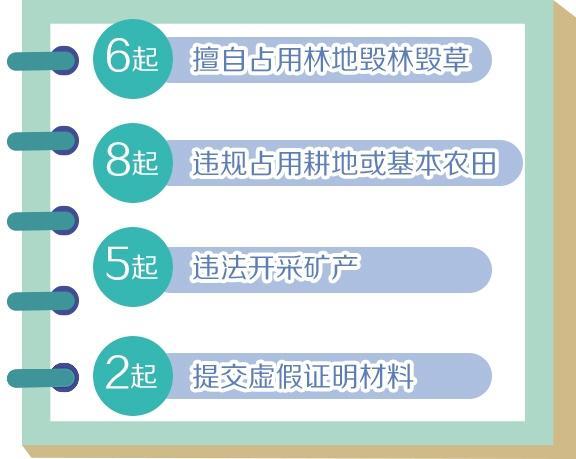
破坏耕地,非法采矿,毁林毁草——两部门通报违法违规典型问题
Jing Ji Ri Bao· 2025-08-07 00:26
Group 1 - The Ministry of Natural Resources reported ongoing illegal land occupation and ecological destruction activities, including illegal mining and deforestation, with 21 typical violations identified [2][3] - Specific violations include unauthorized land occupation for forestry and agriculture, with notable cases such as the illegal occupation of 683.19 acres of forest land by a company in Guizhou and 459.20 acres of basic farmland by a company in Inner Mongolia [2][3] - The report highlights that a significant portion of these violations is driven by local government actions and inadequate regulatory oversight, emphasizing the need for strict compliance and accountability [3] Group 2 - The Ministry plans to enhance law enforcement and supervision through the implementation of a forest chief system, aiming to strengthen the responsibility of local governments in protecting forest and grassland resources [4] - The report indicates that illegal land occupation remains a prevalent issue, despite previous government notifications aimed at curbing non-agricultural use of farmland [3] - Future efforts will focus on establishing a long-term regulatory mechanism to ensure the protection of farmland and ecological safety [4]
各族群众共享改革发展成果 主要经济指标增速位居全国前列 今天的西藏 欣欣向荣生机勃勃(权威发布)
Ren Min Ri Bao· 2025-08-05 22:03
Economic Development - In 2024, Tibet's GDP is projected to reach 276.5 billion yuan, which is 155 times that of 1965, with expectations to exceed 300 billion yuan this year [1] - The region's GDP growth accelerated, with the second 100 billion yuan milestone achieved in just 6 years compared to 50 years for the first [1] - Modern industries such as clean energy, cultural tourism, and highland light industry are flourishing, contributing to a robust economic framework [1][2] Infrastructure Improvement - By the end of 2024, Tibet's total road mileage is expected to reach 124,900 kilometers, and railway operation mileage to 1,359 kilometers, with 183 domestic and international flight routes [2] - The completion of four major power grids has significantly alleviated previous bottlenecks in economic and social development [2] Cultural and Tourism Growth - The cultural industry in Tibet is anticipated to grow by 23.8% in 2024, with domestic and international tourist arrivals reaching 63.89 million, a 15.8% increase [2] - The number of inbound tourists has surged by 188.2%, indicating a strong recovery and growth in the tourism sector [2] Social Welfare and Living Standards - In 2024, urban residents' per capita disposable income is expected to reach 55,444 yuan, 121 times that of 1965, while rural residents' income is projected at 21,578 yuan, 199 times that of 1965 [3] - Significant improvements in public services, including education and healthcare, have been made, with a focus on poverty alleviation and social security [3][4] Ecological Protection - Tibet is recognized as one of the regions with the best ecological environments globally, with over 50% of its land designated as ecological protection zones [7][8] - The region has committed to green development, with over 99% of its electricity generated from clean energy sources, leading the nation in this regard [7][8]
雪域高原上的人间奇迹——西藏自治区成立60年来各项事业取得全方位进步、历史性成就
Xin Hua She· 2025-08-05 14:50
Core Insights - The article highlights the significant achievements and progress made in Tibet over the past 60 years since the establishment of the Tibet Autonomous Region, emphasizing the historical transformation under the leadership of the Communist Party of China [1] Economic Development - Tibet's GDP reached 2,765 billion yuan in 2024, which is 155 times that of 1965, with an average annual growth rate of 8.9% [2] - The region's economy has expanded rapidly, with the first trillion yuan achieved in 50 years and the second trillion yuan in just 6 years [2] - Major investments exceeding 400 billion yuan have been made, with significant projects like the Sichuan-Tibet Railway and the Yarlung Tsangpo River hydropower project underway, supporting high-quality economic development [2] - The GDP is expected to surpass 3,000 billion yuan in 2024, marking the achievement of the third trillion yuan target [2] Social Development - In 2024, the per capita disposable income for urban residents in Tibet reached 55,444 yuan, while for farmers and herdsmen it was 21,578 yuan [3] - The government has invested 236.78 billion yuan in 28 social projects during the 14th Five-Year Plan period, enhancing public services and infrastructure [3] - Improvements in basic medical services, education, and cultural infrastructure have significantly increased the quality of life for residents [3] Environmental Protection - Tibet has implemented strict ecological protection laws, resulting in a forest coverage rate of 12.31% and a clean energy generation rate exceeding 99% [4] - The region has become a leader in clean energy production, with air quality showing over 99.7% of days classified as good [5] Social Stability - All seven prefectures in Tibet have been recognized as national models for ethnic unity, with extensive education on national and civic awareness [6] - The number of party members in Tibet has grown from 14,800 at its establishment to 470,400 in 2024, reflecting strengthened party organization and governance [6] - The implementation of local laws and regulations has supported the development of the region's political, economic, and cultural landscape [6]
甘肃科源电力集团:碧水青山间的绿色答卷
Zhong Guo Neng Yuan Wang· 2025-08-05 02:07
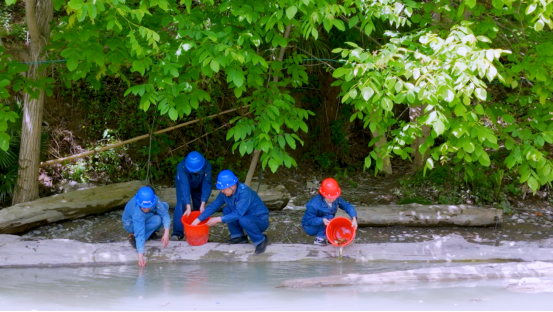
在能源转型与生态保护并重的时代背景下,甘肃科源电力集团明珠公司通过一系列创新 实践,将小水电的生态价值转化为看得见、摸得着的绿色成果。 从增殖放流到碳减排,从库区绿化到流域治理,每一度清洁电力都承载着对自然的敬畏 与回馈。这些举措不仅守护了白龙江、大通河、大夏河等流域的生态平衡,更探索出一条清 洁能源与环境保护协同发展的新路径。 一度水电的诞生,是一场无声的生态革命。 增殖放流:为江河注入生命活力 水轮飞转间,电流点亮陇原万家灯火,清流滋养江河万千生命;每一度清洁电能都丈量 着发展步伐,每一尾洄游鱼苗都见证着生态初心。 2025年7月中旬以来,明珠公司下属多个水电站相继开展增殖放流活动:九龙峡、锁儿 头电站投放3万尾裂腹鱼苗守护白龙江生态;铁城、头道河水电站联合多部门在大通河、大 夏河流域放流2万尾黄河裸裂尻鱼苗。这些看似微小的数字背后,是该公司六年来累计30余 万尾鱼苗的生态坚守。 "我们选择的都是本土鱼种,比如白龙江裂腹鱼、黄河裸裂尻鱼等,这些物种对维持当 地水域生态平衡具有关键作用。"明珠公司相关负责人介绍道,科学严谨是明珠公司所有增 殖放流活动的共同特征。 每批鱼苗都经过地方水务局、环保局等部门的精心 ...
湿地修复为浙南村落带来新生机
Zhong Guo Xin Wen Wang· 2025-08-05 00:12
Core Insights - The establishment of Jiulong Wetland as a national wetland park has significantly improved local tourism and biodiversity, leading to increased income for local villagers [1][2] - The ecological restoration efforts have resulted in the recovery of habitats for fireflies and other species, enhancing the area's biodiversity [2] Group 1: Ecological Restoration - Jiulong Wetland has undergone comprehensive environmental restoration, including the recovery of nearly 1,000 square meters of firefly habitat and an increase in firefly population to over 1 million [2] - The wetland has seen the addition of 14 new bird species and 4 globally newly discovered insect species, indicating a significant boost in biodiversity [2] Group 2: Economic Impact - The wetland's transformation into a national park has made it a key tourist destination, leading to the establishment of 113 new jobs in wetland patrol and greening maintenance, generating approximately 3.7 million yuan in income for local villagers [2] - Local homestays have seen a revenue increase, with 7 homestays in Jiulong Village generating about 100,000 yuan quarterly, and a 50% year-on-year increase in total income during the firefly viewing season [2]