
世界模型

Search documents
直播分享!“具身数据困境”:仿真技术、真实数据与世界模型的碰撞交融
具身智能之心· 2025-08-29 16:03
Core Viewpoint - The article discusses the intersection of simulation technology, real data, and world models in the context of embodied intelligence, highlighting the ongoing debate about the importance of simulation versus real data and the potential breakthroughs in world modeling [3][11]. Group 1: Roundtable Discussion - The roundtable focuses on the "data dilemma" in embodied intelligence, featuring four young scientists who explore the boundaries between simulation and real interaction, as well as the technological advancements in world models like Genie [3][11]. - Sergey Levine's assertion that real data is irreplaceable is examined, questioning whether this is a strategic choice or an inevitable path in AI evolution [11]. Group 2: Key Participants - Li Hongyang, an assistant professor at the University of Hong Kong, leads the OpenDriveLab and has made significant contributions to end-to-end autonomous driving solutions, including the award-winning UniAD [4]. - Zhao Hao, an assistant professor at Tsinghua University, specializes in computer vision related to robotics and has co-founded over ten startups since 2009 [5]. - Gu Jiayuan, an assistant professor at ShanghaiTech University, focuses on generalizable robotic decision-making models and has received multiple awards for his research [6][7]. - Mu Yao, an assistant professor at Shanghai Jiao Tong University, has published extensively in top conferences and has received numerous academic honors [7].

拆解华为乾崑智驾ADS 4:世界模型乱战,尖子生如何闯关?
2 1 Shi Ji Jing Ji Bao Dao· 2025-08-29 13:53
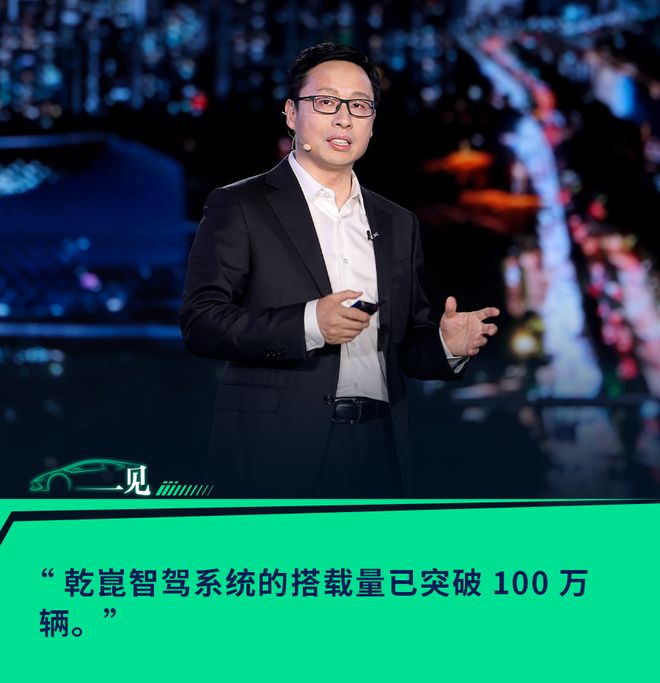
Core Viewpoint - The article discusses the evolution of autonomous driving technology, emphasizing the shift from traditional end-to-end models to world models that enable vehicles to understand and predict their environment more effectively [2][4][8]. Group 1: World Model Development - The world model allows vehicles to possess predictive capabilities, moving beyond mere reactive responses to real-time stimuli [2][3]. - Huawei's ADS 4 system, launched in April 2023, represents a significant advancement in high-level driving assistance, relying on the self-developed WEWA architecture [3][4]. - By 2025, several tech companies, including Xiaopeng and SenseTime, are expected to adopt world models as a crucial step towards achieving fully autonomous driving [4][8]. Group 2: Challenges in Autonomous Driving - The industry has recognized that traditional end-to-end models, which rely heavily on human driving data, often lead to suboptimal decision-making and do not truly understand physical laws [6][7]. - Research indicates that low-precision training can limit the effectiveness of models, highlighting the need for improved generalization capabilities in real-world scenarios [7]. Group 3: Competitive Landscape - Huawei's market share in the domestic pre-installed auxiliary driving domain is reported at 79.0%, maintaining its position as a leading supplier [9]. - The company differentiates itself by focusing on a more fundamental approach to driving, emphasizing spatial reasoning over merely following trends [9][10]. Group 4: Technological Innovations - Huawei's world model architecture integrates a cloud-based world engine and a vehicle-side behavior model, enhancing real-time reasoning and decision-making capabilities [12][14]. - The company has developed a unique approach to generating training scenarios, focusing on extreme cases that are often difficult to capture in real-world data [13][14]. Group 5: Implementation and Future Prospects - Huawei's intelligent driving system has been deployed in over 1 million vehicles across various manufacturers, facilitating rapid feedback and continuous improvement of the system [15]. - The integration of a large-scale real vehicle fleet supports the evolution of the driving system, paving the way for higher levels of autonomous driving capabilities [15].
拆解华为乾崑智驾ADS 4:世界模型乱战,“尖子生”如何闯关?
2 1 Shi Ji Jing Ji Bao Dao· 2025-08-29 10:42
Core Insights - The article discusses the evolution of autonomous driving technology, emphasizing the transition from traditional models to world models that enable vehicles to predict and understand their environment rather than merely reacting to it [2][4][5]. Group 1: World Model Concept - The world model provides vehicles with the ability to anticipate and reason about their surroundings, moving beyond simple reactive capabilities [4][11]. - This model integrates vast amounts of multimodal data, including real-world driving scenarios and traffic rules, to create a dynamic and inferential digital representation of the traffic world [2][4]. - Companies like Huawei, XPeng, and SenseTime are recognizing the world model as essential for achieving true autonomous driving by 2025 [4][12]. Group 2: Technological Advancements - Huawei's ADS 4 system, launched in April 2023, marks a significant advancement in high-level driving assistance, relying on its self-developed WEWA architecture [4][12]. - The WEWA architecture consists of a cloud-based world engine (WE) for data training and scenario generation, and a vehicle-based world behavior model (WA) for real-time environmental reasoning and decision-making [4][12][21]. - The world model addresses the limitations of traditional end-to-end models, which often mimic human behavior without understanding the underlying physics of driving [6][11]. Group 3: Market Position and Competition - Huawei's market share in the domestic pre-installed advanced driving domain is reported at 79.0%, maintaining its position as a leading supplier [12][14]. - The company has successfully deployed its driving system in over 1 million vehicles across various manufacturers, enhancing its data collection and model training capabilities [24][25]. - The competitive landscape is shifting, with other companies like NIO and XPeng also exploring world models, but Huawei's approach remains distinct due to its focus on specialized behavior models rather than language-based models [18][19][22].
极佳视界完成Pre-A&Pre-A+两轮数亿元融资,以世界模型加速“物理世界ChatGPT时刻”到来
3 6 Ke· 2025-08-28 08:21
Core Insights - Physical AI company, GigaVision, has successfully completed two rounds of financing totaling several hundred million yuan, indicating strong market recognition of its team, technology, and product progress [2] - The company aims to accelerate towards general intelligence in the physical world through its world model-driven foundational models [2][3] Financing and Investment - GigaVision completed Pre-A and Pre-A+ financing rounds led by various investment firms, including Guozhong Capital and CICC, showcasing investor confidence in its capabilities [2] - The company has raised significant funds in multiple rounds, including a recent angel round, reflecting robust investor interest [2] Technology and Product Development - GigaVision focuses on "world model-driven physical world foundational models," with products like GigaWorld and GigaBrain, which are designed to enhance physical AI capabilities [2][10] - The company is positioned as a leader in the world model and VLA (Vision-Language-Action) model sectors, with ongoing collaborations with major automotive and robotics companies [5][16] Market Position and Vision - GigaVision is recognized as the first domestic company specializing in world models, aiming to lead technological advancements and industry applications [5] - The company envisions a "ChatGPT moment" for the physical world within 2-3 years, predicting significant breakthroughs in physical AI technology and applications [3][4] Team and Expertise - The core team comprises top researchers and industry experts from prestigious institutions, contributing to GigaVision's strong research and development capabilities [6][7] - The leadership team has extensive experience in AI and has achieved numerous accolades in global AI competitions, enhancing the company's credibility [6][7] Strategic Partnerships and Collaborations - GigaVision has established partnerships with leading automotive manufacturers and robotics centers to facilitate large-scale production and application of its technologies [16] - The company is actively pursuing collaborations to explore the deployment of embodied intelligence across various sectors, including industrial and consumer markets [16][20] Future Outlook - GigaVision plans to utilize the recent funding for technology development and market expansion, aiming to enhance customer delivery and accelerate towards the physical world ChatGPT moment [17] - The company is committed to achieving world-class technological breakthroughs in world models and embodied intelligence, with a focus on creating social value [21]
自动驾驶之心业务合伙人招募来啦!模型部署/VLA/端到端方向~
自动驾驶之心· 2025-08-28 08:17
Core Viewpoint - The article emphasizes the recruitment of business partners for the autonomous driving sector, highlighting the need for expertise in various advanced technologies and offering attractive incentives for potential candidates [2][3][5]. Group 1: Recruitment Details - The company plans to recruit 10 outstanding partners for autonomous driving-related course development, research paper guidance, and hardware development [2]. - Candidates with expertise in large models, multimodal models, diffusion models, and other advanced technologies are particularly welcome [3]. - Preferred qualifications include a master's degree or higher from universities ranked within the QS200, with priority given to candidates with significant conference contributions [4]. Group 2: Incentives and Opportunities - The company offers resource sharing related to autonomous driving, including job recommendations, PhD opportunities, and study abroad guidance [5]. - Attractive cash incentives are part of the compensation package for successful candidates [5]. - Opportunities for collaboration on entrepreneurial projects are also available [5].
极佳视界官宣数亿融资,以世界模型迈向“物理世界chatGPT时刻”
Sou Hu Cai Jing· 2025-08-28 07:29
Core Insights - Physical AI company, 极佳视界, has completed multiple rounds of financing totaling several hundred million yuan, indicating strong market recognition of its team, technology, and product progress [2][3][18] - The company focuses on "world model-driven physical world foundation models" and aims to accelerate towards general intelligence in the physical world [2][3] Financing and Market Position - The Pre-A round was led by Guozhong Capital, with participation from Zifeng Capital and PKSHA Algorithm Fund, while the Pre-A+ round included investments from CICC Capital and others [2] - The company has completed three rounds of financing within six months, showcasing investor confidence in its capabilities [2][3] Product Development - The product lineup includes the GigaWorld platform, GigaBrain embodied foundation model, and other full-stack Physical AI products [3][11] - GigaBrain-0, set to be officially released in September 2025, is the world's first world model-driven embodied foundation model, achieving significant data generation breakthroughs [11][12] Technological Advancements - The company believes that the "world model + VLA + reinforcement learning" paradigm will lead to a "ChatGPT moment" in the physical world within 2-3 years, significantly impacting AI technology and applications [3][4] - The world model is seen as a solution to data bottlenecks in physical world general intelligence, with the potential to achieve a 95% success rate in 90% of common tasks [4][9] Team and Expertise - The core team consists of top researchers from Tsinghua University and other prestigious institutions, with extensive experience in AI and robotics [6][7] - CEO Huang Guambo has a strong background in AI competitions and has led teams to achieve global recognition [7][21] Industry Collaboration - The company has established partnerships with leading robotics and automotive manufacturers for production cooperation [5][17] - It aims to accelerate the commercialization of physical world general intelligence through extensive industry collaborations [17][20] Future Outlook - Investors express confidence in the company's ability to lead in the embodied intelligence and robotics sectors, highlighting its technological depth and industry experience [19][21] - The company is positioned to capitalize on the growing market for embodied intelligence and robotics, with expectations for significant advancements in the coming years [20][21]
极佳视界完成Pre-A&Pre-A+连续两轮数亿元融资
Zheng Quan Shi Bao Wang· 2025-08-28 02:19
Core Insights - Physical AI company, 极佳视界, has completed three rounds of financing within six months, raising hundreds of millions in total [1][2] - The company focuses on world model-driven physical world foundational models, aiming to accelerate the development of general physical intelligence [1][2] - The core team consists of top researchers from Tsinghua University and other prestigious institutions, with significant industry experience [2][6] Financing and Investment - The Pre-A round was led by Guozhong Capital, with participation from Zifeng Capital and PKSHA Algorithm Fund, while the Pre-A+ round included investments from CICC Capital and others [1] - The company also secured tens of millions in angel financing in February 2025, indicating strong investor confidence [1] Technology and Product Development - 极佳视界's products include the GigaWorld platform and GigaBrain foundational model, which are designed to address data bottlenecks in physical AI [1][3] - The GigaBrain-0 model, launched in July 2025, utilizes over 90% self-generated data, showcasing significant advancements in data sourcing and cost efficiency [3] - The company aims to achieve a "ChatGPT moment" for the physical world within 2-3 years, driven by advancements in world models and reinforcement learning [2][3] Industry Position and Collaborations - The company is actively collaborating with leading automotive manufacturers and AI chip companies, indicating a strong market presence [4] - Partnerships with humanoid robot innovation centers and training facilities are being established to enhance practical applications of their technology [4] - Investors express optimism about the company's potential to fundamentally solve data and model challenges in embodied intelligence [4][5] Vision and Future Goals - The CEO emphasizes the company's commitment to achieving world-class technological breakthroughs in physical AI and creating social value [6] - The company aims to continuously innovate in the fields of world models and embodied intelligence, positioning itself as a representative enterprise in the AI sector [6]
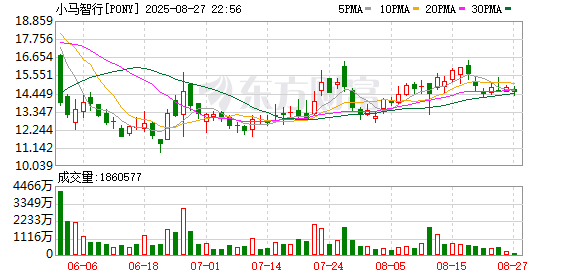
小马智行:一线城市全布局 深度合作整车厂商助力实现盈亏平衡
Zheng Quan Shi Bao Wang· 2025-08-27 14:55
Core Insights - Pony.ai has launched a 24/7 autonomous driving service in Shenzhen, aiming to expand its fleet to over 1,000 vehicles by the end of 2025, accelerating the commercialization of autonomous driving [2][3] - The company has established a comprehensive autonomous driving service network across major Chinese cities, covering over 2,000 square kilometers, with plans for further expansion [4] - Pony.ai's technology includes a "world model" for virtual simulations and a remote assistance system, enhancing safety and operational efficiency [5][6] Domestic Expansion - Pony.ai operates in four major cities (Beijing, Shanghai, Guangzhou, and Shenzhen) with a focus on gradual commercialization and regulatory collaboration [4] - The company has received support from Shenzhen's local government, which has established regulations for autonomous driving, facilitating industry growth [3] Technology Development - The "world model" allows for extensive virtual training, achieving a safety level ten times higher than that of human drivers [6] - The remote assistance system enables real-time support for vehicles in complex situations, allowing for efficient management of multiple vehicles by a single operator [6] Product and International Expansion - The seventh generation of autonomous vehicles has been developed in collaboration with major automotive manufacturers, with over 200 units produced and plans for deployment in major cities by 2025 [7] - Pony.ai is expanding internationally, conducting road tests in Dubai, Seoul, and Luxembourg, while sharing regulatory experiences with foreign authorities [7] Future Outlook - The company is pursuing deep collaborations with automotive manufacturers to reduce costs and achieve profitability [8] - Industry experts believe that safety must remain a priority in the pursuit of scaling autonomous driving services, especially in light of recent developments in the U.S. market [9]
人形机器人,缺一个杀手级共识
创业邦· 2025-08-26 03:37
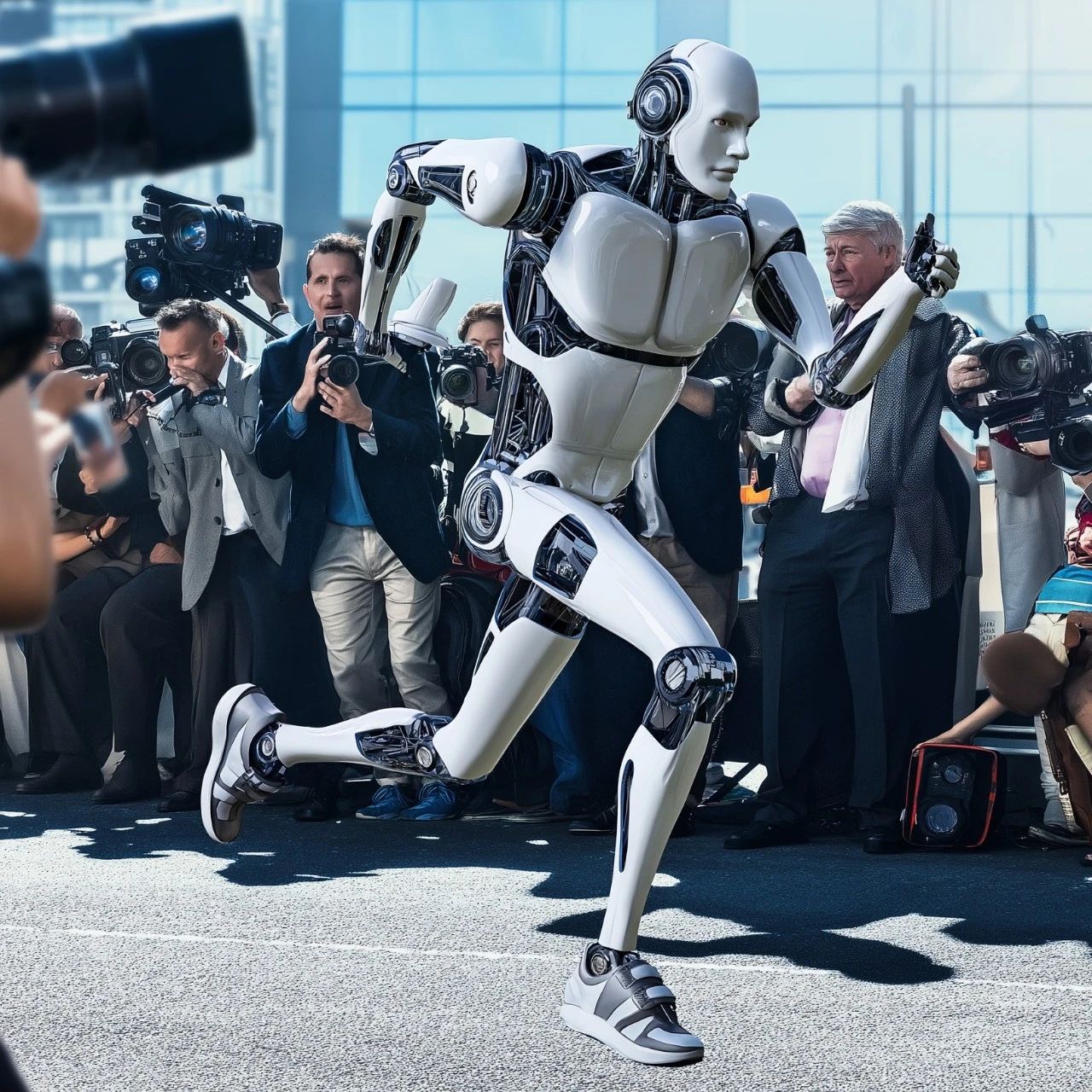
Core Viewpoint - The article discusses the contrasting approaches of two leading companies in the humanoid robotics industry, Starry Era and Yuzhu Technology, highlighting their differing philosophies on how to enhance robot capabilities and their respective paths towards commercialization [8][10][49]. Group 1: Company Strategies - Starry Era focuses on a "soft and hard integration" approach, emphasizing the importance of combining hardware and software to create a cohesive system for humanoid robots [30][32]. - Yuzhu Technology adopts a "hardware-first" strategy, prioritizing the development of hardware capabilities before integrating software solutions [31][32]. - Both companies have distinct views on the viability of the VLA (Vision-Language-Action) paradigm, with Starry Era seeing it as a broad framework for integrating various modalities, while Yuzhu expresses skepticism about its practical application [12][16]. Group 2: Technical Development - Starry Era has developed an end-to-end VLA model, ERA-42, which integrates reinforcement learning and world models, showcasing their commitment to advancing robot intelligence [15][39]. - Yuzhu Technology is concentrating on building reusable data and model resources, focusing on the engineering aspects of distributed computing to enhance their robots' capabilities [22][27]. - Both companies recognize the necessity of a closed-loop system that combines perception, decision-making, and execution to achieve effective humanoid robot performance in complex environments [34][54]. Group 3: Market Positioning - Starry Era is currently deploying its robots in B-end industrial scenarios, achieving over 70% efficiency in real-world applications, with plans to reach around 90% efficiency next year [23][36]. - Yuzhu Technology is primarily focusing on entertainment and demonstration scenarios, acknowledging that their robots are not yet ready for complex tasks, thus adopting a strategy of gradual market entry [26][27]. - Both companies anticipate a significant shift in the humanoid robotics market, with predictions of a "ChatGPT moment" within the next few years, where robots will be capable of understanding and executing complex instructions in unfamiliar environments [50][56]. Group 4: Future Outlook - The industry is expected to see parallel advancements in various technical paths, including end-to-end VLA and world models, with leading companies validating commercial viability in specific industrial applications [56]. - In the mid-term, a unified technical standard may emerge, expanding applications from industrial to logistics, healthcare, and retail sectors [56]. - Long-term aspirations include humanoid robots becoming household companions, necessitating advancements in safety, reliability, and natural interaction [56].
中信证券:短期建议关注具身模型行业的资本布局者及数据采集卖铲人
Di Yi Cai Jing· 2025-08-25 00:58
Core Insights - The correct model architecture and efficient data sampling are identified as the two main challenges for the scalable development of embodied intelligence, which has become a primary focus for companies in this sector [1] - The main theme of model architecture revolves around the integration of large language models, large visual models, and action models, with diffusion model-based flow matching algorithms gaining prominence in the short term [1] - Companies with strong capital expenditure capabilities are leveraging real data collection as a breakthrough to build competitive barriers through data set accumulation, while synthetic data and internet data are also essential for the value foundation of embodied models [1] - The organic combination of pre-training and post-training core demands with data attributes has emerged as a new challenge, leading to the rise of data sampling concepts [1] - The role of world models in empowering the scalability of synthetic data and strategy evaluation is also significant [1] - In the short term, attention is recommended on capital investors in the embodied model industry and data collection providers, while in the long term, cloud computing and computing power providers should be monitored [1]
