元宇宙

Search documents
包子铺“逆袭”背后有套社区治理方案 上海两个案例入选《上海手册》向全球推介
Jie Fang Ri Bao· 2025-10-27 01:57
Core Insights - The article highlights the successful transformation of a small eatery, "Long Ming Xuan," which overcame a rental crisis and became a popular destination through community support and digital technology [1] - The Shanghai East Ming Road community has implemented innovative digital governance strategies to enhance local engagement and business performance [2][3] - The Shanghai Metro has adopted a "smart maintenance" model, significantly improving operational efficiency and passenger experience through advanced technologies [4][5] Group 1: Community and Business Transformation - "Long Ming Xuan" moved to a less expensive location and quickly became profitable, attracting a diverse clientele including foreign visitors and corporate executives [1] - The eatery benefited from a community-driven initiative that utilized "metaverse" technology for online promotion, fostering a supportive ecosystem among local businesses and social organizations [1] - A mobile application was developed to consolidate local merchant offers and activities, increasing visibility and customer engagement for businesses like "Long Ming Xuan" [2] Group 2: Digital Community Governance - The East Ming Road community was previously seen as a "resource gap," with low youth engagement; efforts were made to increase participation through digital tools [2] - A location-based electronic coupon system was established, allowing residents to receive digital benefits when within a designated area, enhancing community interaction [3] - The digital governance model has expanded from East Ming Road to 16 neighborhoods across Shanghai, demonstrating its scalability and effectiveness [3] Group 3: Smart Maintenance in Metro Operations - The Shanghai Metro has a total operational mileage of 896 kilometers, with a daily passenger flow exceeding 10 million [4] - Traditional maintenance methods were inadequate for the growing demands, leading to the adoption of a proactive "smart maintenance" approach using industrial internet, AI, and big data [5] - The new maintenance system has increased inspection frequency by 300 times and reduced average fault response time from 60 minutes to 20 minutes, significantly enhancing operational efficiency and passenger satisfaction [5]
【数字经济周报】TI低功耗Bluetooth? 6.0无线MCU通过Bluetooth SIG认证:数字经济动态事件速览第36期(2025.10.18-2025.10.24)-20251026
GUOTAI HAITONG SECURITIES· 2025-10-26 12:22
Semiconductor Sector Dynamics - TI's low-power Bluetooth® 6.0 wireless MCU has received Bluetooth SIG certification, marking it as the industry's first automotive-grade product series to achieve this milestone[5] - Jiangbolong has launched the industry's first integrated packaging mSSD, enhancing SSD application flexibility and user experience[7] - United Microelectronics Corporation (UMC) has introduced a 55nm BCD platform aimed at improving power efficiency and system integration for next-generation mobile devices and automotive applications[11] Automotive Electronics Sector Dynamics - LoBot has partnered with Swiss PostBus to launch the autonomous driving service "AmiGo" in Switzerland, with initial fleet testing planned for December 2025[14] - Pony.ai and BAIC New Energy have rolled out the 300th unit of the Alpha T5 Robotaxi, showcasing significant advancements in autonomous driving technology[16] - General Motors plans to introduce a "hands-free" autonomous driving system in the Cadillac Escalade IQ by 2028, utilizing a multi-sensor approach for enhanced safety[19] AI Sector Dynamics - Baichuan has released the M2 Plus medical model, significantly reducing the hallucination rate compared to general models, achieving a credibility level comparable to experienced clinicians[21] - RoboSense and ASENSING have formed a strategic partnership to develop multi-modal sensor fusion solutions for robotics, enhancing performance in complex environments[24] - Shengshu Technology has announced the open access of the Vidu Q2 API, enabling high-quality video content creation with emotional expressiveness for advertising and e-commerce[28] Metaverse Sector Dynamics - Samsung has officially launched the Galaxy XR headset, optimized for multi-modal AI, marking a significant step in its XR strategy[32] - Amazon is developing AI smart glasses for delivery drivers to enhance route planning and risk identification, improving service quality[35] - Unity has announced full support for Android XR development in Unity 6, facilitating the creation of immersive applications for the Galaxy XR headset[37] Risk Warnings - There are risks related to market competition in semiconductor, automotive electronics, AI, and metaverse sectors due to rapid growth and increased investment[38] - Potential technological advancements may not meet expectations, impacting overall sector development[39] - Market demand growth may fall short of expectations, affecting the expansion of emerging sectors[40]


一周重磅日程:决定市场命运的一周,来了
华尔街见闻· 2025-10-26 10:43
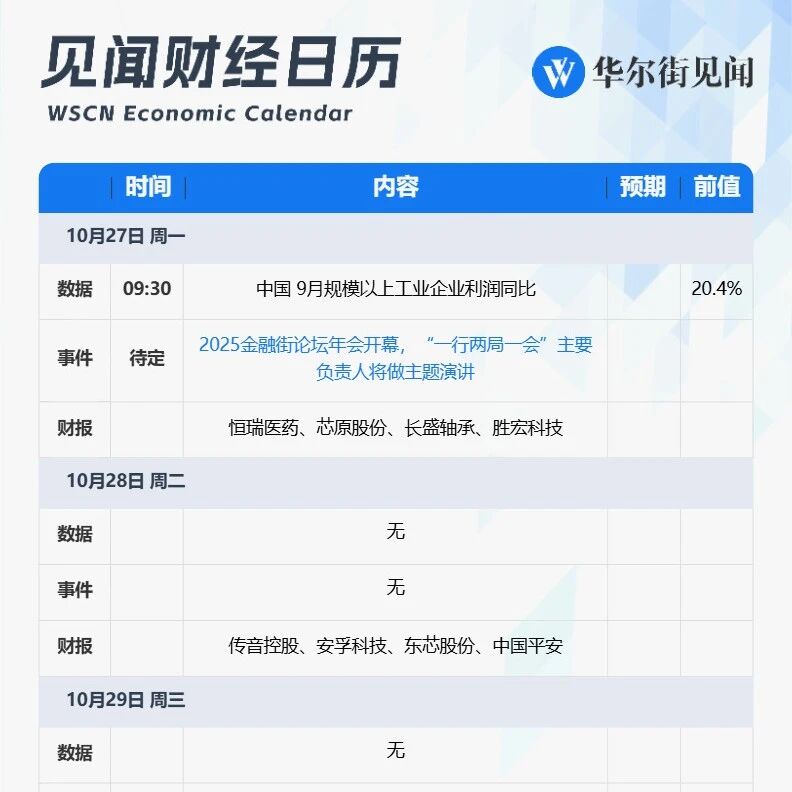
重点关注: 2025年亚太经济合作组织(APEC)领导人非正式会议、超级央行周,美联储、日本央行、欧洲央行、加拿大央行等将公布利率决议。 | 时间 | | 内容 | 预期 前值 | | | --- | --- | --- | --- | --- | | 10月27日 周一 | | | | | | 数据 | 09:30 | 中国 9月规模以上工业企业利润同比 | | 20.4% | | 事件 | 待定 | 2025金融街论坛年会开幕, "一行两局一会"主要 负责人将做主题演讲 | | | | 财报 | | 恒瑞医药、芯原股份、长盛轴承、胜宏科技 | | | | 10月28日 周二 | | | | | | 数据 | | 元 | | | | 事件 | | 元 | | | | 财报 | | 传音控股、安孚科技、东芯股份、中国平安 | | | | 10月29日 周三 | | | | | | 数据 | | 元 | | | | 00:00 | | 华盛顿特区 NVIDIA GTC 大会 黄仁勋发表演讲 | | | | 事件 | 待定 | 美国总统特朗普访问韩国 | | | | 21:45 | | 加拿大央行公布利率决议和货 ...

街区元宇宙、地铁智慧维保,上海两案例入选2025版《上海手册》
Xin Lang Cai Jing· 2025-10-26 03:53
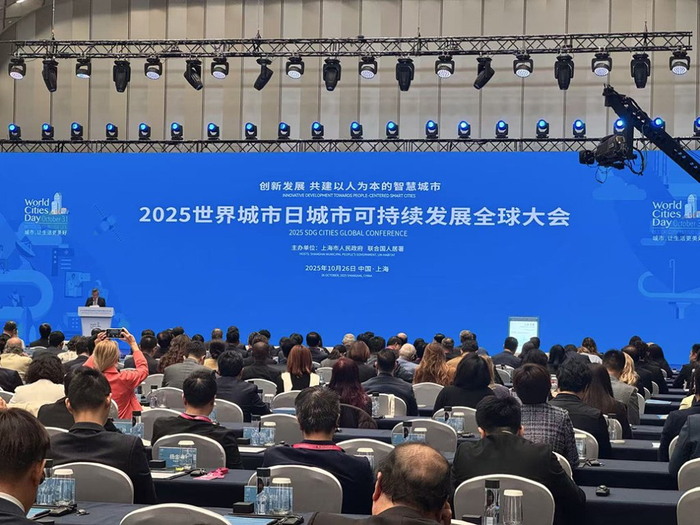
Group 1 - The 2025 World Cities Day Urban Sustainable Development Global Conference was officially opened in Shanghai, where the 2025 version of the "Shanghai Manual: A Guide to Sustainable Urban Development in the 21st Century" was released [3] - The 2025 edition focuses on the theme of "people-centered smart cities" and includes 21 typical cases from 19 cities across 11 countries, with 8 cases from various cities in China [3] - Shanghai's two selected cases include the digital community in Pudong New District and the "smart maintenance" project of the Shanghai Metro [3] Group 2 - The application of metaverse technology in community governance is highlighted, particularly in the East Ming Road Street of Pudong New District, where it engages young people in community participation [5][6] - The metaverse community allows users to access merchant information, public activity schedules, and interact with real-world scenes through AR technology, enhancing youth involvement in community governance [6][7] - The community practice is expanding to 16 other streets and towns in Shanghai, emphasizing local roots, sustainable operations, and collective governance [7] Group 3 - The "smart maintenance" system of the Shanghai Metro utilizes intelligent inspection robots to enhance efficiency and standardization in maintenance operations [9][10] - Shanghai Metro, being one of the largest and most advanced urban rail transit systems globally, is transitioning from passive maintenance to a proactive model using technologies like AI and big data [10][11] - The smart maintenance system aims for real-time monitoring, fault detection, and a significant increase in inspection frequency and efficiency, setting a benchmark for urban rail transit in China and internationally [11]
上亿台币恐“打水漂”,天王周杰伦被好友“坑”了
Xin Lang Cai Jing· 2025-10-25 06:13
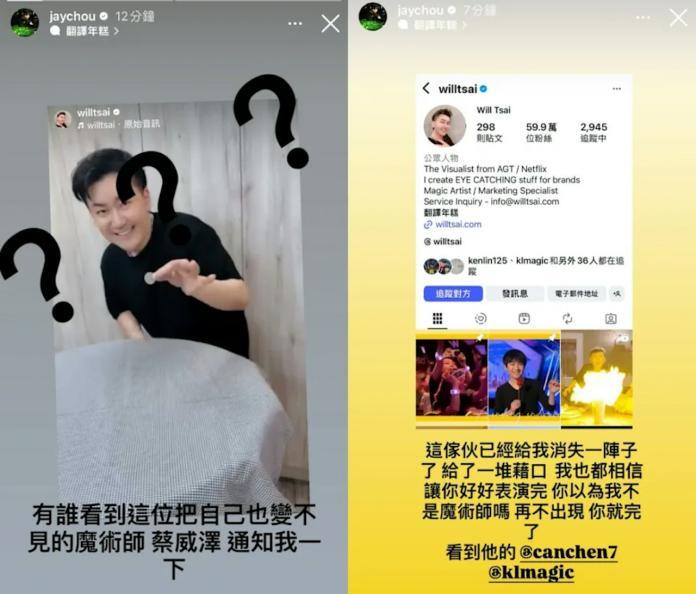
Core Viewpoint - Jay Chou, a prominent figure in the Chinese music industry, has publicly expressed frustration over the disappearance of his friend and magician, Cai Weize, who managed his cryptocurrency investments, potentially involving amounts up to 200 million TWD (approximately 46 million RMB) [1][7][9]. Group 1: Cryptocurrency Involvement - Cai Weize was responsible for managing Jay Chou's Bitcoin investments, which are now in question due to his sudden disappearance [7][9]. - The cryptocurrency market experienced a significant downturn on October 11, with over $19 billion in liquidations, which may have impacted Cai Weize's ability to manage the investments [9]. - Jay Chou had previously ventured into the cryptocurrency space with the launch of the Phantom Bear NFT project, which saw a dramatic price drop of over 90% within six months [1][11]. Group 2: Business Ventures and IP Value - Jay Chou's company, JVR Music, has been instrumental in managing his music-related business, contributing significantly to his wealth through music rights and concert revenues [13][18]. - The company, Superstar Legend, has seen substantial growth, with a market capitalization of 84.34 billion HKD, nearly doubling since the beginning of the year [2][17]. - Superstar Legend reported a revenue of 584 million RMB in the previous year, marking a 35.75% increase, although net profit saw a decline of 58.88% in the first half of the current year [15][17]. Group 3: Legal Actions and Reputation - Jay Chou is reportedly preparing to take legal action against Cai Weize due to the unresolved financial issues stemming from the cryptocurrency investments [8]. - Cai Weize has a controversial reputation in the magic community, with allegations of financial mismanagement and unfulfilled obligations to partners and employees [7][9].
归侨张立华:深耕科研路,与中国创新发展“同频共振”
Zhong Guo Xin Wen Wang· 2025-10-25 06:10
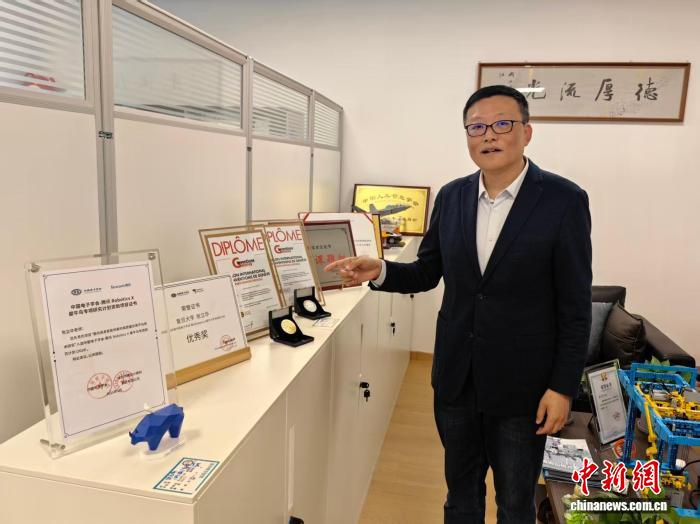
在国际知名科技企业任职期间,张立华专注物理仿真和异构计算技术研究。"那时候,国内了解异构计 算技术的专业人才还比较少。"他回忆起2012年在清华大学交流时的场景,全场仅有两三人举手表示熟 悉该领域。正是这份对技术差距的认知,让他萌生了归国的想法。 中新社上海10月25日电 题:归侨张立华:深耕科研路,与中国创新发展"同频共振" 作者 范宇斌 从清华大学学子到海外科技深耕者,再到上海科研带头人,归侨张立华的人生轨迹,恰好呼应着中国创 新实力的跃升。近日,荣获"上海市侨界杰出人物"称号的复旦大学智能机器人与先进制造创新学院副院 长、特聘教授张立华接受中新社专访,讲述其归国投身科研、推动技术落地的经历。 张立华长期专注人工智能、元宇宙与机器人领域的交叉创新研究及原创技术应用,曾带领团队研发出国 际知名物理智能技术体系的关键支撑底座——PhysX物理仿真引擎。 10 月23日,复旦大学智能机器人与先进制造创新学院副院长、特聘教授张立华接受中新社专访。 范宇斌 摄 2000年,刚从清华大学毕业的张立华赴海外深造。彼时,他敏锐察觉到国际前沿科技与国内的差 距:"在清华时以为自己的软硬件设计已很先进,到海外才发现技术层次和 ...
降息两次?美联储,大消息!昨夜,美股新高!
证券时报· 2025-10-25 00:11
Market Performance - The three major US stock indices all closed higher, with the Dow Jones Industrial Average rising by 1.01% to 47,207.12 points, the S&P 500 increasing by 0.79% to 6,791.69 points, and the Nasdaq gaining 1.15% to 23,204.87 points, all reaching new historical highs [1] - For the week, the Dow Jones increased by 2.2%, the S&P 500 rose by 1.92%, and the Nasdaq climbed by 2.31% [1] European Market Trends - Major European stock indices mostly rose, with the German DAX up 0.13% to 24,239.89 points, the French CAC40 unchanged at 8,225.63 points, and the UK FTSE 100 increasing by 0.7% to 9,645.62 points, also reaching a new historical high [2] - For the week, the German DAX rose by 1.72%, the French CAC40 increased by 0.63%, and the UK FTSE 100 climbed by 3.11% [2] Chinese Stocks Performance - Chinese concept stocks showed mixed results, with the Nasdaq Golden Dragon China Index rising by 0.27% [2] - Notable individual stock performances included a rise of over 6% for Canadian Solar, over 3% for Pony.ai, and nearly 3% for Luokung Technology, while Zai Lab fell over 6% and Beike dropped over 3% [2] US Inflation Data - The US September CPI data indicated a slight increase to 3% year-on-year, up from 2.9% the previous month, but below the market expectation of 3.1% [4] - The core CPI for September also recorded a year-on-year rate of 3%, lower than both market expectations and the previous month's figure of 3.1% [4] - Following the CPI release, traders increased bets on the Federal Reserve potentially lowering interest rates twice more this year [4] Federal Reserve Outlook - Analysts suggest that the current inflation data supports the likelihood of a rate cut in October, with a focus on balancing employment market risks [4] - The St. Louis Fed's research indicates that tariffs currently transmit only about 35% to prices, suggesting that inflation pressures may increase in Q4 [5] - Even with a potential rate cut in October, the Fed's future easing path may be constrained due to rising inflation [5] EU Regulatory Actions - The EU has preliminarily identified violations of the Digital Services Act by a metaverse company, which could face fines up to 6% of its global revenue if non-compliance continues [7] - The investigation is part of a broader enforcement action by the EU to implement the Digital Services Act [8] Commodity Market Trends - International precious metal futures generally declined, with COMEX gold futures down 0.45% to $4,126.90 per ounce and COMEX silver futures down 0.60% to $48.41 per ounce [10] - The US oil market saw a decrease in both WTI and Brent crude oil prices, with WTI down 0.57% to $61.44 per barrel and Brent down 0.29% to $65.10 per barrel [10][11]
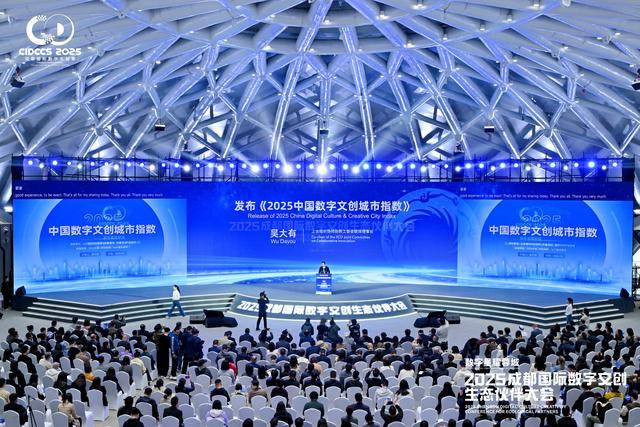
2025成都国际数字文创生态伙伴大会启幕
Sou Hu Cai Jing· 2025-10-24 03:09
Group 1 - The 2025 Chengdu International Digital Cultural and Creative Ecosystem Partner Conference aims to transform Chengdu's digital cultural and creative industry from a "phenomenal hit" production area to a "cluster-style prosperity" new highland [1] - The conference focuses on six core sectors including film and animation, gaming and esports, and gathers over 340 experts, scholars, and representatives from global digital cultural and creative fields to witness the strategic upgrade of Chengdu's industry [3] - Key outcomes include the release of the "2025 China Digital Cultural and Creative City Index" report and the "Chengdu Digital Cultural and Creative Billion Cooperation Opportunity List," showcasing Chengdu's strengths in talent, industry stability, and urban vitality [4] Group 2 - The establishment of the "Chengdu International Digital Cultural and Creative Industry Alliance" aims to enhance industry research, resource collaboration, and international cooperation, promoting a digital asset and IP sharing mechanism [5] - The conference facilitated the signing of 29 projects, covering various aspects such as enterprise establishment, platform co-construction, copyright development, and international cooperation [8] - A series of projects representing cutting-edge directions like AIGC, metaverse, and national trends were showcased during the "Key IP Project Investment Roadshow," injecting new momentum into Chengdu's digital cultural and creative industry [8]
《中国电子商务报告(2024)》
Sou Hu Cai Jing· 2025-10-23 16:14
Core Insights - The report highlights the continuous growth of China's e-commerce sector, with a total transaction volume reaching 46.4 trillion yuan, marking a year-on-year increase of 3.9% [1][7][32]. - Online retail sales amounted to 15.2 trillion yuan, growing by 7.2% year-on-year, maintaining China's position as the world's largest online retail market for 12 consecutive years [1][7][34]. - The report emphasizes the role of digital technology and innovation in driving e-commerce growth, including the integration of AI and big data into various operational processes [1][8][9]. Market Overview - The e-commerce market in China is characterized by a robust expansion, with physical goods contributing 48.4% to social retail growth, adding 1.7 percentage points to overall retail growth [1][7]. - The "4+N" network consumption matrix has been instrumental in driving new consumption momentum, with significant growth in sectors such as smart home systems (22.9% increase) and online travel (48.6% increase) [1][7][8]. Digital Transformation - Major e-commerce platforms have invested over 48 billion yuan in self-developed AI models, enhancing operational efficiency and customer service [1][8]. - The application of technologies like the metaverse and VR/AR is becoming more prevalent, providing consumers with immersive shopping experiences [1][8]. Rural E-commerce Development - The "Digital Commerce Promoting Agriculture" initiative has led to a 6.4% increase in rural e-commerce and a 15.8% increase in online sales of agricultural products [1][9]. - Over 2,000 "e-commerce + industrial belts" have been established, fostering brand creation and quality improvement in various sectors [1][9]. International Cooperation - The "Silk Road E-commerce" initiative has expanded to include 33 partner countries, resulting in significant policy innovations and a 10.8% increase in cross-border e-commerce imports and exports, totaling 2.63 trillion yuan [1][9]. - E-commerce platforms are increasingly focusing on international collaboration, shifting from merely exporting goods to sharing business models and technological capabilities [1][9]. Regulatory Environment - New regulations regarding data security and live-streaming e-commerce standards have been introduced, contributing to a more structured industry environment [1][10]. - The establishment of a standardized technical committee and the issuance of electronic certificates have further enhanced the regulatory framework for e-commerce [1][10].

重点IP项目投资路演亮相成都 投资方:对成都数字文创产业发展充满信心
Sou Hu Cai Jing· 2025-10-23 12:28
Core Insights - The 2025 Chengdu International Digital Cultural and Creative Ecosystem Partner Conference showcased various projects in the fields of AIGC, metaverse, and national trends, injecting new momentum into Chengdu's digital cultural industry [1] - Chengdu Xingyue Chenshi Cultural Development Co., Ltd. aims to raise approximately 80 million yuan for the development of its IP projects, including the animated film adaptation of the popular web novel "Zhetian" [3] - The conference highlighted the growing interest from investors in Chengdu's digital cultural sector, driven by the city's rich cultural heritage and supportive policies [6] Group 1 - The conference featured key IP projects such as the "Xuanyuan Sword" animated film and the "That Year, That Rabbit, Those Things" movie plan, among others [1] - Chengdu Xingyue Chenshi's Vice President, Jiang Jiaming, emphasized the importance of transforming Chengdu's abundant IP resources into globally influential products [3] - The company has recently acquired the cultural IP "Xuanyuan Sword" and is collaborating with local cultural IPs for development [3] Group 2 - Investment manager Wang Zhihao from Sichuan Cultural Industry Investment Group noted the significance of the projects presented, including Yingmu Technology's new product "GO3," which is expected to drive the development of Chengdu's upstream and downstream industries [6] - Mo Jing, General Manager of Sichuan Xinhua Ruiheng Capital, expressed confidence in Chengdu's digital cultural industry, highlighting the city's innovative and inclusive environment [6] - The conference attracted attention from various investors looking to discover high-quality investment opportunities in the digital cultural sector [3][6]