
双碳

Search documents
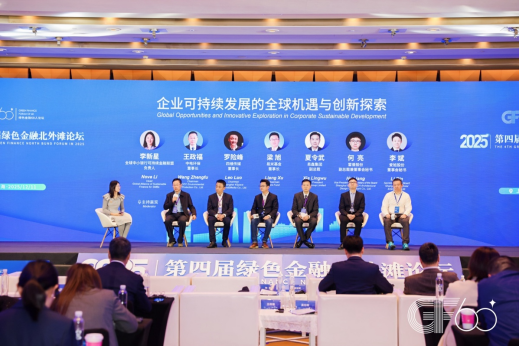
2025绿金论坛|聚焦全球机遇与创新实践,共探企业高质量发展新路径
Zhong Guo Jin Rong Xin Xi Wang· 2025-12-26 13:23
Core Viewpoint - The forum highlighted the importance of sustainable development and the integration of green finance, technology, and industry, emphasizing that green development is now a critical dimension of global competition [1][21]. Group 1: Company Insights - China Electric Environmental Protection (CEEP) focuses on large-scale industrial water treatment and municipal water environment governance, emphasizing the importance of water conservation and environmental technology innovation [5][6]. - Four Dimensions Media has integrated green and sustainable development into its operations, achieving over 70% of its business in the European and American markets, and is preparing for the EU's upcoming "Zero Deforestation Regulation" [8]. - Easy Money Fund emphasizes active equity investment based on industry chain research, aiming to inject financial capital directly into industries to enhance the marginal value of the real economy [10][11]. - Easy Car Group, as an AI-driven automotive financial service provider, has increased its new energy vehicle financing from 27% in 2023 to 58%, focusing on inclusive and green finance [13][14]. - Hope Co., Ltd. has transitioned from traditional building design to green zero-carbon services, focusing on community, factory, and park scenarios, and aims to provide comprehensive zero-carbon solutions [16]. - Aishuo Co., Ltd. has achieved a battery production efficiency of over 27.3% and is the first company to scale produce silver-free photovoltaic products, addressing raw material price volatility [19][20]. Group 2: Industry Trends - The integration of finance, technology, and the real economy is crucial for achieving sustainable development, requiring long-term commitment and systematic innovation breakthroughs [21]. - The forum featured discussions on the role of financial institutions in providing foundational financing services for green industries and optimizing costs for green technologies [11].


建研设计(301167.SZ):工程设计专业类新能源发电乙级资质通过审批
Ge Long Hui A P P· 2025-12-26 12:27
格隆汇12月26日丨建研设计(301167.SZ)公布,根据安徽省住房和城乡建设厅网站近日发布的行政许可 审批公告,安徽省建筑设计研究总院股份有限公司申请的工程设计专业类新能源发电乙级资质通过审 批。该项资质的取得,完善了公司资质体系,标志着公司具备太阳能、地热、垃圾、秸秆等可再生能源 发电工程设计能力,有利于提升公司在该领域的业务拓展能力和市场竞争力,是公司紧跟国家"双碳"目 标推动主营业务增长的重要举措,对公司长期经营发展具有积极影响。 ...
凡鹏飞:零碳园区建设进入规模化系统化新阶段丨美丽中国·零碳洞察
中国能源报· 2025-12-26 12:06
中国能源报: 首批建设名单的落地是否达到预期效果?从本次申报情况看,我国目前零 碳园区建设的基础如何? 凡鹏飞: 首批国家级零碳园区建设名单的落地,标志着我国"双碳"工作从顶层设计进入 了规模化、系统化推进的新阶段,整体开局良好。此次公布的园区名单严格锚定"单位能 耗碳排放"核心指标,筛选出的试点建设园区覆盖全国不同资源禀赋与产业类型。这不仅 是落实"十五五时期力争建成100个左右国家级零碳园区"的具体实践,更是为区域和产业 的深度脱碳确定了一批先行标杆。 从本次申报情况看,我国零碳园区建设的基础是坚实且富有活力的。一是各地申报积极性 高涨。本次零碳园区申报主体数量多,均为国家级、省级园区,已积累初步的能耗和碳排 放统计与监测等方面的经验。二是减碳技术路径清晰多元。各地已探索出绿电直连直供、 生物质和核电供热、分布式光伏、储能及智能微电网的协同减碳体系。三是应用场景广 泛。从本次公布的名单来看,零碳实践已覆盖传统工业园区、高新技术产业区等多种类型 园区,产业类型多元,不仅聚焦能源端转型,更深入到产业循环、数字化能碳管理等领 域,可望带动"以绿制绿"产业升级新模式。 中国能源报: 如何评价当下我国零碳园区建设的 ...

胡祚雄:以技术创新驱动商业模式创新
Zheng Quan Ri Bao Wang· 2025-12-26 10:41
Core Insights - The article emphasizes the importance of innovation in the capital market, particularly for technology companies, highlighting that R&D spending among A-share listed companies exceeded 1.8 trillion yuan, with a year-on-year growth of 12% [1] - The company, Lingxiong Technology, has adopted a business model that shifts from traditional IT equipment ownership to a leasing and subscription model, significantly reducing initial investment and operational costs for enterprises [2][3] - The company has undergone a digital transformation since 2019, enhancing operational efficiency and enabling better asset management for over 40,000 clients [3] - Lingxiong Technology's practices contribute to environmental sustainability by extending the lifecycle of IT equipment and reducing carbon emissions, aligning with national "dual carbon" goals [4] - The company aims to foster a symbiotic ecosystem with its clients, leveraging capital market dynamics to drive higher quality and sustainable economic growth in China [5] Summary by Sections Innovation in Capital Markets - The capital market has introduced various policies to encourage innovation among listed technology companies, with significant R&D investments reported [1] Business Model Transformation - Lingxiong Technology's innovative model allows enterprises to lease IT equipment, reducing upfront costs by over 90% and operational costs by approximately 30% over three years [2] - The shift from ownership to usage rights reflects a broader change in the industry value chain [2] Digital Transformation - The company has implemented a comprehensive digital transformation, improving operational efficiency and enabling effective management of over 1 million devices across its client base [3] - This transformation supports clients in achieving high-quality growth while minimizing initial investments [3] Environmental Sustainability - Lingxiong Technology's recycling and leasing practices contribute to significant reductions in carbon emissions, with the potential to lower emissions by thousands of tons annually [4] - The company actively participates in building a credit and standardization system within the industry to promote high-quality development [4] Ecosystem Development - The company has established a collaborative ecosystem with over 40,000 clients, aiming to leverage capital market vitality to enhance economic sustainability and quality [5]
金融赋能绿色转型——光大银行呼和浩特分行为内蒙古首个源网荷储铁合金项目注入金融“活水”
Zhong Guo Jin Rong Xin Xi Wang· 2025-12-26 09:45
Group 1 - The core viewpoint of the news is the successful financing of the integrated source-grid-load-storage project by Inner Mongolia Xinmeng New Energy Technology Co., Ltd., which received a loan of 10 million yuan from China Everbright Bank, marking a significant step in supporting green energy projects and local economic development [1][2] - The integrated source-grid-load-storage model is highlighted as a key form of the new power system, addressing challenges in renewable energy consumption and high energy consumption in traditional industries [1] - The project aims to enhance the use of green electricity in the ferroalloy production process, significantly reducing energy consumption and carbon emissions, thus setting a benchmark for industry transformation [1] Group 2 - China Everbright Bank's Hohhot branch focuses on supporting green financial needs under the "dual carbon" goals, emphasizing energy transition and industrial upgrading [2] - The bank quickly formed a professional service team to tailor financial solutions for the project, demonstrating its commitment to green finance and confidence in the development potential of the integrated model [2] - The project is expected to improve local employment and upgrade the industrial chain, contributing to Inner Mongolia's goal of becoming a national green energy industry base [2]

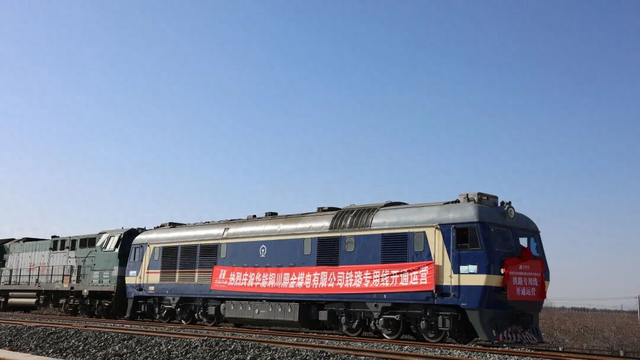
华能铜川照金煤电有限公司铁路专用线正式开通运营
Xin Lang Cai Jing· 2025-12-26 08:48
Core Viewpoint - The successful operation of Huaneng Tongchuan Zhaojin Coal Power Co., Ltd.'s dedicated railway line marks a significant step in implementing the national "shift from road to rail" strategy for energy transportation [1][6]. Group 1: Project Overview - The dedicated railway line is one of the first key demonstration projects for Huaneng Group's "shift from road to rail" initiative, spanning 14.67 kilometers with a designed speed of 80 km/h [3]. - The line has an annual capacity to receive 1.8 million tons and dispatch 700,000 tons of coal [3]. Group 2: Construction Challenges - The project team overcame multiple challenges during construction, including complex terrain, geological conditions, pandemic control, land acquisition, and external coordination [5]. - Significant infrastructure includes two major bridges, two tunnels, and modifications to the roadbed and unloading station, with over 50% of the line consisting of bridges and tunnels [3][5]. Group 3: Operational Significance - The official opening of the dedicated railway line ends the company's long-standing reliance on road transport for coal supply, enhancing the stability of regional coal supply for power generation [6]. - This development supports the national "dual carbon" goals and contributes to the high-quality economic and social development of the local area [6].

部委与地方学习中央经济工作会议精神解析:开局之年,地方如何因地制宜?
Shenwan Hongyuan Securities· 2025-12-26 06:58
国内心局 2025 年 12 月 26 日 开局之年, 地方如何"因地制宜" ? 部委与地方学习中央经济工作会议精神解析 中央经济工作会议后,中财办、相关部委及地方政府迅速推进会议精神的学习贯彻工作。其释 放的增量信息与政策信号有何深意?本文分析,可供参考。 中财办对中央经济工作会议的解读更具体,突出内需结构性变化与"反内卷"的三个层次等。 中央经济工作会议后,中财办、相关部委及地方政府围绕扩大内需、反内卷、新质生产力等方 向,密集开展会议精神的学习、解读与部署工作。各部门和地区部署亮点纷呈:中财办研判消 带结构演变等,财税部门聚焦财力保障,经济大省侧重开放布局,边疆地区强化安全建设。 中财办解读中央经济工作会议精神,重点强调财政"为未来风险留有余地"与货币政策"前瞻 性、科学性调节"两大核心方向。融资条件方面,其提出"促进社会综合融资成本低位运行", 与此前货币政策执行报告"推动社会综合融资成本下降"的表述有所变化。 内需方面,中财办提出把握消费结构性变化,坚持投资于物与投资于人相结合。其指出"我国 正在从以商品消费为主转向商品消费和服务消费并重",契合今年消费现状;投资方面则聚焦 消费类基建,并提出"靠前 ...
三家股份行AIC首投均已落地 都投了什么?
2 1 Shi Ji Jing Ji Bao Dao· 2025-12-26 06:31
Core Insights - Three joint-stock banks under the AIC model have successfully completed their first external investments within a month of their establishment, focusing on technology-related sectors [1] Group 1: Investment Activities - Xingyin Investment has made at least three external investments, primarily in the lithium battery industry, including a C-round investment of 1 billion yuan in Ganfeng Lithium [2] - Zhaoyin Investment has also completed its first investment, contributing 5 billion yuan to Changan Automobile's subsidiary, Deep Blue Automotive, which is involved in intelligent vehicle technology [3] - Xinyin Jintou has invested approximately 64.42 million yuan in Shenzhen Ganghua Clean Energy, acquiring a 49% stake in the company [4] Group 2: Sector Focus - The three AICs have distinct sector focuses: Xingyin Investment targets the lithium battery and environmental refrigerant sectors, Zhaoyin Investment is concentrated on the smart automotive industry, and Xinyin Jintou is focused on clean energy [5] - Xingyin Investment's projects align with national "dual carbon" goals, emphasizing support for new energy and high-end manufacturing [5] Group 3: Strategic Collaborations - Xingyin Investment has signed project cooperation agreements with 12 companies, with a total intended investment exceeding 10 billion yuan [6] - Zhaoyin Investment's collaboration with Changan Automobile reflects a unique synergy within the bank's ecosystem, potentially leading to further capital market activities [6] - Xinyin Jintou aims to leverage its AIC license and resources from CITIC Group to serve local enterprises in the Guangdong-Hong Kong-Macao Greater Bay Area [7]
申万宏观:开局之年,地方如何“因地制宜”?
Xin Lang Cai Jing· 2025-12-26 06:18
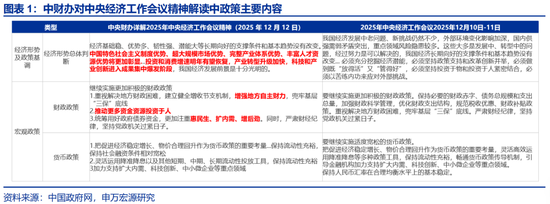
Group 1 - The central economic work conference emphasizes the need for structural changes in domestic demand and the concept of "anti-involution" across three levels [2][3][41] - The central financial office highlights the importance of leaving room for future risks in fiscal policy and the forward-looking, scientific adjustment of monetary policy [2][41] - The focus on optimizing consumption structure indicates a shift from commodity consumption to a balance between commodity and service consumption, aligning with current consumption trends [2][48] Group 2 - Investment strategies should combine investments in physical infrastructure and human capital, with a focus on consumer-related infrastructure projects [11][51] - The central financial office plans to implement major projects under the 14th Five-Year Plan and guide private investment towards high-tech and service sectors [11][51] - The emphasis on establishing a unified national market and "anti-involution" measures requires precise actions from the market, government, and enterprises [3][54] Group 3 - The fiscal and tax departments are focused on ensuring financial stability while addressing local fiscal difficulties, including the issuance of long-term special government bonds [4][58] - Financial regulatory bodies are using various tools to support the real economy and the real estate market, emphasizing the importance of timing and intensity in policy implementation [4][59] - The industrial departments are collaborating to cultivate new productive forces, particularly in digital transformation and key technology breakthroughs [4][65] Group 4 - Local governments are adapting the central economic work conference's spirit to their specific circumstances, focusing on breaking "involution," promoting "investment in people," and establishing a correct view of performance [5][66] - Different regions are pursuing development strategies based on their unique endowments, with eastern regions emphasizing outward competition and future technology, while central and western regions focus on green, transitional, and security aspects [5][34][66] - The emphasis on "investment in people" indicates a shift towards enhancing human capital alongside physical investments, with local governments recognizing the importance of this balance [5][66]
部委与地方学习中央经济工作会议精神解析:开局之年,地方如何“因地制宜”?
Shenwan Hongyuan Securities· 2025-12-26 06:17
宏 观 研 究 国内政策 中央经济工作会议后,中财办、相关部委及地方政府迅速推进会议精神的学习贯彻工作。其释 放的增量信息与政策信号有何深意?本文分析,可供参考。 中财办对中央经济工作会议的解读更具体,突出内需结构性变化与"反内卷"的三个层次等。 中央经济工作会议后,中财办、相关部委及地方政府围绕扩大内需、反内卷、新质生产力等方 向,密集开展会议精神的学习、解读与部署工作。各部门和地区部署亮点纷呈:中财办研判消 费结构演变等,财税部门聚焦财力保障,经济大省侧重开放布局,边疆地区强化安全建设。 中财办解读中央经济工作会议精神,重点强调财政"为未来风险留有余地"与货币政策"前瞻 性、科学性调节"两大核心方向。融资条件方面,其提出"促进社会综合融资成本低位运行", 与此前货币政策执行报告"推动社会综合融资成本下降"的表述有所变化。 内需方面,中财办提出把握消费结构性变化,坚持投资于物与投资于人相结合。其指出"我国 正在从以商品消费为主转向商品消费和服务消费并重",契合今年消费现状;投资方面则聚焦 消费类基建,并提出"靠前实施具备条件的'十五五'重大项目"。 改革方面,中财办注重统一大市场与"双碳"建设。"反内卷"层 ...