现代化产业体系

Search documents
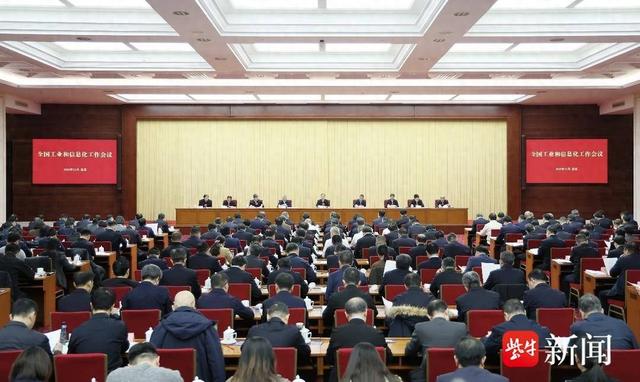
AI核心产业超万亿,工信部将完善具身智能等创新发展政策
第一财经· 2025-12-27 02:07
Core Viewpoint - The article emphasizes the resilience and vitality of the industrial economy in China, highlighting the achievements and future tasks outlined in the national industrial and information technology work conference held on December 25-26, 2025 [3]. Summary by Sections Industrial Growth and Achievements - From January to November 2025, the added value of high-tech manufacturing and equipment manufacturing industries increased by 9.2% and 9.3% year-on-year, respectively [3]. - The core artificial intelligence industry surpassed 1 trillion yuan, and exports of new energy vehicles exceeded 2 million units [3]. - By the end of October, the total number of 5G base stations reached 4.758 million, with 5G technology integrated into 91 out of 97 categories of the national economy [3]. 2026 Key Work Focus - The conference outlined ten key areas for 2026, including consolidating the positive trend of the industrial economy, enhancing the resilience and security of industrial chains, and accelerating technological innovation in industries [4]. - Other focuses include optimizing traditional industries, fostering emerging and future industries, promoting deep integration of information technology and industrialization, and advancing green and low-carbon development in industries [4]. New Industrial Revolution and Future Planning - The new round of technological revolution and industrial transformation is accelerating, with a particular emphasis on artificial intelligence and its profound impact on industrial development models and corporate forms [6]. - The "14th Five-Year Plan" emphasizes building a modern industrial system and strengthening the foundation of the real economy, with a focus on optimizing traditional industries and fostering emerging industries [6]. Governance and Policy Implementation - The modernization of industry governance is progressing, with significant reform measures being implemented to address "involution" competition and improve industry governance efficiency [7]. - The Ministry of Industry and Information Technology plans to accelerate the implementation of the "15th Five-Year" series of plans and strengthen the coordination of industrial policies with fiscal and financial policies [7].

锚定重点,以实际行动推动高质量发展——省委经济工作会议精神在全省引发热烈反响
Da Zhong Ri Bao· 2025-12-27 01:06
Group 1 - The Shandong Provincial Economic Work Conference has outlined "eight greater efforts" as key tasks for the upcoming year, providing guidance for economic work and clarifying main focus areas [1] - The conference emphasizes the importance of promoting consumption as a key part of expanding domestic demand, with Weifang City reporting over 600 consumption promotion events conducted from January to November, generating over 10 billion yuan in consumption and a 10.7% year-on-year increase in retail sales [1] - Yantai City is focusing on building a modern industrial system by supporting the establishment of future industry pilot zones, with plans to create 10 future industry acceleration parks and a 10 billion yuan special fund for emerging future industries [2] Group 2 - The conference highlights the need for greater efforts in regional coordinated development, with specific actions planned for Heze and surrounding areas to clarify paths for economic advancement [3] - Qingdao City is implementing a rural revitalization strategy, aiming to establish around 30 city-level rural revitalization zones by 2030, which will directly impact approximately 1,600 natural villages [3] - The conference also stresses the importance of balancing development and safety, with the Tai Mountain scenic area planning to enhance safety measures while promoting high-quality cultural tourism [3]
发展新质生产力不是齐步走
Xin Lang Cai Jing· 2025-12-26 23:07
Core Viewpoint - The Central Economic Work Conference emphasizes the development of "new quality productivity" tailored to local conditions, indicating a direction for addressing current issues and promoting both traditional industry upgrades and emerging industry cultivation [1] Group 1: Development of New Quality Productivity - The concept of new quality productivity is not limited to emerging industries but includes the upgrading of traditional industries, showcasing a dual development model where both sectors thrive together [1] - From January to November this year, the added value of China's high-tech manufacturing industry has maintained rapid growth, particularly in emerging fields like electronic materials and integrated circuits, while traditional industries such as coal and chemicals have also seen steady growth due to technological upgrades [1] - Different regions are exploring differentiated approaches, with some focusing on new materials and others on future industries like quantum computing and aerospace information, highlighting a trend towards localized and specialized development [1] Group 2: Green Production and Economic Benefits - New quality productivity is fundamentally linked to green productivity, as evidenced by significant growth in clean energy generation and the rapid increase in production of green products like wind power equipment and electric vehicles from January to November [2] - Western regions are leveraging their ecological advantages to develop large-scale photovoltaic projects, while eastern regions are integrating green manufacturing with digital economy initiatives to promote low-carbon transformations across the industry chain [2] - The approach to developing new quality productivity should be precise and tailored rather than uniform, emphasizing the need for differentiated strategies based on regional strengths [2] Group 3: Key Strategies for Implementation - The development strategy should include classified guidance to avoid a one-size-fits-all approach, focusing on regional strengths such as quantum technology in resource-rich areas and smart agriculture in agricultural hubs [3] - Strengthening innovation integration is crucial, requiring the establishment of public service systems to facilitate deep collaboration between industry, academia, and research, thereby overcoming barriers to technology transfer [3] - Institutional support must be improved to align with new quality productivity, enhancing market roles in resource allocation and utilizing policy tools like green finance and technological transformation subsidies to support regional development [3]
加快构建以先进制造业为骨干的现代化产业体系
Xin Lang Cai Jing· 2025-12-26 21:02
(来源:沈阳日报) 转自:沈阳日报 市委经济工作会议围绕向上争取资金政策,促消费扩投资,促进科技创新与产业创新深度融合,深化改 革扩大开放,优化营商环境,提升人民生活品质等重点领域和关键环节作出针对性部署,既注重着力解 决老问题,也重视发力应对新挑战,体现出鲜明的问题导向、任务导向、目标导向。 "此次经济工作会议的召开,为全市上下以奋发有为的精神状态做好'十五五'开局之年各项工作提供了 行动指引、明确了主攻方向,对于进一步推动经济高质量发展具有十分重要的意义。"辽宁社会科学院 经济研究所所长、研究员宋帅官说。 宋帅官称,一年来,沈阳市顶住压力,迎难而上,稳住了经济发展的基本盘,经济运行总体平稳、稳中 有进,产业升级、改革开放、城乡融合、民生保障等领域取得了新进展新成效,为"十五五"开局奠定了 良好基础。 推动经济高质量发展,实现沈阳市"十五五"开好局、起好步。宋帅官认为要跳出沈阳看沈阳,当好东北 振兴、辽宁振兴"跳高队",在一些重点经济发展领域要奋勇争先,尤其是要加快构建以先进制造业为骨 干的现代化产业体系。一方面是加快传统产业转型升级,全面推动制造业"智改数转",在全省率先开展 免费数字化诊断服务,持续打造 ...
稳中求进提质增效 实现“十五五”良好开局
Xin Lang Cai Jing· 2025-12-26 21:02
Group 1 - The core focus for the upcoming economic work in Shenyang is to maintain stability while pursuing progress, emphasizing "qualitative improvement and reasonable quantitative growth" [1] - The construction of a modern industrial system with Shenyang's unique advantages is a top priority, focusing on industrial upgrades and the transformation of old and new driving forces [2] - The city aims to enhance traditional industries like equipment manufacturing while also supporting strategic emerging industries such as aerospace, biomedicine, and new energy [2] Group 2 - Promoting consumption and expanding investment are identified as crucial engines for economic growth, requiring coordinated efforts to achieve breakthroughs [2] - Effective investment will focus on infrastructure, industrial upgrades, and social welfare, with an emphasis on high-quality projects to ensure early commencement and effectiveness [2] - Continuous reform is essential to stimulate internal motivation, with a focus on optimizing the business environment and reducing the cost of factor mobility [3] Group 3 - The city will implement targeted policies to enhance the business environment by comparing with the highest international and domestic standards [3] - The reform will prioritize state-owned enterprises and development zones, aiming to increase vitality and actual benefits through accountability measures [3] - The Shenyang municipal government emphasizes a proactive and results-oriented approach to implement the meeting's spirit and contribute to the modernization of Shenyang [3]
笃“实”夯基现代化产业体系建设持续推进
Xin Lang Cai Jing· 2025-12-26 21:02
Group 1 - The modernization of the industrial system is the material and technical foundation of Chinese-style modernization, with advancements in industrial, agricultural, service sectors, and infrastructure development [1] - The Central Economic Work Conference emphasized the continuous promotion of the modernization of the industrial system by 2025, focusing on innovation-driven growth and nurturing new momentum [1][3] - The current focus is on leading new quality productivity development through technological innovation, reinforcing the real economy to gain strategic advantages in future development and international competition [1][2] Group 2 - The domestic and international environments are complex, necessitating a focus on the real economy for modern industrial system construction, supported by policies aimed at stabilizing growth in key industries [2] - The agricultural sector has shown resilience, achieving a stable grain output of over 1.4 trillion jin, despite natural disasters [3] - In November, 30 out of 41 major industrial sectors reported year-on-year growth in added value, indicating steady progress in the industrial economy [3] Group 3 - The integration of technological and industrial innovation is advancing, with more research outcomes transitioning from laboratories to production lines, supported by the establishment of over 2,400 pilot platforms nationwide [7][8] - Key industrial enterprises have improved their CNC rate to 68.5%, and the comprehensive utilization rate of industrial solid waste has reached 57% [8] - The number of high-tech enterprises in the country has reached 504,000, with over 140,000 specialized and innovative small and medium-sized enterprises cultivated, enhancing the innovation capacity of enterprises [9] Group 4 - The integration of industries is a crucial path for building a modern industrial system, with a focus on enhancing economic efficiency and creating new industries and business models [10] - The acceleration of the integration between the real economy and the digital economy is evident, with over 7,000 advanced intelligent factories established [11][12] - The government is promoting the deep integration of manufacturing and service industries, with policies aimed at enhancing the development of modern services alongside advanced manufacturing [12][13]
笃“实”夯基 现代化产业体系建设持续推进
Xin Lang Cai Jing· 2025-12-26 19:59
Group 1 - The modernization of the industrial system is the material and technical foundation for Chinese-style modernization, with advancements in industry, agriculture, services, and infrastructure development [1] - The Central Economic Work Conference emphasized the continuous promotion of the modernization of the industrial system by 2025, focusing on innovation-driven growth and nurturing new momentum [1] - The current emphasis is on leading new quality productivity development through technological innovation, reinforcing the real economy to gain strategic advantages in future development and international competition [1] Group 2 - The focus on the real economy is crucial for building a modern industrial system, as evidenced by the significant market share of Shandong Zhonghang Taida Composite Materials Co., which has over 30% in the national hot press market [2] - The State Council has issued guidelines to ensure financial services support the real economy, with various departments implementing growth stabilization plans for key industries like steel and automotive [2] - The resilience of the real economy is highlighted by the agricultural sector achieving a stable grain output of over 1.4 trillion jin, despite natural disasters [3] Group 3 - The integration of technological and industrial innovation is essential for enhancing productivity and creating a modern industrial system that is competitive and self-sufficient [6] - The number of high-tech enterprises in China has reached 504,000, with over 140,000 specialized and innovative small and medium-sized enterprises, indicating a strengthening of the innovation主体 [8] - The shift towards digital and intelligent manufacturing is accelerating, with over 7,000 advanced intelligent factories established and more than 100 million devices connected to industrial internet platforms [10] Group 4 - The integration of the primary, secondary, and tertiary industries is necessary for the construction of a modern industrial system, as highlighted by the ongoing efforts to promote service-oriented manufacturing and the deep integration of manufacturing with service industries [12] - The Central Economic Work Conference has outlined plans to enhance the quality and capacity of the service industry, which is expected to further support the modernization of the industrial system [12] - The future outlook for economic development is optimistic, driven by active factor flows and innovation, with a focus on intelligent, green, and integrated development directions [12]
激活创新动能 夯实发展基础
Xin Lang Cai Jing· 2025-12-26 19:02
Group 1 - The economic work conference of the Bingtuan Party has set a clear direction for the economic work in the coming year, emphasizing the need to enhance responsibility, mission, and urgency among cadres and staff to contribute to high-quality economic development [1] - The conference highlighted the importance of building a modern industrial system, focusing on structural adjustment and optimization, and promoting the upgrading of industries such as agriculture and manufacturing [1] - The conference called for the establishment of a collaborative development mechanism for the upstream and downstream of the industrial chain, aiming to transform regional advantages into development advantages [1] Group 2 - The conference proposed high-quality co-construction of the core area of the Silk Road Economic Belt, aiming to enhance the institutional openness of the Xinjiang Free Trade Zone Bingtuan Block [2] - A new "3+2" industrial system will be developed, focusing on power equipment manufacturing, home appliance manufacturing, and hardware processing, along with international warehousing logistics and automobile exports [2] - The conference emphasized the need for state-owned enterprise reform and strategic restructuring to foster a green chemical industry chain and enhance the integration of technological and industrial innovation [2] Group 3 - The Bingtuan Party's economic work conference aims to accelerate the growth of characteristic advantageous industries, with a focus on seed industry revitalization and the development of a corn seed industry [2] - The integration of planting, processing, and sales in the seed industry has been established, creating a robust industry that supports local farmers [2] - There is a collective commitment to translate the conference's directives into actionable measures to ensure a strong start for the 14th Five-Year Plan [2]
2025年终经济观察丨笃“实”夯基 现代化产业体系建设持续推进
Xin Lang Cai Jing· 2025-12-26 14:58
Group 1 - The modernization of the industrial system is the material and technical foundation of Chinese-style modernization, with advancements in industrial, agricultural, service sectors, and infrastructure development [1] - The Central Economic Work Conference emphasized the continuous promotion of the modernization of the industrial system by 2025, focusing on innovation-driven growth and nurturing new momentum [1] - Companies are increasingly leveraging technological innovation to lead the development of new productive forces, reinforcing the real economy for strategic advantages in future development and international competition [1] Group 2 - The focus on the real economy is crucial for building a modern industrial system, as evidenced by the significant market share of Shandong Zhonghang Taida Composite Materials Co., which has over 30% in the national hot press market [2] - The government has issued guidelines to enhance financial support for the real economy, with various departments collaborating on growth stabilization plans for key industries like steel and automotive [2] Group 3 - The resilience of the real economy is highlighted by the agricultural sector achieving a stable grain output of over 1.4 trillion jin, despite natural disasters [3] - In November, 30 out of 41 major industrial sectors reported year-on-year growth in value added, indicating steady progress in the industrial economy [3] - The service sector contributed 3.1 percentage points to GDP growth in the first three quarters, reflecting an increase in quality and efficiency [3] Group 4 - The integration of technology and industry is essential for enhancing industrial innovation capabilities, addressing issues of "large but not strong" and "complete but not refined" in certain sectors [6] - The establishment of over 2,400 pilot platforms nationwide supports the development of new productive forces, with 241 key platforms identified for nurturing innovation [6] Group 5 - Traditional industries are accelerating their transformation, with the CNC rate in key industrial processes reaching 68.5% and the comprehensive utilization rate of industrial solid waste at 57% [7] - The number of high-tech enterprises in China has reached 504,000, with over 140,000 specialized and innovative small and medium-sized enterprises cultivated, enhancing the innovation capacity of the industrial system [8] Group 6 - The integration of industries is a significant pathway for building a modern industrial system, with a focus on improving economic efficiency and creating new industries and business models [9] - The acceleration of the integration between the real economy and digital economy is evident, with over 7,000 advanced smart factories established and more than 100 million devices connected to key industrial internet platforms [10] Group 7 - The shift from merely selling equipment to providing engineering design and energy-saving services is exemplified by Shaanxi Blower (Group) Co., which has expanded its business to over 100 countries [12] - The government is promoting the deep integration of manufacturing and service industries, aiming for a collaborative development model across the three industrial sectors [12]
工信部部署2026年重点工作,事关人工智能、低空经济
Xin Lang Cai Jing· 2025-12-26 13:54
Core Insights - The National Industrial and Information Technology Work Conference was held from December 25 to 26, focusing on the development of emerging industries and future industries, including integrated circuits, new displays, new materials, aerospace, low-altitude economy, and biomedicine, while supporting artificial intelligence initiatives [2][4] Group 1: Industrial Economic Performance - The industrial economy is expected to show steady progress, with telecommunications business volume and software business revenue projected to grow by approximately 9% and 12% year-on-year, respectively, and digital industry revenue also expected to increase by around 9% [3] - From January to November, the added value of high-tech manufacturing and equipment manufacturing industries grew by 9.2% and 9.3% year-on-year, respectively, with the core AI industry exceeding 1 trillion yuan and new energy vehicle exports surpassing 2 million units [3] Group 2: Key Focus Areas for 2026 - The year 2026 marks the beginning of the "15th Five-Year Plan," emphasizing the integration of technological and industrial innovation, and the need to stabilize growth, enhance innovation, promote integration, optimize governance, and mitigate risks [4] - Ten key areas of focus for 2026 include consolidating the positive trend of the industrial economy, enhancing industrial chain resilience, accelerating technological innovation, optimizing traditional industries, and fostering emerging and future industries [5][6] Group 3: Technological and Industrial Integration - The conference highlighted the importance of deepening the integration of information technology and industrialization, including the establishment of high-quality industry data sets and the promotion of digital transformation in key industries [6] - Initiatives to support the integration of AI and manufacturing, as well as the development of industrial internet platforms, were also emphasized [6] Group 4: Green and Sustainable Development - The promotion of green and low-carbon development in the industrial sector is a priority, with efforts to enhance energy efficiency and carbon reduction in industrial enterprises, and the establishment of standards for carbon footprint accounting [6][7] - The conference also called for the cultivation of national green factories and industrial parks, as well as the promotion of comprehensive utilization of industrial solid waste [7] Group 5: Enterprise Development and Governance - The conference aims to foster high-quality enterprises, including "little giant" companies and manufacturing champions, while addressing issues related to overdue payments to enterprises [7] - Enhancing governance efficiency in the industrial and information sectors is crucial, with a focus on curbing "involution" competition and promoting policy coordination across industries [7]