
AGI

Search documents
阿里高德联合小鹏入局无人驾驶赛道,打造Robotaxi聚合平台
Zhong Guo Jin Rong Xin Xi Wang· 2025-11-05 11:56
Core Insights - Alibaba's Gaode has partnered with XPeng Motors to integrate XPeng's Robotaxi into Gaode's platform, marking a significant step in the collaboration between ride-hailing services and autonomous vehicle technology [1] - This partnership aims to leverage Gaode's spatial intelligence capabilities to enhance the Robotaxi service, focusing on global expansion and technological innovation [5] Group 1: Partnership and Collaboration - The collaboration between Gaode and XPeng is not just a business upgrade but a strategic move towards exploring Artificial General Intelligence (AGI) [1] - Gaode has established deep partnerships with over 40 automotive manufacturers, accumulating substantial technical capabilities in smart cockpits and advanced driver-assistance systems (ADAS) [4] Group 2: Technological Advancements - Gaode's spatial intelligence technology enables a deep understanding of urban traffic dynamics, providing real-time traffic analysis, demand forecasting, and enhanced decision-making for autonomous vehicles [3] - The spatial intelligence capability translates into three main values for Robotaxi: optimal global coordination, long-range perception through vehicle-to-everything (V2X) communication, and real-world scenario training for autonomous systems [3] Group 3: Market Position and Ecosystem - Gaode has evolved into a leading ride-hailing aggregator since introducing the aggregation model in 2017, connecting hundreds of service providers and serving over 800 million active users monthly [4] - The platform's capabilities are now extending into the Robotaxi sector, allowing companies to focus on core technology development without the need to build their own user interfaces [4] Group 4: Global Expansion - Gaode's app is available in over 200 countries and regions, with ride-hailing services launched in more than 50 countries, facilitating the global deployment of China's leading Robotaxi technology [5] - The partnership with XPeng exemplifies Gaode's vision of creating a sustainable and operational smart mobility ecosystem in the AI era [5]


AGI五年内突破关键瓶颈!AIGC正在重构所有行业
Sou Hu Cai Jing· 2025-11-05 11:10
Core Insights - The report highlights that AGI will overcome key bottlenecks in the next five years, transitioning AI from virtual spaces to real-world applications, marking the beginning of a new era of human-machine coexistence [1] Group 1: AGI Technology Evolution - AI is evolving from single-text generation to multi-modal and embodied intelligence, with breakthroughs concentrated in five key areas [2] - The continuous evolution of the Transformer architecture is leading to AI video generation technologies that approach physical realism through spatiotemporal modeling [3] - The application of intelligent agents is experiencing a comprehensive explosion, enabling cross-system process automation and establishing a solid foundation for AGI [4] Group 2: US-China Competition - In 50 key AI competitive fields, the US leads in 26 areas, while China leads in 13, with 11 fields being evenly matched [5] - China excels in fields like facial recognition and industrial robots, focusing on application landing and industrial integration, while the US leads in foundational model training and AI-specific chips, emphasizing breakthroughs and principle innovation [6] - The report indicates that closed-source models outperform open-source models by approximately nine months, with the future competition focusing on who can achieve cross-level integration first [7] Group 3: Major Players in AI - Eight major players, including OpenAI and Google DeepMind, are shifting from model competition to ecological competition [8] - Companies are moving towards personalized and specialized models, emphasizing efficient reasoning and multi-modal integration rather than merely pursuing larger scales [9] - OpenAI and Anthropic maintain closed-source strategies for safety and differentiation, while Meta and DeepSeek lean towards open-source approaches [11] Group 4: Industry Applications - AIGC is revolutionizing content production, education, healthcare, and manufacturing, leading to exponential efficiency improvements [12] - In content production, AI has created over 10,000 music pieces, showcasing remarkable efficiency in literary creation as well [13] - AI is transforming education by enabling personalized learning paths and fostering interdisciplinary creativity [14] - In healthcare, AI-assisted platforms are enhancing cancer diagnosis and treatment precision through integrated data analysis [15] Group 5: Future Outlook - The evolution of AGI will redefine human values, shifting from labor-centric to reflection and creativity-centric paradigms [18] - The economic paradigm is transitioning from scarcity to meaning, focusing on how to live more meaningfully rather than merely producing more [19] - The relationship between humans and AI is expected to evolve from automation to cohabitation, with a focus on symbiosis rather than complete automation [49][51]

高德联合小鹏入局无人驾驶赛道,打造最大Robotaxi聚合平台
Guan Cha Zhe Wang· 2025-11-05 09:50
Core Insights - Alibaba's Gaode has partnered with XPeng Motors to integrate XPeng's Robotaxi into Gaode's platform, providing L4 autonomous driving services [1][3] - This collaboration marks the first global ecosystem partnership for XPeng's Robotaxi, which will open its SDK for global partners [1][3] Group 1: Partnership Details - XPeng Motors plans to launch three self-developed mass-produced Robotaxis by 2026, initiating trial operations [3] - The Robotaxi is designed for L4 autonomous driving, equipped with four Turing AI chips and a maximum computing power of 3000 TOPS, utilizing XPeng's second-generation VLA model [3] - Gaode has established deep collaborations with over 40 automotive manufacturers, leveraging its technical capabilities in smart cockpits and advanced driver-assistance systems (ADAS) [3] Group 2: Strategic Implications - The partnership represents a novel "mobility platform + pre-installed mass-produced Robotaxi" collaboration model, highlighting Gaode's shift towards spatial intelligence and the open application of AI capabilities [3] - Both companies aim to explore Artificial General Intelligence (AGI) together, with plans to expand their Robotaxi services internationally [3]


高德联合小鹏打造最大Robotaxi聚合平台,高德CEO郭宁:未来双方将携手出海
Xin Lang Ke Ji· 2025-11-05 09:10
Core Insights - Alibaba's Gaode has announced a global ecological partnership with XPeng Motors, integrating XPeng's Robotaxi into the Gaode platform to provide Level 4 autonomous driving services [1] - Gaode's CEO emphasized that this collaboration is a significant step towards exploring AGI and aims to expand their Robotaxi services internationally [1] - Gaode has established deep partnerships with over 40 automotive manufacturers, enhancing its technological capabilities in smart cockpits and advanced driver assistance systems (ADAS) [1] Group 1 - Gaode has evolved into the largest ride-hailing aggregation platform in China since pioneering the model in 2017, connecting hundreds of specialized transportation service providers [2] - The Gaode app boasts over 800 million active users monthly, facilitating the growth of local transportation companies [2] - The integration of Robotaxi services extends beyond XPeng to include leading companies like WeRide and Pony.ai, enhancing Gaode's capabilities in this sector [2] Group 2 - Gaode's global expansion is evident, with the app covering over 200 countries and regions, and ride-hailing services launched in more than 50 countries [2] - This global reach allows for the potential international deployment of China's leading Robotaxi technology, promoting the concept of "usable everywhere, easy to use" [2]
阿里高德入局无人驾驶赛道,打造最大Robotaxi聚合平台
Xin Lang Cai Jing· 2025-11-05 08:36
"高德与小鹏的合作,不仅仅是一次业务升级,更是我们基于共同认知、探索AGI的关键一步。"高德 CEO郭宁表示,未来双方将携手出海,把中国领先的Robotaxi服务推向世界舞台。 11月5日,阿里巴巴(NYSE:BABA;HKEX:09988)旗下高德宣布与小鹏汽车达成全球生态合作 ——小鹏Robotaxi将正式接入高德平台,共同为用户提供L4级自动驾驶出行服务。 这不仅是行业首个"出行平台+前装量产Robotaxi"合作模式,也是高德全面转向空间智能后,AI能力跨 界开放的重要一步——致力于以"技术+生态"服务全球客户,打造最大的Robotaxi聚合平台。 ...
深度|Andrej Karpathy:行业对Agent的发展过于乐观,一个能真正帮你工作的Agent还需要十年发展时间
Z Potentials· 2025-11-05 02:57
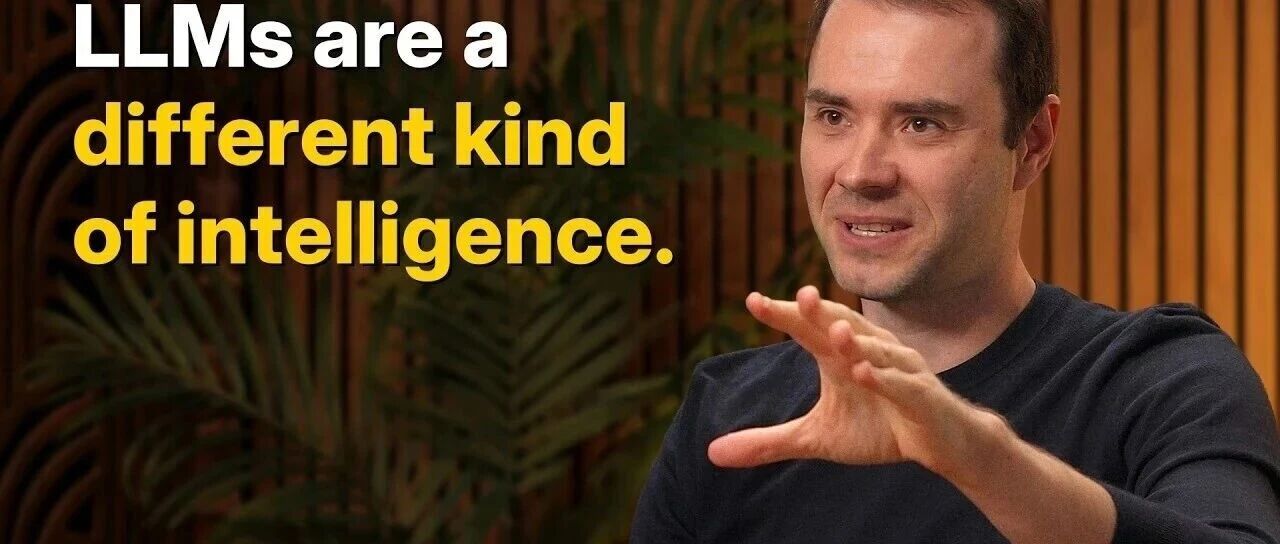
Core Insights - The article discusses the evolution of AI, particularly focusing on the development of agent systems and the challenges they face in achieving true intelligence [4][5][6][7][8][9][10]. Group 1: Future of AI Agents - Andrej Karpathy emphasizes that the next decade will be crucial for the development of AI agents, suggesting that current systems are not yet mature enough to be fully utilized in practical applications [5][6][7]. - The concept of a "cognitive core" is introduced, which refers to a stripped-down version of knowledge that retains intelligent algorithms and problem-solving strategies, highlighting the need for better data quality in training models [5][16]. - Karpathy expresses concern that society may lose understanding and control over AI systems as they become more integrated into daily life, leading to a disconnect between users and the underlying mechanisms of these systems [5][6]. Group 2: Historical Context and Learning Mechanisms - The article outlines significant milestones in AI development, such as the introduction of AlexNet and the Atari reinforcement learning era, which shaped the current landscape of AI research [8][9][10]. - Karpathy argues that human learning differs fundamentally from reinforcement learning, suggesting that humans build rich world models through experience rather than relying solely on reward signals [40]. - The discussion includes the limitations of current AI models in terms of continuous learning and the need for a more sophisticated understanding of context and memory [22][23]. Group 3: AI's Current Limitations - Karpathy critiques the current state of AI, stating that many generated code outputs are of mediocre quality and that the industry is experiencing a phase of over-optimism regarding AI capabilities [5][6][37]. - The article highlights the challenges AI faces in understanding complex code structures and the limitations of code generation models in producing original, contextually appropriate code [30][31][36]. - The need for a more nuanced approach to AI development is emphasized, suggesting that improvements must occur across multiple dimensions, including algorithms, data, and computational power [24][25][27].
重组、谋上市,OpenAI更自由了
投中网· 2025-11-05 02:29
Core Viewpoint - OpenAI is preparing for an initial public offering (IPO) with a potential valuation of $1 trillion, which could be the largest IPO in history. The company is considering submitting its listing application as early as the second half of 2026, with a preliminary fundraising target of at least $60 billion [5][20][18]. Group 1: Company Structure and Transformation - OpenAI has undergone a restructuring to transition from a purely non-profit organization to a dual-structure model that balances commercial and public interest goals. The non-profit entity will control the new public benefit corporation (PBC) that will manage the profit-generating activities [7][11][18]. - The restructuring allows OpenAI to eliminate profit caps, enabling a more traditional capital structure where employees, investors, and the non-profit can hold equity [11][17]. - The new structure aims to provide OpenAI with greater flexibility in fundraising and pursuing an IPO, while still adhering to its original mission [23][18]. Group 2: Financial Performance and Revenue Streams - OpenAI reported a revenue of approximately $4.3 billion for the first half of 2025, a 16% increase compared to the previous year, but also incurred a loss of $13.5 billion primarily due to high R&D costs [20][21]. - The company aims to achieve a full-year revenue target of $13 billion and a cash burn target of $8.5 billion for the year [20]. - OpenAI's revenue sources include user subscription fees, API licensing, and commercial partnerships, with significant contributions from its flagship product, ChatGPT [24][27]. Group 3: Strategic Partnerships and Market Position - Microsoft, as OpenAI's largest investor, holds a 27% stake in the new PBC and has renegotiated terms to extend its exclusive rights to OpenAI's technology until 2032 [16][17]. - The partnership has evolved from a deep integration to a more flexible collaboration, allowing OpenAI to work with other companies while still benefiting from Microsoft's resources [9][12]. - OpenAI's products, particularly ChatGPT and the newly launched Sora, have positioned the company as a leader in AI technology, with Sora achieving significant download numbers shortly after its release [29][30]. Group 4: Future Outlook and Market Sentiment - The market views OpenAI's potential IPO favorably, with expectations of substantial returns for early investors, given the company's innovative products and strong market presence [20][31]. - OpenAI's future growth is anticipated to be driven by its AI Agent products, with projections indicating that revenue from this segment could reach $29 billion by 2029 [34]. - Despite the positive outlook, there are concerns regarding the balance between profit motives and the company's original mission, as well as the implications of its restructuring on governance and public accountability [37][38].


万亿估值、百亿亏损,OpenAI开启商业化狂飙
3 6 Ke· 2025-11-04 23:02
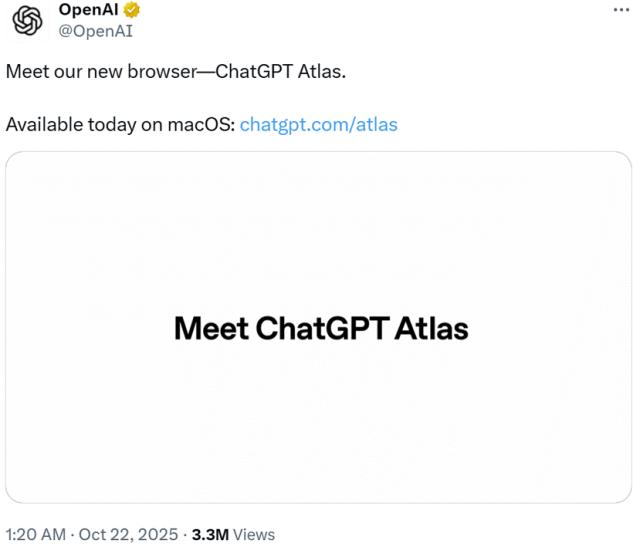
Core Insights - OpenAI is rapidly advancing its commercialization efforts, driven by the need to convert its significant user base into sustainable revenue streams [1][3][5] - The company is launching multiple products, including the Atlas AI browser and Sora 2, to expand its ecosystem and enhance user engagement [1][7][11] Commercialization Strategy - OpenAI's annual recurring revenue is approximately 70% derived from ChatGPT subscription fees, but only 5% of its 800 million monthly active users are paying customers [3][12] - The company is shifting from a cautious approach to a more aggressive "broad net" strategy, aiming to integrate AI into various aspects of users' digital lives [5][9] Financial Pressures - OpenAI faces immense financial pressure due to rising operational costs and significant investments required for AI development, with a reported net loss of $13.5 billion in the first half of 2025 [16][18] - The company has entered into a costly agreement with Microsoft, requiring an additional purchase of $250 billion in Azure cloud services, which is seen as a "separation fee" for losing preferential access to computing resources [12][18] Funding and Valuation - OpenAI has raised substantial funding, including $6.6 billion in 2024 and $40 billion in 2025, leading to a valuation of $300 billion, making it one of the highest-valued private companies globally [13][18] - Despite impressive revenue growth of 200% year-on-year, the company must establish a clear and credible profit model to support its soaring valuation, which is nearing $1 trillion [18][19] Future Plans - OpenAI is considering an initial public offering (IPO) as early as the second half of 2026, with discussions around raising at least $60 billion, which could push its valuation beyond $1 trillion [18][19]
重组、谋上市,OpenAI更自由了
Sou Hu Cai Jing· 2025-11-04 11:32
Core Insights - OpenAI is preparing for an initial public offering (IPO) with a potential valuation of up to $1 trillion, which could be the largest IPO in history [3][6] - The company has recently completed a restructuring, converting investments from various stakeholders into common stock, thereby removing previous financial return limitations [3][5] - OpenAI's relationship with Microsoft is shifting from a "deep integration" to a "free collaboration" model, allowing both companies to partner with others [3][12] Company Structure and Financials - OpenAI has transitioned from a purely non-profit organization to a dual-structure model that balances commercial and public interest goals, with a non-profit entity controlling a public benefit corporation (PBC) [5][8] - The restructuring allows OpenAI to eliminate profit caps, enabling a more traditional capital structure and greater profit potential [8][15] - OpenAI's financial report indicates a revenue of approximately $4.3 billion for the first half of 2025, a 16% increase from the previous year, but also a loss of $13.5 billion due to high R&D costs [16][17] Market Position and Product Development - OpenAI's flagship product, ChatGPT, has significantly contributed to its revenue, with additional income streams from API licensing and partnerships with Microsoft [20][29] - The company is exploring various monetization strategies, including increased pricing for its latest models and integrating e-commerce functionalities into ChatGPT [20][23] - OpenAI's recent product launches, such as Sora, demonstrate its ongoing innovation and potential to disrupt multiple industries, including entertainment and education [27][29] Future Outlook - OpenAI aims to achieve significant milestones in AI research, including the development of fully autonomous AI researchers by 2028 [30][31] - The company is expected to generate substantial revenue from its AI Agent products, with projections estimating $29 billion by 2029 [29] - The market generally views OpenAI's restructuring and future plans positively, recognizing its technological leadership and commercial potential [33]

X @何币
何币· 2025-11-04 10:34
Overview - Sentient is developing a better Bittensor by funding AI products through token issuance mechanisms, which in turn generate actual revenue for the protocol [1] - The company aims to create a decentralized AGI ecosystem with real products, users, utility, and revenue streams [1] Technological Advancement - Sentient's research has surpassed closed-source AI labs with only 1/10th of the funding [1] - The ROMA framework has outperformed Perplexity and Gemini 2.5, becoming the number one trending repository on GitHub [1] - The ODS system has outperformed GPT-4o mini and DeepSeek [1] Investment and Team - Sentient is backed by Founders Fund, the same fund that invested in OpenAI, and is one of their only 10 AI investments to date [1] - The company has assembled a top-tier team in the "AI + Crypto" space, with 70% being open-source AGI researchers aiming to surpass OpenAI [1][2]