小鹏Robotaxi

Search documents
余承东:华为手机终于实现了全面回归!网友:至此,全是麒麟;疑员工内涵小鹏智驾靠吹和后期?地平线余凯回应;小米老是赶潮流?雷军回应
雷峰网· 2026-03-24 00:41
Key Points - Huawei has announced the full return of its smartphone lineup with the launch of the Enjoy 90 series, featuring Kirin chips and the HarmonyOS [4][5] - The Enjoy 90 series is part of a broader product line that includes Mate, Pura, Pocket, and nova series, all equipped with Kirin processors [5] - Huawei's HarmonyOS has surpassed 50 million devices, with daily new device activations exceeding 150,000 and over 350,000 applications and services available [5] Domestic News - Horizon Robotics CEO Yu Kai responded to a circulating comment suggesting that XPeng's autonomous driving capabilities are exaggerated, emphasizing that the individual does not represent the company's views [8][9] - XPeng has established a Robotaxi division, planning to initiate passenger demonstration operations in the second half of the year [25][26] - Cheetah Mobile's chairman publicly apologized to 360's Zhou Hongyi for impulsive comments made in a group chat, clarifying that the remarks were not intended for public consumption [15] Investment and Financing - Lightyear Technology announced the completion of a $100 million Series D financing round, with funds allocated for advanced AI technology development and talent acquisition [18] - Qingxin Yichuang has secured nearly $15 million in Pre-A financing, focusing on the development of small humanoid robots [22][23] - Fast Innovation successfully listed on the Hong Kong Stock Exchange, raising approximately HKD 1.664 billion, with significant oversubscription in its IPO [49][50] International News - Meta plans to reduce its reliance on external auditors by 40%, shifting towards AI tools for content moderation [39] - The FCC has banned the import of all foreign-made consumer-grade routers, citing national security concerns, while allowing exemptions under certain conditions [40] - Apple CEO Tim Cook confirmed that 80 of the top 100 suppliers are based in China, highlighting the country's critical role in Apple's supply chain [42]




别认为小鹏还只是个造车的
虎嗅APP· 2026-03-06 09:59
Core Viewpoint - Xiaopeng Motors is transitioning from being merely a car manufacturer to creating a "super intelligent entity" with its second-generation VLA (Vision-Language-Action) model, which aims to revolutionize autonomous driving technology and enhance user experience [2][4][10]. Group 1: Technological Advancements - The second-generation VLA model features a disruptive architectural redesign that eliminates the "language translation" step, allowing for intuitive responses akin to human driving [2][5]. - The model integrates visual, auditory, and reading capabilities, enabling it to function as a foundational model for various applications, including Robotaxi and humanoid robots [5][9]. - Xiaopeng's approach to leap directly from L2 to L4 autonomous driving aims to clarify responsibility and streamline the development process, avoiding the complexities associated with L3 [7][8]. Group 2: Market Positioning and Strategy - Major investment banks, including Morgan Stanley and Bank of America, have issued buy ratings for Xiaopeng Motors, highlighting its potential to compete with Tesla in the global market due to advancements in autonomous driving technology [2][3]. - The company aims to double its overseas sales by 2026, with a target of selling 1 million vehicles abroad by 2030, contributing significantly to its profits [11][13]. - Xiaopeng's Robotaxi initiative is set to begin public road testing, with plans for operational deployment in Guangzhou by the end of 2026, marking a significant step in expanding its market beyond traditional passenger vehicles [14]. Group 3: Research and Development - The second-generation VLA has been trained on 50PB of data, with each model version utilizing 40 trillion tokens, showcasing Xiaopeng's commitment to data-driven development [9]. - The establishment of a "General Intelligence Center" consolidates the autonomous driving and smart cockpit divisions, emphasizing the integration of driving decisions and human-vehicle interaction [11]. - The company is investing heavily in the foundational model, which is seen as crucial for the future of various embodied intelligent systems, indicating a long-term vision for technological leadership [11][16].
小鹏的“新三年周期”:“一车双能”与物理AI如何构筑新护城河?
Zheng Quan Shi Bao Wang· 2026-01-23 04:53
Core Insights - Xiaopeng Motors is positioning itself as a "physical AI world explorer" and aims to become a global embodiment intelligence company, drawing comparisons to Tesla [1][7] - The company plans to launch seven new models in 2026, expanding its product matrix from entry-level to high-end vehicles, leveraging its "dual-energy" strategy to capture more market share [2][7] - Xiaopeng's revenue for Q3 2025 reached 20.38 billion yuan, a year-on-year increase of 101.8%, with a historic gross margin of 20.1%, indicating a strong financial performance [3] Product Strategy - The 2026 product lineup includes the Xiaopeng P7+, G7 Super Range, G6, and G9, marking a significant product update and the full implementation of the "dual-energy" strategy [2] - The Xiaopeng X9 Super Range broke historical order records within an hour of its launch, highlighting strong market demand [3] - The company is focusing on enhancing its range of extended-range vehicles to penetrate northern markets and expand its global presence [2] Technological Advancements - The 2026 Xiaopeng G7 Super Range features the longest range for an SUV at 1,704 kilometers and the highest computing power at 2,250 TOPS, showcasing significant technological advancements [4] - Xiaopeng's second-generation VLA model will be rolled out in 2026, with parameters exceeding industry averages by over ten times, indicating a leap in AI capabilities [4][5] - The company is transitioning from "technical exploration" to "practical application" of AI technologies, with plans to launch three Robotaxi models in 2026 [5] Global Expansion - In 2025, Xiaopeng delivered 45,008 vehicles overseas, a 96% year-on-year increase, and has established a presence in 60 countries with 321 sales service outlets [6] - The company is adopting a "high-end + intelligent" strategy for international markets, focusing on local production and R&D to enhance competitiveness [6] - Xiaopeng's first "global car," the P7+, is set to launch overseas in January 2026, marking a significant step in its internationalization efforts [7]

“终于上路了”!北汽、长安等车企竞逐L3
Xin Lang Cai Jing· 2026-01-11 11:44
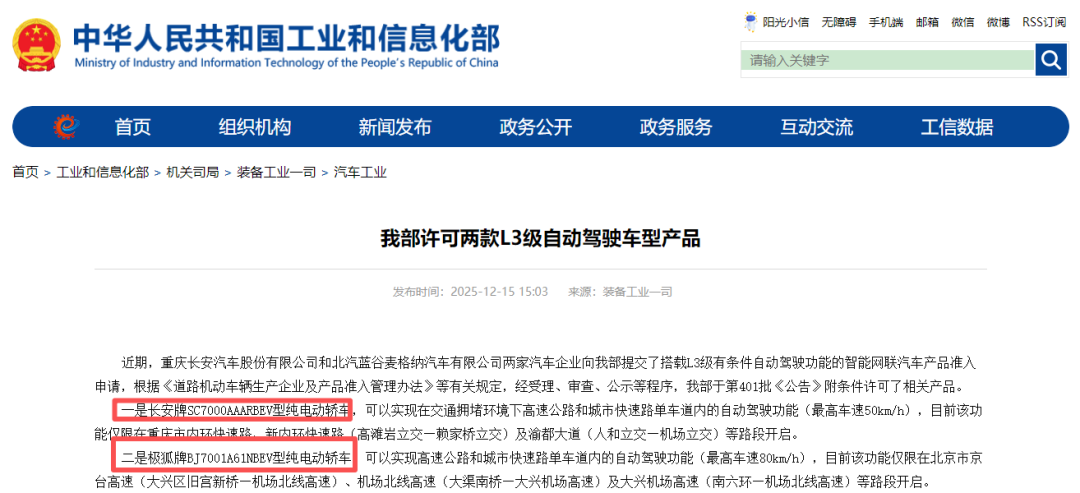
Core Insights - The approval of L3 conditional autonomous driving vehicles by the Ministry of Industry and Information Technology marks a significant step towards commercial application in China [4][18] - Companies like BAIC and Changan are leading the charge in the L3 autonomous driving sector, with their models set to begin trial operations [1][2] Group 1: L3 Autonomous Driving Approval - The first batch of L3 conditional autonomous driving vehicles approved includes the BAIC Arcfox Alpha S (L3 version) and Changan SC7000AAARBEV [1][2] - These vehicles are designed for specific urban and highway scenarios, with the Arcfox model capable of operating at speeds up to 80 km/h on designated routes in Beijing [2][3] - The approval process involves a phased approach, with commercial operations expected to gradually open to individual users by Q2 2026 [3][12] Group 2: Competitive Landscape - Multiple automakers, including BYD, NIO, and Geely, are vying for entry into the L3 autonomous driving market, with some obtaining local government permits for testing [2][14] - The distinction between permits from the Ministry of Industry and Information Technology and local governments lies in their nature; the former allows for commercial pilot projects, while the latter focuses on research and development [15][17] - Geely's Zeekr 9X has received a testing permit covering over 9,224 square kilometers in Hangzhou, indicating the scale of testing efforts [14] Group 3: Future Developments - The industry anticipates 2026 to be a pivotal year for the mass production of L3 autonomous driving technology, with potential breakthroughs in L4 technology as well [6][18] - BAIC is committed to expanding its lineup of vehicles equipped with L3 technology, indicating a long-term strategy in the autonomous driving space [18] - The partnership between BAIC and Pony.ai aims to develop a comprehensive operational model for Robotaxi services, showcasing the industry's focus on commercializing autonomous driving [19]

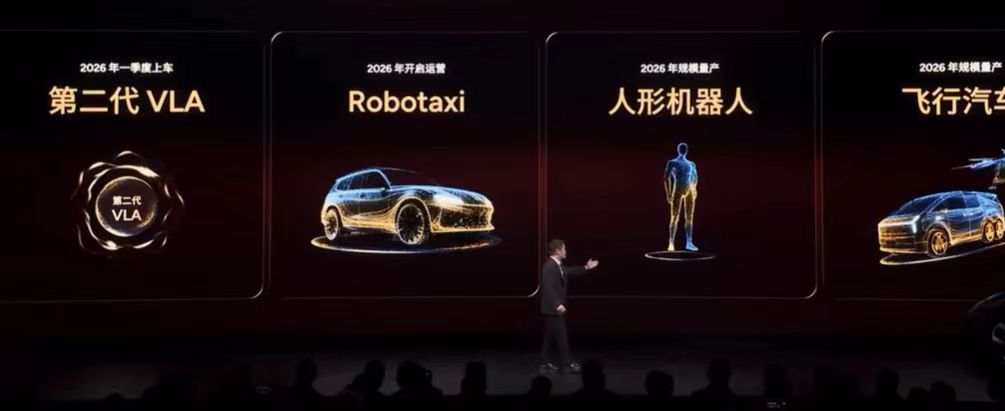
何小鹏宣布2026年量产人形机器人和飞行汽车、Robotaxi开启运营
Jin Rong Jie· 2026-01-08 10:58
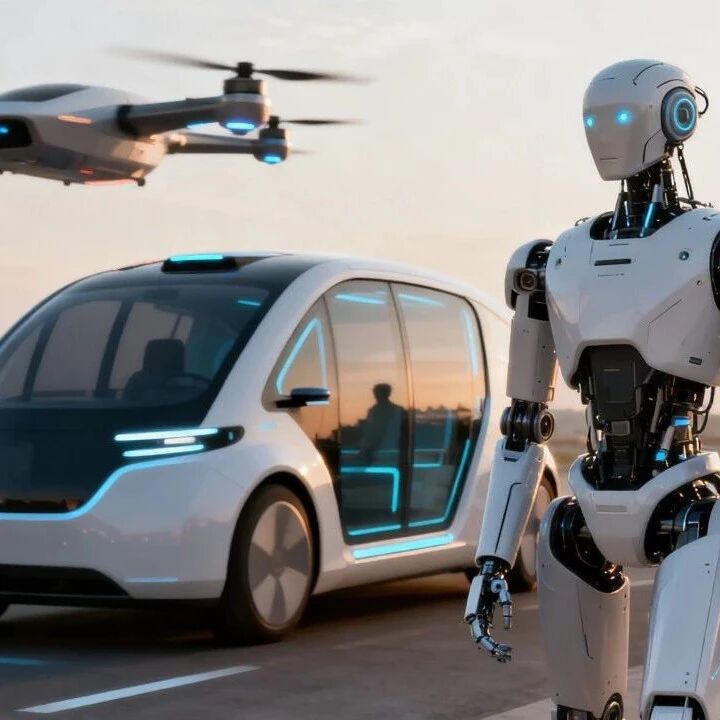
Group 1 - The core message of the news is that XPeng Motors is advancing its technology and product offerings, including the launch of the second-generation VLA, humanoid robots, flying cars, and the initiation of Robotaxi operations by Q1 2026 [1][3]. - XPeng's second-generation VLA eliminates the "language translation" step, enabling direct generation of action commands from visual signals, which revolutionizes the traditional V-L-A architecture [3]. - The new VLA can utilize vast amounts of real driving video for training without manual data labeling, enhancing the performance of intelligent driving in complex environments [3][5]. Group 2 - The Robotaxi initiative represents XPeng's exploration into Level 4 autonomous driving, leveraging the capabilities of the second-generation VLA and VLM for low-latency interactions with the autonomous driving system [5]. - The new humanoid robot, IRON, features a human-like spine, bionic muscles, and flexible skin, with 82 degrees of freedom, allowing for natural and fluid movements [5]. - The flying car, XPeng Huìtiān A868, boasts a range of 500 km and a maximum speed of 360 km/h, with a passenger capacity of six [6]. Group 3 - XPeng Motors projects a global sales volume of 429,445 units by 2025, representing a 126% year-on-year increase, with overseas deliveries reaching 45,008 units, a 96% increase [8].

【AI智能汽车1月投资策略】特斯拉无接管横穿美国,工信部首批L3准入,看好智能化
东吴汽车黄细里团队· 2026-01-07 12:21
Core Viewpoint - The article emphasizes the significant advancements in L4 and L3 autonomous driving technologies, highlighting a dual stronghold in the U.S. and China, with notable developments in commercial applications and regulatory approvals [3][10]. Group 1: December Smartization Marginal Changes Summary - L4 commercialization is experiencing global resonance, while L3 policies have made a "0-1" breakthrough. Tesla has initiated pure unmanned testing in Austin without safety drivers or passengers, and the Chinese version of FSD has completed compliance construction in Shanghai [3][10]. - Waymo's monthly active users have increased by 96.6% year-on-year to 1.64 million, accelerating the validation of its business model. Domestic players like Pony.ai have integrated into the WeChat ecosystem, and CAOCAO's "Ten Years, One Hundred Cities, One Hundred Billion" Robotaxi strategy continues to expand [3][10]. - The policy side for L3 has seen a milestone breakthrough with the issuance of the first batch of L3 permits by the Ministry of Industry and Information Technology, marking a transition from assisted driving to conditionally automated driving in China [3][10]. Group 2: January Smartization Catalysts - The industry may enter a year of Robotaxi explosion, driven by both technology and policy, accelerating towards an "iPhone moment" for AI smart vehicles. CES 2026 is expected to be a key industry indicator, with NVIDIA's CEO focusing on the latest advancements in physical AI [4][10]. - In the L4 dimension, attention is on Tesla's FSD V14.2 performance across the U.S. without driver intervention and the expansion of its fleet. For L3, January 2026 will mark the first complete month for public road commercial trials in cities like Chongqing and Beijing, with a focus on operational takeover rates and accident liability cases [4][10]. Group 3: Investment Recommendations - The company maintains a strong outlook for the L4 RoboX theme in 2026, favoring B-end software stocks over C-end hardware stocks. Preferred H-shares include Xpeng Motors, Horizon Robotics, Pony.ai, WeRide, CAOCAO, and Black Sesame Intelligence, while A-shares include Qianli Technology, Desay SV, and Jingwei Hirain [5][10]. - Relevant downstream application stocks include those in the Robotaxi sector, such as Tesla and Xpeng Motors, as well as technology providers like Horizon and Baidu. The transformation of ride-hailing and taxi services involves companies like Didi, CAOCAO, and others [5][10]. Group 4: Supply Chain Insights - In the upstream supply chain, key players include B-end unmanned vehicle manufacturers like BAIC BluePark, GAC Group, and Jiangling Motors, along with core suppliers for testing services, chips, domain controllers, sensors, and other components [5][10]. - The investment landscape is characterized by a spiral upward iteration of hardware and software, with significant opportunities in both sectors as the industry transitions from the 0-1 stage to more advanced phases [15][10].


前11个月广州经济数据出炉 广州经济韧性十足
Guang Zhou Ri Bao· 2025-12-24 01:54
Core Insights - Guangzhou's retail sales exceeded 1 trillion yuan, marking a 4.2% year-on-year growth, indicating a robust domestic market and structural optimization in the economy [2][3] - The city is experiencing a transformation in its industrial system, moving from traditional manufacturing to new energy and technology-driven sectors, with significant growth in electric vehicles and aerospace industries [5][6] Economic Performance - The total retail sales reached 10078.01 billion yuan, with essential consumer goods showing stable demand, including a 11.7% increase in grain and oil products, 12.1% in clothing, and 3.8% in daily necessities [3] - New energy vehicles saw a production increase of 22.6%, while the production of civil drones rose by 41.1% [9] Consumption Trends - Online retail sales accounted for 31.3% of total retail sales, with significant growth in e-commerce and digital consumption, driven by promotional activities [3] - Upgraded consumption categories, such as jewelry and cosmetics, reported retail growth of 10.2% and 5.8%, respectively, indicating a shift towards higher-value consumer goods [4] Industrial Transformation - Traditional manufacturing is undergoing a transformation, with the automotive sector optimizing its structure despite a slight decline in industrial value added [5] - New sectors, particularly in information technology and low-altitude economy, are experiencing rapid growth, with integrated circuit manufacturing increasing by 41.0% [6] Service Sector Growth - The modern service industry in Guangzhou saw a revenue increase of 10.2% from January to October, with significant contributions from internet and technology services [7] - The 138th Canton Fair attracted over 310,000 foreign buyers, contributing to a 12.1% year-on-year growth in foreign trade [10] Event Impact - The Fifteenth National Games are expected to generate 1 billion yuan in merchandise sales, with over 2800 licensed products launched [11] - The combined effect of major events like the Canton Fair and the National Games has enhanced the city's economic vitality, with passenger traffic reaching 3.11 billion, a 1.1% increase year-on-year [8]
小鹏汽车-W(9868.HK):强势产品周期驱动业绩高增 战略升级聚焦物理AI
Ge Long Hui· 2025-12-19 12:17
Core Viewpoint - Xiaopeng Motors is a leading smart electric vehicle manufacturer in China and a pioneer in AI-defined vehicles, poised to reach a profitability inflection point [1][4] Delivery and Revenue Performance - In Q3 2025, the company achieved a record delivery volume of 116,000 vehicles, a year-on-year increase of 149%, generating revenue of 20.38 billion yuan [2][5] - For November 2025, Xiaopeng Motors delivered 36,700 new vehicles, representing a 19% year-on-year growth [2][3] - Cumulative deliveries from January to November 2025 reached 391,900 vehicles, up 156% year-on-year, with overseas deliveries at 39,700 vehicles, a 95% increase [3] Product Strategy and Market Positioning - The company is entering a strong product cycle with the launch of MONA M03, the new P7, and the Super Extended Range X9, establishing a "pure electric + extended range" dual-energy strategy [1][5] - The new P7 quickly gained traction in the 200,000 to 300,000 yuan pure electric sedan market, while the X9 set a record for daily orders shortly after its launch [3] Technological Advancements - Xiaopeng Motors is upgrading its strategy to focus on becoming a global embodied intelligence company, with the IRON series robots as key carriers of automotive AI capabilities [4] - The company announced four significant applications related to "physical AI," including the second-generation VLA, Robotaxi, the new generation IRON, and the Huitian flying system, all set to enter mass production in 2026 [1][4] Financial Projections - Revenue projections for 2025-2027 are estimated at 78.1 billion, 116.9 billion, and 147.1 billion yuan, respectively, with an initial coverage rating of "buy" [1][6]
小鹏汽车盘前涨超5% 高管透露L3有望明年一季度全量上车
Xin Lang Cai Jing· 2025-12-19 09:42
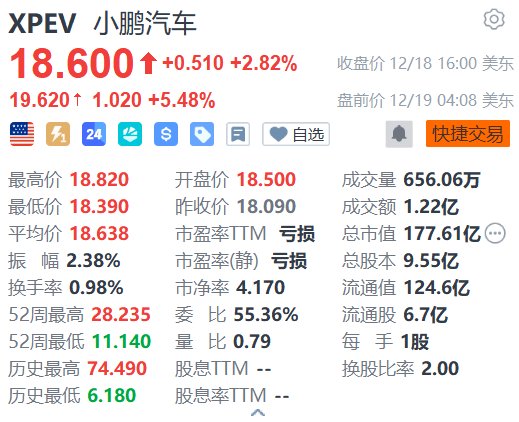
Core Viewpoint - Xiaopeng Motors (XPEV.US) has gained significant market attention following the acquisition of an L3 autonomous driving road test license in Guangzhou, indicating a strong push towards advanced autonomous vehicle technology [1] Group 1: Stock Performance - Xiaopeng Motors' stock rose by 2.82% yesterday and continued to increase by 5.48% in pre-market trading today, reaching $19.62 [1] Group 2: Autonomous Driving Development - The company has initiated regular L3 road testing, with expectations for a full rollout in Q1 of next year, as indicated by the company's vice president [1] - The announcement suggests that some users may experience the new version of the technology even earlier than the official launch [1] Group 3: Product Strategy - Analysts highlight that the launch of new models such as MONA M03, the updated P7, and the super-extended range X9 marks the beginning of a robust product cycle for the company [1] - Xiaopeng Motors is establishing a dual-energy strategy focusing on both pure electric and extended-range vehicles, aiming to capture a larger share of the market [1] Group 4: Strategic Upgrade - The company is transitioning into a global technology firm, with plans to introduce four significant applications related to "physical AI" by 2026, including the second-generation VLA, Robotaxi, the new generation IRON, and the Huitian flying system [1]
美股异动丨小鹏汽车盘前涨超5% 高管透露L3有望明年一季度全量上车
Ge Long Hui· 2025-12-19 09:28
Group 1 - The core viewpoint of the article highlights that Xpeng Motors (XPEV.US) has gained a Level 3 autonomous driving road test license in Guangzhou and has initiated regular L3 road testing, which is expected to lead to significant developments in the first quarter of next year [1] - Xpeng Motors' stock price increased by 2.82% to close at $18.60 and further rose by 5.48% in pre-market trading to $19.62, indicating positive market sentiment [1] - The company is entering a strong product cycle with the launch of models such as MONA M03, the new P7, and the super-extended range X9, while establishing a dual-energy strategy of "pure electric + extended range" to capture market share [1] Group 2 - Xpeng Motors is upgrading its strategy to position itself as a global technology company, focusing on "physical AI" with four key applications set to enter mass production by 2026, including the second-generation VLA, Robotaxi, the new generation IRON, and the Huitian flying system [1] - The total market capitalization of Xpeng Motors is reported at $17.761 billion, with a trading volume of 6.5606 million shares and a price-to-earnings ratio indicating a loss [1] - The stock has seen a 52-week high of $28.235 and a low of $11.140, reflecting significant volatility in its market performance [1]