
人类命运共同体

Search documents
中俄学术工作坊成功举行
人民网-国际频道 原创稿· 2025-10-25 04:10
人民网讯 10月24日,由中国社科院俄欧亚所、中俄战略协作高端合作智库、俄罗斯国际事务委员 会联合主办的中俄学术工作坊成功召开,主题为"联合国成立80周年以来的成就与未来及其在当代全球 治理中的作用"。2025年10月25日,联合国将迎来成立80周年纪念日,会议在这一重要历史节点召开, 旨在总结联合国在维护国际秩序、推动全球治理方面的作用与挑战,并探讨中俄在支持联合国体系、维 护多边主义中的共同立场与合作方向。 李振利指出,联合国成立80年来在维护国际和平与促进发展方面发挥了重要作用,但当今全球治理 体系正面临多重挑战。他指出,中国提出的全球治理倡议为完善现行体系、推动国际关系民主化提供了 新的方向。中俄作为安理会常任理事国,应在维护多边主义、推动联合国改革中继续发挥建设性作用, 共同为完善全球治理贡献智慧与力量。 来自中俄两国多个智库机构的专家学者与会,围绕"联合国对国际体系的重要性:历史与当 代"、"中俄维护联合国在全球事务中的主导地位"、"践行全球治理倡议,维护多边机制与多边主义"三 个议题展开深入研讨交流。 中国现代国际关系研究院院长傅小强指出,当前全球治理体系面临效能低下、南方国家代表性不足 和联合 ...
林剑:祝贺大阪世博会中国馆获奖
Shang Wu Bu Wang Zhan· 2025-10-24 16:48
Core Points - The China Pavilion at the Osaka Expo has won the Gold Award for large self-built pavilions from the International Exhibitions Bureau, marking the first time China has received this award at an overseas expo [1] - The pavilion showcases China's rich historical culture and its commitment to providing excellent development solutions for future societies, resonating with the global community's shared values [1] Group 1 - The China Pavilion is recognized for its traditional ecological wisdom and achievements in green development, becoming one of the most popular national pavilions at the expo [1] - The pavilion reflects significant contemporary value of Chinese traditional culture in addressing global challenges, emphasizing concepts such as "harmony" and "inclusiveness" [1] - China's recent initiatives, including the construction of a community with a shared future for mankind and the Belt and Road Initiative, embody these cultural principles and have gained widespread international recognition and support [1] Group 2 - In the context of increasing deficits in peace, development, security, and governance, China aims to contribute wisdom and solutions rooted in Eastern civilization to address contemporary global issues [2]
以团结与担当谋划亚太发展新篇章——写在习近平主席出席亚太经合组织第三十二次领导人非正式会议并对韩国进行国事访问之际
Xin Hua She· 2025-10-24 15:56
Core Points - The article discusses President Xi Jinping's upcoming visit to South Korea for the APEC informal leaders' meeting, emphasizing China's commitment to regional cooperation and development [1][2][5] - It highlights the importance of the Asia-Pacific region in global economic dynamics, accounting for one-third of the world's population and over 60% of global economic output [2][3] - The article outlines China's role as a key driver of regional integration and trade within the APEC framework, with significant growth in trade volumes with APEC economies [3][6] Group 1: APEC and Regional Cooperation - APEC is described as the highest-level economic cooperation mechanism in the Asia-Pacific region, focusing on open cooperation and common development [1][2] - Xi Jinping's leadership has been pivotal in promoting a shared vision for the Asia-Pacific community, advocating for mutual trust and win-win partnerships [2][3] - The article emphasizes the need for open and inclusive development in the face of geopolitical tensions and economic fragmentation [3][4] Group 2: China-Korea Relations - The article details the historical and cultural ties between China and South Korea, highlighting the importance of their strategic partnership [5][6] - It notes that China has been South Korea's largest trading partner for 21 consecutive years, with bilateral trade reaching $328.08 billion in 2024, reflecting a 5.6% increase [6] - The ongoing cultural exchanges and people-to-people connections are underscored as vital for strengthening bilateral relations [5][6] Group 3: Economic Contributions and Future Outlook - China's economic growth is projected to average 5.5% annually from 2021 to 2024, contributing approximately 30% to global economic growth [9][11] - The article discusses China's commitment to high-quality development and green initiatives, positioning itself as a leader in sustainable economic practices [10][11] - It concludes with a vision for continued collaboration in the Asia-Pacific region, aiming for shared prosperity and stability [11][12]
东西问丨安德烈·卢贝特·吉马良斯:中国“两山”理念何以引发世界共鸣?
Zhong Guo Xin Wen Wang· 2025-10-24 12:48
Core Viewpoint - The "Two Mountains" concept, which emphasizes the balance between economic development and ecological protection, has gained significant recognition both domestically in China and internationally, marking its 20th anniversary in 2025 [3][4]. Group 1: Understanding the "Two Mountains" Concept - The "Two Mountains" concept articulates the essential relationship between economic growth and environmental protection, highlighting that prosperity cannot be achieved at the expense of nature [3][4]. - The concept conveys that people require clean water, fresh air, and a healthy environment to ensure sustainable national development while promoting economic and social progress [4]. Group 2: Balance Philosophy and Global Sustainability - The "balance philosophy" inherent in the "Two Mountains" concept recognizes that economic growth and environmental protection are not mutually exclusive, but rather interdependent [6]. - This philosophy aligns with global sustainable development goals, providing a framework for a green transition that benefits current and future generations [6]. Group 3: Global Ecological Issues and Solutions - The primary global ecological challenge is balancing ecological protection with economic development, which requires a collective understanding of the "Two Mountains" concept to formulate comprehensive action plans [8]. - There is a significant gap between knowledge and action regarding climate change, with existing technologies and information available to mitigate its effects, but lacking implementation [8]. Group 4: Opportunities for Global South Countries - Brazil and China have substantial potential for collaboration in sustainable development research and green trade, which can enhance knowledge sharing and technology exchange [9]. - The upcoming COP30 in Brazil presents an opportunity for countries to gather advanced scientific results and foster cooperation in global ecological protection efforts [11].


外交部:中国始终是全球发展的动力源和增长极
Bei Jing Ri Bao Ke Hu Duan· 2025-10-24 08:09
Core Viewpoint - The recent Fourth Plenary Session of the 20th Central Committee of the Communist Party of China highlighted China's resilience in the face of global challenges, emphasizing the country's commitment to high-quality development and the continuation of its modernization plans during the "14th Five-Year Plan" period [4]. Group 1 - China has achieved significant economic milestones, with its GDP surpassing 130 trillion RMB during the "14th Five-Year Plan" [4]. - Emerging industries such as artificial intelligence and renewable energy have made breakthrough advancements, transforming China from the "world's factory" to a "global innovation center" [4]. - The country has maintained a high level of openness to foreign investment, reducing the negative list for foreign investment and lowering the overall tariff level to 7.3% [4]. Group 2 - The Fourth Plenary Session approved recommendations for the "15th Five-Year Plan," signaling stability in China's policies, economic growth, and development expectations [4]. - This continuity from the "14th Five-Year Plan" to the "15th Five-Year Plan" reflects China's determination and reveals the successful governance model of the country [4]. - China aims to share opportunities and promote equal and orderly global multipolarity and inclusive economic globalization, contributing to the construction of a community with a shared future for mankind [4].

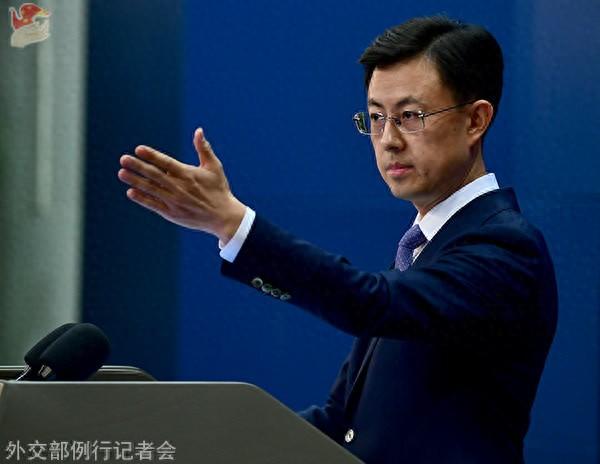
外交部:中国始终是全球发展的动力源增长极
Xin Lang Cai Jing· 2025-10-24 08:09
Core Points - The Chinese government emphasizes high-quality development and significant achievements during the 14th Five-Year Plan, with GDP surpassing 130 trillion RMB [1] - Emerging industries such as artificial intelligence and renewable energy have made breakthrough progress, transforming China from the "world's factory" to a "global innovation center" [1] - China maintains a high level of openness to foreign investment, reducing the negative list for foreign investment and lowering the overall tariff level to 7.3% [1] - The country contributes approximately 30% to global economic growth and continues to be a driving force for global development [1] - The recent 20th Central Committee's Fourth Plenary Session approved recommendations for the 15th Five-Year Plan, signaling stability in policies and economic growth expectations [1] - China aims to share opportunities and promote a multipolar world and inclusive economic globalization, contributing to the building of a community with a shared future for mankind [1]
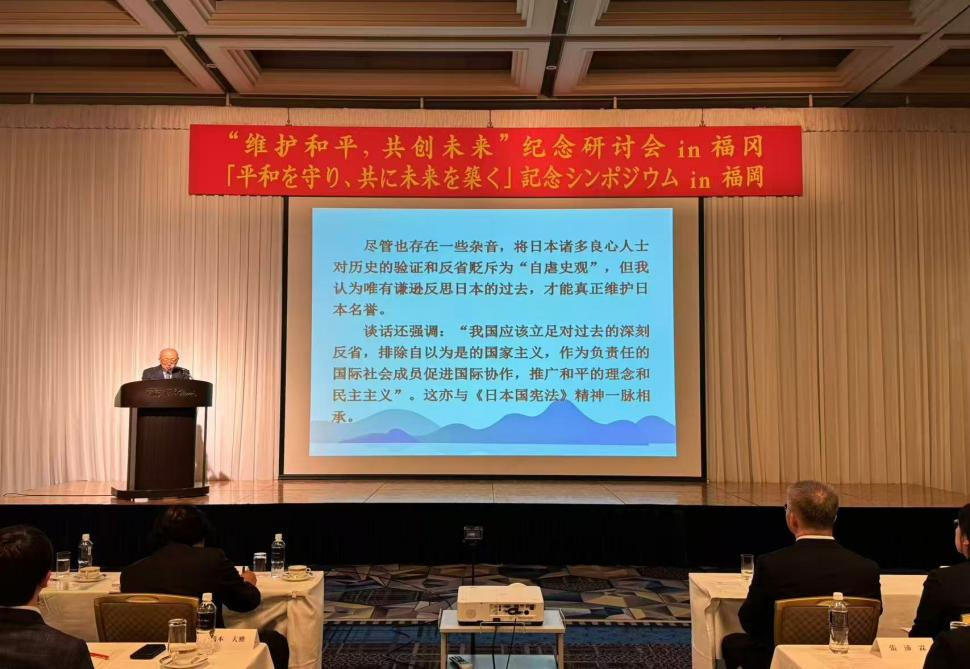
“维护和平,共创未来”纪念研讨会in福冈举办
人民网-国际频道 原创稿· 2025-10-24 06:10
Core Points - The seminar titled "Maintaining Peace, Creating the Future" held in Fukuoka focused on reflecting on the painful history of World War II and emphasized the importance of cherishing peace and enhancing cooperation between China and Japan in the context of global changes [1][2] Group 1 - The seminar was organized by the Chinese Embassy in Japan and the Chinese Consulate in Fukuoka, with support from various institutions, and attracted around 120 participants from both countries, including political, economic, and academic representatives [1] - Yu Yingfu highlighted China's role as a major builder and defender of the results of the global anti-fascist war, advocating for true multilateralism and regional stability, while emphasizing the importance of historical lessons and youth exchanges for future cooperation [2][3] - Zhao Baogang pointed out the resurgence of unilateralism and cold war mentality, stressing the need for China and Japan to work together to maintain peace and stability in the region, and to implement the consensus of mutual cooperation without threats [3] Group 2 - Former Japanese Prime Minister Yukio Hatoyama expressed concerns about the fading memory of Japan's militaristic past and the importance of learning from history to avoid repeating mistakes, advocating for a constructive and stable Japan-China relationship [4] - The late former Prime Minister Murayama Tomiichi emphasized the need for humility in reflecting on Japan's past to maintain the country's honor and to build a lasting friendly relationship with China as a foundation for peace in Asia [4]
深刻认识全人类共同价值的共同性特征(专题深思)
Ren Min Ri Bao· 2025-10-23 22:29
Core Viewpoint - The concept of "common values for all humanity" proposed by Xi Jinping emphasizes peace, development, fairness, justice, democracy, and freedom, which is significant in addressing global challenges and promoting a shared future for mankind [1][7]. Theoretical Logic - The common values reflect the universal needs of humanity, despite differences in history, culture, and political systems, highlighting the shared pursuit of peace, development, fairness, justice, democracy, and freedom [2][3]. Historical Logic - The emergence of common values is rooted in the historical development of human society, moving from isolation to a stage of universal interaction, where diverse value systems converge to form shared values that promote common interests [2][3]. Practical Logic - In the context of deepening economic globalization, the interdependence among nations has increased, necessitating a collective response to global challenges such as environmental pollution, terrorism, and health crises, thereby reinforcing the need for a community of shared destiny [3][4]. Specificity and Respect for Differences - Unlike the Western notion of "universal values," which often overlooks specific cultural contexts, the common values for all humanity are grounded in Marxist materialist historical perspectives, aiming to unify diverse civilizations while addressing real-world issues [4][5]. Unity of Commonality and Particularity - The common values acknowledge the diversity of value interpretations across different social systems and ideologies, striving for a balance between shared values and the unique characteristics of various civilizations [5][6]. Importance in Current Global Context - In an increasingly unstable and uncertain world, promoting and practicing common values is crucial for maintaining peace and advancing human civilization, requiring an understanding of different cultural perspectives and respecting the paths chosen by various nations [7].
文明交响 和合共鸣
Ren Min Ri Bao· 2025-10-23 22:29
Core Viewpoint - The "World Mayors Dialogue in Dunhuang 2025" focuses on cultural city governance, exploring opportunities and challenges faced by cities in preserving cultural heritage while promoting development [2][4]. Group 1: Cultural Heritage and Digital Innovation - Dunhuang Research Institute collaborates with 23 overseas institutions to obtain over 100,000 high-definition resources of cultural relics and has developed a "Digital Dunhuang" platform integrating AI technology [2]. - The city has launched the world's first blockchain-based "Digital Dunhuang Open Material Library," facilitating global sharing and intelligent inheritance of cultural resources [2]. - Dunhuang is utilizing digital technology to preserve its cultural heritage, exemplified by the "Digital Cave of Scriptures" project, which allows murals to "live forever" in the cloud [7]. Group 2: International Collaboration and Cultural Exchange - Mayors from various cities, including Garni in Armenia and Venice in Italy, emphasize the importance of mutual respect and learning among different civilizations to address common challenges faced by heritage sites [3][5]. - The dialogue highlights the need for cities to balance heritage protection with modern development, as seen in the experiences shared by representatives from Nepal and Turkey [5][6]. Group 3: Urban Development and Governance - Dunhuang is recognized for its clean urban management and effective sandstorm control, serving as a model for other cities [4]. - The city is enhancing its tourism services and cultural offerings, including the establishment of a major airport and the promotion of cultural performances [5]. - The integration of traditional and modern practices in cultural spaces, such as the Dunhuang Printing Bureau and the "Dunhuang Boundless" art space, showcases innovative approaches to cultural heritage transmission [7].
更好汇聚应对全球挑战的磅礴力量 深刻认识全人类共同价值的共同性特征(专题深思)
Ren Min Ri Bao· 2025-10-23 22:02
Core Viewpoint - The concept of "common values for all humanity" proposed by Xi Jinping emphasizes peace, development, fairness, justice, democracy, and freedom, which is significant in addressing global challenges and promoting a shared future for mankind [1] Theoretical Logic - The common values for all humanity represent the greatest common divisor of values shared by different civilizations, countries, and nations, reflecting universal needs for survival and development [2] - Despite diverse histories, cultures, and systems, the values of peace, development, fairness, justice, democracy, and freedom accurately express the common pursuits of humanity [2] Historical Logic - The emergence of common values is rooted in the historical transition to a world history where human societies have moved away from isolation towards universal interaction [3] - The deepening of world history has led to the accumulation of value concepts that meet the needs of human interaction and promote common interests [3] Practical Logic - In the context of deepening economic globalization, the interdependence among nations has created a community of shared destiny, necessitating collective responses to global challenges such as environmental pollution and terrorism [3] - The concept of a community of shared destiny serves as both an interest community and a value community, highlighting the need for a consensus on values to effectively address global challenges [3] Specificity of Common Values - Unlike the Western notion of "universal values," which often overlooks the uniqueness of different cultures, the common values for all humanity are based on Marxist materialist historical perspectives and aim to achieve a profound innovation in value concepts [4] - The common values are derived from the specific practices of different civilizations and aim to meet the growing common interests of humanity [4] Recognition of Diversity - The common values acknowledge the diversity of value interpretations and realization methods across different social systems and ideologies, achieving a unity of commonality and individuality [5] - The existence of value differences necessitates a broader perspective to foster consensus on values, moving beyond narrow self-interests [6] Importance in Current Context - In an increasingly unstable and uncertain world, the common values for all humanity play a crucial role in maintaining world peace and promoting human civilization [7] - Promoting these values requires understanding and respecting different civilizations' interpretations of value, avoiding the imposition of one's values on others, and ensuring that these values benefit all nations [7]