
产业融合

Search documents
春·将至——全国青年画家邀请展在烟台财金大厦启幕
Qi Lu Wan Bao· 2026-01-24 02:52
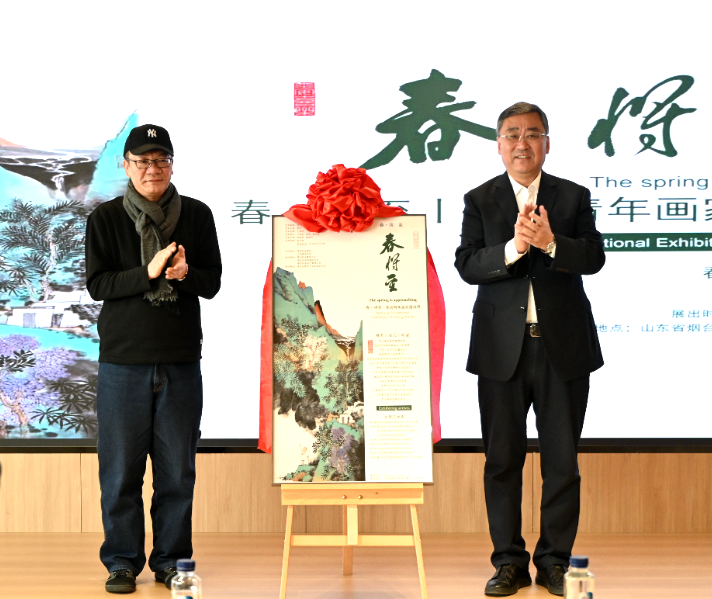
通讯员石冠婷齐鲁晚报.齐鲁壹点李楠楠 随后,特邀嘉宾、北京服装学院教授高良致辞。他表示,此次绘画艺术展将有助于推动艺术创作的繁荣,促进艺术人才的培养。 仪式结束后,与会领导嘉宾逐一欣赏了展出作品,现场洋溢着浓郁的文化气息。 本次绘画艺术展是集团探索文化与金融、产业融合的一次有益尝试,集团将探索更多文化与金融、产业融合的新路径、新模式,让艺术之花在企业沃土中 持续绽放,让文化软实力成为企业核心竞争力的重要组成部分,为文化强市建设贡献财金力量。 现场,烟台财金集团党委书记、董事长田序润与北京服装学院教授高良共同为本次绘画艺术展览揭幕。 此次烟台财金集团工会携手著名艺术家高良先生和国内优秀青年画家,以"笔墨随时代,丹青绘新象"为主题,通过一幅幅丹青作品,实现传统文化艺术的 当代转化与创新表达。活动旨在以画展为媒,将艺术之美融入企业文化之中,进一步丰富职工精神文化生活,提升集团文化品位,以墨韵迎接新春,以文 化润泽企业。 活动由烟台财金集团党委副书记、工会主席连瑞渝主持。活动伊始,集团党委副书记、总经理胥延义致辞。他表示,通过这次展览,将持续推动"艺术 +金融+产业"的深度融合,为企业注入文化活力,让文化成为联盟成员 ...

擦亮“雨花品牌” 助推南京茶产业高质量发展
Yang Zi Wan Bao Wang· 2026-01-23 11:37
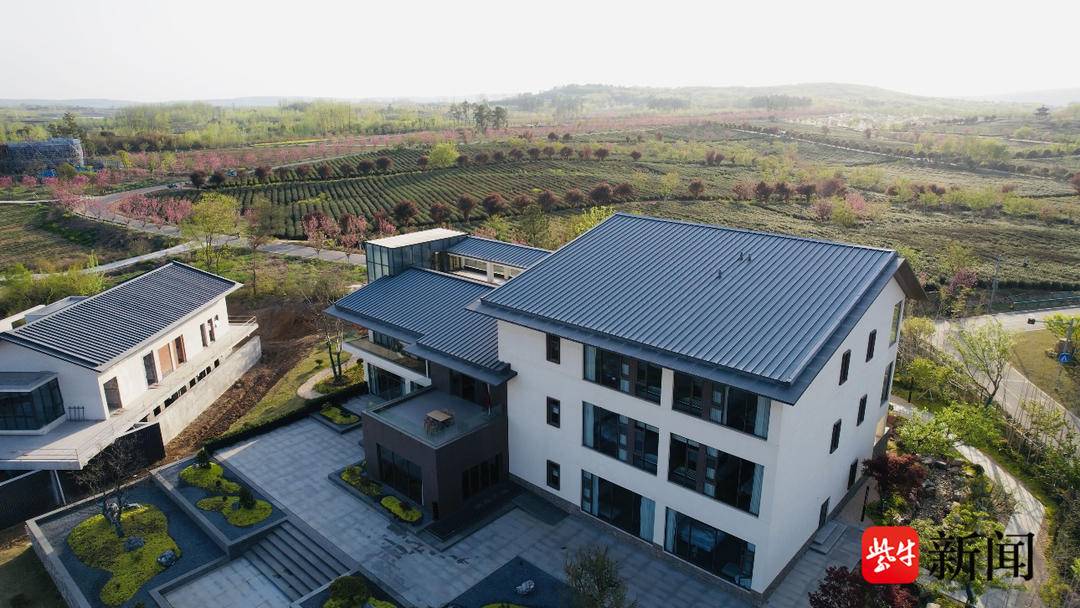
南京雨花茶因"形似松针,翠绿挺拔"的独特品相,被誉为中国炒制绿茶中的珍品,与此同时,雨花茶产业整体发展也面临挑战。 今年南京市两会期间,市人大代表、六合现代农业产业园区党工委(竹镇镇党委)书记李晓东提出建议:立足资源优势、强化科技支撑、深化产业融合,持 续擦亮"雨花品牌",为南京茶产业高质量发展注入强劲动能。 六合区竹镇镇是南京雨花茶的核心产地之一 产业融合拓宽发展路径 茶产业的高质量发展,离不开产业链条的延伸拓展与业态模式的创新升级。竹镇镇以茶为媒,推动一二三产业深度融合,为全镇集体经济注入持久动能。 按照规划,当地将分六期打造总面积超1500亩的茶园,并同步新建标准化茶叶加工坊、茶文化主题民宿,进一步加强"大泉雨花茶"品牌营销。 与此同时,结合乡村振兴先行区建设,依托区域资源打造茶文化旅游景点,将茶文化与产业发展和旅游相结合开发研学项目,积极推进农旅融合。此外, 打造茶园山地自行车运动户外体验基地,让游客参与茶园山地自行车运动户外体验。通过多维度的融合发展,让千年茶香焕发现代生机,推动茶产业发展 与乡村振兴。 竹镇镇积极推动茶产业融合发展 "大泉雨花"首摘"五星" 六合区竹镇镇作为南京雨花茶的核心产地之一 ...
从“单点突破”到“全链引领” 黑河寒区试车产业实现蝶变
Xin Lang Cai Jing· 2026-01-22 21:16
Core Insights - Heihe City has rapidly developed its cold-region vehicle testing industry, leveraging opportunities in the new energy vehicle and intelligent connected vehicle sectors, achieving a transformation from "single testing" to "full-chain leadership" with a growth rate of 10% annually [1][2] Group 1: Strategic Development - The cold-region vehicle testing industry has been integrated into Heihe's modern industrial system with a strategic path defined as "one core, two wheels driving, and two wings flying" [2] - Policies such as the "Cold Region Vehicle Testing Industry Service Regulations" and the "Heihe Cold Region Vehicle Testing Full Industry Chain Development Plan (2022-2035)" have been established to support industry growth [2] - Over 1 billion yuan has been invested in cold-region testing infrastructure, leading to the establishment of significant testing facilities [2] Group 2: Technological Empowerment - Heihe has made significant advancements in intelligent connected vehicle testing, including the construction of a 1.6 km testing road and the successful outdoor cold-weather flight tests for drones and flying cars [3] - The proportion of new energy vehicle testing in Heihe has increased from less than 30% to over 60% during the 14th Five-Year Plan period, with major companies like Xiaomi and Tesla conducting long-term tests [3] Group 3: Economic Integration - The integration of cold-region vehicle testing with tourism and sports has led to the successful hosting of events like the Cold Region Vehicle Testing Festival, generating over 600 million yuan in revenue and creating more than 1,500 jobs [4] - The cold-region vehicle testing industry has become a vital part of Heihe's urban development, with significant contributions to local economic growth [5] Group 4: Industry Impact - Heihe's cold-region vehicle testing accounts for 85% of the national market and 45% of the global market, earning accolades such as "China Heihe Automotive Cold Region Testing Base" [5] - The industry has transitioned from "industrial advantages" to "brand advantages," enhancing its reputation and recognition [5]




从“展销”到“补链”:会展正成为产业链“超级接口”
Shang Hai Zheng Quan Bao· 2026-01-22 18:37
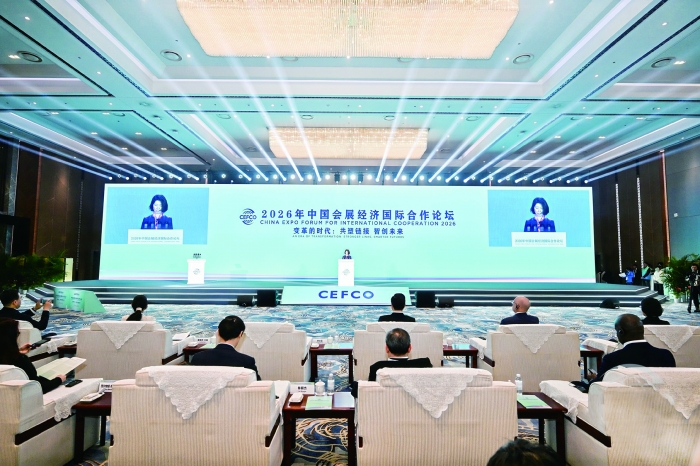
Core Viewpoint - The exhibition industry is adapting to the current uncertain global environment by focusing on industry integration and creating opportunities for businesses to connect and collaborate through trade shows [1][2]. Group 1: Industry Growth and Trends - The global exhibition industry is experiencing an average annual growth rate of 7%, with some regions achieving growth rates as high as 20% [2]. - Major exhibitions are increasingly oriented towards industry needs, transforming "traffic" from events into "incremental" value for industries [2][3]. - The 2025 Abu Dhabi International Petroleum Exhibition exemplifies this trend by incorporating the latest energy industry trends and attracting over 250 global energy companies [2][3]. Group 2: Importance of Content and Collaboration - High-quality content is essential for the long-term health of the exhibition industry, as it fosters dialogue and partnerships within industries [2][3]. - New exhibition formats should aim to enhance cooperation across supply chains rather than solely focusing on immediate transactions [3]. Group 3: Opportunities for Chinese Enterprises - 2026 is seen as a pivotal year for many companies to expand internationally through exhibitions, as the notion of "going out or being left behind" becomes more prevalent [4]. - China possesses a complete industrial system and has formed over 60 emerging industries, providing a broad market space for deepening cooperation in the exhibition industry [4]. - The demand for qualified suppliers and complete supply chains is increasing among large enterprises, highlighting the need for the exhibition industry to assist Chinese companies in integrating into global supply chains [4]. Group 4: Challenges and Domestic Support - Chinese enterprises face challenges in unfamiliar overseas markets and varying capabilities, necessitating a focus on coexistence and integration within local industrial chains to avoid trade friction [4]. - The domestic exhibition industry is also creating opportunities for companies to participate in exhibitions closer to home by reducing booth fees and inviting more international exhibitors [5].
淄博国资半年退出两家上市公司盈利超6亿,地方国资股权投资逻辑生变?
Xin Lang Cai Jing· 2026-01-21 23:33
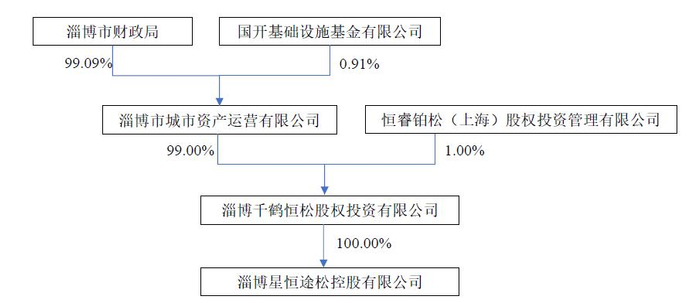
Core Viewpoint - The rapid divestment of two listed companies by the Zibo Municipal Finance Bureau within six months raises questions about the changing investment logic and the pressures faced by local state-owned assets [1][2]. Group 1: Company Transactions - On January 19, Jianghuai Microelectronics (江化微) announced the transfer of 23.96% of its shares for 1.848 billion yuan to Shanghai Fuxun Technology, changing its controlling shareholder from Zibo Municipal Finance Bureau to Shanghai State-owned Assets Supervision and Administration Commission [1]. - In August 2022, Zibo Municipal Finance Bureau transferred control of Dongjie Intelligent (东杰智能) to individual investor Han Yongguang for 1.62 billion yuan [1]. - Zibo Municipal Finance Bureau initially acquired control of Jianghuai Microelectronics and Dongjie Intelligent in 2021 for 1.372 billion yuan and 1.472 billion yuan, respectively, achieving profits of 514 million yuan and 148 million yuan from these investments [1]. Group 2: Investment Strategy and Performance - The Zibo Municipal Finance Bureau's strategy shifted from a focus on controlling listed companies to divesting them due to stricter local debt management and underperformance of the companies [1][19]. - Over four years, Zibo Municipal Finance Bureau realized a total profit of 662 million yuan from the divestments, indicating a successful financial investment despite the lack of significant operational involvement in the companies [7][18]. - The initial goal of integrating local industries with the acquired companies was not met, as the operational management remained with the original teams, limiting the expected synergies [14][21]. Group 3: Market Context and Future Outlook - The divestment aligns with a broader trend among local state-owned enterprises to sell off control of listed companies, especially when the companies do not meet integration expectations [2][19]. - The financial performance of Dongjie Intelligent showed significant losses in 2023 and 2024, prompting the decision to exit at a favorable time [19]. - The management teams of the acquired companies, including Jianghuai Microelectronics, will remain in place post-divestment, ensuring continuity in operations [21].


刘奕:促进生产性服务业扩能提质
Jing Ji Ri Bao· 2026-01-21 00:01
Core Viewpoint - The development of the productive service industry is essential for enhancing production efficiency and supporting the modernization of the industrial system, as outlined in the "14th Five-Year Plan" [1][4]. Group 1: Integration and Development Trends - The productive service industry is increasingly integrated with other sectors, driven by advancements in information technology and the deepening of economic services, leading to the emergence of new industrial forms [2]. - The integration of productive services with manufacturing, agriculture, and other service industries is a dynamic process that can stimulate significant changes in industrial functions, forms, and business models [2]. Group 2: Support for Manufacturing Transformation - In 2023, the revenue of large-scale productive service enterprises in China reached 119 trillion yuan, with an average annual growth rate of 12.1% from 2020 to 2023, significantly outpacing GDP growth [4]. - Productive services provide comprehensive technical support to manufacturing, helping to overcome core technological bottlenecks and significantly reduce product development cycles and improve production efficiency [4]. - Services such as supply chain finance and smart logistics help manufacturing reduce overall costs and enhance supply chain stability [5]. Group 3: Expanding Development Space - International logistics and compliance consulting services assist manufacturing enterprises in integrating into the global value chain, thereby reducing costs associated with entering overseas markets [6]. - The relationship between the development of productive services and maintaining a reasonable proportion of manufacturing is complementary, with both sectors driving each other's growth [6]. Group 4: Optimizing the Development Environment - Despite progress, challenges remain in the depth of integration, the strength of operating entities, and the availability of high-end supply [7]. - Recommendations include accelerating the application of digital technologies, cultivating diverse entities, and optimizing policy support to enhance the capacity and quality of productive services [7][8]. - Expanding financial incentives and tax benefits for high-end productive services, while lowering market entry barriers, is crucial for promoting the free flow and optimal allocation of resources [8].
促进生产性服务业扩能提质
Jing Ji Ri Bao· 2026-01-20 22:12
Core Insights - The production service industry is crucial for enhancing production efficiency and supporting agricultural and industrial activities, as highlighted in the "14th Five-Year Plan" which emphasizes the need for specialization and high-end value chain extension [2][4] Group 1: Industry Development - The production service industry has seen significant growth, with revenue from large-scale enterprises reaching 119 trillion yuan in 2023, reflecting an average annual growth rate of 12.1% from 2020 to 2023, surpassing GDP growth during the same period [5] - The integration of production services with advanced manufacturing is essential for driving the transformation and upgrading of the manufacturing sector, fostering a dual cycle of service support for manufacturing and vice versa [6][7] Group 2: Technological Integration - The application of technologies such as artificial intelligence, big data, and industrial internet is enhancing the efficiency and value of production services, facilitating a more intelligent and digitalized manufacturing process [5][8] - The promotion of smart technologies and the establishment of platforms for technology transfer are critical for accelerating the transition from laboratory innovations to production applications [6][8] Group 3: Policy Recommendations - To optimize the development environment for the production service industry, it is recommended to promote the application of digital technologies, cultivate diverse service providers, and enhance policy support mechanisms [8][9] - Expanding financial incentives and tax benefits for high-end production services, while lowering market entry barriers, is essential for fostering a competitive and efficient production service sector [9]
文旅新探丨吉林查干湖:冰湖腾鱼冬捕热
Xin Lang Cai Jing· 2026-01-20 06:33
Core Viewpoint - The article highlights the traditional winter fishing practices at Chagan Lake in Jilin Province, showcasing its cultural significance and the integration of tourism with local fishing activities [3][9][13]. Group 1: Winter Fishing Practices - Chagan Lake, one of China's top ten freshwater lakes, hosts concentrated winter fishing from mid-December to February, with a water area exceeding 400 square kilometers and rich fishery resources [3]. - Fishermen utilize traditional methods such as ice drilling and horse-drawn winches to catch large fish, with nets measuring approximately 1,200 meters in length and 1,000 meters in width [5][9]. - The fishing process involves creating ice holes and using horses to assist in pulling the heavy nets from the water, demonstrating a blend of ancient techniques and teamwork [7][9]. Group 2: Economic Impact and Tourism Development - Chagan Lake's annual fish catch is around 3 million pounds, with a growing e-commerce presence that ships approximately 3,000 items daily across the country [11]. - The region is evolving from a primarily fishing-based economy to a comprehensive industry that includes tourism, sports, and culture, with various seasonal activities attracting visitors year-round [13]. - Local businesses, such as homestays and restaurants, have flourished, reflecting the increased interest in tourism and the improved ecological conditions of the lake [13][15].

算好“兴县富民”经济账——来自四川省凉山州的调查
Jing Ji Ri Bao· 2026-01-19 22:17
Core Viewpoint - The article emphasizes the importance of income as a fundamental indicator of residents' living standards and highlights the efforts in Liangshan Yi Autonomous Prefecture, Sichuan Province, to promote income growth among the impoverished population through the development of characteristic industries [1] Group 1: Economic Development and Income Growth - Liangshan Prefecture has been focusing on characteristic industries as a key driver for county economic development, effectively addressing issues such as unclear direction and insufficient motivation in economic and social development [1] - During the "14th Five-Year Plan" period, Liangshan Prefecture has seen three counties with an economic total exceeding 20 billion yuan and eight counties exceeding 10 billion yuan, indicating a positive development trend [1] - The county of Huidong is optimizing its agricultural structure by promoting the avocado industry, which has led to agricultural transformation and increased income for local farmers [2] Group 2: Agricultural Industry Enhancement - Huidong County is developing five characteristic industries, each exceeding 1 billion yuan, while also focusing on the optimization of grain and oil, silkworm, and traditional Chinese medicine industries [2] - The apple production base in Yanyuan County has adopted a collaborative development model that integrates technology, cold chain logistics, and deep processing to enhance the value chain [2][3] - NIng County is promoting a model of "spring silkworms, winter mushrooms" to utilize mulberry branches for mushroom cultivation, thereby increasing farmers' income [3] Group 3: Infrastructure and Financial Support - The construction of a comprehensive material distribution center in Meigu County, with an investment of 247 million yuan, aims to improve agricultural product circulation channels [4] - The Agricultural Development Bank of China has provided 258.5 billion yuan in loans to support infrastructure improvements and agricultural development in key counties during the "14th Five-Year Plan" period [4] Group 4: Industrial Integration and Upgrading - NIng County is advancing the silkworm industry towards industrialization and scale-up, with a projected industrial output value of 730 million yuan by 2025 [5][6] - The establishment of the largest organic silk quilt production base in NIng County has significantly contributed to the local economy, with a comprehensive output value of 3.1 billion yuan from the silk industry [6] Group 5: Cultural and Tourism Development - Liangshan Prefecture is actively promoting cultural tourism, with 80 national A-level tourist attractions established, enhancing the economic vitality of rural areas [9] - The Jiangzhou Rural Complex project aims to integrate agriculture and tourism, providing new income channels for local residents and boosting confidence in development [10] - The transformation of the Dashi Ban Ancient Village into a modern community centered on cultural tourism has significantly increased the collective economy from 140 million yuan to 860 million yuan [10]
山东高唐:小锦鲤“游”出年产值10亿元的大产业
Zhong Guo Jing Ji Wang· 2026-01-19 08:29
当地还以技术突破引领产业提质增效,聚焦锦鲤养殖核心环节,科研人员突破了"无水孵化"等16项关键 技术。"我们培育的'富贵双色',一条极品赛级鱼能卖到上万元。"该项目负责人贾清河表示。不仅如 此,高唐还发布了全国首套锦鲤养殖技术规程,让养殖过程可复制、品质可控制。 品牌响了,销路就更宽了。连续七年举办的全国锦鲤大赛,让"高唐锦鲤"名声大噪。而在2300平方米的 电商直播基地里,38个专业直播间每天热闹非凡。如今,高唐锦鲤每月通过快递发往全国6000多单,今 年9月更是首次"游"出国门,销往迪拜。 冬日里,阳光棚里暖意融融,山东聊城市高唐县养殖户徐飞正俯身网起一尾红白锦鲤,鳞片在温光里泛 着润亮的光泽。他望着满池游弋的锦鲤说:"这棚里的越冬苗长得匀,开春能发三批订单,今年这成 色,光精品鱼的利润就得比去年翻番!"现如今,高唐的锦鲤养殖总面积突破8000亩,这里上演着"一条 鱼带动一个产业"的鲜活故事。 过去,高唐的锦鲤养殖多是农户散养,规模小、收益低。如何让锦鲤真正"游"出高唐、"游"进更广阔的 大市场?近年来,高唐县做好"锦鲤+"产业融合这篇大立意,政策先行,给产业"搭好舞台"。县里专门 出台规划,整合涉农资金 ...