价值创造

Search documents
食品饮料行业2026年投资策略:需求多元、供给升级,大众消费的嬗变与曙光
2025-12-15 01:55
Summary of the Food and Beverage Industry Conference Call Industry Overview - The food and beverage sector experienced a poor performance in 2025, with a year-on-year decline of 8.1%, primarily due to weak domestic demand and alcohol restrictions [1][8] - Despite the overall downturn, leading companies in the consumer goods segment demonstrated resilience, achieving a revenue growth of 4.5% and a profit increase of 2.3% in the first three quarters [1][8] - The industry is currently undervalued, with an absolute valuation of approximately 20 times PE, which is a 50% premium over the CSI 300 index, nearing levels seen in 2013-2014 [1][10] Key Factors Affecting Performance - Major factors impacting the 2025 performance include consumption scene restrictions, pessimistic sentiment, and profit pressures [2][3] - The ban on alcohol has negatively affected the consumption of liquor, beer, and the restaurant supply chain, putting pressure on earnings per share (EPS) [3] Investment Strategy for 2026 - The investment strategy for 2026 focuses on a bottom-up approach, particularly in the liquor sector, with an emphasis on identifying signs of recovery in distressed companies [1][9] - Recommended companies include Dongpeng, Weilong, Moutai, Anjuke, Qiaqia, Yanghe, and Qianhe Flavor Industry, along with opportunities in the upstream and downstream of the restaurant supply chain [1][9] Consumer Trends and Channel Changes - Future development in the consumer goods sector will hinge on adapting to modern consumption patterns, with accelerated channel transformations including traditional retail adjustments, O2O integration, and instant retail [1][13] - Companies need to optimize their channel systems to seize new retail opportunities and adapt to changing cooperation models [1][14] Expected Changes in Consumer Behavior - Consumer confidence is expected to improve in 2026, with a shift from extreme price comparison to a focus on high quality-to-price ratios [1][15] - The supply side will likely see broader opportunities for product and service innovation as consumers are willing to pay for added value that meets their needs [1][15] Company Performance Insights - As of December 5, 2025, 83 stocks in the food and beverage sector recorded positive growth, with a total market value increase of 21% and profit growth of 12.5% compared to the previous year [5] - Notable performers include Nongfu Spring, Weilong, and Babi Foods, with respective stock price increases of 57%, 51%, and 67% [5] Valuation and Trading Volume - The food and beverage industry's valuation is relatively low, with trading volumes declining sharply to around 1.4% in the fourth quarter, indicating increased industry pressure but also potential for value recovery [10][11] Sector-Specific Insights - The beer industry is expected to face weak growth prospects, with opportunities arising from differentiated products and the importance of new retail channels [4][17] - The snack industry is experiencing significant channel changes, with emerging channels like high-end membership supermarkets and instant retail showing strong vitality [21][22] - The dairy sector is under pressure, particularly liquid milk, but leading companies like Yili and Mengniu are optimistic about future growth due to proactive inventory management and product innovation [30] Recommendations for Investment - Investment recommendations include focusing on value recovery companies, value creation firms, and those with strong earnings certainty [7] - Specific recommendations for the restaurant supply chain include companies like Hai Tian and Anjuke, which are expected to benefit from demand recovery and improved operational efficiency [31][34] Conclusion - The food and beverage industry is navigating a challenging landscape with opportunities for recovery and growth in specific segments. Investors are advised to focus on companies that can adapt to changing consumer preferences and channel dynamics while capitalizing on the potential for value recovery in the sector.
Omdia:2025年第三季度,全球开放式耳机(OWS)出货量突破1,000万台,华为领跑,TWS市场逐渐转向价值创造
Canalys· 2025-12-12 01:05
Core Insights - Omdia's latest research indicates that global True Wireless Stereo (TWS) headphone shipments will reach 92.6 million units in Q3 2025, reflecting a slight year-on-year increase of 0.33% [1][9] - Open Wireless Stereo (OWS) headphone shipments surpassed 10 million units, showing a significant year-on-year growth of 69%, compensating for a 4% decline in traditional TWS shipments [2][9] - The market is evolving along two distinct paths: one focusing on high-end differentiation with advanced Active Noise Cancellation (ANC) and AI features, and the other offering cost-effective innovative products in emerging markets [4][8] TWS Market Dynamics - Apple maintains its leading position in the TWS market, capturing approximately 50% of the market value, despite a 4% decline in shipments [4][9] - Xiaomi ranks second, achieving triple-digit growth in Latin America and other emerging markets by accelerating the launch of products priced below $50 [4][9] - The average selling price (ASP) of OWS products is being pushed above $100 to avoid price-driven competition, with higher-priced OWS shipments growing faster than lower-priced ones [7] OWS Market Potential - OWS shipments are projected to reach 40 million units by 2026, accounting for 10% of the overall TWS market, highlighting the strategic importance of OWS in reshaping the audio market [8] - The long-term retention of OWS users will depend on the continuous provision of functional value beyond initial use, as the open design has inherent sound quality limitations [7][8] - Key manufacturers are exploring integration with specific use cases, such as sports or office environments, to enhance functionality and maintain growth momentum [7][8]


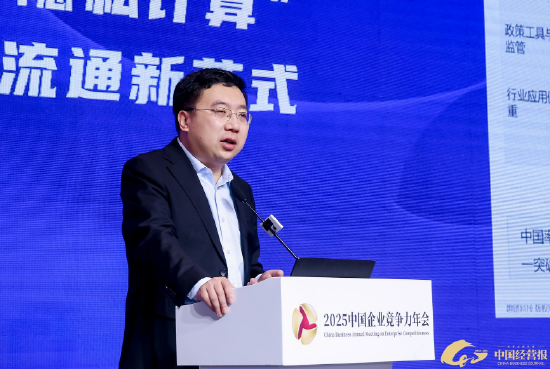
趣链科技董事长李伟:技术不能只追求高大上,必须形成可持续的商业闭环
Xin Lang Cai Jing· 2025-12-10 09:33
Core Insights - The "2025 China Enterprise Competitiveness Conference" was held in Beijing on December 9-10, highlighting the importance of data as a core production factor alongside land and capital [3][8] - Li Wei, Chairman of QuChain Technology, emphasized the role of "Blockchain + Privacy Computing" as foundational technology to bridge data innovation services with application scenarios [3][8] Healthcare Sector - QuChain Technology aims to address issues in China's healthcare system, such as data fragmentation and discipline separation, by creating a trusted medical data space that integrates resources from health authorities, hospitals, and data bureaus [3][8] - In the smart healthcare domain, the company is developing high-quality datasets and AI multimodal fusion models to enable intelligent diagnosis and imaging functions, exemplified by a collaboration with Peking University Dental Hospital to launch China's first dental AI medical registration certificate [3][8] Insurance Sector - The company has implemented a rapid claims project for accident insurance in Wenzhou, which connects data across health insurance, health commissions, hospitals, traffic police, and insurance companies, allowing patients to claim online without upfront costs [4][9] - This initiative has reduced insurance companies' annual costs by 80%, creating a win-win situation for users, companies, and data providers, with potential for nationwide expansion [4][9] Pharmaceutical and AI Innovation - QuChain Technology leverages integrated high-quality medical data to support drug development and foster more medical AI innovations, driving digital transformation in the healthcare industry [4][9] Financial Sector - The financial industry has high demands for data credibility and security, and QuChain Technology utilizes "Blockchain + Privacy Computing" to enable compliant sharing and efficient use of financial data, addressing privacy risks in multi-party data collaboration [4][10] - The company has established multiple replicable commercial cases in the financial sector, which is characterized by strong willingness to pay and clear demand for technology [10] Future Directions - Li Wei indicated the need to further explore data value across industries and promote more scenarios that achieve cost reduction and efficiency enhancement, aiming to build a standardized, vibrant, and integrated national data market [5][10]
GE Vernova(GEV.US)开启价值创造新阶段:翻倍股息、扩大回购,并提高盈利指引
智通财经网· 2025-12-10 03:58
展望 2028 年之后,该公司预测到 2028 年,其收入将达到 520 亿美元,复合年增长率将达到低两位数, 高于此前预测的 450 亿美元(高个位数增长率),同时将其该期间的调整后 EBITDA 利润率从 14% 上调 至 20%。 GE Vernova首席执行官 Scott Strazik 表示:"公司正处于创造巨大价值的早期阶段,未来财务状况将更加 稳健。" 该公司表示,预计到 2026 年,其电力业务的有机收入将增长 16%-18%,电气化业务的有机收入将增长 20%。 智通财经APP获悉,GE Vernova (GEV.US)周二夜盘股价上涨近6% ,此前该公司宣布将股息翻倍,提高 股票回购授权,并在提高了盈利预期。这家涡轮机制造商将季度股息提高至每股 0.50 美元,并将股票 回购授权从 60 亿美元提高至 100 亿美元,这主要得益于大量且不断增长的积压订单、强劲的利润率以 及更优惠的招聘价格。 GE Vernova还发布了2026 年的初步业绩指引,预计收入为 410 亿至 420 亿美元,自由现金流为 45 亿至 50 亿美元,同时将本年度的自由现金流预期从之前的 30 亿至 35 亿美元 ...

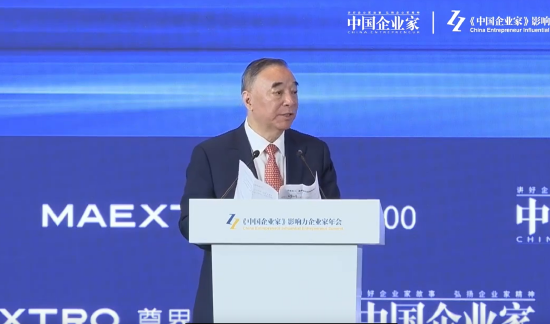
宋志平:建议企业从“大出海”转向“稳健出海”,总结成功经验并保持良好心态
Xin Lang Cai Jing· 2025-12-09 12:23
Core Viewpoint - The 2025 China Entrepreneur Influence Conference emphasizes the need for companies to adapt their business models in response to unprecedented global changes, focusing on high-quality development and innovation [1][4]. Group 1: Key Insights from Song Zhiping - Companies should shift from prioritizing scale expansion to focusing on high-quality development, which requires adherence to five basic requirements: standardized governance, core business prominence, innovation leadership, value enhancement, and risk prevention [3][6]. - The transition from "Internet+" to "Artificial Intelligence+" is essential for future business strategies [3][6]. - A change in focus from cost-driven approaches to value creation is necessary, advocating for differentiation, segmentation, high-end positioning, and branding [3][6]. - Companies should move from red ocean competition to blue ocean competition, seeking untapped market spaces [3][6]. - The approach to international expansion should evolve from aggressive strategies to more stable and cautious methods, with an emphasis on learning from successful overseas experiences [3][6].
东方雨虹全新高端防水品牌“鳐龙”正式面市
Zhong Guo Zhi Liang Xin Wen Wang· 2025-12-06 14:27
Core Viewpoint - The launch of the high-end waterproof brand "Raylong" by Oriental Yuhong marks a significant step towards high-quality development in the construction waterproofing industry, redefining high-end standards and emphasizing the importance of product quality and brand value [1][3][4]. Group 1: Product Launch and Market Response - The "Raylong" brand was officially unveiled at a product launch event in Beijing, showcasing its high-end waterproof product series [1][3]. - The event highlighted the systematic layout of "Raylong" in terms of product advantages and brand value, responding to the increasing market demand for high-quality waterproof systems [3][4]. - Market research indicates that customers in high-end residential, industrial parks, green buildings, and municipal landmarks are demanding higher reliability and environmental standards from waterproof materials, which "Raylong" aims to fulfill [4][6]. Group 2: Industry Transformation and Value Creation - Oriental Yuhong's introduction of the "Raylong" brand during a critical industry transformation period sends a clear signal against internal competition, focusing on quality and technological leadership [7][9]. - The company aims to shift the competitive focus from cost suppression to value creation, encouraging partners to move away from low-price competition and explore sustainable high-quality market opportunities [9][11]. - The launch of "Raylong" represents a strategic commitment to co-create value with partners, enhancing construction quality and overall advantages through a customer-centric approach [9][11]. Group 3: Collaborative Solutions and Future Outlook - The brand promotes a collaborative model centered on system solutions, transitioning partnerships from traditional supply-demand relationships to deep integration and co-creation [11]. - By providing high-reliability and high-adaptability products along with technical support, Oriental Yuhong aims to enhance partners' competitiveness in the high-end construction market [11]. - Experts view the launch of the "Raylong" brand as a strategic action that addresses industry-wide needs, setting a high-quality transformation example for the construction materials sector and encouraging a return to product essence and healthy ecosystem building [11].


吴清讲话重塑价值坐标系:市值管理如何应对“投资者回报”新纪元
Huan Qiu Wang· 2025-12-06 11:07
Core Viewpoint - A profound transformation is occurring in the capital market, shifting from a focus on scale competition to a system centered on long-term value creation and investor returns [1] Group 1: Institutional Inclusiveness - The current capital market is in a critical phase of transitioning to high-quality development, with a focus on enhancing the inclusiveness and adaptability of the capital market system [2] - The relationship between investment and financing is being elevated to a strategic level, marking a shift from merely pursuing financing scale to achieving a dynamic balance between financing efficiency and investor returns [2] - Three dimensions of institutional inclusiveness are highlighted: precise empowerment for technological innovation, diverse responses to investor needs, and upgraded regulatory effectiveness using big data and AI [2] Group 2: Governance Upgrade - Effective corporate governance is now a core foundation for value management, directly impacting the reliability and sustainability of investor returns [3] - Regulatory measures have been taken against over 50 listed companies for governance violations, demonstrating a commitment to enforce governance and equity management [3] - Companies with strong governance that protect minority shareholder rights will benefit from a "governance premium," while those with poor governance will face higher regulatory risks and valuation discounts [3] Group 3: Value Creation - Creating real and sustainable value is essential for companies to fulfill their responsibility to return value to investors [4] - The focus on value creation is shifting towards technological innovation and industrial upgrading, with a dual-driven model of internal growth and external expansion [4] - There has been a notable increase in major asset restructurings in sectors like semiconductors and AI, indicating a trend towards value enhancement [4] Group 4: Market Practice - The actions of listed companies to return value to investors have become widespread, with cash dividends totaling 2.4 trillion yuan in 2024, a 9% increase year-on-year [5][6] - The number of companies implementing continuous cash dividends over three years has also increased, reflecting a shift towards more frequent dividend distributions [6] - Regulatory upgrades have transformed soft constraints into hard indicators, enhancing the accountability of cash dividends [6] Group 5: Intermediary Transformation - Intermediary institutions, particularly investment banks, are transitioning from merely facilitating IPOs to becoming "value partners" throughout the entire lifecycle of listed companies [7] - This transformation includes providing research support, connecting with investors, and enabling capital operations for industrial upgrades [7] - Public fund reforms are also reinforcing investor orientation, with a focus on long-term performance metrics [7] Group 6: Ecological Construction - A collaborative and vibrant capital market ecosystem is essential, with each market participant playing a distinct role [8] - The establishment of robust investor protection mechanisms is crucial for supporting investor rights [8] - Promoting a culture that encourages innovation and tolerates failure will create a conducive environment for value creation and market management [8] Group 7: Long-termism - The capital market is shifting from short-term speculation to long-term value management, emphasizing sustainable investor returns and strategic foresight [9] - Long-term funding is vital for supporting this shift, with mechanisms being established to attract long-term investments [9] - The dual approach of long-term capital and strategic planning provides a stable environment for value management [9] Group 8: Open and Win-Win - Expanding the capital market's openness is a key task, bringing both opportunities and challenges [10] - International investors can provide additional capital and diverse valuation perspectives, while companies must adapt to international regulatory standards [10] - The internationalization of value management standards is being promoted, requiring companies to align their practices with both domestic and international expectations [10]
胡望明调研马钢有限并召开协同支撑推进会:树立“整合协同,价值创造”标杆
Xin Lang Cai Jing· 2025-12-05 12:49
(来源:中国宝武) 邂逅 · 3449 期 · 11744 篇 胡望明指出,今年以来,马钢有限通过自身努力,在宝钢股份全体系协同支撑下,在思想理念转变上发生了可喜变化,在经营绩效改善、信息化推动算账 经营方面实现了巨大进步,主要体现在三方面:一是经营绩效持续向好;二是管理变革激发活力;三是树立了集团内"整合协同,创造价值"的榜样案例。 12月5日,宝武党委书记、董事长胡望明到马钢有限调研,并召开协同支撑推进会。 胡望明强调,成绩巨大、来之不易,但潜力更大、需继续努力。潜力来源于"弯弓搭箭"钢铁主业格局下协同发展的强大动能,来源于马钢有限独特的自身 优势。释放潜力要在"补短板、强弱项"方面下更大功夫:一是进一步释放协同效应;二是进一步提升产品经营能力;三是进一步深化管理融合;四是持续 加快改革创新。 胡望明要求,马钢有限要认清形势任务,坚定发展战略,以战略为引领,持续推动高质量发展。要时刻牢记习近平总书记的殷殷嘱托,坚持做强做优做 大,着力将马钢有限打造成钢铁行业由大变强的标志性项目。锚定新要求,成为具备持续竞争优势的市场化主体。在技术创新、产品经营、效率提升、产 业链控制等方面持续发力,不断锻造差异化竞争优势 ...

商业模式,到底藏着什么魔法?
Sou Hu Cai Jing· 2025-12-05 02:08
Core Insights - The article emphasizes the importance of business models as a structural wisdom that facilitates the smooth flow of value among different participants, rather than merely a technique for making money [4][6][7] Business Model Fundamentals - Effective business models focus on creating incremental value rather than competing for existing resources, akin to improving oil extraction processes to yield more from the same input [4] - The principle of "total value creation" is highlighted, where the goal is to generate overall growth that benefits all parties involved, rather than taking from others [4] Value Creation Questions - To assess the viability of a business model, two key questions should be asked: "What unique value do I provide?" and "Why is this endeavor essential for me?" [6] - A clear understanding of these questions leads to the realization that profitability is a byproduct of value creation rather than a primary goal [6] Target Audience and Value Distribution - The article suggests a strategic approach to value distribution: allocate 5 units to consumers to enhance perceived value, 5 units to partners to expand the market, and retain 5 units for profit growth [5]

联名卡“进出”之间:信用卡坚持高质量发展
新浪财经· 2025-12-03 12:34
Core Viewpoint - The credit card industry is undergoing significant changes, with banks actively adjusting their product offerings to enhance quality and meet evolving consumer demands, indicating a shift towards high-quality development in the sector [3][10]. Group 1: Industry Adjustments - Since last year, nearly all commercial banks have announced adjustments to their card products, including the discontinuation of co-branded cards, primarily due to "market changes," "business adjustments," and "expiration of copyrights" [2]. - In April, major banks like China Merchants Bank and Bank of China announced the upgrade of UnionPay-Visa dual-standard magnetic stripe cards to chip cards to enhance payment security and convenience [2]. - Many banks are optimizing their strategies and improving their credit card product layouts to pursue high-quality customer acquisition [3]. Group 2: Co-branded Card Focus - The recent adjustments in co-branded card products have drawn significant attention, driven by regulatory guidance, market changes, and internal operational needs, leading to a strategic shift towards refined and high-quality management [5]. - Financial regulators have intensified the oversight of credit card partnerships, requiring banks to manage risks associated with co-branded cards carefully [5]. - The costs associated with issuing and maintaining co-branded cards are typically higher than standard products, with some top IP brand authorization fees exceeding 30% of the benefits cost [5]. Group 3: Product Innovation and Market Strategy - Despite the discontinuation of outdated products, many banks are actively launching new offerings, such as the Starbucks co-branded credit card and the bilibili credit card, which cater to specific consumer preferences and trends [8][9]. - The credit card industry is focusing on optimizing service models and achieving a balance between acquiring new customers and retaining existing ones, emphasizing quality over quantity [9]. - The introduction of innovative products, such as the Engineer Credit Card by China Merchants Bank, reflects the industry's commitment to meeting the needs of specific consumer segments [13]. Group 4: Economic and Regulatory Context - The 20th National Congress of the Communist Party of China emphasizes high-quality development as a key theme for economic and social progress, guiding the credit card industry towards innovation and consumer satisfaction [11]. - Banks are increasingly investing in consumer-focused areas, such as e-commerce promotions and government-supported initiatives, to stimulate domestic demand and consumption [12]. - The credit card industry must navigate technological changes and economic structural upgrades while maintaining risk management and operational stability [18].