
农产品出口

Search documents
棕榈油:短期暂获支撑,警惕二次下探,豆油:美豆反弹,豆棕做扩维持
Guo Tai Jun An Qi Huo· 2025-10-31 02:37
Report Summary 1. Report Industry Investment Rating - Not provided in the report 2. Core Viewpoints - Palm oil has short - term support but there is a risk of a second decline; for soybean oil, with the rebound of US soybeans, the spread between soybean oil and palm oil is expected to widen [1] 3. Summary by Relevant Catalogs 3.1 Fundamental Tracking - **Futures Prices**: The closing price of palm oil主力 was 8,828 yuan/ton (down 0.16% during the day session, 8,806 yuan/ton at night, down 0.25%); soybean oil主力 was 8,168 yuan/ton (up 0.44% during the day session, 8,156 yuan/ton at night, down 0.15%); rapeseed oil主力 was 9,529 yuan/ton (up 0.04% during the day session, 9,468 yuan/ton at night, down 0.64%); Malaysian palm oil主力 was 4,260 ringgit/ton (up 0.19% during the day session, 4,269 ringgit/ton at night, up 0.21%); CBOT soybean oil主力 was 49.58 cents/pound (down 1.16%) [1] - **Trading Volume and Open Interest**: The trading volume of palm oil主力 was 483,690 lots (down 243,616 lots), and the open interest was 391,870 lots (up 3,383 lots); for soybean oil主力, the trading volume was 286,316 lots (down 152,541 lots), and the open interest was 489,700 lots (down 3,447 lots); for rapeseed oil主力, the trading volume was 167,186 lots (down 189,402 lots), and the open interest was 226,014 lots (down 7,051 lots) [1] - **Spot Prices**: The spot price of 24 - degree palm oil in Guangdong was 8,750 yuan/ton (unchanged); the price of first - grade soybean oil in Guangdong was 8,500 yuan/ton (up 50 yuan/ton); the price of fourth - grade imported rapeseed oil in Guangxi was 9,900 yuan/ton (unchanged); the FOB price of Malaysian palm oil was 1,065 dollars/ton (down 10 dollars/ton) [1] - **Basis**: The basis of palm oil in Guangdong was - 78 yuan/ton; for soybean oil in Guangdong, it was 332 yuan/ton; for rapeseed oil in Guangxi, it was 371 yuan/ton [1] - **Price Spreads**: The spread between rapeseed oil and palm oil futures主力 was 701 yuan/ton (previous two - day spread was 683 yuan/ton); the spread between soybean oil and palm oil futures主力 was - 660 yuan/ton (previous spread was - 710 yuan/ton); the 1 - 5 spread of palm oil was - 46 yuan/ton (previous spread was - 48 yuan/ton); the 1 - 5 spread of soybean oil was 184 yuan/ton (previous spread was 172 yuan/ton); the 1 - 5 spread of rapeseed oil was 319 yuan/ton (previous spread was 349 yuan/ton) [1] 3.2 Macro and Industry News - Malaysia's MPIC aims to strengthen the downstream development of palm oil in Sabah, especially in biodiesel production. Sabah, the largest crude palm oil - producing region in Malaysia, had a production of 4.27 million tons in 2024, accounting for 22.1% of the national total. The state has over 1.48 million hectares of oil palm plantations, about 26.43% of the national total, and 129 palm oil mills. There are three licensed biodiesel plants in Sabah, creating about 160 jobs [2][3] - As of the week ending October 28, about 34% of US soybean - growing areas were affected by drought, down from 39% the previous week and 73% last year [3] - The estimated soybean production in Paraná, Brazil for the 2025/26 season is 21.96 million tons, higher than the September forecast of 21.94 million tons [3] - Brazil exported 1.347347 million tons of soybeans, 0.451508 million tons of soybean meal, and 1.551232 million tons of corn from October 19 - 25. It plans to export 1.832822 million tons of soybeans, 0.48587 million tons of soybean meal, and 1.369037 million tons of corn from October 26 - November 1 [4] - Since the start of the 2024/25 season, the EU's imports of five major oilseed meals reached a record high of 24.99 million tons. The increase in soybean meal imports was the most significant, reaching 20.34 million tons from October 2024 to August 2025, an increase of 3.5 million tons. Imports from Argentina, Brazil, and India increased by 2 million tons, 1.4 million tons, and 0.55 million tons respectively, while imports from the US decreased by 0.4 million tons. Rapeseed meal imports (mainly from Canada) slightly rebounded to 0.421 million tons (lower than last year's 0.647 million tons). Sunflower seed meal imports totaled 2.49 million tons (3.06 million tons last year), and palm kernel meal imports were 1.45 million tons (1.41 million tons last year) [4] - In September 2025, Canada's rapeseed crushing volume was 1.007389 million tons, up 16.07% from the previous month and 7.97% from the same period last year. Rapeseed oil production was 0.42533 million tons (up 15.8% month - on - month and 7.72% year - on - year), and rapeseed meal production was 0.589724 million tons (up 14.52% month - on - month and 8.32% year - on - year). The cumulative rapeseed crushing volume for the 2025/26 season was 1.875333 million tons, rapeseed oil production was 0.792629 million tons, and rapeseed meal production was 1.104666 million tons [5] 3.3 Trend Intensity - The trend intensity of palm oil is 0, and that of soybean oil is 0. The range of trend intensity is from - 2 to 2, with - 2 being the most bearish and 2 being the most bullish [6]
青海冷凉蔬菜首次出口越南
Zhong Guo Xin Wen Wang· 2025-10-30 21:50
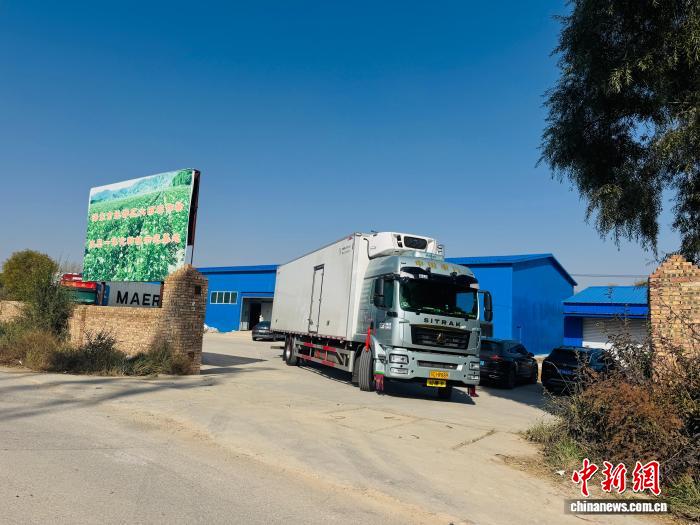
Core Points - Qinghai province has successfully exported its cool-season vegetables, specifically the Ledou cabbage, to Vietnam for the first time, marking a significant milestone in its agricultural trade [1][2]. Group 1: Export Achievement - Two trucks loaded with Ledou cabbage departed from the Ledou District of Haidong City, Qinghai, and crossed the Yunnan Hekou port to Hanoi, Vietnam [1]. - This export signifies the first time that Qinghai's cool-season vegetables have reached the Vietnamese market [1]. Group 2: Agricultural Advantages - Qinghai's unique geographical conditions, including a cool climate, large temperature variations between day and night, long sunlight hours, strong ultraviolet radiation, and low pest incidence, contribute to the higher sugar and vitamin content in its vegetables [2]. - The province's agricultural products are noted for their rich nutritional value due to these favorable growing conditions [2]. Group 3: Trade Development - Haidong Letong Import and Export Trade Co., Ltd. is a key foreign trade enterprise in the city, primarily exporting cool-season vegetables to Central Asia, with overseas warehouses established in Kazakhstan and Uzbekistan [2]. - As of the end of September this year, the registered area for agricultural product cultivation in Haidong City reached 25,000 acres [2]. - In the first three quarters of this year, Qinghai province exported 3,986.4 tons of fresh or refrigerated vegetables and 3,966.5 tons of potatoes [2].

建信期货豆粕日报-20251030
Jian Xin Qi Huo· 2025-10-30 02:11
Report Summary 1. Reported Industry Investment Rating No investment rating for the industry is provided in the report. 2. Core Viewpoints of the Report - The future direction depends on the outcome of the current round of negotiations. It is expected that the price volatility may increase next week. It is recommended that investors hold an empty or light - position. Aggressive investors can consider the option double - buying strategy to gain potential returns from the rising volatility [6]. 3. Summary by Related Catalogs a. Market Review and Operation Suggestions - **Market Conditions**: The US soybean futures contracts were relatively strong, with the main contract at 1075 cents. The domestic soybean meal rebounded slightly from its low level last week but was weaker than the external market. The market was affected by the China - US talks, and the bulls were hesitant to enter the market due to the uncertainty of importing US soybeans. Also, potential positive factors could not be realized because of the US government shutdown [6]. - **Operation Suggestions**: Pay attention to the results of the negotiation. It is recommended that investors hold an empty or light - position. Aggressive investors can consider the option double - buying strategy [6]. b. Industry News - As of Sunday, the US soybean harvest is expected to be 84% complete, and corn harvest 72% complete. Analysts' forecasts for the US harvest progress range from 80% - 88% for soybeans and 67% - 80% for corn. Last year, the soybean harvest progress was 89%, and the corn harvest progress was 81% [7]. - Brazil's soybean exports in October are expected to reach 7 million tons, down from the previous week's estimate of 7.34 million tons. Brazil's soybean meal exports in October are expected to reach 2.08 million tons, down from 2.09 million tons the previous week [9].
油脂油料早报-20251028
Yong An Qi Huo· 2025-10-28 01:44
Group 1: Industry Investment Rating - No information provided Group 2: Core Viewpoints - As of the week ending October 23, 2025, the U.S. soybean export inspection volume was 1,061,375 tons, in line with market expectations, and the cumulative export inspection volume for this crop year was 6,715,111 tons, lower than the same period last year [1] - As of last Thursday, the planting rate of soybeans in Brazil's 2025/26 season reached 36% of the expected sown area, unchanged from the same period last year [1] - From October 1 - 25, 2025, Malaysia's palm oil production increased by 2.78% month - on - month, with a 1.63% increase in fresh fruit bunch yield and a 0.22% increase in oil extraction rate [1] - Different institutions' data on Malaysia's palm oil exports from October 1 - 25, 2025 showed different trends: SGS reported a 23.79% increase, while AmSpec reported a 0.3% decrease and ITS reported a 0.4% decrease [1] Group 3: Summary by Related Catalogs Overnight Market Information - U.S. soybean export inspection volume as of the week ending October 23, 2025 was 1,061,375 tons, with market expectations of 1,000,000 - 1,500,000 tons, and the previous week's revised volume was 1,590,264 tons [1] - As of the week ending October 24, 2024, the U.S. soybean export inspection volume was 2,630,651 tons [1] - The cumulative U.S. soybean export inspection volume for this crop year was 6,715,111 tons, compared to 10,643,999 tons in the same period last year [1] - Brazil's 2025/26 season soybean planting rate reached 36% as of last Thursday, unchanged from the same period last year and up from 24% the previous week [1] - From October 1 - 25, 2025, Malaysia's palm oil production increased by 2.78% month - on - month, fresh fruit bunch yield increased by 1.63%, and oil extraction rate increased by 0.22% [1] - SGS reported that Malaysia's palm oil exports from October 1 - 25, 2025 were 985,301 tons, a 23.79% increase from the same period last month [1] - AmSpec reported that Malaysia's palm oil exports from October 1 - 25, 2025 were 1,182,216 tons, a 0.3% decrease from September [1] - ITS reported that Malaysia's palm oil exports from October 1 - 25, 2025 were 1,283,814 tons, a 0.4% decrease from the same period last month [1] Spot Prices - Spot prices of various products (bean meal in Jiangsu, rapeseed meal in Guangdong, soybean oil in Jiangsu, palm oil in Guangzhou, and rapeseed oil in Jiangsu) from October 21 - 27, 2025 are provided [5] Others - Information on precipitation in major producing countries, import soybean crushing profit on the futures market, and grease import profit are mentioned but no specific data is provided [1] - Information on grease basis, grease and oilseed price spreads on the futures market, and protein meal basis are mentioned but no specific data is provided [8][10][13]
宁夏固原马铃薯深加工产品出口乌兹别克斯坦
Zhong Guo Xin Wen Wang· 2025-10-27 08:53
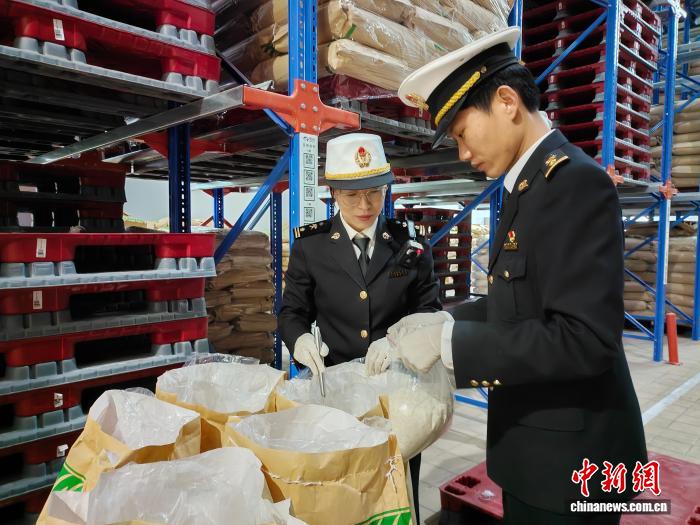
Core Points - The export of potato snowflake powder from Ningxia Guyuan to Uzbekistan marks a significant breakthrough for local potato products in international markets [1] - The potato snowflake powder retains essential nutrients and is increasingly used in various food industries, becoming a key ingredient in many consumer products [2] - The customs authority has implemented measures to enhance service efficiency for local enterprises, including a "green channel" for rapid inspection and clearance of agricultural products [2] Group 1 - A batch of 20.6 tons of potato snowflake powder produced by Xuechuan Liupan Mountain Food (Ningxia) Co., Ltd. has been cleared for export to Uzbekistan [1] - From January to September, the export value of potato products from Guyuan exceeded 200 million yuan, representing a 32% year-on-year increase [2] - The export landscape for Guyuan's potato products has expanded to include countries such as Thailand, Australia, Russia, South Korea, Japan, Singapore, and now Uzbekistan [2] Group 2 - Potato snowflake powder is made from high-quality fresh potatoes and is rich in protein, dietary fiber, vitamins, and minerals [2] - The customs authority's initiatives include proactive services and personalized support to help local businesses expand into international markets [2] - The growing demand for potato snowflake powder in baking, cooking, and snack production highlights its role as an "invisible protagonist" in the food industry [2]
棕榈油:产地去库偏慢,关注棕油下方支撑,豆油:南美产情偏好,关注中美经贸关系
Guo Tai Jun An Qi Huo· 2025-10-20 01:51
Report Title - "Palm Oil: Slow De-stocking in Origin Regions, Focus on Downside Support for Palm Oil" and "Soybean Oil: Favorable Production Situation in South America, Focus on China-US Economic and Trade Relations" [1][2] Report Core View - The report focuses on the fundamentals of palm oil, soybean oil, and rapeseed oil, including price, trading volume, position, spot price, basis, and spread data, as well as macro and industry news [3][4] Fundamental Tracking Futures Data - Palm oil futures: The closing price of the main contract during the day session was 9,308 yuan/ton, down 0.04%, and 9,354 yuan/ton at night, up 0.49%. The trading volume was 484,295 lots, an increase of 100,467 lots, and the position was 337,826 lots, a decrease of 10,220 lots [3] - Soybean oil futures: The closing price of the main contract during the day session was 8,256 yuan/ton, unchanged, and 8,298 yuan/ton at night, up 0.51%. The trading volume was 295,513 lots, an increase of 88,765 lots, and the position was 499,960 lots, an increase of 1,780 lots [3] - Rapeseed oil futures: The closing price of the main contract during the day session was 9,861 yuan/ton, down 0.74%, and 9,874 yuan/ton at night, up 0.13%. The trading volume was 226,809 lots, an increase of 67,299 lots, and the position was 281,371 lots, a decrease of 6,590 lots [3] Spot Data - Palm oil (24 - degree, Guangdong): The spot price was 9,250 yuan/ton, with no price change [3] - First - grade soybean oil (Guangdong): The spot price was 8,660 yuan/ton, an increase of 40 yuan/ton [3] - Fourth - grade imported rapeseed oil (Guangxi): The spot price was 10,120 yuan/ton, a decrease of 50 yuan/ton [3] Basis Data - Palm oil (Guangdong) basis: - 58 yuan/ton [3] - Soybean oil (Guangdong) basis: 404 yuan/ton [3] - Rapeseed oil (Guangxi) basis: 259 yuan/ton [3] Spread Data - Rapeseed - palm oil futures main contract spread: 553 yuan/ton (previous two - day spread was 623 yuan/ton) [3] - Soybean - palm oil futures main contract spread: - 1,052 yuan/ton (previous two - day spread was - 1,056 yuan/ton) [3] - Palm oil 1 - 5 spread: 44 yuan/ton (previous two - day spread was 54 yuan/ton) [3] - Soybean oil 1 - 5 spread: 214 yuan/ton (previous two - day spread was 194 yuan/ton) [3] - Rapeseed oil 1 - 5 spread: 386 yuan/ton (previous two - day spread was 441 yuan/ton) [3] Macro and Industry News - SGS estimated that Malaysia's palm oil exports from October 1 - 15, 2025, were 606,292 tons, a 49.8% increase from 404,688 tons in the same period last month [4] - As of the week of October 14, 2025, about 39% of the US soybean - growing areas were affected by drought, the same as the previous week [5] - Brazilian farmers had planted soybeans on 23.27% of the expected area in 2025, compared with 9.33% in the same period last year, and higher than the 2023 record of 17.35% and the past 5 - year average of 16.20% [6] - As of October 17, 2025, the soybean - planting area in Mato Grosso, Brazil, for the 2025/26 season had reached 43.57% of the estimated total area, up from 21.22% the previous week and 25.08% in the same period last year [6] - Argentina's 2024/25 soybean - planting area was expected to be 18 million hectares, unchanged from the previous month's estimate and an 8.4% increase from 16.6 million hectares in the previous year. The 2024/25 soybean production was expected to be 51.1 million tons, unchanged from the previous month's estimate and a 6% increase from 48.2 million tons in the 2023/24 season. The first planting intention estimate for the 2025/26 season showed an expected area of 17.5 million hectares, a 2.8% decrease from the previous year [6] - As of October 8, 2025, Argentine farmers had sold 37.54 million tons of 2024/25 soybeans, 1.28 million tons more than a week ago, compared with 29.85 million tons in the same period last year. They had pre - sold 3.11 million tons of 2025/26 soybeans, 190,000 tons more than a week ago, compared with 1.11 million tons in the same period last year [7] - As of the week of October 12, 2025, Canada's rapeseed exports increased 97.8% to 159,200 tons from the previous week. From August 1 to October 12, 2025, Canada's rapeseed exports were 955,300 tons, a 59.1% decrease from the same period last year. As of October 12, 2025, Canada's rapeseed commercial inventory was 1.4668 million tons [7] Trend Intensity - Palm oil trend intensity: 0; Soybean oil trend intensity: 0 [8]
广西香蕉实现自主品牌首次出口
Zhong Guo Xin Wen Wang· 2025-10-17 21:08
Core Points - The news highlights the successful export of 25.3 tons of bananas from Guangxi, marking the first time local enterprises have exported bananas under their own brand [1][2] - The bananas were produced by Guangxi Jinsui Agricultural Group Co., Ltd., which has seen an increasing demand for exports as banana cultivation in Guangxi expands [1] - The Yongzhou Customs has implemented measures to facilitate the export process, including training for local enterprises and the establishment of a "green channel" for fresh produce [1][2] Company Summary - Guangxi Jinsui Agricultural Group Co., Ltd. has successfully opened international markets for its self-branded bananas, which is significant for the company's development [1] - The company plans to consolidate existing markets and actively explore new markets in Central Asia to support growth in export business [1] Industry Summary - Yongzhou Customs is focusing on enhancing the export of local agricultural products by improving brand cultivation, quality control, and customs facilitation [2] - The customs authority aims to assist more local brands from Guangxi in entering the global market through coordinated efforts with relevant departments [2]
美媒:中国近半年没买过美国一粒大豆
Xin Lang Cai Jing· 2025-10-09 02:09
Core Insights - Soybeans are crucial for U.S. agriculture and agricultural exports, with a projected export value of $24.58 billion in 2024, accounting for 14% of total agricultural exports [1] - China is the largest buyer of U.S. soybeans, purchasing $12.64 billion worth in 2024, which represents over half of U.S. soybean exports [1] - Since May 2025, China has ceased purchasing U.S. soybeans, redirecting orders to Brazil and Argentina, while the U.S. is encouraging purchases from African and Asian countries [1] Summary by Category Export Value - The export value of soybeans for 2024 is projected at $24.58 billion, making it the leading agricultural export for the U.S. [1] - Soybeans account for 14% of the total agricultural export value [1] Major Buyers - China remains the largest buyer, with purchases valued at $12.64 billion in 2024, which is more than 50% of total U.S. soybean exports [1] - Other significant buyers include Mexico, the European Union, Japan, and Indonesia [1] Market Shifts - Since May 2025, China has not purchased any U.S. soybeans, leading to a shift in orders to Brazil and Argentina [1] - The U.S. is actively seeking to increase soybean purchases from African and Asian markets, including efforts to penetrate the Indian market [1]
从高原田间走向国际市场:青海丰收节见证农产品“出圈”加速度
Zhong Guo Xin Wen Wang· 2025-09-24 06:59
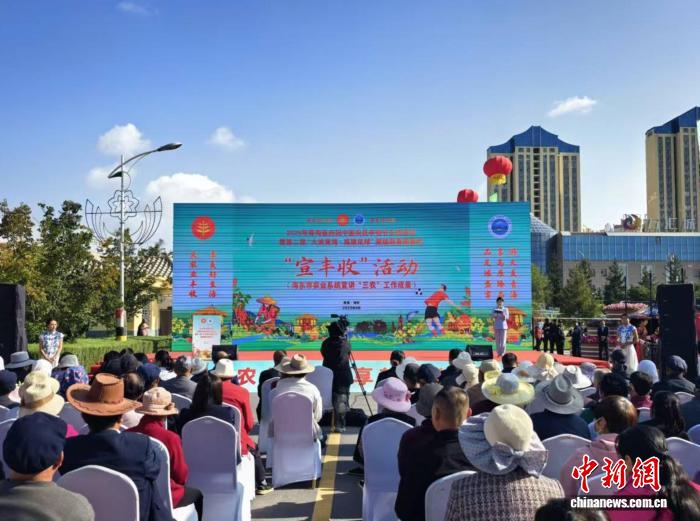
Core Viewpoint - The 2025 Qinghai Province Farmers' Harvest Festival highlights the acceleration of agricultural products from Qinghai entering international markets, showcasing the region's unique agricultural advantages and export growth [1][3]. Group 1: Agricultural Export Growth - The average annual sunshine hours in Haidong City is 3,180 hours, with an average annual precipitation of 345.4 mm, creating a favorable environment for the growth of cool-season vegetables [3]. - Since the first direct supply of cool-season vegetables to Hong Kong in 2023, Haidong City's exports have expanded to countries including Thailand, South Korea, Malaysia, Kazakhstan, and Kyrgyzstan. In the first seven months of this year, 1,905 tons of cool-season vegetables were exported, representing a year-on-year increase of 140%, accounting for 89.9% of the province's total cool-season vegetable exports during the same period [3][5]. Group 2: Local Agricultural Characteristics - Haidong City has 840 square kilometers of selenium-rich soil, making it a natural production base for highland green selenium products. The proportion of specialty crops in the city exceeds 86%, forming three major characteristic industrial belts: Sichuan water specialty industry, shallow mountain dry farming industry, and brain mountain green industry [5]. - The city cultivates 248 varieties of cool-season vegetables, which are highly favored by customers in the Guangdong-Hong Kong-Macao Greater Bay Area. The "enterprise + cooperative + farmer + order" model is used to send these vegetables to the Greater Bay Area, involving over 20,000 farming households and achieving an average income increase of over 20,000 yuan per household [5][7]. Group 3: Promotion and Marketing Initiatives - The first "Qinghai Specialty Product Recommendation Officer" live broadcast competition was held, featuring 16 teams from Qinghai Province showcasing highland specialty agricultural and livestock products. This initiative aims to promote Qinghai's unique agricultural products nationwide and create new income opportunities for farmers and herders [7].

9月23日《新闻联播》主要内容
Xin Lang Cai Jing· 2025-09-23 12:31
Group 1 - The 70th anniversary celebration of the Xinjiang Uyghur Autonomous Region is attended by a central delegation led by Xi Jinping [1] - The publication of the "Xi Jinping Thought on Socialism with Chinese Characteristics for a New Era Curriculum System and Teaching Outline" for party members and cadres [1] - Li Qiang attends the 80th United Nations General Assembly in New York [1] Group 2 - The rapid development of e-commerce in China during the first eight months of the year [1] - The balance of inclusive agricultural loans increased by 7.45% compared to the beginning of the year as of the end of August [1] - Record high agricultural product exports from China in the first eight months of this year [1]