
普惠金融

Search documents
证券公司学习宣传贯彻党的二十届四中全会精神 | 长城证券党委书记、董事长王军:锻造产业金融特色内核,书写金融强国“长城答卷”
Zhong Guo Zheng Quan Bao· 2026-02-13 12:35
编者按 当前,资本市场改革持续深化,证券行业正处在乘势而上、建设一流投资银行和投资机构的关键战略机 遇期,学习、宣传、贯彻党的二十届四中全会精神是当前和今后一个时期的重要政治任务。为此,中国 证券报联合中国证券业协会推出"证券公司学习宣传贯彻党的二十届四中全会精神"系列专题报道,聚焦 证券公司在强化功能发挥、提升专业能力、推进差异化发展、筑牢合规风控底线、厚植行业文化底蕴等 方面的实践探索与丰硕成果,生动展现证券公司作为资本市场重要践行者、改革排头兵、服务主力军的 责任担当与时代作为。本篇为系列报道第三十篇。 雄关漫道,星河璀璨。卅载风雨,铸就金融脊梁。自1995年于改革春潮中破土而生,长城证券 (002939)便如一道蜿蜒于资本市场的"金融长城",以深圳为原点,将服务的脉络延伸至大江南北。 棋局新开 于产融共生中落子 善弈者谋势,不争一子之得失;善融者聚力,贵在全局之共生。长城证券正于产业金融的棋盘上,布下 一局共生共荣的大棋。 从首批综合类券商到深交所挂牌上市,其名"长城",早已超越了地理符号,升华为一种深耕产业、固本 培元的战略定力。当"十五五"的号角吹响,金融强国建设的时代命题如巍峨关山矗立眼前,这家 ...

七大“很行”礼遇 浦发信用卡绘就新春普惠全景图
Zhong Guo Jin Rong Xin Xi Wang· 2026-02-13 09:21
红包很行:新春普惠红包雨 "开年有喜,人人有奖" 积极践行"普惠金融",浦发信用卡启动"好运加马,马上有礼"春节红包雨活动,携百亿积分重磅奖池,多重覆盖消费场景,奉以"人人有奖"的诚意,打造 无门槛、广覆盖的普惠盛宴。持卡人登录浦大喜奔APP即可参与,最高可得6666随机积分、最高666元商城满减券;最高66元的快捷支付刷卡金、自动还 款还款金、分期满减优惠券、账单分期达标刷卡金;快捷支付5倍积分权益;品牌茶咖1元购权益等。 值得一提的是,该活动多维联动"支付宝、微信、京东、美团、抖音"头部电商及品牌方,覆盖消费、支付、还款、分期等多场景需求,传递"开年有喜"的 金融温暖。 转自:新华财经 新春将至,年味渐浓。浦发信用卡于马年新春消费旺季推出覆盖"红包、美食、文娱、出游、分期、 会员、网购"的七大"很行"新春礼遇,融入场景,用 心陪伴,以高质量金融服务与持卡人共度美好幸福年。 文娱很行:半价观影逛景区 新春休闲超有料 浦发信用卡特别推出"佳片1元购""半价看电影""半价逛景区"三重好礼,持卡人有机会以1元购得指定影片50元代金券、收获"半价观影券",可抵扣订单 50%金额,单券最高减25元。将金融福利转换为值 ...



邮储银行漯河市分行开展金融服务进企业活动
Huan Qiu Wang· 2026-02-13 08:30
据悉,该行深入践行"以客户为中心"服务理念,紧扣企业生产节奏与员工实际需求,量身定制班前、午 休、班后专属服务时段,在企业内设立专属金融服务点,配备移动展业设备、安排专业服务人员,为企 业员工现场一站式办理银行卡激活、手机银行签约等业务,实现金融服务全时覆盖且不干扰企业正常生 产经营。 下一步,该行将持续探索贴合客户需求的服务新模式,以个性化服务精准对接客户诉求,将专业普惠金 融服务延伸至群众身边,为群众提供高效、专业、便捷的定制化金融解决方案,让金融服务更具温度。 来源:环球网 临近春节,为方便工资代发企业一线员工使用银行卡服务,近日,邮储银行漯河市分行开展金融服务进 企业活动,将金融服务便利送到企业生产一线。 ...

中国人民银行通告全国:2月1日起,人民币现金收付新规正式施行
Sou Hu Cai Jing· 2026-02-12 13:13
2026年2月1日,中国人民银行会同国家发展改革委、金融监管总局联合制定的《人民币现金收付及服务 规定》正式施行。新规直面近年来频发的拒收现金乱象,为流通领域现金使用划定清晰标准。 在移动支付成为主流的今天,不少人可能好奇:为何要专门出台政策保护现金支付?答案藏在我们身边 那些被数字浪潮边缘化的群体里。央行抽样调查显示,超过75%的老年人经常使用现金,这一比例在县 域老年人中更是高达80.4%。 数字时代的支付困境 《人民币现金收付及服务规定》2月1日正式施行,为现金支付构建全链条保障体系。新规基于分类管理 和普遍适用原则,提出保障现金支付的基本要求。 人工收款、面对面服务必须支持现金支付。采取人工方式收款、提供面对面服务以及线上预约交易、线 下完成服务或货物交付的场合,收费单位和经营主体应支持现金支付,保持合理的零钱备付。 无人值守场所需公示现金转换方式。采取无人值守、机具设备等自助服务模式,以及采用"一卡通"结算 的场所,应在醒目位置标识现金收取转换方式及服务联系电话,且不得收取额外手续费。 全部交易均通过网络完成的,收费单位应提前公示支付方式,尊重公众知情权和选择权。 "只能扫码、不收现金"的场景遍布餐 ...
农业银行股价震荡下行,机构看好中长期基本面
Jing Ji Guan Cha Wang· 2026-02-12 10:58
股票近期走势根据内部数据库,农业银行(601288.SH)近7天(2026年2月6日至2月12日)股价呈现震 荡下行趋势。截至2月12日收盘,股价报6.61元,单日下跌2.65%,区间累计跌幅为1.34%。期间最高价 为2月10日的6.81元,最低价为2月9日的6.60元,振幅达3.13%。资金面上,2月12日主力资金净流出7.05 亿元,换手率0.14%,显示短期抛压有所增加。板块方面,银行板块同期下跌1.41%,国有大型银行板 块下跌1.75%,农业银行表现略弱于行业平均水平。 近期事件近期农业银行涉及两项关键事件:一方面,农行上海市分行于2月11日率先落地上海市首笔"民 间投资专项担保计划"贷款,该政策旨在支持中小微企业融资,可能对农行普惠金融业务形成正向催 化。另一方面,国家金融监督管理总局济宁监管分局于2月12日对农行微山县支行开出罚单,因票据业 务管理不审慎罚款45万元,或对局部合规管理带来短期压力。此外,银行板块整体呈现结构性行情,中 小银行领涨而大型银行回调,农行年初至今股价下跌13.93%,与行业分化趋势一致。 经济观察网 农业银行(601288)(601288.SH)近7天股价呈现震荡下行 ...

金融人·事|消失的县域法人银行
Xin Lang Cai Jing· 2026-02-12 10:09
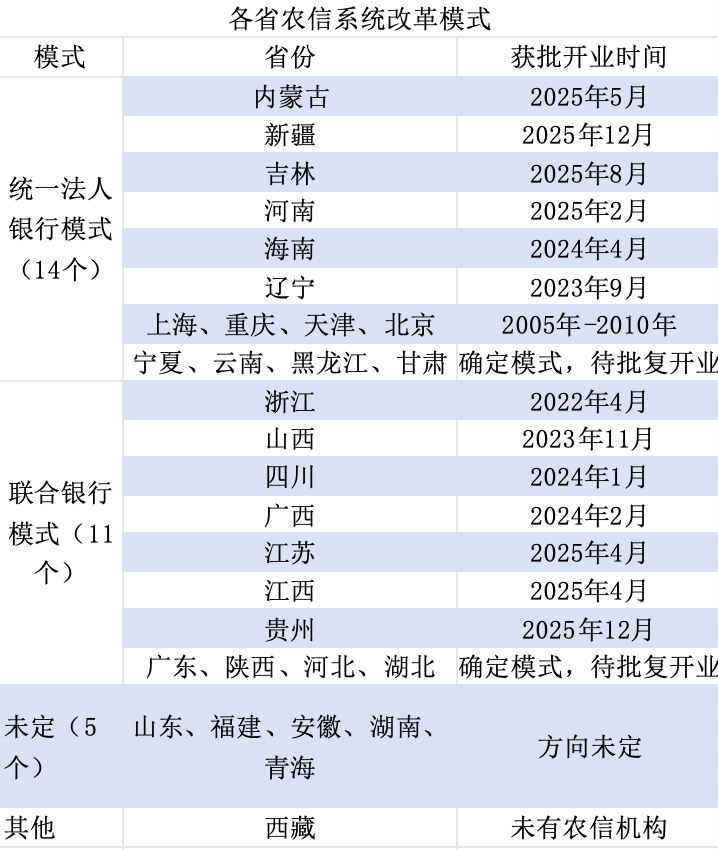
智通财经记者 | 杨志锦 智通财经编辑 | 王姝 时间回到5年前。 2020年9月12日,西安曲江国际会议中心,首届中国金融四十人"曲江论坛"在此举行。一向以敢言著称的时任人民银行金融稳定局局长孙天琦在会上直 言:"我国不缺大银行,这次信用社改革过程中,一定要保持农村信用社、县级农商行法人地位的稳定。" 与全国展业的大行、股份行及城区经营的城商行不同,县域法人银行(农信社、农商行、农合行、村镇银行等)经营范围严格限定在所在地,是服务县域经 济与"三农"的主力军。 自2010年天津农商行成立后,十余年来再无省级农商行获批。期间,监管部门甚至中央一号文件也多次提出要"保持农村金融机构县域法人地位和数量总体 稳定",旨在引导相关机构就地投信贷放,防止其从农村"抽水"(从农村吸收存款到城市放贷)。 然而,地方组建省级农商行的意愿始终强烈。2020年新一轮农信社改革启动后,孙天琦的发言被视为延续原有监管导向的信号。 出乎意料的是,三年之后的2023年9月,辽宁省农商行挂牌成立,成为新一轮改革中首家采用全省统一法人模式的省级农商行。据智通财经记者梳理,截至 今年2月,海南等五省份也组建了省级农商行。同时,山西等七省份则选 ...
宁津农商银行:助力商户备货 更添客流增量
Qi Lu Wan Bao· 2026-02-12 09:56
宁津农商银行立足支农支小市场定位,依托清单走访、驻点办公等活动,对辖内2个街道、10个乡镇内 的商户划分网格,针对个体工商户用款急、期限短、频度高的资金需求特点,提供"线上+线下"联合金 融服务模式,有效满足商户金融需求,缓解商户进货、储备等难题。截至1月末,该行共向辖内商户投 放贷款5677笔,金额9.89亿元,支持商户2045户。(荣艳芳林清治) "逢年过节的时候就是商品销量的黄金期,烟酒、扒鸡礼盒更是供不应求,宁津农商银行发放的商户贷 款帮了我的大忙!"扒鸡超市老板路春霞说。在多年的注重品质、诚信经营下,超市生意越来越好。随 着年关临近,她本想趁着销售旺季再储备一批货源,但苦于手头上资金不够。宁津农商银行在"普惠金 融商户行"活动中了解到她的情况后,第一时间为其办理了20万元的"个体工商户贷",及时满足客户备 货需求,顺利解决了资金问题,还为其免费安装了"聚合支付"收款码。 春节期间,宁津农商银行聚焦个体工商户新春备货过程中信贷需求旺盛的实际情况,组织开展"普惠金 融商户行"服务活动,全力帮助商户解决资金周转难题,为集市商户、商超等个体工商户发展壮大"保驾 护航"。 ...
微小企业贷款证券化2025年度运营报告与2026年度展望:微小企业贷款 ABS 产品发行放缓,发行利率保持下降趋势,产品累计违约率有所上升;国内经济内生动力不足,有效需求偏弱,小微企业经营承压,仍需关注小微企业信贷资产表现
Zhong Cheng Xin Guo Ji· 2026-02-12 09:53
1. Report Industry Investment Rating - No information provided in the given content 2. Core Viewpoints of the Report - In 2025, under the dual pressure of increased external environmental uncertainty and internal structural contradictions, small and micro - enterprises faced operational challenges. Despite continuous macro - policy support for inclusive small and micro - enterprise loans, the growth rate of such loans slowed down, and the issuance of small and micro - enterprise loan ABS products declined in terms of both the number of issues and scale. The cumulative default rate of these products rose at the end of the year, indicating pressure on asset quality. The credit performance of small and micro - enterprise credit assets and the future issuance of small and micro - enterprise loan ABS products in the credit asset securitization market remain uncertain [3][4][33] 3. Summary by Relevant Catalogs Policy - In 2025, in the face of a complex situation with deepening external environmental impacts and prominent domestic supply - demand contradictions, the macro - policy implemented a moderately loose monetary policy, maintained the intensity of support for inclusive small and micro - enterprise loans, and optimized the loan structure. Multiple departments issued a series of policies to support small and micro - enterprises, aiming to increase financing supply, reduce costs, and improve service quality. The new general tone of "ensuring quantity, improving quality, stabilizing prices, and optimizing structure" was established [4][5] - The scale of inclusive small and micro - enterprise loans continued to grow, with the balance increasing from 29.40 trillion yuan in 2023 to 36.57 trillion yuan in 2025, and the proportion in total loans rising from 12.37% to 13.45%. However, due to economic slowdown and policy transformation, the growth rate of loans decreased from 23.53% in 2023 to 11.05% in 2025 [6] - The central bank cut the reserve requirement ratio and the loan prime rate (LPR) in 2025, leading to a stable decline in the average interest rate of newly issued inclusive small and micro - enterprise loans. In June 2025, the average rate was 3.48%, a decrease of 0.66 percentage points compared to the previous year [9] Issuance - In 2025, 10 small and micro - enterprise loan ABS products were issued in the inter - bank market, with a total issuance scale of 58.645 billion yuan, a year - on - year decrease of 23.08% in the number of issues and 10.49% in scale. Meanwhile, 117 asset - backed notes (ABN) products with underlying micro - enterprise loans were issued, with a scale of 101.93 billion yuan, a year - on - year increase of 27.94% in the number of issues and 44.44% in scale [12] - The issuance of small and micro - enterprise loan ABS slowed down due to the loose market liquidity and the slowdown of banks' inclusive small and micro - enterprise loan growth, while the issuance of micro - enterprise loan ABN was more active because of the strong financing and cost - optimization needs of Internet banks and non - bank institutions [12] - In terms of issuing institutions, in 2025, there were 7 institutions issuing small and micro - enterprise loan ABS products. State - owned banks remained the dominant issuers, with 1 state - owned bank issuing 4 products worth 49.612 billion yuan, accounting for 84.60%. The concentration of issuing institutions has increased in recent years [14] Issuance Interest Rate - In 2025, the issuance interest rates of small and micro - enterprise loan ABS products generally showed a downward trend. The interest rate range of senior (AAAsf) securities was 1.58 - 1.96%, and that of sub - senior (AA + sf) securities was 1.91 - 2.19%, with a narrower range compared to 2024. The issuance cost of these products was at a historical low [17] - Compared with the 1 - year ChinaBond Medium - and Short - Term Note Yield, the spread range of AAAsf - rated securities of small and micro - enterprise loan ABS products was - 11 - 20 basis points, and that of AA + sf - rated securities was 21 - 30 basis points, with a narrower spread range compared to the previous year [17] - The issuance interest rates of small and micro - enterprise loan ABS products were generally lower than those of micro - enterprise loan ABN products because banks had an advantage in capital cost over Internet banks and non - bank financial institutions [17] Secondary Market - In 2025, the trading volume of small and micro - enterprise loan ABS products in the secondary market was 9.388 billion yuan, a 49.61% increase compared to 2024. The trading frequency was 43 times, with an average transaction amount of 218 million yuan. The turnover rate was 29.30%, slightly higher than the 2025 credit ABS market turnover rate, but the trading activity still needed to be improved [20] - The "Feichi Jianpu" series of products issued by China Construction Bank had a significant increase in trading activity, with the trading amount increasing by 165.27% compared to the previous year, accounting for 84.57% of the total secondary - market trading amount of small and micro - enterprise loan ABS products in that year [20] Asset Pool Characteristics - In 2025, the average single - household unpaid principal balance of the underlying assets of small and micro - enterprise loan ABS products increased. The proportion of underlying assets with mortgage guarantees was over 90%, and the average single - household unpaid principal balance was 1.7682 million yuan, higher than in 2024 [22] - The weighted average remaining term of the underlying assets decreased slightly to 12.20 months in 2025 from 12.96 months in 2024, remaining relatively short [23] - The weighted average interest rate of the underlying assets continued to decline and remained at a low level. The average interest rate of the asset pool of products issued by state - owned banks was 3.73%, that of joint - stock banks was 4.14%, and that of regional banks was 4.58% [23] Performance during the Continued Period Default Rate - By the end of 2025, the cumulative default rate of small and micro - enterprise loan ABS products showed an upward trend, ranging from 0.00% to 4.53%. The cumulative default rate of products issued by state - owned banks was between 0.00% and 3.43%, that of joint - stock banks was between 0.00% and 4.53%, and that of regional banks was between 0.00% and 4.50% [26] - For the 10 small and micro - enterprise loan ABS products issued in 2025, the cumulative default rate by the end of 2025 was between 0.00% and 1.67%. The cumulative default rate of products issued by state - owned banks was between 0.00% and 0.47%, that of joint - stock banks was between 0.00% and 1.67%, and that of regional banks was between 0.00% and 0.01% [29] Prepayment Rate - In recent years, the prepayment rate of small and micro - enterprise loan ABS products has been declining but remains at a high level. In 2025, except during the peak periods of small and micro - enterprise capital demand such as the Spring Festival and the end of the year, the annualized prepayment rate was generally above 50% [31] - There were significant differences in prepayment rates among products due to the small number of issued products. Among issuing institutions, the average prepayment rate of products issued by state - owned banks was the highest, while that of joint - stock banks was the lowest [31][32]
A股突然暴力拉升,道指破5万点,2.27万亿天量成交,三大信号告诉你,周二行情怎么走?
Sou Hu Cai Jing· 2026-02-12 09:40
是什么促使内外资机构突然变得如此乐观? 2026年2月9日股市复盘:攻势如虹,价值领航 今日A股气势如虹,大盘高歌猛进,开盘即奠定了全天强势基调。沪指以超过4100点的高位开盘,三大指数集体飘红。与以往冲高回落的走 势不同,今日大盘稳扎稳打,步步攀升,如同拾阶而上。午后虽有短暂横盘,但抛压轻微,显示市场惜售情绪浓厚。尾盘时段,甚至出现资 金主动抢筹的迹象。最终,三大指数均以接近全天最高点收盘,尤其是上证指数,收出一根气势逼人的光头阳线,技术上呈现出强势多头信 号,预示买盘力量占据绝对优势。 此轮上涨行情中,大金融板块尤其是券商股,扮演了核心驱动角色。锦龙股份率先封板,华泰证券、中信证券等头部券商纷纷大幅跟涨。券 商股素有"行情风向标"和"发动机"之称,它们的集体发力,极大地提振了市场信心,直接拉动指数上行,为市场注入了一剂强心剂。 除了券商板块,科技成长和新能源无疑是今日盘面上的耀眼明星。半导体、通信设备、光伏设备等板块成为资金重点涌入的领域。数据显 示,仅半导体板块就吸金53.19亿元,通信设备板块紧随其后,净流入52.95亿元,光伏设备板块也获得了48.71亿元的资金注入。这三大板块 合计吸引了超过150 ...
支持“五碳”建设 绿色金融全面纳入国家战略体系——2026年绿色金融发展十大前瞻
Zheng Quan Ri Bao Wang· 2026-02-12 08:49
Core Viewpoint - China's green finance development has accelerated and is becoming a crucial driver for sustainable economic and social development, with significant achievements expected by 2025 in various areas such as standardization, product innovation, and carbon market construction [1] Group 1: Policy and Institutional Framework - Green finance is becoming a key area for the coordination of fiscal and financial policies, with the "14th Five-Year Plan" emphasizing the establishment of foundational systems for carbon management [2][3] - By 2026, China aims to enhance carbon footprint management and accelerate the establishment of carbon accounting standards for key products [2] - The government is focusing on integrating fiscal policies with financial support for carbon reduction projects, expanding the scope of support to include energy efficiency upgrades and green transformations [3] Group 2: Market Trends and Growth - The green finance market is expected to experience a dual optimization in scale and structure by 2026, driven by policy support, market demand, and financial innovation [4] - Green credit remains the largest green finance tool, with a steady growth rate projected, while green bonds are anticipated to see rapid development, enhancing the importance of direct financing [5] - ESG public fund sizes are growing, with a reported increase of 30% year-on-year, indicating a rising acceptance of ESG investment principles [6] Group 3: Technological Integration and Information Disclosure - The quality of information disclosure is expected to improve significantly due to advancements in artificial intelligence, enhancing the effectiveness of green financial product pricing [7] - By 2026, companies will be required to disclose sustainability reports, which will include climate-related information, thereby increasing the credibility of green finance pricing [8] Group 4: Product Innovation and Financial Instruments - Transition finance products are expected to be a primary focus, with innovative products emerging that link financing to corporate transformation goals [10] - Green asset securitization is expanding, with new products expected to cover a wider range of underlying assets, including renewable energy and ecological projects [11] Group 5: Carbon Market Development - The carbon finance market is anticipated to become more active, with innovations in carbon financing tools such as carbon pledges and repurchase agreements [12] - The linkage between green electricity, green certificates, and carbon markets is maturing, with expectations for increased trading activity in green certificates [13] Group 6: Integration with Digital and Inclusive Finance - Green finance is increasingly integrating with digital and inclusive finance, promoting green consumption through favorable loan conditions for consumers [15] - Financial institutions are expected to enhance support for green technology innovation, providing various financial products to facilitate the development of green technologies [19] Group 7: Support for Traditional Industry Transformation - The "14th Five-Year Plan" emphasizes the role of traditional industries in achieving modernization, with a focus on supporting their green transformation through targeted financial products [16] - Financial institutions are expected to create products that link financing to environmental performance metrics, addressing the financing challenges faced by high-carbon industries [17] Group 8: Green Trade and International Cooperation - Green trade is becoming a key area for enhancing export competitiveness, with financial policies being developed to support green product exports [20] - The demand for green finance tools is rising among export-oriented enterprises due to the EU's carbon border adjustment mechanism, prompting financial institutions to create diverse financial products to assist these enterprises [21]