
脱贫攻坚

Search documents
鼓足干劲儿创造美好生活!2025“三农”答卷已交卷!请阅↓
Yang Shi Wang· 2025-12-26 02:44
就业保得准!5年来,脱贫人口务工就业规模一直稳定在3000万人以上。通过东西部劳务协作、公益性岗位安置、就业帮扶车间吸纳等多元渠 道,脱贫群众实现"家门口就业"或"稳岗外出务工",就业质量与收入水平同步提升。 收入涨得稳!脱贫群众的"钱袋子"持续鼓起来,脱贫县农村居民人均可支配收入从2020年的12588元增长至2024年的17522元,增速连续4年高 于全国农村平均水平。 发展后劲强!5年来,中央财政专门安排衔接推进乡村振兴补助资金,累计投入8505亿元,重点支持160个国家乡村振兴重点帮扶县、3.5万个 易地搬迁集中安置区发展,脱贫地区的交通、水利、电讯、教育、卫生、文化等基础设施和公共服务水平进一步提升。 央视网消息:2025年是巩固拓展脱贫攻坚成果同乡村振兴有效衔接5年过渡期的收官之年。5年来,我国牢牢守住了不发生规模性返贫致贫底 线,脱贫群众生产生活水平稳步提升,脱贫地区发展活力持续增强。《2025"三农"答卷》,首先来看一份来自脱贫地区的"成绩单"。 底线守得牢!过渡期以来,我国织起一张全方位防止返贫致贫的"安全网"。截至9月底,累计识别帮扶超过700万监测对象稳定消除返贫致贫风 险,剩下的也都有 ...

保利星火班持续培训乡村青年 创新就业帮扶机制 巩固拓展脱贫攻坚成果
Ren Min Ri Bao· 2025-12-25 22:18
Core Viewpoint - The "Spark Class" project initiated by Poly Group since 2018 serves as an effective path for state-owned enterprises to fulfill social responsibilities through employment assistance, significantly contributing to poverty alleviation efforts [1][3]. Group 1: Project Overview - The "Spark Class" targets children from impoverished families in poverty-stricken areas of Shanxi, Inner Mongolia, Guizhou, and Yunnan, offering a "zero tuition, guaranteed employment" policy [1]. - As of October 2025, the program has conducted 10 sessions, helping 661 youths achieve quality employment and directly benefiting over 600 families [1]. Group 2: Training and Employment Connection - The program has identified a synergy between corporate strengths and poverty alleviation needs, addressing a labor shortage in the property management sector, which requires over 3,000 new employees this year [2]. - The training model includes 3 months of classroom instruction followed by 2 months of on-the-job training, tailored to meet specific job requirements [2]. Group 3: Evolution of the Program - The evolution of the "Spark Class" from skill training to comprehensive services covering living security, educational advancement, and career development illustrates a shift from "blood transfusion" to "blood production" and then to "blood circulation" in corporate assistance [3].

“脱贫的兜底必须是固若金汤的”——脱贫地区五年过渡期观察
Ren Min Ri Bao· 2025-12-25 00:41
"这5年,生活美得就像花儿一样!" "对退出的贫困县、贫困村、贫困人口,要保持现有帮扶政策总体稳定,扶上马送一程。" "要持续推动同乡村振兴战略有机衔接,确保不发生规模性返贫,切实维护和巩固脱贫攻坚战的伟大成 就。" 进入过渡期以来,习近平总书记每年都深入脱贫地区考察,作出一系列重要指示,谆谆嘱托饱含着"让 乡亲们过好光景"的深厚情怀,彰显了中国共产党人"咬定青山不放松"的坚定执着。 牢记嘱托,接续奋斗。5年来,各地区各部门认真落实"四个不摘"要求,持续加大政策支持和帮扶力 度,架起通向乡村全面振兴的"衔接之桥"。脱贫地区广大干部群众真抓实干、埋头苦干,巩固拓展脱贫 攻坚成果,衔接推进乡村全面振兴,脱贫群众的生活芝麻开花节节高。 中国的成功实践向全世界充分证明,贫困不仅是可以战胜的,而且是可以阻断、不再复发的。 2020年5月,她告别大凉山深处那个曾让习近平总书记"感到很揪心"的"悬崖村",通过易地搬迁住进了 沐恩邸社区的楼房,并顺利脱贫。自己在刺绣工坊上班,女儿上学就在家门口,看病15分钟就能到县医 院……惹记伍果动情地说:"共产党瓦吉瓦(好得很),总书记卡沙沙(谢谢您)!" 如何巩固拓展脱贫攻坚成果,衔接 ...
“脱贫的兜底必须是固若金汤的”
Ren Min Ri Bao· 2025-12-24 22:32
"这5年,生活美得就像花儿一样!" 坐在自家南北通透的三居室里,四川省凉山彝族自治州昭觉县城北镇沐恩邸社区楼栋长惹记伍果笑容灿 烂。 2020年5月,她告别大凉山深处那个曾让习近平总书记"感到很揪心"的"悬崖村",通过易地搬迁住进了 沐恩邸社区的楼房,并顺利脱贫。自己在刺绣工坊上班,女儿上学就在家门口,看病15分钟就能到县医 院……惹记伍果动情地说:"共产党瓦吉瓦(好得很),总书记卡沙沙(谢谢您)!" 如何巩固拓展脱贫攻坚成果,衔接推进乡村全面振兴,习近平总书记念兹在兹。 党中央决定,脱贫攻坚目标任务完成后,对摆脱贫困的县,从脱贫之日起设立5年过渡期。 "对退出的贫困县、贫困村、贫困人口,要保持现有帮扶政策总体稳定,扶上马送一程。" "要持续推动同乡村振兴战略有机衔接,确保不发生规模性返贫,切实维护和巩固脱贫攻坚战的伟大成 就。" 进入过渡期以来,习近平总书记每年都深入脱贫地区考察,作出一系列重要指示,谆谆嘱托饱含着"让 乡亲们过好光景"的深厚情怀,彰显了中国共产党人"咬定青山不放松"的坚定执着。 牢记嘱托,接续奋斗。5年来,各地区各部门认真落实"四个不摘"要求,持续加大政策支持和帮扶力 度,架起通向乡村全面 ...
守底线 兴产业 促振兴
Xin Lang Cai Jing· 2025-12-24 19:52
Core Viewpoint - Inner Mongolia is focusing on consolidating poverty alleviation achievements while effectively connecting with rural revitalization strategies, emphasizing industry development, infrastructure improvement, and cultural tourism integration to enhance the livelihoods of rural residents [1] Group 1: Poverty Alleviation and Support Mechanisms - The region has implemented a robust monitoring and support mechanism to prevent poverty, ensuring that 99.6% of the 73,000 households and 153,000 individuals identified as at risk receive targeted assistance [4] - Inner Mongolia has established a dynamic monitoring system that reduces the identification time for at-risk households from one month to 15 days, with 13,155 new monitoring subjects identified in 2025 [3] - Various support measures have been put in place, including employment assistance for 20,000 individuals annually, with the employment scale increasing from 203,000 in 2021 to 243,200 in 2025 [7] Group 2: Industry Development - Inner Mongolia is focusing on specialized and differentiated development, promoting rural characteristic industries to drive income growth, with over 20,000 industry support projects implemented [6][7] - The region has seen a significant increase in funding for industry development, rising from 60% in 2021 to over 70% currently, enhancing economic vitality in poverty-stricken areas [7] - The establishment of a "company + base + farmer" model in livestock farming has led to the acquisition of 54,000 lambs and the signing of contracts with 1,250 cooperative farmers [6] Group 3: Rural Revitalization and Infrastructure - Inner Mongolia is enhancing rural living conditions through comprehensive infrastructure improvements, including the construction of clean roads and community service centers, contributing to a better quality of life for residents [8][10] - The region has initiated a "rural beautification" campaign, achieving a 50.8% toilet coverage rate and improving waste management in 97.2% of administrative villages [10] - The average disposable income for rural residents in Inner Mongolia is projected to reach 22,543 yuan in 2024, ranking first among 12 western provinces and showing a growth rate above the national average for five consecutive years [10]
是谁划下那条“斩杀线”?
Xin Lang Cai Jing· 2025-12-24 18:49
Core Viewpoint - The article discusses the phenomenon of the "cut-off line" in American society, highlighting how many individuals are precariously balanced financially and can easily fall into homelessness due to unexpected events, reflecting systemic issues within the U.S. socio-economic structure [1][2][3] Group 1: Economic Conditions - The average survival time for homeless individuals in the U.S. is only three to five years, indicating a severe lack of support for those who fall below the financial threshold [1] - The concept of the "cut-off line" illustrates that many Americans live paycheck to paycheck, and any financial setback can lead to homelessness [1][2] Group 2: Systemic Issues - The article critiques the U.S. system for lacking a safety net for individuals who fall into dire financial situations, contrasting it with China's more supportive policies that prevent large-scale homelessness [2][3] - The U.S. social assistance programs are described as inadequate, primarily providing minimal support like food stamps rather than addressing the root causes of poverty [3] Group 3: Social Implications - The article emphasizes that the failure to protect vulnerable populations reflects poorly on the governance and societal structure of the U.S., suggesting that a nation's civilization is measured not just by its successes but also by how it treats its most vulnerable citizens [3]
内蒙古固阳以产促兴助增收
Jing Ji Ri Bao· 2025-12-22 22:22
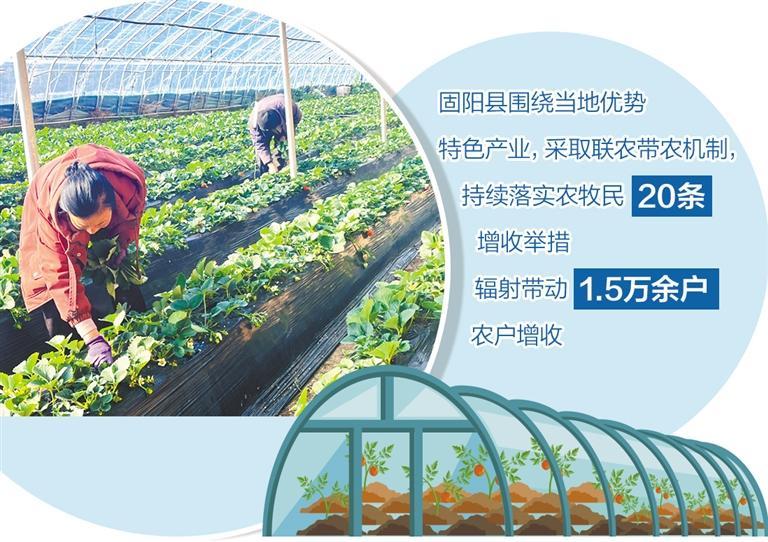
Group 1 - The modern agricultural industrial park in Guyang County, Inner Mongolia, has created job opportunities for over 100 people, including 20 poverty alleviation households, with an annual salary distribution of 700,000 yuan [3] - The project, which began construction in September 2023 and commenced production in December 2023, involved an investment of 15 million yuan and generates an annual collective economic benefit of 850,000 yuan for Xue Tianhui Village [3] - The "company + farmer + base" model has effectively integrated employment assistance with agricultural development, allowing farmers to learn cultivation techniques while working [3] Group 2 - The town of Xia Shihou has focused on "assistance, stability, promotion, and protection" to effectively connect poverty alleviation efforts with rural revitalization, creating job opportunities for over 80 farmers, including 30 poverty alleviation households [4] - The establishment of Wanshengxing Agricultural Food Co., Ltd. in Wanshenghao Village has transformed traditional food production into a standardized operation, providing 10 job positions for local residents [4][5] - The company has contributed 300,000 yuan to the village's collective economy since its operation began in August 2024, while also facilitating skill training for villagers [5] Group 3 - Guyang County has implemented 20 measures to increase farmers' income, benefiting over 15,000 households, with a total investment of 28.07 million yuan in various projects aimed at poverty alleviation and employment assistance [6] - A total of 817 poverty alleviation laborers have received skills training, and 1,043 individuals have been assigned to public welfare positions, receiving monthly subsidies [6] - The county plans to continue enhancing support responsibilities and accurately identify and assist targeted groups to prevent large-scale poverty [6]
紫苏香里说变迁
Xin Lang Cai Jing· 2025-12-20 22:07
Core Viewpoint - The transition from poverty alleviation to rural revitalization is emphasized, highlighting that achieving poverty alleviation is not the end but the beginning of a new life and struggle [2]. Group 1: Poverty Alleviation Achievements - The county successfully lifted itself out of poverty in 2019, validated by multiple assessments, leading to visible improvements in the lives of the local population [1]. - The average per capita net income of the poverty alleviation population increased from 12,123 yuan in 2021 to 16,849 yuan in 2024, indicating a stable income growth through industrial development and employment opportunities [2]. Group 2: Industrial Development - The county adopted a "base + farmers" and "order + farmers" model, with the purple perilla industry becoming a key pillar of wealth, covering 100,000 acres, which is one-third of the national total for the same category [2]. - Seven leading enterprises have formed a complete industrial chain, benefiting 70 poverty-stricken households and 20 poverty-stricken villages with an annual income increase of nearly 800,000 yuan [2]. Group 3: Social and Infrastructure Improvements - Educational support has funded over 30,000 disadvantaged students, ensuring that no eligible students from impoverished families drop out of compulsory education [2]. - Health support has achieved standardized construction of village clinics across all 12 towns and 192 administrative villages, with a reimbursement rate of 95% for hospitalization costs among the poverty alleviation population [2]. - Rural infrastructure improvements include the establishment of roads and water supply systems, with 100% coverage of tap water in 192 administrative villages [2]. Group 4: Community Engagement and Cultural Development - The internal motivation of the community has been stimulated through activities such as the selection of "civilized families" and "good daughters-in-law," contributing to a more civilized rural culture [2]. - The county has maintained over 3,800 village-level public welfare positions, helping more than 6,000 poverty alleviation individuals achieve nearby employment [2]. Group 5: Recognition and Future Outlook - The county has received an A rating in city-level assessments for three consecutive years, with the "Purple Perilla Town" and "China's Purple Perilla Hometown" becoming increasingly recognized [3].
政策再接力 初心恒久远——中国减贫脱贫启示录⑤
Ren Min Ri Bao· 2025-12-19 03:25
Core Insights - The article emphasizes the transition from poverty alleviation to rural revitalization, highlighting the importance of continuous efforts and policies to sustain development [1][2][3] Group 1: Poverty Alleviation Success Stories - Individual success stories, such as Li Guozhi from Tongjiang County, illustrate how targeted support policies can transform lives, turning impoverished households into leaders of wealth creation [1] - In Gansu's Weiyuan County, the potato industry has seen a total output value exceeding 3.2 billion yuan in 2024, showcasing the shift from "poverty potatoes" to "revitalization potatoes" [1] Group 2: Policy Continuity and Internal Motivation - The need for a consistent support policy is highlighted, alongside the importance of stimulating internal motivation among the impoverished population to pursue better living standards [2] - Initiatives like the "Tian-Gan Hu Gong" labor service brand and skill training programs are examples of how external support can be combined with local efforts to foster self-sufficiency [2] Group 3: Infrastructure and Long-term Development - Addressing basic needs such as housing, healthcare, education, and safe drinking water is crucial for both immediate relief and long-term rural development [2] - Projects in Hubei and Shaanxi demonstrate innovative solutions to rural infrastructure challenges, promoting equal access to public services [2] Group 4: Leveraging Comparative Advantages - The article discusses the importance of utilizing local advantages and integrating into the national market to enhance rural development [3] - Examples include the coffee industry in Yunnan and live-streaming sales in Guangxi, which illustrate how rural areas can become vibrant economic hubs [3] Group 5: Global Significance of China's Poverty Alleviation - The successful eradication of poverty for 800 million people is presented as a significant achievement with implications for global development, suggesting that other developing countries can also succeed [3] - The concept of shared prosperity is linked to China's modernization efforts, emphasizing the inclusive nature of its development model [3]
政策再接力 初心恒久远——中国减贫脱贫启示录⑤(人民时评)
Ren Min Ri Bao· 2025-12-18 21:52
Core Viewpoint - The article emphasizes the transformation of rural areas in China from being seen as "remote" to becoming frontiers of development, driven by policies aimed at poverty alleviation and rural revitalization [1][3]. Group 1: Poverty Alleviation and Rural Revitalization - The journey from poverty alleviation to rural revitalization is highlighted, showcasing individual success stories such as Li Guozhi, who transitioned from a poverty-stricken individual to a leader in wealth creation through targeted support policies [1]. - Gansu's Weiyuan County has successfully transformed its potato industry, with a projected total output value exceeding 3.2 billion yuan in 2024, illustrating the shift from "survival potatoes" to "prosperity potatoes" [1]. - The importance of maintaining existing support policies for previously impoverished areas is underscored, as emphasized by President Xi Jinping, who stated that poverty alleviation is a starting point for new lives and new struggles [1]. Group 2: Mechanisms for Sustained Development - The article discusses the need for a dual approach that combines continuous support policies with the stimulation of internal motivation among the impoverished population [2]. - The implementation of new technologies for monitoring and preventing poverty is suggested, alongside initiatives like the "Tian-Gan Hu Gong" labor service brand, which focuses on skills training and employment connections [2]. - Infrastructure improvements, such as addressing rural drinking water issues and promoting safe housing, are essential for long-term rural development and the well-being of formerly impoverished communities [2]. Group 3: Leveraging Advantages for Development - The establishment of a unified national market facilitates the flow of resources between urban and rural areas, allowing rural regions to capitalize on their unique advantages for development [3]. - Examples of successful rural enterprises, such as coffee production in Yunnan and live-streaming sales in Guangxi, demonstrate how local resources can be transformed into competitive advantages in larger markets [3]. - The article concludes by highlighting the global significance of China's poverty alleviation success, suggesting that it serves as a model for other developing countries [3].