
肉羊

Search documents
新农人的年终盘点
Xin Lang Cai Jing· 2026-02-08 19:33
Group 1: Livestock Farming - The intelligent livestock farming base in Linhe District, Bayannur City, showcases healthy and well-fed sheep, benefiting from advanced feeding systems that reduce labor costs and ensure scientific feeding practices [1] - The price of meat sheep has risen to 29 yuan per kilogram, with an additional government subsidy of 60 yuan per sheep sold, highlighting the significant benefits of large-scale farming [1] - The farmer, with 23 years of experience, has established a complete industrial chain of breeding, raising, and selling sheep, with a stable annual production of 700 lambs from 500 breeding ewes [1] Group 2: Agricultural Policies and Practices - The government has increased support for agriculture, providing various subsidies that have encouraged new farmers to adopt innovative practices and expand their operations [2] - A local farmer has successfully cultivated a diverse range of crops on 5,000 acres, including glutinous corn, feed corn, and sunflowers, which enhances land utilization and mitigates market risks [2] - The focus is shifting towards high-quality and high-value crop production, with plans to expand the planting area of staple crops and develop vegetable production for Hong Kong [2]
建设生态安全屏障的陈巴尔虎“基层实践”
Xin Lang Cai Jing· 2026-01-29 19:50
Core Viewpoint - Chen Barhuqi is actively engaged in ecological protection and sustainable development, focusing on transforming traditional livestock farming into a modern, technology-driven industry while ensuring environmental sustainability [3][7][15]. Group 1: Ecological Protection Initiatives - Chen Barhuqi has established a comprehensive work system to address overgrazing and promote the transformation of traditional livestock farming, including a total plan with 15 sub-plans and 8 pilot areas [3]. - The region has implemented a "one map, one network" platform for ecological monitoring, enhancing collaboration among various departments and improving response times to environmental issues [4][5]. - By 2025, the region aims for 100% of days with good air quality and has completed low-emission upgrades for all major coal boilers [5]. Group 2: Technological Integration - The use of drones and a real-time ecological map allows for automatic identification and monitoring of livestock numbers, ensuring compliance with grazing limits [5][6]. - A livestock information management platform has been developed, enabling traceability from breeding to sales, which supports the modernization of the livestock industry [9]. Group 3: Community Engagement and Economic Development - Local communities are actively involved in ecological protection efforts, with initiatives translating ecological concepts into practical actions among herders [8]. - The "Chen Barhuqi Wo Jin Livestock Cloud Base" project exemplifies a government-invested, enterprise-operated model that integrates community benefits and promotes livestock tourism [9]. Group 4: Sustainable Land Management - The region is undertaking significant efforts in ecological restoration, including combating desertification and restoring degraded grasslands, with a focus on community participation [10][13]. - The implementation of a pilot project for ecological restoration has led to increased vegetation cover and improved local livelihoods through job creation [13]. Group 5: Future Development Goals - The future strategy emphasizes ecological priority and green development, with plans to enhance data sharing and collaboration across various sectors for better environmental management [14][15]. - The livestock industry is set to undergo further modernization, focusing on sustainable practices that balance ecological protection with economic benefits for local herders [15][16].


“中国粮”主要用上了“中国种” 我国连续两年实现农作物种子贸易顺差
Ren Min Ri Bao· 2026-01-22 00:02
Core Insights - China's seed industry has achieved significant advancements, with a focus on self-sufficiency in seed production, leading to a robust agricultural foundation [1][2] Group 1: Seed Export and Trade Surplus - By 2025, China's seed export volume is projected to reach 62,000 tons, resulting in a trade surplus of $7.5 million, marking the second consecutive year of surplus following 2024's first-time export exceeding imports [1] - The area of self-bred crop varieties in China accounts for over 95%, with domestic market shares for livestock and aquatic seeds exceeding 80% and 86%, respectively [1] Group 2: Technological Innovation and Development - The seed industry has entered the world's top tier in terms of technological innovation, supported by key projects and national research plans, establishing a comprehensive breeding innovation system [2] - The area of self-selected corn varieties has increased from 91% in 2020 to 94%, while vegetable self-selected varieties have risen from 87% to 91% [2] Group 3: Future Goals and Strategic Plans - The "14th Five-Year Plan" emphasizes the implementation of seed industry revitalization actions, aiming to enhance seed quality and ensure food security by 2030 [3] - Continuous efforts will be made to improve seed supply capabilities and promote the emergence of high-yield, quality, and specialized seeds [3]
我国连续两年实现农作物种子贸易顺差 “中国粮”主要用上了“中国种” 种业科技创新整体进入世界第一方阵
Ren Min Ri Bao· 2026-01-21 22:25
Core Insights - The core viewpoint of the articles emphasizes the significant progress in China's seed industry, highlighting the country's increasing self-sufficiency and export capabilities in agricultural seeds, particularly in hybrid rice and other crops [1][2][3]. Group 1: Seed Export and Trade Surplus - By 2025, China's seed export volume is projected to reach 62,000 tons, achieving a trade surplus of $7.5 million, marking the second consecutive year of surplus following the first instance in 2024 [1]. - Currently, over 95% of the area planted with crops in China consists of self-bred varieties, with domestic market shares exceeding 80% for livestock and over 86% for aquatic species [1]. Group 2: Technological Advancements and Innovation - The seed industry has seen a significant increase in self-bred varieties, with the area of self-selected corn varieties rising from 91% in 2020 to 94%, and vegetable varieties from 87% to 91% [2]. - China has established a world-class national resource bank for crop, livestock, and marine fish genetic resources, and has created multiple national and regional innovation platforms for seed industry development [2]. Group 3: Strategic Goals and Future Plans - The "14th Five-Year Plan" suggests the continuation of the seed industry revitalization actions, aiming to enhance seed quality and ensure food security by 2030 through improved breeding innovation and resource utilization [3].
守底线 兴产业 促振兴
Xin Lang Cai Jing· 2025-12-24 19:52
Core Viewpoint - Inner Mongolia is focusing on consolidating poverty alleviation achievements while effectively connecting with rural revitalization strategies, emphasizing industry development, infrastructure improvement, and cultural tourism integration to enhance the livelihoods of rural residents [1] Group 1: Poverty Alleviation and Support Mechanisms - The region has implemented a robust monitoring and support mechanism to prevent poverty, ensuring that 99.6% of the 73,000 households and 153,000 individuals identified as at risk receive targeted assistance [4] - Inner Mongolia has established a dynamic monitoring system that reduces the identification time for at-risk households from one month to 15 days, with 13,155 new monitoring subjects identified in 2025 [3] - Various support measures have been put in place, including employment assistance for 20,000 individuals annually, with the employment scale increasing from 203,000 in 2021 to 243,200 in 2025 [7] Group 2: Industry Development - Inner Mongolia is focusing on specialized and differentiated development, promoting rural characteristic industries to drive income growth, with over 20,000 industry support projects implemented [6][7] - The region has seen a significant increase in funding for industry development, rising from 60% in 2021 to over 70% currently, enhancing economic vitality in poverty-stricken areas [7] - The establishment of a "company + base + farmer" model in livestock farming has led to the acquisition of 54,000 lambs and the signing of contracts with 1,250 cooperative farmers [6] Group 3: Rural Revitalization and Infrastructure - Inner Mongolia is enhancing rural living conditions through comprehensive infrastructure improvements, including the construction of clean roads and community service centers, contributing to a better quality of life for residents [8][10] - The region has initiated a "rural beautification" campaign, achieving a 50.8% toilet coverage rate and improving waste management in 97.2% of administrative villages [10] - The average disposable income for rural residents in Inner Mongolia is projected to reach 22,543 yuan in 2024, ranking first among 12 western provinces and showing a growth rate above the national average for five consecutive years [10]
天津:“十四五”时期,农业农村现代化成效显著
Zhong Guo Fa Zhan Wang· 2025-11-11 08:35
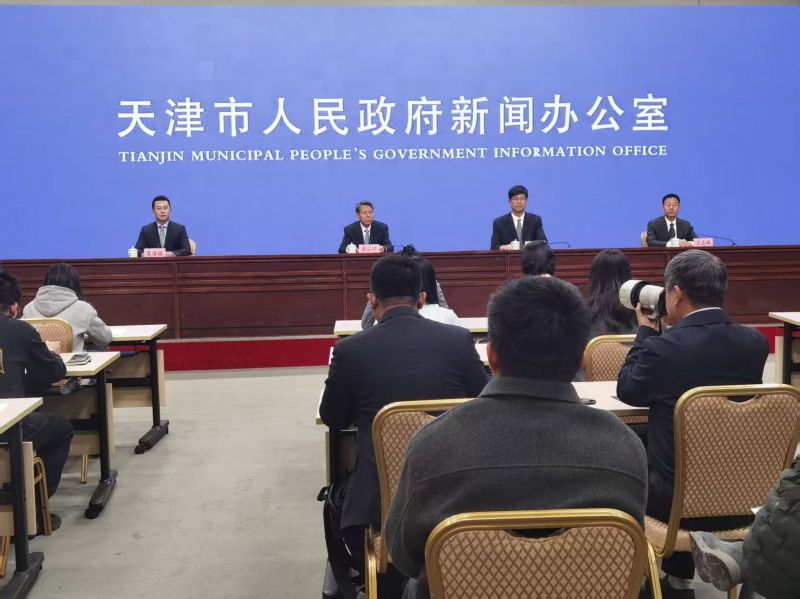
Core Insights - The "14th Five-Year Plan" period is crucial for Tianjin to advance towards a modern socialist metropolis and enhance rural revitalization and agricultural modernization [3] - Tianjin ranks 5th nationally in the comprehensive rural revitalization development index, indicating significant progress in agricultural quality and efficiency, rural livability, and stable income growth for farmers [3][4] Agricultural Production - A total of 1.45 million acres of high-standard farmland have been newly built or upgraded, with 82% of permanent basic farmland meeting high standards, a 20 percentage point increase from the end of the "13th Five-Year Plan" [4] - Grain production is expected to achieve a "22-year continuous harvest," with total output surpassing historical highs and increasing by over 1 billion pounds compared to the end of the "13th Five-Year Plan" [4] - The proportion of facility vegetable production in total vegetable output has risen to 55%, and the scale of livestock and poultry farming has reached over 90% [4] Rural Industry Development - The integration of rural industries has been emphasized, with the establishment of 4 national-level advantageous characteristic industrial clusters and 22 agricultural industry integration development carriers [5] - The "Tianjin Agricultural Boutique" brand has seen sales exceed 10 billion yuan for three consecutive years, enhancing brand recognition and influence [5] Agricultural Innovation and Technology - The implementation of seed industry revitalization actions has led to the cultivation of several nationally leading varieties, with a mechanization rate of 90.5% in crop farming [6] - The establishment of the Tianjin Intelligent Agriculture Research Institute and advancements in agricultural technology have increased the contribution rate of agricultural science and technology to 75% [6] Rural Living Environment - A total of 300 rural living environment demonstration villages have been established, with a sanitation toilet coverage rate of 97.9% and rural sewage treatment exceeding 90% [6] - The integration of public services and infrastructure in rural areas has significantly improved, enhancing the quality of life for residents [6] Urban-Rural Integration - Tianjin has established a comprehensive rural property rights trading market system, with annual transaction volume exceeding 16 billion yuan, ranking first nationally [7] - The per capita disposable income of rural residents is projected to reach 32,715 yuan, ranking 4th nationally, with a reduced urban-rural income ratio of 1.76:1 [7]
天津发布乡村振兴“成绩单”:综合指数全国前五 农业科技进步贡献率达75%
Zhong Guo Xin Wen Wang· 2025-11-11 02:59
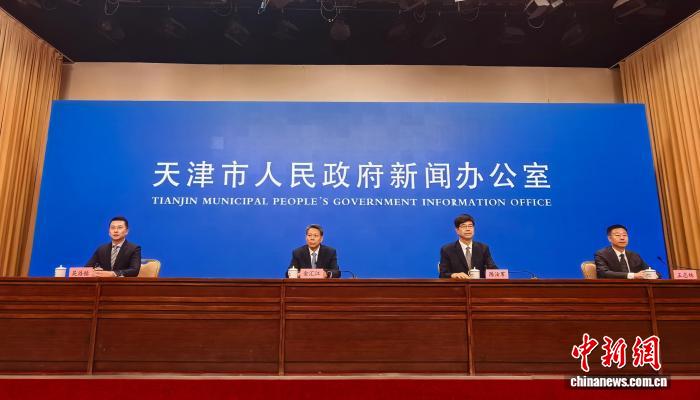
Core Insights - Tianjin ranks fifth in the national rural revitalization development index according to the National Bureau of Statistics' 2024 assessment, showcasing significant progress in agricultural quality and efficiency, rural livability, and stable income growth for farmers [1][3]. Agricultural Development - During the "14th Five-Year Plan" period, Tianjin has constructed and upgraded 1.45 million acres of high-standard farmland, with the proportion of high-standard farmland in permanent basic farmland reaching 82%, an increase of 20 percentage points from the end of the "13th Five-Year Plan" [3]. - Grain production is expected to achieve a "22-year continuous increase," with total output surpassing historical highs and projected to increase by over 1 billion jin compared to the end of the "13th Five-Year Plan" [3]. - The output of facility vegetables now accounts for 55% of the total vegetable output in the city, and the scale of livestock and poultry farming has reached over 90% [3]. Rural Industry Development - Tianjin has advanced industrial integration by creating four national-level advantageous characteristic industrial clusters and three modern agricultural industrial parks, leading to the formation of five hundred billion-level industrial chains and seventeen billion-level industrial chains [4]. - The city has received nearly 80 million tourists in the past two years through the development of key rural tourism areas [4]. - The sales revenue of the "Tianjin Agricultural Boutique" brand has exceeded 10 billion yuan for three consecutive years, enhancing brand recognition and influence [4]. Agricultural Technology and Infrastructure - The agricultural technology progress contribution rate has increased to 75%, with significant advancements in mechanization and smart agriculture [5]. - The comprehensive mechanization rate for crop farming has reached 90.5%, and a national key laboratory for vegetable breeding has been established [5]. - Rural living conditions have improved, with a sanitation toilet coverage rate of 97.9% and over 90% of rural wastewater being treated [5][6]. Economic and Social Development - The per capita disposable income of rural residents is projected to reach 32,715 yuan in 2024, ranking fourth nationally, with the urban-rural income ratio narrowing to 1.76:1 [6]. - Tianjin has established a rural property transaction market system covering all administrative levels, with the Tianjin Agricultural Exchange achieving a transaction volume exceeding 16 billion yuan [6].
安海龙跨界转身在泥土中开辟创业新途 种养循环接通产业链计划2027年产值破亿
Chang Jiang Shang Bao· 2025-11-02 23:14
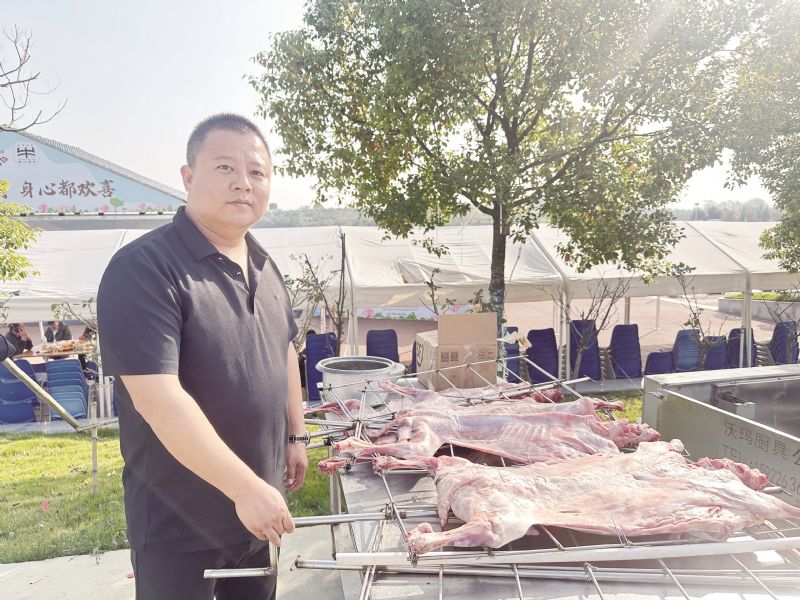
Core Insights - The article highlights the journey of An Hailong, the chairman of Xiangchu Agricultural Technology Co., Ltd., who transitioned from a mechanical designer to an agricultural entrepreneur, emphasizing the importance of agricultural development for rural revitalization [2][3]. Company Overview - Xiangchu Agricultural Technology has established a comprehensive industrial chain that includes feed production, large-scale sheep farming, slaughter processing, and supply chain sales, contributing to steady annual revenue growth [5]. - The company aims to achieve a target of 80,000 sheep slaughtered and a revenue of 100 million yuan by 2027, alongside developing a circular agriculture model [5]. Business Development - An Hailong initially started with sheep farming and later expanded into feed processing due to local supply challenges, eventually growing a customer base of over 1,000 across central and southern provinces [4]. - The company faced significant challenges, including natural disasters and market fluctuations, but adapted by extending its operations into the downstream supply chain, including slaughtering and restaurant services [4]. Future Plans - The company plans to build four breeding areas, each capable of producing 20,000 sheep annually, with a projected annual output of 80,000 sheep by the end of 2027 [5]. - A comprehensive agricultural model will be developed, integrating fruit tree cultivation, ecological fish ponds, and organic fertilizer processing, creating a closed-loop system [5]. Technological Innovation - The company collaborates with Huazhong Agricultural University and Hubei Academy of Agricultural Sciences to enhance livestock survival rates, achieving a 98% survival rate, which is 12 percentage points higher than traditional methods [6]. - Plans include establishing a technology training program to support small-scale farmers in transitioning to standardized and large-scale operations [6].

筑牢北疆万里绿色长城
Jing Ji Ri Bao· 2025-10-27 22:37
Group 1 - The core viewpoint emphasizes the importance of high-quality development in border ethnic areas for the overall strategy of Chinese modernization, highlighting ecological protection and sustainable development [1] - The Baotou region is focusing on integrated ecological protection and management, achieving a historical shift from desertification to greening, and utilizing water resources effectively [1][2] - The agricultural and livestock industry in Baotou has seen significant growth, with the total output value of the agricultural industry chain exceeding 90 billion yuan, and stable grain production at over 5.8 billion jin [2] Group 2 - Promoting national unity and progress is a key focus, with initiatives aimed at strengthening the sense of community among various ethnic groups and improving infrastructure and public services [3] - The region is leveraging its unique resource advantages to develop characteristic industries, aiming to stimulate economic vitality and improve living standards [2][3] - The future development prospects for border ethnic areas are promising, with strategies like the Western Development and East-West cooperation providing new momentum for growth [4]
内蒙古锡林郭勒 乡村振兴“羊”动力
Jin Rong Shi Bao· 2025-09-23 03:09
Core Insights - The development of the meat sheep industry in Xilin Gol League is significantly supported by financial institutions, with a focus on enhancing the overall quality and efficiency of the grassland animal husbandry sector [1][2][3] Financial Support and Growth - Financial institutions in Xilin Gol League issued a total of 4.369 billion yuan in loans for the meat sheep industry in the first seven months of this year, with a loan balance exceeding 10 billion yuan as of the end of July, reflecting a year-on-year growth of 17.63% [1] - The Agricultural Commercial Bank of Inner Mongolia provided low-interest loans totaling 590,000 yuan to a local farmer, facilitating the expansion of his sheep farming operations [2] - As of the end of July, the balance of targeted re-loans for supporting agriculture and small enterprises reached 909 million yuan, with over 500 million yuan specifically allocated to the meat sheep industry [2] Product Innovation - Financial institutions have developed a comprehensive and customized credit product matrix to address the cyclical and seasonal nature of the meat sheep industry, resulting in the launch of nearly 30 credit products, including "Meat Sheep Loan" and "Ecological Mu Sheep Loan" [3][4] - In the first seven months of this year, loans from these credit products exceeded 2 billion yuan, with a loan balance reaching 5.407 billion yuan by the end of July [3] Brand Development - The "Xilin Gol Sheep" regional public brand has achieved a brand value of 32.17 billion yuan, ranking second in the 2024 Inner Mongolia well-known regional public brand list [5] - Financial institutions have provided over 90 million yuan in loans to brand-authorized enterprises in the first seven months, with a loan balance of 179 million yuan as of the end of July [5] Case Studies of Financial Support - The Inner Mongolia Agricultural Commercial Bank's support for the Inner Mongolia Fengjing Manyuan Animal Husbandry Co., Ltd. has enabled the company to meet increased demand from its supply chain partners, with a loan balance of 3.924 million yuan [4] - The Industrial and Commercial Bank of China has provided 30 million yuan in loans to three authorized enterprises of the "Xilin Gol Sheep" brand, enhancing their operational capabilities [6]
